Lower extremity arterial disease (___) is a progressive narrowing or blockage of arteries in the lower limbs, often due to atherosclerosis (McNichol et al., 2021). It is commonly associated with PAD and defined by an ABI < 0.9, leading to ischemia in the lower leg.
LEAD
____ leg ulcers are often triggered by trauma, such as blunt force or chronic pressure from improperly fitting footwear.
Arterial
PAD
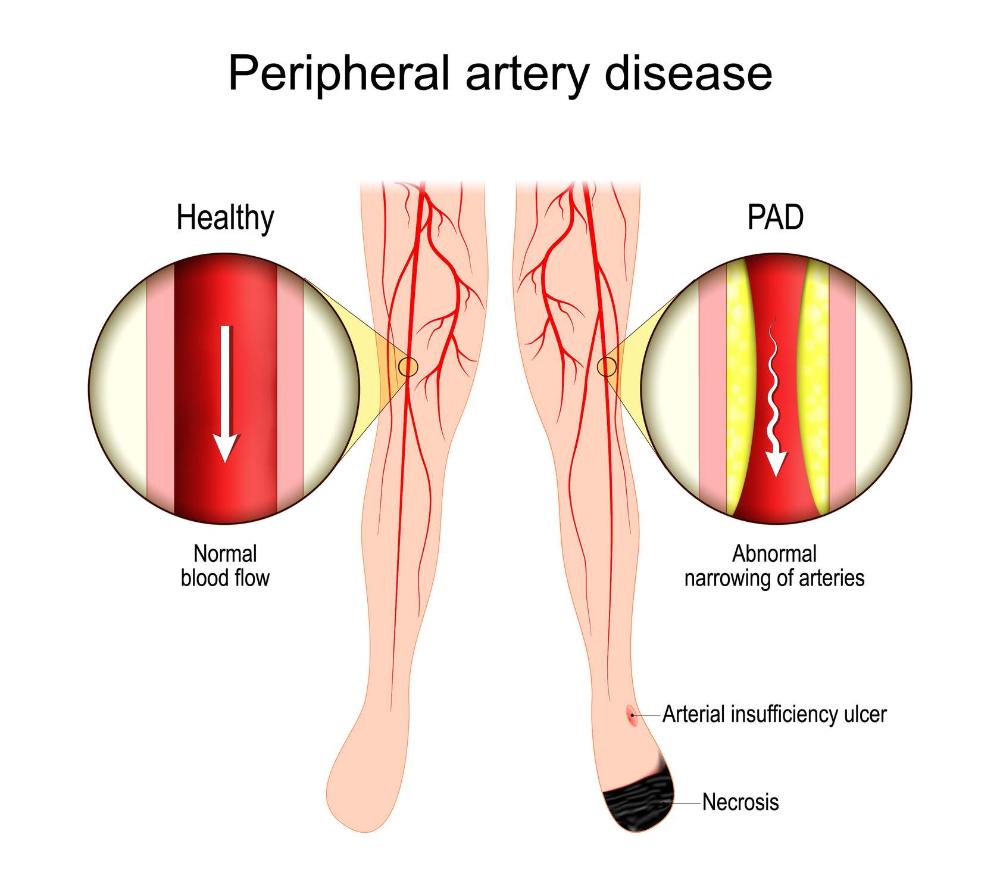
Critical Limb Ischemia
Is the most severe form of LEAD, where blood flow is so poor that tissues cannot survive (DynaMed, 2022). Most individuals with CLI also have diabetes. Without appropriate revascularization, these patients often face amputation, with the risk increasing as their ABI decreases.
Risk Factor for Arterial Disease Modifialble:
- Smoking
- Diabetes
- Dyslipidemia
- Hypertension
- Obesity
- Inactivity
- Stress
Risk Factor for Arterial Disease
- Age
- Male assigned at birth
- Postmenopausal status
- Family history of cardiovascular disease
- Race, specifically Black
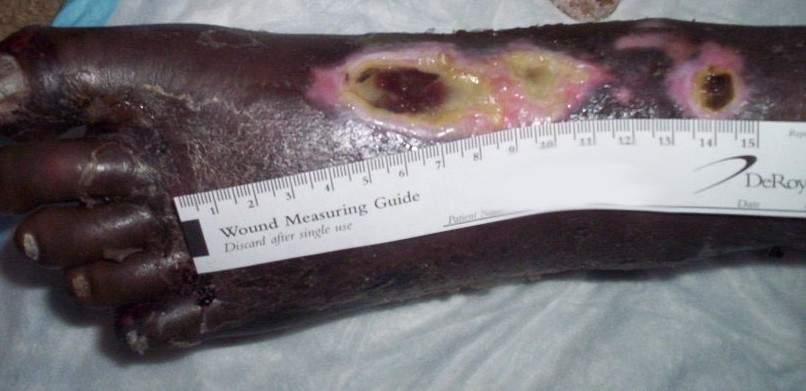
Is the VLU, or ALU?
ALU
Wound Edges
They have a well-defined, round, or "punched-out" appearance with sharply demarcated edges.
ALU characteristics
* well-defined, round, or "punched-out" appearance with sharply demarcated edges.
Wound bed pale, gray, or yellowish due to the lack of oxygen-rich blood reaching the area. The wound bed may also be dry and necrotic, with necrotic tissue ranging from thick black eschar to slough.
* Minimal exudate because of lack of blood supply
* Periwound Periwound -This is often thin, shiny, dry, and cool to the touch.
What does ABI stand for and mean?
An ankle-brachial index (ABI) is a painless test that measures blood pressure in your ankles and arms. It shows if you have peripheral artery disease (PAD), or plaque buildup in your leg arteries. Your ABI is the blood pressure in your ankle divided by that in your arm. * Can catch PAD before it gets severe!
When is an ABI test needed?
- if you have PAD symptoms, like leg pain when active. Your PCP may also suggest this test if you don’t have symptoms but are:
- Age 65 or older
- Age 50 to 64 and have certain risk factors for atherosclerosis (like diabetes, high blood pressure, high cholesterol, history of tobacco use) or a history of PAD in your biological family
- Under age 50 and have diabetes along with another risk factor for atherosclerosis
Below are preparations for what kind of test/procedure?
- Don’t eat or drink anything that contains caffeine on the day of your test.
- Don’t use tobacco products or alcohol during the hour before your test.
- Don’t exercise during the hour before your test.
- Wear loose, comfortable clothes so your provider can easily access your upper arms and ankles.
- Just before the test, go to the restroom and pee until your bladder is empty.
Be sure to tell your provider if you’ve had any procedures to improve circulation in your legs. This may affect how they do the test.
ABI test
What is this formula?
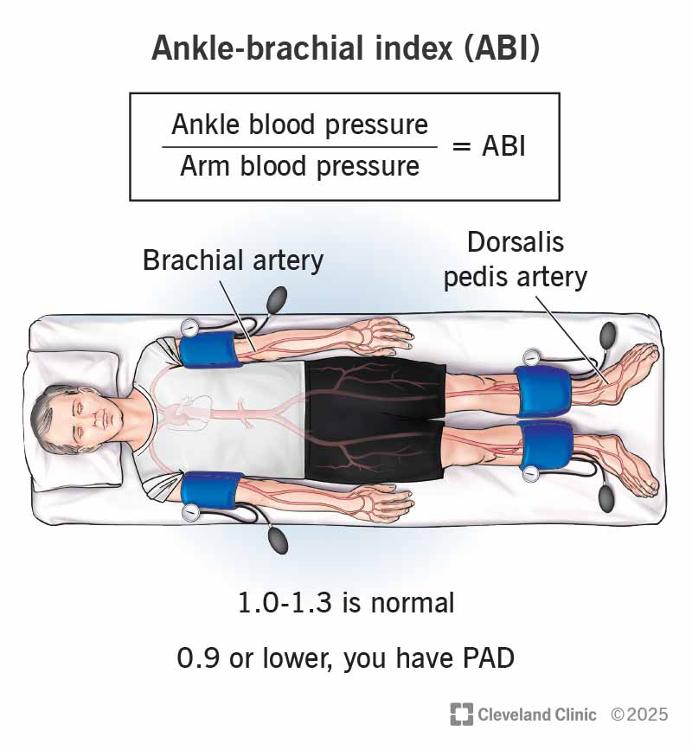
Ankel-Brachial Index
ABI: Ranges
_._-__._ is normal range
_._ or lower, you have PAD
1.0-1.3 is normal
0.9
What do these ABI results mean?
- 1.0 to 1.3: Normal
- 0.9 to 1.0: Borderline
- 0.7 to 0.9: Mild PAD
- 0.4 to 0.7: Moderate PAD
- Lower than 0.4: Severe PAD
Normal
Borderline
Mild PAD
Moderate PAD
Severe PAD
ABI Range:
Lower that 0.4 means?
Severe PAD
ABI Range:
0.4 to 0.7 means?
Moderate PAD
ABI Range:
1.0 to 1.3 means?
Normal
ABI Range:
0.9 to 1.0 Borderline
Borderline PAD
When your arteries are calcified, an ___ test can't reliably diagnose PAD. Other options Toe- Brachial (big toe)
ABI
Researchers found that people with an ankle-brachial index higher than 1.4 have in increased risk of _____ ____
CARDIOVASCULAR DEATH
Ulcer Stages:
Supervicial Ulcer
Grade 1
Superficial ulcer w/out subcutaneous tissue involvement
Ulcer Stages:
DEEP ULCER
Grade 2
Involves ligament, tendon, joint capsule, or deep fascia but no abscess or osteomyelitis
Ulcer Stages:
Osteitis
Grade 3
Deep wound with abscess or osteomyelitis
Ulcer Stages:
Partial gangrene
Grade 4
Gangrene affects a portion of the foot
Ulcer Stages:
Gangrene
Grade 5
Gangrene affects entire foot
Wagner Scale (Meggitt-Wagner)
The Wagner Scale, also known as the Meggitt-Wagner classification, is a simple grading system used to evaluate the severity of DFUs (DynaMed, 2024b).
The Meggitt-Wagner classification, is a simple grading system used to evaluate the severity of DFUs (DynaMed, 2024b). It classifies ulcers based on:
- Depth of the wound.
- If the wound is infected.
- The amount of tissue necrosis.
Q. 1
Which component of the blood is primarily involved in forming the initial phase of a blood clot during wound healing?
Platelets
Q. 2
Which type of white blood cell is most abundant and acts as the first responder to bacterial infection?
Neutrophils
* Neutrophils are the most abundant white blood cells and the primary first responders to bacterial infections. They make up approximately 55% to 70% of circulating white blood cells and are rapidly drawn to the site of an invasion to ingest and destroy pathogens
Q 3.
What role does melanin play in protecting the skin from ultraviolet radiation?
Acts as a physical barrier by scattering and absorbing UV rays to decrease penetration
Q. 4
What is the average pH of the acid mantle of an adult’s skin?
5.5
The average pH of the skin's acid mantle ranges between 4.5 and 5.5, with an optimal physiological target typically cited at 5.5. This slight acidity creates a protective barrier that inhibits the growth of harmful bacteria and fungi, while maintaining the skin's moisture
Q. 5
Which layer of the epidermis is responsible for producing new cells through mitosis?
Stratum Lucidum
Stratum Spinosum
Stratum Granulosum
Stratum Germinativum
* Also known as the stratum basale, this is the deepest layer of the epidermis and is responsible for the cell division and replacement.
Q. 6
Which choice BEST describes the function of tendons?
Connects muscle to bone
*
Tendons are tough, fibrous cords of tissue that act as the vital connection between your muscles and bones. They translate the mechanical force generated by muscle contractions into skeletal movement, allowing you to walk, run, and lift things
7.
What BEST describes the characteristics of healthy skeletal muscle?
Pink to dark red in color with striation
8
What is the primary composition of fascia?
Collagen
* Fascia is primarily composed of collagen fibers, elastin fibers, and an aqueous extracellular matrix (or ground substance). This intricate connective tissue permeates the body, surrounding muscles, vessels, and organs to provide structural support and facilitate movement
9.
What protein gives red blood cells the ability to transport oxygen?
Hemoglobin
10.
What BEST describes the responsibilities of collagen and elastin in the skin?
Transporting nutrients and waste products through the dermis
Killing parasites and helping with allergic responses
Providing tensile strength and recoil to the skin
Collagen provides firmness and structural support, while elastin provides flexibility and recoil
What best describes what “Skin of Color” refers to?
The broad range of skin types and complexions of individuals not of White descent
Q 12
Which of the following best describes a systematic head-to-toe skin assessment?
Inspecting and palpating the skin, focusing on bony prominences and skin folds
Q 13
What is the term used to describe a pocket of pus under the skin surrounded by inflamed tissue?
Abscess
14.
What are some of the key factors assessed by the Malnutrition Screening Tool (MST)?
Unintentional weight loss
15
Why should a skin turgor test be performed on the chest in older adults?
The chest is less affected by loose skin.
16
Which laboratory test is most indicative of a patient's long-term blood glucose control and potential wound healing complications?
Hemoglobin A1C
17.
Which action best demonstrates a clinician addressing a patient’s health literacy in their wound care plan?
Explaining wound care instructions in simple, non-medical language and using visual aids
18.
Which end-stage foot complication in diabetic patients is often confused with infection due to similar symptoms such as swelling, warmth, and redness?
Charcot neuroarthropathy
19.
In the context of a patient with a diabetic foot ulcer, which laboratory value is highly suggestive of osteomyelitis when correlated with clinical findings and diagnostic imaging?
Elevated ESR of 70 mm/hr or higher
* An erythrocyte sedimentation rate (ESR) greater than \(70 \text{ mm/h}\) is highly suggestive of underlying osteomyelitis. [1]
20
When assessing the wound of a patient with a dark skin tone, what should you be particularly aware of?
Hematoma
Hematoma's are darkened skin, that may look like a deep purple
21
A patient with a diabetic foot ulcer has thick, yellow-green drainage with a foul odor. The wound bed appears inflamed and edematous. What type of exudate is present?
Purulent
22
What is an example of addressing a patient’s economic status as part of the Social Determinants of Health (SDOH) in their wound care plan?
Discussing cost-effective alternatives with the patient and exploring financial assistance programs
23
Your patient, who has a history of Ulcerative Colitis, presents with a painful and deep wound to the left anterior lower leg that has significant undermining and violaceous borders. Despite adherence to standard care, it has doubled in size in the past 3 weeks. What type of wound are you assessing?
Pyoderma Gangrenosum
24
A 78-year-old bedbound patient is being evaluated for a pressure injury on the sacrum. On assessment, the wound presents with a shallow open ulcer, a red-pink wound bed without slough, and no visible bone, tendon, or muscle. There is partial-thickness skin loss, and the surrounding skin is intact. How should this pressure injury be staged?
Stage 2
* Stage 2 is defined as partial-thickness skin loss with exposed dermis. It typically presents as a shallow, open ulcer or a ruptured blister. The wound bed is viable, moist, and red-pink in color, without slough, eschar, or exposure of deeper tissues like muscle or bone
25.
A 65-year-old patient presents with a linear cluster of fluid-filled blisters on their left flank, accompanied by sharp, prickly pain and flu-like symptoms. What type of lesion is most likely responsible for these symptoms?
Herpes Zoster
26.
A 58-year-old patient presents with severe pain in their left leg that is out of proportion to physical findings. The leg appears red, swollen, and warm to the touch. Fluid-filled blisters (bullae) are present, and the patient reports flu-like symptoms, including fever and chills. What is the most likely diagnosis?
Necrotizing fasciitis
* The combination of severe, excruciating pain out of proportion to physical findings and systemic "flu-like" symptoms (fever and chills) is the classic hallmark of this flesh-eating bacterial infection. Fluid-filled blisters (bullae) and surrounding redness and warmth typically indicate that the infection has rapidly advanced into the deeper tissue layers and fascia
27.
Which condition is characterized by itchy, blistered, and crusted plaques on the legs associated with venous insufficiency?
Stasis dermatitis
* Stasis dermatitis (also referred to as venous stasis dermatitis or varicose eczema) is the condition characterized by itchy, blistered, and crusted plaques on the legs. It is driven by chronic venous insufficiency (CVI), where poor vein function causes blood and fluid to pool in the lower legs
28.
What characteristic distinguishes purpura from petechia and ecchymosis?
Size of lesions
* Size and depth of tissue involvement are the key characteristics that distinguish purpura from petechiae and ecchymosis. All three are types of non-blanching hemorrhages (meaning the color does not fade when pressed) caused by blood leaking under the skin or mucous membranes.
29.
A 6-year-old child presents to the clinic with a large, non-healing wound on their leg. The child appears visibly uncomfortable, and the parent mentions the child has difficulty sleeping due to pain. Which pain assessment tool is most appropriate for assessing the child’s pain level?
Wong-Baker FACES Pain Rating Scale
30.
A patient with necrotizing fasciitis has undergone surgical debridement and has an open wound with copious drainage. What is the BEST wound care approach to manage exudate while promoting granulation tissue?
Apply a dry gauze dressing and change it daily.
Pack the wound with saline-soaked gauze and change it every 8 hours.
Pack the wound with hypochlorous acid soaked calcium alginate and change it every 12 hours.
Use a negative pressure wound therapy (NPWT) system with hypochlorous acid instillation.
* Negative Pressure Wound Therapy (NPWT), often supplemented by hydrocolloid or alginate dressings, to maintain an optimal moist healing environment, clear exudate, and promote healthy granulation tissue. [1, 2, 3, 4, 5]
31.
Which of the following best describes microbial activity during the contamination stage of wound infection?
Microorganisms are present but not actively multiplying or causing harm.
* Contamination is the presence of non-multiplying microorganisms on or in a wound. During this initial stage, the microbes do not increase in number, do not invade surrounding healthy tissue, and do not trigger a host immune response or delay the normal healing process
32.
A patient with a venous leg ulcer has not shown measurable signs of improvement over the past 3 weeks. They deny pain, and no erythema, purulence, or fever is present. You reviewed wound culture results, which show moderate growth of Staphylococcus aureus. Which sign is typical of the colonization stage of wound infection?
Increased microbial load without clinical signs
Red streaks extending from the wound
High fever, tachycardia and low blood pressure
Increased microbial load with purulence and pain
* In the colonization phase, bacteria are actively multiplying but have not yet invaded the host tissue. This condition delays wound repair and may be accompanied by subtle, covert indicators like friable granulation tissue, foul odor, or discolored wound beds, without classical signs of clinical infection
33.
How long after mechanical disruption of a biofilm are antimicrobial treatments most effective?
Less than 24 hours
* Because physically disrupted biofilms rapidly reform and re-establish their protective matrix (extracellular polymeric substance) within 24 to 72 hours, timing treatments sequentially is highly recommended:
34.
Your patient has a stage 3 pressure injury on their sacrum. They have developed the following symptoms: High fever, rapid heart rate, low blood pressure, new confusion, and decreased urinary output. The wound bed is dark grey and is producing moderate amounts of malodorous exudate. What group of symptoms are MOST characteristic of a systemic infection (sepsis)?
High fever, rapid heart rate, and low blood pressure
* Temperature: An abnormally high body temperature (fever) or a lower-than-normal temperature (hypothermia), Mental Decline: Sudden confusion, disorientation, or extreme, hard-to-shake sleepiness., Rapid Vital Signs: A high heart rate (tachycardia) and fast, shallow breathing (tachypnea).
50.
Your patient has a latex allergy but requires a cohesive bandage to secure a dressing to their leg. Which type of bandage should you AVOID to protect the periwound skin?
A cohesive bandage made with natural rubber latex
51.
Pick the BEST product to apply in order to protect a patient’s periwound from damage caused by excess drainage.
Moisture barrier
52.
The provider has just finished debriding your patient’s wound. Which dressing is the best choice to promote hemostasis?
Gauze dressing
Hydrofiber
Hydrogel
Calcium alginate
* An alginate dressing (such as calcium alginate) is generally the best choice to promote primary hemostasis and manage bleeding in a newly debrided wound
53.
Which dressing type is the BEST choice for a wound with fragile granulation tissue?
The best choice for a wound with fragile granulation tissue is a non-adherent or low-adherent dressing. The primary goal is to maintain a moist healing environment without causing trauma or tearing delicate new tissue during dressing changes. Example: Silicone contact layers or foams. Hydrogels, and Alginates
54.
Which type of dressing is best suited for a pressure injury (PI) with heavy exudate?
Calcium alginate dressing
* For pressure injuries (PI) with heavy exudate, the best dressings are alginates, gelling fibers (hydrofibers), and highly absorbent foam or superabsorbent dressings. These dressings are designed to absorb large amounts of fluid while maintaining the moist environment required for healing
55.
What is the MOST appropriate initial treatment for a stage 1 pressure injury (PI)?
Offloading pressure
55.
A patient with a malignant wound is experiencing bleeding during dressing changes. What intervention should be prioritized?
Rubbing the wound bed to remove granulation tissue
Using cytotoxic solutions like Dakin’s to stop bleeding
Applying firm, direct pressure to the wound
Using non-adherent dressings to stop exudate
...
57.
You are assessing a patient’s pressure injury using the PUSH tool. Which three parameters does this tool evaluate?
Surface area, exudate amount, and tissue type
58.
Angiogenesis occurs during which phase of wound healing?
Proliferative
* During this stage, the body focuses on rebuilding the damaged area. New capillary networks (angiogenesis) form within the wound bed to supply the developing granulation tissue with the necessary oxygen and nutrients required to repair the injury.
59.
The probe-to-bone test evaluates diabetic foot ulcers for what condition?
Osteomyelitis
60.
When treating diabetic foot ulcer infections, what primarily guides the duration of antibiotic therapy?
Response to therapy
61.
A patient with a venous insufficiency wound has been receiving weekly debridement, silver alginate dressings, and multilayer compression. Despite adherence, the wound shows no significant improvement after six weeks. What should the clinician do next?
Obtain a tissue biopsy to rule out an unsuspected diagnosis such as vasculitis or malignancy.
* If a venous insufficiency wound shows no significant improvement after six weeks of standard care, the clinician should re-evaluate the diagnosis for underlying comorbidities, obtain a wound biopsy to rule out malignancy, and refer the patient to a vascular specialist to address potential venous reflux or obstruction
62.
Which topical treatment is MOST appropriate for managing localized wound pain?
Lidocaine gel or creams
63.
Which phase of wound healing is hindered by the presence of necrotic tissue?
Proliferative
* Necrotic tissue primarily hinders the proliferative phase of wound healing, though it also extends and disrupts the preceding inflammatory phase
64.
During a wound assessment, you find translucent tissue that is developing into a deep pink color along the wound margins. What type of tissue does this indicate?
Epithelial tissue
* This signals that the wound is in the final stages of closure, with new skin cells migrating from the margins to resurface the wound bed.
65.
When measuring a wound on the foot, how should you orient the ruler for measuring length?
From heel to toe
66.
What is the primary difference between adherence and compliance in wound care?
Adherence focuses on collaboration, while compliance implies following orders.
67.
During a wound assessment, you notice that the wound edges appear curled under, preventing epithelial cells from migrating across the wound bed. How would you describe this finding?
Maceration
Epibole
Induration
Undermining
...
68.
Your patient’s wound has stalled, and you identify circumferential epibole during your assessment. Why does epibole interfere with wound healing?
It prevents epithelial cells from migrating across the wound bed.
69.
A patient with a Wagner Grade 3 diabetic foot ulcer has shown no improvement despite adherence to standard care for the past four weeks. You are considering a referral for hyperbaric oxygen therapy (HBOT). Which factor would most strongly support the use of HBOT in this case?
The failure to improve with 4 weeks of standard treatment
70.
You are re-evaluating the wound of a patient with diabetes who has no measurable healing over the past three weeks. You suspect osteomyelitis as the underlying cause. Which labs would be most appropriate to confirm your suspicion?
Complete blood count (CBC), erythrocyte sedimentation rate (ESR), and C-reactive protein (CRP)
* To confirm your suspicion of osteomyelitis, you should order an Erythrocyte Sedimentation Rate (ESR) and a C-Reactive Protein (CRP) level. For patients with diabetes-related foot ulcers, elevated levels of these inflammatory markers are the most useful initial blood test
71.
A patient with a venous stasis ulcer has not been wearing their compression garments consistently because they only own one pair, and it is often unavailable while being washed. How would this non-adherence be classified?
Unintentional non-adherence
72.
A patient with a venous stasis ulcer reports that they stopped wearing their compression garments because they believe the garments do not contribute to healing. How should the clinician address this intentional non-adherence?
Use motivational interviewing to explore the patient’s beliefs and provide education about the benefits of compression therapy.
73.
A patient with a Stage 2 pressure injury on their sacrum has been following a treatment plan that includes pressure redistribution, moisture management, and a hydrocolloid dressing. After two weeks, what findings would indicate that the treatment plan is effective?
Reduced wound size, healthy periwound skin, and epithelial tissue development
74.
Why is it important to use plain language when educating patients?
To ensure the patient can understand and utilize the information given
75.
Which method encourages patient engagement by having them explain the information in their own words?
Teach-back method
76.
To be as universally accessible as possible, at what reading level should patient education materials be written?
5th to 6th
77.
Which strategy is recommended for presenting new information to patients?
Present all information at once and delve deeper into areas they do not understand.
Chunk information into small, manageable segments.
78.
What advice should a healthcare provider give a patient with venous leg ulcers to prevent recurrence?
Wear compression stockings daily.
79
How can healthcare providers effectively assess a patient's health literacy level?
By using validated assessment tools
80.
What is an effective technique for gauging a patient's readiness to learn about their treatment?
Directly ask the patient about their goals and priorities for treatment.
81.
As a wound care specialist, you are tasked with training a healthcare team on methods to incorporate patient education into their care. Which strategy best ensures that the patient receives consistent and effective education across all team members?
Emphasize the use of consistent terminology and patient instructions by all team members.
82.
Your patient has asked to include their caregiver who will be assisting them with wound care at home. What is the best practice for involving the caregiver during an educational session?
Encourage caregiver participation but ensure that the patient’s needs remain the focus of the session.
83.
When collaborating with an insurance provider for a patient requiring advanced wound care products, what is the clinician’s primary responsibility?
Submitting documentation that demonstrates medical necessity for the products
84.
Your patient is being referred to a hyperbaric oxygen therapy (HBOT) facility. What is the most critical information to include in the referral documentation?
The patient’s wound history, current wound status, and the rationale for HBOT referral
85.
A patient is being discharged from your acute care facility to a long-term care facility. What is the most critical action to ensure continuity of care?
Sending the wound care protocol with detailed instructions for ongoing management
86.
How do prevalence and incidence differ in wound care data collection?
Prevalence reflects existing cases, while incidence tracks new cases over time.
* Incidence measures the number of new wounds developing in a defined population over a specific period, reflecting the risk of developing a wound. Prevalence measures the total number of existing wounds (both new and old) at a specific point or period in time, reflecting the overall burden of disease
87.
What is the most effective way to educate staff about a newly implemented wound care protocol?
Conduct comprehensive training programs with regular competency assessments.
88.
A wound care team leader is responsible for monitoring staff adherence to wound care protocols. Which strategy would be most effective for ensuring compliance?
Conducting regular wound care audits and competency assessments
89.
A wound care clinician is developing a facility protocol for pressure injury prevention. To align the protocol with evidence-based practice, which of the following steps should they prioritize?
Integrating guidelines from the National Pressure Injury Advisory Panel (NPIAP) into the protocol
90.
What is a standard of care?
Actions any reasonable and prudent practitioner would take under similar circumstances
91.
When documenting instances of patient or caregiver non-adherence, which of the following best practices should be followed?
Include specific details about the non-adherence, the education provided, and the patient or caregiver's response.
92
Which of these principles of health care ethics is usually considered to take precedence?
Autonomy
93
A wound care clinician moves from one state to another. Which step is essential to ensure compliance with the new state’s regulations?
Reviewing the new state’s scope of practice for wound care professionals
94.
Why is comprehensive documentation critical in wound care practice?
It serves as a legal record of care and supports continuity of care.
95
What is the primary benefit of malpractice insurance for wound care professionals?
It protects against financial losses arising from negligence claims.
96
What is one of the most commonly reported causes of substandard wound care?
Inadequate assessment
97.
How should a wound care professional respond if a patient refuses a recommended treatment?
Ensure the person is fully informed and respect their decision.
98
What is the primary goal of a comprehensive skin assessment in wound care?
To identify potential skin issues early
99.
A patient is admitted to the hospital with limited mobility due to a recent stroke. Which of the following factors is most critical in assessing their risk for developing pressure injuries?
Mobility level
100.
How can cultural and religious beliefs impact adherence to a wound care plan?
They require the care team to consider both medical and cultural factors in planning.
101
A patient with multiple comorbidities is at risk for developing pressure injuries. How can a wound care professional use wound-tracking technology to prevent this?
Track early warning signs and adjust care promptly.
102.
What is a contraindication for pulsed lavage with suction (PLWS)?
Wounds with uncontrolled bleeding
* contraindicated when a wound has exposed named tissues (nerves, tendons, bones, and blood vessels), as the forceful irrigation can cause trauma or deep bacterial penetration. Also: active bleeding, recent grafts, or surgical procedures.
103
What is a common contraindication for autologous platelet-rich plasma (PRP) therapy?
Superficial wounds
Chronic ulcers
Diabetic foot ulcers
Active infection, cancer or malignancy
* Because PRP introduces a high concentration of growth factors, it can potentially stimulate the growth or spread of tumor cells, and infections.
104.
Why is a foam dressing applied over a bony prominence in a patient at risk for pressure injuries?
To redistribute pressure and reduce friction and shear
105.
A 76-year-old immobile patient with urinary and fecal incontinence has persistent erythema on the sacrum and perineal area despite their caregiver cleansing the area with soap and water and applying a thick layer of barrier cream after every incontinence episode. What is the most effective intervention to prevent further moisture-associated skin damage (MASD)?
Switch to pH-balanced, no-rinse cleansers and use a structured skin care regimen.
106.
A 72-year-old patient with limited mobility, BMI of 36, and a history of multiple pressure injuries is being evaluated for a support surface. Which factor is most important when selecting the appropriate support surface for this patient?
The patient’s weight and body size for adequate pressure redistribution
107
Which condition is an absolute contraindication for hyperbaric oxygen therapy (HBOT)?
Untreated pneumothorax - Collapsed lung)
108.
A 68-year-old patient with rheumatoid arthritis and a chronic venous ulcer has been on long-term corticosteroid therapy. What effect might corticosteroids have on the wound healing process?
Prolong the inflammatory phase and delay wound contraction
109
A wound care clinician is documenting a patient's pressure injury using a standardized assessment tool. What is the primary benefit of using a standardized tool in this situation?
To ensure consistency and accuracy in wound assessment and documentation
50.
An 80-year-old patient with a venous leg ulcer takes an anticoagulant for management of atrial fibrillation. What is the most significant impact of anticoagulant use on wound healing?
Anticoagulants can delay wound healing and increase bleeding risks.
49.
Your patient with diabetes has a stable dry eschar to their left heel, what is the best dressing choice?
Hydrocolloid
Transparent film
Hydrogel gauze
Dry gauze
* You do not want to use any dressing that will moisten the stable eschar. * The eschar is the dressing, normally it would be painted with iodine.
48.
Which of the following best describes an effective practice for applying tape to secure a dressing on fragile skin?
Apply the tape gently and avoid stretching it over the skin.
47.
Which dressings are an alternative treatment for hypergranulation?
Foam dressings
* Purpose is Gentle Compression
46.
What is a key clinical sign of spreading infection in a wound?
Red streaks extending from the wound
45.
A patient presents with a chronic wound that is not healing as expected. The healthcare provider wants to determine the bacterial load to distinguish between colonization and infection. Which type of wound culture is used to quantify the number of bacteria present in a wound?
Quantitative wound culture
44.
What is the primary benefit of using antimicrobial dressings in wound care?
They create a moist wound-healing environment and reduce microbial bioburden.
43
Which agent in antimicrobial dressings attaches to the bacterial cell membrane causing structural changes that kill the bacteria?
Polyhexamethylene biguanide (PHMB)
* There are a few key agents in modern antimicrobial dressings that function by attaching to and disrupting the bacterial cell membrane, causing fatal structural changes. The two most prominent are Antimicrobial Peptides (AMPs) and Polyhexamethylene Biguanide (PHMB)
42.
Which action is essential in managing biofilms in chronic wounds?
Disrupting the biofilm regularly
* The most essential action in managing biofilms in chronic wounds is debridement (mechanical, surgical, or enzymatic removal of dead tissue). Because biofilms are highly resistant communities of bacteria encased in a protective matrix, debridement is required to physically disrupt this shield, clear slough, and jumpstart the healing process
41.
Which bacterial growth mode is more resistant to antibiotics and host defenses?
Biofilm
* Biofilms are the bacterial growth mode most resistant to antibiotics and host defenses. Unlike free-floating, single-celled bacteria (planktonic mode), bacteria in a biofilm live in complex, sessile communities encased in a self-produced protective matrix
40.
Which type of antimicrobial dressing uses high sugar and low water content to inhibit biofilm growth?
Polyhexamethylene biguanide (PHMB)
Cadexomer iodine
Silver
Leptospermum honey
* Honey-based dressings (often referred to as medical-grade honey or Leptospermum honey) are the type of antimicrobial dressings that use a high sugar and low water content to inhibit biofilm growth. [1, 2, 3, 4]
39.
What is the benefit of using nutritional supplements in wound care?
Provide additional nutrients
38.
After removing the dressing, you notice the wound has a sweet, pungent odor with green exudate. What does this MOST likely indicate?
Wound infection
Q37
Your patient is a middle-aged male, with obesity, lymphedema in the lower extremities due to chronic venous insufficiency, and a sedentary lifestyle. He has difficulty reaching his feet to tie his shoes and often skips wearing socks to his appointments. What do you recommend to enhance this patient's lymph flow?
Teach him how to apply lymphedema wraps daily to promote lymphatic drainage and filtration.
Q36
What therapy is recommended for extensive open wounds, especially after surgical debridement and/or infection?
Negative pressure wound therapy
Q35
If clinical suspicion for osteomyelitis is high and radiographs are not confirmative, what IMAGING study is indicated NEXT?
MRI
* MRI is the modality of choice for evaluating suspected osteomyelitis when initial radiographs are unrevealing. It offers superior soft-tissue contrast and high spatial resolution, allowing clinicians to detect early signs of bone marrow edema, abscesses, and sinus tracts. [1, 2, 3, 4, 5]