Instructions for Side by Side Printing
- Print the notecards
- Fold each page in half along the solid vertical line
- Cut out the notecards by cutting along each horizontal dotted line
- Optional: Glue, tape or staple the ends of each notecard together
SWM Module 15 part 2: Assessing the Wound — Lower Extremity Arterial Disease (LEAD)
front 1 Lower extremity arterial disease (___) is a progressive narrowing or blockage of arteries in the lower limbs, often due to atherosclerosis (McNichol et al., 2021). It is commonly associated with PAD and defined by an ABI < 0.9, leading to ischemia in the lower leg. | back 1 LEAD |
front 2 ____ leg ulcers are often triggered by trauma, such as blunt force or chronic pressure from improperly fitting footwear. | back 2 Arterial |
front 3 PAD | back 3 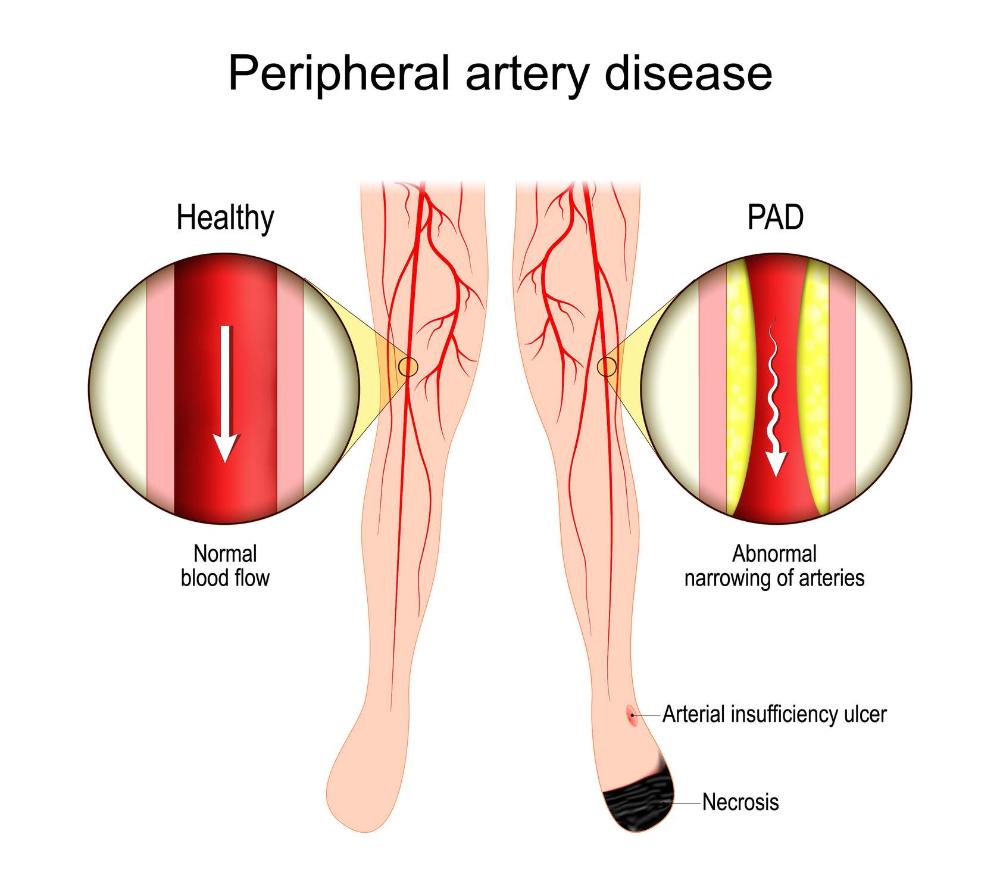 |
front 4 Critical Limb Ischemia | back 4 Is the most severe form of LEAD, where blood flow is so poor that tissues cannot survive (DynaMed, 2022). Most individuals with CLI also have diabetes. Without appropriate revascularization, these patients often face amputation, with the risk increasing as their ABI decreases. |
front 5 Risk Factor for Arterial Disease Modifialble: | back 5
|
front 6 Risk Factor for Arterial Disease | back 6
|
front 7 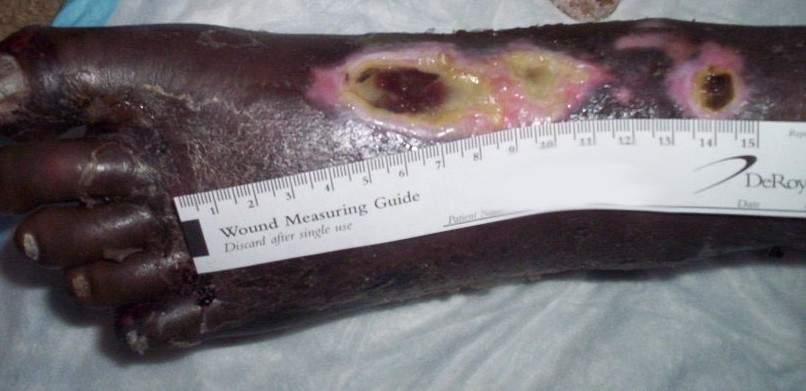 Is the VLU, or ALU? | back 7 ALU Wound Edges They have a well-defined, round, or "punched-out" appearance with sharply demarcated edges. |
front 8 ALU characteristics | back 8 * well-defined, round, or "punched-out" appearance with sharply demarcated edges. Wound bed pale, gray, or yellowish due to the lack of oxygen-rich blood reaching the area. The wound bed may also be dry and necrotic, with necrotic tissue ranging from thick black eschar to slough. * Minimal exudate because of lack of blood supply * Periwound Periwound -This is often thin, shiny, dry, and cool to the touch. |
front 9 What does ABI stand for and mean? | back 9 An ankle-brachial index (ABI) is a painless test that measures blood pressure in your ankles and arms. It shows if you have peripheral artery disease (PAD), or plaque buildup in your leg arteries. Your ABI is the blood pressure in your ankle divided by that in your arm. * Can catch PAD before it gets severe! |
front 10 When is an ABI test needed? | back 10 - if you have PAD symptoms, like leg pain when active. Your PCP may also suggest this test if you don’t have symptoms but are:
|
front 11 Below are preparations for what kind of test/procedure?
Be sure to tell your provider if you’ve had any procedures to improve circulation in your legs. This may affect how they do the test. | back 11 ABI test |
front 12 What is this formula? | back 12 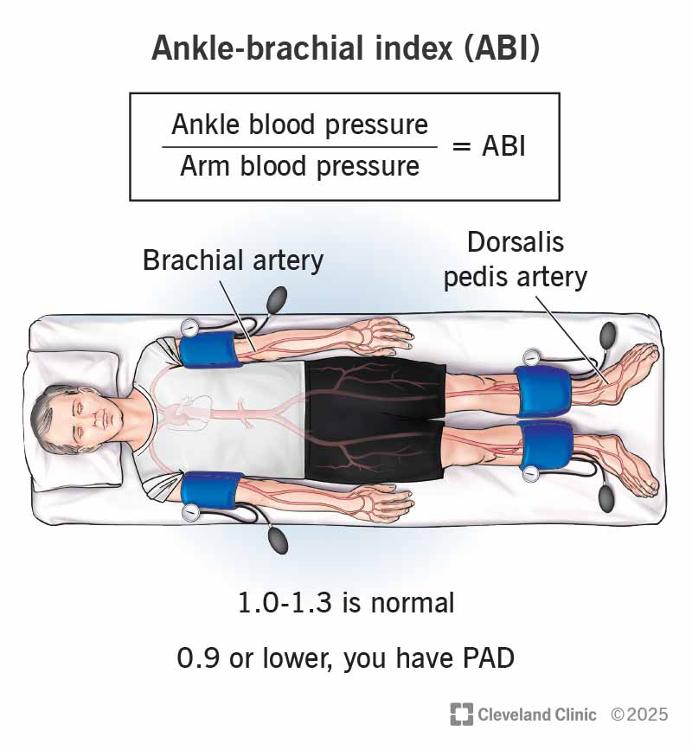 Ankel-Brachial Index |
front 13 ABI: Ranges _._-__._ is normal range _._ or lower, you have PAD | back 13 1.0-1.3 is normal 0.9 |
front 14 What do these ABI results mean?
| back 14 Normal Borderline Mild PAD Moderate PAD Severe PAD |
front 15 ABI Range: Lower that 0.4 means? | back 15 Severe PAD |
front 16 ABI Range: 0.4 to 0.7 means? | back 16 Moderate PAD |
front 17 ABI Range: 1.0 to 1.3 means? | back 17 Normal |
front 18 ABI Range: 0.9 to 1.0 Borderline | back 18 Borderline PAD |
front 19 When your arteries are calcified, an ___ test can't reliably diagnose PAD. Other options Toe- Brachial (big toe) | back 19 ABI |
front 20 Researchers found that people with an ankle-brachial index higher than 1.4 have in increased risk of _____ ____ | back 20 CARDIOVASCULAR DEATH |
front 21 Ulcer Stages: Supervicial Ulcer | back 21 Grade 1 Superficial ulcer w/out subcutaneous tissue involvement |
front 22 Ulcer Stages: DEEP ULCER | back 22 Grade 2 Involves ligament, tendon, joint capsule, or deep fascia but no abscess or osteomyelitis |
front 23 Ulcer Stages: Osteitis | back 23 Grade 3 Deep wound with abscess or osteomyelitis |
front 24 Ulcer Stages: Partial gangrene | back 24 Grade 4 Gangrene affects a portion of the foot |
front 25 Ulcer Stages: Gangrene | back 25 Grade 5 Gangrene affects entire foot |
front 26 Wagner Scale (Meggitt-Wagner) | back 26 The Wagner Scale, also known as the Meggitt-Wagner classification, is a simple grading system used to evaluate the severity of DFUs (DynaMed, 2024b). |
front 27 The Meggitt-Wagner classification, is a simple grading system used to evaluate the severity of DFUs (DynaMed, 2024b). It classifies ulcers based on: | back 27
|
front 28 Which component of the blood is primarily involved in forming the initial phase of a blood clot during wound healing? Red blood cells Platelets White blood cells Plasma proteins | back 28 no data |
front 29 Which type of white blood cell is most abundant and acts as the first responder to bacterial infection? Lymphocytes Neutrophils Eosinophils Monocytes | back 29 no data |
front 30 What role does melanin play in protecting the skin from ultraviolet radiation? Acts as a physical barrier by scattering and absorbing UV rays to decrease penetration Increases transepidermal water loss to cool the skin Produces antimicrobial peptides to defend against sun-induced pathogens Stimulates the production of sweat to enhance evaporation cooling | back 30 no data |
front 31 What is the average pH of the acid mantle of an adult’s skin? 5.5 0 to 4.5 7.1 to 14 7.0 | back 31 no data |
front 32 Which layer of the epidermis is responsible for producing new cells through mitosis? Stratum Lucidum Stratum Spinosum Stratum Germinativum Stratum Granulosum | back 32 no data |
front 33 Which choice BEST describes the function of tendons? Attaches bone to bone Connects muscle to bone Provides a surface for bones to glide over Surround muscles to reduce friction | back 33 no data |
front 34 What BEST describes the characteristics of healthy skeletal muscle? White and shiny in appearance Pearly white ribbon-like appearance Pink to dark red in color with striation Pale pink without striation | back 34 no data |
front 35 What is the primary composition of fascia? Adipose tissue Collagen Keratin Muscle tissue | back 35 no data |
front 36 What protein gives red blood cells the ability to transport oxygen? Fibroblasts Hemoglobin Macrophage Mast Cells | back 36 no data |
front 37 What BEST describes the responsibilities of collagen and elastin in the skin? Transporting nutrients and waste products through the dermis Killing parasites and helping with allergic responses Protecting skin integrity and preventing water loss Providing tensile strength and recoil to the skin | back 37 no data |
front 38 What best describes what “Skin of Color” refers to? A specific skin type that is only found in tropical regions Skin that tans easily and rarely burns under sun exposure The broad range of skin types and complexions of individuals not of White descent Skin that is overly sensitive to ultraviolet radiation and prone to sunburn | back 38 no data |
front 39 Which of the following best describes a systematic head-to-toe skin assessment? Examining only the areas around and under medical devices Inspecting and palpating the skin, focusing on bony prominences and skin folds Using only visual inspection to assess the skin Checking the patient’s clothing for signs of moisture | back 39 no data |