Microbiology: Micro Ch 19 Infectious Diseases Manifesting in the Skin and Eyes Flashcards


Set Details Share
created 1 day ago by akatelynnoyes_04
book cover
Microbiology
Chapter 19
Subjects:
bmd 330, science, life sciences, biology, microbiology
show moreless
Page to share:
Embed this setcancel
COPY
code changes based on your size selection
Size:
X
Show:

1

What is the integument formed by?

skin, hair, nails, sweat and oil glands

2

What are the layers of the skin?

Epidermis, dermis, and hypodermis

3

What is the epidermis (stratum corneum) and what defenses does it provide?

  • A thick layer of epithelial cells, packed w/ keratin giving the cells the ability to withstand damage and abrasion.
  • Lipids are packed b/t cells giving them water-repelling properties
  • It is replaced entirely every 25-45 days
  • It contains a basal layer which is the source for all the cells making up the epidermis

4

What is the dermis and what defenses does it provide?

  • Composed of connective tissue w/ a rich matrix of fibroblast cells and fibers like collagen. It harbors a dense network of nerves, blood vessels, and lymphatic vessels w/ damage causing the dermis to bleed.
  • Blisters form as a result of friction trauma or burns, leading the dermis and epidermis to separate.
  • Defenses include follicles, sweat gland, sebum, sweat, and lysozyme
  • Antimicrobial peptides are also a defense BUT they are in both the dermis and epidermis

5

The defenses of the skin include:

  • keratinized surface: creates water resistant barrier
  • sloughing: continuous shedding of dead skin cells
  • follicles: root of hairs containing sebaceous (oil) and scent glands
  • sweat glands: separate from follicles, producing sweat w/ low pH and high salt concentration inhibiting microbes
  • antimicrobial peptides: positive charged chemicals disrupt negatively charged bacteria membranes
  • sebum: secreted by sebaceous gland creating low pH, high lipid concentration, and toxic by-product via fatty acids breakdown
  • lysozyme: enzyme in sweat, tears and saliva that breaks down peptidoglycan

6

Which microbes make up the normal biota?

bacteria, viruses, archaea, fungi, and protists/protozoa

7

Bulla

large (wide) vesicle

8

Cyst

raised lesion that is encapsulated and usually solid or semisolid

9

Macule

...

10

Maculopapular rash

...

11

Papule

...

12

Petechiae

...

13

Plaque

...

14

Purpura

...

15

Pustule

...

16

Scale

...

17

Vesicle

...

18

Staphylococcus aureus

  • gram-positive coccus forming grape clusters, nonmotile and sturdiest of all non-endospore forming to withstand high salt, extremes in pH and high temps and viable after months of air drying.

19

MRSA (Methicillin-resistant Staphylococcus aureus) Skin and soft tissue infection
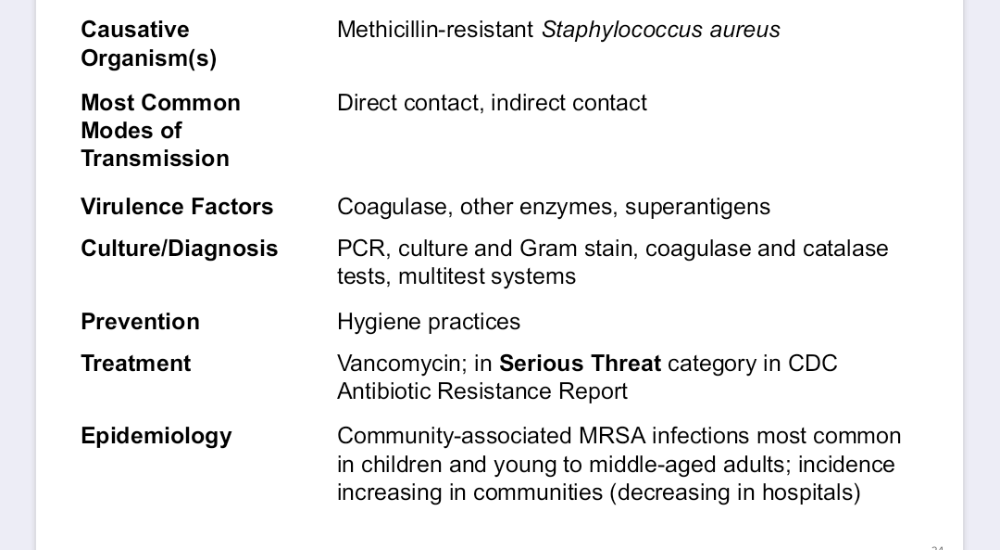
  • Causative organism:
  • Common modes of transmission:
  • Virulence factors:
  • Culture/Diagnosis:
  • Symptoms:

20

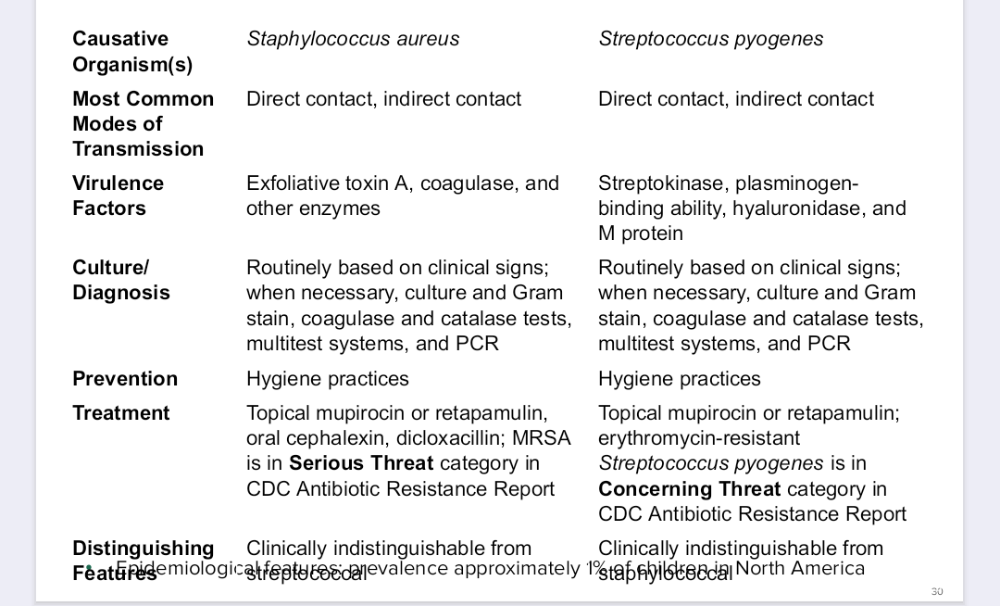
Impetigo (Staphylococcus aureus)

  • Causative organism:
  • Common modes of transmission:
  • Virulence factors:
  • Culture/Diagnosis:
  • Symptoms:

21

Impetigo (Streptococcus pyogenes)

  • Causative organism:
  • Common modes of transmission:
  • Virulence factors:
  • Culture/Diagnosis:
  • Symptoms:

22

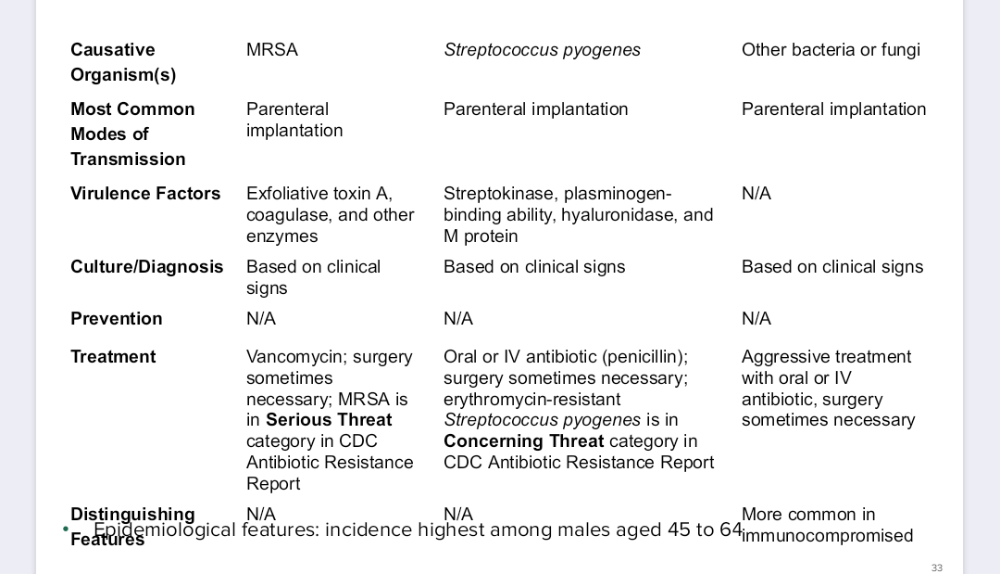
Cellulitis (MRSA)

  • Causative organism:
  • Common modes of transmission:
  • Virulence factors:
  • Culture/Diagnosis:
  • Symptoms:

23

Cellulitis (Streptococcus pyogenes)

  • Causative organism:
  • Common modes of transmission:
  • Virulence factors:
  • Culture/Diagnosis:
  • Symptoms:

24

Cellulitis (other bacteria or fungi)

  • Causative organism:
  • Common modes of transmission:
  • Virulence factors:
  • Culture/Diagnosis:
  • Symptoms:

25

SSSS (Staphylococcal Scalded Skin Syndrome)
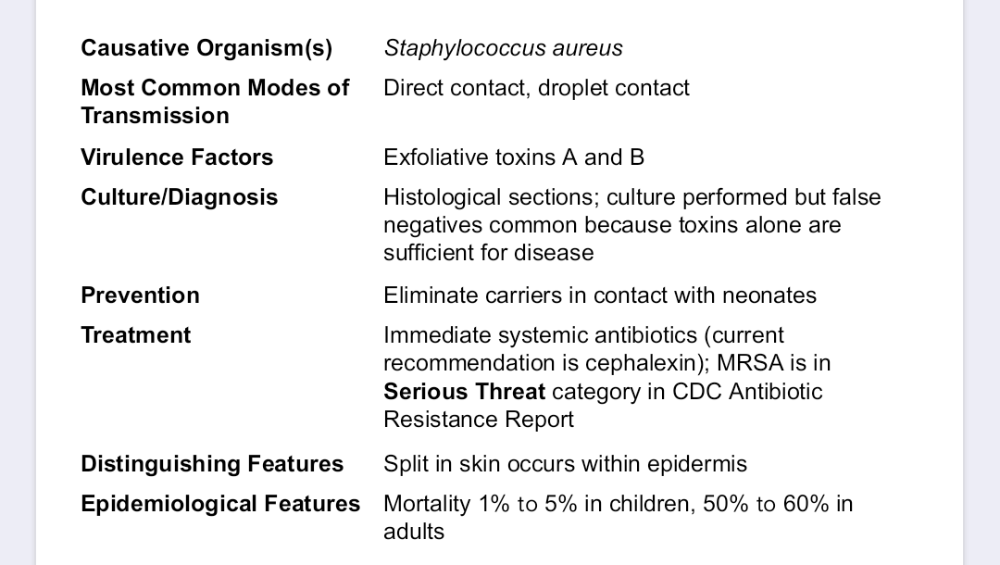
  • Causative organism:
  • Common modes of transmission:
  • Virulence factors:
  • Culture/Diagnosis:
  • Symptoms:

26

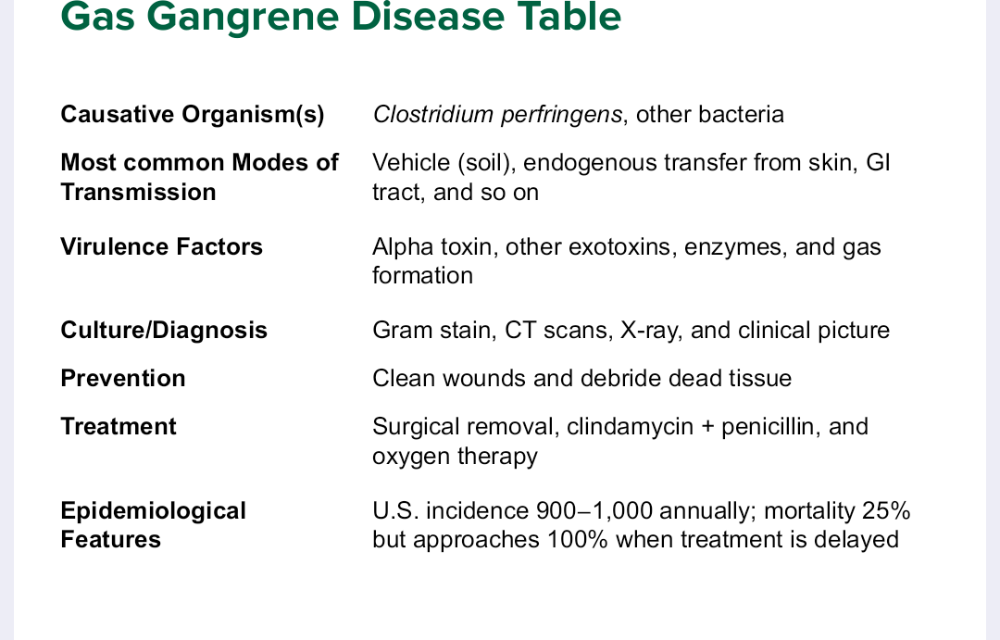
Gas Gangrene

  • Causative organism:
  • Common modes of transmission:
  • Virulence factors:
  • Culture/Diagnosis:
  • Symptoms:

27

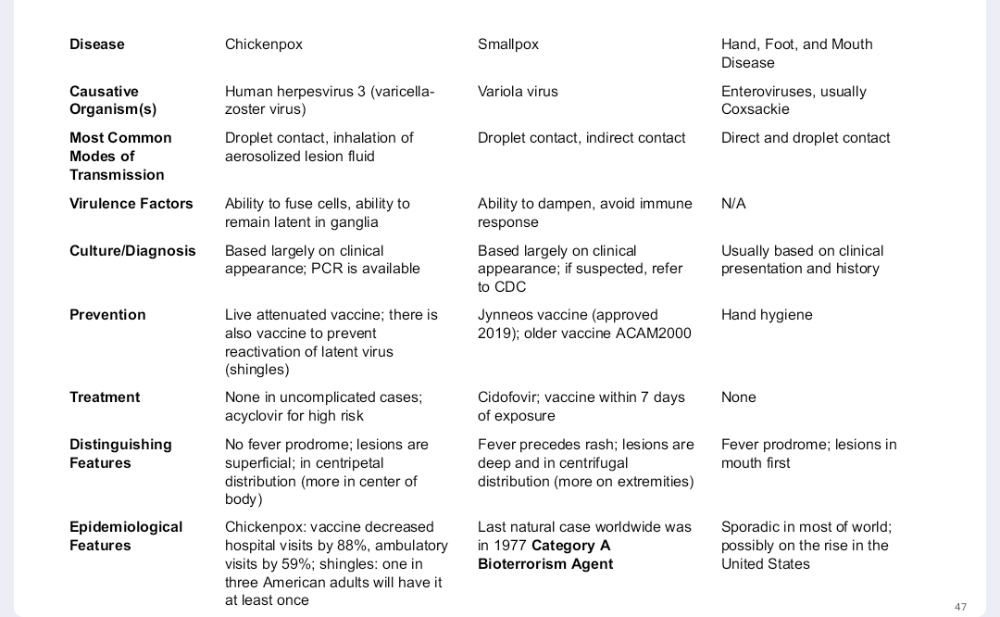
Chickenpox

  • Causative organism:
  • Common modes of transmission:
  • Virulence factors:
  • Culture/Diagnosis:
  • Symptoms:

28

Smallpox

  • Causative organism:
  • Common modes of transmission:
  • Virulence factors:
  • Culture/Diagnosis:
  • Symptoms:

29

Hand, Foot and Mouth Disease

  • Causative organism:
  • Common modes of transmission:
  • Virulence factors:
  • Culture/Diagnosis:
  • Symptoms:

30

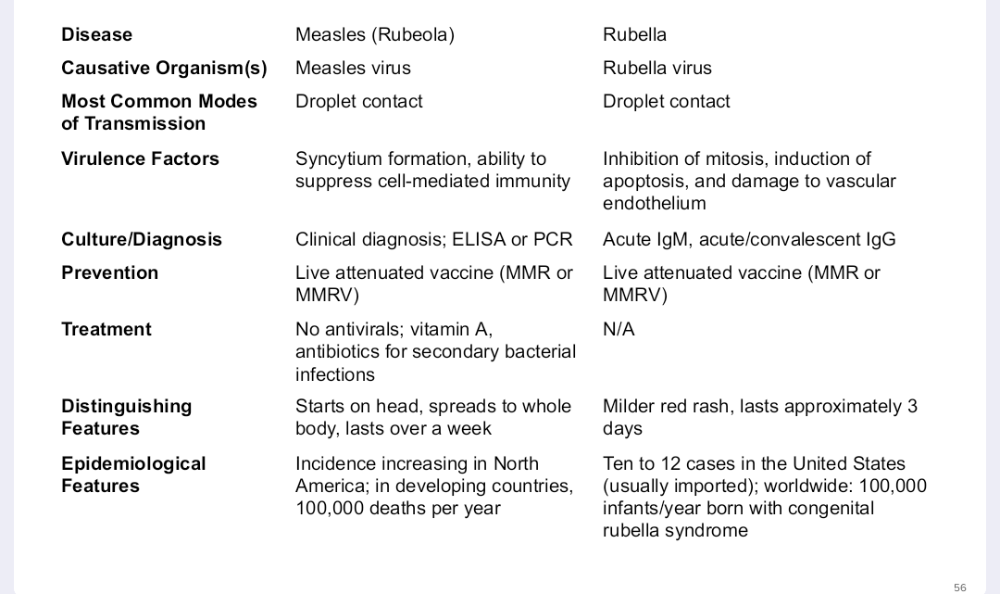
Measles (Rubeola)

  • Causative organism:
  • Common modes of transmission:
  • Virulence factors:
  • Culture/Diagnosis:
  • Symptoms:

31

Rubella

  • Causative organism:
  • Common modes of transmission:
  • Virulence factors:
  • Culture/Diagnosis:
  • Symptoms:

32

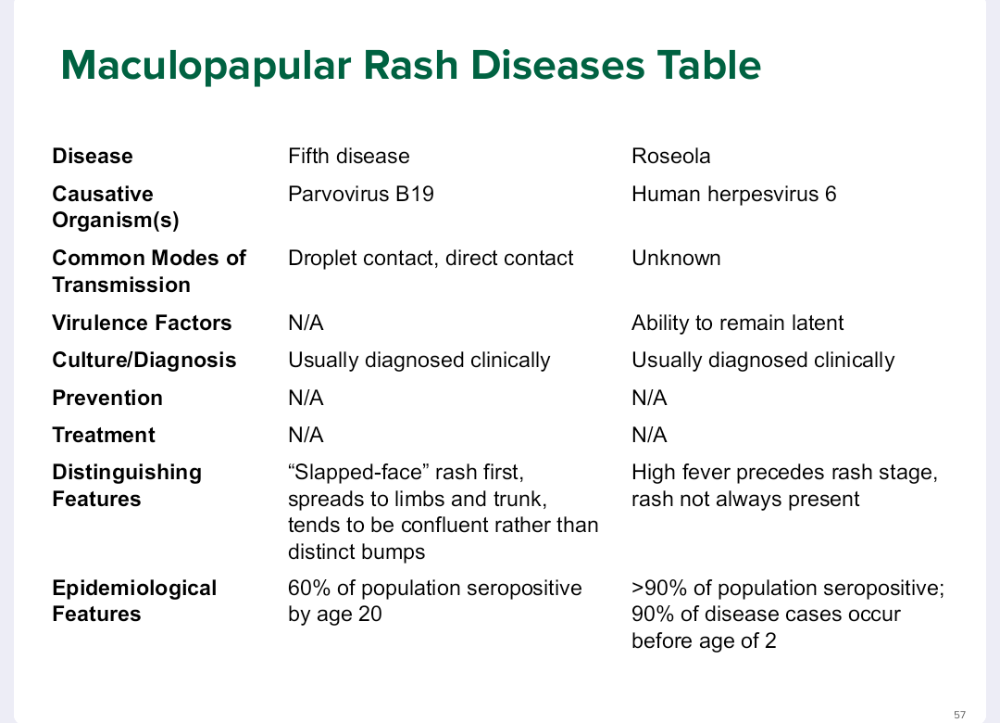
Fifth disease

  • Causative organism:
  • Common modes of transmission:
  • Virulence factors:
  • Culture/Diagnosis:
  • Symptoms:

33

Roseola

  • Causative organism:
  • Common modes of transmission:
  • Virulence factors:
  • Culture/Diagnosis:
  • Symptoms:

34

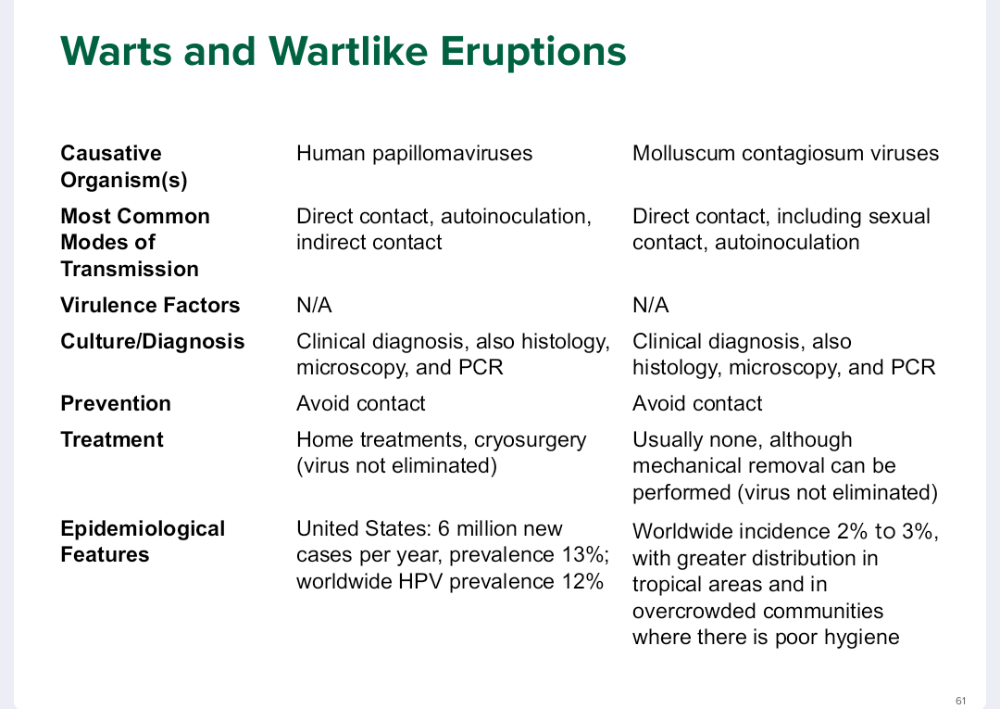
Warts and Wartlike Eruptions (human papillomaviruses)

  • Causative organism:
  • Common modes of transmission:
  • Virulence factors:
  • Culture/Diagnosis:
  • Symptoms:

35

Warts and Wartlike Eruptions (Molluscum contagiosum viruses)

  • Causative organism:
  • Common modes of transmission:
  • Virulence factors:
  • Culture/Diagnosis:
  • Symptoms:

36

...

  • Causative organism:
  • Common modes of transmission:
  • Virulence factors:
  • Culture/Diagnosis:
  • Symptoms: