Print Options

Card layout: ?

← Back to notecard set|Easy Notecards home page

Instructions for Side by Side Printing
  1. Print the notecards
  2. Fold each page in half along the solid vertical line
  3. Cut out the notecards by cutting along each horizontal dotted line
  4. Optional: Glue, tape or staple the ends of each notecard together
  1. Verify Front of pages is selected for Viewing and print the front of the notecards
  2. Select Back of pages for Viewing and print the back of the notecards
    NOTE: Since the back of the pages are printed in reverse order (last page is printed first), keep the pages in the same order as they were after Step 1. Also, be sure to feed the pages in the same direction as you did in Step 1.
  3. Cut out the notecards by cutting along each horizontal and vertical dotted line
To print: Ctrl+PPrint as a list

36 notecards = 9 pages (4 cards per page)

Viewing:

Micro Ch 19 Infectious Diseases Manifesting in the Skin and Eyes

front 1

What is the integument formed by?

back 1

skin, hair, nails, sweat and oil glands

front 2

What are the layers of the skin?

back 2

Epidermis, dermis, and hypodermis

front 3

What is the epidermis (stratum corneum) and what defenses does it provide?

back 3

  • A thick layer of epithelial cells, packed w/ keratin giving the cells the ability to withstand damage and abrasion.
  • Lipids are packed b/t cells giving them water-repelling properties
  • It is replaced entirely every 25-45 days
  • It contains a basal layer which is the source for all the cells making up the epidermis

front 4

What is the dermis and what defenses does it provide?

back 4

  • Composed of connective tissue w/ a rich matrix of fibroblast cells and fibers like collagen. It harbors a dense network of nerves, blood vessels, and lymphatic vessels w/ damage causing the dermis to bleed.
  • Blisters form as a result of friction trauma or burns, leading the dermis and epidermis to separate.
  • Defenses include follicles, sweat gland, sebum, sweat, and lysozyme
  • Antimicrobial peptides are also a defense BUT they are in both the dermis and epidermis

front 5

The defenses of the skin include:

back 5

  • keratinized surface: creates water resistant barrier
  • sloughing: continuous shedding of dead skin cells
  • follicles: root of hairs containing sebaceous (oil) and scent glands
  • sweat glands: separate from follicles, producing sweat w/ low pH and high salt concentration inhibiting microbes
  • antimicrobial peptides: positive charged chemicals disrupt negatively charged bacteria membranes
  • sebum: secreted by sebaceous gland creating low pH, high lipid concentration, and toxic by-product via fatty acids breakdown
  • lysozyme: enzyme in sweat, tears and saliva that breaks down peptidoglycan

front 6

Which microbes make up the normal biota?

back 6

bacteria, viruses, archaea, fungi, and protists/protozoa

front 7

Bulla

back 7

large (wide) vesicle

front 8

Cyst

back 8

raised lesion that is encapsulated and usually solid or semisolid

front 9

Macule

back 9

no data

front 10

Maculopapular rash

back 10

no data

front 11

Papule

back 11

no data

front 12

Petechiae

back 12

no data

front 13

Plaque

back 13

no data

front 14

Purpura

back 14

no data

front 15

Pustule

back 15

no data

front 16

Scale

back 16

no data

front 17

Vesicle

back 17

no data

front 18

Staphylococcus aureus

back 18

  • gram-positive coccus forming grape clusters, nonmotile and sturdiest of all non-endospore forming to withstand high salt, extremes in pH and high temps and viable after months of air drying.

front 19

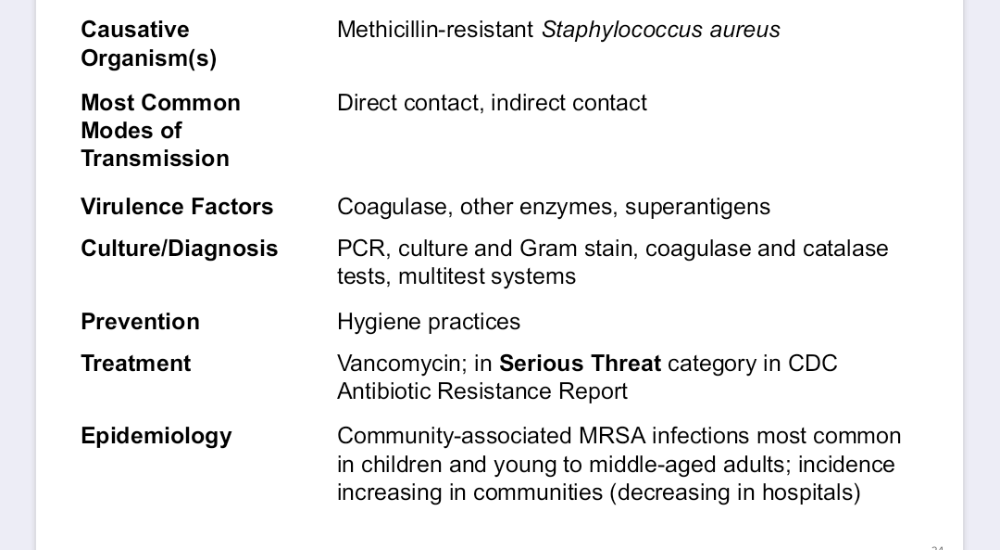
MRSA (Methicillin-resistant Staphylococcus aureus) Skin and soft tissue infection

back 19

  • Causative organism:
  • Common modes of transmission:
  • Virulence factors:
  • Culture/Diagnosis:
  • Symptoms:

front 20

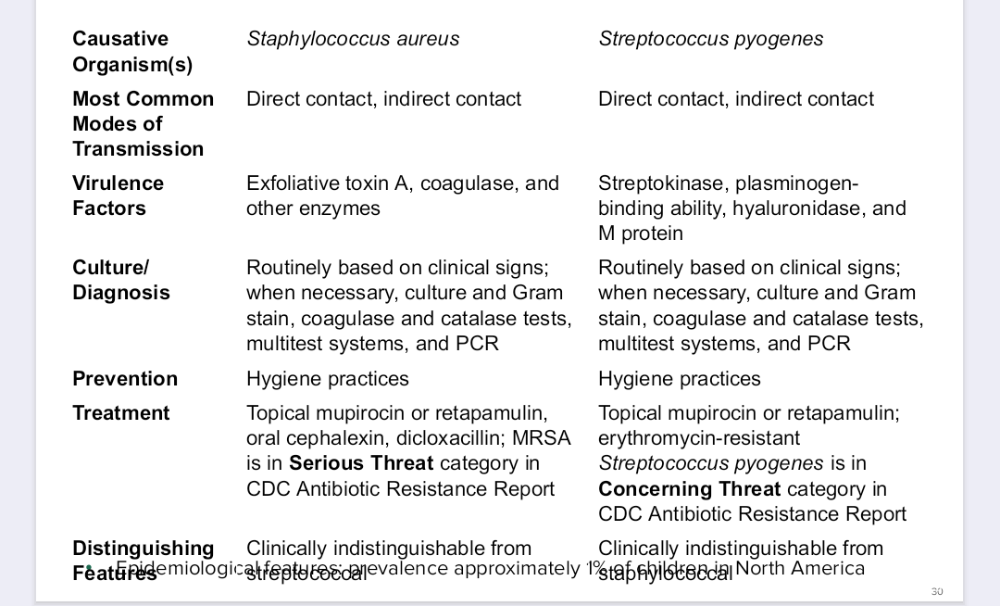
Impetigo (Staphylococcus aureus)

back 20

  • Causative organism:
  • Common modes of transmission:
  • Virulence factors:
  • Culture/Diagnosis:
  • Symptoms:

front 21

Impetigo (Streptococcus pyogenes)

back 21

  • Causative organism:
  • Common modes of transmission:
  • Virulence factors:
  • Culture/Diagnosis:
  • Symptoms:

front 22

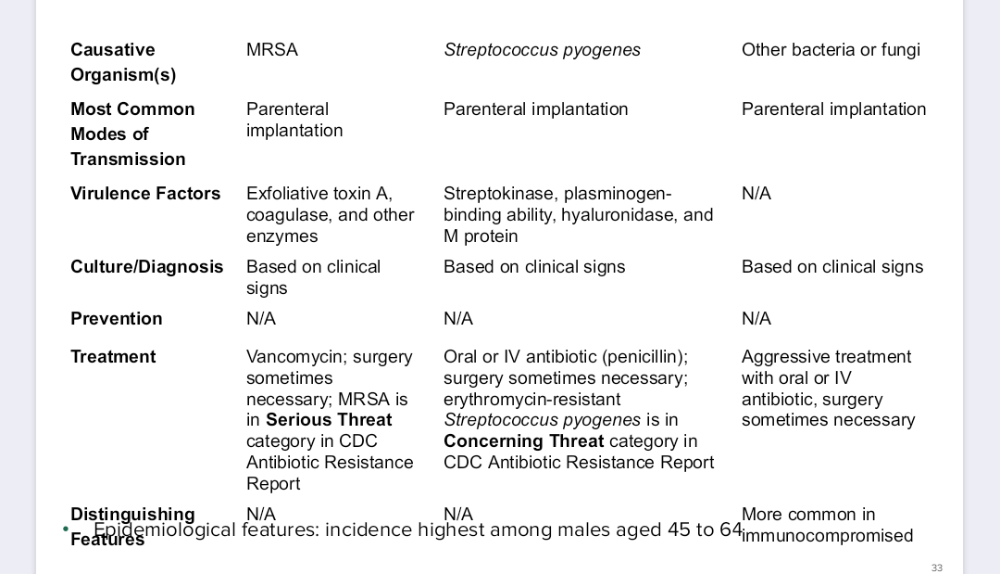
Cellulitis (MRSA)

back 22

  • Causative organism:
  • Common modes of transmission:
  • Virulence factors:
  • Culture/Diagnosis:
  • Symptoms:

front 23

Cellulitis (Streptococcus pyogenes)

back 23

  • Causative organism:
  • Common modes of transmission:
  • Virulence factors:
  • Culture/Diagnosis:
  • Symptoms:

front 24

Cellulitis (other bacteria or fungi)

back 24

  • Causative organism:
  • Common modes of transmission:
  • Virulence factors:
  • Culture/Diagnosis:
  • Symptoms:

front 25

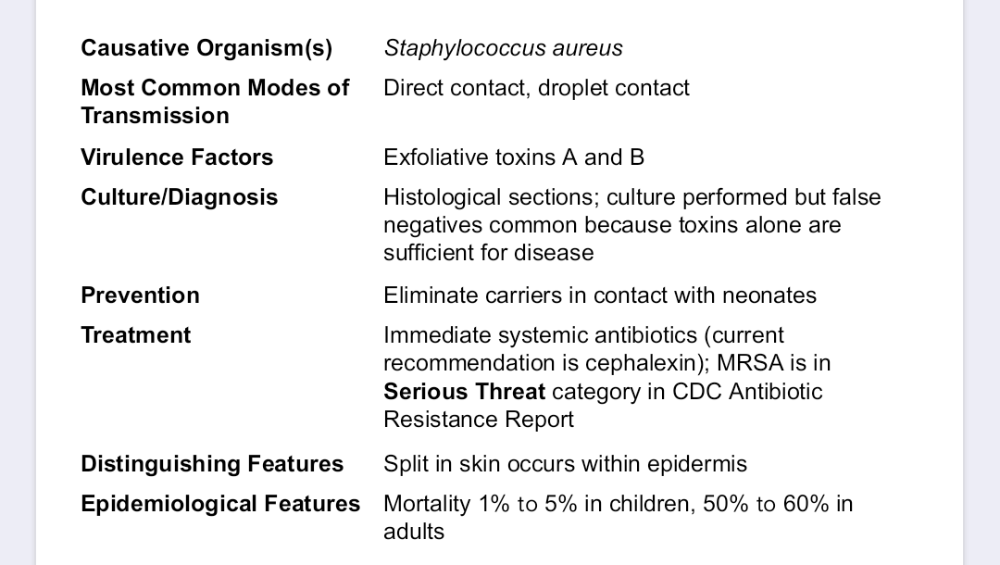
SSSS (Staphylococcal Scalded Skin Syndrome)

back 25

  • Causative organism:
  • Common modes of transmission:
  • Virulence factors:
  • Culture/Diagnosis:
  • Symptoms:

front 26

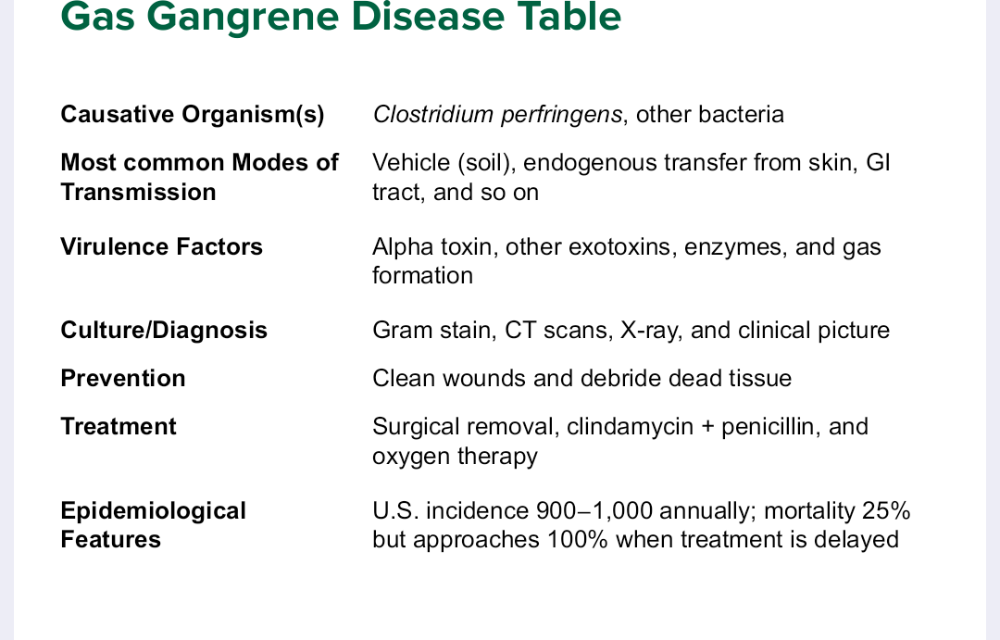
Gas Gangrene

back 26

  • Causative organism:
  • Common modes of transmission:
  • Virulence factors:
  • Culture/Diagnosis:
  • Symptoms:

front 27

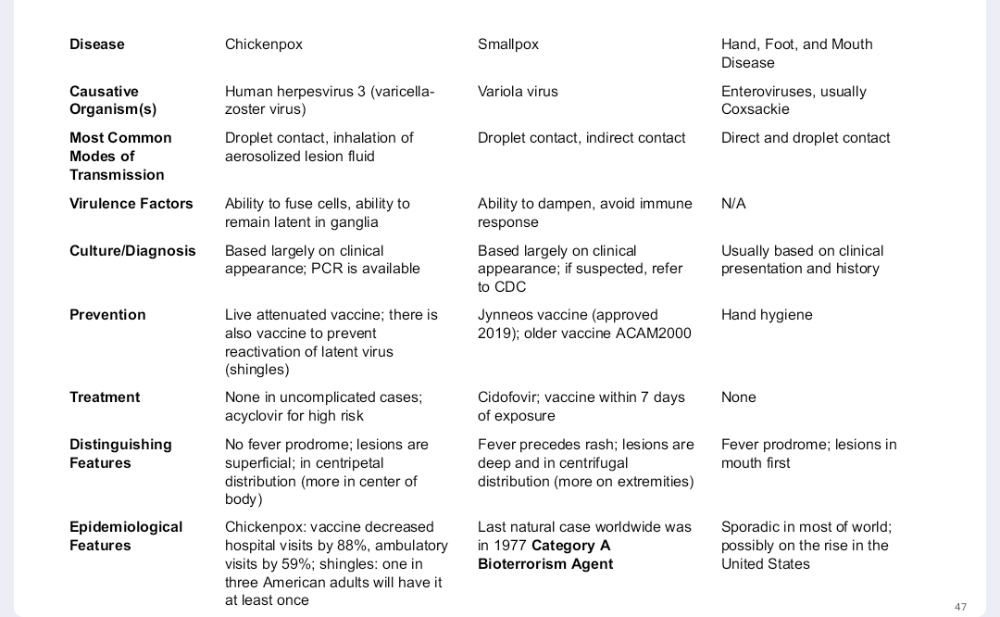
Chickenpox

back 27

  • Causative organism:
  • Common modes of transmission:
  • Virulence factors:
  • Culture/Diagnosis:
  • Symptoms:

front 28

Smallpox

back 28

  • Causative organism:
  • Common modes of transmission:
  • Virulence factors:
  • Culture/Diagnosis:
  • Symptoms:

front 29

Hand, Foot and Mouth Disease

back 29

  • Causative organism:
  • Common modes of transmission:
  • Virulence factors:
  • Culture/Diagnosis:
  • Symptoms:

front 30

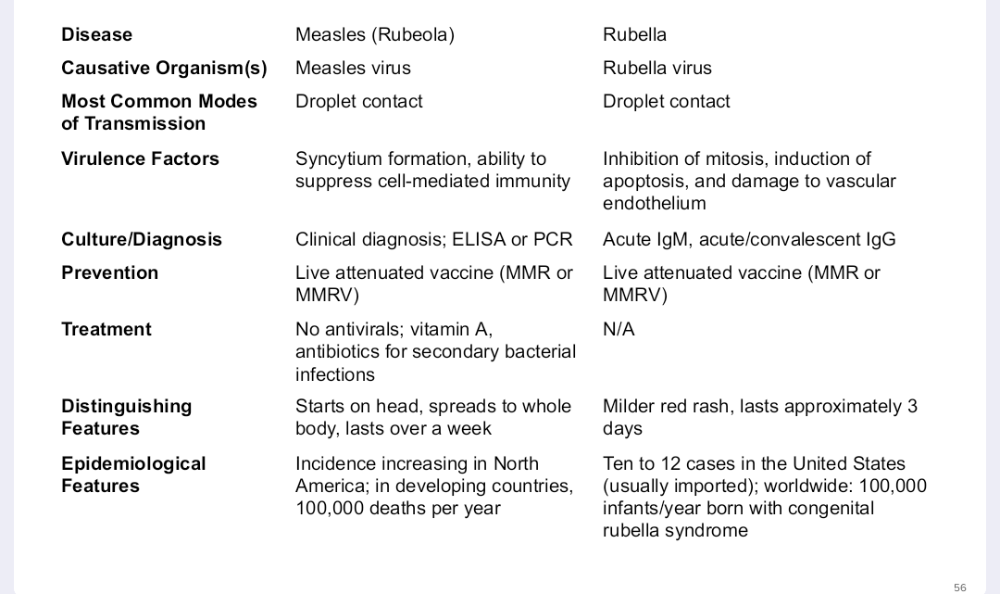
Measles (Rubeola)

back 30

  • Causative organism:
  • Common modes of transmission:
  • Virulence factors:
  • Culture/Diagnosis:
  • Symptoms:

front 31

Rubella

back 31

  • Causative organism:
  • Common modes of transmission:
  • Virulence factors:
  • Culture/Diagnosis:
  • Symptoms:

front 32

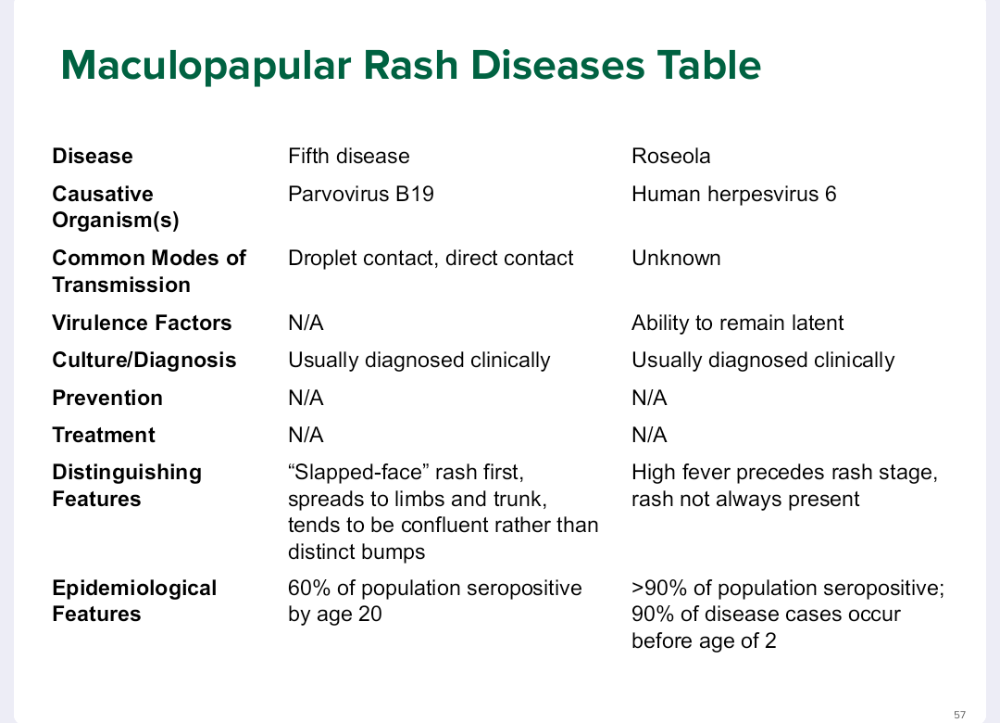
Fifth disease

back 32

  • Causative organism:
  • Common modes of transmission:
  • Virulence factors:
  • Culture/Diagnosis:
  • Symptoms:

front 33

Roseola

back 33

  • Causative organism:
  • Common modes of transmission:
  • Virulence factors:
  • Culture/Diagnosis:
  • Symptoms:

front 34

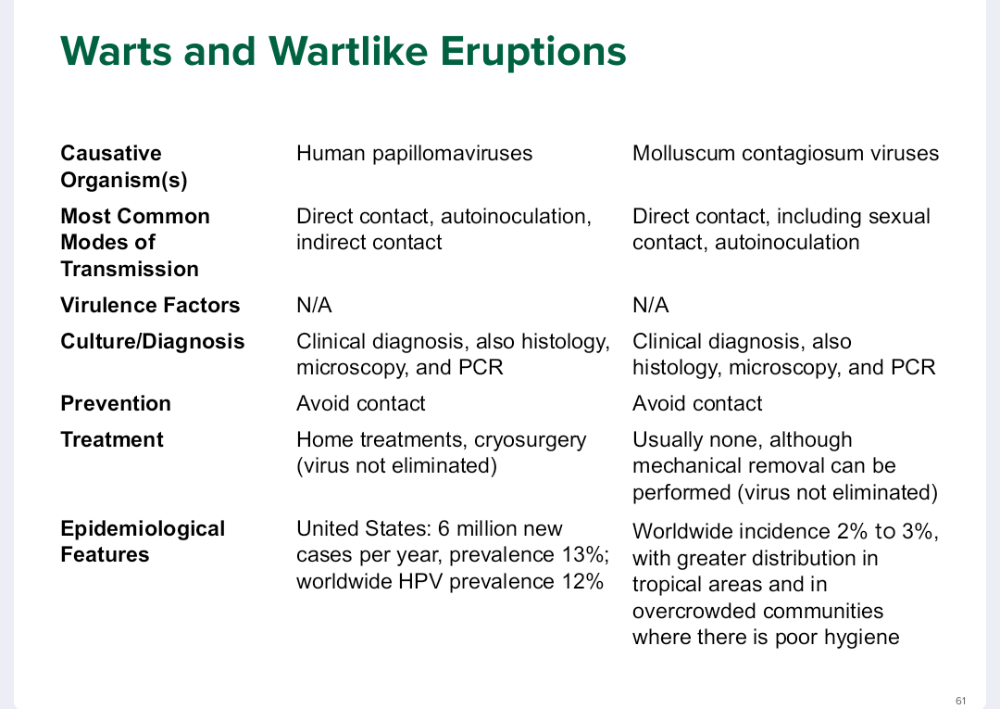
Warts and Wartlike Eruptions (human papillomaviruses)

back 34

  • Causative organism:
  • Common modes of transmission:
  • Virulence factors:
  • Culture/Diagnosis:
  • Symptoms:

front 35

Warts and Wartlike Eruptions (Molluscum contagiosum viruses)

back 35

  • Causative organism:
  • Common modes of transmission:
  • Virulence factors:
  • Culture/Diagnosis:
  • Symptoms:

front 36

no data

back 36

  • Causative organism:
  • Common modes of transmission:
  • Virulence factors:
  • Culture/Diagnosis:
  • Symptoms: