COVID-19 disease table
SARS-CoV-2
COVID-19 causative agent
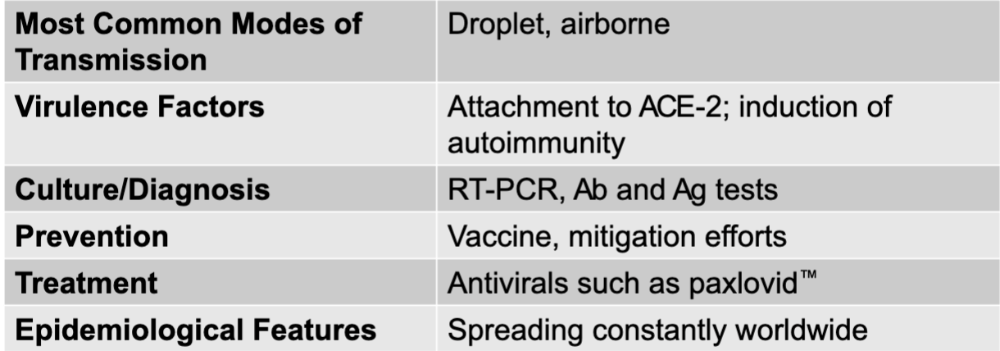
droplet, airborne
COVD-19 mode of transmission
attachment to ACE-2; induction of autoimmunity
COVID-19 virulence factors
RT-PCR, Ab and Ag tests
COVID-19 culture/diagnosis
vaccine, mitigation efforts
COVID-19 prevention
antivirals such as paxlovid
COVID-19 treatment
spreading constantly worldwide
COVID-19 epidemiological features
fever, anemia, abnormal heartbeat, symptoms of heart attack, shortness of breath, and chills
abdominal or side pain, Janeway lesions, and Osler's nodes
signs and symptoms of acute endocarditis
similar to symptoms of acute endocarditis
develop more slowly and are less pronounced
enlarged spleen, clubbed fingers, and toes
signs and symptoms of subacute endocarditis
acute endocarditis disease table
subacute endocarditis disease table
staphylococcus aureus, streptococcus pyogenes, S. pneumoniae, enterococcus, pseudomonas aeruginosa
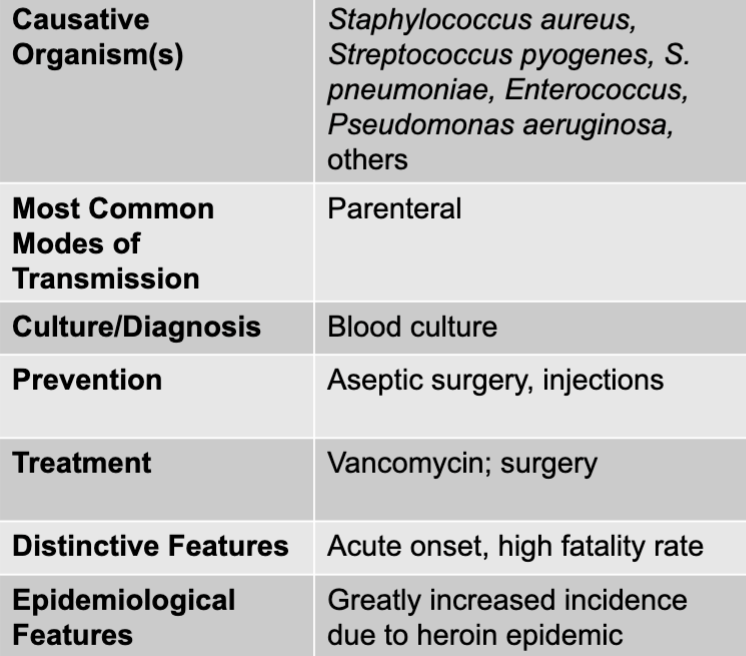
acute endocarditis causative agent
parenteral
acute endocarditis mode of transmission
aseptic surgery, injections
acute endocarditis prevention
vancomycin; surgery
acute endocarditis treatment
acute onset, high fatality rate
acute endocarditis disntictive features
greatly increased incidence due to heroin epidemic
acute endocarditis epidemiological features
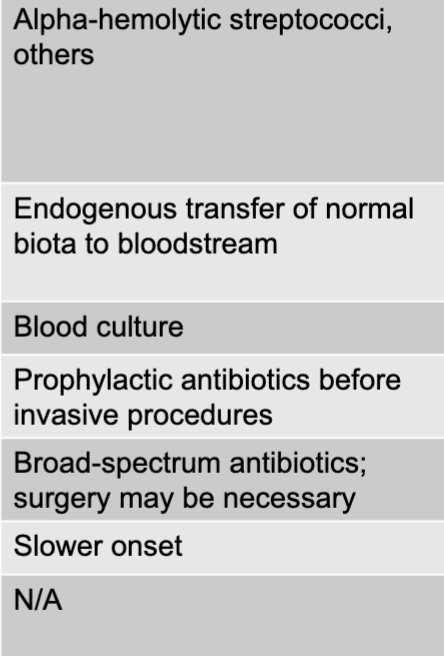
alpha-hemolytic streptococci, others
subacute endocarditis causative agent
endogenous transfer of normal biota to bloodstream
subacute endocarditis mode of transmission
blood culture
subacute endocarditis culture/diagnosis
prophylactic antibiotics before invasive procedures
subacute endocarditis prevention
broad-spectrum antibiotics surgery may be necessary
subacute endocarditis treatment
slower onset
subacute endocarditis distinctive features
fever, altered mental state, shaking chills, and gastrointestinal symptoms
increased breathing rate, respiratory alkalosis, and low blood pressure resulting in loss of fluid from the vasculature
sepsis signs and symptoms
sepsis disease
bacteria or fungi
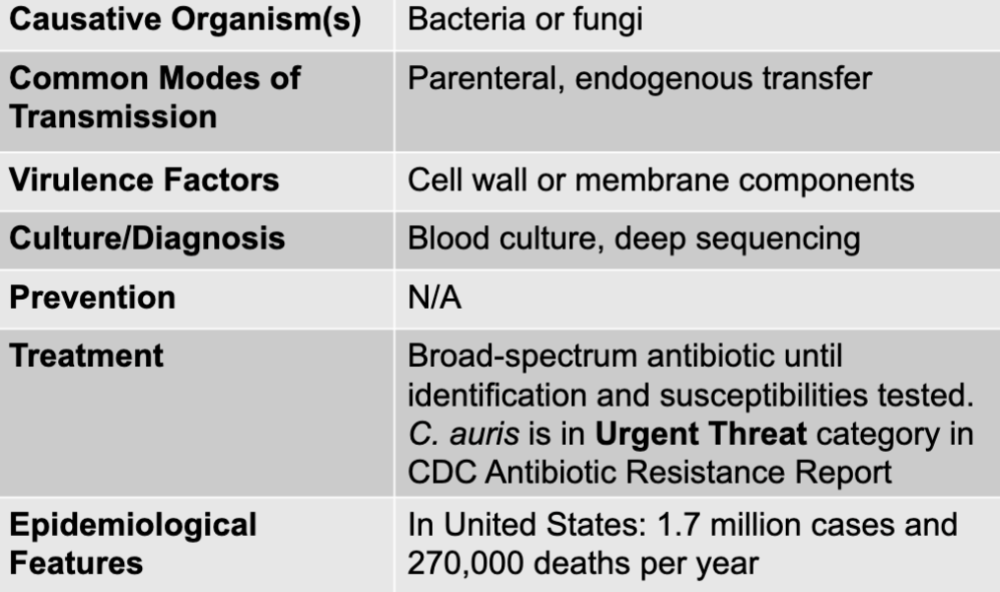
sepsis causative agent
parenteral, endogenous transfer
sepsis mode of transmission
cell wall or membrane components
sepsis virulence factors
blood culture, deep sequencing
sepsis culture, deep sequencing
broad-spectrum antibiotic until identification and susceptibilities tested. C. auris is in urgent threat category in CDC antiobiotic resistance report
sepsis treatment
in united states: 1.7 million cases and 270,000 deaths per year
sepsis epidemiological features
plague disease table
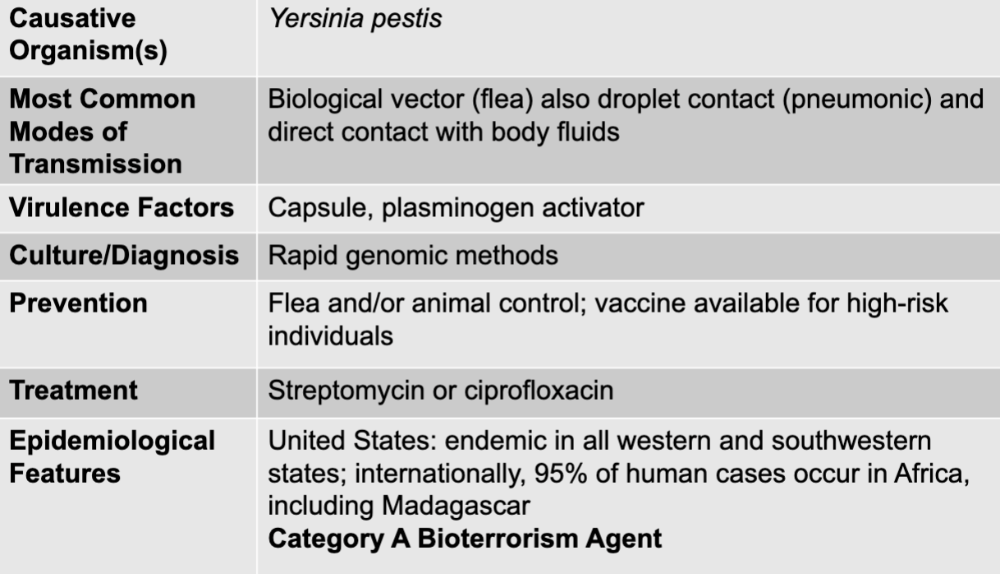
yersinia pestis
plague causative agent
biological vector (flea) also droplet contact (pneumonic) and direct contact with body fluids
plague mode of transmission
capsule, plasminogen activator
plague virulence factors
rapid genomic methods
plague culture/diagnosis
flea and/or animal control; vaccine available for high-risk individuals
plague prevention
streptomycin or ciprofloxacin
plague treatment
united states: endemic in all western and southwestern states; internationally, 95% of human cases occur in africa, including madagascar
category A bioterrorism agent
plague epidemiological features
tularemia disease table
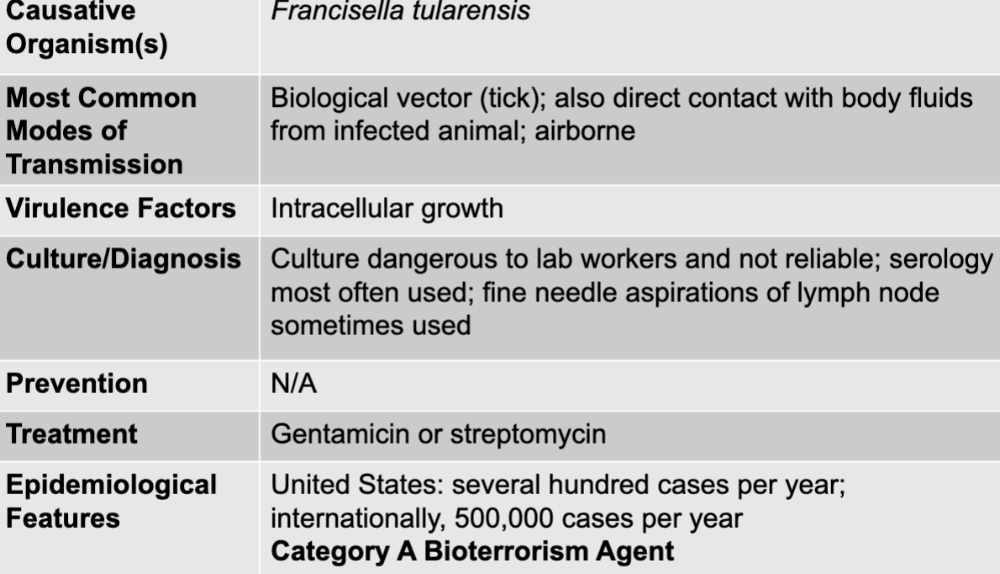
francisella tularensis
tularemia causative agent
biological vector (tick); also direct contact with body fluids from infected animal; airborne
tularemia mode of transmission
intracellular growth
tularemia virulence factors
culture dangerous to lab workers and not reliable; serology most often used; fine needle aspirations of lymph node sometimes used
tularemia culture/diagnosis
gentamicin or streptomycin
tularemia treatment
united states: several hundred cases per year; internationally 500,000 cases per year category A bioterrorism agent
tularemia epidemiological features
lyme disease table
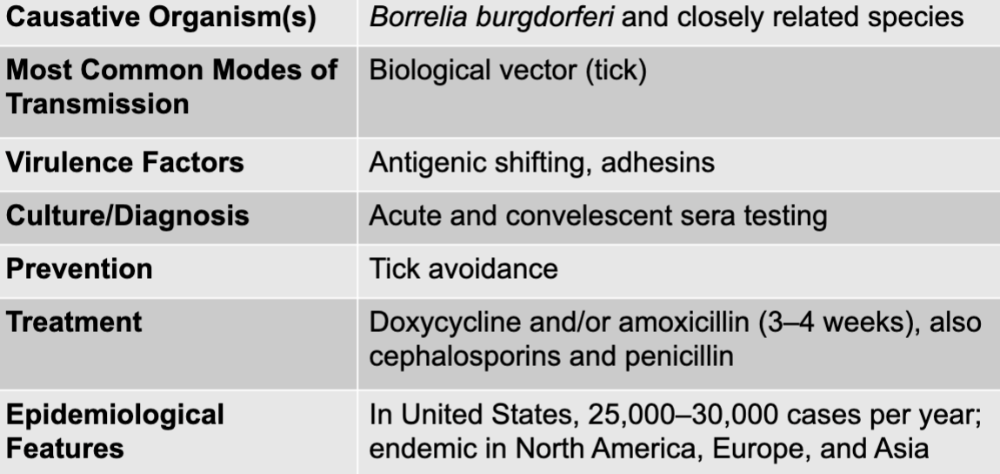
borrelia burgdorferi and closely related species
lyme disease causative agent
biological vector (tick)
lyme disease mode of transmission
antigenic shifting, adhesins
lyme disease virulence factors
acute and convalescent sera testing
lyme disease culture/diagnosis
doxycycline and/or amoxicillin (3-4 weeks), also cephalosporins and penicillin
lyme disease treatment
tick avoidance
lyme disease prevention
in US, 25,000-30,000 cases per year; endemic in north america, europe, and asia
lyme disease epidemiological features
mono(nucleosis) disease table
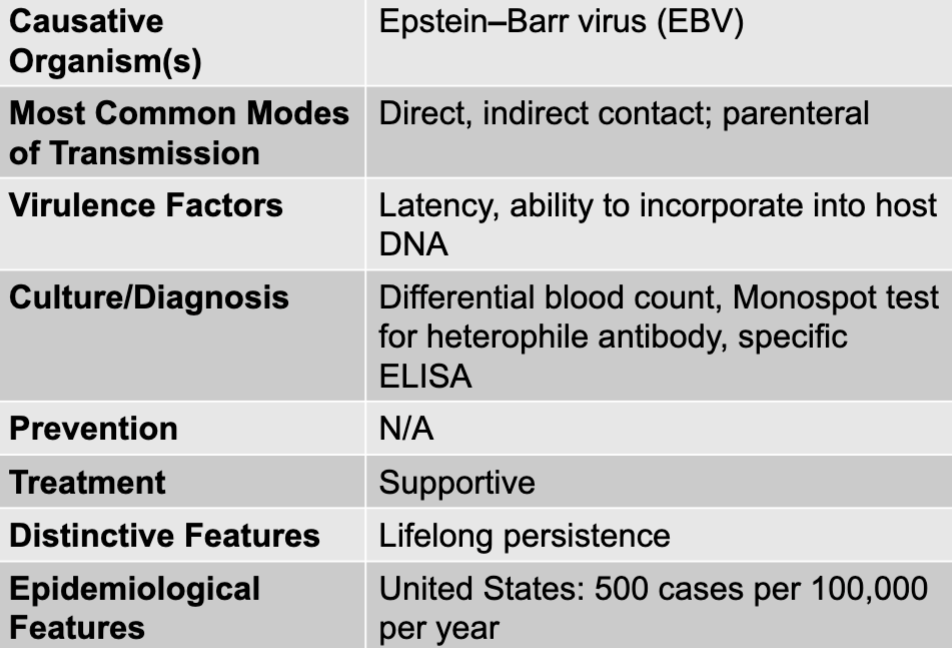
epstein-barr virus
mono causative agent
direct, indirect contact; parenteral
mono mode of transmission
latency, ability to incorporate into host DNA
mono virulence factors
differential blood count, monospot test for heterophile antibody, specific ELISA
mono culture/diagnosis
supportive
mono treatment
lifelong persistence
mono distinctive features
united states: 500 cases per 100,000 per year
mono epidemiological features
anthrax disease table
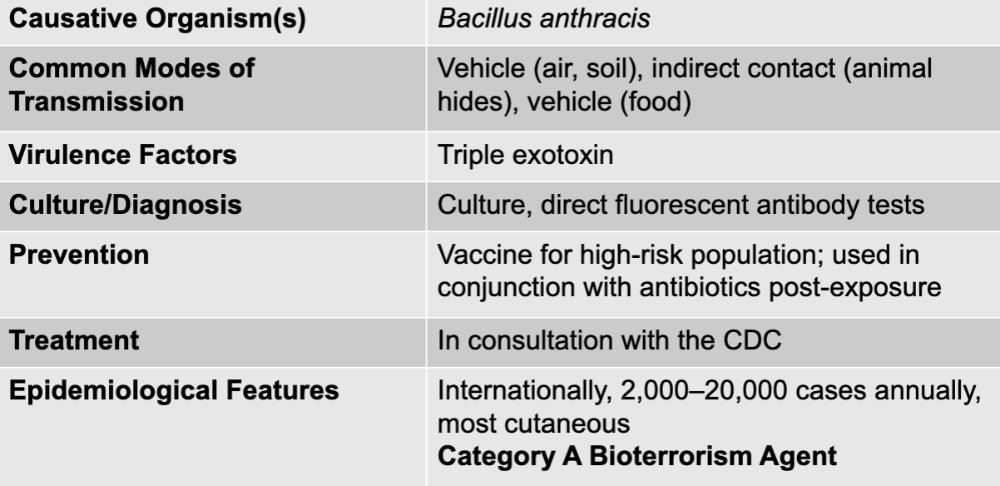
bacillus anthracis
anthrax causative agent
vehicle (air, soil), indirect contact (animal hides), vehicle (food)
anthrax mode of transmission
triple exotoxin
anthrax virulence factors
culture, direct fluorescent antibody tests
anthrax culture/diagnosis
vaccine for high-risk population; used in conjugation with antibiotics post-expsoure
anthrax prevention
in consultation with the CDC
anthrax treatment
internationally, 2,000-20,000 cases annually, most cutaneous
category A bioterrorism agent
anthrax epidemiological features
yellow fever, dengue fever, chikungunya, ebola and/or marburg, lassa fever
hemorrhagic fever diseases
yellow fever disease table
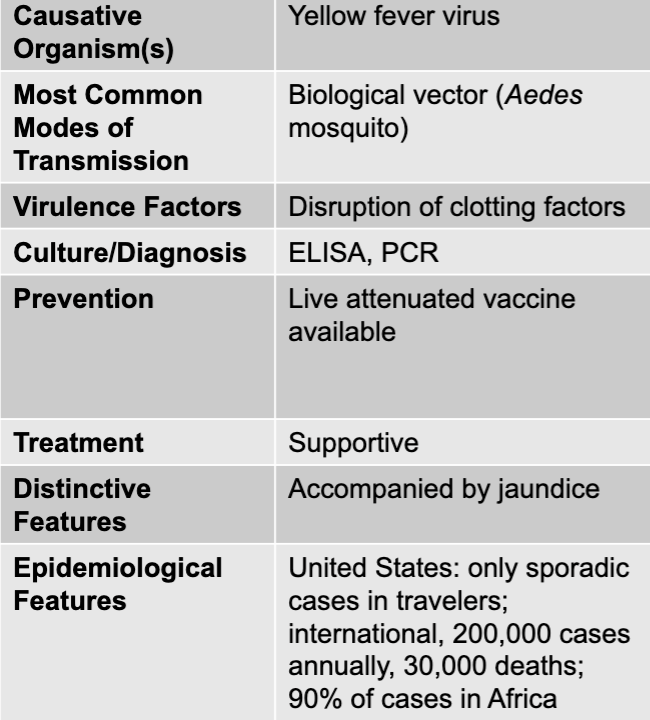
yellow fever virus
yellow fever causative agent
biological vector (Aedes mosquito)
yellow fever mode of transmission
disruption of clotting factors
yellow fever virulence factors
ELISA, PCR
yellow fever culture/diagnosis
live attenuated vaccine available
yellow fever prevention
supportive
yellow fever treatment
accompanied by jaundice
yellow fever distinctive features
united states: only sporadic cases in travelers; international, 200,000 cases annually, 30,000 deaths; 90% of cases in africa
yellow fever epidemiological features
dengue fever disease table
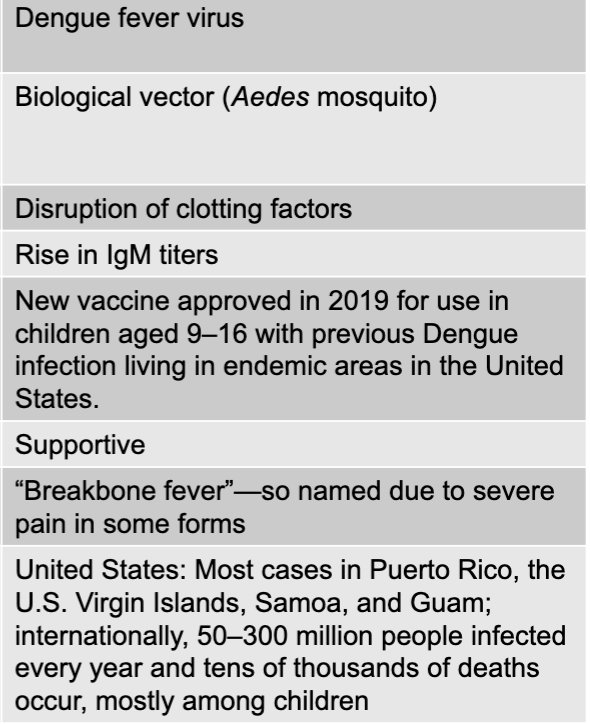
biological vector (Aedes mosquito)
dengue fever mode of transmission
disruption of clotting factors
dengue fever virulence factors
rise in IgM titers
dengue fever culture/diagnosis
new vaccine approved in 2019 for use in children aged 9-16 with previous infection living in endemic areas in the US
dengue fever prevention
supportive
dengue fever treatment
"breakbone fever" - so named due to severe pain in some forms
dengue fever distinctive features
united states: most cases in puerto rico, the us virgin islands, samoa, and guam; internationally, 50-3000 million people infected every year and tens of thousands of deaths occur, mostly among children
dengue fever epidemiological features
chikungunya disease table
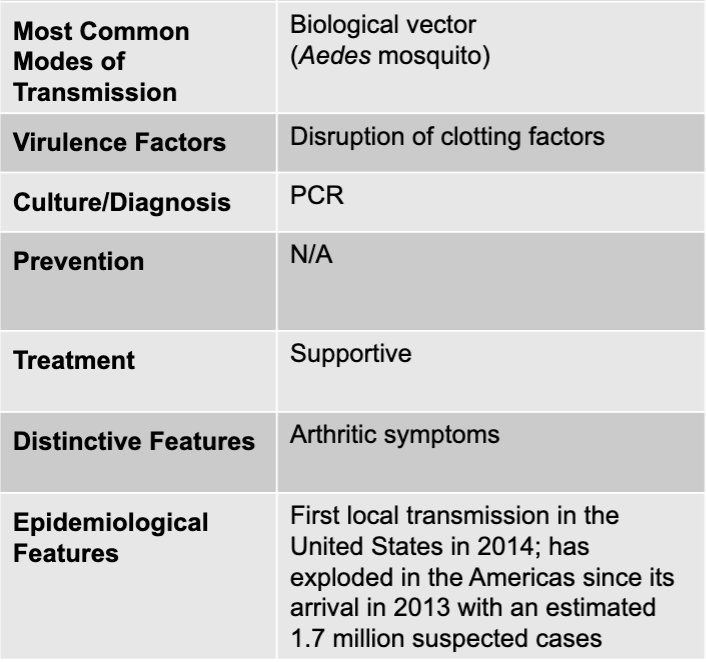
chikungunya virus
chikungunya causative agent
biological vector (Aedes mosquito)
chikungunya mode of transmission
disruption of clotting factors
chikungunya virulence factor
PCR
chikungunya culture/diagnosis
supportive
chikungunya treatment
arthritic symptoms
chikungunya distinctive features
first local transmission in the united states in 2014; has exploded in the americas since its arrival in 2013 with an estimated 1.7 million suspected cases
chikungunya epidemiological features
ebola and/or marburg disease table
ebola virus, marburg virus
ebola and/or marburg causative agents
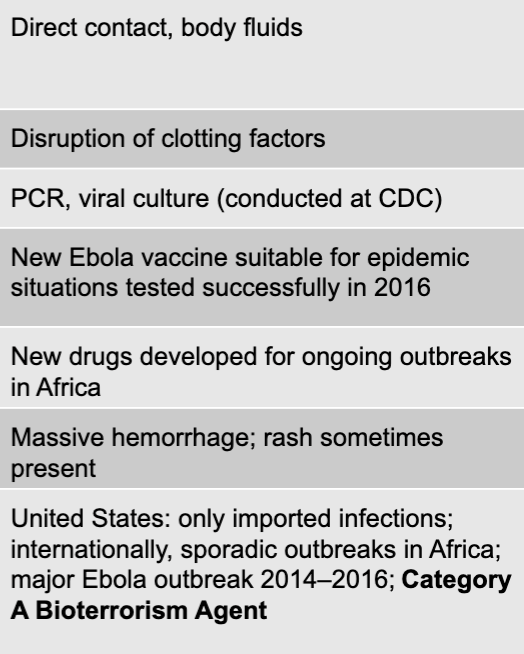
direct contact, body fluids
ebola and/or marburg mode of transmission
disruption of clotting factors
ebola and/or marburg virulence factors
PCR, viral culture (conducted at CDC)
ebola and/or marburg culture/diagnosis
new vaccine suitable for epidemic situations tested successfully in 2016
ebola and/or marburg prevention
new drugs developed for ongoing outbreaks in africa
ebola and/or marburg treatment
massive hemorrhage; rash sometimes present
ebola and/or marburg distinctive features
united states: only imported infections; internationally, sporadic outbreaks in africa; major ebola outbreak 2014-2016; category A bioterrorism agent
ebola and/or marburg epidemiological features
lassa fever disease table
lassa fever virus
lassa fever causative agent
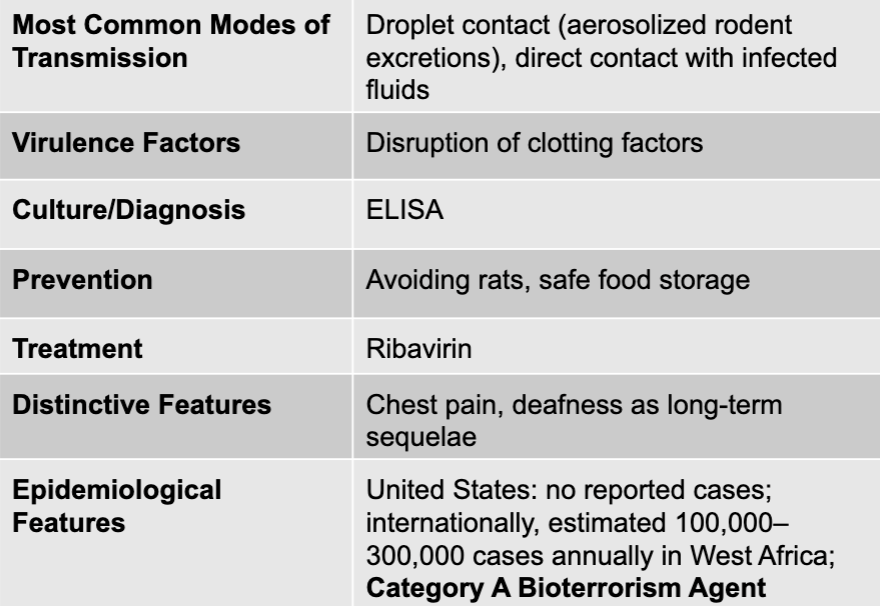
droplet contact (aerosolized rodent excretions), direct contact with infected fluids
lassa fever mode of transmission
disruption of clotting factors
lassa fever virulence factors
ELISA
lassa fever culture/diagnosis
avoiding rats, safe food storage
lassa fever prevention
ribavirin
lassa fever treatment
chest pain, deafness as long-term sequelae
lassa fever distinctive features
united states: no reported cases; internationally, estimated 100,000-300,000 cases annually in west africa; category A bioterrorism agent
lassa fever epidemiological features
brucellosis, Q fever, cat-scratch disease, trench fever, ehrilichiosis, anaplasmosis, babesiosis, spotted fever rickettsiosis
nonhemorrhagic fever
brucellosis disease table
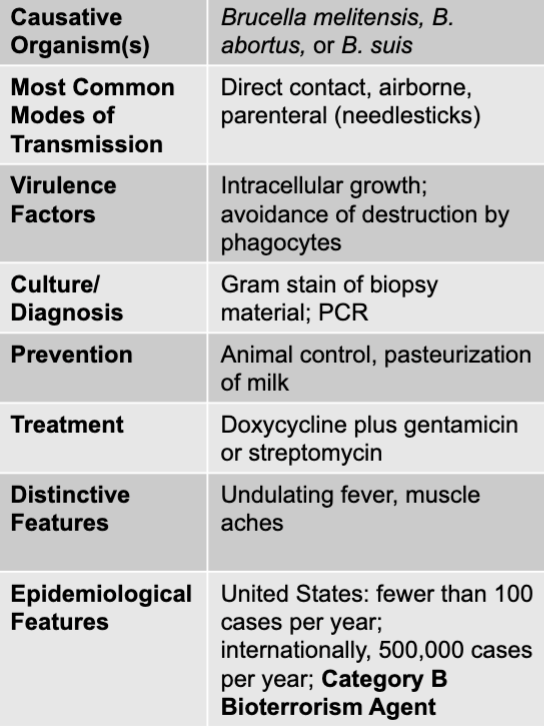
brucella melitensis, B. abortus, or B. suis
brucellosis causative agent
direct contact, airborne, parenteral (needlesticks)
brucellosis mode of transmission
intracellular growth; avoidance of destruction by phagocytes
brucellosis virulence factors
gram stain of biopsy material; PCR
brucellosis culture/diagnosis
animal control, pasteurization of milk
brucellosis prevention
undulating fever, muslce aches
brucellosis distinctive features
doxycycline plus gentamicin or streptomycin
brucellosis treatment
united states: fewer than 100 cases per year; internationally, 500,000 cases per year; category B bioterrorism agent
brucellosis epidemiological features
Q fever disease table
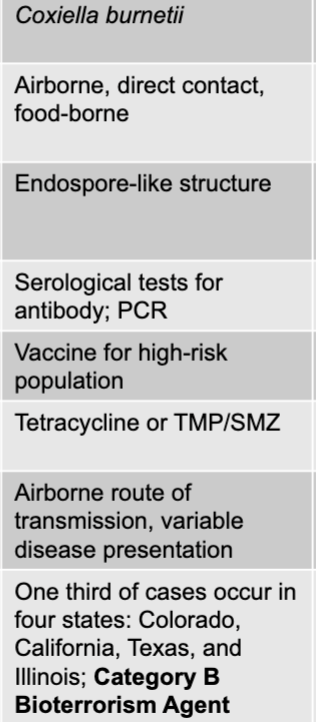
coxiella burnetii
Q fever causative agent
airborne, direct contact, food-borne
Q fever mode of transmission
endospore-like structure
Q fever virulence factors
serological tests for antibody; PCR
Q fever culture/diagnosis
vaccine for high-risk population
Q fever prevention
tetracycline or TMP/SMZ
Q fever treatment
airborne route of transmission, variable disease presentation
Q fever distinctive features
one third of cases occur in four states: colorado, california, texas, and illinois; category B bioterrorism agent
Q fever epidemiological features
cat-scratch disease table
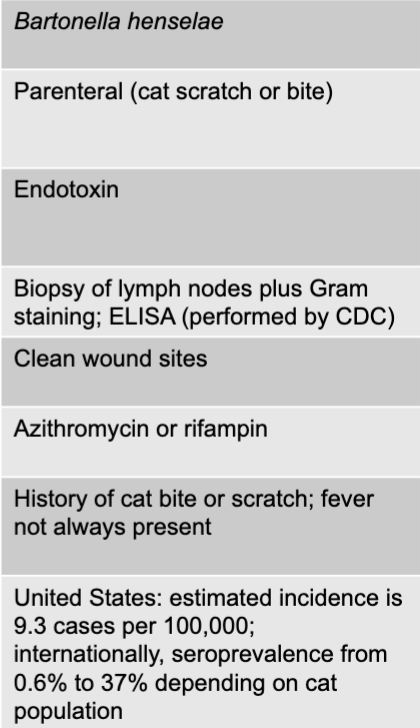
bartonella henselae
cat-scratch causative agent
parenteral (cat scratch or bite)
cat-scratch mode of transmission
endotoxin
cat-scratch virulence factors
biopsy of lymph nodes plus gram staining; ELISA (performed by CDC)
cat-scratch culture/diagnosis
clean wound sites
cat-scratch prevention
azithromycin or rifampin
cat-scratch treatment
histroy of cat bite or scrath; fever not always present
cat-scratch distinctive features
united states: estimated incidence is 9.3 cases per 100,000; internationally, seroprevalence from 0.6-37% depending on cat population
cat-scratch epidemiological features
trench fever disease table
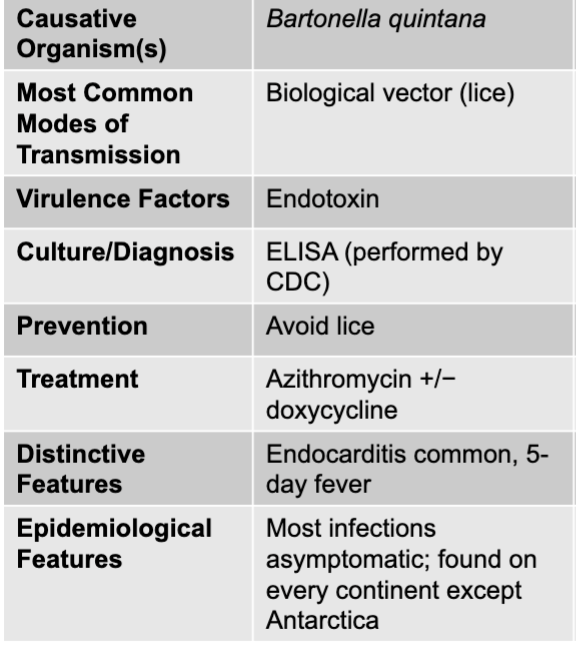
bartonella quintana
trench fever causative agent
biological vector (lice)
trench fever mode of transmission
endotoxin
trench fever virulence factors
ELISA (performed by CDC)
trench fever culture/diagnosis
avoid lice
trench fever prevention
azithromycin +/- doxycycline
trench fever treatment
endocarditis common, 5 day fever
trench fever distinctive features
most infections asymptomatic; found on every continent except antarctica
trench fever epidemiological features
ehrlichiosis disease table
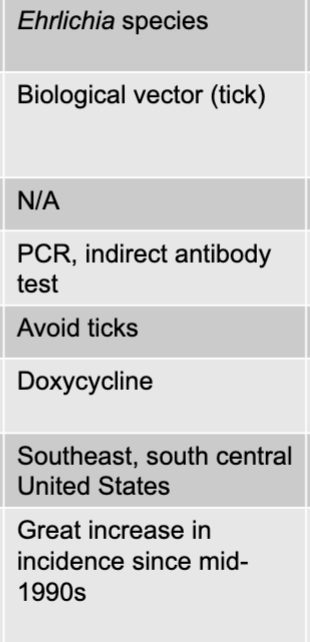
ehrlichia species
ehrlichiosis causative agent
biological vector (tick)
ehrlichiosis mode of transmission
PCR, indirect antibody test
ehrlichiosis culture/diagnosis
doxycycline
ehrlichiosis treatment
southeast, south central united states
ehrlichiosis distinctive features
great increase in incidence since mid-1990s
ehrlichiosis epidemiological features
anaplasmosis disease table
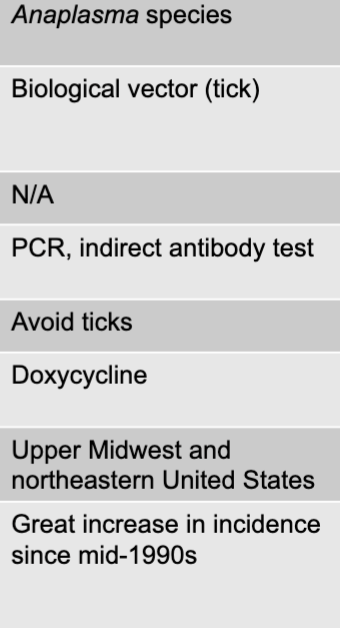
anaplasma species
anaplasmosis causative agent
biological vector (tick)
anaplasmosis mode of transmission
PCR, indirect antibody test
anaplasmosis culture/diagnosis
avoid ticks
anaplasmosis prevention
doxycyycline
anaplasmosis treatment
upper midwest and northeasteern united states
anaplasmosis distinctive features
great increase in incidence since mid-1990s
anaplasmosis epidemiological features
babesiosis disease table
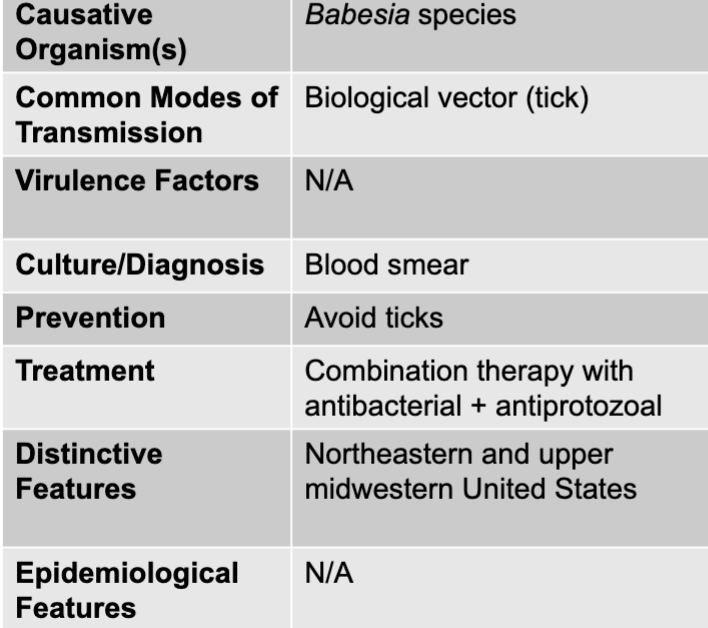
biological vector (tick)
babesiosis mode of transmission
blood smear
babesiosis culture/diagnosis
avoid ticks
babesiosis prevention
combination therapy with antibacterial + antiprotozoal
babesiosis treatment
northeastern and upper midwestern united states
babesiosis distinctive features
spotted fever rickettsiosis disease table
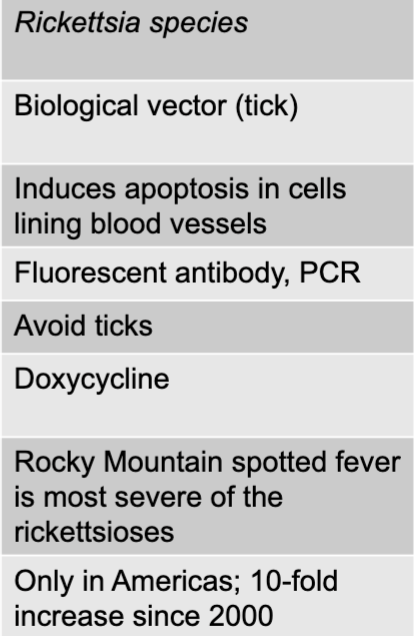
rickettsia species
spotted fever rickettsiosis causative agent
biological vector (tick)
spotted fever rickettsiosis mode of transmission
induces apoptosis in cells lining blood vessels
spotted fever rickettsiosis virulence factors
fluorescent antibody, PCR
spotted fever rickettsiosis culture/diagnosis
avoid ticks
spotted fever rickettsiosis prevention
doxycycline
spotted fever rickettsiosis treatment
rocky mountain spotted fever is most severe of the rickettsioses
spotted fever rickettsiosis distinctive features
only in americas; 10-fold increase since 2000
spotted fever rickettsiosis epidemiological features
chagas disease table
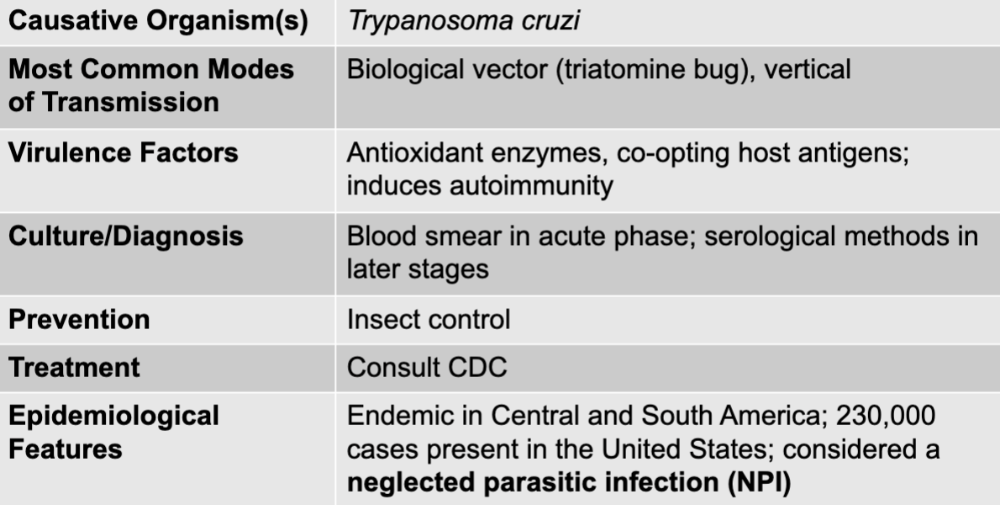
trypanosoma cruzi
chagas causative agent
biological vector (tratomine bug), vertical
chagas mode of transmission
antioxidant enzymes, co-opting host antigens; induces autoimmunity
chagas virulence factors
blood smear in acute phase; serological methods in later stages
chagas culture/diagnosis
insect control
chagas prevention
consult CDC
chagas treatment
endemic in central and south america; 230,000 cases present in the united states; considered a neglected parasitic infection
chagas epidemiological features
malaria disease table
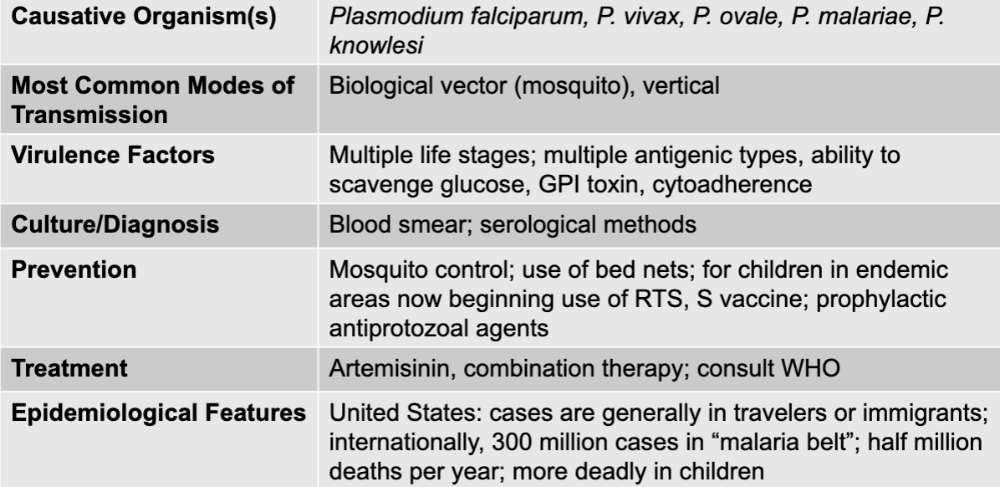
plasmodium falciparum, p. vivax, p. ovale, p. malariae, p. knowlesi
malaria causative agents
biological vector (mosquito_, vertical
malaria mode of transmission
multiple life stages; multiple antigenic types, ability to scavenge glucose, GPI toxin, cytoadherence
malaria virulence factors
blood smear; serological methods
malaria culture/diagnosis
mosquito control; use of bed nets; for children in endemic areas now beginning use of RTS, S vaccine; prophylactic antiprotozoal agents
malaria prevention
arteminisin, combination therapy; consult WHO
malaria treatment
united states: cases are generally in travelers or immigrants; internationally, 300 million cases in"malaria belt"; half million deaths per year; more deadly in children
malaria epidemiological features
HIV and AIDS disease table
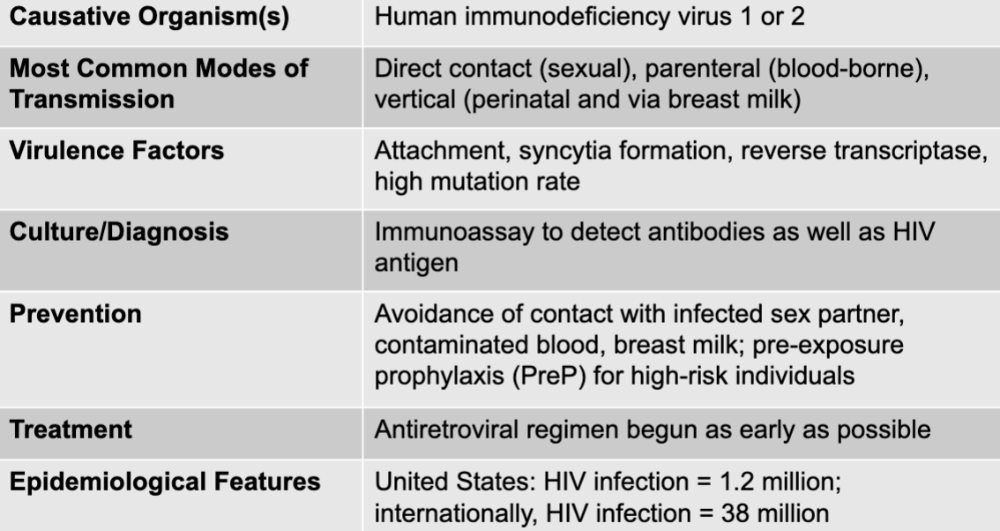
human immunodeficiency virus 1 or 2
HIV causative agent
direct contact (sexual), parenteral (blood-borne), vertical (perinatal and via breast milk)
HIV mode of transmission
attachment, syncytia formation, reverse transcriptase, high mutation rate
HIV virulence factors
immunoassay to detect antibodies as well as HIV antigen
HIV culture/diagnosis
avoidance of contact with infected sex partner, contaminated blood, breast milk; pre-exposure prophylaxis (PreP) for high-risk individuals
HIV prevention
antiretroviral regiment begun as early as possible
HIV treatment
united states: HIV infection = 1.2 million
internationally: HIV infection = 38 million
HIV epidemiological features
gram-positive endospore-forming bacteria
bacillus anthracis
gram-positive bacteria
staphylococcus aureus
streptococcus pyogenes
streptococcus pneumoniae
enterococcus
gram-negative bacteria
pseudomonas aeruginosa
yersinia pestis
francisella tularensis
borrelia burgdorferi
brucella abortus, B. suiss
coxiella burnetii
bartonella henselea
bartonella quintana
ehrlichia species
anaplasma species
rickettsia species
DNA virus
epstein0barr virus
RNA viruses
SARS-CoV-2
yellow fever virus
dengue fever virus
chikungunya virus
ebola and marburg viruses
lassa fever virus
retroviruses
human immunodeficiency virus 1 and 2
protozoa
babesia species
trypanosoma cruzi
plasmodium falciparum, p. vivax, p. ovale, p. malariae