exercise 17
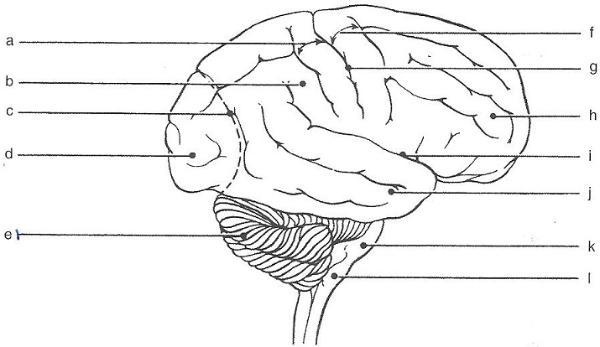
a. postcentral gyrus b. parietal lobe c. parieto-occipital
d. occopital lobe e. cerebellum f. precentral gyrus
g. centeral sulcus h. frontal lobe i. lateral sulcus
j. temporal lobe k. pons l. medulla
In which of the cerebral lobes is the functional area found?
Auditory cortex:
Temporal
In which of the cerebral lobes is the functional area found?
Primary motor cortex:
Frontal
In which of the cerebral lobes is the functional area found?
Primary sensory cortex:
Parietal
In which of the cerebral lobes is the functional area found?
Olfactory cortex:
Temporal
In which of the cerebral lobes is the functional area found?
Visual cortex:
Occipital
In which of the cerebral lobes is the functional area found?
Broca's area:
Frontal
which of the following structures are not part of the brain stem? ( circle all that apply)
cerebral hemispheres
pons
midbrain
cerebellum
medulla
diencephalon
cerebral hemispheres
cerebellum
diencephalon
A(n)________ is an elevated rdige of cerebral tissue
gyrus
The convolutions seen in the cerebrum are important because they increase the___________.
surface area
Gray matter is composed of __________.
neuron cell body
White matter is composed of ________.
axon
a fiber tract that provides for communcation between different parts of the same cerebral hemisphere is called a(n)___________.
association tract
whereas one that carries impulses from the cerebrum to lower CNS areas is called a(n) __________ tract.
projection tract
the caudate,putamen,and globus pallidus are collectively called the ________.
basal nuclei
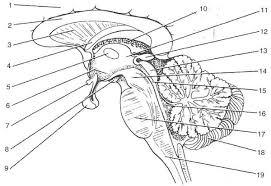
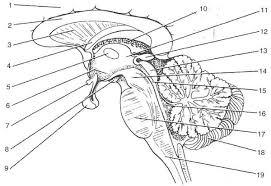
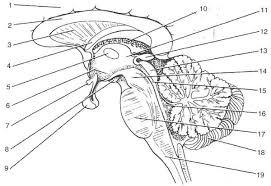
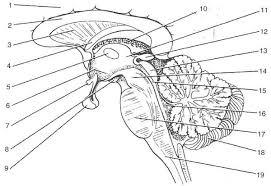
1. cerebrall hemisphere 2. corpus callosum 3. septum pellucidum
4. fornix 5.interthalamic adhesion 6. hypothalamus
7. optic chiasma 8.mammillary bodies 9. pituitary gland
10. choroid plexus 11. thalamus 12. pineal gland
13. corpora quadrigemina 14. cerebral peduncle 15. cerbral aqueduct
16. fourth ventricle 17. pons 18. cerebellum 19. medulla oblongata
site of regulation of body temperature and water balance; most important autonomic center

hypothalamus
consciousness depends on the function of this part of the brain
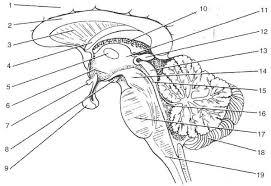
choroid plexus
located in the midbrain; contains reflex centers of vision and audition
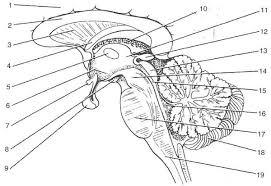
copora quadrigemina
responsible for regulation of posture and coordination of complex muscular movements
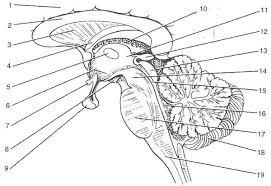
cerebellum
important synapse site for afferent fibers traveling to the sensory cortex
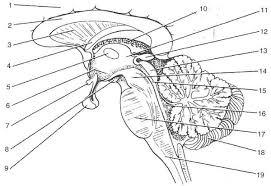
thalamus
contains autonomic centers regulating blood pressure, heart rate, and respiratory rhythm, as well as coughing, sneezing, and swallowing centers
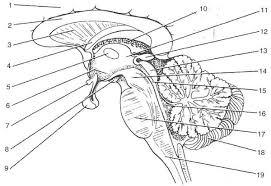
medulla oblongata
large commissure connecting the cerebral hemispheres
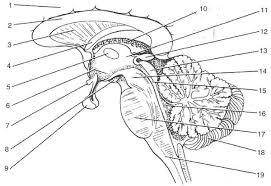
corpus callosum
fibers tract involved with olfaction
fornix
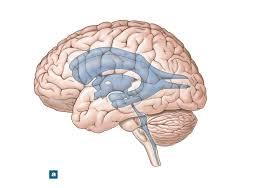
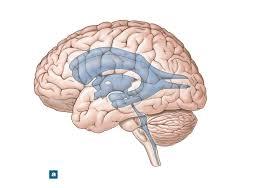
connects the third and fourth ventricles
cerebral aqueduct
encloses the third ventricle
thalamus
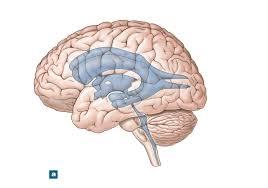
interventricular
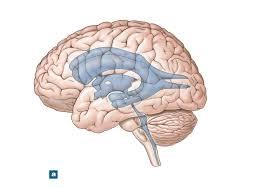
lateral ventricle
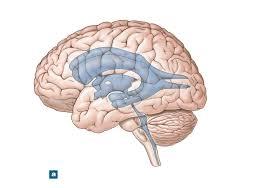
third ventricle

cerebral aqueduct
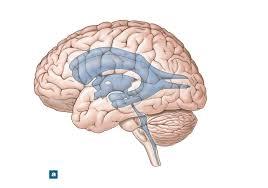
median aperture
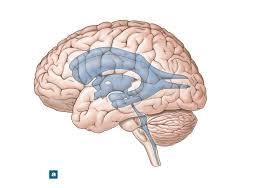
lateral aperture
cerebrospinal fluid flows from the fourth ventricle into the ________ space surrounding the brain and spinal cord.
subarachnoid space
from this space it drains throught ________ into the ________.
arachnoid villi, dural sinsuses