Instructions for Side by Side Printing
- Print the notecards
- Fold each page in half along the solid vertical line
- Cut out the notecards by cutting along each horizontal dotted line
- Optional: Glue, tape or staple the ends of each notecard together
A&P 1
front 1 integumentary system | back 1 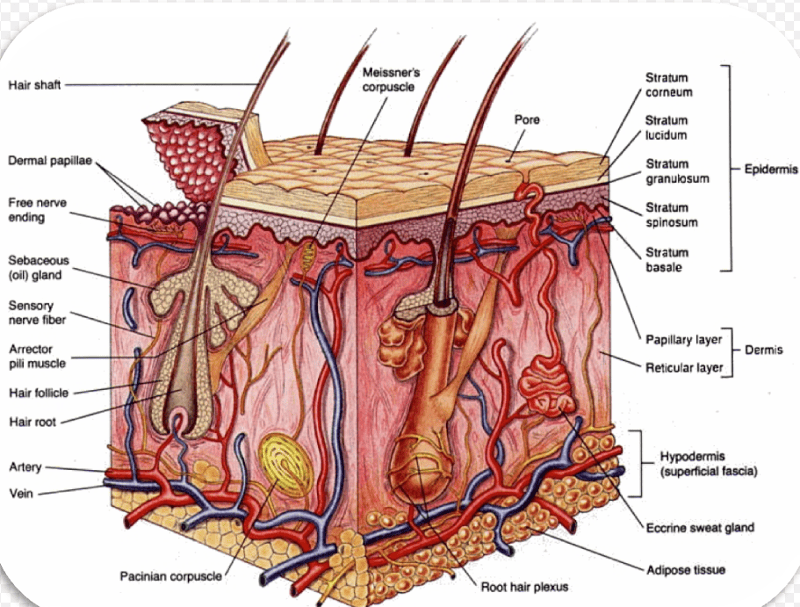 The integumentary system is the organsystem that protects the body from various kinds of damage, such as loss of water or abrasion from outside. The system comprises the skin and its appendages (including hair, scales, feathers, hooves, and nails). |
front 2 skeletal system | back 2 protects and support body organs and provides a framework the muscle use to cause movement.Blood cells are formed within the the bones.Bones store minerals. |
front 3 Muscular system | back 3 Allows manipulation of the environment , locomotion and facial expression , Mantains posture and produces heat |
front 4 Nervous system | back 4 As the fast acting control system of the body , it responds to internal and external changes by activating appropriate muscle and glands |
front 5 Endocrine system | back 5 Gland secrete hormones that regulate process such as growth ,reproduction and nutrient use (metabolism by body cells |
front 6 Cardiovascular system | back 6 Blood vessels transport blood , which carries oxygen ,carbon dioxide, nutrients waste, etc.The heart pumps blood |
front 7 Lymphatic system/immunity | back 7 picks up fluid from blood vessels and return it to blood .Disposes of debris in the lymphatic stream .Houses white blood cells (lymphocytes )involved in immunity |
front 8 Respiratory system | back 8 keeps blood constantly supplied with oxygen and removes carbon dioxide |
front 9 Digestive system | back 9 breaks down food into more absorbable units that enter the blood for distribution to body cells to indigesable food stuff are eliminated as feces. |
front 10 Urinary system | back 10 Eliminates nitrogenous wastes from the body. Regulates water electrolyte and electrolyte and acid base balance of the the blood. |
front 11 anabolism | back 11 breaking down substances into simpler building blocks |
front 12 Anabolism | back 12 synthesizing more complex cellular from simpler substances |
front 13 Homeostasis | back 13 is the ability to maintain relatively stable internal conditions even though the the outside world changes continuously |
front 14 Process of homeostatic control | back 14 #1. receptor #2. control system #3 afferent pathway |
front 15 Regional terms | back 15 Axial:the head trunk Appendicular: limbs |
front 16 Cephalic | back 16 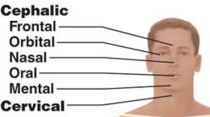 |
front 17 THORACIC | back 17 STERNAL(STERNUM), AXILLARY AND MAMMARY |
front 18 BACK | back 18 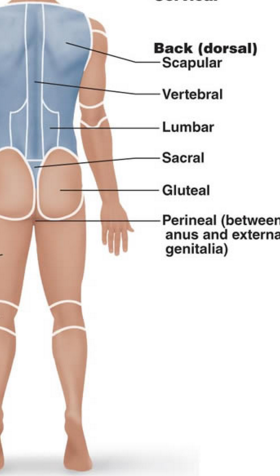 |
front 19 UPPER LIMB,MANUS, LOWER LIMB PEDAL(FOOT)REGIONS | back 19 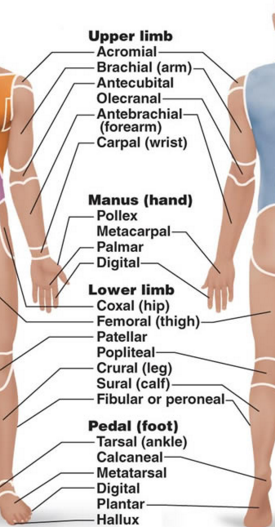 |
front 20 SUPERIOR (CRANIAL) | back 20 Toward the head end or upper part of a structure or the body above.(ex)the head is superior to the shoulder |
front 21 Inferior (caudal) | back 21 Away from the head end or toward the lower part of a structure of the body;below ex)the navel is inferior to the the chin |
front 22 Anterior (ventral) | back 22 toward at the front of the body ;in front of.EX) the breastbone is anterior to the spine |
front 23 Posterior(dorsal) | back 23  Toward or at the front of the body;behind the heart is posterior to the breastbone |
front 24 Medial | back 24  Toward or at the mid line of the body; on the inner side of the heart is medial to trunk |
front 25 Lateral | back 25  Away from the midline of the body l on the outer side of the arms are lateral to the chest |
front 26 Intermediate | back 26  Between a more medial and a more lateral structure The collar bone is intermediate between the breastbone and shoulder |
front 27 Proximal | back 27  Closer to the origin of the body part or the point or the attachment of the a limb to the trunk the elbow is proximal to the wrist |
front 28 Distal | back 28 Farther from the origin of the body part or the point of attachment of a limb to the body trunk the knee is is distal to the tigh |
front 29 Superficial (external ) | back 29 toward or at the body surface |
front 30 Deep (INTERNAL) | back 30 The lungs are deep to the skin |
front 31 Sagittal plane | back 31 Is a vertical plane that divides the body into right and left parts |
front 32 Median plane or mid sagittal plane | back 32 Lies exactly in the middle of the body |
front 33 Parasagittal plane | back 33 divides the body into unequal halves |
front 34 frontal and coronal planes | back 34 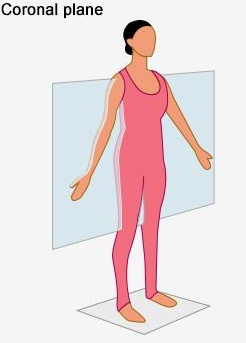 |
front 35 CRANIAL CAVITY | back 35 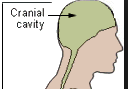 |
front 36 DORSAL AND VENTRAL CAVITIES | back 36 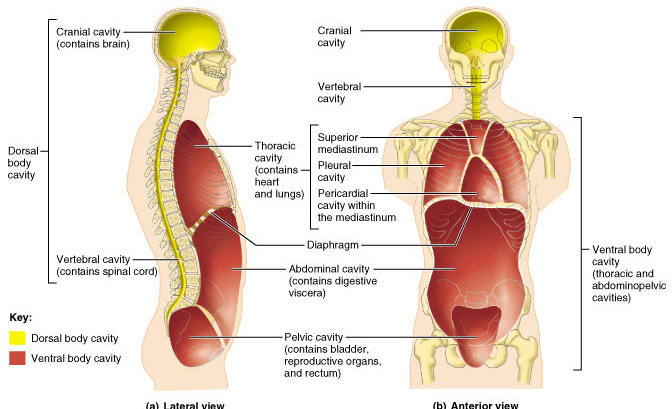 |
front 37 ABDOMINO PELVIC CAVITY, ABDOMIAL | back 37 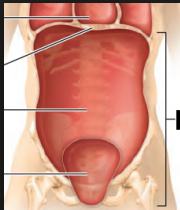 |
front 38 THORACIC CAVITY | back 38 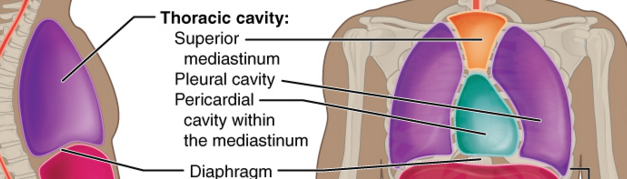 Ventral cavity:houses the pleura cavities which encases the lungs . Superior Mediastenum houses the |
front 39 DORSAL CAVITY | back 39 Protects the fragile nervous system organs,has two subdivisions the cranial and the vertebral cavities |
front 40 PELVIC CAVITY | back 40  |
front 41 VENTRAL BODY CAVITY | back 41 HAS TWO MAJOR SUBDIVISIONS THE THORACIC AND THE ABDOMINO PELVIC AREA CAVITY .IT HOUSES THE INTERNAL ORGANS CALLED VISCERA OR VISCERAL ORGANS |
front 42 PELURAL CAVITIES IN THE THORACIC CAVITY ENCLOSE ? | back 42 THE LUNGS |
front 43 THE MEDIAL MEDIASTENUM IN THE THORACIC CAVITY ENCLOSE ? | back 43 IT CONTAINS THE PERICARDIAL CAVITY ,WHICH IT ENCLOSES THE HEART , ESOPHAGUS and THE THRACHEA |
front 44 SEROUS MEMEBRANE | back 44 The walls of the ventral cavity and the outer surfaces of the organs on the ventral cavity are protected by a thin double layer membrane called serosa or serous membrane |
front 45 Regional name = | back 45 regional term |
front 46 The axial part is: | back 46 Head neck and trunk |
front 47 The appendicular part is: | back 47 The limbs |
front 48 Cephalic | back 48 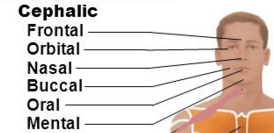 |
front 49 Cephalic (back) | back 49 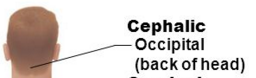 |
front 50 Thoracic | back 50 Sternal ,Axillary ,mamary |
front 51 Abdominal | back 51 Umbilical |
front 52 Pelvic | back 52 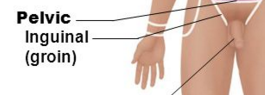 Inguinal(groin) |
front 53 Regional terms Ventral (anterior) | back 53 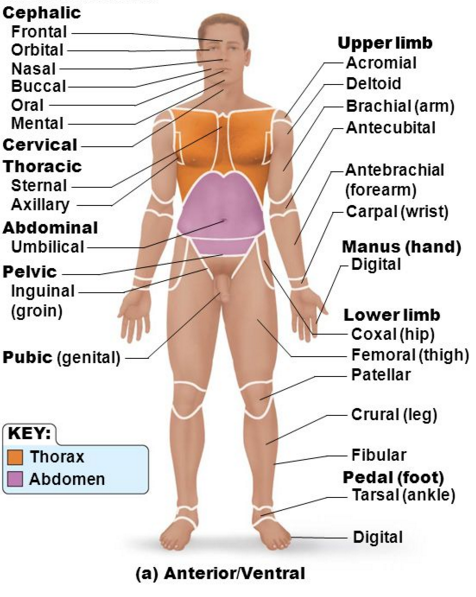 |
front 54 Regional terms dorsal(posterior) | back 54 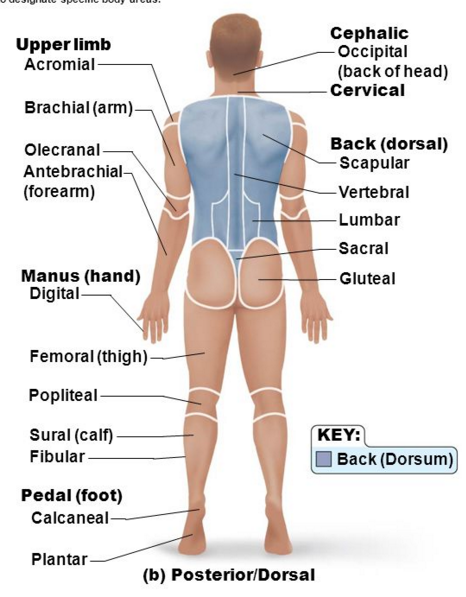 |
front 55 Superior mediastenum | back 55 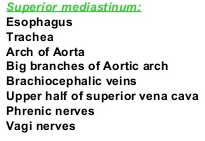 |
front 56 Medial Mediastenum | back 56 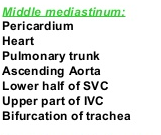 |
front 57 Poterior Mediastenum | back 57 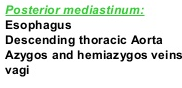 |
front 58 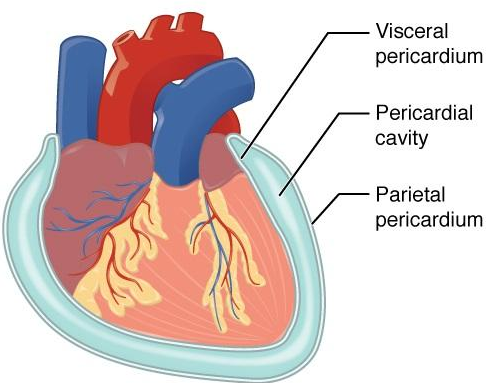 Pericardial cavity encloses? | back 58 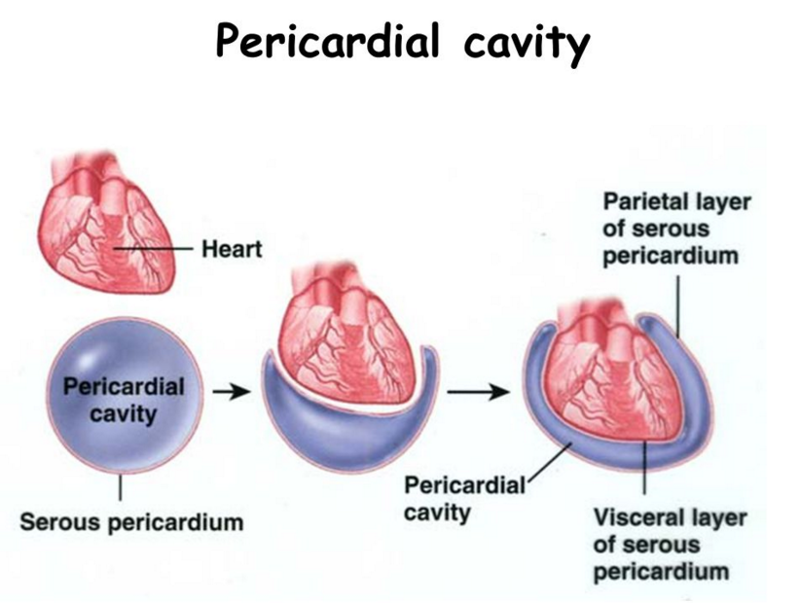 Encloses the heart and it also surrounds the other remaining thoracic organs (esophagus, trachea and others) |
front 59 The abdominopelvic cavity | back 59 The abdominopelvic cavity is divided into the abdominal cavity and pelvic cavity. Abdominal cavity contains the intestines,the stomach,spleen, liver and other organs. The pelvic cavity contains the urinary bladder, some reproductive organs and rectum |
front 60 SEROSA | back 60 The walls of the ventral body cavity and the outer surfaces of the organs it contains are covered by a thin double layer called the "serosa" or the serorus membrane |
front 61 Parietal pericardium | back 61 lines into the pericardial cavity and folds back as the visceral pericardium, which it cover the heart |
front 62 Parietal pleurae | back 62 line the walls of the of the thoracic cavity and the visceral pleurae cover the lungs. |
front 63 Parietal peritoneum | back 63 is associated with the walls of the abodominopelvic cavity while the visceral peritoneum covers most of the organs within that cavity |
front 64 ABDOMINOPELVIC REGIONS AND QUADRANTS | back 64 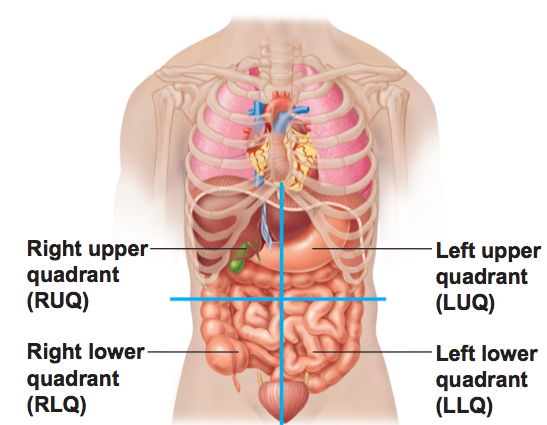 |
front 65 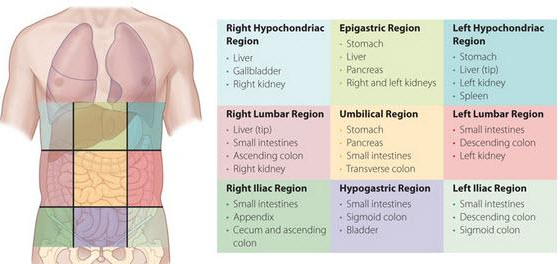 ABDOMINOPELVIC REGIONS | back 65 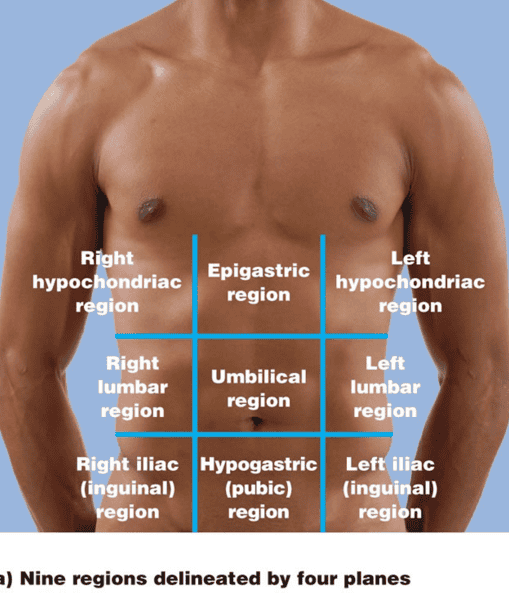 |
front 66 THE 9 REGIONS SHOWING THE SUPERFICIAL ORGANS | back 66 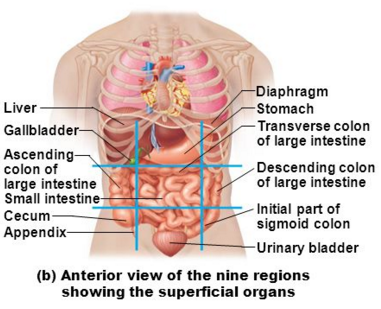 |
front 67 MID SAGITTAL CROSS CUT SECTION | back 67 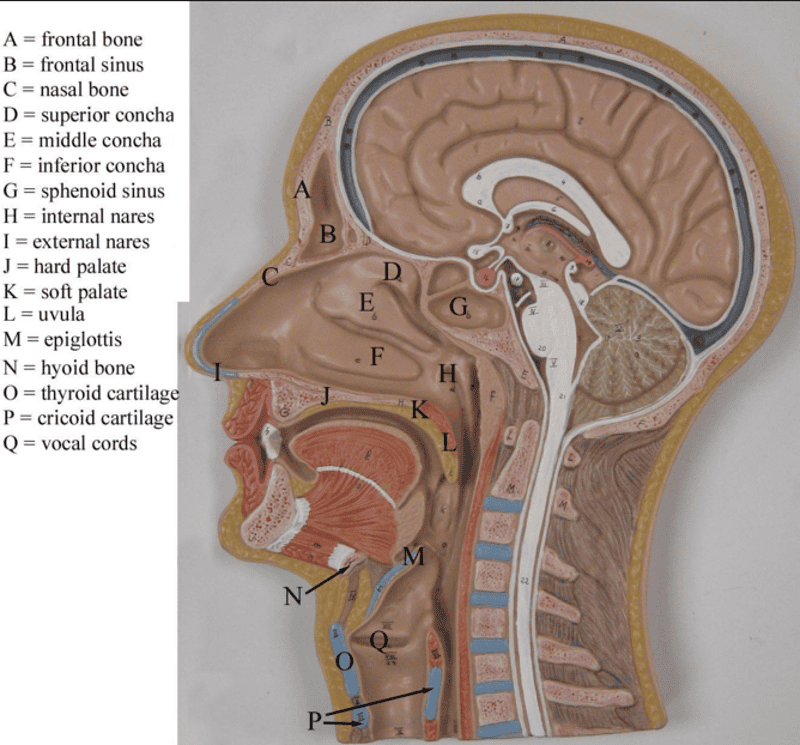 |
front 68 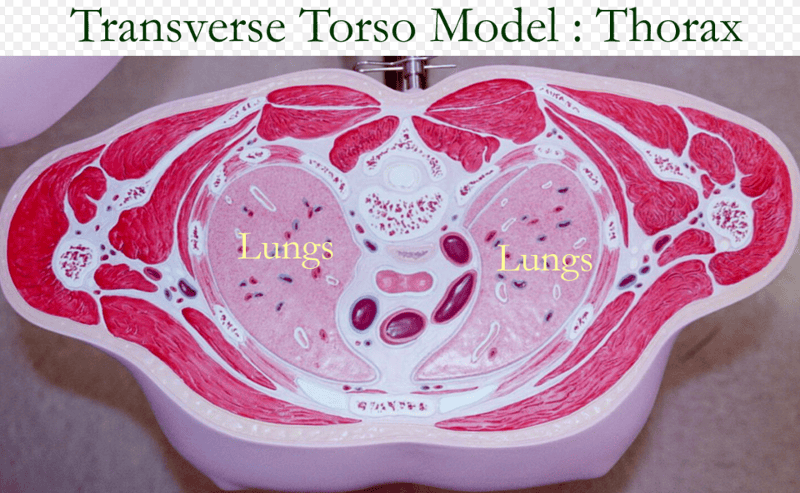 TRANSVERSE PLANE SECTION | back 68 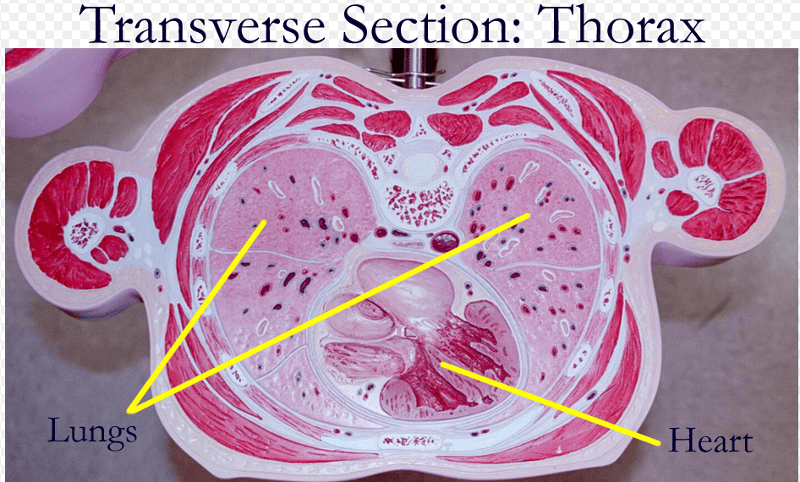 |
front 69 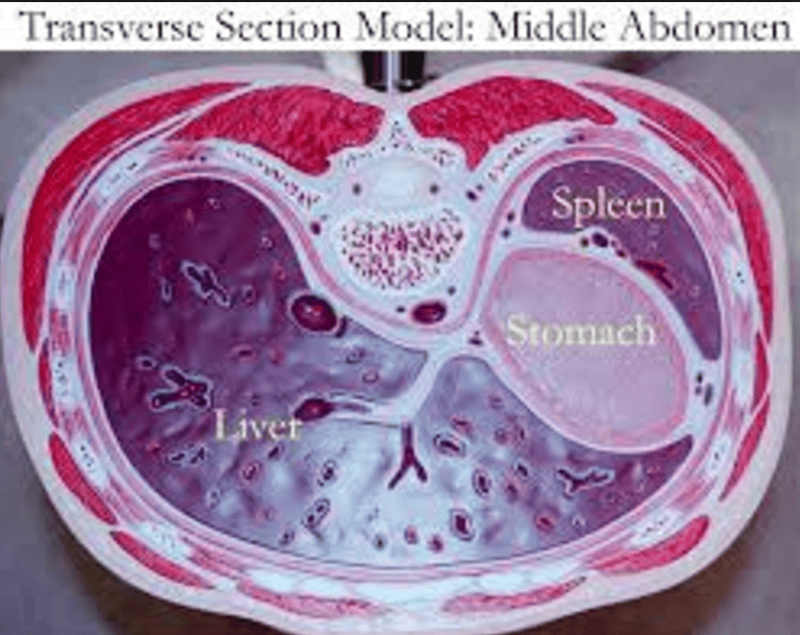 MORE TRANsVERSE PLANE CUT SECTIONS | back 69 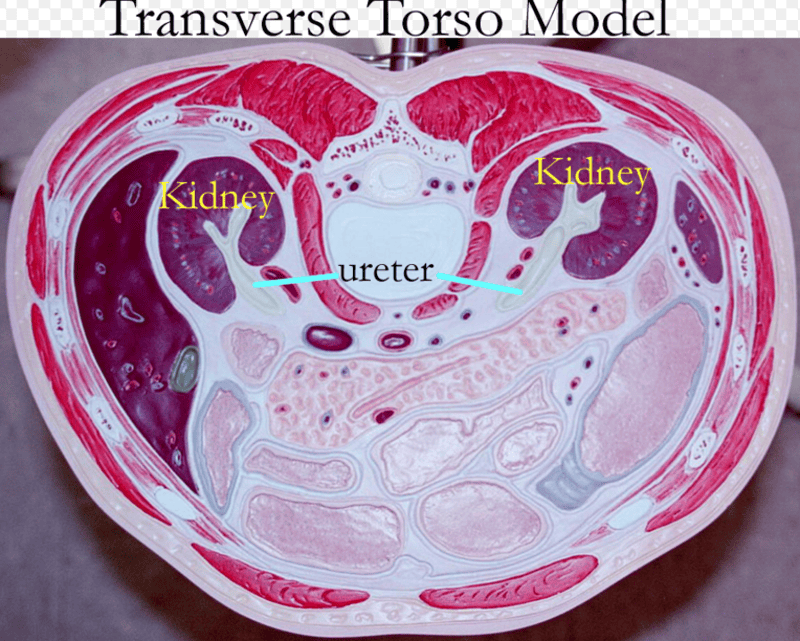 |
front 70 coronal plane of cephalic area or head | back 70 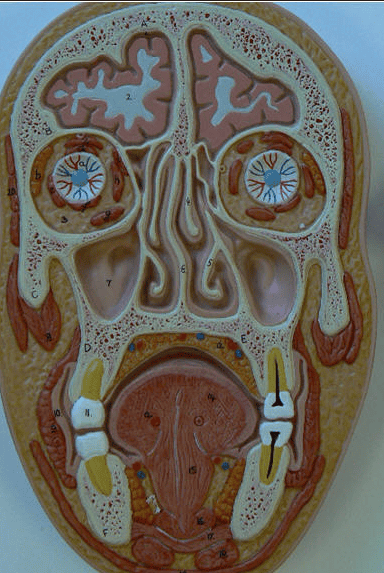 |
front 71 transverse section of cephalic area or head | back 71 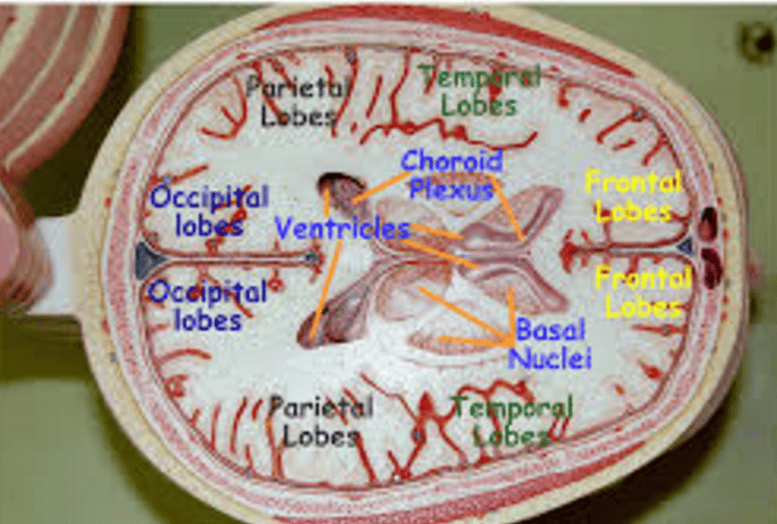 |
front 72 Forehead is superior to? | back 72 the forehead is superior to the nose |
front 73 The navel is inferior to? | back 73 The navel is inferior to the breast bone |
front 74 The breast bone is anterior to? | back 74 The breast bone is anterior to the the spine |
front 75 The heart is posterior to ? | back 75 The heart is posterior ton the breastbone |
front 76 The heart is medial to ? | back 76 The heart is medial to the arms |
front 77 The arms are lateral to? | back 77 The armas are lateral to the chest |
front 78 The elbow is proximal to? | back 78 The elbow is proximal to the wrist |
front 79 The knee is distal to? | back 79 The knee is distal to the thigh |
front 80 The skin is superficial to? | back 80 The skins superficial to the skeleton |
front 81 The lungs are deep to? | back 81 The lungs are deep to the rib cage |
front 82 the aorta is __________ to the vertebral column | back 82 ventral |
front 83 the vertebral column is ________ to the aorta | back 83 dorsal |
front 84 the sternum is _______ to the heart | back 84 anterior |
front 85 the esophagus is _________ to the trachea | back 85 posterior |
front 86 the _______ end of the embryonic neural tube develops into the brain | back 86 cephalic |
front 87 the forebrain is _______ to the brainstem | back 87 rostral |
front 88 the spinal cord is ________ to the brain | back 88 caudal |
front 89 the heart is _______ to the diaphragm | back 89 superior |
front 90 the liver is _______ to the diaphragm | back 90 inferior |
front 91 the heart is ________ to the lungs | back 91 medial |
front 92 the eyes are _______ to the nose | back 92 lateral |
front 93 the fingernails are at the _______ ends of the fingers | back 93 distal |
front 94 the bones are _______ to the muscle | back 94 deep |
front 95 The serous membranes | back 95 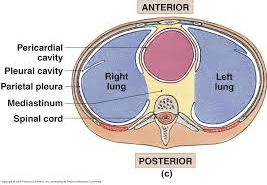 Are double thin layer composed of connective and epithelial tissue.they line the walls of the thoracic and abdominal cavities and then fold back to cover the organs within the cavities.A slippery serous fluid produced by the cells of the membrane is found in between the two layers. This fluid permits the free sliding of the two layers during movement. THE portion of the membrane attached to an organ is called the visceral layer. The external layer or the portion of the membrane that attaches the body wall is called the parietal layer. |
front 96 PERICARDIAL MEMBRANE(PERICARDIUM) | back 96 Surrounds the heart |
front 97 PLEURAL MEMEBRANES | back 97 Surround the lungs |
front 98 PERITONEAL MEMBRANE(PERITONUM) | back 98 Surrounds many organs in the abdominopelvic cavity |
front 99 respiratory system | back 99 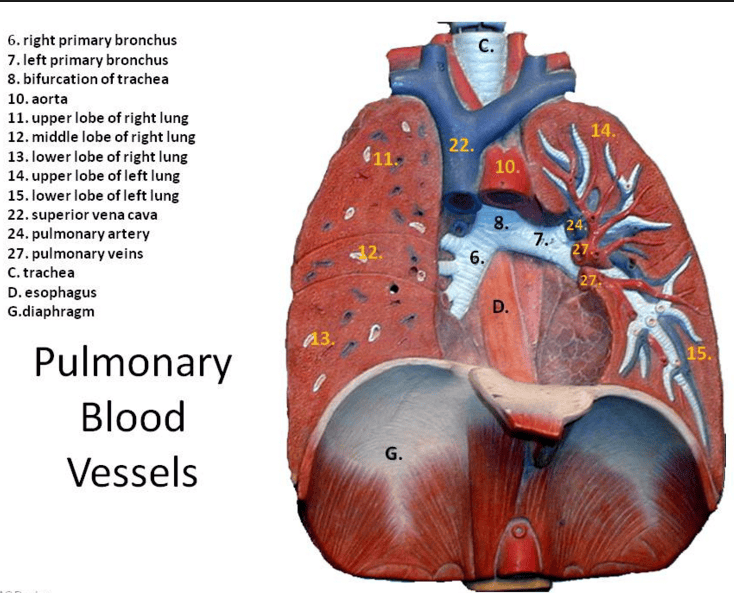 |
front 100 The heart is in the ? | back 100 The heart is in the thoracic cavity over the ventral cavity |
front 101 The trachea is located in ? | back 101 The trachea is locate din the superior is in the superior mediastenum cavity of the thoracic cavity over the ventral cavity |
front 102 The stomach is located where? | back 102 in the abdominal cavity on the ventral cavity |
front 103 the uterus is in the ? | back 103 pelvic cavity on the ventral cavity |
front 104 The spinal cord is in located ? | back 104 is located in the vertebral cavity o the dorsal cavity |