tagmata
fused segments into functional groups
exoskeleton
hard outer covering that protects, supports, and gives shape to insects
- shed to grow larger
chitin
primary structural material of the exoskeleton
ecdysis
molting to increase in size
ecdysone
the hormone that controls molting --> ecdysis
uniramous vs biramous
one branch, two branches
tracheal system
air piped directly to cells
spiracles
holes that open the tracheae to the outside --> directly supply O2 to muscles
Phylum Arthropoda
complex nervous system, compound eyes, complete digestive, sensory organs, complex behavior patterns (mating)
trophic breadth
feeding role changes at each stage
- young and adult stages not competing for same resources
mandibles
plates that come together
in the clade Mandibulata: myripoda, hexapoda, crustacea
chelicerae
first pair of pre-oral appendages (spiders) --> function as fangs
pedipalps
second pair of appendages (spiders)
- where males store sperm packets to transfer to female
carapace
dorsal shield - hard protective shell
telson
the tailpiece
how many pairs of walking legs do sea spiders (class pycnogonida) have?
4 pairs of walking legs
ovigers
the walking legs of males that carry egg masses
cephalothorax
the head and thorax region fused together
book lungs
parallel air pockets that extend into a blood-filled chamber
Tracheae
air tubes that carry air from spiracles directly to tissue
Malpighian tubules
drain waste into intestine
rectal glands
reabsorb potassium and water
neurotoxic venom
carried by black widow that acts on the nervous system
hemolytic venom
brown recluse that destroys blood tissue --> necrosis
capitulum
forward region that carry the mouth parts
maxillae
mouthparts by mandibles used to taste hold, and manipulate food
Class Chilopoda
centipedes
predators, each segment contains one pair of legs, flattened, ocelli, first segment are venom claws
class diplopoda
millipedes
cylindrical bodies --> round, 4 thoratic segments=1pair of legs, abdominal segments 2 pair of legs, herbivorous
maxillapeds
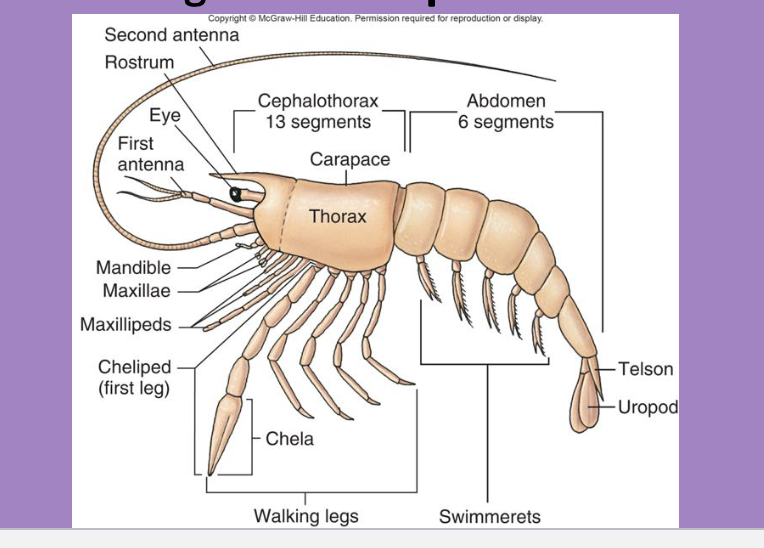
first 3 pair of thoracic appendages that handle food --> crayfish
cheliped
first pair of walking legs with strong claw -> crayfish
chela
Big claw for defense --> crayfish
swimmerets
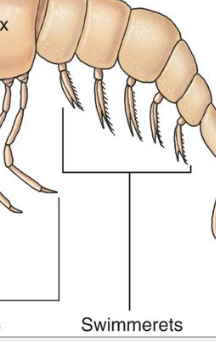
abdominal appendages that retain biramous conditions
gonopods
first pair of swimmerets in male used in copulation
uropods
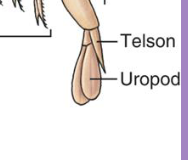
last pair of appendages used for backwards movements and protection for eggs or young swimmerets
chromatophores
how the epidermis produces body color
androgenic glands
stimulate expression of male characteristics
in male malacostracans (shrimp, crab, lobster)
brachial chambers
larger crustaceans use featherlike gills for gas exchange, overlapping carapace protects these chambers
protects the respiratory system
antennal glands
paired glands located in the head process waste
--> called green glands in decapods
median eye
consists of retinal cells, may have a lens
ommatidia
many small units that make up the compound eye
nauplius
larval form with unsegmented body, frontal eye, 3 pair of appendages
halzoun
infection from tongue worms that are ingested by uncooked meat --> cause difficulty breathing --> cough out
head (subphylum hexapoda)
compound eyes, pair of antennae, 3 ocelli,
Mouthparts: mandibles, maxillae
Thorax (subphylum hexapoda)
prothorax, mesothorax, and metathorax
legs on each segment
wings on mesothorax and metathorax
insect leg modifications
muscular legs for grasshoppers & crickets to jump
midgut
does most of the absorption
stomach, gastric ceca
proventriculus
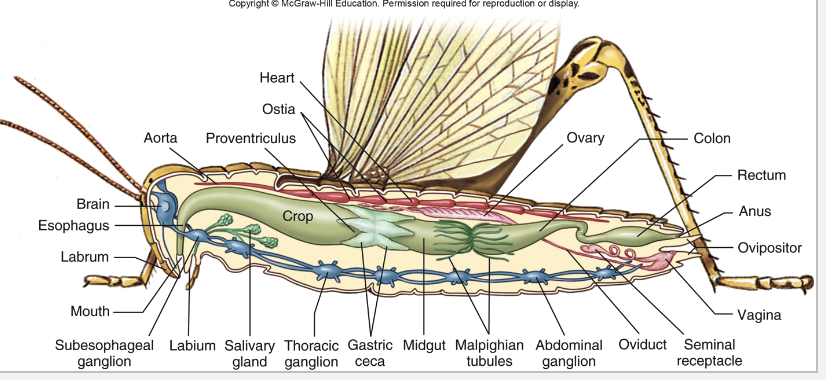
used for grinding up food
phytophagus
feed on plant juices
mouthpart determine feeding (chewing or sucking)
saprophagus
feed on dead animals
predaceous
feed and kill live animals
parasitoids
feed on and then kill host
hyperparasitism
parasite of a parasite
hemolymph
distributes hormones and nutrients within an open circulatory system of the tubular heart
2 goals of an efficient respiratory system
fast O2 and CO2 exchange, little water loss
holometabolous
complete metamorphosis
larva --> pupa --> adult
hemimetabolous
incomplete metamorphosis
nymphs
resemble adults grow by molting
instar
stages between molts
diapause
period of prolonged dormancy, often due to climate changes or seasons
plumose
feathery antennae on males