cuticle
non-living outer layer secreted by epidermis, restricts growth and must be molted via ecdysis
ecdysone
hormone that regulates molting
hypodermis
thick, noncellular cuticle composed of collagen is secreted by the underlaying epidermic
hydrostatic skeleton
fluid-filled muscular wall that provides the support for antagonistic muscle action
nematodes use this as their pseudocoelom
pharynx
muscle that sucks food in
anus
short rectum that expels waste at anterior end
copulatory spicules
part of the male that allows for reproduction, males are smaller and enter into the female
Ascaris Lumbricoides (human roundworm) life cycle
Adults in small intestine --> eggs pass out in feces --> development in soil --> person swallows infected egg (through contaminated soil, unwashed veggies, etc) --> egg hatches in small intestine --> larvae travels through blood to lungs --> coughed up and swallowed again and enter small intestine
One host --> no intermediates
Necator Americanus (hookworm)
Adults in the small intestine (mating) --> eggs in feces --> rhabditiform larva hatches (molting as grows) --> Filariform larva (infective stage) --> skin penetration (burrows through skin into the blood) --> migration in blood to lungs, coughed up and swallowed back to small intestine
trichinosis
potentially lethal disease caused by the trichina worm caused by eating uncooked meat or ingesting contaminated soil
nurse cells
cells that nourish the parasite and these are muscle cells that lose striations
trichinella larvae in nurse cells (life cycle)
adults in small intestine --> eggs produced --> juveniles penetrate skeletal muscle cells (these muscle cells loose there striations and become nurse cells) --> juveniles encysts in the muscles --> cycle continues
haplodiploidy
shown in pinworms, haploid males from unfertilized eggs, females are diploid and come from fertilized eggs
enterobius vermicularis (pinworms) life cycle
adults live in the large intestine and cecum --> females migrate to anal region causing itching --> scratching region causes contamination of hands and bedclothes --> eggs develop quickly --> when swallowed, hatch and mature in large intestine
wuchereia bancrofti (elephantiasis)
vectored by mosquito, block lymph flow
humans - definitive host, mosquito - intermediate host
Cycle: enters skin through bite wound --> migrate to lymph nodes (in legs and arms) --> adult females release microfilariae into the blood and lymph
this blocks lymphatic vessels causing chronic swelling and thickening of skin = elephantiasis
onchocerca volvulus (river blindness)
vectored by black flies
- adults form nodules under skin, leads to blindness if microfilaria die in eyes, skin becomes itchy, then thickens and cracks
Dirofilaria immitis (dog heartworm)
adult found in heart of dog, mosquito vector
indirect life cycle
mosquito takes a blood meal from infected dog --> microfilariae penetrate mosquito's gut --> worms go to heart and pulmonary arteries (causing heart problems)
Guinea worm
intermediate host: copepod
causes burning sensation, chronic infections --> fusion of ankle joints
Human drinks contaminated water (L3 larvae) or infected copepods by fish, frogs, etc. (inside human) --> adults mate in tissues (females longer) --> Female migrates to the skin causing painful blister --> larvae released into water (human puts blister in water to relieve pain and larvae shoots out) --> copepod eat larvae
What is the true medical symbol?
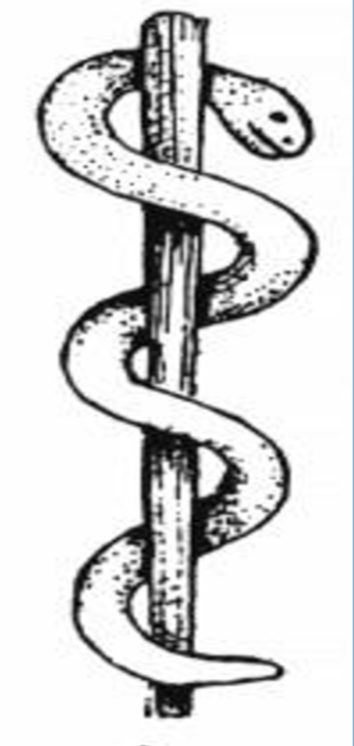
This can relate to how you remove a Guinea worm --> when the female emerges from the skin, slowly wind the worm around a stick to pull out the worm.
disability - adjusted life year
measures the estimated value of the years of healthy life lost to a disease
Phylum Nematomorpha (horsehair worms)
resemble coarse hairs, lack gut, free-living, juveniles are parasites of arthropods, crabs
life cycle : free-living adults mate in water --> females lay strings of eggs in water --> egg hatches into larvae with proboscis to penetrate host --> host gets eaten by a terrestrial arthropod and now enters definitive host --> larva grows into juvenile worm and feeds on host in body cavity --> manipulate host behavior to enter water and starts cycle again
dead end host: larva eaten by wrong animal
Phylum Tardigrada (water bears)
very small, live in mosses, freshwater/marine/terrestrial, 8 short unjointed legs with claws, pharynx, non-chitinous cuticle, molts, reduced coelom
can survive in vacuum spaces= no circulatory or respiratory systems
hemocoel
main body cavity filled with fluids and functions as the hydrostatic skeleton
hemolymph
the liquid that fills the body cavity of tardigrades (hemocoel)
cryptobiosis
the ability to suspend metabolism to survive harsh conditions
tardigrades can dehydrate from 85% water to only 3% water --> when water available they can become metabolically active again
amphids
sensory organs on each side of the head in phylum nematoda