Metamerism
segmentation, bodies composed of serially repeated units, each unit contains components of most organ systems
- increased burrowing efficiency by permitting independent movement of segments
- if one segment failed, others could still function
setae
tiny chitinous bristles
- absent in leeches, short setae anchor segments in earthworms, long setae help aquatic worms swim
prostomium
most anterior region of the head, sits directly in front of the mouth (may or may not be retractile)
peristomium
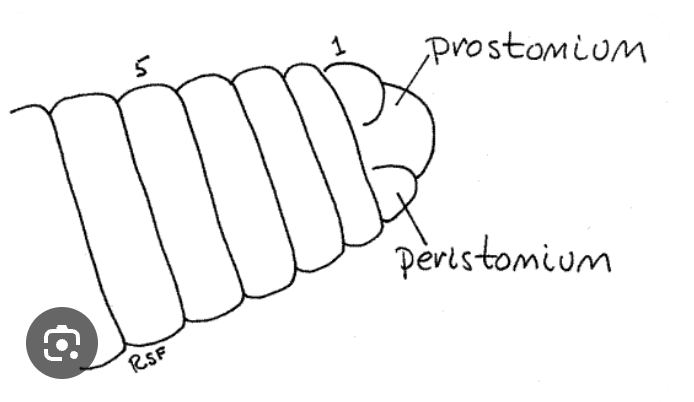
first body segment on anterior end that surrounds the mouth, may have setae, palps, or chitinous jaws
pygidium
terminal portion bearing the anus (posterior end)
petrioneum (mesodermal epithelium)
lines body wall and forms dorsal and ventral mesenteries
mesenteries
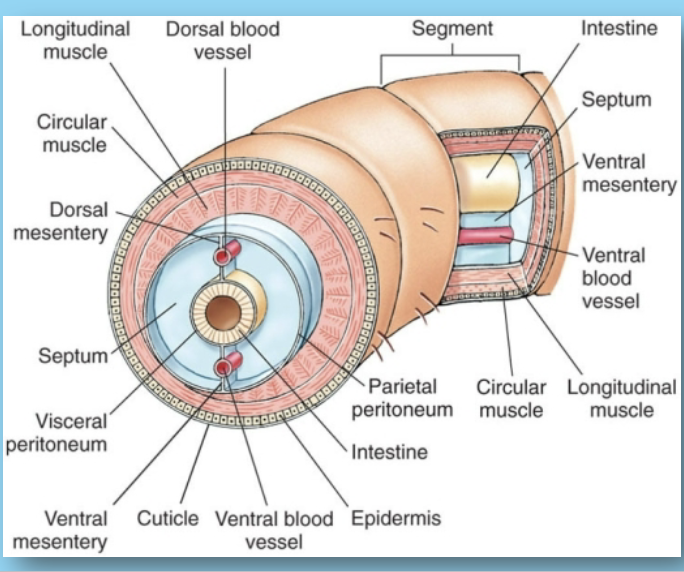
thin double layer sheets of peritoneal tissue that supports internal organs and the digestive tract
septa
where peritonea of adjacent segments meet
- thin walls that separate the worm's body cavity into individual segments
hydrostatic skeleton
the annelid coelom is filled with fluid creating stability
peristalsis
the alternate waves of contraction to allow for efficient burrowing
- longitudinal muscles: body shortens and expands
- circular muscles: body narrows and lengthens
parapodia
paired, unjointed, fleshy lateral appendages found on the segments with setae
used for crawling, swimming, or anchoring in tubes
Class Errantia
errant or mobile polychaetes are predators
Class Sedentaria
sedentary or burrowing polychaete, oligochaete, and leeches
feed on suspended particles or particles in sediment
Family Hirudinidae (leeches)
34 segments, lack setae and have anterior and posterior suckers
most have proboscis or pharynx with 3 teeth-lined jaws, feed on body fluids with bloodsuckers secreting an anticoagulant in their saliva
Family Lubricidae (earthworms)
have 4 pairs of setae on each segment, scavengers, have pharynx, unsegmented digestive tract
closed circulatory system
palps
specialized appendages on the prostomium that serve sensory and feeding functions
statocysts
sense organs for balance
trochophore
early larva stage
fertilization is external - release gametes
radioles
how food moves to mouth by ciliary action
Class Oligochaetes
freshwater, few marine or parasitic (earthworms, leeches, chaetogasters)
all possess a clitellum
lack parapodia
clitellum
ring of secretory cells in the epidermis used in reproduction
class oligochaetes
pharynx
moistens food by the mouth
typhlosole
a U-shaped fold that increases the internal surface area of the intestine
chloragogen cells
surround he intestine to synthesize glycogen and fat, also function in excretion
hemoglobin
in the blood with colorless ameboid cells
nephridia
pairs in the segments that do excretion
- ciliated funnel draws in wastes and moves through tubules that resorb water and salts
nephridiopore
where dilute urine is discharged to the outside