visceral mass
central region, containing digestive, circulatory, respiratory, and reproductive organs
--> protected by a shell
foot
used for locomotion, attachment to substrate, posterior to the mouth
- secreted mucus aids in adhesion or helps mollusc glide on cilia
radula
ribbon -like membrane with rows of tiny chitinouys teeth --> tongue like organ, rasps off particles of food from surfaces
mantle
where two folds of skin form protective layer
mantle cavity
space between mantle and body wall, houses the gills or lungs
-> asists in gas and waste exchange
-> some the mantle helps in reproduction, locomotion, some have chemoreceptors
periostracum
outer organic layer composed of conchiolin, a protein
nacre
secreted continuously in thin layers by mantle, becomes thicker over the life of the mollusc
open circulatory system
blood not entirely contained in blood vessels -> blood in cavity
metanephridia
primary excretory and osmoregulation organs
- have pair of kidneys
trochophore
a free swimming larva after egg hatches
veliger
the intermediate larval stage, showing the beginning of foot, mantle, and shell
Class Polyplacophora (chitons)
flattened; surface with 8 dorsal plates
most prefer rocky intertidal surfaces - clings to rock with broad food and can roll up for protection
mantle extends around margin of plates to form a girdle (protection)
Class Scaphopoda (tusk or tooth shells)
sedentary marine molluscs
slender body covering with a mantle
tubular shell is open at both ends
mantle is wrapped around the viscera and fused to form a tube
foot protrudes from larger end to burrow into sand
Class Gastropoda
most diverse class
shells are defense
one-piece univalve (1 opening), coiled/uncoiled
snails, limpets, slugs, whelks, conches, periwinkles, sea slugs, sea hares, and sea butterflies
marine to air-breathing terrestrial snails and slugs --> sedentary animals (slow moving)
operculum
covering shell aperture: protects and prevents water loss
class gastropoda
torsion
position of visceral and mantle organs shift by 180 degrees in development
veliger starts with (head) mouth anterior and anus posterior (foot)
class gastropoda
Why torsion?
1. more space in mantle cavity allows the head to be withdrawn into the shell with tougher food forming a barrier
2. sensory organs in mantle cavity better positioned to sample water at anterior end
- fouling can occur by waste washing over gills when rotated in specific way
coiling
spiral winding of shell and visceral mass (no torsion)
bilaterally symmetrical shell but not compact, unbalanced, loss of right gill, auricle, and kidney
shifted shell for better weight distribution
occurs at same larval stage as torsion but has separate earlier evolutionary origin --> all living gastropods descended from coiled ancestors
detorsion
reversal of torsion so anus is posterior
pulmonates
air breathing snails --> have a highly vascular area in mantle that functions as a lung
class gastropoda
pneumostome
small opening for lungs to open to outside
aquatic freshwater pulmonates must surface to expel a gas bubble
class gastropoda
dioecious
male and female
spermatophores
bundles of sperm, how hermaphroditic species undergo copulation (class gastropoda)
where spermatozoa are encased and stored in male seminal vesicle (mantle cavity) to be inserted into female (class cephalopoda)
Class bivalvia
pelecypoda = hatchet food
include mussels, clams, scallops, oysters, and shipworms
most are sedentary suspension feeders; ciliary currents produced by gills collect food
lack a head, radula, and very little cephalization
most are marine
valves
2 shells are held together by a hinge ligament
class bivalvia
adductor muscles
the muscle creates hinge, holding valves together, allowing for contracting
relaxed, valves open
what is the function of cilia on mantle? class bivalvia
on gills and inner surface to move water containing food and oxygen (gas exchange)
move food into mouth
umbo
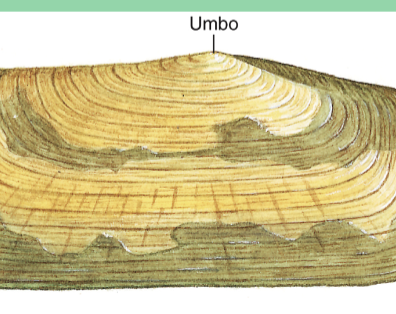
oldest part of the shell with growth occuring outward in rings
Class bivalvia embryronic development
trochophore --> veliger --> spat
glochidia
attached to fish gills at larvae stage and then develop into a specialized veliger
- attach to gills of passing fish where they live as parasites briefly --> then sink to bottom to become sedentary adults)
unionid freshwater mussels life cycle
glochidia larvae --> fish host --> juvenile mussels --> adult mussel
The Lure Strategy
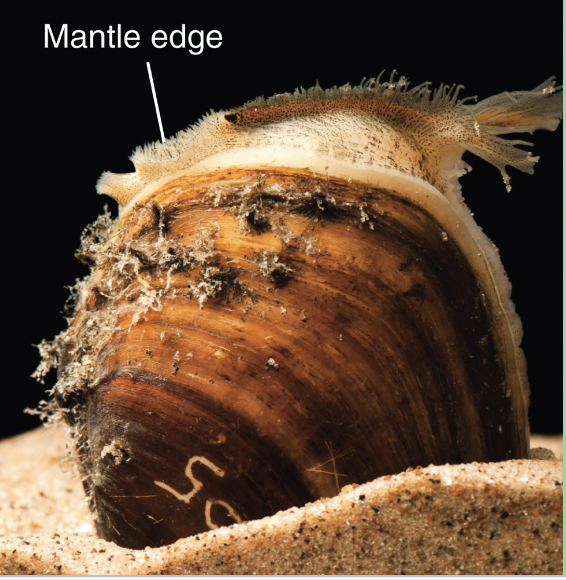
pregnant female lures fish by wiggling mantle flaps that look like small minnows
The Bait Strategy
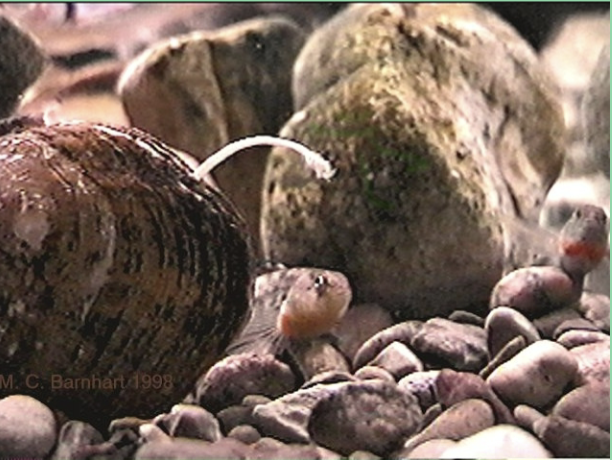
bags of larvae are reeled out of end of a line to pretend to be a fish to attract
The Net Strategy
releases long filaments of mucus strands that intertwine to form "nets"
Why are freshwater mussels indicators of clean water?
eat algae and filter feeders
Class Cephalopoda
includes squids, octopuses, nautiluses, and cuttlefish
all marine predators
foot is the head region
foot may act as funnel for expelling water (jet propulsion= siphon)
brain is the most complex of any invertebrate
pen
squid shell that has a thin strip, the enclosed part of mantle
class cephalopoda
nautilus shell
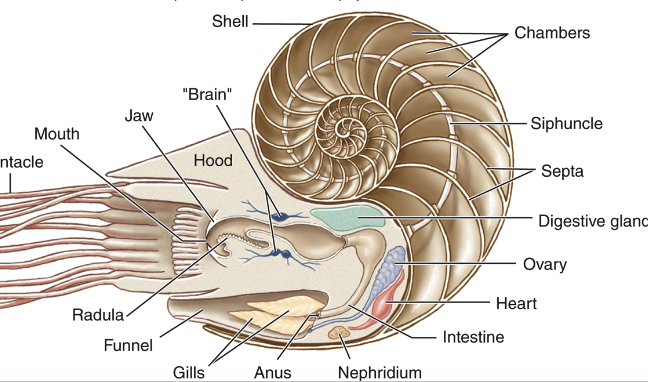
divided into gas chambers
class cephalopoda
branchial hearts
at the base of each gill to increase pressure to blood going through gill capillaries
closed circulatory system
class cephalopoda
Chromatophores
cells in the skin that expand and contract to produce color