Cardiac monitor showed ventricular tachycardia. Upon assessment, the client became unresponsive and did not have a pulse?
1.Call a code blue
2.Defibrillate the client
3.Perform chest compression
Client with myocardial infaction who is receiving tissue plasminogen activator (tPA) the nurse should paln to prioritize which of the following ?
Clients receiving tPA therapy should remain in bed with the head of the bed elevated at 30-45 degree angle to reduce the risk of bleeding complications.
Observe for signs of bleeding
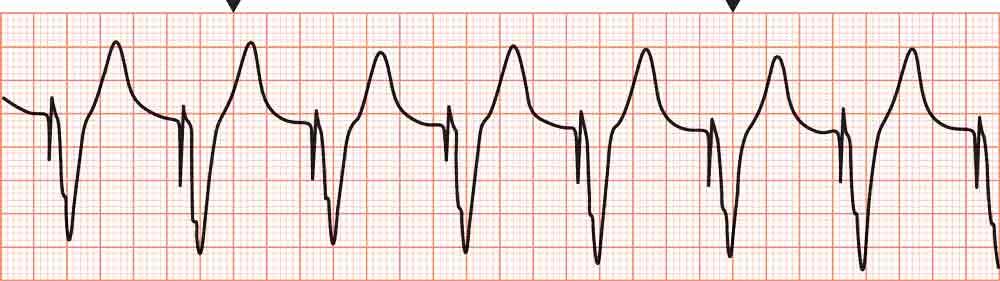
The nurse is caring for a client with the below tracing on the electrocardiogram. The nurse should perform which priority action? See the image below.
A. initiate a code blue.
B. establish a peripheral vascular access device
C. notify the primary healthcare physician (PHCP)
D. assess the client’s airway, breathing, and circulation
D. assess the client’s airway, breathing, and circulation
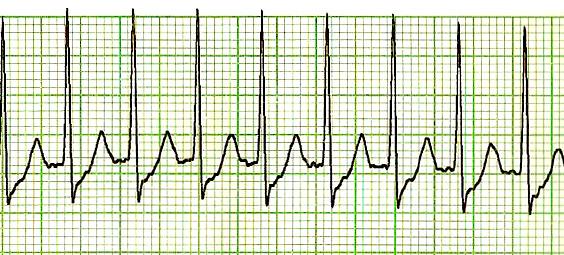
The nurse is caring for a client with the following tracing on the electrocardiogram (ECG). The nurse identifies this tracing as See the image below.
A. sinus tachycardia
B. supraventricular tachycardia.
C. ventricular tachycardia.
D. atrial flutter.
B. supraventricular tachycardia.
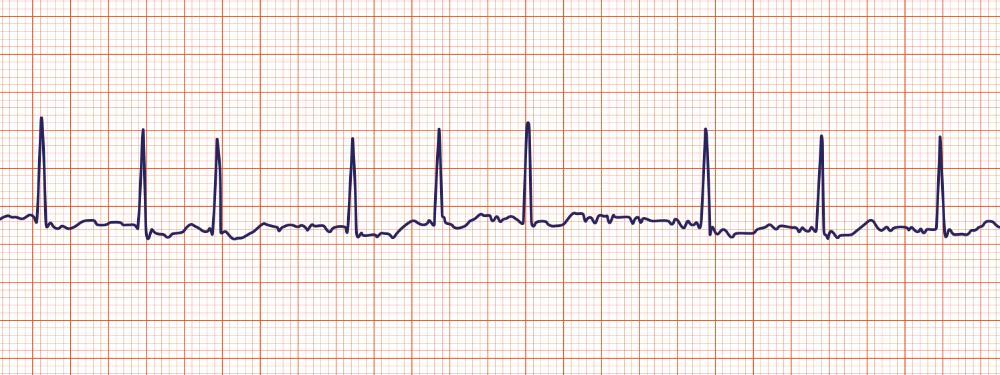
The nurse is caring for a client with the below tracing on the electrocardiogram (ECG).
The nurse should anticipate which prescription from the primary healthcare provider (PHCP)? See the exhibit.
A. captopril
B. atropine
C. adenosine
D. diltiazem
D. diltiazem
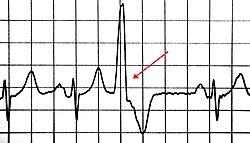
The nurse assesses the following telemetry strip for a client on a medical-surgical unit. Based on the rhythm, what is the priority action for the nurse to take? See the exhibit.
A. Prepare for synchronized cardioversion
B. Obtain a prescription for intravenous (IV) atropine
C. Review the client's most recent labs
D. Assess if the client has a carotid pulse (P)
C. Review the client's most recent labs
The findings that are associated with peripheral arterial disease (PAD)?
Intermittent pain in the legs with walking that improves with rest.
Lower extremities appear thin, shiny, and hairless.
Pedal pulses are weak bilaterally.
Numbness and tingling in the feet.
The findings that are associated with peripheral venous disease PVD?
Bilateral 2+ pitting edema is noted in the lower legs.
Skin on the lower legs appears brownish and thickened.
Capillary refill time is less than 2 seconds.
Blood flow back to the heart is affected
uneven wound edges around ankle
swelling
pedal pulse is present
Pain
symptom of right-sided heart failure?
Ascites
jugular vein distention
oliguria
weight gain
peripheral edema.
symptom of left-sided heart failure ?
Tachypnea
cough
Orthopnea
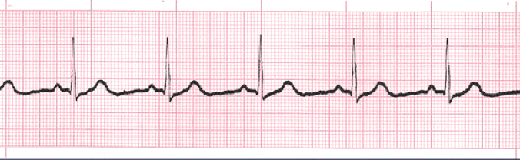
The nurse is caring for client who is experiencing the cardiac rhythm in the ECG strip shown below. The nurse should recognize that client is experiencing?
Sinus bradycardia
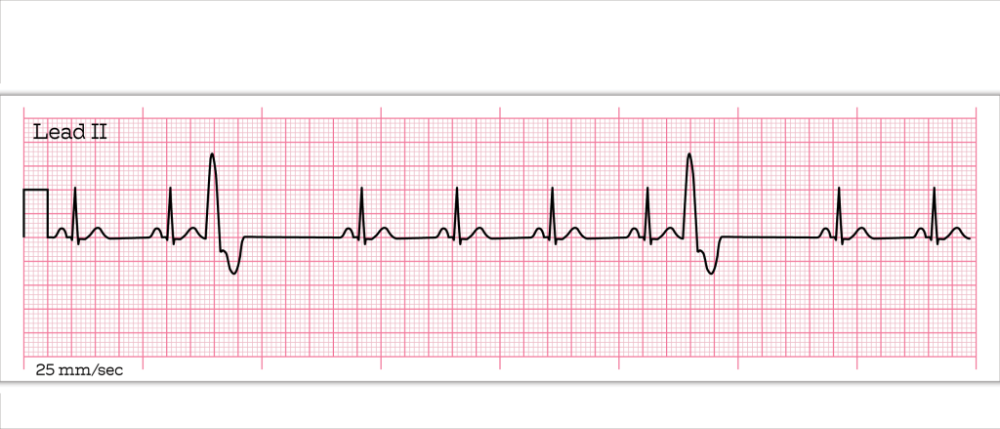
The nurse is caring for a client who is experiencing the cardiac rhythm in the ECG strip shown below. The nurse should recognize that client is experiencing?
Premature Ventricular contractions.
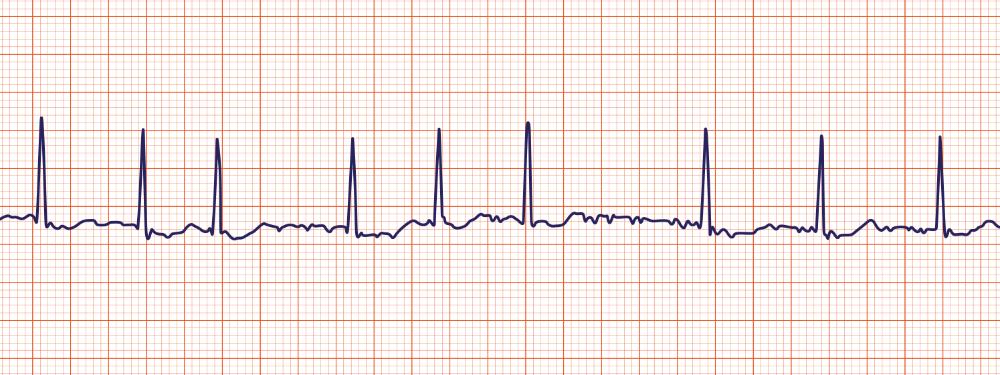
The nurse is caring for a client who is experiencing the cardiac rhythm in the ECG strip shown below. The nurse should recognize that client is experiencing?
Atrial fibrillation