What pathogen is higher risk in unvaccinated individuals and presents with cough, runny nose, conjunctivitis, a diffuse rash, and blue-white spots in the mouth?
A. Mumps
B. Measles
C. Poliovirus
D. West Nile virus
B. Measles
Which measles receptor normally helps inactivate C3 convertase?
A. CD155
B. CCR5
C. CD46
D. SLAM
C. CD46
What signaling receptor is implicated in the pathogenesis of measles?
A. Nectin-4
B. CD46
C. CCR5
D. SLAM
D. SLAM
What signaling receptor is responsible for viral replication for measles?
A. Nectin-4
B. CD155
C. CD46
D. CCR5
A. Nectin-4
Why can measles cause substantial morbidity and mortality?
A. Persistent bacteremia
B. Profound transient immunosuppression
C. Chronic vascular thrombosis
D. Permanent complement activation
B. Profound transient immunosuppression
What rare central nervous system sequelae of measles infection occurs a few days following the developement of the classic rash?
______
Encephalitis
Which oral finding is pathognomonic for measles?
A. Aphthous ulcers
B. Koplik spots
C. Gingival plaques
D. Palatal vesicles
B. Koplik spots
Koplik spots are typically found near the opening of which duct?
A. Wharton duct
B. Stensen duct
C. Lacrimal duct
D. Cystic duct
B. Stensen duct
Which description best matches Koplik spots?
A. Ulcerated mucosal lesions
B. Vesicular skin lesions
C. Necrotic lymphoid plaques
D. Hemorrhagic oral nodules
A. Ulcerated mucosal lesions
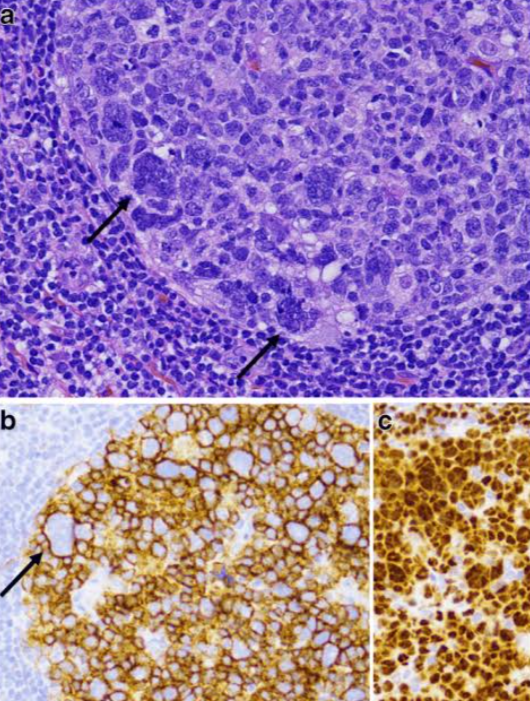
A lymph node biopsy from a measles patient shows multinucleated giant cells. What are these called?
A. Reed-Sternberg cells
B. Warthin-Finkeldey cells
C. Langhans giant cells
D. Touton giant cells
B. Warthin-Finkeldey cells
Warthin-Finkeldey cells may be found in which site?
A. Lymphoid organs
B. Renal glomeruli
C. Salivary ducts
D. Peripheral nerves
A. Lymphoid organs
Which additional site may contain Warthin-Finkeldey cells?
A. Pancreatic ducts
B. Lungs
C. Myocardium
D. Bone marrow
B. Lungs
Which respiratory specimen may contain Warthin-Finkeldey cells?
A. Pleural fluid
B. Sputum
C. Nasal mucus
D. Bronchial lavage
B. Sputum
A patient has an acute systemic viral illness with painful swelling of salivary glands. Which diagnosis is most likely?
A. Measles
B. Mumps
C. Poliovirus
D. West Nile virus
B. Mumps
Which two surface glycoproteins are found on mumps virus?
A. Hemagglutinin and neuraminidase
B. CD46 and nectin-4
C. SLAM and CD155
D. CCR5 and CD46
A. Hemagglutinin and neuraminidase
Which mumps glycoprotein pair resembles influenza surface proteins?
A. CD46 and SLAM
B. Hemagglutinin and neuraminidase
C. Nectin-4 and CD155
D. CCR5 and CD46
B. Hemagglutinin and neuraminidase
What is the most common extrasalivary complication of mumps?
A. Orchitis
B. Pancreatitis
C. Aseptic meningitis
D. Encephalitis
C. Aseptic meningitis
Mumps is most likely in a child who presents with ______ pain and enlarged ______ glands.
epigastric
parotid
What are the symptoms of mumps?
______
______
______ meningitis
______
Parotitis
Orchitis
Aseptic meningitis
Pancreatitis
Inflammation of the testes from mumps is called:
A. Nephritis
B. Orchitis
C. Uveitis
D. Myelitis
B. Orchitis
Which system is commonly involved when mumps spreads extrasalivarily?
A. CNS
B. PNS
C. Endocrine system
D. Lymphatic system
A. CNS
Mumps involvement of the CNS may manifest as:
A. Encephalitis
B. Myocarditis
C. Nephritis
D. Vasculitis
A. Encephalitis
What possible sequela can occur in mumps, especially after puberty?
_____
Sterility
A patient develops an acute systemic viral illness ranging from mild symptoms to paralysis of limb and respiratory muscles. Which virus is most likely?
A. Measles virus
B. Mumps virus
C. Poliovirus
D. West Nile virus
C. Poliovirus
Severe poliovirus infection may paralyze which muscles?
A. Limb muscles
B. Facial muscles
C. Extraocular muscles
D. Cardiac muscle
A. Limb muscles
Which additional muscle group may be paralyzed in severe poliovirus infection?
A. Respiratory muscles
B. Smooth muscle
C. Esophageal muscles
D. Pupillary muscles
A. Respiratory muscles
Which receptor does poliovirus bind to enter human cells?
A. CD46
B. CD155
C. SLAM
D. CCR5
B. CD155
Poliovirus is higher risk in ______ individuals and presents with ______, ______, and ______.
unvaccinated
meningitis, myalgia, and paralysis
What two vaccines can be used for poliovirus infections?
_____ vaccine (injection)
_____ vaccine (by mouth)
Salk
Sabin
B-cell immunodeficiency results in predisposition to which two type
of viruses?
______
______ encephalitis
Poliovirus
Enteroviral encephalitis
A patient has fever, headache, myalgia, fatigue, anorexia, and nausea from a systemic viral infection. Which diagnosis best fits?
A. West Nile virus
B. Measles
C. Mumps
D. Poliovirus
A. West Nile virus
Approximately what proportion of West Nile infections are asymptomatic?
A. 20%
B. 40%
C. 60%
D. 80%
D. 80%
Before reaching lymph nodes, West Nile virus initially replicates in which cells?
A. Skin dendritic cells
B. B lymphocytes
C. Motor neurons
D. Endothelial cells
A. Skin dendritic cells
After replicating in skin dendritic cells, West Nile virus next spreads to:
A. Lymph nodes
B. Salivary glands
C. Renal tubules
D. Bone marrow
A. Lymph nodes
Which receptor has an unusual protective role against neuroinvasive West Nile infection?
A. CD155
B. CCR5
C. CD46
D. SLAM
B. CCR5
Functional CCR5 has what effect on West Nile infection?
A. Increases paralysis
B. Confers neuroinvasive resistance
C. Causes immunosuppression
D. Promotes viral latency
B. Confers neuroinvasive resistance
Loss-of-function mutations in both CCR5 copies increase risk of:
A. Symptomatic West Nile infection
B. Severe measles immunosuppression
C. Mumps orchitis
D. Poliovirus paralysis
A. Symptomatic West Nile infection
What condition is caused by West Nile virus?
_______
Meningoencephalitis
How does CCR5 loss affect HIV compared with West Nile virus?
A. Protective in both infections
B. Harmful in both infections
C. Protective HIV, harmful West Nile
D. Harmful HIV, protective West Nile
C. Protective HIV, harmful West Nile
Why is CCR5 loss protective against HIV?
A. HIV uses CCR5 entry
B. CCR5 activates caspases
C. CCR5 blocks complement
D. HIV binds CD155
A. HIV uses CCR5 entry
A patient develops shock during a severe viral multisystem illness caused by vascular dysregulation and damage. Which syndrome best fits?
A. Viral hemorrhagic fever
B. Acute measles
C. Poliomyelitis
D. Chronic GVHD
A. Viral hemorrhagic fever
Which tissue is commonly damaged across viral hemorrhagic fevers?
A. Blood vessels
B. Salivary glands
C. Renal tubules
D. Peripheral nerves
A. Blood vessels
Viral hemorrhagic fever can damage vessels directly by infecting which cells?
A. Endothelial cells
B. Plasma cells
C. Motor neurons
D. Hepatocytes
A. Endothelial cells
Viral hemorrhagic fever may indirectly damage vessels through cytokines released by:
A. Leukocytes
B. Erythrocytes
C. Platelets
D. Fibroblasts
A. Leukocytes
Leukocyte cytokine release in viral hemorrhagic fever promotes what process?
A. Inflammation
B. Paralysis
C. Latency
D. Opsonization
A. Inflammation
Severe vascular damage in viral hemorrhagic fever may ultimately cause:
A. Shock
B. Orchitis
C. Dysphagia
D. Meningitis
A. Shock
Which viral family most commonly establishes latency in humans?
A. Herpesviruses
B. Paramyxoviruses
C. Picornaviruses
D. Flaviviruses
A. Herpesviruses
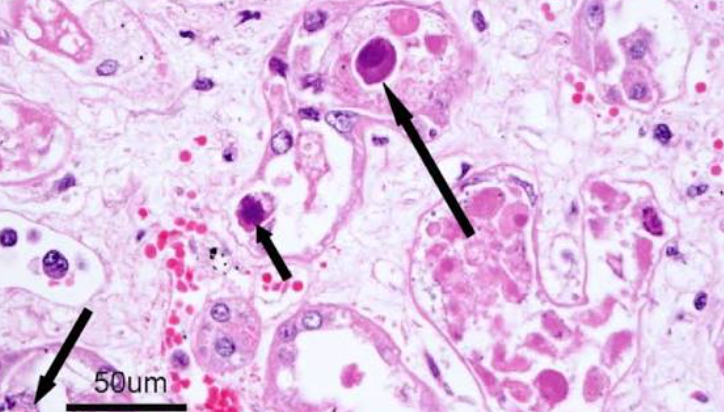
HSV-infected cells contain large pink-purple intranuclear inclusions called:
A. Downey cells
B. Cowdry bodies
C. Owl-eye cells
D. Reed-Sternberg cells
B. Cowdry bodies
CMV belongs to which herpesvirus subgroup?
A. Alpha
B. Beta
C. Gamma
D. Delta
B. Beta
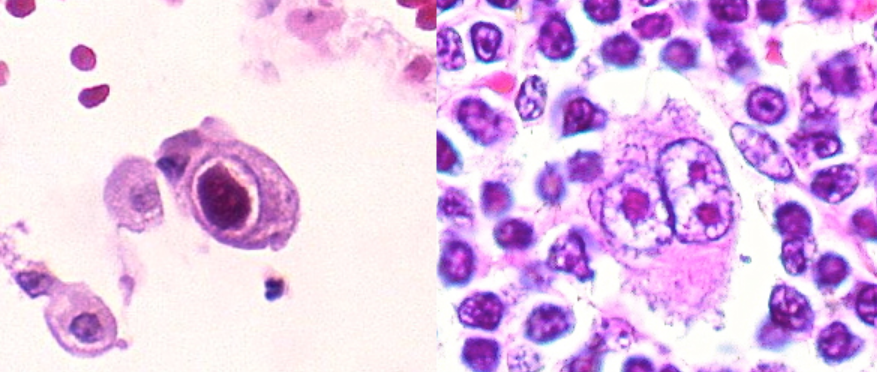
An “owl’s-eye” inclusion is classically associated with:
A. HSV
B. EBV
C. CMV
D. Measles
C. CMV
CMV infection can transiently cause which immune effect?
A. Severe immunosuppression
B. Permanent neutropenia
C. Excess antibody production
D. Complement hyperactivation
A. Severe immunosuppression
Which groups are most concerning for severe CMV disease?
A. Children and athletes
B. Neonates and immunocompromised
C. Elderly and smokers
D. Adults and adolescents
B. Neonates and immunocompromised
Signs and Symptoms in Newborns
- Yellow skin and eyes (jaundice)
- Enlarged liver and spleen
- Small head size (microcephaly)
- Tiny purple or red spots on the skin (petechiae)
- Seizes or developmental delays
A. EBV mononucleosis
B. Cytomegalic inclusion disease
C. HSV encephalitis
D. Measles infection
B. Cytomegalic inclusion disease
Which test can distinguish cytomegalic inclusion disease from erythroblastosis fetalis?
A. Monospot test
B. PCR testing
C. Coombs test
D. ANA testing
B. PCR testing
Which additional method can confirm cytomegalic inclusion disease?
A. Viral culture
B. Heterophile testing
C. Flow cytometry
D. Indirect immunofluorescence
A. Viral culture
An immunocompetent adult with CMV most commonly develops what syndrome?
A. Pneumonia-like illness
B. Mononucleosis-like illness
C. Hemorrhagic fever
D. Paralytic illness
B. Mononucleosis-like illness
Which symptom commonly occurs in immunocompetent CMV infection?
A. Fever
B. Orchitis
C. Paralysis
D. Hemorrhage
A. Fever
Which hematologic finding may accompany immunocompetent CMV infection?
A. Neutropenia
B. Lymphocytosis
C. Thrombocytosis
D. Eosinophilia
B. Lymphocytosis
Which lymphatic finding may occur with immunocompetent CMV infection?
A. Splenic rupture
B. Lymphadenopathy
C. Thymic atrophy
D. Marrow fibrosis
B. Lymphadenopathy
Which organ enlargement may occur in immunocompetent CMV infection?
A. Splenomegaly
B. Cardiomegaly
C. Hepatomegaly
D. Nephromegaly
C. Hepatomegaly
An immunocompromised patient with CMV develops visual symptoms. Which manifestation is most likely?
A. Chorioretinitis
B. Keratitis
C. Optic neuritis
D. Cataracts
A. Chorioretinitis
What constellation of findings is seen in patients with congenital
cytomegalovirus infection?
_____ loss
s_____
c_____
_____ muffin rash
_____ rash
_____ calcifications
Hearing loss
Seizures
Chorioretinitis
blueberry muffin
rash
petechial rash
periventricular calcifications
Which pulmonary manifestation can CMV cause in immunocompromised patients?
A. Bronchiectasis
B. Pneumonitis
C. Emphysema
D. Pneumothorax
B. Pneumonitis
An immunocompromised patient develops CMV-associated diarrhea and abdominal pain. Which manifestation is likely?
A. Colitis
B. Pancreatitis
C. Hepatitis
D. Appendicitis
A. Colitis
A CBC from an EBV patient shows unusual mononuclear cells. What are they?
A. Atypical T lymphocytes
B. Plasma cells
C. Immature neutrophils
D. Eosinophilic blasts
A. Atypical T lymphocytes
Atypical lymphocytes seen in EBV mononucleosis are also called:
A. Cowdry cells
B. Downey cells
C. Owl-eye cells
D. Langerhans cells
B. Downey cells
What is the main cellular reservoir for EBV?
A. T cells
B. B cells
C. Neutrophils
D. Monocytes
B. B cells
In the “Mono HELPS” mnemonic, the “M” represents:
A. Myocarditis
B. Meningitis
C. Myositis
D. Mastitis
B. Meningitis
In “Mono HELPS,” the “H” represents:
A. Hepatitis
B. Hemolysis
C. Hypersensitivity
D. Hemorrhage
A. Hepatitis
In “Mono HELPS,” the “E” represents:
A. Endocarditis
B. Encephalitis
C. Enteritis
D. Epididymitis
B. Encephalitis
In “Mono HELPS,” the “L” represents:
A. Leukopenia
B. Lymphadenitis
C. Laryngitis
D. Lymphoma
B. Lymphadenitis
In “Mono HELPS,” the “P” represents:
A. Pneumonitis
B. Pancreatitis
C. Pericarditis
D. Pyelonephritis
A. Pneumonitis
In “Mono HELPS,” the “S” represents:
A. Sepsis
B. Splenitis
C. Synovitis
D. Sinusitis
B. Splenitis
Which EBV protein binds viral DNA to host chromosomes?
A. LMP1
B. EBNA1
C. vIL-10
D. CD40
B. EBNA1
What is a key function of EBNA1?
A. Activates complement
B. Ensures equal viral division
C. Suppresses antibody secretion
D. Destroys infected B cells
B. Ensures equal viral division
EBNA1 helps EBV genomes segregate into:
A. Daughter cells
B. Neutrophil granules
C. Plasma proteins
D. Viral envelopes
A. Daughter cells
Which EBV protein drives B-cell activation?
A. EBNA1
B. LMP1
C. vIL-10
D. CD16
B. LMP1
LMP1 activates B cells by mimicking which host signal?
A. CD28
B. CD40
C. CD16
D. CD25
B. CD40
Which EBV protein suppresses the host immune response?
A. LMP1
B. EBNA1
C. vIL-10
D. CD40
C. vIL-10
Which T-cell population contributes to EBV atypical lymphocytes?
A. CD4 T cells
B. CD8 T cells
C. Tfh cells
D. Th17 cells
B. CD8 T cells
Which innate lymphocyte also contributes to EBV atypical lymphocytes?
A. CD16 NK cells
B. Plasma cells
C. Basophils
D. Eosinophils
A. CD16 NK cells
The CD8 T cells seen in EBV atypical lymphocytosis are directed against:
A. CMV
B. EBV
C. HSV
D. Measles
B. EBV
A patient with prior EBV infection develops a t(8;14) MYC translocation. Which malignancy is associated?
A. Hodgkin lymphoma
B. Burkitt lymphoma
C. Multiple myeloma
D. Follicular lymphoma
B. Burkitt lymphoma
In Burkitt lymphoma, where do lesions occur in different
epidemiological forms?
_____ lesions in the
endemic form in Africa
_____ and/or _____ lesions in the sporadic form
Jaw lesions in the endemic form in Africa
abdominal and/or pelvic lesions in the sporadic form
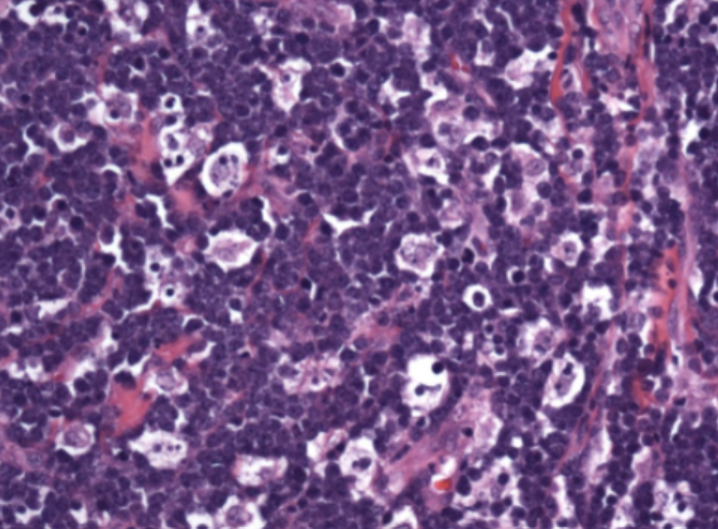
How is the histologic appearance of Burkitt lymphoma, as shown in the image, described?
starry sky
What population age is associated with Burkitt lymphoma?
_______ and _______ adults
Adolescents and younger adults
Which oncogene is involved in the EBV-associated t(8;14) translocation?
A. BCL2
B. MYC
C. RAS
D. TP53
B. MYC
Which screening test supports a diagnosis of EBV mononucleosis?
A. Monospot test
B. Coombs test
C. ANA test
D. PCR only
A. Monospot test
The Monospot test detects which type of antibody reaction?
A. Antinuclear antibody
B. Heterophile antibody
C. Antiphospholipid antibody
D. Anti-histone antibody
B. Heterophile antibody
Which serologic trend supports recent EBV infection?
A. Falling ANA titers
B. Rising EBV antibodies
C. Falling IgE levels
D. Rising C4d levels
B. Rising EBV antibodies
Which combination best supports an EBV diagnosis?
A. Atypical lymphocytes, Monospot, rising antibodies
B. Owl-eye cells, PCR, neutropenia
C. Cowdry bodies, culture, rash
D. CD155 binding, paralysis, meningitis
A. Atypical lymphocytes, Monospot, rising antibodies
Which herpesvirus group infects epithelium and establishes neuronal latency?
A. Alpha herpesviruses
B. Beta herpesviruses
C. Gamma herpesviruses
D. Retroviruses
A. Alpha herpesviruses
Which viruses belong to the alpha-herpesvirus group?
A. CMV, HHV-6, HHV-7
B. EBV, HHV-8, CMV
C. HSV-1, HSV-2, VZV
D. HSV-1, EBV, CMV
C. HSV-1, HSV-2, VZV
Alpha herpesviruses characteristically establish latency in which cells?
A. Hepatocytes
B. Neurons
C. Lymphocytes
D. Endothelial cells
B. Neurons
Which tissue is initially infected by alpha herpesviruses?
A. Epithelium
B. Lymphoid tissue
C. Bone marrow
D. Renal tubules
A. Epithelium
Which herpesvirus group infects lymphocytes and can remain latent in several cell types?
A. Alpha group
B. Gamma group
C. Beta group
D. Retrovirus group
C. Beta group
Which viruses belong to the beta-herpesvirus group?
A. CMV, HHV-6, HHV-7
B. HSV-1, HSV-2, VZV
C. EBV, HHV-8, HSV-1
D. VZV, EBV, CMV
A. CMV, HHV-6, HHV-7
Beta herpesviruses characteristically infect which cells?
________
Lymphocytes
Unlike alpha herpesviruses, beta herpesviruses may remain latent in:
A. Neurons exclusively
B. Lymphoid cells exclusively
C. Various cell types
D. Epithelial cells exclusively
C. Various cell types
Which herpesvirus group establishes latency primarily in lymphoid cells?
A. Beta herpesviruses
B. Alpha herpesviruses
C. Gamma herpesviruses
D. Orthomyxoviruses
C. Gamma herpesviruses
Which viruses belong to the gamma-herpesvirus group?
A. HSV-1 and HSV-2
B. EBV and HHV-8
C. CMV and HHV-6
D. VZV and CMV
B. EBV and HHV-8
What are the physical findings of Kaposi sarcoma associated with
HHV-8 infection with a CD4+ count < 500
cells/mm3?
Invading _____ _____ cells that
form _____ tumors visible on histology
perivascular spindle
vascular
Which oncogenic virus is associated with Kaposi sarcoma?
HHV-8
A Chinese male with prior EBV infection develops a malignancy. Which cancer is classically associated?
A. Gastric cancer
B. Burkitt lymphoma
C. Nasopharyngeal carcinoma
D. Hepatocellular carcinoma
C. Nasopharyngeal carcinoma
An African patient with prior EBV infection develops lymphoma. Which malignancy is associated?
A. Hodgkin lymphoma
B. Burkitt lymphoma
C. Follicular lymphoma
D. Mantle cell lymphoma
B. Burkitt lymphoma
Which gastrointestinal malignancy is associated with EBV?
A. Colon cancer
B. Pancreatic cancer
C. Gastric cancer
D. Esophageal cancer
C. Gastric cancer
Which group contains three malignancies associated with EBV?
A. Burkitt, gastric, nasopharyngeal cancers
B. Colon, thyroid, hepatic cancers
C. Pancreatic, renal, bladder cancers
D. Melanoma, glioma, sarcoma
A. Burkitt, gastric, nasopharyngeal cancers
An HIV-positive patient develops a white oral lesion associated with EBV. What is the diagnosis?
A. Oral candidiasis
B. Aphthous ulcer
C. Oral hairy leukoplakia
D. Kaposi sarcoma
C. Oral hairy leukoplakia
Which virus causes sixth disease?
A. HHV-6
B. HHV-8
C. HSV-1
D. CMV
A. HHV-6
How does the rash seen in roseola infantum spread
automatically?
Starts on the _____ and then spreads to
the _____
trunk
extremities
Roseola infantum is another name for infection with:
A. EBV
B. HSV-2
C. HHV-6
D. VZV
C. HHV-6
HHV-6 belongs to which herpesvirus subgroup?
A. Alpha
B. Beta
C. Gamma
D. Delta
B. Beta
Which three names refer to the same illness?
A. Roseola, sixth disease, exanthem subitum
B. Mumps, roseola, exanthem subitum
C. Measles, sixth disease, rubella
D. Varicella, roseola, shingles
A. Roseola, sixth disease, exanthem subitum
Which virus is a major cause of corneal blindness?
A. HSV-1
B. HSV-2
C. CMV
D. HHV-6
A. HSV-1
Which virus is a major cause of fatal sporadic encephalitis?
A. VZV
B. EBV
C. HSV-1
D. HSV-2
C. HSV-1
A patient develops gingivostomatitis and recurrent facial cold sores. Which virus is most likely?
A. HSV-2
B. HSV-1
C. CMV
D. HHV-6
B. HSV-1
A patient develops recurrent painful genital vesicles. Which virus is most likely?
A. HSV-1
B. VZV
C. HSV-2
D. CMV
C. HSV-2
Which neurologic complication is associated with HSV-2?
A. Fatal sporadic encephalitis
B. Aseptic meningitis
C. Corneal blindness
D. Peripheral neuropathy
B. Aseptic meningitis
Which clinical combination best matches HSV-2?
A. Cold sores and encephalitis
B. Genital herpes and meningitis
C. Roseola and lymphadenopathy
D. Gastric cancer and leukoplakia
B. Genital herpes and meningitis
HSV-1 remains latent in which structure?
A. Sacral ganglia
B. Trigeminal ganglia
C. Dorsal root
D. Celiac ganglia
B. Trigeminal ganglia
How can you differentiate esophageal ulcers caused
by HSV-1 from those caused by cytomegalovirus?
HSV-1
causes _____- _____ ulcers
Cytomegalovirus causes _____ ulcers
punched-out
linear
What brain lesion causes sudden hyperoral, hypersexual, and
uninhibited behavior with a positive cerebrospinal fluid polymerase
chain reaction for HSV-1?
Bilateral _____ lesions
amygdala
What viral infections are associated with intranuclear eosinophilic
Cowdry A inclusions?
_______
_______
_______
HSV-1
HSV-2
VZV
HSV-2 remains latent primarily in which structure?
A. Trigeminal ganglia
B. Cervical ganglia
C. Sacral ganglia
D. Sympathetic chain
C. Sacral ganglia
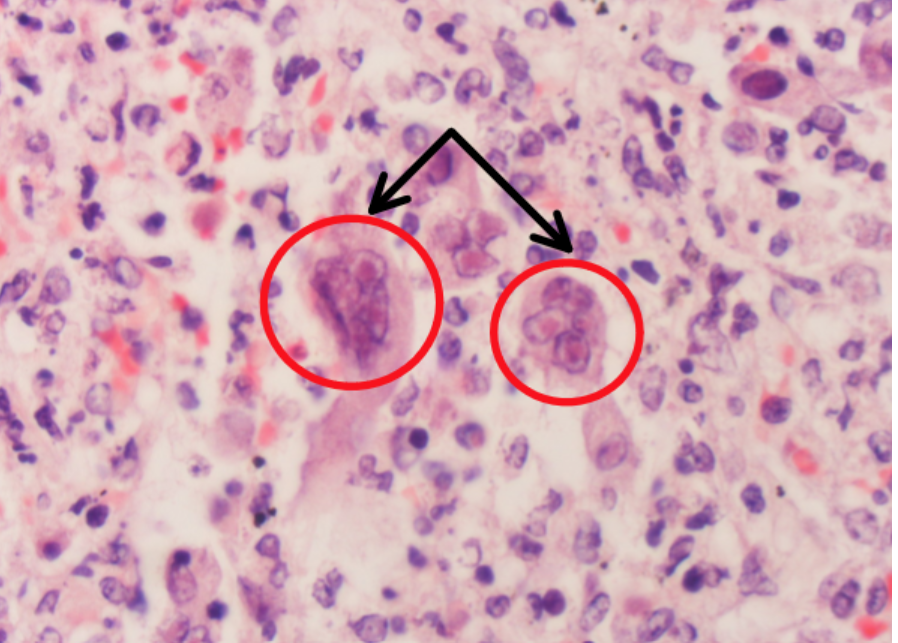
Which diagnostic test for HSV can reveal multinucleated giant cells?
A. PCR
B. Tzanck smear
C. Monospot
D. Viral culture
B. Tzanck smear
Which molecular test can diagnose HSV infection?
A. PCR
B. ANA
C. Monospot
D. Coombs test
A. PCR
Which pair represents diagnostic methods for HSV?
A. Tzanck smear and PCR
B. Monospot and ANA
C. Culture and Coombs test
D. C4d and RF
A. Tzanck smear and PCR
Which pair is listed for HSV-1 and HSV-2 treatment?
A. Acyclovir and valacyclovir
B. Acyclovir and cefazolin
C. Valacyclovir and gentamicin
D. Famciclovir and aztreonam
A. Acyclovir and valacyclovir
What is the advantage of using valacyclovir over acyclovir?
Valacyclovir is a prodrug of acyclovir with better ______ bioavailability
oral
Which medication is listed as a treatment for CMV?
A. Acyclovir
B. Tacrolimus
C. Neomycin
D. Cefuroxime
A. Acyclovir
Which additional drug is listed for CMV treatment?
A. Spectinomycin
B. Valacyclovir
C. Gentamicin
D. Penicillin V
B. Valacyclovir
Which third medication is listed for CMV treatment?
A. Famciclovir
B. Cefotaxime
C. Tobramycin
D. Vancomycin
A. Famciclovir
A herpesvirus infects epithelium before establishing neuronal latency. Which virus could fit?
A. CMV
B. EBV
C. HSV-1
D. HHV-6
C. HSV-1
A herpesvirus establishes latency in lymphoid cells and is associated with several malignancies. Which virus best fits?
A. HSV-2
B. EBV
C. VZV
D. HHV-6
B. EBV
A herpesvirus belongs to the beta group and causes roseola. Which virus is it?
A. HHV-6
B. HHV-8
C. HSV-1
D. EBV
A. HHV-6
Measles can be diagnosed via ______ or by ______ and ______ secretions
serology
respiratory
urinary
Viral hemorrhagic fever is caused by viruses with which structural feature according to these notes?
A. Encapsulated
B. Nonencapsulated
C. Segmented
D. Double-stranded
A. Encapsulated
Which set contains only viral hemorrhagic fever families?
A. Herpes, adeno, reo, retro
B. Arena, filo, bunya, flavi
C. Paramyxo, orthomyxo, picorna, corona
D. Papilloma, polyoma, calici, hepe
B. Arena, filo, bunya, flavi
A pregnant woman contracts Zika virus. Which fetal abnormality is classically associated?
A. Hydrocephalus
B. Macrocephaly
C. Microcephaly
D. Spina bifida
C. Microcephaly
Which mosquito genus transmits Zika virus?
A. Anopheles
B. Culex
C. Sandfly
D. Aedes
D. Aedes
A newborn exposed to Zika in utero undergoes brain imaging. Which finding is expected?
A. Cerebral calcifications
B. Subdural hematoma
C. Cerebral aneurysms
D. Epidural hemorrhage
A. Cerebral calcifications
Why can congenital Zika infection produce cerebral calcifications?
A. It infects hepatocytes
B. It grows in neurons
C. It destroys erythrocytes
D. It infects osteoclasts
B. It grows in neurons
Which group contains cutaneous manifestations of HSV-1 or HSV-2 infection?
A. Shingles, roseola, warts
B. Molluscum, shingles, measles
C. Genital herpes, gingivostomatitis, cold sores
D. Varicella, zoster, erythema multiforme
C. Genital herpes, gingivostomatitis, cold sores
Where does varicella-zoster virus classically remain latent?
A. Anterior horn cells
B. Sympathetic ganglia
C. Cerebellar nuclei
D. Dorsal root ganglia
D. Dorsal root ganglia
Reactivation of VZV from the geniculate nucleus produces which syndrome?
A. Ramsay-Hunt syndrome
B. Horner syndrome
C. Lambert-Eaton syndrome
D. Guillain-Barré syndrome
A. Ramsay-Hunt syndrome
A patient develops shingles from VZV latent in the geniculate nucleus. Which neurologic finding may occur?
A. Limb paralysis
B. Facial paralysis
C. Diaphragmatic paralysis
D. Tongue paralysis
B. Facial paralysis
Besides dorsal root ganglia, VZV may remain latent in ganglia associated with which cranial nerve?
A. Facial nerve
B. Vagus nerve
C. Trigeminal nerve
D. Hypoglossal nerve
C. Trigeminal nerve
Localized VZV recurrence is especially frequent and painful in dermatomes innervated by which ganglia?
A. Ciliary ganglia
B. Otic ganglia
C. Geniculate ganglia
D. Trigeminal ganglia
D. Trigeminal ganglia
CMV establishes latent infection primarily in which cells?
A. Monocytes
B. Neutrophils
C. Erythrocytes
D. Platelets
A. Monocytes
Initial replication of West Nile virus occurs in which cells?
A. Alveolar macrophages
B. Hepatic Kupffer cells
C. Skin dendritic cells
D. Intestinal epithelial cells
C. Skin dendritic cells