A 22 YO male pt. presents w/a superficial abrasion on his forearm. The wound is clean, dry, & free of any signs of infection. Which of the following products is indicated for this wound?
Hydrogel dressing
Honey based dressing
Transparent film dressing
Dry gauze dressing
Transparent film dressing
* This dressing is ideal for a clean, dry superficial abrasion. It provides protection, maintains & moist wound environment conducive to healing, and allows continuous vilsualization of the wound w/out disturbming the healing tissue.
For a patient w/an ischemic ulcer, what is the best treatment option?
Topical agents only
Amputation
Systemic antibiotics & Topical agents
Systemic antiobiotics only
Systemic antibiotics & Topical agents
* Because arterial macrovascular insufficiency limits perfusion & reduces delivery of WBCs to the wound, bacteria can proliferate unchecked. Although systemic abx are frequently prescribed, their effectiveness is compromised by poor blood flow; therapeutic concentrations may not reach the ischemic tissue. Therefore, combining systemic antibiotics w/topical antimicrobial agents is essential to manage bioburden effectively.
Which ulcer tends to be painful w/minimal drainage.
Ischemic ulcer
In what context would the use of multimedia educational tools be most appropriate when educating patients and families?
Patient who are easily distracted
Pt.s w/limited literacy skills
Pt.s w/extensive knowledge of wound care
Pts. who prefer not to engage w/educational materials
Pt.s w/limited literacy skills
* These tools convey information visually or auditorily, helping pts. better understand wound care instructions when they struggle w/written materials.
You are providing wound care for a 22 YO female pt. with a burn wound who is receiving enzymatic debridement therapy. Which outcome would be most directly indicate an improvement in the wound condition?
Increased blistering around the wound edges
Wound appearance becomes drier & less prone to infection
Enzymatic degradion of necrotic tissue
Reduced sensation around the wound area
Enzymatic degradion of necrotic tissue
* The primary goal of enzymatic debridement therapy is to remove nectrotic tissue & promote wound healing. ~ The presence of enzymatic breakdown of nectrotic tissue directly indicates that the treatment is effective.
Examples of enzymatic debriding agents:
Collagenase ; Papain; Bromelain
This enzymatic debriding agent is the most widely used agent, derived from Clostridium histolyticum, which specifically targets and breaks down collagen in necrotic tissue.
Collagenase
This enzymatic debriding agent is a proteolytic enzyme derived from papaya that digests non-viable protein tissue, frequently formulated with urea and chlorophyllin.
Papain
This enzymatic debriding agent is a plant-derived enzyme often utilized in specialized burn management to dissolve thick eschar
Bromelain
A new NP (Practitioner) at your clinic is cnfulsed about the selction criteria for different debridement techniques. What is the appropriate approach to educate the NP on when to use enzymatic debridement?
Enzymatic debridement should be reserved for use only after trying sharp debridement methods
Enzymatic debridement should be used mainly for infected wounds w/heavy exudate
Enzymatic debridement is used primarily for dry necrotic wounds
Enzymatic debridement is preferred for patient who cannot tolerate surgical debridement
Enzymatic debridement is preferred for patient who cannot tolerate surgical debridement
* This type of debridement is especially useful in pt.s that are poor candidates for surgical/sharp debridement, or with bleeding disorders, anticoagulation, pain sensitivity, or other comorbidities that increase surgical risk.
A wound care NP is asked to perform a wound dressing change on a patient who has developed a new diabetic foot ulcer (DFU). Before proceeding, what should the NP confirm to remain w/in their legal scope of practice?
Wait until a physician completes a thorough examination of the wound
Verify that the dressing change alligns w/the established wound care plan
Confirm a physician's direct supervision for the dressing change
Ensure that a colleague is present for assistance
Verify that the dressing change alligns w/the established wound care plan
* The Care plan is the guiding document that outlines treatment protocols & ensures practice within the NP's legal scope. ~ A wound care NP generally has the autority to change wound dressings independently when the procedure falls within the pts. individualized wound care plan.
When should a wound care specialist consider referring a pt. w/a DFU to a vascular surgeon?
When there is no significant improvement after four weeks of standard care
When an infection is suspected
Once the wound has healed completely
When the patient is diagnosed w/the ulcer
When there is no significant improvement after four weeks of standard care
* Referral to vascular surgeon is recommended if there is no significant improvement in a diabetic foot ulcer after 4 weeks of comprehensive wound management.
A palpable pulse in the foot indicates which blood pressure level?
80 mm Hg
100 mm Hg
60 mm Hg
120 mm Hg
80 mm Hg
* A palpable pedal pulse indicates an arterial perfusion pressure of approx. 80mm Hg in the foot.
In wound care; if a regional pulse is not palpable, ______ _____ or other vascular assessments are necessary to evaluate the potential for wound healing.
Doppler Ultrasound
Chronic or non-healng wounds are often unable to progress past which phase of wound healing?
Inflammatory phase
Remodeling (maturation phase)
Epithelialization phase
Proliferative phase
Inflammatory phase
* This phase is essential to initiate wound healing; however, when inflammation becomes chronic or unregulated, it inhibits progression to the next phase.
_______ or infection can prolong the inflammatory stage, elaying overall healing.
Necrosis
A wound care specialist is teaching a group of nurses about hydrotherapy for wounds & is reviewing the benefits & risks of this treatment. What is a significant risk associated w/hydrotherapy in wound care?
Increased risk of infection
Rapid healing of the wound
Reduced blood flow to the wound area
Decreased sensation in the wound area
Increased risk of infection
____________ for wounds involves- using running water or controlled water immersion to clean, debride, and heal tissue. It increases infection risk, soothes inflammation, and promotes healthy circulation.
Hydrotherapy
-Reference: Wound Care: A collaborative practice manual for Health Professionals, 4th edition, p. 739
Hydrotherapy
The two primary methods are directional wound irrigation and whirlpool treatments
What is the primary purpose of involving family members in wound care education?
To increase family members' medical knowledge about their loved one's condition
To provide additional support for the patient in adhering to the treatment plan
To minimize the need for future medical interventions
To ensure they can independently handle at-home wound care needs.
To provide additional support for the patient in adhering to the treatment plan
* Involving family members in wound care education helps them understand how to assist the patient w/their treatment plan. This can be critical for pts. who need help adhering to wound care routines, as family members often encourage consistent care & plrovide reminders or assistance w/daily tasks.
A 62 YO patient's chronic ulcer begins to exhibit signs of reduced inflammation & the start of new tissue formation over the wound bed. Which of the following best describes this transition from one phase of wound healing to the next?
From maturation to hemostatis
From proliferation to maturation
From inflammation to proliferation
From hemostasis to inflammation
From inflammation to proliferation
This transition from inflammatory to proliferative phase in chronic wound healing involves a decrease in signs of inflammation-- such as swelling & redness, and the initiation of new tissue formation.
The Unna/Duke boot is an example of what type of compression therapy?
Cohesive bandage compression
Light support
Inelastic compression
Multilayer high compression
Inelastic compression
* Inelastic compression, also called nonelastic compression, provides low resting pressure & high working pressure during muscle contraction.
Name this form Compression Therapy-
When a patient ambulates , the expanding calf muscle presses agbainst the semirigid bandage, generating higher compression. At rest, with no muscle activity, the pressure is minimal.
Inelastic compression such as- Unna/Duke boot
In which of the following positions would a patient most likely experience a shearing force injury to skin?
Laying supine in bed
Side-lying w/a pillow between the knees
Sitting upright at a 90-degree angle
Sitting w/the head of the bed at a 30-degree angle
Sitting upright at a 90-degree angle
* Keeping the head of the bed at or below 30-degree (Semi-Fowler's position) minimizes
A new occupational therapist (OT) on the wound care team is uncertain about the rols of specialty cushions in preventing pressue injuries. What is the best way to clarify the function of these cushions to the OT?
Speciatly cushions help prevent pressure injuries when combined w/regular respositioning
Specialty cushions can be used only for patients w/stage 3 or 4 pressure ulcers
Specialty cushions are used to prevent pressure injuries w/out repositioning
Specialty cushions are primarily designed to treat existing pressure injuries rather that to prevent new ones
Speciatly cushions help prevent pressure injuries when combined w/regular respositioning
A patient develops a pressure ulcer on the hell that has blister involving the epidermis & dermis. What is the stage of this ulcer?
Stage IV
Stage III
Stage I
Stage II
Stage II
* According to NPUAP staging system, a Stage II pressure ulcer is characterized by partial-thickness skin loss involving the epidermis and /or dermis
Stage II pressure ulcer appearance
The wound bed is viable, pink or red, moist, and may present as an intact or ruptured serum-filled blister. There is no slough, eschar, or granulation tissue present.
Which type of sock fabric is best at wicking moisture away from the skin?
Wool blends
100% polyester
Acrylic blends
100% cotton
Acrylic blends
* A cotton/acrylic blend facilitates the wicking of perspiration away from the foot, helping to keep the area clean & dry.
Which of the following is not a function of the macrophages?
Promote angiogenesis
Produce antibodies that neutralize foreign objects
Induce fibroblast lproliferation
Enact phagocytosis
Produce antibodies that neutralize foreign objects
* Macrophages derive from circulating monocytes & appear at the wound site approximately 24 to 48 hours after injury. They are activated by chemokines, cytokines, growth factors, and fragments of extracellular matrix components.
You are caring for a 70 YO male pt. w/a pressure ulcer who cannot be frequently repositioned due to severe pain. Which adjunctive therapy is most appropriate for this patient?
Negative pressure wound therapy (NPWT)
Ultrasound therapy
Electrical simulation
Low-level laser therapy
Negative pressure wound therapy (NPWT)
* NPWT reduces pressure around the wound, removes exudate, and promotes granulation tissue formation- making it ideal for patients who cannot be repositioned frequently due to severe pain.
______ stimulation enhances muscle function & circulation but does not provide pressure relief.
Electrical
______ therapy stimulates the wound bed at the cellular level yet does not replace the need for repositioning.
Ultrasound
__________ _____________ therapy aids in reducing inflammation & promoting healing but does not address pressure off-loading or repositioning issues.
Low-level laser
Bacterial skin damage can be caused by several sources & irritants. Which of the following is not a source of Bacterial skin damage?
Eryspelas
Dermatophyte (tinea)
Folliculitis
Cellulitis
Dermatophyte (tinea)
* tinea are fungal organisms (e.g., ringworm) that cause skin damage but are not bacterial.
Bacterial skin damage is most common due to :
- Cellulitis
- Erysipelas (a bacterial infection of the upper skin layer & superficial lymphatics)
- Erythrasma (a superficial bacterial infection that cuses brown, scaly patches in the skin folds)
Erythrasma
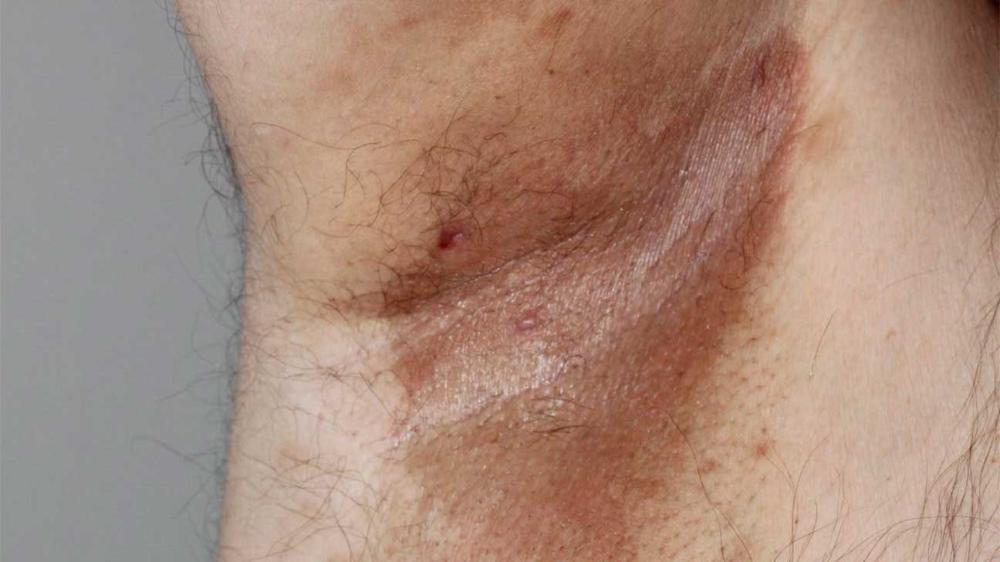
A superficial bacterial infection that cuses brown, scaly patches in the skin folds
Pathergy is a phenomenon often seen in which clinical condition?
DFU
Pyoderma gangrenousum (PG)
Factiltious disorder
Pressure ulcers
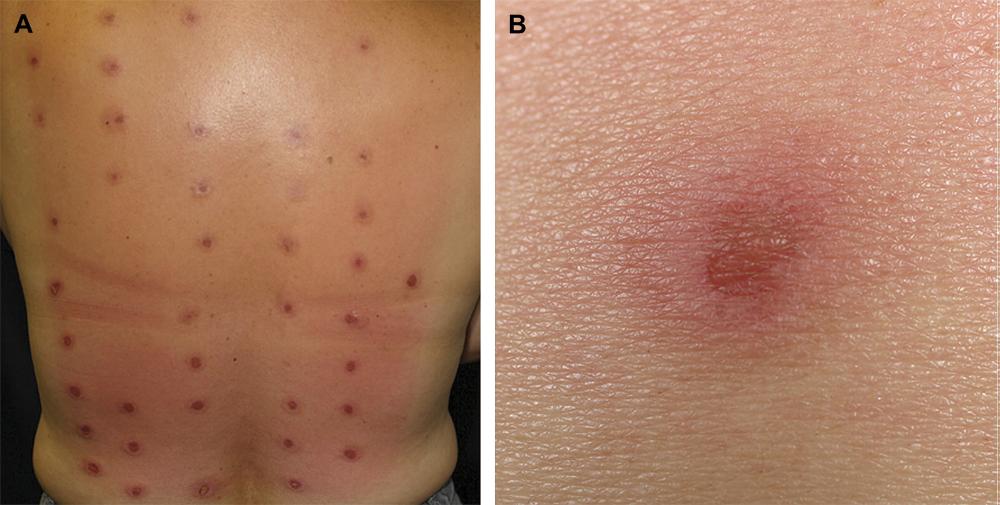
Pyoderma gangrenousum (PG)
* A hallmark of PG is pathergy- an abnormal, exaggerated inflammatory respnse to minimal trauma
During the acute inflammatory phase of wound healing, what type of drainage is exprected?
Infected
Viscous, yellow, and malodorous
Serous or serosanguineous
scant or dry
Serous or serosanguineous
* In a healthy wound, the acute inflammatory phase (lasting only a few days) focuses on controlling infection & establishing a clean wound bed.
A pt. presents to the ER after spillintg scalding coffee on herself, w/painful, blanching, unblistered redness to approximately 30% of her body. What type of burn injury does she have?
Full-thickness burn
Subdermal burn
Partical-thickness burn
Superficial-thickness burn
Superficial-thickness burn
* blanching redness w/out blisters indecates a superficial-thickness (first degree) burn.
In ____ _____ burns, the epiderms remains intact & there i s no blisher formation. The skin is erythematous & blanches w/pressure.
First-degree
What is the first step a wound care nurse should take when a patient exhibits signs of non-adherence to their prescribed wound care regimen?
Report non-adherence to your nursing supervisor
Prescribe a different treatment w/out consultation
Decrease the frequency of the treatment to better accomoodate the patient's preferences
Discuss potential reason for non-adherence w/the patient
Discuss potential reason for non-adherence w/the patient
What is the most effective initial intervention to manage hypergranulation tissue?
Cover the wound w/a sterile dry gauze dressing
Debride the wound bed
Apply silver nitrate
Apply topical antibiotic ointment
Apply silver nitrate
* Silver nitrate chemically cauterizes hypergranulation tissue, effectively reducing its size and promoting normal healing. - This approach directly targets the over-growth of granulation tissue.
_______________ tissue results when a wound remains in the chronic proliferative phase. It is typically caused by excess moisture or friction and is predisposed to infection.
Hypergranulation
Which type of data is most relevant to a risk assessment in wound care mgt.?
Average length of hospital stay for wound patients
Pt. satisfaction surveys
Prevalence of chronic wounds in the community
Incidence reports of falls in the facility
Incidence reports of falls in the facility
*Incidence reports of falls in the facility can help identify potential risk factors contributing to wound development, such as mobility issues or environmental hazards.
A 57 YO man w/a healing wound has a scar that is still remodeling & strengthening; the wound is otherwise asymptomatic & intact. In which phase of wound healing is his wound?
Inflammation
Hemostasis
Maturation
Proliferation
Maturation
* This phase, also called the remodeling phase, is the final phase of wound healing.
Total-contact casting (TCC) is absolutely contraindicated in which of the following conditions?
Excessive edema
Acute deep infections
Fragile skin
Noncompliant patients
Acute deep infections
* TCC is contraindicated are deep infections, sepsis, gangrene
Acute deep infections, sepsis, gangrene, are contraindicated with which type of off loading technique?
Total contact casting (TCC)
Allergic contact dermatitis has 2 phases. What are they?
Vascular & migratory
Acute inflammatory & proliferative
Sensitization & acute inflammatory
Sensitization & elicitation
Sensitization & elicitation
* Allegic contact dermatitis is an immunologic response to an allergen. True allergic dermatitis requires prior exposure and proceeds in the above two distinct phases
Allergic contact dermatitis has 2 phases.
______ phase: occurs over a 7- to 10- day period when the skin of a nonsensitzed individual is first exposed to the substance or chemical
Sensitization
Allergic contact dermatitis has 2 phases.
_________ phase: upon reexposure to the same allergen, this phase occurs within 48-72 hours & triggers the inflammatory reaction.
Elicitation
The skin is composed of the epidermis & dermis, with each layer containing multiple cell types. Which of the following cell types is found predominantly in the epidermis?
Neutrophils
Macrophages
Keratinocytes
Mast cells
Keratinocytes
* The epidermis outer most layer consist of several cell layers--90% of which are keratinocytes, cells that synthesize keratin.
The _____ is the thickest layer of the skin; it's constituent cells include mast cells, neutrophils, macrophages, and lymphocytes.
dermis
The epidermis & dermis are separated by the _______ __________.
Basement membrane
Beneath the dermis is the _______.
hypodermis (subcutis), a layer of loose connective tissue
During an education session, you explain to your patient that the primary benefit of hydrotherapy for wound managment is which of the following?
Decreasing infection rates
Reducing the need for analgesics
Dehydrating the wound bed
Increased epithelial tissue formation
Increased epithelial tissue formation
* Hydrotherapy, promotes a moist envrionment that supports epithlial cell proliferation and expedites wound closure, making increased epithelial tissue formation the primary benefit of hydrotherapy.
Which of the following statements about patient education is false?
It should be planned only after assessing the pt.'s healthcare literacy
It allows patients to apply compression therapy as ordered
It improves patient compliance
It improves healing outcomes
It allows patients to apply compression therapy as ordered
Patient education can-
- increase compliance
- promote desirable healing outcomes
- empowers patients & their families to actively participate in care
Prior to providing your pt. with education on their care assess their
healty literacy
Angiogenesis is stimulated by all the following factors except?
Angiostatin
lactic acid
heparin-binding epidermal growth factor
Hypoxia
Angiostatin
What factors stimulate Angiogenesis?
- Lactic acid
- Heparin-binding epidermal growth factor
- Hypoxia
______________ is the grwth of new blood vessels and is involved in wound healing during the proliferative phase.
Angiogenesis
_______ & ___________ also promote angiogenesis
Lactic acid ; heparin-binding epdermal growth factor
Angiostatin -
inhibits angiogenesis
The epidermis ______ in thicness, has no blood supply of its own, and consists of several cell layers.
varies
Arterial occlusion can be assessed by measureing capillary refill time. A refill time greater than which value indicates areterial occlusion?
20 seconds
10 seconds
3 seconds
15 seconds
3 seconds
* A normal capillary refill time is under three seconds.
A capillary refill time of > 3 secsonds indicates
delayed perfusion & may be a sign of lower extremity arterial disease (LEAD)
___________ ________________ in the Health Belief Model (HBM) refers to -
an individual's belief about their likelihood of experieencing a health issue.
Which of the following skin lesions is an example of a papule?
Freckle
Psoriasis
Insect bite
Wart
Wart
* A papule is defined as an elevated firm, circumscribed area under 1cm in diameter. Examples: warts, elevated moles, and lichen planus
What is lichen planus?
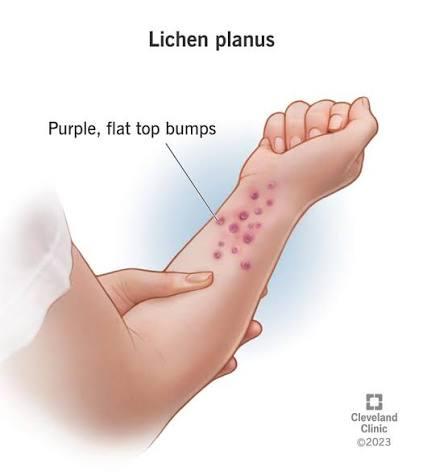
A non-contagious, chronic inflammatory condition that triggers swelling, irritation, and rashes on the skin, hair, nails, and mucous membranes.
The 3 predominant complications associated w/fistulas are:
1. Sepsis
2. Malnutrition
3. Fluid & Electrolyte Imbalances
Which factor enables fetal healing to occur w/out scarring during the first & second trimesters?
Diminished inflammatory response
____ _____ _________ (through 22 to 24 weeks of gestation) is characterized by a significantly reduced inflammatory response and a rapid, balanced proliferative phase that restores the demal architecture with scarring.
Early fetal wound repair
Stage __ pressure ulcers present as intact skin w/non-blanchable erythema localized over a bony prominence.
one