A patient reports increased discomfort and pruritus after the application of a silver alginate dressing. What is the best initial action to take?
Reassess the dressing application technique and the patient's skin reaction
Document the patient's reaction & continue to observe
Remove the the dressing & apply gauze dressing
Administer an antihistamine for the itching
Reassess the dressing application technique and the patient's skin reaction
* A thorough reassessment of both application technique and the pt.s reaction indicated. By doing so, you can determine whether the issue stems from an allergic response, incorrect application, or another factor.
A pt. presents to the ED after accidentally spilling boiling water over their left arm & hand. The burn area is blistered, moist, and bright red. It blanches w/normal capillary refill. The pt. is in severe pain, there is moderate edema at the injury site, and the area is hot to touch. What is the depth of this burn?
Superficial
Superficial partial-thickness
Deep partial-thickness
Full-thickness
Superficial partial-thickness
* A common indication of this burn depth is the presence of blisters. Once blisters are denuded, the wound appears moist, bright red, and extremely painful, often w/moderate edema.
____ means to strip away a covering, make bare, or lay exposed. It is the past tense and past participle of the verb denude. Depending on the context, it is used literally to describe landscapes and anatomy, or metaphorically to describe a loss of resources
Denuded
A pt. presents to the ED after accidentally spilling boiling water over their left arm & hand. The burn area is blistered, moist, and bright red. It blanches w/normal capillary refill. The pt. is in severe pain, there is moderate edema at the injury site, and the area is hot to touch. Healing usually occurs within how many days?
7-14 days
Which of the following is key strategy to prevent Moisture-Associated Skin Damage (MASD) in pt.s w/chronic wounds?
Avoid the use of moisturizers
Apply adhesive dressings directly to the skin for moisture mgt.
Change dressings only when they become saturated
Regularly inspect the wound and surrounding skin
Regularly inspect the wound and surrounding skin
* Essential to detect early signs of moisture-related issues, such as maceration or irritation. - Early detection allows for timely interventions for adjusting the dressings types or applying moisture barriers, along w/other protective measures.
You are providing wound care to a 69 YO male pt. w/Type II DM wo has chronic, nonhealing foot ulcer and has not resonded to conventional treatments. Which adjunctive therapy should be considered to promote healing of his diabetic ulcer?
Compression therapy
Negative Pressure Wound Therapy
Hyperbaric Oxygen therapy
Topical steroids
Negative Pressure Wound Therapy
* NPWT promotes wound healing by applying controlled subatmospheric pressure to the wound bed. NPWT is especially effective for diabetic foot ulcers that fail to respond to standard wound care.
What treatment is this?
Enhances perfusion, reduces interstitial edema, removes exudate, and infectious material, and stimulates granulation tissue formation. This is ESPECIALLY effective for DFUs that fail to respond to standard wound care.
Negative Pressure Wound Therapy (NPWT)
Which of the following most strongly indicates that surgical exploration is necessary after a laceration has been sustained?
A foreign body is present in the wound
Only the epidermis & dermis are involved
There may be damage to underlying structures
Uncontrolled bleeding is present
There may be damage to underlying structures
* Damage to underlying structures indicates that surgical exploration is likely necessary, since these structures must be assessed & repaired. ^ Uncontrolled bleeding should first be managed; surgical exploration is only required if bleeding results from damage to deeper structures.
~ I keep getting this question wrong, I choose the bleeding.... :( The wording isn't clear for me
Which of the following methods for obtaining a wound culture is considered the gold standard?
Needle aspiration
Levine technique
Quantitative swab technique
Tissue biopsy
Tissue biopsy
* Tissue biopsy is the removal of a piece of tissue using a scalpel or a punch device. - Needle aspiration & swab techniques are alternative methods.
What is the purpose of an alginate dressing change?
To promote enzymatic debridement in a moist environment
To prevent tissue dehydration, promote autolysis of nonviable tissue, and provide a moist wound-healing environment
To promote autolysis of necrotic tissue and absorb exudate
To promote autolysis of nonviable tissue and provide a moist wound-healing environment for a minimally exudative wound.
To promote autolysis of necrotic tissue and absorb exudate
* Alginate dressings are indicated for wounds w/moderate to heavy drainage, wound filling, and possibly infected wounds. ** They interact w/wound fluid via ion exchange to form a nonadhesive, nonocclusive hydrophilic gel. That gel maintains a moist environment that promotes AUTOLYSIS of necrotic tissue.
The Gold Standard method for obtaining a wound culture is....
Biopsy of the tissue
What dressing is this?
- Indicated for wounds with Moderate to Heavy drainage, wound filling, and poss. for infected wounds.
- Interacts w/wound fluid via ion exchange mechanisms to absorb serous fluid or exudate & form a nonadhesive, occlusive hydrophilic gel that conforms to the shape of the wound. * That gel maintains a moist environment that promotes Autolysis of necrotic tissue.
- Creates hydrophilic gel that conforms to the shape of the wound. * That gel maintains a moist environment that promotes Autolysis of necrotic tissue.
Alginate dressings
A 66 YO male pt. w/a venous leg ulcer has been receiving compression therapy for 4 weeks. During reevaluation, you note that the wound size has decreased by approximately 40% & the periwound skin appears less edematous. What should be your next step in treatment?
Discontinue compression therapy & switch to nonaderent dressings
Continue the current compression therapy & schedule the next reevaluation in 4 weeks
Refer the pt. to a surgeon
Increase the frequency of dressing changes to BID- twice daily
Continue the current compression therapy & schedule the next reevaluation in 4 weeks
A wound nurse prepares to irrigate a pt.'s pressure ulcer. Which of the following supplies is not needed for this procedure?
Sterile gloves
Refrigerated irrigating solution
19-gauge angiocatheter
35-mL syringe
Refrigerated irrigating solution
Wound irrigation involves debridement of necrotic tissue using fluid delivered between 4 & 15 psi (pounds per square in.) which is sufficient to remove debris w/out damaging healthy tissue or inoculating underlying tissue w/bacteria.
This procedure is typically performed using:
* 19-gauge angiocatheter attached to a 35-mL syringe.
* Prepackaged canisters of pressuized saline (not refrigerated) & attachments for saline bags that provide continuous, acceptable pressure are also available.
* Sterile gloves.
Wound irrigation
What is the gold standard for the management of moderate to severe lymphedema?
Sequential pneumatic compression pumps
Complete decongestive therapy
Dietary & lifestyle modifications
Surgery
Complete decongestive therapy
* Also called Complex Decongestive physiotherapy or lymphatic massage- is a specialized treatment designed to stimulate lymphatic vessels, break up subcutaneous fibrotic tissue, and redirect lymph fluid to areas w/intact lymphatic flow.
_______ is a chronic condition causing painful, protein-rich swelling (edema), most commonly in the arms or legs. It occurs when the lymphatic system is damaged, blocked, or missing, preventing the normal drainage of lymph fluid.
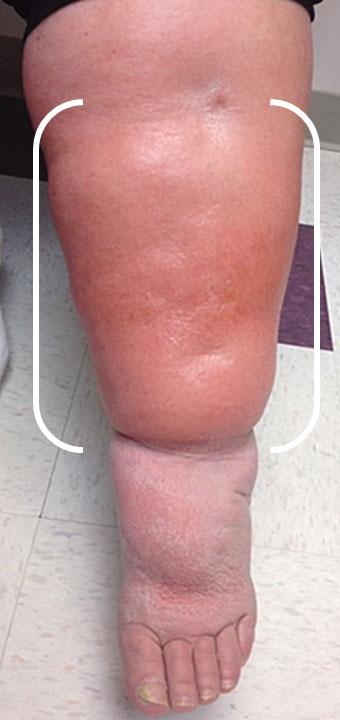
Lymphedema
Complex Decongestive physiotherapy or lymphatic massage (the treatment for Mod to Severe lymphedema) consists of
- Manual lymphatic drainage
- Compression bandaging
- Therapeutic exercise
- Skin & nail care.
What is the most appropriate initial action for the wound care nurse to take when a pt. repeatedly fails to comply w/prescribed wound dressing changes?
Discuss the barriers to adherence w/the pt. & adjust to the treatment plan accordingly
Discharge the pt. from the care due to noncompliance
Schedule more frequent follow-up visits to increase supervision
Change the treatment plan to a less effective but more manageable option as soon as possible.
Discuss the barriers to adherence w/the pt. & adjust to the treatment plan accordingly
A 59 YO pt. in the intensive care unit is on prolonged bed rest & requires frequent monitoring of vital signs & fluid mgt. You notice redness & slight indentation on the skin under the monitoring cables & tubing. What is the most appropriate intervention to prevent further skin impairment?
Increase the frequency of vital signs monitoring to check for worsening skin damage
Use larger, heavier cables to distribute pressure more evenly
Apply additional adhesives to secure the tubing more tightly
Reposition the cables & tubing regularly & pad the areas of contact.
Reposition the cables & tubing regularly & pad the areas of contact.
While undergoing compression therapy for venous leg ulcers, a 60 YO woman reports increased leg pain & numbness after bandaging. As the wound care specialist, what should be your first step in addressing this complaint?
Recommend analgesics to manage symptoms
Loosen the banages to ensure the comfortable & not constrictive to the patient
Assess the bandage application for the proper pressure & positioning
Inform the patient that these symptoms are typical during the initial phase of treatment
Assess the bandage application for the proper pressure & positioning
* Increased pain & numbness may indicate that the compression bandages are applied to tightly or are improperly positioned. ** By assessing & correcting the application, you can alleviate discomfort & prevent complications such as nerve compression or restricted blood flow. Loosening may be needed, this should follow a careful evaluation of their pressure & placement first.
A 62 YO pt. presents w/a surgical wound infection following a recent abd surgery. As part of the wound care team, you recommend evidence-based infection mgt. protocols. Which of the following recommendations aligns w/the current standard of care & is supported by research studies?
Begin with NPWT
Administer broad-spectrum oral abx therapy while awaiting wound culture results
Perform wound debridement
Apply occlusive dressings to maintain a moist wound environment
Begin with NPWT
* It is considered a standard modality for managing surgical wound infections & is supported by clinical guidelines & numerous research studies.
Negative-pressure wound therapy NPWT is contraindicated for which of the following types of fistulas?
Complex fistulas w/ing the wound
Acute enterocutaneous fistulas
Chronic enterocutaneous fistulas
Non-enteric & unexplored fistulas
Non-enteric & unexplored fistulas
* NPWT is contraindicated as the risk for uncontrolled leakage or injury is too high
A ________ is an abnormal tunnel connecting the stomach or intestines to the skin. This causes digestive fluids to leak outward. It is generally considered "chronic" if it persists for weeks or months.
chronic enterocutaneous fistula (ECF)
Negative Pressure Wound Therapy (NPWT) effective in the treatment of these 5 wound conditions (but not limited too) -
- Especially effective for diabetic foot ulcers that fail to respond to standard wound care
- Complex fistulas within a wound- to promote wound closure
- Acute enterocutaneous fistulas
- Chronic enterocutaneous fistulas
- Considered a standard modality for managing surgical wound infections & is supported by clinical guidelines & numerous research studies.
Below are causes of what medical condition?
- Complications after abdominal surgery
- Radiation therapy
- Chrohn's disease
- Trauma (knife wound)
Enterocutaneous fistula (ECF)
A wound care clinic implements telehealth services to reach a broader patient base. What is a significant benefit of this approach for patients in rural areas?
Increased access to specialists
Expedited healing rates
Reduced treatment costs
Improved technological infrastructure
Increased access to specialists
Which of the following interventions is not helpful in controlling the discomfort of paresthesia secondary to peripheral neuropathy?
TENS unit
Oral or topical analgesic
Oral anticonvulsant
Oral muscle relaxant
Oral muscle relaxant
* Muscle relaxant are indicated for muscular pain, and do not address neuropathic pain.
______ may be leviated by the following:
- TENS unit
- Pharmacologic interventions for neuropathic pain include- anticonvulsant therapy (carbamazepine, phentyoin) and analgesics such as oral tramadol or topical lidocaine cream.
Paresthesia
_________- is a complex, chronic pain state caused by damage, injury, or malfunction of the nervous system. Instead of signaling an injury, the nerves themselves misfire and send incorrect signals to the brain
Neuropathic pain
An _____ (often called a painkiller) is any medication or agent specifically designed to relieve or reduce pain.
analgesic
Patch testing is considered the gold standard for diagnosing which of the following conditions?
Allergic- contact dermititis
Herpes simplex virus (HSV)
Folliculitis
Psoriasis
Allergic- contact dermititis
* Allergic-contact dermatitis occurs more readily in the presence of a preexisting skin disorder in which the cutaneous barrier is disrupted. * True allergic dermatits requires exposure to an allergen & involves 2 phases: sesitization & elicitation
Which of the following statements is True regarding wound cultures (select all that apply)?
Cultures are indicated when a clean wound does not show progress in healing after two weeks of topical treatment
Culture pus, slough, eschar, or necrotic tissue from the wound when obtaining the sample
Cultures are indicated when clinical signs of infection appear
Cultures are used to obtain a specimen for Gram staining
- Cultures are indicated when clinical signs of infection appear
- Cultures are used to obtain a specimen for Gram staining
- Cultures are indicated when a clean wound does not show progress in healing after two weeks of topical treatment
For accurate results the specimen should be obtained from clean, healthy-looking tissue rather than from pus, eschar & necrotic material, which may yield colonizing organisms and lead to misleading findings.
3 predominant complications associated with fistulas are:
- Sepsis
- Malnutrition
- Fluid & electrolyte imbalances
* Internal hemorrhage does not play a significant role in fistula-related mortality
Which of the following conditions frequently presents with an "inverted champagne bottle" leg appearance?
Hemosiderin deposits
Atrophie blanche
Lipodermatosclerosis
Stasis dermatitis
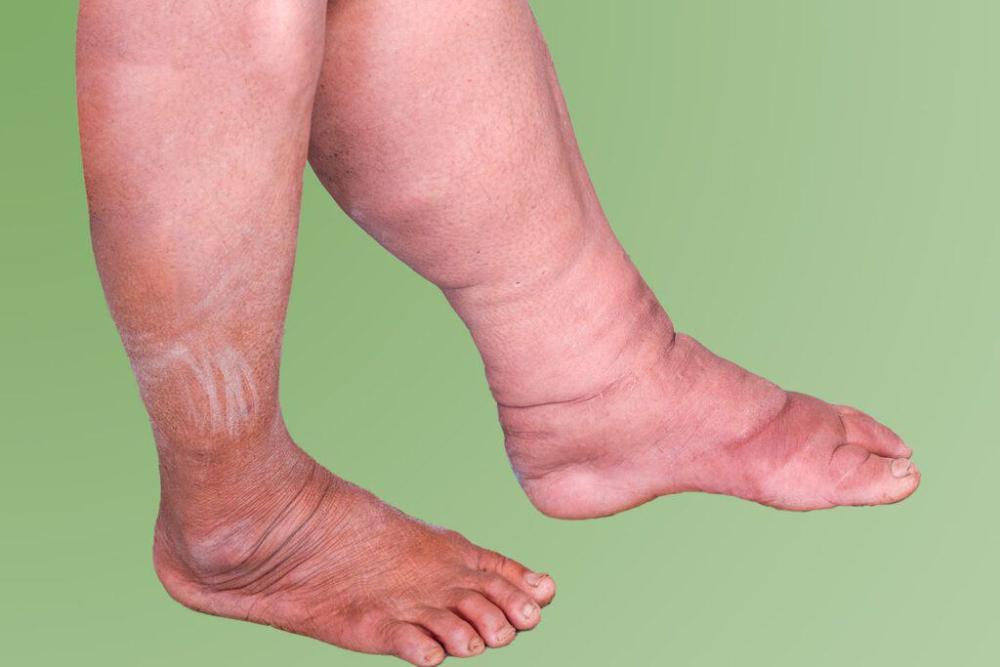
Lipodermatosclerosis
Lipodermatosclerosis is a chronic, inflammatory condition of the lower legs characterized by swelling, pain, and the hardening of the skin and underlying fat. It is closely tied to__________ (poor blood flow in the legs) and obesity
chronic venous insufficiency
Empiric treatment of a severe diabetic foot infection involves which of the following antibiotics?
Vancomycin
Amoxicillin/clavulanate
Ampicillin/sulbactam
Cephalexin
Ampicillin/sulbactam
* For severely infected diabetic foot wounds, initiate antibiotic therapy IV, then switch to oral administation once the patient improves.
For severe diabetic foot infections the recommended empiric treatment options are:
- Ampicillin/sulbactam 2.1g IV every 6hrs
- Clindamycin 450mg PO every 6hrs PLUS ciprofloxacin 750mg PO BID (twice daily)
For mild to moderate infections what antibiotics are recommended -oral therapy for the entire course of
- Cephalexin
- amoxicillin/clavulanate (Augmentin)
________ is the primary swab method.
Levine technique