A pressure ulcer is assessed on a patient's coccyx as full-thickness tissue loss with visible subcutaneous fat. The wound has not reached bone, tendon, muscle, or cartilage, and there is undermining in the wound. What stage ulcer is this, based on the National Pressure Ulcer Advisory Panel (NPUAP) classification system?
Unstageable/unclassified
Stage III
Stage IV
Stage II
Stage III
* Full-thickness loss of skin in which adipose (subcutaneous fat) is visitble in the ulcer. Granulation tissue & epibole (rolled edges) may be present. The ulcer does not extend to muscle, tendon, or bone. Undermining and / or tunneling can occur. Slough may appear but does not obscure the depth of tissue loss.
NPUAP classification system: What stage is described below?
Partial-thickness skin loss involving the edpidermis and / or dermis. Presents as a shallow open ulcer w/a red-pink wound bed, without slough. May also appear as an intact or ruptured serum-fill blister.
Stage II
NPUAP classification system: What stage is described below?
Full-thickness skin and tissue loss w/exposed or directly palpable fascia, muscle, tendon, ligament, cartilage, or bone. * Slough or eschar may be present in parts of the wound bed
Stage IV
NPUAP classification system:
Full-thickness skin/tissue loss in which the true depth cannot be determined because it is obscured by slough or eschar?
unstageable
NPUAP classification system: What stage is described below?
Intact skin w/non-blanchable erythema that is not blue or purple, usually over a bony prominence. In darkly pigmented skin, color may not blanch but differs from surrounding tissue.
Stage I
What is the most common form of heel pain?
Achilles tendonitis
Plantar fascitis
Tarsal tunnel syndrome
Heel spur
Plantar fascitis
* Most common condition causing heel pain. It results from inflammation of the plantar fascia, the long band of connective tissue that spans from the calcaneus to the ball of the foot. Pain typically occurs w/weight-bearing activities or when faulty biomechanics place excessive stress on the calcaneus, surrounding ligaments, or nerves.
_____ ____ is an overuse injury causing inflammation of the Achilles tendon—the thick band of tissue connecting your calf muscles to your heel bone. It causes heel pain, stiffness, and tenderness at the back of the ankle, often peaking after periods of rest or in the morning
Achilles tendonitis
____ ___ ____ is a pinched nerve in the ankle. It occurs when the posterior tibial nerve—which runs through a narrow, inflexible passageway of bones and ligaments on the inside of your ankle—is compressed or squeezed. This compression leads to pain, numbness, or tingling in the foot and toes
Tarsal tunnel syndrome
A 58 YO man w/a oderately exuding venous leg ulcer has been advised to use a silver dressing. Which of the following patient conditions would make this recommentation inappropiate?
High cost of silver dressings
Patient preference for less frequent dressing changes
Known hypersensitivity to silver
The need for daily dressing changes
Known hypersensitivity to silver
With the high cost of silver dressings and the need for more frequent changes may impact practicality or patient preference to what kind of dressing?
Silver dressing
* Need for more frequent dressing changes, impacts both patients time and wallet.
Why is it important to accurately document the anatomic location of the wound?
For consistent tracking and care coordination
To ensure the appropriate treatment modality
To inform the patient of the wounds position
To avoid unnecessary treatments
For consistent tracking and care coordination
* knowing the precise location of the wound enables the healthcare team to monitor its progression accurately; it is the first step in reproducing measurements at that site. Consistent tracking of wound location allows exact comparisons over time, which is critical for evaluating treatment effectiveness.
What does a Braden Scale score of 9 indicate?
Mild risk of pressure ulcer development
Moderate risk of pressure ulcer development
Very high risk of pressure ulcer development
No risk of pressure ulcer development
Very high risk of pressure ulcer development
* Braden Scale most used scale for the prediction of Pressure ulcer risk. It assesses 6 risk factors: Sensory perception, Skin moisture, Physical Activity, Nutritional intake, Friction & Shear, and the body's ability to change position.
Risk Categories based on total Braden Scale scores:
> 18: ____
No risk
Risk Categories based on total Braden Scale scores:
15-18: _____
Mild risk
Risk Categories based on total Braden Scale scores:
13-14: ______
Moderate risk
Risk Categories based on total Braden Scale scores:
10-12: _____
High risk
Risk Categories based on total Braden Scale scores:
< 9:
Very high risk
* Braden scale total scores range from 6 to 23 with the lowest numbers meaning the most risk. >18 = no risk ; < 9 = Very high risk. Categories broken down into 5 groups-> No Risk: > 18 ; Mild risk: 15-18 ; Mod. risk:13-14 ; High risk: < 9; Very high risk
A patient with burns to 25% of their total body surface area (TBSA) has a sulfonamide allergy. What is the best topical treatment for this patient?
Triple antibiotic ointment
Pennicillin
Silver sulfadiaine
Silver nitrate
Silver nitrate
* Silver nitrate is a topical antimicrobial indicated for deep or extensive burns when early excisiton and wound closure are not possible. Silver preparations are the most commonly used topical burn-care agents.
____ is not used tipically; it is administered IV or PO
Penicillin
Which silver agent listed below is contraindicated in patient w/sulfa allergy?
Silver Nitrate
Silver sulfadiazine
Silver sulfadiazine
___ ____ ___ is suitable only for minor burns.
Triple antibiotic ointment
Which of the following interventions is not appropriate when caring for a patient with a stage I pressure ulcer?
Head to the bed at a 45 degree angle
Frequent repositioning
Frequent turning
Pressure-relieving devices
Head to the bed at a 45 degree angle
* HOB should be kept at or below 30°
For patients with a stage I pressure ulcer the most appropriate interventions are?
*Hint there are 4 most common*
- Head of bed at 30° or lower to prevent shear, and extra pressure.
- Frequent repositioning
- Frequent turning
- Pressure-relieving devices (foams, pillows, etc)
For a patient w/a venous ulcer, which factor associated w/failure to heal indicates the need for sugical intervention?
Increased ulcer size (<5 cm^2)
Failure to show significant progress toward healing during the first 2 weeks of compression therapy
Coexisting arterial disease
Prolonged duration of ulcer healing (< 3 months)
Increased ulcer size (<5 cm^2)
* this means it's not healing, but getting worse by getting larger! * Appropriate topical therapy & compression often heal venous ulcers, but larger ulcers frequently require surgical intervention when conservative measures fail.
The key factors listed below are linked to ____ _____ outcomes:
- Increased ulcer size (<5 cm^2)
- Longer ulcer duration(<6 months)
- Failure to show significant improvement during the first 3-4 weeks of compression therapy.
poor healing
Which factor enables fetal healing to occur without scarring during the first and second trimesters?
Diminished proliferative phase
Diminished inflammatory response
Diminished migratory response
Diminished epithelialization
Diminished inflammatory response
* Early fetal wound repair (through 22 to 24 weeks of gestation) is charcterized by significantly reduced imflammatory response & a rapid, balanced proliferative phase that restores the dermal architecture without scarring
What is the outer avascular layer of the skin?
Hypodermis
Epidermis
Keratinocytes
Dermis
Epidermis
* This is the outermost layer of the skin. It is avascular and is derived fromembryonic ectoderm. It's almost entirely composed of keratinocytes, the epidermis produces keratin, a figrous protein that provides protection & strength.
Beneath the epidermis lies the ____, a vascular layer that supplies nutrients & oxygen to the epdermis.
dermis
Separating the epidermis from the dermis is the _____ ____.
basement membrane
Below the dermis is the ______ (superficial fascia), which consists of loose connective tissue and serves as an additional layer of insulation & cushioning.
hypodermis
The Braden Q Scale is specifically designed to target which patient population?
Immunosuppressed patients
Diabetic patients
Elderly patients
Pediatric patients
Pediatric patients
* Braden Q is a modified version of the original Braden Scale, designed to assess the risk of pressure ulcers in pediatric patients, including critically ill infants & children.
What scale adds a seventh subscale to the original six Braden subscales?
Braden Q Scale.
* the added subscale for the Braden Q is: tissue perfusion/oxygenation
Which of the following characteristics is an important diagnostic feature of candidiasis?
Superficial pustules that rupture to form a "honey colored" crust
Pustules pierced in the center by hair
Bright red, sharply demarcated plaques
Satellite lesions
Satellite lesions
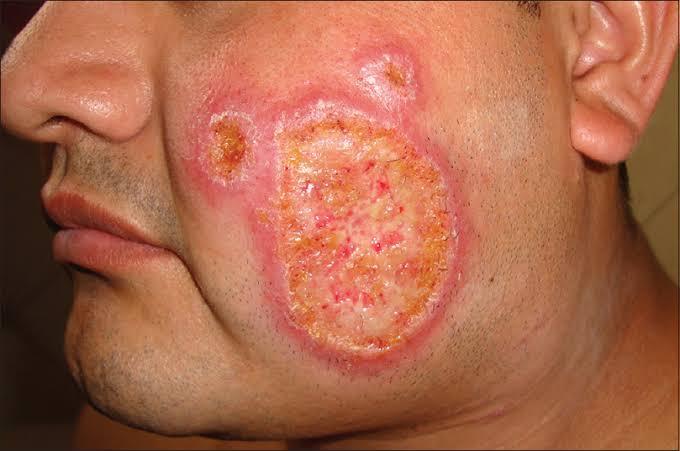
* these lesions are an important diagnostic feature of candidiasis. The primary lesions typically appear as pustles or erythematous papules or plaques that may have associated scaling, crusting, or a cheesy white exudate.
___ ___ are smaller, secondary marks, growths, or tumor deposits that appear near a primary, central lesion.
Satellite lesions
When developing educational media for wound care staff, which of the following is essential to ensure effective dissemination of informtion?
Lengthy written materials
A focus on theoretical knowledge
Interactive case studies
Complex medical terminology
Interactive case studies
* these promote active engatement and practical application of knowledge among wound care staff.
Which of the following is a characteristic feature of hypergranulation tissue?
Yellowish slough covering the wound bed
Pale, avascular appearance
Dry, flaky appearance
Excessive, red, raised tissue growth
Excessive, red, raised tissue growth
* Overgrowth of granulation tissue beyond the suface of the surrounding tissue. It appears red, raised, and bumpy, forming an excessive barrier that can impede wound healing by prevent epithelialization.
_______ is the process of regrowing a protective layer of epithelial tissue over a wound or denuded surface.
Epithelialization
A 49 YO patient w/obesity and a history of hypertension has a DFU w/significant maceration of the surrounding skin. What evidence-based protocol should be followed to reduce the risk of the wound infection?
Initiate systemic antibiotics and apply a foam dressing
Use an absorbent antimicrobial dressing to control drainage
Cover the ulcer with a hydrogel dressing to reduce maceration
Recommend bedrest & properly fitting shoes to promote wound healing
Use an absorbent antimicrobial dressing to control drainage
* The ulcer's surrounding skin is macerted, indicating excess exudate. An absorbent antimicrobial dressing manages exudate by drawing excess fluid away from the skin, reducing further macertion & preventing infection
Absorbent antimicrobial dressings manage moderate-to-heavy wound drainage while preventing or treating infection. They incorporate antimicrobial agents like-
silver, iodine, or medical-grade honey
- Silver Alginates
- Hydrofiber with Silver
- Honey-Impregnated Dressings
- Antimicrobial Foam
You are preparing to educate a patient and their family about wound management at home. To effectively convey the information, which of the following should you assess first?
The patient's previous wound care experience
The patient's health literacy level
The patient's readiness to learn
The patient's understanding of wound care terminology
The patient's health literacy level
* This helps ensure the patient and their family understand and apply wound care instructions accurately.
Which type of data is most relevant to a risk assessment in wound care management?
Average length of hospital stay for wound patients
Patient satisfaction surveys
Prevalence of chronic wounds in the community
Incidence reports of falls in the facility
Incidence reports of falls in the facility
* These reports can help identify potential risk factors contributing to wound development, such a mobility issues or environmental hazards.
Which of the following statements about the unique characteristics of darkly pigmented skin is false?
Darkly pigmented skin is associated with increased circulating levels of vitamin D
Increased melanin synthesis and distribution provide better protection against skin cancer
Care of darkly pigmented skin requires keeping it well lubricated
Color changes over bony promineces should be considered
Darkly pigmented skin is associated with increased circulating levels of vitamin D
* Melanin pigmentation accounts for the variation in human skin color from very dark to very light.
A 48 YO male patient present with a wound in which subcutaneous tissue is exposed, but bone, tendon, and muscle are not visible. According to the National Pressure Injury Advisory Panel (NPIAP), how is this wound classified?
Stage 4
Stage 3
Stage 2
Stage 1
Stage 3
* A stage 3 injury is defined as Full thickness skin loss involving damage or necrosis of the subcutaneous tissue that may extend down to , but not through, underlying fascia. * At this stage, subcataneous fat may be visible as a deep crater, but bone, tendon, or muscle are not exposed.
Identifying a STAGE 3 Pressue Injury (PI)
- Full thickness skin loss involving damage / necrosis of the subcutaneous tissue
- May extend down to, but NOT through underlying fascia
- Subcataneous fat may be visible as a deep crater
Again....
Identifying a STAGE 3 Pressue Injury (PI)
- Full thickness skin loss involving damage / necrosis of the subcutaneous tissue
- May extend down to, but NOT through underlying fascia
- Subcataneous fat may be visible as a deep crater
Blistering is typically categorized as either a __________ or a ____________ , depending on the fluid type and skin condition
Stage 2 Pressure Injury ; Deep Tissue Injury
A patient with a burn wound expresses fear about pain associated with the upcoming debridement procedures. What is the most appropriate action for the wound care specialist to take in response to the patient's concerns?
Schedule the procedure & administer anxiolytics to help manage the patient's anxiety / fear
Explain the importance of debridement in healing & provide reassurance
Postpone the debridement procedure to a later time
Assess the patient's previous pain experiences & effectiveness of prior pain management strategies
Assess the patient's previous pain experiences & effectiveness of prior pain management strategies
* Directly addressing the patient's concerns about pain ensures that care is both effective and compassionate
According to contemporary pressure injury prevention guidelines, how should the turning/repositioning frequency for an immobile patient be determined?
Individualized based on risk, tissue tolerance, support surface, and ongoing skin assessment (not fixed interval for all)
Every 4hrs if on pressure-redistriuting mattress
Only when blanchable erythema is first observed
Every 2hrs for all patients regardless of condition
Individualized based on risk, tissue tolerance, support surface, and ongoing skin assessment (not fixed interval for all)
* Repositioning is individualized based on the patients assessment
Compared to the Wagner Scale, what additional factors does the Texas Univ. Diabetic Foot Scale evaluate?
Location & size of the ulcer
Serum glucose levels
Infection status & ischemia
Presence of calluses & corns
Infection status & ischemia
* Texas Univ. Diabetic Foot Scale adds 2 critical components-assessments of wound infection & ischemia that are not explicitly included in the Wagner Ulcer Grade Classification System. by incorporating the Texas Scale this offers a more comprehensive assessment.
While the ____ ____ categorizes diabetic foot ulcers by depth, presence of osteomyelitis, and gangrene, it DOES NOT provide a structured evaluation of infection severity or vascular status.
Wagner Scale
Paresthesia may be alleviated by :
- TENS unit
- Pharmacologic interventions for neuropathic pain include: Anticonvulsant therapy, carbamazepine, phentyoin) and analgesics such as oral tramadol or topical lidocaine cream
Medication contraindicated for paresthesia / neuropathic pain
Muscle relaxants, however, are indicated for muscular pain, but do not address neuropathic pain.
What is the purpose of hydrotherapy in burn care management?
To cleanse, debride, and assess a burn wound
Foam dressings that contain an adhesive film that are known to reduce which of the following?
Adhesiveness
Residue
Skin maceraton
Moisture vapor transmission rate (MVTR)
Moisture vapor transmission rate (MVTR)
* These dressings absorb exudate, raise the wound's core temp. and maintain a moist environment, which promotes cellular migration and extracellular matrix formation.
For a patient w/a venous ulcer, which factor associated w/failure to heal indicates the need for sugical intervention?
Coexisting arterial disease
Prolonged duration of ulcer healing (> 3 months)
Increased ulcer size (>5cm^2)
Failure to show significant progress towards healing durting the first 2 weeks of compression therapy
Increased ulcer size (>5cm^2)
Key factors to consider for sugical outcomes:
- >5cm^2 increased ulcer size
- Longer ulcer duration > 6months (not 3mos)
- Failure to show significant improvement during the first 3 to 4 weeks of compression therapy
A patient is being treated w/topical steroids for a dermatological issue related to wound healing and reports skin thinning and worsening skin discoloration. For the wound care specialist, what is the most appropriate next step in management.
Decrease the frequency of steroid application or consider an alternative treatment modality.
* Worsening skin discoloration and thinning skin are significant side effects of prolonged topical steroid use and are not expected findings.
What is the most commonly used dressing for traumatic wounds following deridement of necrotic tissue and eschar?
Hydrocolloids used as a tapng platform
Alginate and hyrdrofiber dressings
Antibiotic cement or beads
Negative-pressure wound therapy (NPWT) at 75-150 mm Hg
Negative-pressure wound therapy (NPWT) at 75-150 mm Hg
* this is the most frequently applied dressing for traumatic wounds after debridement of necrotic tissue and eschar.
NPWT creates an evironment conducive to secondary or tertiary intention healing by:
- Reducing edema & removing exudate and infectious material
- Stimulating granulation tissue formation & improving perfusion
- Providing an occlusive barrier that protects against further contamination
Herpes zoster (shingles) is an example of what type of skin lesion?
Scale
Vesicle
Excoriation
Pustule
Vesicle
* A vesicle is an elevated, circumscribed, superficial lesion that does not extend into the dermis. It is filled w/serous fluid & is UNDER 1cm in diameter. EXAMPLES: Chickenpox (varicella) and shingles
An _____ is an abrasion or scratch
excoriation
A ____ is similar to a vesicle in that it is elevated & superficial, BUT it is filled with purulent fluid (for example acne, and impetigo)
pustule
* this PUS
The ____ classification is an internationally recognized standard used by medical professionals to describe, classify, and stage chronic venous disorders (such as varicose veins or venous insufficiency). It is an acronym standing for Clinical, Etiological, Anatomical, and Pathophysiological
CEAP
A 70 YO man presents to the wound clinic with a chronic venous ulcer on the medial side of his left ankle. He has a history of chronic venous insufficiency, with mild leg pain and edema that worsens in the evening. The ulcer has been present for several weeks, and compression therapy provides some relief. How would you classify this patient's condition according to the CEAP classification?
C6, Ep, As, Pn 6 p s n
In this case the key feature is the presence of an active venous ulcer, which places the patient in clinical class 6
CEAP
Chronic venous insufficiency =
EP
CEAP
Superficial vein involvement =
As
CEAP
Nonthrombic pathology =
Pn
CEAP classifications:
C4
C2
C3
CEAP classifications:
- C4:
skin changes such as pigmentation or eczema w/out ulceration
CEAP classifications:
C2 =
Varicose veins w/out ulceration
CEAP classifications:
C3 =
edema w/out ulceration
Which of the following symptoms would indicate cellulitis instead of venous dermatitis?
Both legs affected by erythema & erosion
Elevated temperature, inflammation, erythema, and streaking
Vesciles, varicose, veins, and itching
Erythema, crusting, and itching
Elevated temperature, inflammation, erythema, and streaking
A nurse is caring for a patient w/a stage IV pressure ulcer. Based on the severity of the his wound, which type of the healing will the nurse expect to occur?
Primary intection healing
Partical-thickness wound healing
Secondary-intention healing
Tertiary-intention healing
Secondary-intention healing
* Full-thickness would repair, also known as secondary-intention healing is preferred method for stage IV PIs. These wounds extend through the epidermis and dermis into the subcutaenous tissue or beyond, creating a large defect that cannot be closed by approximating the wound edges.
Effective treatment options for Liedema, a a chronic medical condition that causes an abnormal, symmetrical buildup of fat, primarily in the buttocks, legs, and sometimes the arms.
Rigorous weight control
Exercise
Gentle compression garments
A patient with a 3 degree burn to the hands is being prescribed mafenide acetate cream. What is the purpose of this topical cream?
To inhibit pathogenic organisims from proliferating
To stimulate tissue growth
To decrease the transmission of pain impulses
To prevent loss of fluid through the injured tissue
To inhibit pathogenic organisims from proliferating
* Mafenide acetate (Sulfamylon) is a broad-spectrum topical agent effecte against both Gram-positive & Gram-Negative bacteria including Pseudomonas aeruginosa. * It penetrates burn eshar well, making it use ful when an infection is suspected or when vascular suppl to the wound bed is minimal. ^^ A common side effect is pain or burning on application.
__________ —often discussed in the context of wound healing protocols—is a diagnostic instrument developed in 1997 by physical therapists C. Sussman and J. Swanson. It is specifically designed to assess pressure ulcers, track healing progression, and predict the effectiveness of physical therapy treatments over time.
Sussman Wound Healing Tool (SWHT)
In the Sussman Wound Healing Protocol, which of the following should be minimized to facilitate optimal wound healing?
Moisture
Pressure
Temperature
Movement
Pressure
Minimizing pressure is essential in wound care, particularly for pressure ulcers. In the Sussman Protocol, alleviating pressure is key component, especially for bedridden or immobile patients.