Communication with a physician via two-way radio or telephone is an example of:
- medical control help
- call-a-doc
- standard operating protocol
- online medical control
- online medical control
When EMTs or paramedics arrive at the scene of an emergency, the EMR should:
- assume that his or her assistance will no longer be required.
- follow the ambulance to the hospital in their car.
- assist the EMTs in continuing the care that he or she initiated.
- say goodbye to the patient and leave the scene.
- assist the EMTs in continuing the care that he or she initiated.
If you have any doubts about the safety of a scene, you should:
- refuse to respond to the call
- wait at a safe distance and request law enforcement.
- carefully assess the scene and report to law enforcement.
- cautiously enter the scene.
- wait at a safe distance and request law enforcement.
The recovery position is used for patients who are:
- semiconscious with a neck injury.
- experiencing respiratory distress.
- severely obese and not breathing.
- unconscious and not injured.
- unconscious and not injured.
A patient is trapped in his car following a collision. After the paramedic starts an intravenous (IV) line on the patient, the paramedic hands you the needle. You should:
- place the needle directly in a puncture-resistant container.
- carefully recap the needle and safely dispose of it in the trash.
- break the tip of the needle off and place it in a sharps container.
- lay the needle on the ground and document its location.
- place the needle directly in a puncture-resistant container.
A DNR is a written order that requires medical personnel to:
- begin CPR only if the patient has tachycardia
- leave the scene without contacting the patient
- withhold a tourniquet from someone with a superficial laceration
- withhold CPR in the event of cardiac arrest
- withhold CPR in the event of cardiac arrest
For a patient to be legally able to make decisions regarding his or her own health care, he or she must:
- have a non–life-threatening injury or illness.
- must have adequate insurance to cover the cost of the ambulance ride.
- be mentally competent and of legal age as defined by law.
- have at least two witnesses present at the scene.
- be mentally competent and of legal age as defined by law.
You and your partner are the first to arrive at the scene of a major motor vehicle crash, you determine that there are at least a dozen patients. You should:
- triage all patients and then use your cell phone to call for additional resources.
- immediately request additional resources using the radio in your ambulance, then begin triage.
- call for additional help using your cell phone after you have determined the severity of the patients’ injuries.
- call a medical doctor to respond to the scene.
- immediately request additional resources using the radio in your ambulance, then begin triage.
When referring to the blood, the prefix _______ is used.
- hema-
- post-
- cardio-
- angio-
- hema-
A 40-year-old woman has an injury to the midshaft humerus following a motor vehicle crash. What major joint is immediately distal to her injury?
- Xiphoid Process
- Shoulder
- Elbow
- Knee
- Elbow
A man has a sever laceration on his forearm near the elbow. The bleeding is not controlled. Where would you place the tourniquet?
- his humorous
- lower part of his left femur
- just below his tibia on the uninjured side
- carotid artery
- his humorous
Your patients wound has started bleeding again, 5 minutes after a tourniquet had been applied, you should:
- Apply a second tourniquet
- Ask your partner to drive the ambulance faster
- Tighten the Tourniquet
- Apply medical grade super glue to the wound to slow the bleeding
- Apply a second tourniquet
What does AVPU stand for?
Alert, Verbal, Pain, Unresponsive
A car drives up to your station shortly before you hear a frantic knock at the door. When you answer the door, a young woman tells you that her father is choking. The patient, a 60-year-old man, is standing beside her clutching his throat. You ask him if he is choking, but he does not respond to your question. You should:
- nothing, he didn't answer your question
- lay the man on the ground and begin chest compressions.
- repeat your question and wait for him to respond.
- stand behind the man and deliver abdominal thrusts.
- stand behind the man and deliver abdominal thrusts.
A 70-year-old woman was found unconscious in her bed. She has a pulse, but is cyanotic and gurgling when she breathes. You should:
- administer high-flow oxygen and wait for EMTs or paramedics to arrive.
- Suction her airway and assist with ventilations using a BVM
- Apply a nasal cannula and obtain history from the family
- Close her mouth and insert a NPA into her larger nostril
- Suction her airway and assist with ventilations using a BVM
If a patient is unconscious or otherwise unable to answer your questions, the quickest way to ascertain his or her medical history is to:
- ask family members or friends that are present about the patient’s medical history.
- obtain the patient’s personal medical records from the receiving hospital.
- have a law enforcement officer look in the house for medication bottles.
- call the patient’s physician to determine the patient’s medical history.
- ask family members or friends that are present about the patient’s medical history.
During the primary assessment, you should:
- identify and correct all life-threatening conditions.
- perform a comprehensive examination of the patient.
- determine whether the scene is safe for you to enter.
- determine whether additional resources are needed.
- identify and correct all life-threatening conditions.
A 56-year-old man experienced a sudden onset of dyspnea during a meal. He is conscious and alert but is in obvious respiratory distress. You should:
- lay him down and begin rescue breathing.
- keep the patient comfortable until paramedics arrive
- suspect that he has an airway obstruction.
- inquire about a history of hyperglycemia.
- suspect that he has an airway obstruction.
What does SAMPLE stand for?
Signs/symptoms, Allergies, Medications, Pertinent medical history, Last oral intake, Events leading up.
A person experiencing ___________ may appear to be drunk.
- high blood sugar levels
- diabetic coma
- a seizure
- hypoglycemia
- hypoglycemia
Children with serious head injuries commonly experience:
- low blood pressure
- hyperglycemia
- seizures
- toe pain
- seizures
A classic sign of croup is:
- a barking cough.
- high fever.
- an absent cough.
- drooling.
- a barking cough.
A 44-year-old man shot himself in the head with a small-caliber handgun. Law enforcement personnel are at the scene and have the weapon in their possession. The patient has a pulse but is unconscious and is bleeding heavily from the gunshot wound. His wife, who is also present at the scene, tells you that her husband had been severely depressed after losing his job. You should:
- obtain a thorough history of the incident from the patient’s wife and then begin treating the patient’s injury.
- provide immediate emotional support to the patient’s wife and tell her that his suicide attempt is not her fault.
- wait for law enforcement to take pictures of the patient and then open the patient’s airway.
- control the bleeding from the wound and then assess the status of the patient’s airway and breathing.
- control the bleeding from the wound and then assess the status of the patient’s airway and breathing.
One of the main causes of suicide in older people is:
- terminal disease.
- domestic problems.
- schizophrenia.
- drug abuse.
- terminal disease.
A construction worker was struck on the upper arm with a wooden board. He is in severe pain and is holding his arm against his chest. Your assessment reveals a large contusion and swelling at the injury site. You should:
- apply direct pressure to the injury.
- manipulate his arm to elicit pain.
- advise him to see his family physician.
- suspect an underlying fracture.
- suspect an underlying fracture.
After applying direct pressure to an arm laceration with gauze, you note that the bleeding has stopped. You should:
- pack the wound with hemostatic gauze
- apply a pressure bandage on top of the gauze to maintain direct pressure
- keep the arm below the heart
- apply a distal tourniquet
- apply a pressure bandage on top of the gauze to maintain direct pressure
An expectant mother is 39 weeks pregnant. She tells you that she is having strong contractions and feels like she needs to move her bowels. You should:
- ask a female to escort her to the bathroom.
- prepare for imminent delivery of the infant.
- suspect that the infant is in a breech position.
- ask her to hold her breath during contractions.
- prepare for imminent delivery of the infant.
What does OPQRST stand for?
Onset, Provocation, Quality, Radiation, Severity, Time
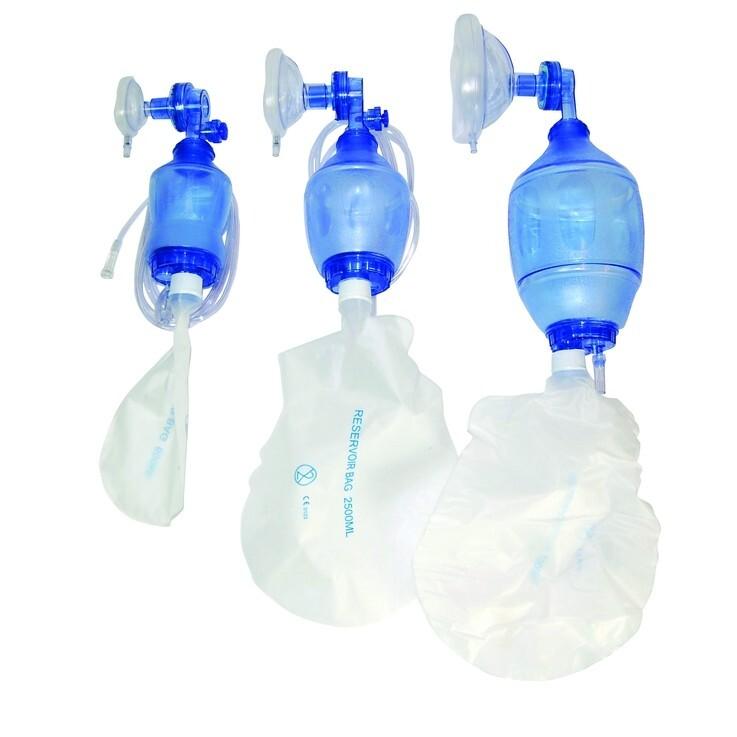
What is this?
Bag Valve Mask (BVM)
What is this?
Nasopharyngeal Airway (NPA

What is this?
Oropharyngeal Airway (OPA)
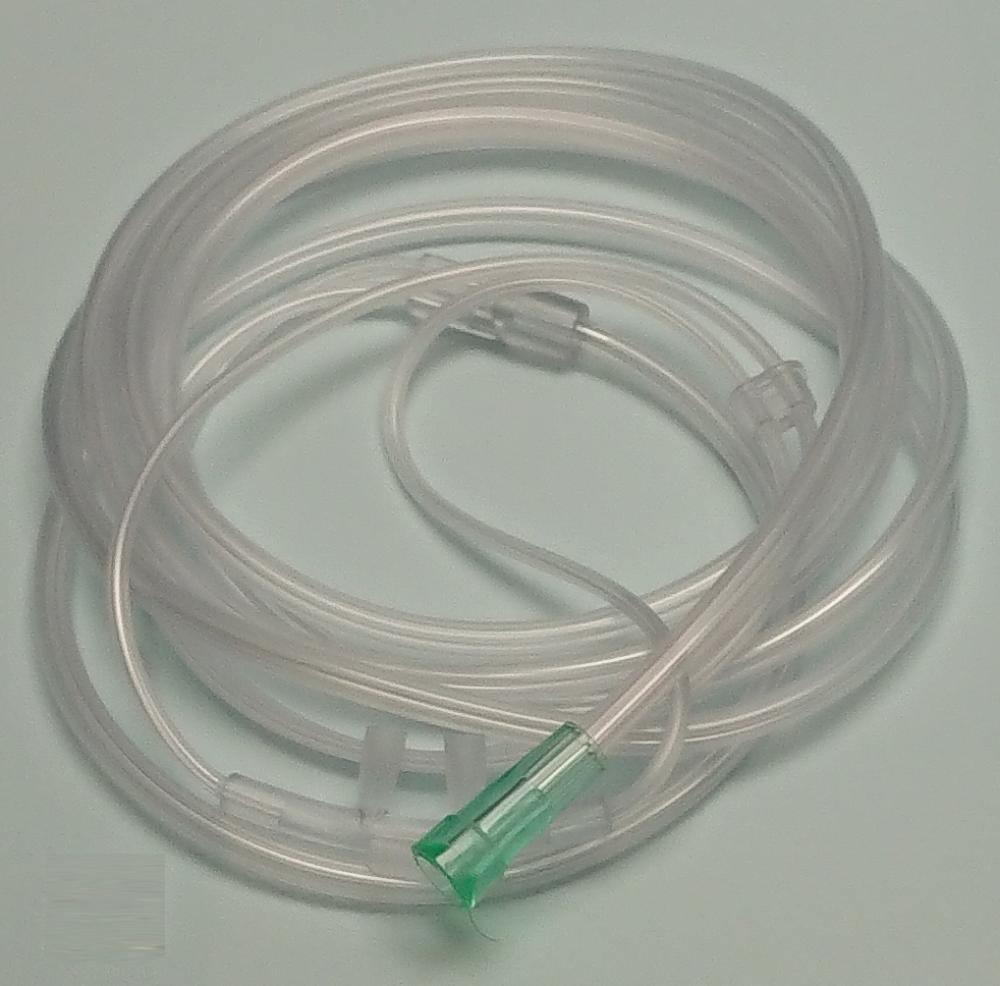
What is this?
Nasal Cannula (NC)
Complying with a valid DNR order is optional, if the patients friend requests you to ignore it
- True
- False
- False
Firefighters are often a crucial part of the EMS system because they:
- always arrive at the scene before EMTs or paramedics
- are better trained than EMTs to assist paramedics.
- provide specialized rescue such as patient extrication.
- provide protection and control of the scene.
- provide specialized rescue such as patient extrication.
True or false? In the first 6 months of an infants life, they primarily breathe through their nose
- True
- False
- True
A child has an elevated temperature and his mother reports he has not been acting himself all day. If this child experiences a febrile seizure, you should do all of the following EXCEPT:
- protect the child from injury
- monitor the airway during and after the seizure ends
- restrain the child to prevent shaking and injury
- remove clothing to cool the patient after the seizure is over
- restrain the child to prevent shaking and injury
True or false? A high priority patient should be reassessed every 15 minutes during transport.
- True
- False
- False
What does MOI mean? When is it used?
Mechanism of Injury, Traumatic emergencies
A woman tells you she was diagnosed with ________________. This means she has high blood pressure.
- Gestational hypotension
- Placenta Previa
- Preeclampsia
- Pregnant hypertension
- Preeclampsia
What does NOI Mean? When is it used?
Nature of Illness, Medical emergencies
Patients with third degree burns generally do not complain of pain because:
- blister formation protects the burn
- the burns are superficial
- nerve endings have been destroyed
- they are minor burns
- nerve endings have been destroyed
Where do you take a pulse on an infant and why?
Brachial Artery, located on the inside of the upper arm. Can't use radial because it's too weak. Can't use carotid because you risk crushing their throat.
Your patient has been sexually assaulted. Police are on scene and she is requesting transport to the hospital to be evaluated further. Throughout transport, she tells you details of her assault as you complete your assessment.
When performing your primary assessment of the woman, you should do all of the following EXCEPT:
- demonstrate confidence
- provide emotional support
- allow personal feelings to influence your care
- talk in a calm, steady voice
- allow personal feelings to influence your care
Any time a patient has suffered a traumatic injury, you should:
- immobilize the patient and move them using a scoop stretcher
- suspect injury to the head, neck, or spine
- transport the patient on a flat backboard
- use a SAM splint to immobilize their neck
- suspect injury to the head, neck, or spine
Whats the term for an elevated level? (ex. ___glycemia)
Hyper
Whats the term for a lowered level? (ex. ___glycemia)
Hypo
When a newborn's head appears at the vaginal opening during childbirth, this is called:
- Delivery
- Crowning
- Breech
- Placenta previa
- Crowning
True or false? An EMR has a higher level of training than an EMT-B
- True
- False
- False
When assessing a patient, EMRs use the mnemonic, “ABC”. What does it stand for?
- Assessment Breathing Circulation
- Airway Breathing Circulation
- Airway Breathing Call 911
- Airway Bleeding Circulation
- Airway Breathing Circulation
All of the following are signs of child neglect, except:
- lack of adult supervision
- malnourished-appearing child
- treated chronic illness
- unsafe living environment
- treated chronic illness
Whats pallor?
Pale skin
Whats jaundiced?
yellow
Whats cyanotic?
blue
Whats Hematoma?
Bruising/redness
True or false?
A bar owner calls 911 because they are worried that someone fell and hit their head when they were drunk. You arrive on scene and the patient denies they are injured and refuses treatment. They do show signs of impairment and injury, but because they are alert and oriented they can refuse care.
- True
- False
- False
Which of the following is not considered an emotional phase in a situational crisis?
- Anger
- Denial
- Violence
- Grief
- Violence
You are dispatched to a call for a 30 year old female who is reportedly choking. Upon your arrival, your patient is standing in the kitchen stating "I have a piece of steak caught in my throat"
What should you do?
- Position yourself behind the patient and give abdominal thrusts
- Instruct the patient to cough and attempt to self-clear their airway
- Suction the patients airway using a french catheter
- Attempt to visualize the steak and grab it with your fingers
- Instruct the patient to cough and attempt to self-clear their airway
When assessing a child’s general appearance, you should compare them to what you would expect from a healthy child of the same age.
- True
- False
- True