FINAL EXAM
Anything that demands mental or physical effort
Work
Mechanical work is equal to the product of _______ and
________?
Thus, work is only done when the object is _____and the
motion is influenced by _______?
the magnitude of a force applied against an object and the distance the object moves in the direction of the force
moving
the applied force
Work can only be done with __________?
movement
Because work is the product of ______ and ______, the units for work are units of _____ by ______? Name all units for work, force and length? What does one joule equal?
force and displacement
force x units of length
ft-lb
N-m
J (joule) is the international unit
of measurement for work
1 J = 1 N-m
U = F(d) describes the work done by a ________?
U = F(d)
describes work done by a ________?
constant force.
force whose magnitude varies
To determine the amount of work done on an object, we need to know
three things:
The average _____ exerted on the object
The
______ of the force
The ________ of the object along the line of
action of the force during the time the force acts on the object
force
direction
displacement
A discus thrower exerts an average force of 1000 N against the discus while the discus moves through a displacement of 0.6 m in the direction of this force. How much work did the discus thrower do to the discus?
U = F(d)
F = 1000 N
d = 0.6 m
U = (1000 N)(0.6 m)
U = 600 Nm = 600 J
A weightlifter bench presses a 1000 N barbell. He begins with his arms extended and the barbell 75 cm above his chest. The lifter then lowers the barbell and stops it when it is 5 cm above his chest. He pauses there and then lifts the barbell upward away from his chest and back to the original starting position 75 cm above his chest. The average force exerted on the barbell by the lifter while lowering the weight is 1000 N upward. The average force exerted by the lifter while raising the weight is also 1000 N upward. So the average force exerted on the barbell by the lifter is 1000 N for the whole lift. How much work did the lifter do on the barbell from the start until the finish of the lift?
High to low so 75-5…..= -70 cm displacement
As we go up…pos displacement
done by a force acting on an object if the object is displaced in the same direction as the force. Describe an examle with a pitcher, weightlifter and a high jumper?
Positive Work
A pitcher does positive work against a baseball when
throwing it
Weightlifter does positive work against a weight
when lifting or raising it
High jumper does positive work when
jumping off the ground
done by a force acting on an object when the object is displaced in the direction opposite the force acting on it. Give examples with a first basemen, weightlifter, and a gymnast?
Negative Work
A first baseman does negative work against the ball when
catching it
Weightlifter does negative work against a weight
when lowering it
Gymnast does negative work when landing from a dismount
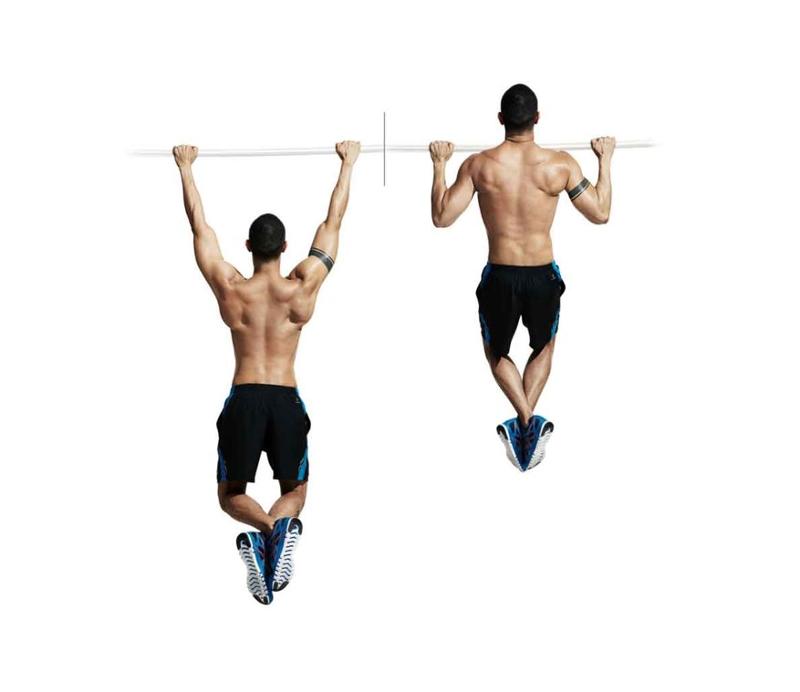
Is it positive or Negative work when doing a pull-up? What tends to be negative work?
Positive work…most concentric muscle action
Eccentric tend to be negative
When a muscle contracts and the force results in the points of
attachment moving in the direction of the muscle force
______ movements
Positive muscle work
Concentric
When a muscle contracts and the points of attachment move away from
the direction of the muscle force
______ movement
Negative muscle work
Eccentric
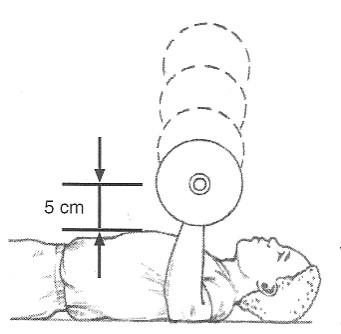
Calculate work done while lowering the bar?
U = 1000N(-0.7m)
U = -700 Nm
How much work is being done?
(raise bench press up to 75 m then bring it down to 5 cm and then back up)
explain?
-700 + 700 = 0
Pos and neg work will cancel each other out
the rate of doing work, or how much work is done in a specific amount of time.
Power
two equations for power?
∆t = ?
Units of power are units of ____ divided by units of _____.
Power = Work/time
P = F(d)/ ∆t
time taken to do the work
work
time
Joules (J) divided by seconds are called ?
watts (W)
1 W = ?
1 J/s
In this equation: P = F(d)/ ∆t...what can you also write it as
dealing with velocity and why? When looking at angular movements power
can be expressed as:
Power = ?
Because velocity is the displacement / time some also identify power
as:
Power = force x velocity
Torque x angular velocity
Human movement involves _____ displacement being performed by joints
angular
Displacement can be _____ or ______?
linear or angular
Peak Power is also referred to as ?
Instantaneous Power
The highest power value achieved during the movement being observed
Peak Power / Instantaneous Power
The product of the average force and the average velocity of an entire movement
Average Power
The product of the joint torque and angular velocity
Internal (Joint) Power
When we examine joint movements, what 2 things do you look at and
why? The balance between these may change as we go through a _______
during a particular movement
How can you look at this from a
training perspective?
torque or angular velocity may dominate in producing the highest power values
joint ROM
From a training perspective it is important to understand which factor is most important during certain movements in order to optimize training (whether in the weight room or during sport specific practice drills)...Look at if its torque or velocity that is the weak link and then work on improving that to inc power
The aggregate of multiple joint powers resulting in a body movement? What is a common method for analyzing whole body power? How would you analyze that movement?
External (Whole-body) Power
The vertical jump
Isolate joints and identify as upper or lower body power….ex. With vertical jump as a lower body power the subject must not use their arms and have their arms on their hips
What are 3 schools of thought when trying to train to maximize power output?
1. Lower Intensity Loads
2. Higher Intensity Loads
3. Mixed Methods
As wee get older what do we develop? What is that defined as? What does this effect?
As we get older… develop sarcopenia…dec in cross sectional area…less ability to recruit type 2 muscle fibers
Ballistic exercises focus more on ?
velocity
Heavy resistance exercises focus more on ?
strength
Describe force-velocity curve?
As velocity inc force goes down and as velocity dec, force inc
When attempting to increase power output there are 3 key
elements:
1. Overall _____ must be maximized
2. Rate of
_________
3. Important to develop ability to generate _____ as
_____ of shortening increases ; aka what?
strength
force development
high forces
velocity
optimum load
Maximization of overall strength levels results in significant improvements in _____? Thus training should establish adequate ____?
muscular power
strength
Sufficient _____ is needed prior to incorporating activities targeting _____ development
strength
power
(RFD)
Rate of Force Development
Rate of Force Development is determined from ?
RFD = ?
The steeper the slope means what?
the slope of the force time curve
∆force/ ∆time
The better the rate of force development
As a muscle’s velocity of contraction increases, its __________ decreases
maximum force of contraction
The maximum power output occurs when?
at a velocity approximately one-half the muscle’s maximum contraction velocity.
Mechanically defined as the capacity to do work
Energy
Mechanical energy comes in what two forms?
Kinetic Energy
Potential Energy
Energy due to motion
Kinetic Energy
Energy due to position
Potential Energy
A moving object has the capacity to do work due to its motion
kinetic energy
The kinetic energy of an abject is affected by the _____ and _____ of the object
mass and velocity
An object that is stationary has no ?
kinetic energy
KE formula=
1/2 m x v squared
m = mass
v = velocity
To determine the kinetic energy of an object, the _____ and _____ must be known
mass and velocity
How much kinetic energy does a baseball thrown at 80 mph (35.8 m/s) have?
The mass of the baseball is 145 g (0.145 kg).
KE = 1/2 mv 2
KE = 1/2 (0.145 kg)(35.8 m/s)2
KE = 92.9 kg(m2/s2)
mass x velocity squared is equal to which unit? Which is also equivalent to?
Units of Kinetic energy are mass times velocity squared
This is
equivalent to Nm, which is equivalent to Joules
The energy (capacity to do work) an object has due to its position
Potential Energy
What are the two types of potential energy?
Gravitational Potential Energy
Strain Energy
Energy due to an object’s position relative to the Earth
Gravitational Potential Energy
Energy due to the deformation of an object
Strain Energy
Related to the object’s weight and its elevation or height above the ground or some reference
Gravitational Potential Energy
PE = ?
PE = ?
Explain what each thing stands for?
Wh or mgh
W = weight
m= mass
g = acceleration due to
gravity (9.81 m/s/s)
h = height
Greater the mass and the higher up it is…the greater the ?
gravitational potential energy
How much gravitational potential energy does a 700 N ski jumper have when taking off from a 90 m jump?
PE = Weight x height
PE = (700 N)(90 m)
PE = 63,000 Nm =
63,000 J
Related to the objects stiffness, material properties, and its deformation
Strain Energy
The greater the _______ of an object, the greater the strain energy
deformation
1/2 k∆x2
what does k and delta x stand for?
Strain Energy
k = stiffness or spring constant of material
∆x =
change in length or deformation of the object from its undeformed position
Name 2 Strain Energy Examples?
Lacrosse Shaft
Pole Vault
Name 2 Strain Energy Examples in the body?
Muscle Tendons
Stretch-Shortening Cycle
Describes motion
Kinematics
Kinematics can be ______ or ______
Can be Qualitative or Quantitative
Kinematic description of kicking a soccer ball?
Qualitatively…good, bad, okay?
Quantitatively…describe force or
speed with math
A2 + B2 = C2
Pythagorean Theorem
Trigonometric Functions
sinθ=?
how to get just theta?
cosθ =?
how to get just theta?
tanθ =?
how to get just theta?
opposite/hypotenuse
θ = arcsin{opposite/hypotenuse}
adjacent/hypotenuse
θ = arccos{adjacent/hypotenuse}
opposite/adjacent
θ = arctan{opposite/adjacent}
The branch of dynamics concerned with the description of motion
Linear Kinematics
The outcomes of many sporting events are kinematic measures..such as?
Speed
Velocity
Acceleration
The action or process of a change in position
Motion
Moving involves a change in position from ______ to _____?
one point to another.
What two things are necessary for motion to occur
Space: to move in
Time: during which to move
3 motion Movement Classifications?
Linear
Angular
Both
Referred to as translation
Linear Motion
Occurs when all points on a body or object move the same distance, in the same direction, and at the same time
Linear Motion
Linear Motion can happen in what two ways?
Rectilinear Translation
Curvilinear Translation
Occurs when all points on a body or object move in a straight line so the direction of motion does not change, the orientation of the object does not change, and all points on the object move the same distance
Rectilinear Translation/Motion
Occurs when all points on a body or object move so that the orientation of the object does not change and all points on the object move the same distance
Curvilinear Translation/Motion
Paths followed are curved, so the direction of motion is constantly changing
Curvilinear Translation/Motion
Sledding and skiing are which motions?
Sledding is in a straight line
Skiing= curvilinear
Referred to as Rotary Motion or Rotation
Angular Motion
Occurs when all points on a body or object move in circles (or parts of circles) about the same fixed central line or axis
Angular Motion
Angular motion can occur about an axis within _____ or outside ______?
the body
of the body
Combination of both Angular and Linear Motions
General Motion
Most common type of motion exhibited in sports and human movement.
General Motion
Combining the Angular Motion of the limbs can produce __________ of one or more body parts
Linear Motions
Location in space
Position
Strategies employed in sports often depend on where players on each team are _________?
positioned
20 yd from the goal and 15 yd from the left sideline...what is his full position? What would it be on a Cartesian Coordinate System?
His full position would be 20 yd from the goal line and 15 yd from the left sideline.
Identify the running back’s position with the two numbers corresponding to his x- and y-coordinates in yards as (15, 80) -he traveled 80 yards
In 3 Dimensions, we would need ____ numbers to describe the position of an object in space? How would you do this?
three
x-axis
Line along the intersection of the front wall
and the floor
y-axis
Line along the intersection of the
front wall and the left side wall
z-axis
Line along the
intesection of the left side wall and the floor
If the ball were:
3 m to the right of the left side wall
2
m above the floor
4 m away from the front wall
x-, y-, and
z-coordinates would be?
(3, 2, 4)
Most commonly used unit of distance and displacement is the
meter (m)
1 km = _____ m
1 cm = _____ m
1 mm = _____ m
1000
1/100
1/1000
Scalar Quantity
Magnitude
Distance
Vector Quantity
Magnitude
Displacement
For displacement, Direction
Sign=? Compass Direction=? General Terms=?
(+)(-)
i.e. NE, SW
i.e. Left, Right, Up, Down
Describe coordinates for northeast, NW, SW, and SE?
NE= (+,+)
NW= (-, +)
SW= (-,-)
SE= (+,-)
Simply a measure of the length of the path followed by the object whose motion is being described...example?
Distance Travelled
When a runner goes partially around a track
Distance Travelled...from its what to what?
From its starting (initial) position
To its ending (final) position
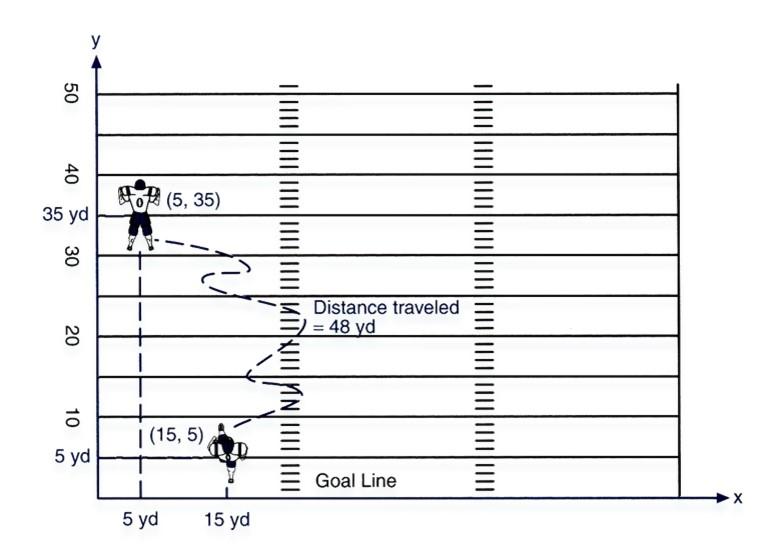
distance and displacement?
The length of the path of his run is 48 yd.
The player ran 48 yd
to gain 30 yd.
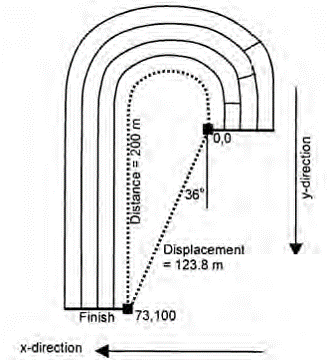
The straight-line distance in a specific direction from initial (starting) position to final (ending) position... example of this?
Displacement
When a runner goes partially around a track
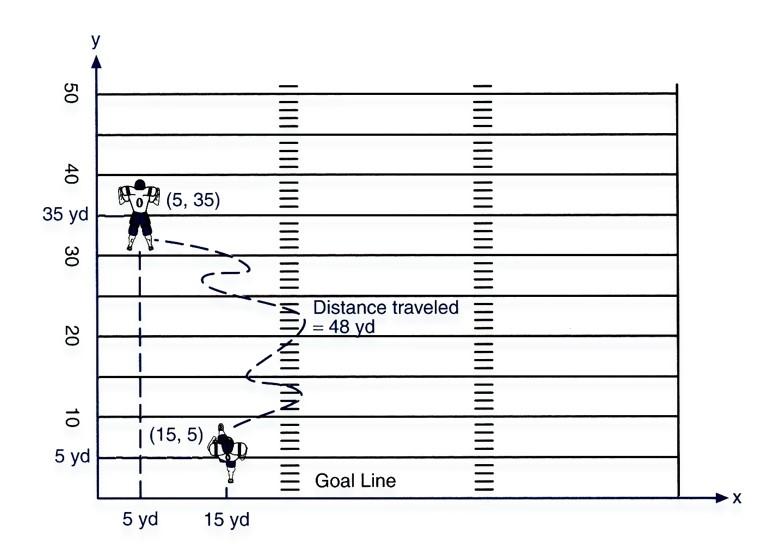
A football player receives a kickoff at his 5 yd line, 15 yd from the
left sideline.
Position on the field is (15, 5) when he catches
the ball.
He runs the ball back following the path shown and is
tackled on his 35 yd line, 5 yd from the left sideline (5,
35)
What is his y and x displacement???
dy = ∆y = yf - yi = 35 yd - 5 yd = +30 yd
dx = ∆x = xf - xi = 5 yd - 15 yd = -10 yd
The distance measured in a straight line from the initial position to the final position
Resultant Displacement
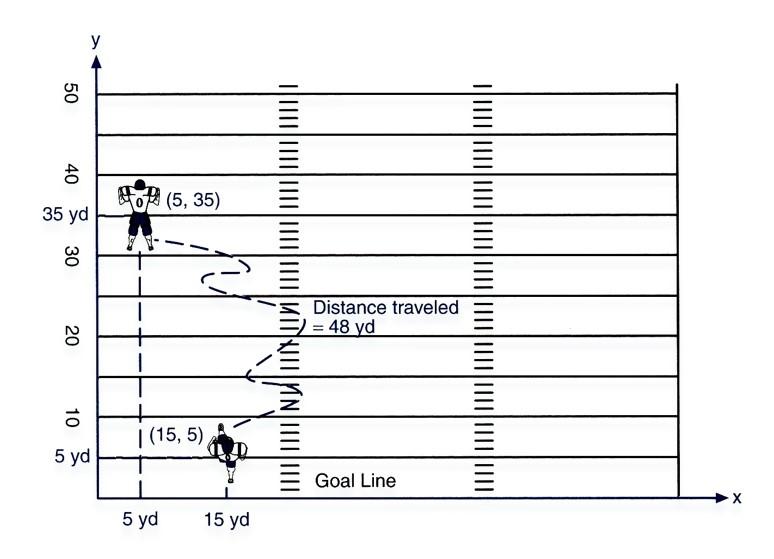
Resultant Displacement here?
A2 + B2 = C2
(∆x)2 + (∆y)2 = R2
(-10 yd)2 + (30 yd)2 =
R2
100 yd2 + 900 yd2 = R2
1000 yd2 = R2
√1000 yd2 =
R
31.65 yd = R
The rate of motion
Speed
Speed is a _______ quantity?
Scalar Quantity
Calculated as distance/∆t
Speed
The rate of motion in a specific direction
Velocity
Velocity is a _________ quantity?
Vector Quantity
Speed involves what and velocity involves what?
Magnitude
Magnitude
Direction
Calculated as displacement/∆t
Velocity
position2 – position1 divided by
time2 – time1
Velocity
The distance travelled divided by the time it took to travel that distance...its formula?
Average Speed
s =ℓ/∆t
s = average speed
ℓ = distance
travelled
∆t = change in time
When comparing 2 peoples average speed what can you analyze?
Here we can determine where they are stuggling and from here postentially train their weak areas. Is it physiological or mechnical.
Comparison of two 100 m dash performances
Ben Johnson 9.79 s
Carl Lewis 9.92 s
Comparison of the performances for the first 50 m of the 100 m race
Ben Johnson 5.50 s
Carl Lewis 5.65 s
s = 100 m/9.79 s = 10.21 m/s
s = 100 m/9.92 s = 10.08 m/s
s 0-50 m = 50 m/5.50 s = 9.09 m/s
s 0 - 50 m = 50 m/5.65 s = 8.85 m/s
Because description of velocity must include an indication of both
the _____ and the _____ of motion
If the direction of the motion
is positive, velocity is ______
If the direction of the motion is
negative, velocity is __________
A change in the body’s velocity
may represent a change in its speed, movement direction, or ________?
direction
magnitude
positive
negative
both
The displacement of an object divided by the time it took for that displacement...formula for it?
Average Velocity
v = d/∆t
v = average velocity
d =
displacement
∆t = change in time
Mechanically defined as the rate of change in velocity, or the change in velocity occurring over a given time interval...formula for it and explain each part?
Acceleration
a = ∆v/∆t
or
a = (vf – vi)/∆t
a = average acceleration
∆v = change in
velocity
vf = instantaneous velocity at the end of an interval,
or final velocity
vi = instantaneous velocity at the beginning
of an interval, or initial velocity
∆t = time taken or change in time
In general usage, the term accelerating means what?
speeding up, or increasing in velocity.
If vf is greater than vi, acceleration is a _____ number indicating what?
positive
the body in motion may have sped up during the time period in question
If vf is less than vi, acceleration is a ______ number indicating what?
negative
the resulting average acceleration is negative…you slowed down
Because it is sometimes appropriate to label the direction of motion as positive or negative, a positive value of acceleration may not mean what?
If the direction of motion is described in terms other than positive or negative, a positive value of acceleration _____ indicate that the body being analyzed has speeded up
that the body is speeding up
does
If a sprinter’s velocity is 3 m/s on leaving the blocks and is 5 m/s one second later, calculation of the acceleration is?
a = v2 – v1/∆t
a = (5 m/s – 3 m/s)/1 s
a = 2 m/s2
As long as the direction of motion is described in terms other than positive or negative, negative acceleration indicates ?
that the body in motion is slowing down, or that its velocity is decreasing
When a base runner slides to a stop over home plate, acceleration is negative. If a base runner’s velocity is 4 m/s when going into a 0.5 s slide that stops the motion?
calculate acceleration
v1 = 4 m/s, v2 = 0, t = 0.5 s
a = v2 – v1/∆t
a = (0 m/s – 4 m/s)/0.5 s
a = -8 m/s2
The third alternative is for acceleration to be equal to ?
0
Acceleration is 0 whenever ? When could we see this?
velocity is constant, that is, when vi and vf are the same.
In the middle of a 100 m sprint, a sprinter’s acceleration should be close to 0, because at that point the runner should be running at a constant, near maximum velocity
During a 100 m race, describe acceleration during the start, middle and end?
pos at start
constant velocity in middle giving 0 acceleration
neg at end
When speeding up, acceleration is in the direction _______?
of the motion
When slowing down, acceleration is in the _____ direction of the motion
opposite
Speeding up (+) in the positive (+) direction results in a
?
Slowing down (-) in the positive (+) direction results in a
?
Speeding up (+) in the negative (-) direction results in a
?
Slowing down (-) in the negative (-) direction results in a ?
positive (+) sign
negative (-) sign
negative (-) sign
positive (+) sign
Angular Kinematics is similar to _____? How is it different? This involves different what? Give a few examples?
Linear Kinematics
Dealing with Rotary Motions (rather than linear)
Different equations to account for rotary motion
Angular
distance
Angular displacement
Angular velocity
Angular acceleration
is measured as the sum of all angular changes undergone by a rotating body
Angular Distance
Angle of elbow joint changes from 90º to 160º
What is the
angular distance?
70º
is assessed as the difference in the initial and final positions of the moving body
Angular Displacement
If the angle of elbow joint changes from 90º to 160º then back to 90º the displacement would be?
0º
Like linear displacement, angular displacement is defined both by ____ and ______?
Clockwise is ?
Counterclockwise is ?
magnitude and direction
negative
positive
Angular Distance & Displacement can be recorded in what three different units of measure? Which is most common? Which is preferred for calculations?
1. Degrees – most common
2. Radian – SI units (preferred for
calculations)
3. Revolution
SI units for position, displacement or velocity, and acceleration?
position- radians
dis and vel- rad x s-1
acc- rad x s-2
Size of the angle subtended at the center of a circle by an arc equal in length to ?
One radian is equivalent to ?
One complete circle is ?
The radius of a circle fits around its circumference ____ times ?
____ radians in a half circle
the radius of the circle
57.3°
2π radians
2π
1π
We also know that the entire circle encompasses a total of ____ degrees?
360°
How do you convert from degrees to radians?
Example: convert 276 degrees to radians
simply divide 276 by 57.3 = 4.82 radians
How do you convert from radians to degrees?
Example: convert 2.3 radians to degrees
simply multiply 2.3 by 57.3 = 132 degrees
defined as one complete turn
Revolution
How do you convert degrees into revolutions?
Degrees / 360 = revolution
Example: 24/360 = .067 revolutions
σ
Angular Speed
Defined as: the angular distance covered divided by the time interval or which the motion occurred
what kind of quantity?
Angular Speed
Scalar quantity
ϕ
angular distance
angular distance/change in time
σ = ϕ/∆t
Angular Speed formula
Change in angular displacement that occurs during a given period of time?
what kind of quantity?
Angular Velocity
vector
angular displacement/ change in time
Angular Velocity formula
ω
Angular Velocity
Ɵ
angular displacement
ω = Ɵ2 – Ɵ1 /t 2 – t1
Angular Velocity formula
Angular Speed & Velocity are recorded in:
Degrees per second
= ?
Radians per second = ?
Revolutions per second or per minute = ?
deg/s
rad/s
rev/s or rpm
The rate of change in angular velocity?
what type of quantity?
Angular Acceleration
vector
α
Angular Acceleration
ω2 – ω1 /t 2 – t1
Angular Acceleration
A golf club is swung with an average angular acceleration of 1.5
rad/s2.
What is the angular velocity of the club when it strikes
the ball at the end of a 0.8 second swing?
Provide the answer in
both radians and degrees per second
Known:
acceleration
α = 1.5 rad/s2
time
t =
0.8s
Initial velocity
ω1 = 0
Formula:
α = ω2 – ω1 /∆t
1.5 = ω2 – 0
/0.8
1.5(0.8) = ω
ω = 1.2 rad/s
Convert:
ω = 1.2
rad/s x (57.3 deg/rad)
ω = 68.8 deg/s
Just as with linear acceleration, angular acceleration may be what?
positive, negative, or zero
Positive angular acceleration:
May speed up an angular velocity
in the _____ direction or slow down an angular velocity in the ____ direction
positive
negative
Negative angular acceleration:
May speed up an angular velocity
in the _____ direction or slow down an angular velocity in the ______ direction
negative
positive
The greater the radius is between a point on a rotating body and the axis of rotation, the greater the __________ undergone by that point during an angular motion
linear distance
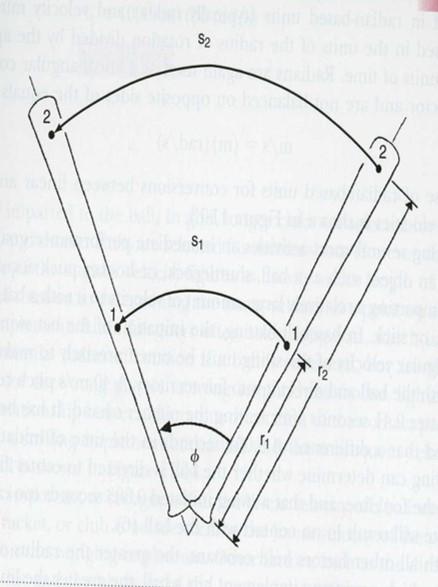
Describe this pic?
Formula to use here that relates angular and linear relationships?
Point 2 traveling further than point 1…means it is moving faster (linear velocity)
The angular velocity is the same though
S = rϕ
Where
s = linear distance
r =
radius
ϕ = angular distance
= r ω
explain each part
For this formula to work, what must happen?
Linear Velocity
Where:
V= linear velocity
r = radius
ω =
angular velocity
angular velocity must be in rad/s
Two baseballs are consecutively hit by a bat. The first ball is hit
20 cm from the bat’s axis of rotation and the second ball is hit 40 cm
from the bat’s axis of rotation
If the angular velocity of the
bat was 30 rad/s at the instant that both balls were contacted, what
is the linear velocity of the bat at the two contact points?
Known:
Radius
r1 = 20 cm
r2 = 40 cm
Angular
velocity
ω = 30 rad/s
Formula:
V = r ω
Ball 1:
V1 = (0.20m)(30
rad/s)
V1 = 6 m/s
Ball 2:
V2 = (0.40m)(30
rad/s)
V2 = 12 m/s
Can you think of examples of sport/exercise where we manipulate all of these variables?
(with a lever and two points on it-related to baseball and golf)
Baseball pitchers are usually tall with long arms
Also where a
ball is hit on the bat affeccts how far it will go
In golf you
initially have a long club to hit the ball far
Longer limbs are more advantageous for imparting _____ linear velocities
greater
In Athletic Coaching,
Optimize form to take advantage/maximize
_______ when appropriate
limb length
In Training principles,
Athletes with shorter limbs:
Train
to improve/maximize ______?
Athletes with longer
limbs:
Train to optimize ______ ? ...move longer/heavier limbs at
competitive _______?
angular velocity
force generating capacity
velocities
Using these principles of smaller distance between point and axis of rotation to reduce an opponents performance in baseball and tennis?
Baseball Pitcher
Pitching inside
Tennis
Player
Serving or hitting the ball toward opponents body
Cant extend arm fully to get a good lever arm length to maximize linear velocity
What are Newton’s 3 Laws of Motion?
First Law: Law of Inertia
Second Law: Law of
Acceleration
Third Law: Law of Action/Reaction
Law of Inertia
1st law
Law of Acceleration
2nd law
Law of Action/Reaction
3rd law
A body will maintain a state of rest or constant velocity unless acted upon by an external force that changes the state
1st Law – Law of Inertia
A motionless object will remain _________ unless there is a net force (a force not counteracted by another force) acting on it
motionless
A body travelling with a constant speed along a straight path will
continue its motion unless ?
Example?
acted on by a net force that alters either the speed or the direction
of the motion.
seat-belt in a moving car
The property of an object that causes it to remain in a state of either rest or motion
Inertia
Because of Inertia, ______ is needed to change the velocity of an object
force
The amount of force needed to alter the object’s velocity is directly related to ?
the amount of inertia it has
The measure of (linear) inertia in a body is its ? Give an example or a comparison?
mass (the quantity of matter it posses)
Example: A bowling ball
has greater inertia compared to a volleyball and will need more force
to stop it and to get it rolling
inertia is most in what football players?
offensive and defensive lines in football have more inertia...they are big
A force applied to a body causes an acceleration of that body of a magnitude proportional to the force, in the direction of the force, and inversely proportional to the body’s mass.
2nd Law – Law of Acceleration
When a ball is thrown, kicked, or struck with an implement, it tends to travel in what direction?
the direction of the line of application of the applied force.
The greater the amount of force applied, the greater the _____ of the ball.
speed
describes the relationship between an object's mass and the amount of force needed to accelerate it.
Newton's second law of motion
Formula for force?
Force = mass x acceleration
Force = mass x acceleration:
the more mass an object has, the
more ____ you need to accelerate it.
the greater the force, the
greater the object's ___________.
force
acceleration
The Law of Acceleration dictates that when sufficient _______ is applied to a mass, an acceleration will occur (F = ma)
Because acceleration is the rate of change in velocity, this equation can be written as?
How do we turn that formula into impulse?
force
F = m(v-u)/t
v=final vel and u= initial vel
Ft = m(v-u)
The product of Force (F) and the time over which the force is applied is called?
Impulse
We manipulate impulse all the time to maximize sport/exercise performance to do what?
The greater the time we apply the force the greater the ?
Examples with bobsledding, baseball, shot-put and triple extension?
enhance the acceleration and subsequent velocity of an object
acceleration
Bobsled…running and pushing to apply force over a given amount of time to inc acceleration
Baseball..windup in pitch
Shot-put, etc. (spin around 1st before throwing)
Triple Extension –
Power Clean
during Gait with impulse, the objective is to apply ______ for the longest possible time?
the largest force
The greater the impulse the greater the change in ? How do we
optimize this during gait?
1. minimize ?
2. maximize ?
momentum
breaking impulse (ex. Heel strike)
propulsive impulse
Describe impulse graph for gait?
area under curve is the braking impulse and is negative
propulsive impulse is on positive part of graph
Elite sprinters land with their foot about 6cm where?
Novice
sprinters land with their foot _____ that distance in front of their body
in front of the body
twice
How do you improve propulsive impulse? How does this improve it? “Short contact times of elite sprinters are the result of their __________, rather than the being the cause of them” Blazevich 2007. When in the air are we accelerating? how does this relate?
Improve hip extension (force & ROM) to lengthen the propulsive impulse
This increases the force and the time over which the force is applied by keeping feet on ground longer
fast running speed
When in air we aren’t accelerating
Want longest ground
contact time…loading response to toe off in quickest time (doing it
fast though)
Impulse is related to ? The greater the impulse (Ft) the greater the ? Give an example with a car?
momentum
change in momentum
Example - pushing a car
applying a big force for a long
time (impulse) increases the car’s momentum
Ft = mv – mu
impulse equation
The product of mass and velocity is ? Describe this?
momentum
The faster an object moves, the more momentum it has
The
larger a moving object’s mass, the more momentum it has
Linear Momentum equation
L = mv
L = linear momentum
m = mass
v = instantaneous velocity
Newton’s 1st Law states that the velocity of an object is constant if the net force acting on the object is ?
zero
If the velocity of an object is constant, then its momentum is constant as well, why?
since mass doesn’t change and vel is constant
L = constant if ∑F = ?
0
Since velocity is a vector quantity, momentum is also a vector quantity and contains both ______ and _______?
magnitude and direction
Units of momentum are units of ____ multiplied by units of _____ and are expressed in terms of ?
mass
velocity
kg ● m/s
The total momentum of a system of objects is _____ if the net external force acting on the system is zero
constant
∑(mu) initial = m1u1 + m2u2 + m3u3 = m1v1 + m2v2 +m3v3 = ∑(mv) final
Describe each symbol?
if Li and Lf are constant
Li = initial linear momentum
Lf = final linear
momentum
m =mass of part of the system
u = initial
velocity
v = final velocity
For every action, there is ? What law?
an equal and opposite reaction.
3rd law
When one body exerts a force on a second, the second body exerts a reaction force that is _____ in magnitude and ______ in direction on the first body
equal
opposite
When a person leans with a hand against a rigid wall, the wall does what? The harder the hand pushes against the wall, the greater is the what?
pushes back on the hand with a force that is equal and opposite to that exerted by the hand on the wall.
amount of pressure felt across the surface of the hand where it contacts the wall.
Where are collisions are common in sport?
Baseballs collide with bats, soccer balls collide with feet, defensive linemen collide with offensive linemen
When two objects collide in a head-on collision, their combined ______ is conserved? What can this help us know?
momentum
This principle can be used to predict the post-collision movements of the objects in certain situations if we know their masses and their pre-collision velocities
Yellow car bumps into parked green car? Find the green cars momentum?
my = 1,814 kg
uy = 8.94 m/s
mg = 2,268 kg
ug = 0 m/s
my = 1,814 kg
vy = 0 m/s
mg = 2,268 kg
vg = ? m/s
(my)(uy) + (mg)(ug) = (my)(vy) + (mg)(vg)
(1,814 kg)(8.94 m/s) + (2,268 kg)(0 m/s) = (1,814 kg)(0 m/s) + (2,268 kg)(vg)
16,217.16 kg-m/s = (2,268 kg)(vg)
7.15 m/s = vg
In a perfectly inelastic collision, momentum is still conserved, but rather than bouncing off each other, the objects in the collision do what? Formula for this?
stay together after the collision and move with the same velocity
(m1)(u1) + (m2)(u2) = (m1 + m2)(v)
Actual collisions are also affected by other factors such as the extent to which the players become ______, by whether one or both players remain on their _____, and by the _____ of the collision.
entangled
feet
elasticity
In the absence of external forces, the total momentum of a given system remains ?
constant
A 90 kg hockey player traveling with a velocity of 6 m/s collides head-on with an 80 kg hockey player traveling at 7 m/s. If the two players entangle and continue traveling together as a unit following the collision, what is their combined velocity?
m1 = 90 kg
v1 = 6 m/s
m2 = 80 kg
v2 = -7 m/s
m1v1 + m2v2 = (m1 + m2)(v)
(90kg)(6m/s) + (80kg)(-7m/s) =
(90kg + 80kg)(v)
540 kg•m/s – 560 kg•m/s = (170 kg)(v)
-20
kg•m/s = (170 kg)(v)
-0.12 m/s = v
v = 0.12 m/s in the 80
kg player’s original direction of travel
Remember, total momentum of a system must remain the same, because momentum is conserved unless ?
….an external force acts.
How can you ensure in sports that you don't get pushed backwards?
1. We can manipulate your _____ so your momentum is greater than
your opponents (depending on the comparison of your ______, your
velocity may need to be very great or only slightly more)
2. A
second way to make the opponent move backwards is to continue to apply
a __________ during the collision so that the ground does
what?
3. Because velocity is a vector quantity, so too is
momentum. Thus, if you apply your momentum ______ with their momentum
you effectively reduce their momentum to . Essentially, tackle them how?
velocity
masses
a force to the ground
applies an equal and opposite force back at you
not in line
zero
Tackle them from the side.
2 Classification of Forces?
Internal
External
Those forces that act on an object as a result of its interaction with the environment surrounding it
External Forces:
The property of an object to resist changes in its linear motion....dependent only to the ______ of the object (no fixed point – object moves as a unit)
Linear inertia
mass
The larger the mass the more _____
inertia
“We use _________ because we are describing the propensity form masses which are at a distance from the center of rotation, to resist changes to ________”
Moment of Inertia aka Angular inertia (
their state of motion
The property of an object to resist changes in its angular motion
Dependent on the ____ and the ______ of the mass
Angular inertia (aka – moment of inertia)
mass
distribution
The total moment of inertia is the sum of the masses of all these particles multiplied by the distance of each of those particles from the center of rotation
Angular inertia (aka – moment of inertia)
The more particles that are _____________, the larger is the moment of inertia.
further from the pivot
Doubling the mass – ______ the inertia
Doubling the radius –
_________ its inertia
I = Σ mi ri2
doubles
quadruple
Describe how radius plays a big role in angular inertia?
Radius or how far it is fro center of rotation will determine and effect angular inertia…gets harder to rotate something further away from axis
If an object is unconstrained and free to rotate about any axis, it will rotate through its center of gravity
Angular inertia about center of gravity
If an object rotates about a fixed axis that does not pass through the Center of Gravity
Angular inertia about Eccentric Axes
Represents the object’s mass distribution with respect to a given axis of rotation (a distance)
Radius of gyration
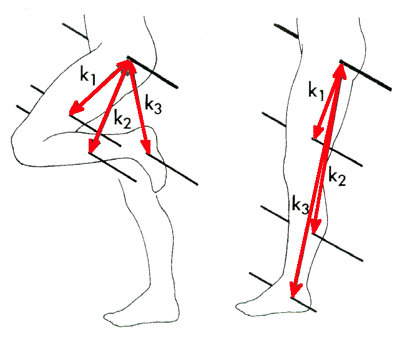
explain this picture?
Reduces moment of inertia when we bring the lower leg up…results in less force needed to bring leg forward
Knee angle affects the moment of inertia of the swing leg with respect to the hip because of changes in the radius of gyration for the lower leg
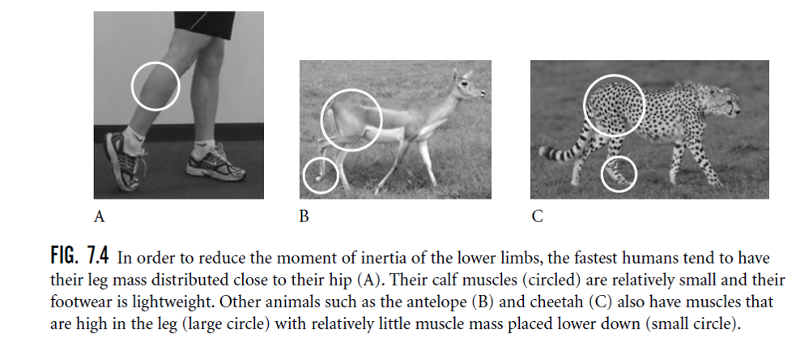
explain this picture?
Reduces MOI with skinny ankles or skinny legs…makes it easier to move those limbs
How do we manipulate our bodies in sport and exercise to optimize inertia?
What about sporting implements?
Keep the load closer to you
Choke up on bat to lessen the radius
of the mass from the center of rotation
When a figure skater is spinning, what happens as she brings her arms in close to her trunk? As she abducts her arms?
Faster they spin if they keep all their mass as close as they can to their center of rotaion
What about a tight rope walker?
Where else do you see this type
of manipulation of inertia on balance beam?
Wont rotate as easily with a big pole (holding it as they walk across) because their radius is huge. Also keep arms out when walking on a balance beam to increase inertia and therefore they wont fall.
As the distribution of mass was altered relative to the axis of rotation, the rotation of the object was ________?
altered.
The greater the angular inertia – the harder it is to ?
to change an objects motion (speed it up or slow it down)
Angular inertia:
Use knowledge of these principles:
Teach children that
those with less strength should do what?
choke up on an implement to reduce the moment of inertia
Explain body position during recovery movements to reduce effort (by reducing inertia) and maximize angular velocity (with sports)
bring the arm back really close to the body to reduce inertia...like in tennis with back swing and then in recovery phase in swimming...loop arm really close to you.
The idea that ______ can alter the rotation of an object with a given moment of inertia is similar to the idea that a linear force can alter the movement of ______?
torque
a mass
The angular acceleration of an object is proportional to the net _____ acting on it and inversely proportional to the _____ of the object:
explain this?
torque
inertia
Greater the force…greater the angular acceleration…greater the inertia…the lower the angular acceleration
which shows that the angular acceleration of an object will be greater if the torque is increased or the moment of inertia is decreased
We now have a mass moving at an angular velocity, so it has __________, symbol= ? and so we also have to apply an _____ , formula= ?
angular momentum
‘H’ (although you might also see it as L in physics texts)
angular impulse
(torque × time, τ·t)
The angular impulse–angular momentum relationship would be? What does it basically say?
τ·t = Iω
where a certain impulse creates a change in angular velocity of a certain amount in an object with a given moment of inertia
The greater the force… the greater the __________…and the greater the ______…the lower the ____________
angular acceleration
inertia
angular acceleration
Most human movements are characterized by a large number of body segments simultaneously moving in _______?
circles/arcs.
For every angular action there is an equal and opposite _______? According to?
angular reaction
As Newton's Third Law states
Forces that act to modify motion include (3)?
Contact Forces
Fluid Forces
Gravity
Normal Reaction
Friction
Contact Forces
Buoyancy
Drag
Lift
Fluid Forces
For every action there is an equal and opposite reaction
In terms of forces, the law may be stated as follows:
Newton’s third law
When one body exerts a force on a second body, the second body exerts a “Reaction Force” that is equal in magnitude and opposite in direction on the first body
Are forces that occur between objects in contact with each other
can be what or what? What are two components that this can be resolved?
Contact Forces
Can be solid or fluid (water & air)
Contact forces can
be resolved into two components:
Normal Reaction Force
Friction
Perpendicular to the surface of contact
Usually the _____
component
Also known as ?
Normal Reaction Force
vertical
Ground Reaction Force
Line of action is parallel to the two surfaces in contact and opposes the motion or sliding between the surfaces
Frictional Force
Friction is ______ to the surfaces in contact and _____ the direction of motion
______ component?
Parallel
opposite
Usually the horizontal component
Frictional force when the object is not moving
Static friction
The maximum static frictional force…friction right before object moves
Limiting friction
If you go over the limiting friction value ________ will occur
dynamic/kinetic friction
The friction between two objects in motion relative to each other
Dynamic/kinetic friction
There are 2 factors that impact the magnitude of friction, explain?
1. Normal Contact/Reaction Force
2. Coefficient of Friction –
Nature of the surfaces (rough or smooth)
How much vertical (or perpendicular in relation to motion) pressure there is between the two objects
Normal Reaction Force
The greater the normal reaction force, the greater the overall ?
friction
indicates the relative ease of sliding or the mechanical and molecular interaction between two surfaces in contact
Based on the nature of what?
Coefficient of Friction
the surfaces in contact
In calculating Friction we must take into consideration these two factors
(formula)
Potential Frictional Reaction Force (PFRF) =
Coefficient of
friction x reaction force or
Coefficient of friction x contact force
Actual FRF will equal the _________ applied, resulting in _________ if they are equal?
horizontal force
no movement
example:
100 lb object and coF= 2
PFRF?
What happens if you try to move this object with only 50 lbs? With 210 lbs? (what would be the net force and why is there movement)
What happens when you bring it back down to 180 lbs? Net force?
PFRF = 200 lbs
Have to overcome the 200 in order to make it move….if you only put in 50 then you will only get 50 back
Once horizontal force exceeds the PFRF motion will result : Net force = 10 lbs
Once object is moving, if horizontal force is < FRF the object will slow down: Net force = -20 lbs
When two components come into contact with one another, the ________ of the objects will influence the behavior of the two objects
This definition is for? 2 types?
elasticity
Impact
Perfectly Elastic Impact
Perfectly Plastic Impact
Most impacts are not ?
“Perfect”
describes the relative elasticity of an impact?
Coefficient of Restitution/Elasticity

Previously in lecture you learned that if we know the masses and
velocities of two objects before a collision, we can determine what
their velocities will be afterwards.
Is this completely true?
If a ball were to bounce on a concrete floor, its velocity after the
collision should be the same as its velocity before but this isn’t so.
If you drop a ball, it never bounces back to the same height
(Figure 11.1), so its velocity after the impact cannot have been as
great as it was before
This loss of velocity can be attributed to _________ during the collision.
Some energy will be changed to ______ and emitted when?
_____ energy is also produced, explain an example?
Energy cannot be destroyed but it can be ?
energy dissipation
sound, emitted as the ball hits the ground.
Heat -(you might have noticed that a squash ball becomes warmer when it is hit repeatedly before a game).
converted to other forms.
Coefficient of Restitution aka ?
CoElasticity
Objects _____ slightly as they collide
For Example:
a ball
is first compressed and then undergoes ___________
The greater
this is, the less _______ must have been lost during the collision
deform
restitution
energy
the ability of an object to resist distorting influences and to return to its original size and shape when distorting forces are removed
Elasticity
Whether or not the deformation is permanent depends on the ______ of the interacting objects
elasticity
force that acts to distort
stress
the proportion of distortion that occurs due to stress
strain
Coefficient of Restitution/Elasticity is a term used to compare _________ of different substances
elasticity
Coefficient of Restitution/Elasticity formula?
what happens as this calculation approaches one?
What happens when a ball of dough is dropped, why?
The collision of dough with the floor has a very low ?
e= square root of (bounce height/ drop height)
As CE approaches 1.0 the more perfect the elasticity of an object (returns to normal shape)
When a ball of dough hits the floor, it doesn’t undergo restitution, because all its energy is dissipated.
coefficient of restitution.
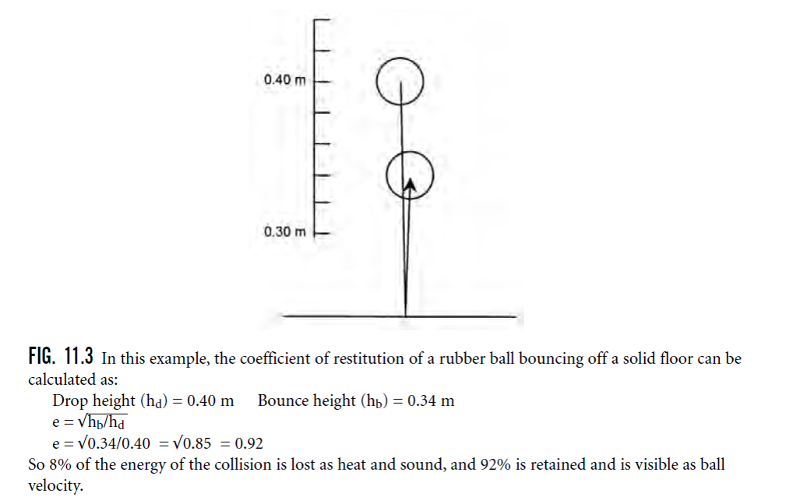
Go over picture?
pic
How much should a basketball be inflated:
Basketball should be inflated to rebound to a height of _____- _____ inches at its top when its bottom is dropped from a height of ___ inches
49 – 54
72
Coefficient of restitution is also affected by what? Give an example?
temperature.
A warm ball will bounce higher than a cold one.
Nature of a rebound is governed by:
1. _____
2.
_____
3. ____ of the rebounding surfaces
4. _____ between
surfaces
5. ______ of contact between objects
Elasticity
Mass
Velocity
Friction
Angle
An elastic object that strikes the ground obliquely will compress unevenly and rebound at an ______ angle
oblique
Size of the rebound angle compared to striking angle depends upon what 2 things?
Describe what a picture of this would look like?
1. Elasticity of striking object
2. Friction between the 2 surfaces
surface line and then perpendicular line straight up and then angle of incidence, and then angle of rebound
The rebound of a perfectly elastic object will occur as a ____ angle to the striking angle
mirror
Low coefficients produce angles of reflection greater than ________?
angle of incidence
Coefficient of Restitution/Elasticity
Impacts the _____
component of the rebound
vertical
Friction impacts the _______ component of the rebound. An increase in friction will produce a ______ in angle rebound
horizontal
decrease
____ can influence rebound angles:
Topspin
causes balls to rebound from horizontal surfaces ____ and with greater ________?
Essentially, what does friction do, helping what?
Spin
lower
horizontal velocity
Goes in the direction the object is moving, helping increase its horizontal rebound velocity
Effects of Spin on Rebound:
Backspin
Results in _____ bounce and _____ rebound velocity
Essentially, what does friction do, helping what?
higher
slower
FRF is in opposite direction as horizontal movement, which slows the object down and helps to give a higher bounce
Both _______ and _______ are fluid mediums that exert forces on bodies moving through them. Some will slow _______? Others will provide ?
air and water
movement
support or propulsion
We often think of liquids when we hear the term ______?
fluid
any substance that tends to flow or continuously deform when acted on by a shear force. Two examples?
Fluid
Gases and liquids
The velocity of a body with respect to the velocity of something else, such as the surrounding fluid. Two types? Explain them a little?
Relative Velocity
Absolute vs Relative..important when making comparisons with gender...differences usually decline with relatie
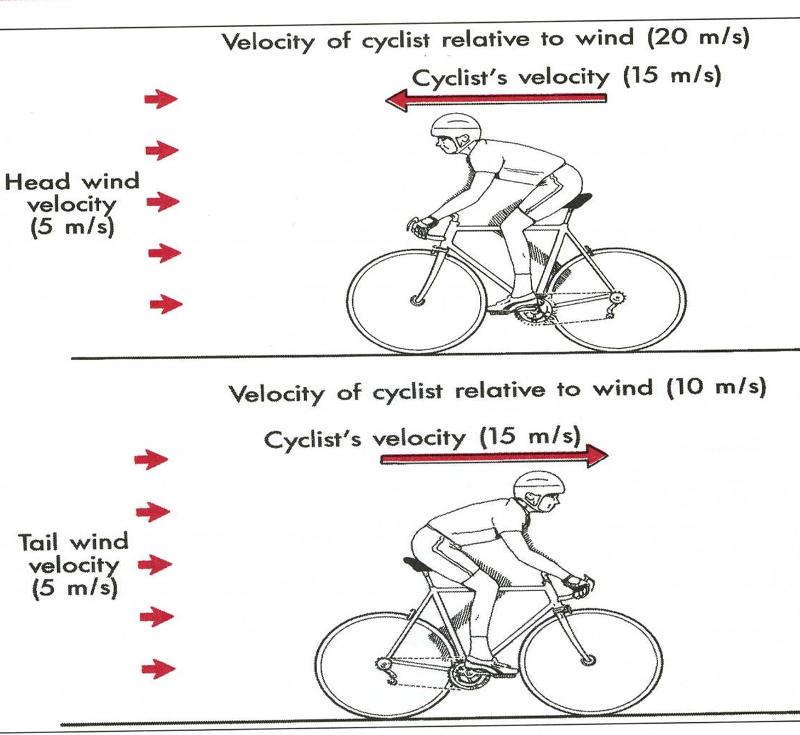
calculate relative velocity?
Scenario A:
V = Vc – Vw
V = - 15m/s – 5 m/s
V = -20 m/s
(right to left is a neg. velocity)...only going 15 m/s but working harder at 20 m/s....because of the wind
Scenario B:
V = Vc – Vw
V = 15 – 5
V = 10 m/s
working less hard to go at this faster velocity
the primary climatic factor in sprint performances.
Air resistance
A strong ______ is very detrimental to performance. But a ______ can improve performances significantly.
head wind
A tail wind
What is "wind legal" in running?
A tail wind can improve performances significantly.
For this
reason, a maximum tail wind of 2.0 m/s is allowed for a 100 m
performance to be considered eligible for records
Forces produced by gases or liquids:
Three types?
1. Buoyancy
2. Drag
3. Lift
The __________ a fluid generates is impacted by the properties of the fluid
magnitude of the forces
Ratio of mass/volume
Density
Ratio of weight/volume
Specific Weight
Resistance to fluid flow.
Viscosity
Buoyancy is based on __________ Principle
Archimedes’
Two things bouyancy is influenced by? What does this mean: More mass concentrated in a given unit of fluid volume at high atmospheric pressures & lower temps
Influenced by Fluid temperature and Atmospheric Pressure
the more dense the fluid medium is
Archimedes’ Principle:
States that a solid body immersed in
liquid is buoyed up by a force equal to?
the weight of the liquid displaced
If an object exists in a fluid there is a force applied to the object opposite to?
gravity
Buoyancy:
The ______ of the force is equal to the _______ of the fluid that the object displaces
magnitude
weight
Fb = Vd γ which formula?
explain each part?
Fb = Vd γ
Fb = Buoyancy
Vd = displaced volume
γ =
fluid’s specified weight
For buoyancy: The line of force is applied opposite ______ and passes through the ?
gravity
“center of volume”
point around which a body’s volume is equally distributed in all directions
Center of Volume
The heavier the amount of fluid displaced the greater the ? Give an example?
Fresh water = ?
Salt water = ?
buoyancy force
i.e. : in salt water objects produce a greater buoyancy force because salt water weighs more
62.4 lb/ft3
64 lb/ft3

Person = 3 ft3
(represents displaced volume)
Specific
Weight = 62.4 lb/ft3
what is the buoyancy force? Will they float?
Fresh water:
62.4 x 3 = 187.2
Buoyancy force = 187.2…they
will float
Net force = 7.2 lb
So, why do some people float while others sink?
Body composition
More dense….a lot of muscle mass…wont be buoyed
up as much because you are more dense
Lift & Drag: Fluid resistance to ? Lift & Drag are the result of either ______ or _______?
movement
fluid movement or object movement
Without Lift & Drag what will not occur?
fluid movement or object movement
The resistance to forward motion of an object through a fluid
Drag
Drag is the result of fluid _____ on the leading edge of the object and the amount of __________ (describe this last one)
pressure
turbulence (backward pull on the trailing edge)
Produces a suction force pulling the object in the opposite direction of its intended path
Turbulence
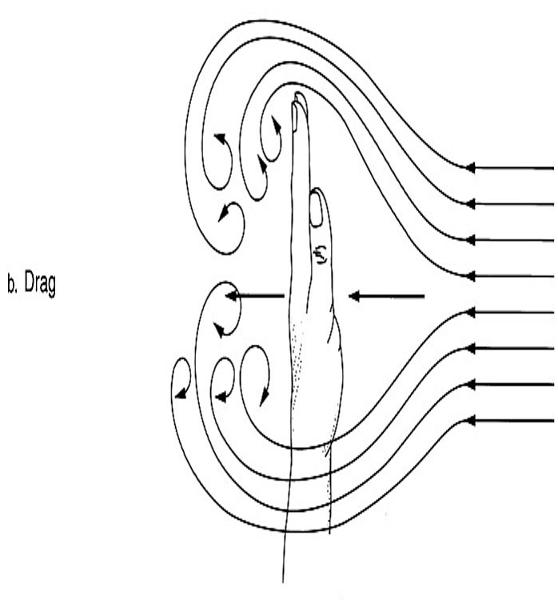
Describe this?
Hand gets pulled back in the wind when you stick your hand out of the
window
Anything behind the hand will get sucked behind the
object
Turbulent flow slows the hand down though or pulls it back
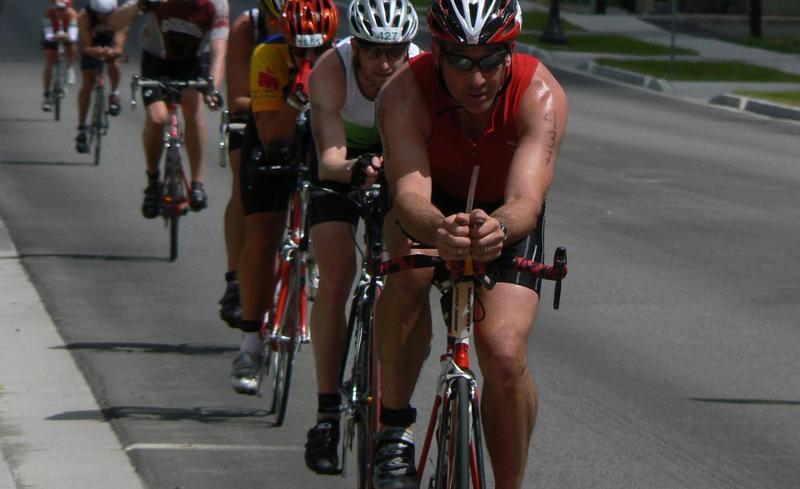
Why are these cyclists so close?
Travel by close….take advantage of forward turbulence flow
3 factors Affecting Drag? Describe how they affect drag?
With CSA...it is measured _____ to the line of the force?
1. Viscosity of the fluid
Thickness of the fluid
The thicker the more drag
2. Cross sectional area of the object
The greater the CSA the greater the drag
CSA is measured
perpendicular to the line of force
3. Velocity of the object or fluid
if you double the velocity then you square the drag force=Theoretical Square Law
if you double the velocity then you square the drag force
Theoretical Square Law
2 types of drag?
form and surface drag
The _____of the object makes the fluid unable to follow the contours of the object causing ________?
What type of drag is this?
shape
turbulence
Form Drag
A row boat vs a kayak dealing with aerodynamics?
A lot of work in a row boat
Aerodynamic kayak boat…makes it easier
The friction that exists between the boundary layer and the object
surface drag
the layer of fluid directly next to the object
Boundary layer
smooth, unbroken fluid flow
Laminar flow
Advantage of tight clothes and shaving in relation to surface drag?
Can decrease surface drag & enhance laminar flow by shaving, high-tech fabrics, etc
a force generated by the changes in fluid pressure as the result of different fluid velocities
lift
__________ Principle:
The pressure in a moving fluid decreases
as the speed ________
The faster the fluid flows, the ____
pressure it generates
Any __________ of an object may generate a
lift force
Example: ?
Bernoulli’s
increases
less
differences on either side
Airplane wing (airfoil shape)
Slower moving means _____ pressure which generates ____? With lower pressure what is the speed like?
Higher Pressure
Generate Lift
Faster moving
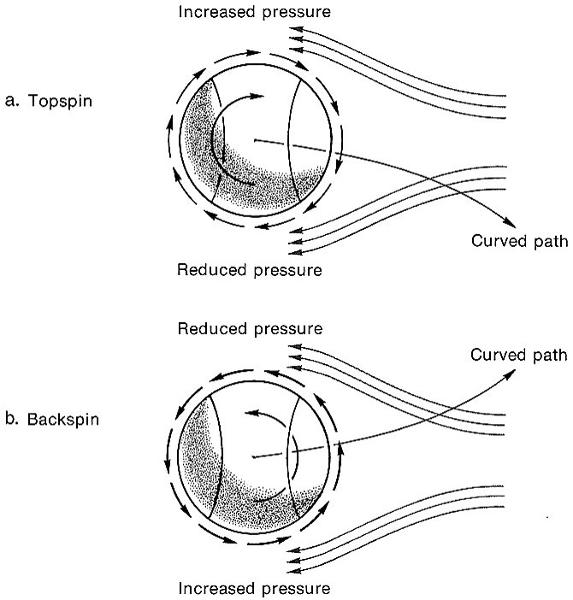
LIFT : with Topspin & Backspin?
with topspin: increased pressure on top which means slower movement and reduced pressure on bottom meaning increased speed going around the ball in a clockwise manner....topspin brings the ball down
with backspin: increased pressure on bottom meaning slower speed and reduced pressure on top meaning faster speed...increased speed going around the ball in a counter clockwise manner bringing the ball backwards
So, why does a golf ball have dimples?
Reduces turbulent flow on back end of it…making it able to fly forward