ventricles, meninges, CSF and blood vessels of the brain
Which dural septum lies in the longitudinal fissure between the two cerebral hemispheres?
falx cerebri
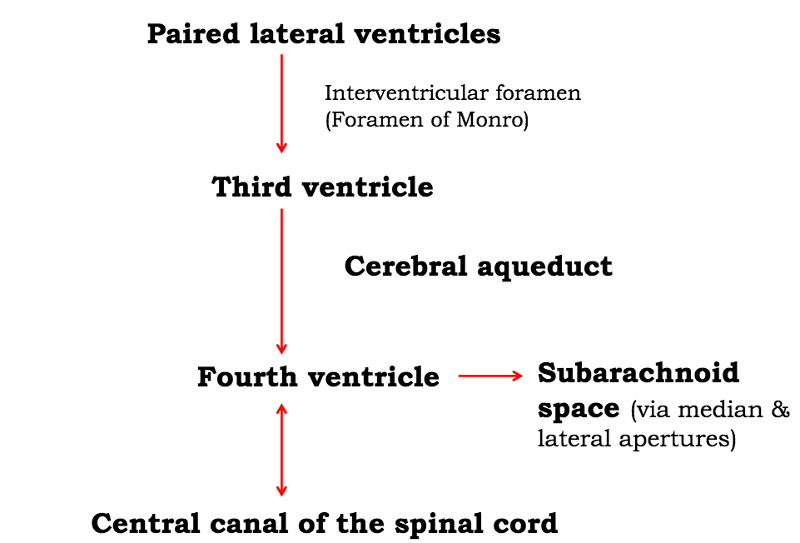
CSF flows from each lateral ventricle into the ___________ via an interventricular foramen.
third ventricle
What meninx is directly adhered to the surface of the brain, giving the brain its shiny appearance?
pia mater
Which arteries are NOT part of the Circle of Willis?
Middle cerebral aa. Anterior cerebral aa. Posterior cerebral aa. Internal carotid aa. Posterior communicating aa.
middle cerebral
Cerebrospinal fluid (CSF) is produced by __________.
choroid plexuses
Reabsorption of CSF occurs via the __________ into the superior sagittal sinus.
arachnoid villi
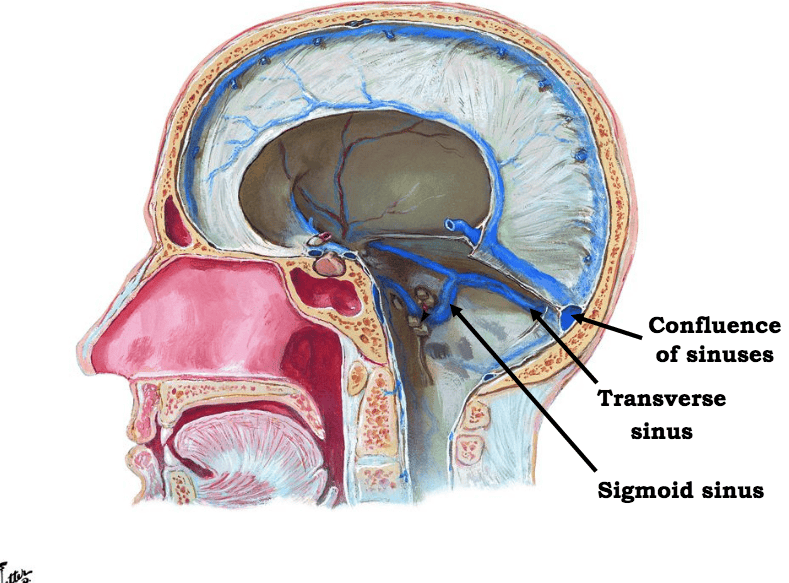
What dural sinus enters the jugular foramen and continues as the internal jugular vein?
sigmoid sinus
The __________ is derived from the diencephalon portion of the lumen of the neural tube.
third ventricle
What artery or arteries pass through the transverse foramina of the cervical vertebrae?
vertebral arteries
Place these potential/actual spaces in order from SUPERFICIAL TO DEEP.
- Subarachnoid space
- Epidural space (extradural)
- Subdural space
Epidural space, subdural space, & subarachnoid space
what are the three cranial meninges from superficial to deep?
dura mater, arachnoid mater, pia mater
what are the two layers of dura mater in the skull, from superficial to deep?
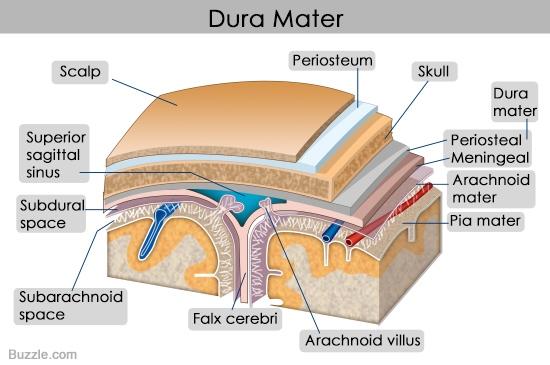
periosteal layer and meningeal layer
which layer of dura mater is continuous in the vertebral sheath of spinal cord? which layer of dura mater is absent in the spinal cord?
meningeal layer; periosteal layer
which layer of dura mater forms the dural septa?
meningeal layer
what is dural septa?
double layered folds of dura mater that insert into fissures
what are the three dural septa of the brain?
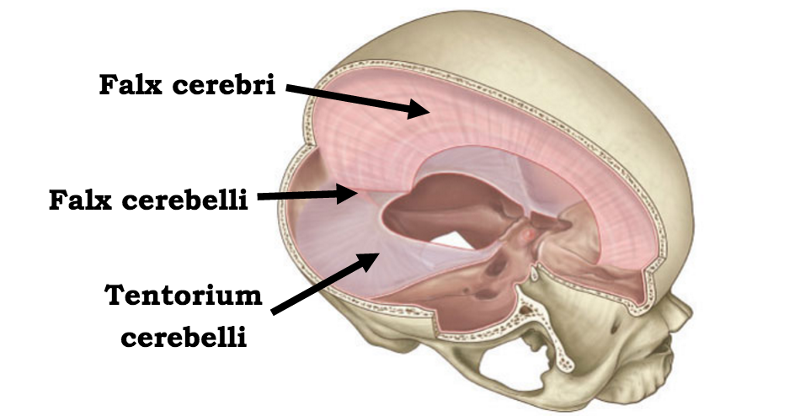
falx cerebri, falx cerebelli, and tentorium cerebelli
crescent-shaped fold of meningeal layer of dura mater that descends vertically in the longitudinal fissure between the cerebral hemispheres of the human brain
falx cerebri
meningeal layer that separates the cerebrum from the cerebellum
tentorium cerebelli
function of the dural septa?
prevent excess movement, like packaging material
meningeal layer that separates the two cerebellar hemispheres
falx cerebelli
the falx cerebri contains which two dural venous sinuses? where are they located?
superior sagittal sinus runs on superior edge and inferior sagittal sinus located on inferior edge
the tentorium cerebelli houses which dural venous sinus?
transverse sinus
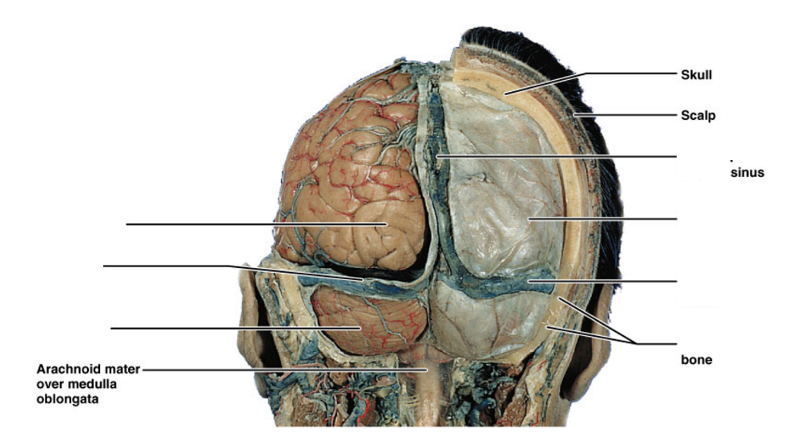
label
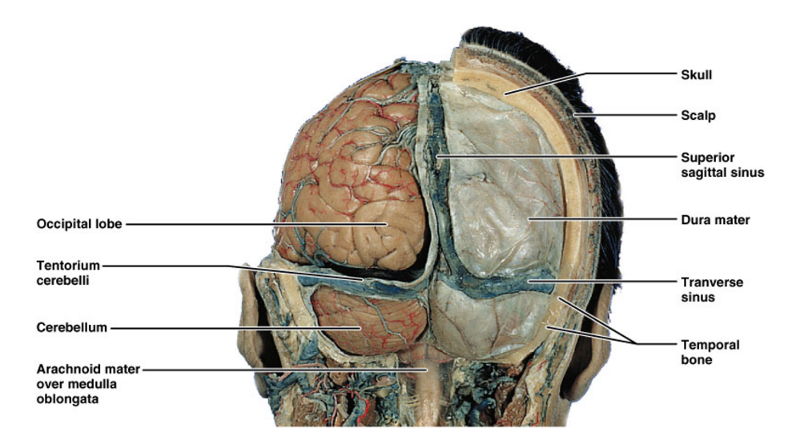
space where layers of dura mater separate are
dural venous sinuses
what in contained in the dural venous sinuses?
venous blood from the veins of the brain and CSF returned from the subarachnoid space
be able to make dural venous sinus chart
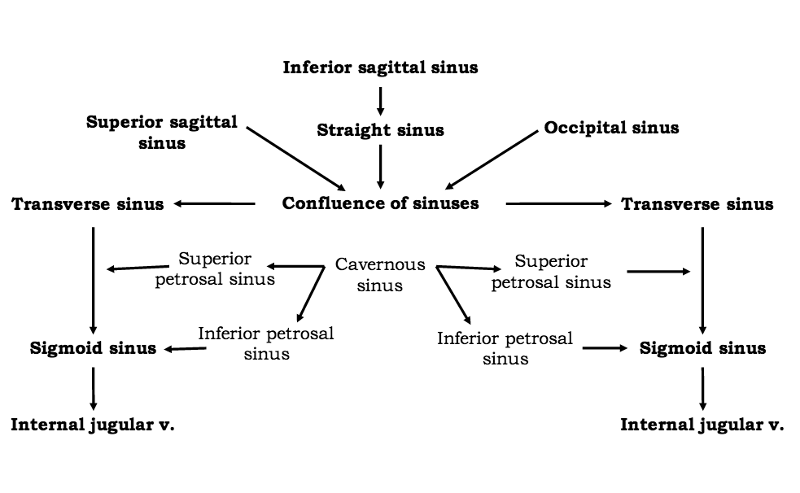
define arachnoid granulations/villi
projections of the arachnoid villi into the dural sinuses that allow CSF entrance from the subarachnoid space into the venous system.
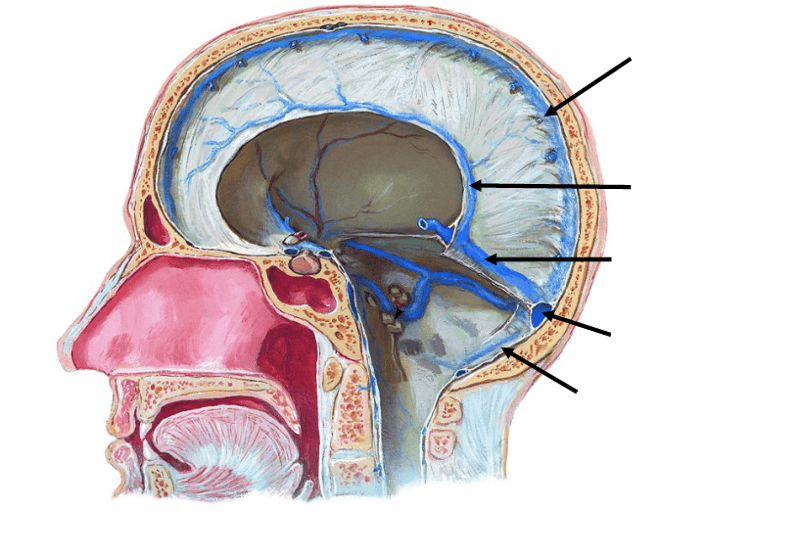
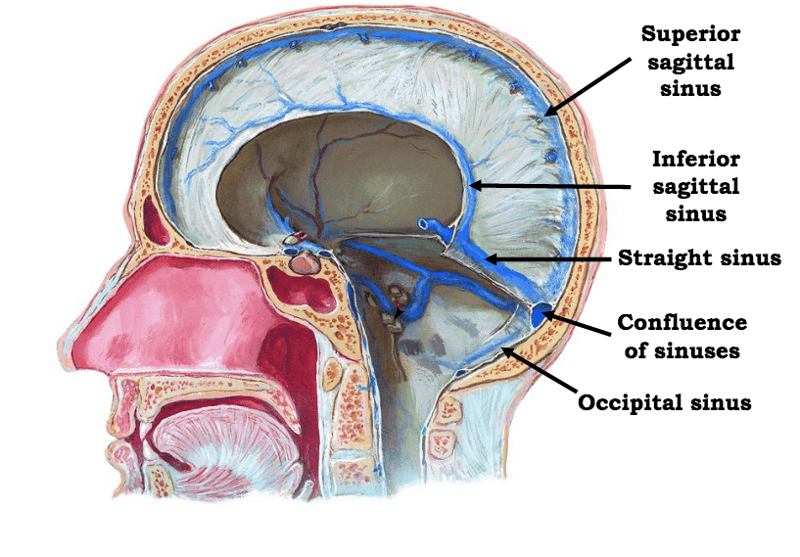
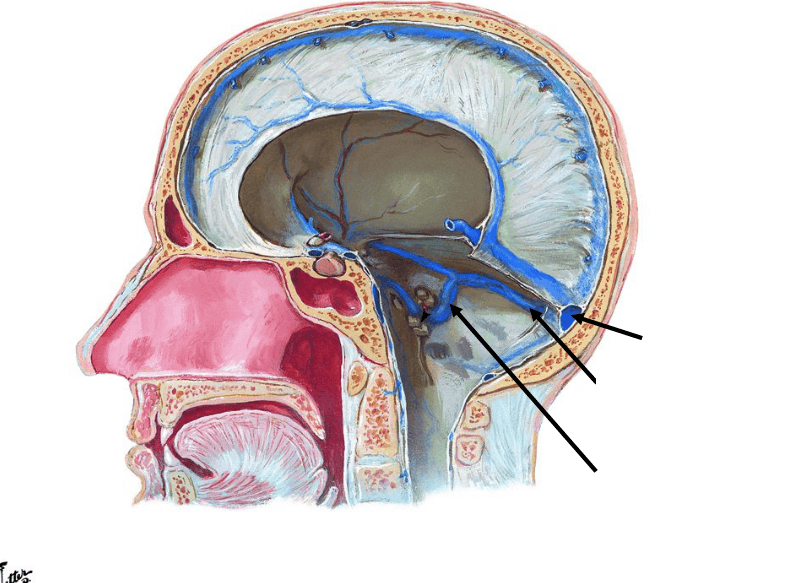
label
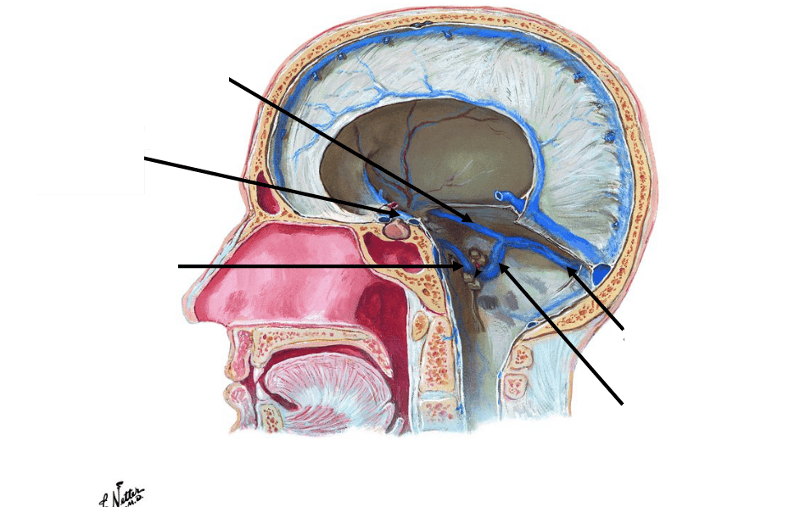
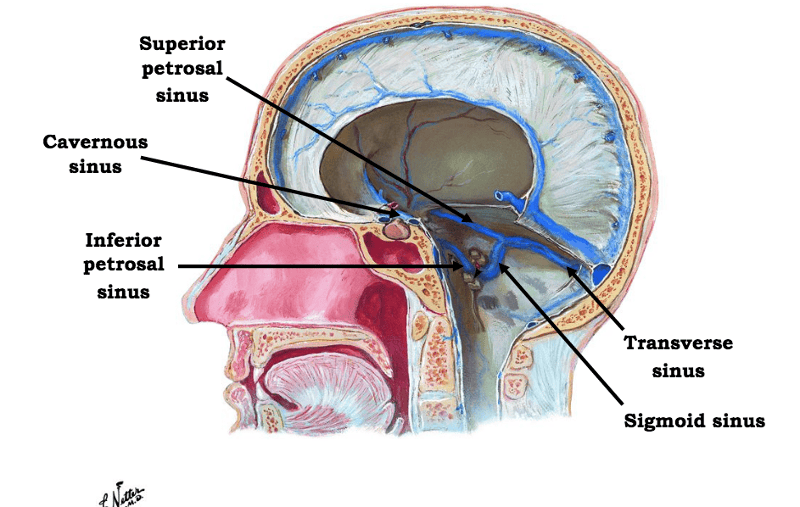
which sinus is situated on the inferior border of the petrous part of the temporal bone?
inferior petrous sinus
name the two potential and on actual meningeal spaces of the brain
potential: epidural and subdural
actual: subarachnoid
space between the skull and dura mater of the brain
extradural/epidural
space between dura mater and arachnoid mater of the brain
subdural space
space between arachnoid and pia mater of the brain
subarachnoid space
location of CSF and blood vessels around the brain
subarachnoid space
what type of blood would be gathering in the case of an extradural hematoma? which blood vessel is damaged?
arterial blood; the middle meningeal artery is damaged in most situations
what type of blood is building up in a subdural hemorrhage
venous blood
what type of fluid is building up in a subarchnoid hemorrhage
CSF
_____ arise from the lumen of the neural tube (ie neural canal)
ventricles
which ventricle arises from the telencephalon?
the paired C shaped lateral ventricles
which neural tube gives rise to the third ventricle
diencephalon
which ventricle arises from the mesencephalon
cerebral aquaduct
from which neural tubes does the fourth ventricle arise?
metencephalon and myelencephalon
what forms the central canal?
lumen associated with the neural tube which will become the spinal cord

label
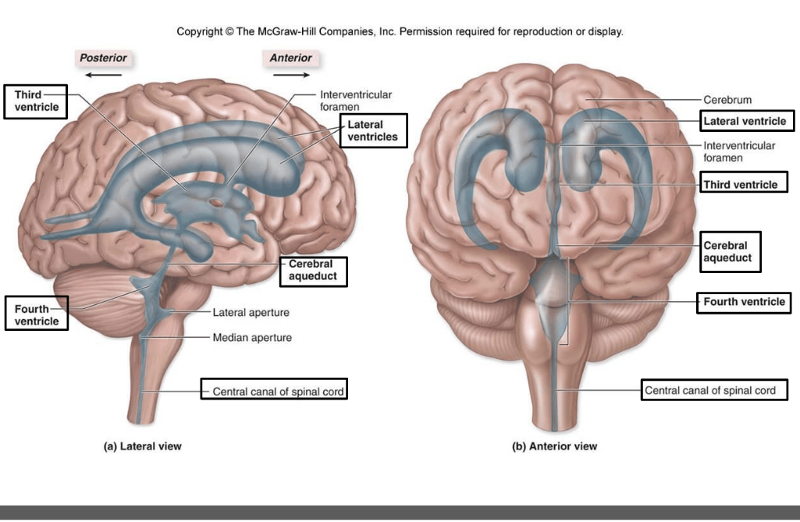
what forms CSF and where is it found?
a choroid plexus forms CSF and there is choroid plexus found in all ventricles
what type of cells is choroid plexus made of?
modified ependymal cells
what are the three functions of CSF
shock absorber for brain
transports nutrients and removal of waste in deep brain
helps maintain proper ion balance in neural tissue
what is the order of the of CSF through the ventricles?
what is hydrocephalus
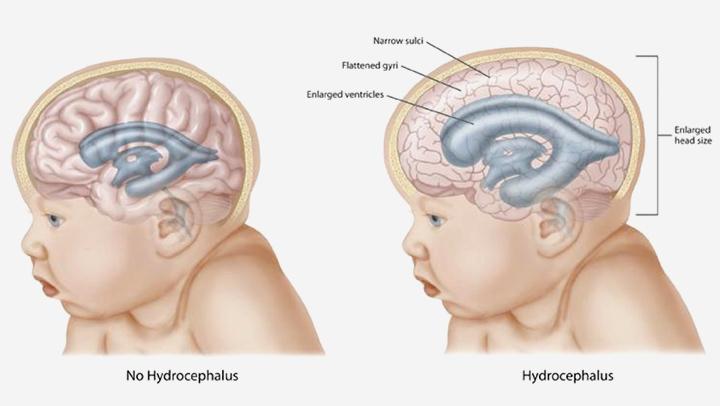
it is caused by obstruction of circulation of CSF
leads to accumulation of fluid
compresses the brain/pushes skull outward in babies
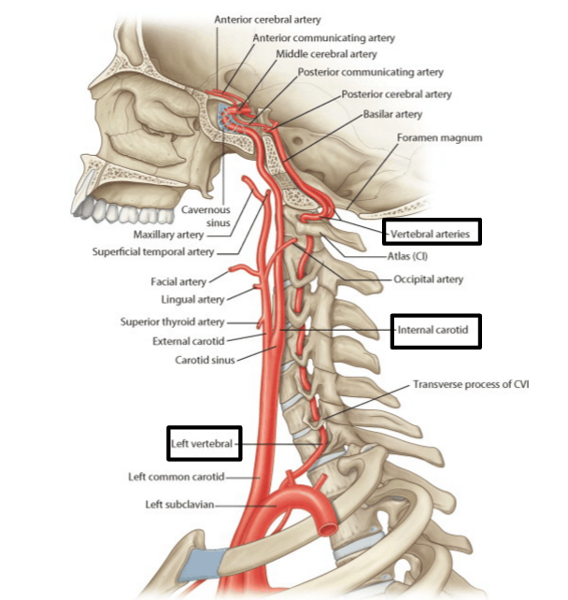
what are the two major pairs of arteries that supply blood to the brain?
vertebral arteries and internal carotid arteries
which arteries supply the posterior circulation of the brain?
the vertebral arteries
which arteries do the vertebral arteries branch off of?
subclavian
which major arteries enter the skull through the foramen magnum?
vertebral arteries
which artery supplying blood to the brain branches off the common carotid arteries?
internal carotid arteries
the internal carotid arteries supply the anterior or posterior circulation of the brain
anterior
what is the pathway for the internal carotid arteries to enter the skull?
enter the skull through the carotid canal and then through the internal opening of the foramen lucerum
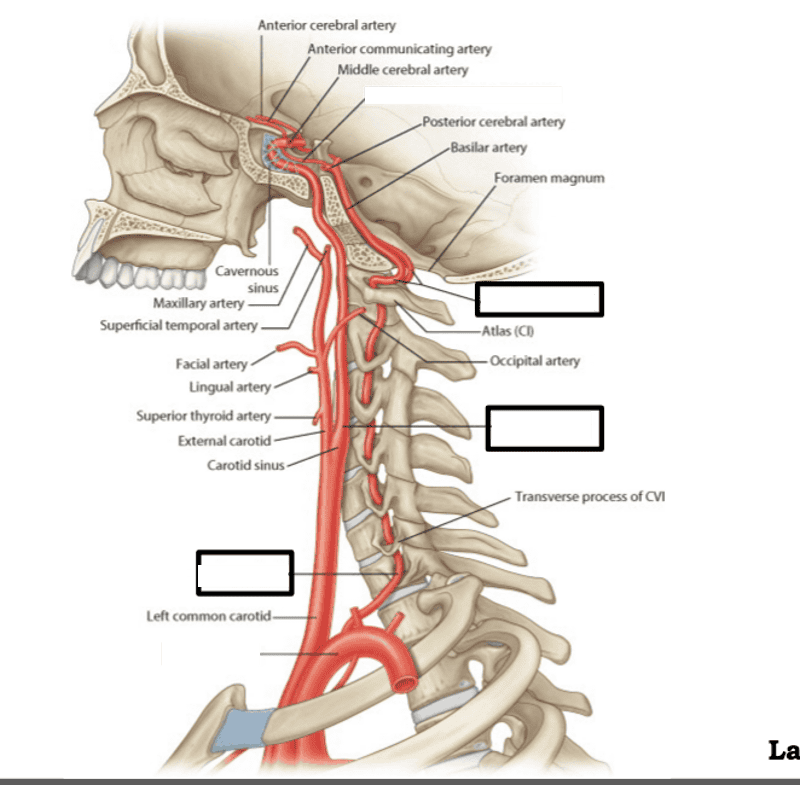
label
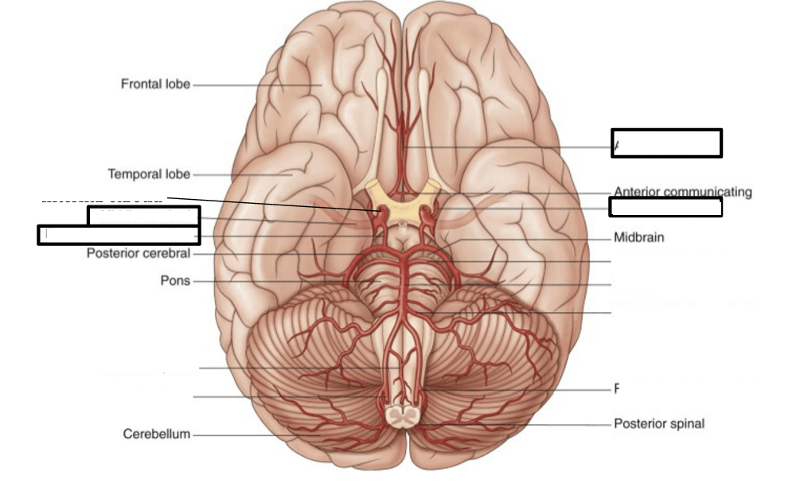
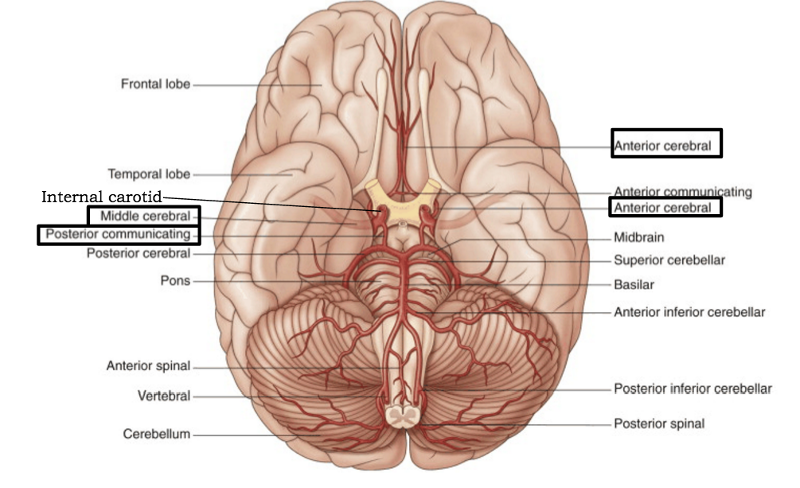
label
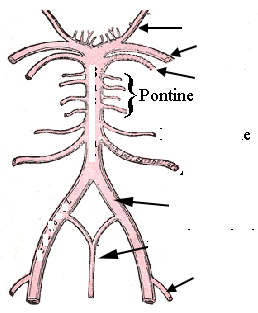
draw and label
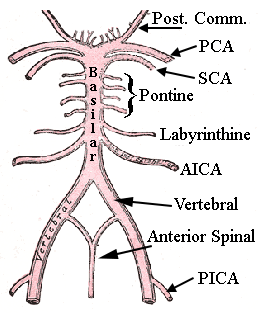
PCA = posterior cereberal
SCA = superior cerebellar
PICA = posterior inferior cerebellar artery
AICA = anterior inferior cerebellar artery
what are the major branches of the internal carotid artery
anterior cerebral
middle cerebral
posterior communicating
which branch of the internal carotid artery is located in the longitudinal fissure and wraps around the corpus callosum?
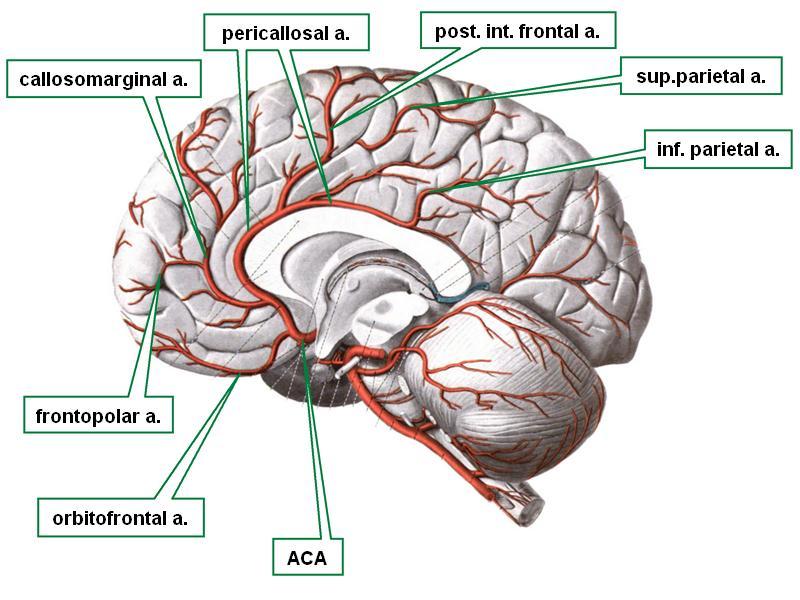
anterior cerebral artery
which branch of the internal carotid artery passes through the lateral fissure to supply the lateral aspect of the brain?
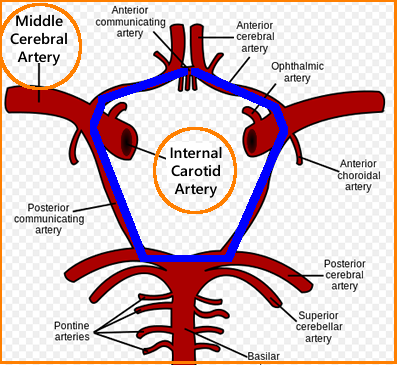
middle cerebral artery
which artery branching off the internal carotid artery connects anterior and posterior circulation of the brain?
posterior communicating artery
what are the major branches of the vertebral artery?
posterior inferior cerebellar
anterior spinal
basilar
what are the branches of the basilar artery?
anterior inferior cerebellar
pontine
labyrinthine
superior cerebellar
posterior cerebral
which artery feeds the anterior portion of the spinal cord?
anterior spinal artery
which arteries make up the Circle of Willis?
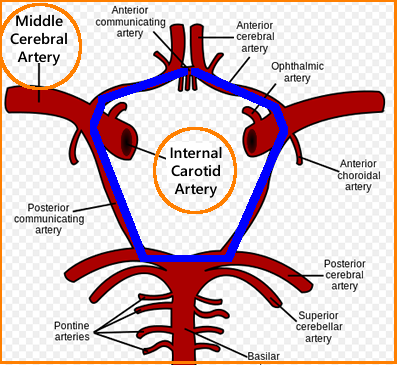
anterior communicating artery
anterior cerebral artery
internal carotid artery
posterior communicating artery
posterior cerebral artery
which artery is a terminal branch of the internal carotid and supplies most of the medial and superior surfaces of the cerebral hemispheres (specifically on the frontal and parietal lobes)
anterior cerebral artery
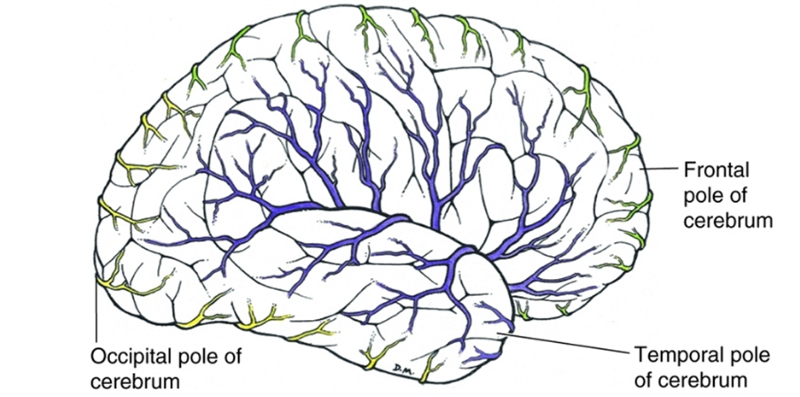
out of the anterior, middle, and posterior cerebral arteries, which feeds the more lateral aspects of the brain and which feed the more medial
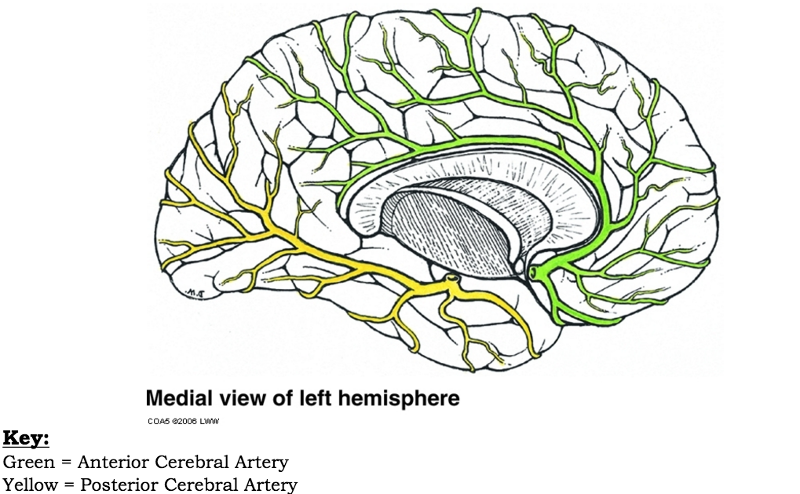
medial = anterior and posterior
lateral = middle
the terminal branch of the internal carotid artery which passes between the temporal and frontal lobes to reach the lateral part of the cerebral hemispheres
middle cerebral artery
if you had upper limb, face, and tongue deficits due to a stroke, which artery would you think was damaged?
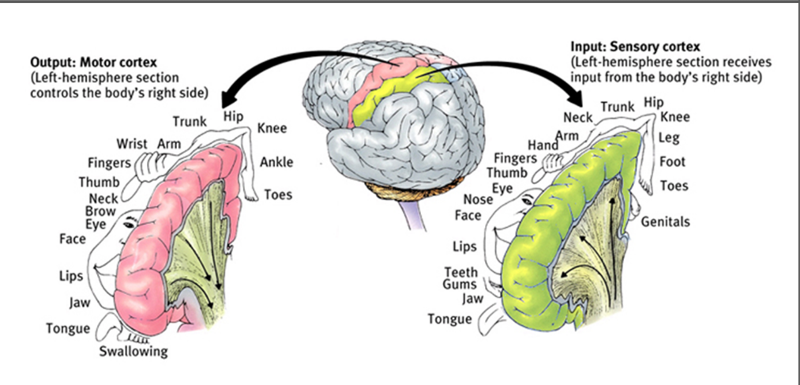
middle cerebral artery
if you had lower limb deficits due to a stroke, which artery would you think was damaged?
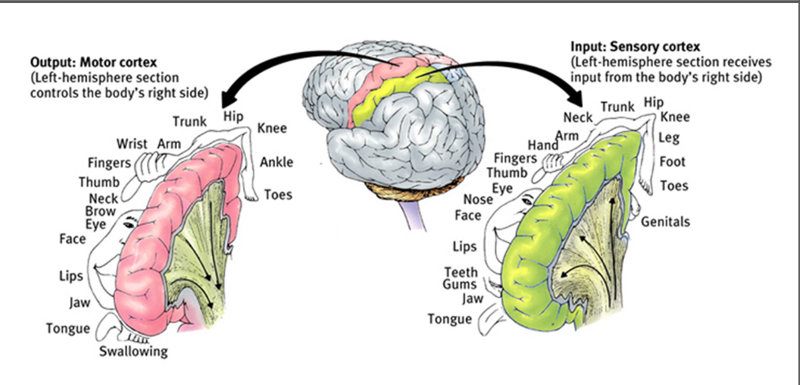
anterior cerebral artery
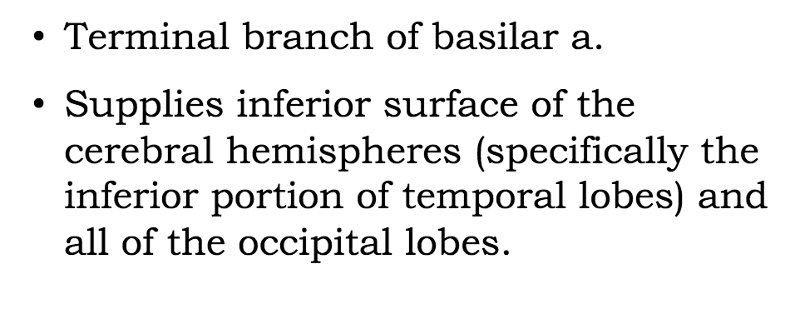
which artery is being described here?
posterior cerebral
if vision loss occurs after a stroke, damage to which blood vessel may have occurred?
posterior cerebral artery
it supplies all of the occipital lobe, which is responsible for vision
Be able to draw complete bloodflow pattern in brain