Festival 1 (Endocrine & Blood)
True or False:
Positive chemotaxis is a feedback system that signals leukocyte migration into damaged areas.
True
Which of the choices below is the parent cell for all formed elements of blood?
polymorphonuclear cell
megakaryocyte
hemocytoblast
normoblast
hemocytoblast
Which of the following is not a category of endocrine gland stimulus?
neural
hormonal
enzyme
humoral
enzyme
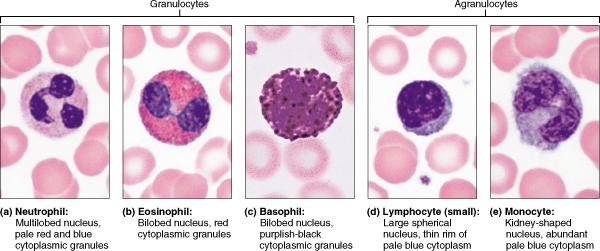
When we take anti-histamines, we are countering the effects of which type of leukocyte?
neutrophils
eosinophils
lymphocytes
basophils
basophils
The main protein in blood plasma is ______
albumin
hemoglobin
plasmin
erythropoietin
albumin
Which of the following hormones helps the body avoid dehydration and water overload?
thyroid-stimulating hormone
antidiuretic hormone
follicle-stimulating hormone
oxytocin
antidiuretic hormone
One of the least complicated of the endocrine control systems directly responds to changing blood levels of ions and nutrients. Which of the following describes this mechanism?
carbohydrate oxidation
catabolic inhibition
protein synthesis
humoral stimulation
humoral stimulation
Which of the following occurs in situations where more than one hormone produces the same effects at the target cell and their combined effects are amplified?
summation
synergism
permissiveness
antagonism
synergism
True or False:
Each hemoglobin molecule can transport two molecules of oxygen.
False
What gland secretes growth hormone?
thyroid gland
adrenal cortex
posterior pituitary (lobe)
anterior pituitary (lobe)
anterior pituitary (lobe)
True or False:
Iodine is an essential element required for the synthesis of thyroxine.
True
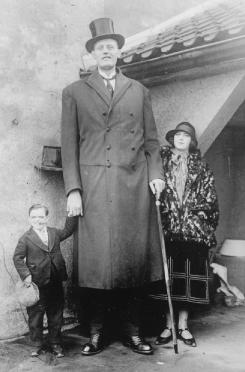
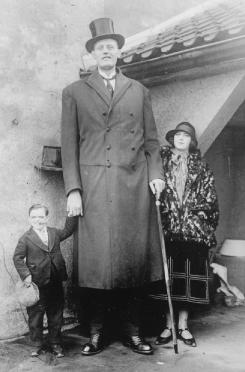
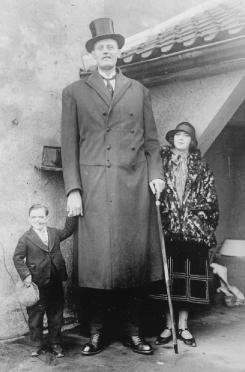
Hypersecretion of what hormone can produce the effects of gigantism (individual in the center of this image)?
aldosterone
growth hormone (GH)
thyroid-stimulating hormone (TSH)
thyroid hormones (TH)
growth hormone (GH)
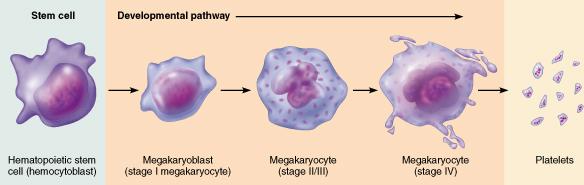
What part of the pathway to produce platelets is shared with other formed elements?
megakaryoblast
hematopoietic stem cell (hemocytoblast)
lymphoid stem cell
reticulocyte
hematopoietic stem cell (hemocytoblast)
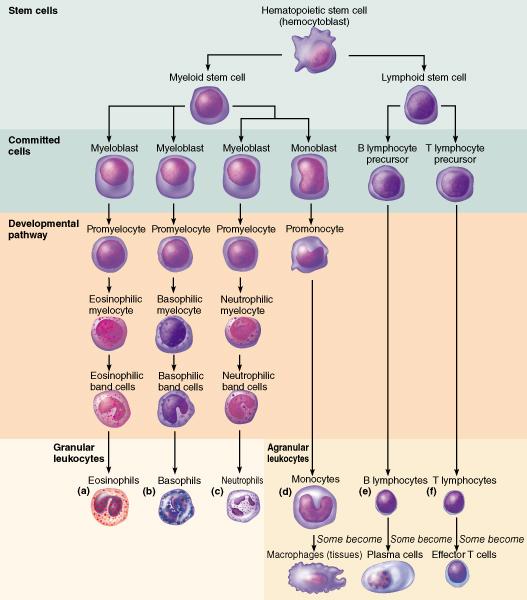
What do the lymphoid stem cells give rise to?
lymphocytes
granulocytes
erythrocytes
monocytes
lymphocytes
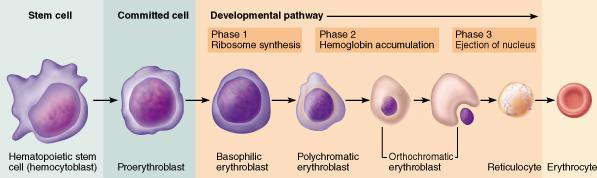
What part of the body does erythropoietin (EPO) target to increase erythropoiesis?
kidneys
bone marrow
lungs
liver
bone marrow
Which hormone is the body's major metabolic hormone?
adrenocorticotropic hormone
thyroid hormone
antidiuretic hormone
parathyroid hormone
thyroid hormone
True or False:
The endocrine gland that is probably malfunctioning if a person has a high metabolic rate is the parathyroid.
False
What is the primary function of hormones?
cause allergic reactions
influence metabolic activity of glands by electrochemical impulses
alter cell activity
activate extracellular enzymes
alter cell activity
True or False:
Diapedesis is the process by which red blood cells move into tissue spaces from the interior of blood capillaries.
False
Hormones that regulate the secretory action of other endocrine glands are called ________
somatotropin
tropins
GHIH
somatostatins
tropins
True or False:
Direct gene activation involves a second-messenger system.
False
Which of the following hormones mainly serves to stimulate milk production by the breasts?
prolactin
follicle-stimulating hormone
adrenocorticotropic hormone
thyroid-stimulating hormone
prolactin
Which of the following is characteristic of all leukocytes?
They are nucleated.
They have cytoplasmic granules.
They are phagocytic.
They are the most numerous of the formed elements in blood.
They are nucleated.
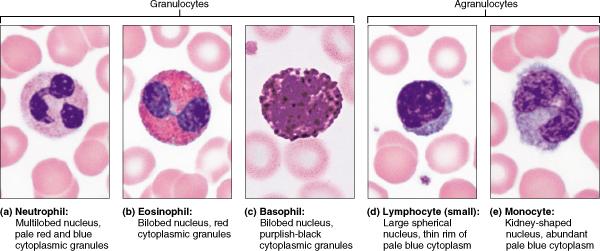
Which type of leukocyte is responsible for antibody production?
basophils
monocytes
eosinophils
lymphocytes
lymphocytes
True or False:
Oxytocin and ADH are produced in the posterior pituitary.
False
Which of the following is a hormone produced by the posterior pituitary?
oxytocin
ADH
HGH
none of these
none of these
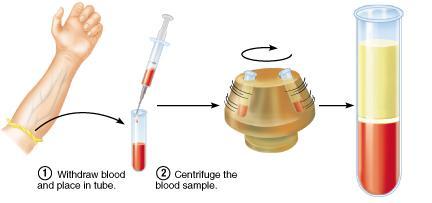
The majority of whole blood is ______
platelets
plasma
erythrocytes
erythrocytes
leukocytes
plasma
Which of the formed elements contains hemoglobin and transports respiratory gases?
erythrocytes
agranular leukocytes
platelets
granular leukocytes
erythrocytes
What is required for the production of anterior pituitary gland hormones?
neural stimuli (from the sympathetic division of the ANS)
hormonal stimuli
humoral stimuli
all of these
hormonal stimuli
Which of the following is NOT a function of blood?
distribution
regulation
hormone production
protection
hormone production
The ability of a specific tissue or organ to respond to the presence of a hormone is dependent on ______.
the membrane potential of the cells of the target organ
the location of the tissue or organ with respect to the circulatory path
nothing- all hormones of the human body are able to stimulate any and all cell types because hormones are powerful and nonspecific
the presence of the appropriate receptors on the cells of the target tissue or organ
the presence of the appropriate receptors on the cells of the target tissue or organ
What organ in the body regulates erythrocyte production?
kidney
brain
liver
pancreas
kidney
Which of the following hormones stimulates the adrenal cortex to release glucocorticoids that help the body resist stressors?
thyroid-stimulating hormone
follicle-stimulating hormone
prolactin
adrenocorticotropic hormone
adrenocorticotropic hormone
On a blood smear slide prepared using Wright's stain, you observe a large cell with a U-shaped nucleus and pale blue cytoplasm. This cell is most likely a(n) _______
eosinophil
basophil
monocyte
lymphocyte
monocyte
Which of the following is correctly matched?
aplastic anemia: results from excessive blood loss
hemolytic anemia: results from inadequate iron intake
hemorrhagic anemia: red blood cells rupture
pernicious anemia: results from a vitamin B12 deficiency
pernicious anemia: results from B12 deficiency
Which of the following is not a type of hormone interaction?
permissiveness
antagonism
feedback
synergism
feedback
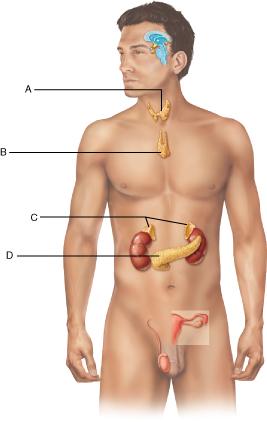
Which letter represents the adrenal glands? Select from letters A-D.
A
B
C
D
C
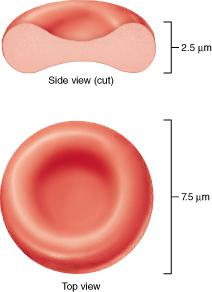
What is the name of the protein found in erythrocytes that allows for respiratory gas transport?
albumin
fibrinogen
hemoglobin
antibodies
hemoglobin
True or False:
Hemorrhagic anemias result from blood loss.
True
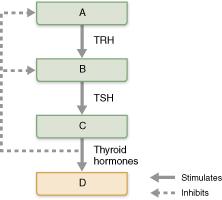
Where is thyrotropin-releasing hormone (TRH) made? Select from letters A-D
A
B
C
D
A
______ is the situation when one hormone cannot exert its full effects without another hormone being present.
Antagonism
Synergism
Activism
Permissiveness
Permissiveness
The most abundant leukocytes are __________.
basophils
monocytes
neutrophils
lymphocytes
neutrophils
What is the average normal pH range of blood?
7.75-7.85
4.65-4.75
8.35-8.45
7.35-7.45
7.35-7.45
Platelets __________.
stick to the damaged area of a blood vessel and help seal the break
have a life span of about 120 days
have multiple nuclei
are the precursors of leukocytes
stick to the damaged area of a blood vessel and help seal the break
Which of the following glands is found atop the kidneys?
pituitary
adrenal
parathyroid
thyroid
adrenal
In circumstances where the body requires prolonged or increased levels of a hormone, the DNA of target cells will specify the synthesis of more receptors on the surface of the cells of the target organ. This is known as ________.
sensitivity increase
up-regulation
a stressor reaction
cellular affinity
up-regulation
Which of the following is not a distribution function of blood?
transport of hormones to their target organs
transport of metabolic wastes from cells
delivery of oxygen to body cells
transport of salts to maintain blood volume
transport of salts to maintain blood volume
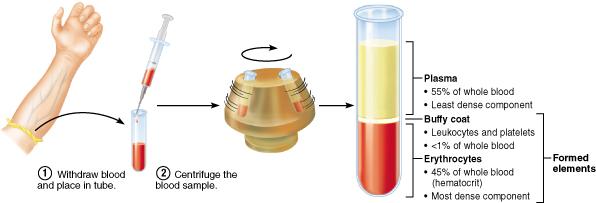
What is hematocrit a measure of?
Hematocrit is the percentage of erythrocytes in a whole blood sample.
Hematocrit is the percentage of leukocytes and platelets in a whole blood sample.
Hematocrit is the percentage of plasma in a whole blood sample.
Hematocrit is the percentage of formed elements in a whole blood sample.
Hematocrit is the percentage of erythrocytes in a whole blood sample.
Bilirubin is cleared from the body by _________.
the spleen
the kidneys
the liver
the pancreas
the liver
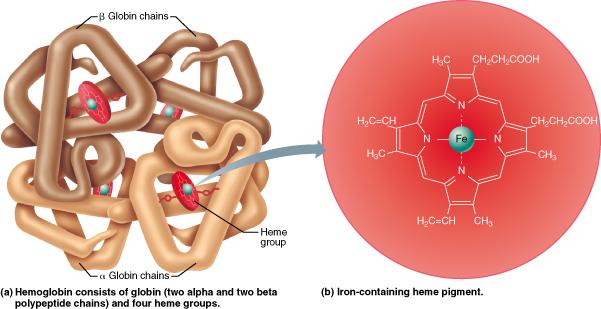
When oxygen is bound to hemoglobin, what bright red molecule is formed?
hematocrit
oxyhemoglobin
carbaminohemoglobin
deoxyhemoglobin
oxyhemoglobin
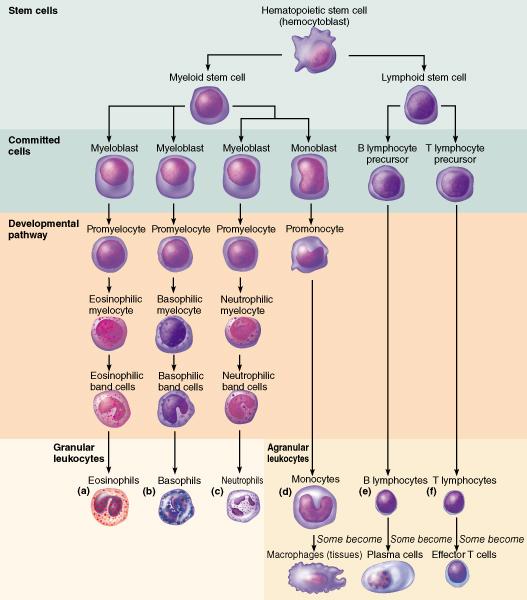
What do the lymphoid stem cells give rise to?
monocytes
lymphocytes
erythrocytes
granulocytes
lymphocytes
True or False:
Both "turn on" factors (hormonal, humoral, and neural stimuli) and "turn off" factors (feedback inhibition and others) may be modulated by the activity of the nervous system.
True
What triggers erythropoietin (EPO) production to make new red blood cells?
reduced availability of oxygen
excess of oxygen in the bloodstream
too many erythrocytes
too many platelets
reduced availability of oxygen
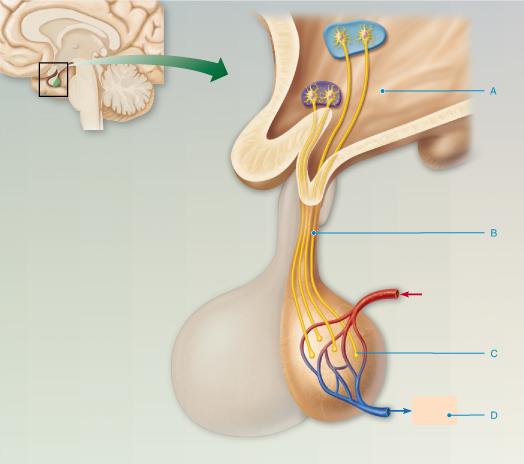
Where are the hormones oxytocin and antidiuretic hormone (ADH) stored? Select from letters A-D.
A
B
C
D
C
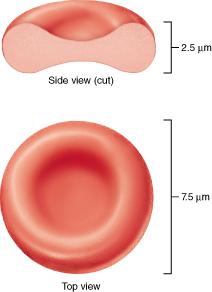
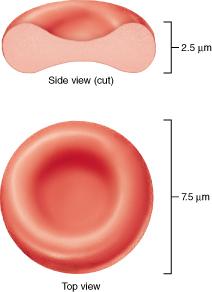
Which of the following is true of the structure of an erythrocyte?
Erythrocytes are shaped like biconcave discs.
Erythrocytes are nucleated cells.
Erythrocytes are a fixed shape and cannot change shape.
Erythrocytes are cell fragments.
Erythrocytes are shaped like biconcave discs.
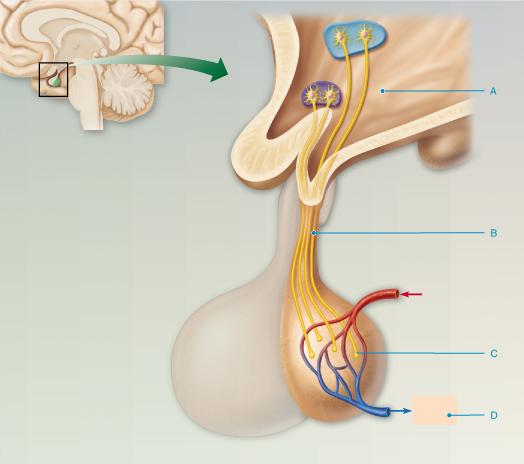
What hormone released into the blood (shown by letter D) by the posterior pituitary inhibits or prevents urine formation?
thyroid-stimulating hormone (TSH)
cortisol
oxytocin
antidiuretic hormone (ADH)
antidiuretic hormone (ADH)
Steroid hormones exert their action by _______.
binding cell receptors and initiating cAMP activity
entering the nucleus of a cell and initiating or altering the expression of a gene
activating the hypothalamic release of regulating hormones
entering the cell and activating mitochondrial DNA
entering the nucleus of a cell and initiating or altering the expression of a gene
True or False:
Up-regulation involves the loss of receptors and prevents the target cells from overreacting to persistently high hormone levels.
False
Which of the following is a protective function of blood?
prevention of blood loss
maintenance of adequate fluid volume
maintenance of normal pH in body tissue
maintenance of body temperature
prevention of blood loss
True or False:
The primary source of RBCs in the adult human being is the bone marrow in the shafts of the long bones.
False
True or False:
Hemorrhagic anemias results from blood loss.
True
Which of the following is NOT a major type of stimulus that triggers endocrine glands to manufacture and release hormones?
neural
humoral
enzymatic
hormonal
enzymatic
Which of the following might trigger erythropoiesis?
moving to a lower altitude
hypoxia of EPO-producing cells
an increased number of RBCs
decreased tissue demand for oxygen
hypoxia of EPO-producing cells
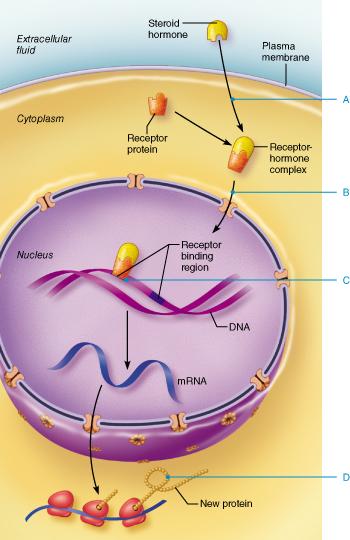
At what point does the receptor-hormone complex bind to DNA? Select from letters A-D.
A
B
C
D
C
True or False:
Hormones are long-distance chemical signals that travel in blood or lymph throughout the body.
True
The ________ is the fluid portion of the blood.
hemoglobin
plasma
buffy coat
hematocrit
plasma
True or False:
Major hormones circulate to virtually all tissues.
True
True or False:
Growth hormone solely exerts its influence by targeting other endocrine glands to produce hormones.
False
Which leukocyte functions in phagocytizing bacteria?
lymphocyte
neutrophil
eosinophil
basophil
neutrophil
Which of the following is NOT an endocrine gland?
adenoid
adrenal
pituitary
thyroid
adenoid
The second-messenger mechanism of hormone action operates by ________.
binding to specific receptors and employing the services of G proteins and cAMP
synthesizing more than one hormone at a time
altering gene expression in the nuclear DNA
increasing the basal metabolic rate in the target organ
binding to specific receptors and employing the services of G proteins and cAMP
Virtually all of the protein or amino acid-based hormones exert their effects through intracellular ________.
calcium
second messengers
deactivating ions
nucleotides
second messengers
Thyroid hormone (a small iodinated amine) enters target cells in a manner similar to ________.
steroid hormones, because both diffuse easily into target cells
insulin, because insulin is a small peptide
glucagon, because the structure of glucagon is similar to that of thyroid hormone
growth hormone, because the thyroid works synergistically with thyroid hormone
steroid hormones, because both diffuse easily into target cells
Which hypothalamic hormone stimulates the release of growth hormone from the anterior pituitary (lobe)?
thyroid-stimulating hormone (TSH)
growth hormone-releasing hormone (GHRH)
growth hormone-inhibiting hormone (GHIH)
adrenocorticotropic hormone (ACTH)
growth hormone-releasing hormone (GHRH)
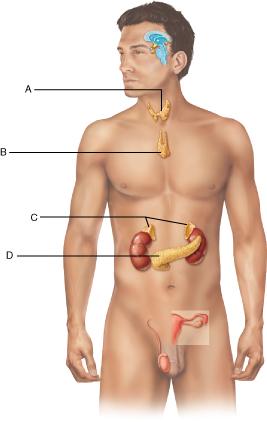
Identify the thyroid gland. Select from letters A-D.
A
B
C
D
A
Which of the following is true about blood plasma?
It contains about 20 dissolved components.
It is about 90% water.
It is the same as serum but without the clotting proteins.
The main protein component is hemoglobin.
It is about 90% water.
ADH ________.
promotes dehydration
increases urine production
is produced in the adenohypophysis
is inhibited by alcohol
is inhibited by alcohol
The first step in hemostasis is __________.
vascular spasm
platelet plug formation
fibrin production
coagulation
vascular spasm