Exercise 15: Gross Anatomy of the Muscular System
gluteus maximus
location of muscle relative to a bone or body region; relative size of muscle
adductor magnus
action of the muscle; relative size of muscle
biceps femoris
number of origins; location of muscle relative to a bone or body region
transversus abdominis
location of muscle relative to a bone or body region; direction in which the muscle fibers run relative to some imaginary line
extensor carpi ulnaris
action of muscle; location of the origin and or insertion of the muscle; location of muscle relative to bone or body region
trapezius
shape of muscle
rectus femoris
location of the muscle relative to a bone or body region; direction in which the muscle fibers run relative to some imaginary line
external oblique
location of the muscle reltive to a bone or body region; direction in which the muscle fibers run relative to some imaginary line
prime mover (agonist)
term for the biceps brachii during elbow flexion
synergist
term that describes relation of brachialis to biceps brachii during elbow flexion
antagonist
term for the triceps brachii during elbow flexion
antagonist
term for iliopsoas during hip extension
prime mover (agonist)
term for the gluteus maximus during hip extension when walking up the stairs
fixator
terms for the rotator cuff muscles and deltoid when the elbow is flexed and the hand grabs a tabletop to lift the table
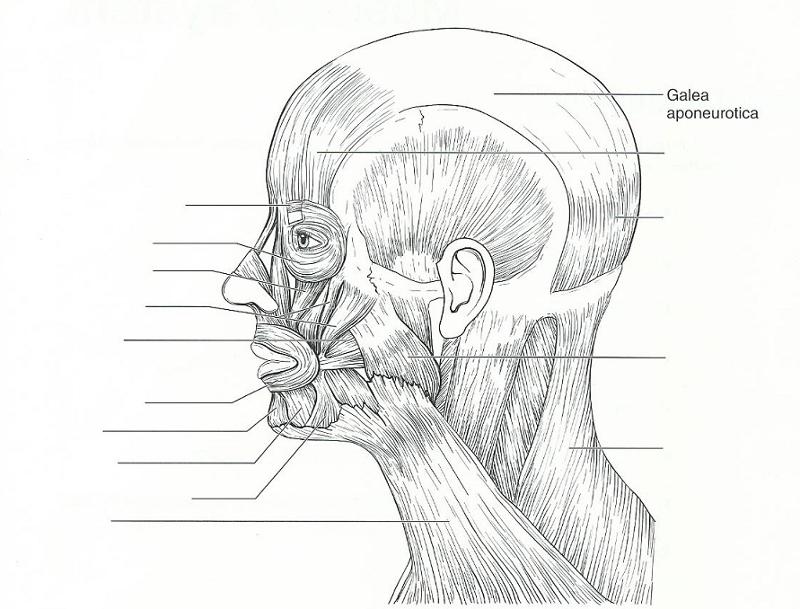
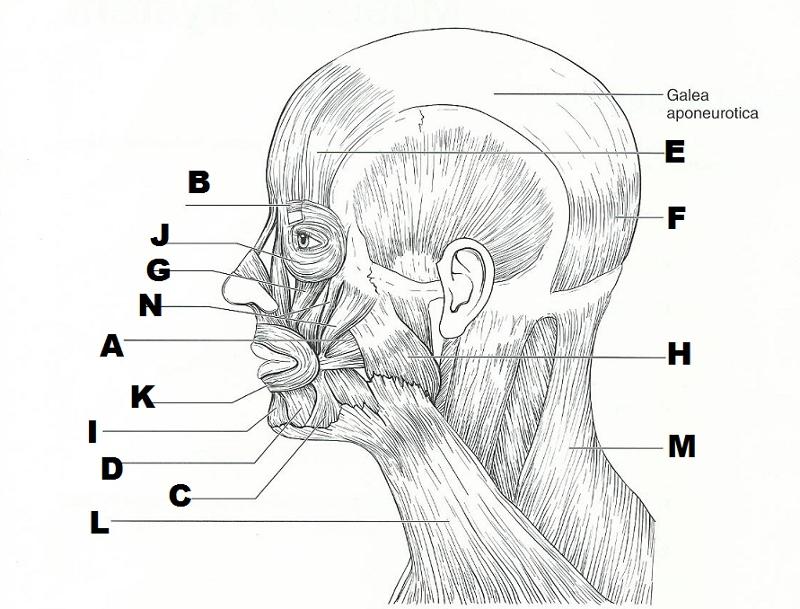
START FROM LEFT SIDE AND GO DOWN, THEN START ON THE UPPER RIGHT SIDE AND GO DOWN.
B. CORRUGATOR SUPERCILII
J. ORBICULARIS OCULI
G. LEVATOR LABII SUPERIORIS
N. ZYGOMATICUS MAJOR AND MINOR
A. BUCCINATOR
K. ORBICULARIS ORIS
I. MENTALIS
D. DEPRESSOR LABII INFERIORIS
C. DEPRESSOR ANGULI ORIS
L. PLATYSMA
RIGHT:
E. EPICRANIUS (FRONTAL BELLY)
F. EPICRANIUS (OCCIPITAL BELLY)
H. MASSETER
M. TRAPEZIUS
zygomaticus
used in smiling
buccinator
used to suck in your cheeks
Orbicularis Oculi
Used in blinking and squinting (closes eye)
Depressor Anguli Oris Muscle and Mentalis Muscle
used to pout (pulls the corners of the mouth downward)
epicranius (frontal belly)
raises your eyebrows for a questioning expression
corrugator supercilii
used to form the vertical frown crease on your forehead
orbicularis oris
your "kisser"
masseter
prime mover to raise the mandible
platysma
tenses skin of the neck during shaving
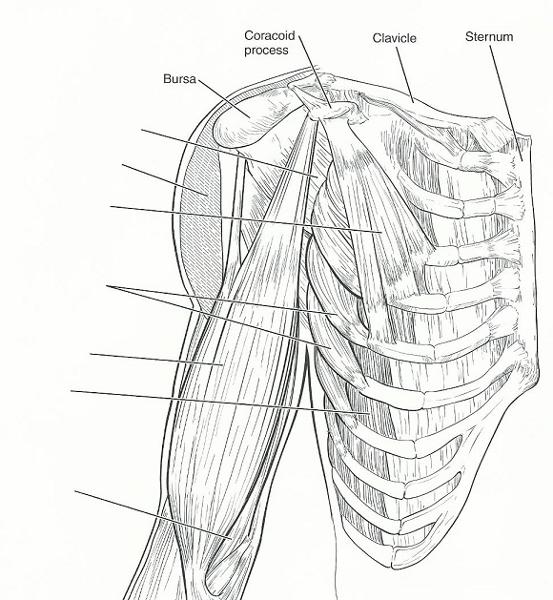
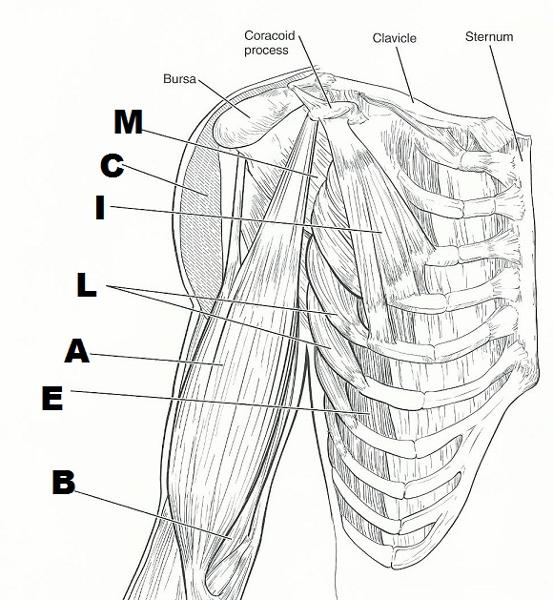
FROM TOP TO BOTTOM:
M. SUBSCAPULARIS
C. DELTOID (CUT)
I. PECTORALIS MINOR
L. SERRATUS ANTERIOR
A. BICEPS BRACHII
E. EXTERNAL OBLIQUE
B. BRACHIALIS
rectus abdominus
a major spine flexor
latissimus dorsi
prime mover for arm extension
pectoralis major
prime mover for arm flexion
external oblique, internal oblique, transverse abdominus, rectus abdominus
assume major responsibility for forming the abdominal girdle
deltoid
prime mover of shoulder abduction
latissimus dorsi, pectoralis major
important in shoulder adduction; antagonists of the shoulder abductor
serratus anterior
moves the scapula forward and rotates scapula upwards
external intercostals
small, inspiratory muscles between the ribs; elevate the ribs
trapezius
extends the head
rhomboids
pull the scapula medially
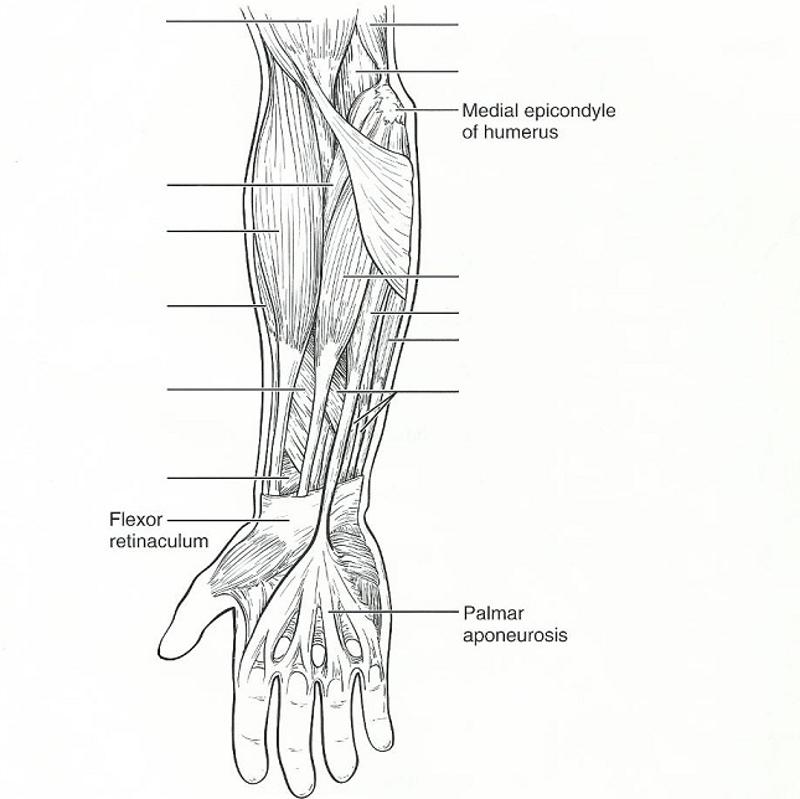
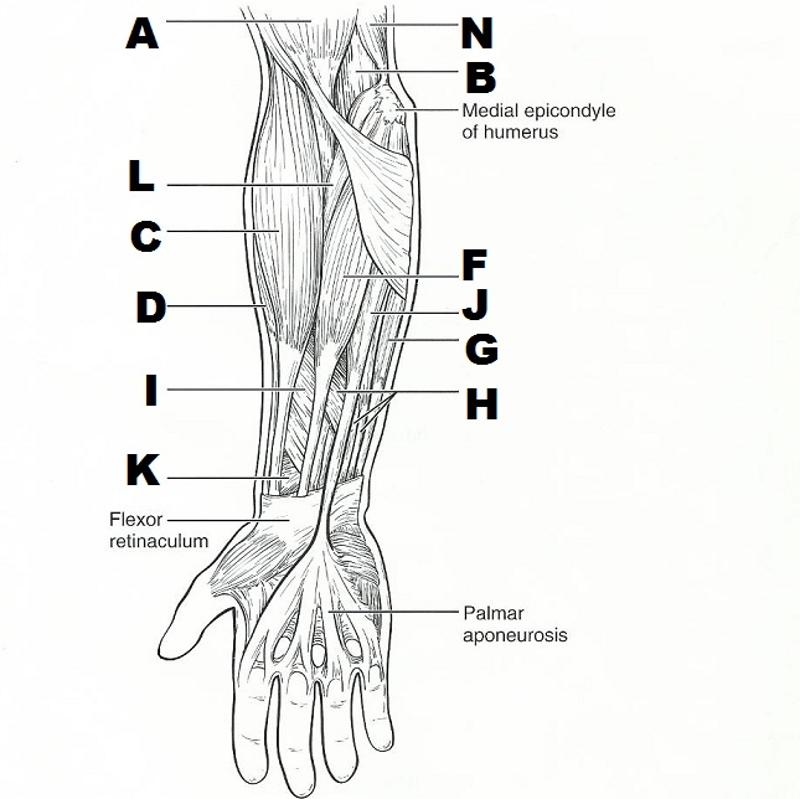
FROM LEFT TOP TO BOTTOM, THEN RIGHT TOP TO BOTTOM:
LEFT:
A. BICEPS BRACHII
L. PRONATOR TERES
C. BRACHIORADIALIS
D. EXTENSOR CARPI RADIALIS LONGUS
I. FLEXOR POLLICIS LONGUS
K. PRONATOR QUADRATUS
RIGHT:
N. TRICEPS BRACHII
B. BRACHIALIS
F. FLEXOR CARPI RADIALIS
J. PALMARIS LONGUS
G. FLEXOR CARPI ULNARIS
H. FLEXOR DIGITORUM SUPERFICIALIS
biceps brachii
flexes the forearm and supinates the hand
supinator
synerhist for supination of hand
brachialis; brachioradialis
forearm flexors; no role in supination
triceps brachii
elbow extensor
flexor carpi radialis
power wrist flexor and abductor
flexor digitorum superficialis
flexes wrist and middle phalanges
pronator quadratus, pronator teres
pronates the hand
flexor pollicis longus
flexes the thumb
extensor carpi radialis longus
extends and abducts the wrist
extensor digitorum
extends the wrist and digits
palmaris longus
flat muscle that is a weak wrist flexor; tenses skin of the palm
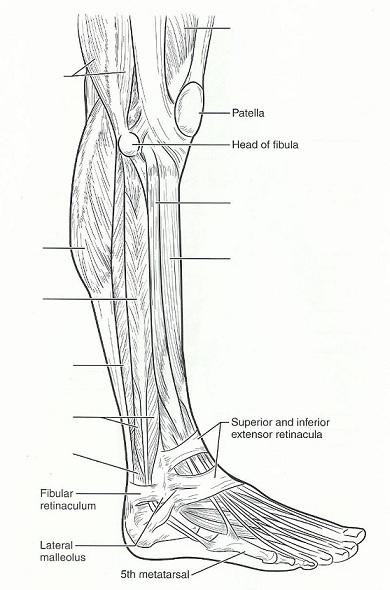
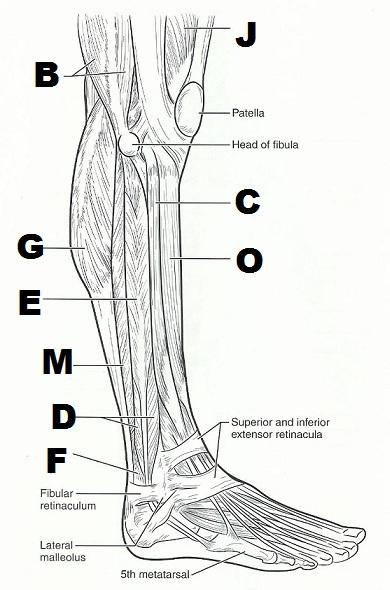
LEFT FROM TOP TO BOTTOM:
B. BICEPS FEMORIS
G. GASTROCNEMIUS
E. FIBULARIS LONGUS
M. SOLEUS
D. FIBULARIS BREVIS
F. FLEXOR HALLUCIS LONGUS
RIGHT FROM TOP TO BOTTOM:
J. RECTUS FEMORIS
C. EXTENSOR DIGITORUM LONGUS
O. TIBIALIS ANTERIOR
flexor hallucis longus
flexes the great toe and inverts the foot
fibularis brevis, fibularis longus
lateral compartment muscles that plantar flex and evert the foot
gluteus medius, tensor fasciae latae
abduct the thigh to take the "at ease" stance
gluteus maximus
used to extend the hip when climbing stairs
gastrocnemius, soleus
prime movers of plantar flexion of the foot
tibialis posterior
prime mover of inversion of the foot
tibialis anterior
prime mover of dorsiflexion of the foot
adductor group
adduct the thigh, as when standing at attention
extensor digitorum longus
extends the toes
biceps femoris, semimembranosus, semitendinosus
entend thigh and flex knee
rectus femoris
extends knee and flexes thigh
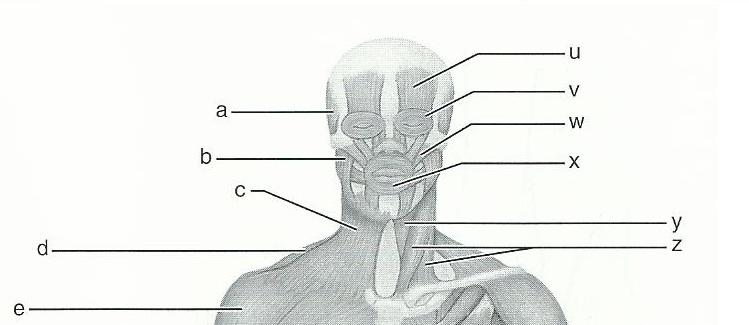
11
A. TEMPORALIS
B. MASSETER
C. PLATYSMA
D. TRAPEZIUS
E. DELTOID
U. FRONTALIS
V. ORBICULARIS OCULI
W. ZYGOMATICUS MAJOR
Y. STERNOTHYROID
Z. STERNOCLEIDO-MASTOID
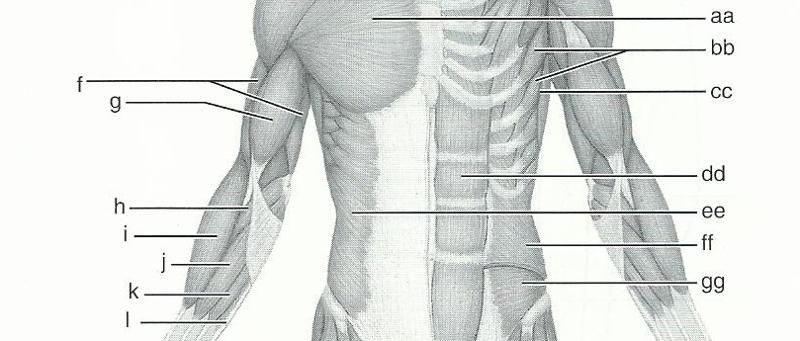
11
AA - PECTORALIS MAJOR
BB - SERRATUS ANTERIOR
CC - LATISSIMUS DORSI
DD - RECTUS ABDOMINIS
EE - EXTERNAL ABDOMINAL OBLIQUE
FF - INTERNAL ABDOMINAL OBLIQUE
GG - TARASVERSUS ABDOMINIS
F - BRACHOALIS
G - BICEPS BRACHII
H - PRONATOR TERES
I - BRACHIORADIALIS
J - FLEXOR CARPI RADIALIS
K - PALMARIS LONGUS
L - FLEXOR CARPI ULNARIS
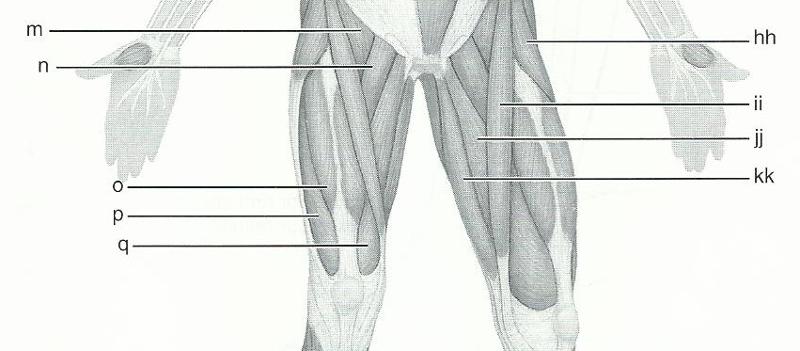
11
M - ILIOPSAS
N - PECTINEUS
O - RECTUS FEMORIS
P - VASTUS LATERALIS
Q - VASTUS MEDIALIS
HH- TENSOR FASCIAE LATAE
II - SARTORIUS
JJ - ADDUCTOR LONGUS
KK - GRACILIS
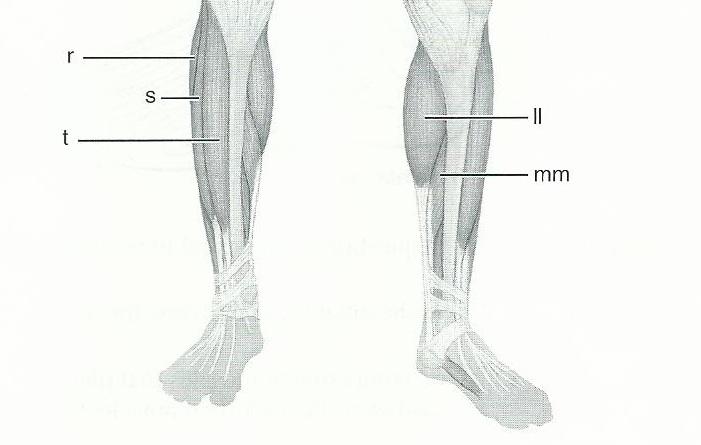
11
R - PERONEUS LONGUS
S - EXTENSOR DIGITORUM LONGUS
T - TABIALIS ANTERIOR
LL - GASTROCNEMIUS
MM - SOLEUS
12
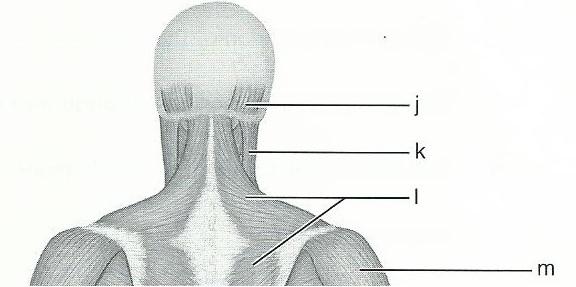
J - OCCIPITALIS
K - STERNOCLOIDOMASTOID
L - TRAPEZIUS
M - DELTOID
12
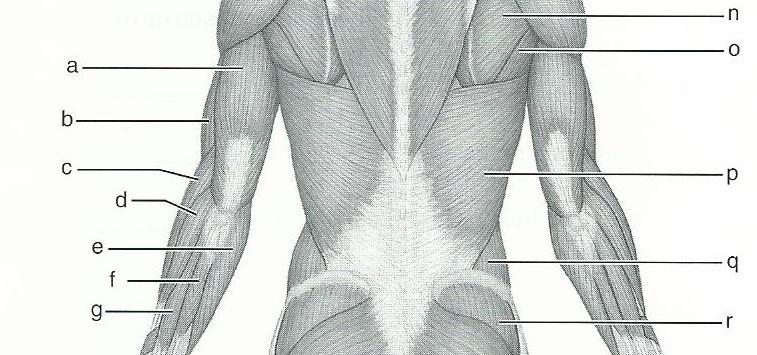
A. TRICEPS BRACHII
B. BRACHIALIS
C. BRACHIORADIALIS
D. EXTENSOR CARPI RADIALIS LONGUS
E. FLEXOR CARPI ULNARIS
F. EXTENSOR CARPI ULNARIS
G. EXTENSOR DIGITORUM
N - TERES MINOR
O - TERES MAJOR
P - LATISSIMUS DORSI
Q- EXTERNAL ABDOMINAL OBLIQUE
R - GLUTEUS MEDIUS
12
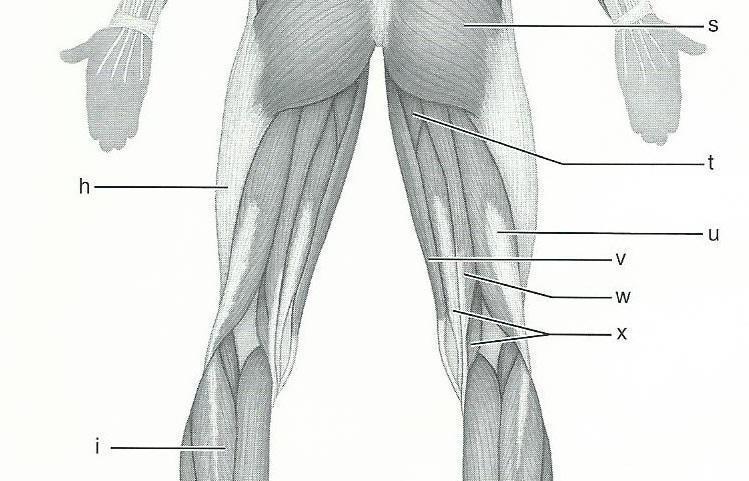
H - ILIOTIBIAL TRACT
I - GASTROCNEMIUS
S- GLUTEUS MAXIMUS
T - ADDUCTOR MAGNUS
U - BICEPS FEMORIS
V - GRACILIS
W - SEMITENDINOSUS
X - SEMIMEMBRANOSUS
What are the 4 muscles commonly used for intramuscular injections?
Deltoid, Vastus Lateralis, Gluteus Medius, Gluteus Maximus
Quadriceps
The insertion tendon of the ____ group contains a large sesamoid bone, the patella.
calcanal
The triceps surae insert in common into the ____ tendon.
mediala proximal
The bulk of the tissue of a muscle tends to lie ______ to the part of the body it causes to move.
forearm
The extrinsic muscles of the hand originate on the ______
anterior
Most flexor muscles are located on the _____ aspect of the body;
posteria
most extensors are located ______
knee
An exception to this generalization is the extensor-flexor musculature of the ____