Diagnostic Media Flashcards for Test 3
General (Complex) Medium
Contains necessary nutrients, vitamins, minerals, etc. Most types of non-fastidious organisms, but not all, are able to grow on this type of media.
Enriched Medium
Contains added ingredients such as blood, serum, vitamins, growth factors, etc.
Differential Medium
Contains an indicator designed to cause certain organisms to develop a different appearance from other microbes growing on the same medium. The colonies of one particular bacteria might be a different color than those of another bacterial species growing on the same medium.
Selective Medium
Permits or encourages the growth of certain organisms while preventing or inhibiting the growth of others.
Selective/Differential Medium
Many of the media commonly used in the lab possess both selective and differential qualities.
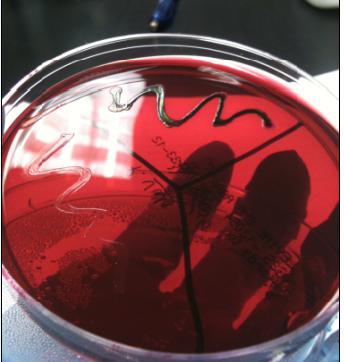
Eosin Methylene Blue Agar
Red plate
Selective for Gram -
Differential for lactose fermenters and coliforms
Positive for lactose fermentation -- pink/dark purple colonies, organism produces B-galactosidase
Positive for coliforms -- green metallic sheen, denotes vigorous lactose fermentation
Pink -- Enterobacter
Green -- E. coli
24 hours
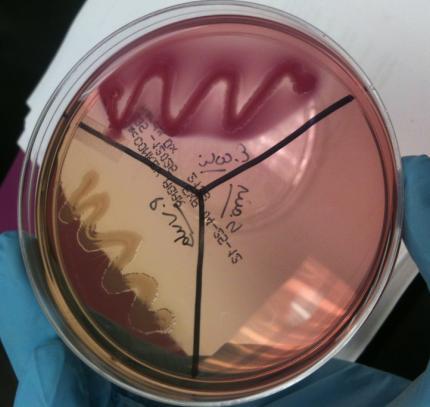
MacConkey Agar
Clearish plate
Selective for Gram -
(Bile salts and crystal violet dye inhibit G+)
+ lactose fermentation -- pink/lavender colonies
Pink/lavender -- E. coli, Enterobacter
24 hours
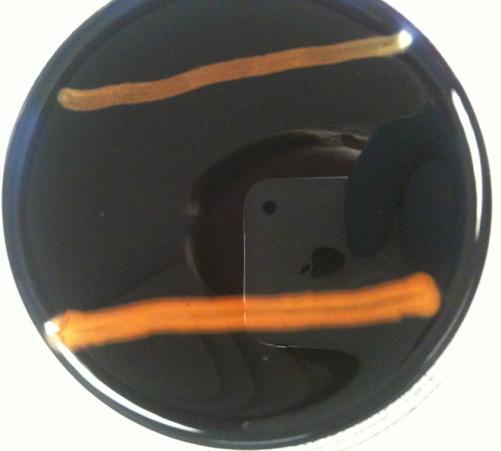
Starch Agar
Clear plate with iodine added after growth
+ starch fermentation -- clear area around culture
Positive organisms -- Bacillus
Negative organisms -- E. coli
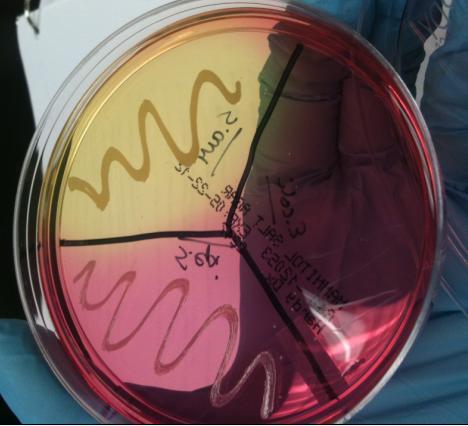
Mannitol Salt Agar
Red plate
Selective for Staph (7.5% salt)
+ mannitol fermentation -- yellow culture (yellow halo means pathogenic)
Positive -- Staph. aureus
Negative -- Staph epidemidis
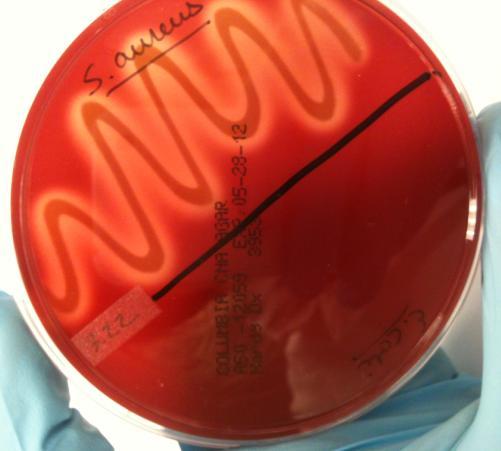
Colistin-nalidixic acid
Opaque red plate
Selective for Gram +, inhibits Gram -
Differential for hemolysis
Enriched by addition of blood
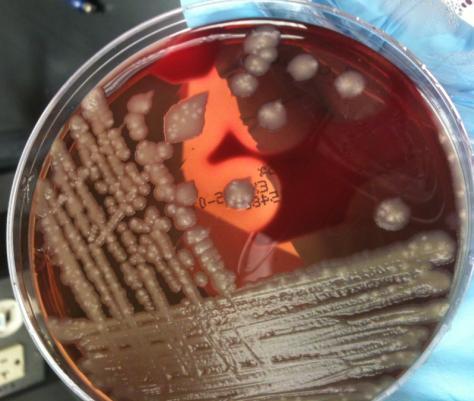
Blood Agar
Red plate
TSA enriched with 5-10% sheep blood
Gamma - Negative no change(Staph. epidermidis)
Alpha - Partial destruction, greenish agar (S. salivarius)
Beta - Total destruction, clear zone (Strep. pyogenes)
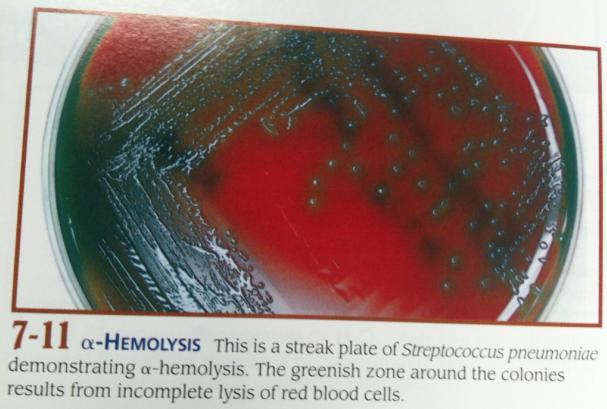
Blood Agar- Alpha hemolysis
Partial destruction, greenish agar (S. salivarius)
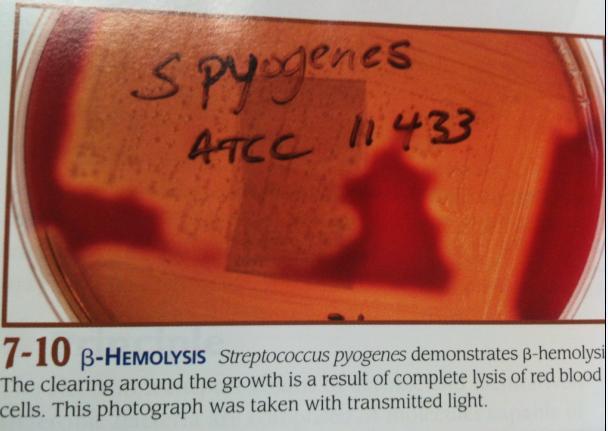
Blood Agar- Beta hemolysis
Total destruction, clear zone (Strep. pyogenes)
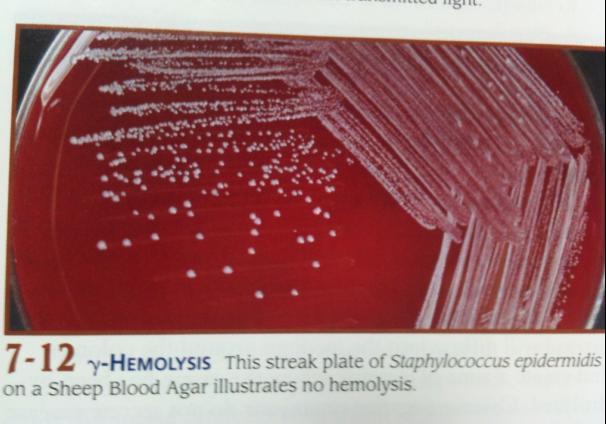
Blood Agar- Gamma hemolysis
Negative no change(Staph. epidermidis)
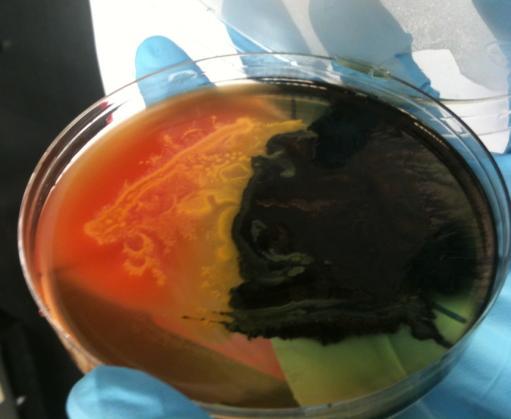
Hektoen Enteric Agar
Dark Blue Plate
Differential for Salmonella and Shigella Gram -
Differential for lactose fermentation and H2S
+ lactose fermentation -- yellow/salmon pink colonies (E. coli)
- lactose fermentation -- blue/green colonies (Shigella)
+ H production -- black colonies (Salmonella)
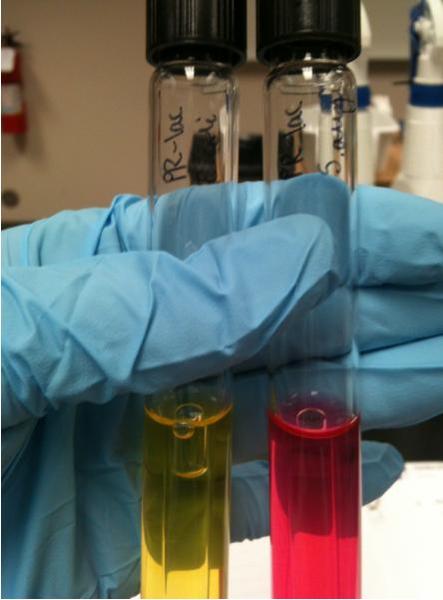
Phenol Red Carbohydrate Fermentation Broth
Red Tube with durham tube
Differential for carbohydrate fermentation (any sugar: sucrose, lactose, mannitol)
+ carbohydrate fermentation -- broth turns yellow (E. coli, Staph. aureus)
- carbohydrate fermentation -- broth stays red (Salmonella)
Bubble positive for gas production during fermentation (E. coli)
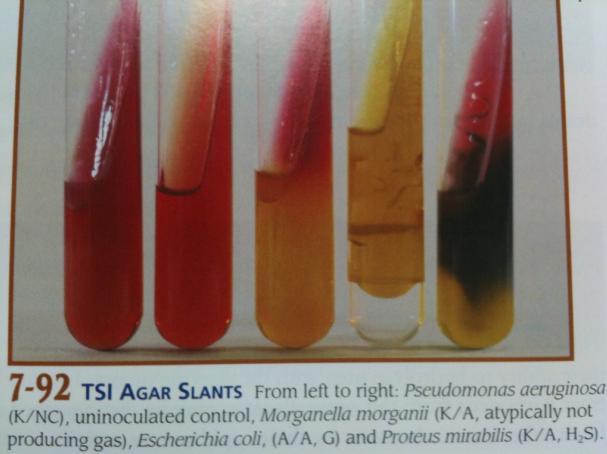
Triple Sugar Iron Agar
Red slant tube, contains glucose, lactose, sucrose.
Differential for fermentation, H2S.
Distiguish Gram - enteric
+ glucose fermentation -- red slant, yellow butt
+ glucose and/or lactose, sucrose -- yellow all
+ H2S -- blackening
+ gas -- lifted or cracked agar
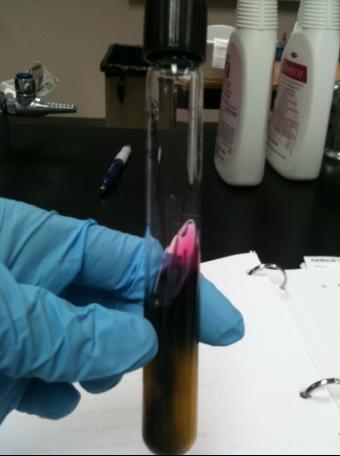
Triple Sugar Iron Agar (positive fermentation of only glucose)
red slant, yellow butt
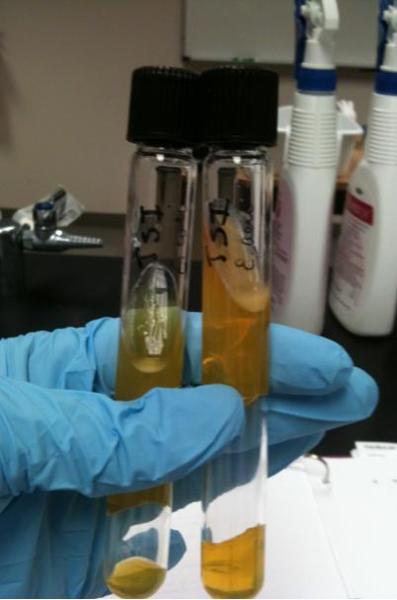
Triple Sugar Iron Agar (positive fermentation of glucose, lactose, and/or sucrose plus positive gas formation.)
all yellow
lifted or cracked agar
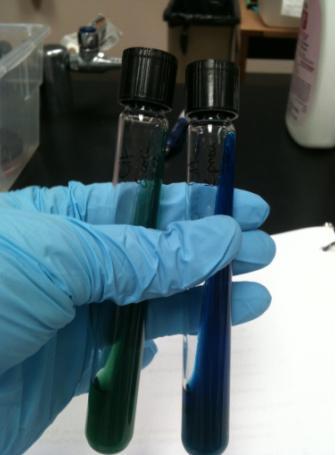
Citrate Agar Slants
Green slant tube
Differential for citrate utilization
+ citrate - slant turns blue (Citrobacter)
- citrate -- B. cereus
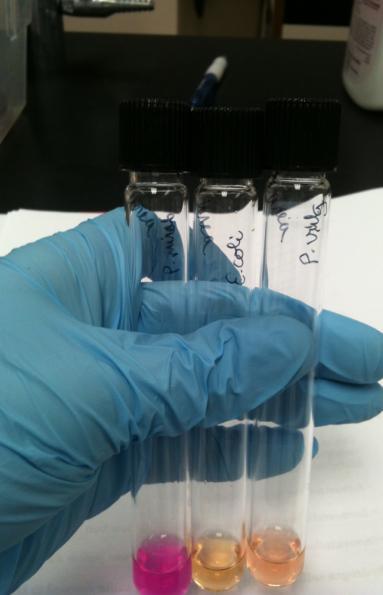
Urea Broth
Orange-ish slant
Differential for urease production
+ Urease -- dark pink (Proteus)
- Urease -- orange (Salmonella, Shigella)
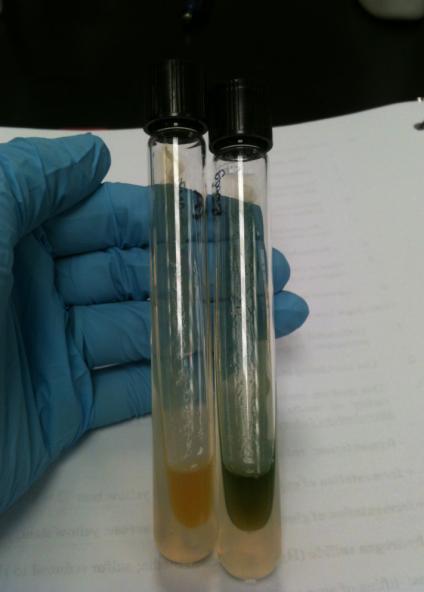
Phenylalanine Agar
Clear to yellowish slant
Differential for phenylalanine deaminease
Add ferric chloride after incubation
+ phenylalanine - green (Proteus)
- phenylalanine - no change (Salmonella)
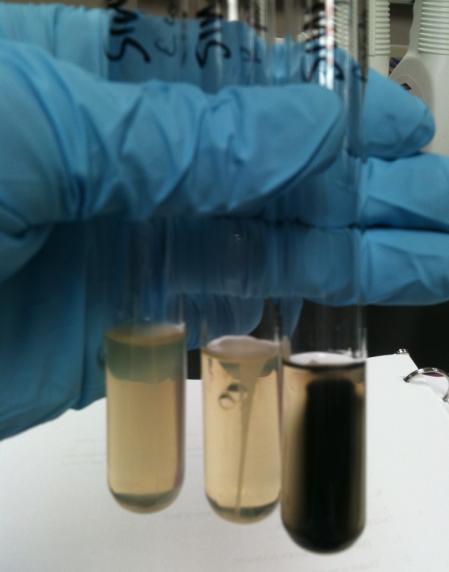
SIM Medium (Semisolid)With positive Hydrogen Sulfide
Sulfur Reduction
Clear to yellow semisolid tube
Three tests: H production, motility, Indole Production
+ H2S -- blackened (Proteus)
+ motility -- growth diffuses away from stab line (Enterobacter)
+ indole (after adding Kovac's reagent) -- pink or red ring
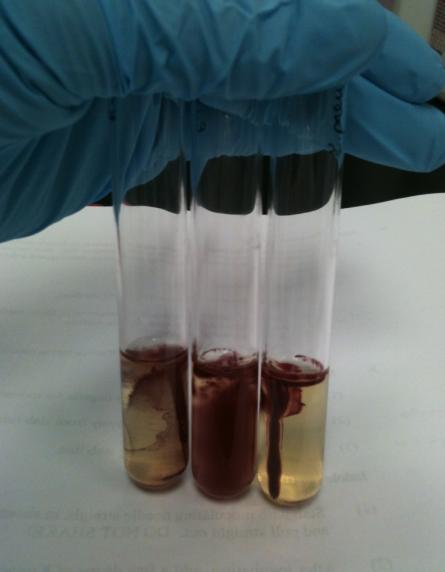
SIM Medium (Semisolid)With positive motility
+ motility -- growth diffuses away from stab line (Enterobacter)
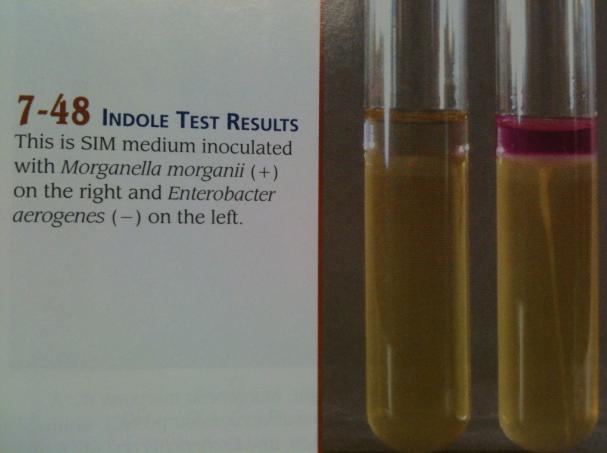
SIM Medium (Semisolid) with positive indole production
+ indole (after adding Kovac's reagent) -- pink or red ring
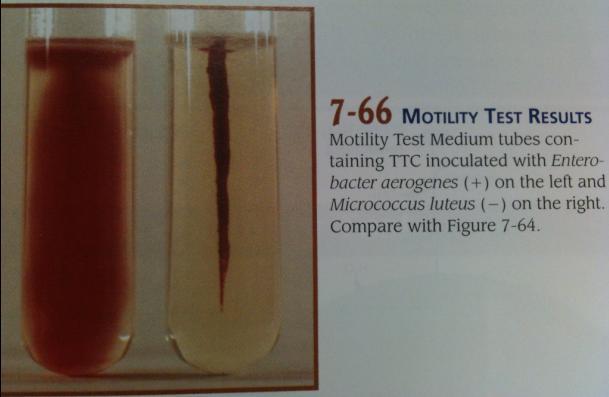
Motility GI Medium/ TTC (MOT) with positive motility
Clear tube
+ motility - diffuse red thru out (E. coli)
- motility - red stab line (Shigella)
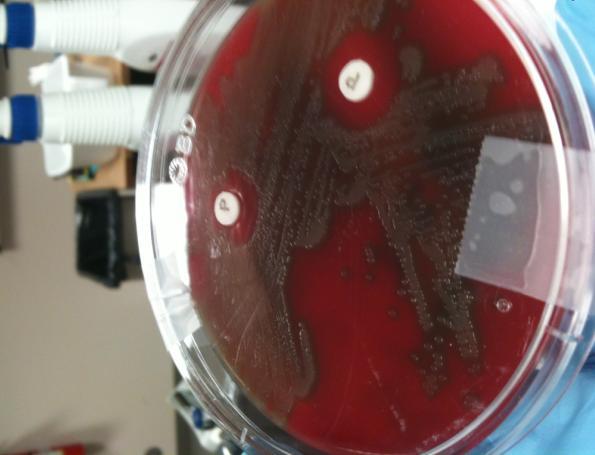
Optichin Disk Test
Red plate painted with white circle (optichin)
Presumptive for Strep. pneumoniae
+ optichin sensitivity - 14+mm zone of inhibition
- optichn sensitivity - <14mm zone, requires more test
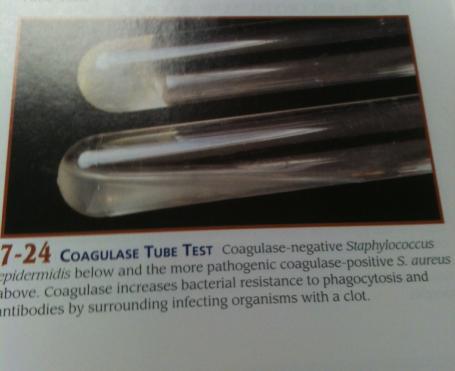
Coagulase Test
Clear tube
Differential for Staph. species
+ coagulase - plasma thickens to semisolid (S. aureus)
- coagulase - plasma remains liquid (S. epidermidis)

Oxidase Test
Test strips
+ oxidase - strip turns purple or black (Pseudomonas or Neisseria)
- oxidase - no color change (Enterobacteriaceae)
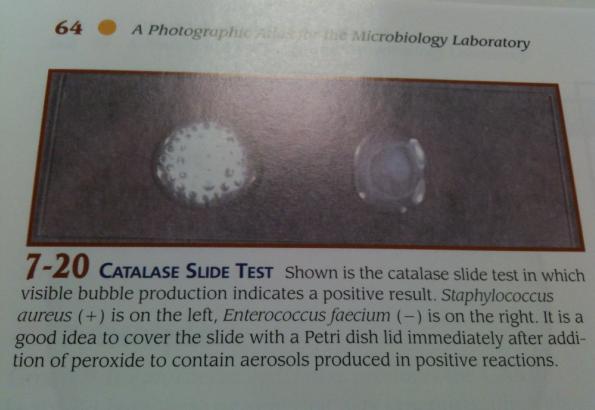
Catalase Test
H2O2
+ Catalase - Bubbles (Staph)
- Catalase - no bubbles (Strep)