Microbiology Exam 3 Review - Chapter 6 + 21
Chapter 6
Microbial Genetics
What is a genome?
The sum total of genetic material of an organism
- Mostly in the form of chromosomes
What are some nonchromosomal forms of genome?
1. Plasmids, which are tiny extra pieces of DNA, non-essential to the survival of the organism
2. Organelle: mitochondria and chloroplasts have their own DNA
Genomes of cells are made of DNA, but viruses can contain ____ or _____.
DNA or RNA
What is a chromosome?
A distinct cellular structure composed of a neatly packaged DNA molecule
Where can genomes be found in eukaryotes?
Plasmids, Chloroplast DNA, Mitochondrial DNA, and Chromosomes
- Located in nucleus
- Chromosomes vary in number from a few to hundreds
- Chromosomes can occur in pairs (diploid) or singles (haploid)
- Linear appearance in chromosomes
Where can genomes be found in bacteria?
Chromosomes (no nucleus) and plasmids
- Singular and circular chromosomes (double-stranded)
- Many bacteria have multiple, circular chromosomes and some have linear chromosomes
Where can genomes be found in viruses?
DNA and RNA in the capsid
What are genes?
Basic informational packets in which a chromosome is subdivided containing the necessary code for a particular cell function
What is the difference between genome, chromosomes, and genes?
- The genome = all the DNA in your cells (the full library).
- The chromosomes = how that DNA is divided and packaged (the books).
- The genes = the information within those books that tells the body how to function (the chapters or recipes).
Genes can be used for what three functions:
- Structural genes that code for proteins
- Genes that code for RNA machinery used in protein production
- Regulatory genes that control gene expression
What is the difference between genotype and phenotype?
Genotype is the sum of all types of genes constituting an organism's distinctive genetic makeup. Phenotype is the expression of the genotype that creates certain structures or functions.
True or False:
- All organisms contain more genes in the genotype than the ones expressed to manifest their phenotype
TRUE
Step 1: What this means
- Genotype = all the genes an organism has (its complete set of genetic instructions).
- Phenotype = the traits an organism shows (what you can observe — physical, biochemical, or behavioral).
So, the statement is saying:
➡️ Every organism has
more genes in its DNA than the subset of genes that
are actually turned on (expressed) to create its traits.
Every organism carries a full set of genetic instructions (genotype), but only a portion of those genes are actively expressed to produce the observable traits (phenotype).
What is the basic unit of a DNA molecule?
A nucleotide:
- Phosphate
- Deoxyribose sugar
- Nitrogenous base
What are the four nitrogenous bases and what do they pair with?
- Adenine (A) always pairs with Thymine (T)
- Guanine (G) always pairs with Cytosine (C)
Purines: A and G (Pure as Silver)
- Purines are larger molecules made up of two rings of carbon and nitrogen.
Pyrimidines: CUT the Pyramid
- Pyrimidines are smaller molecules with one ring.
True or False: The typical bacteria chromosomes contains a few nucleotides.
FALSE: several million
What are the differences between DNA and RNA?
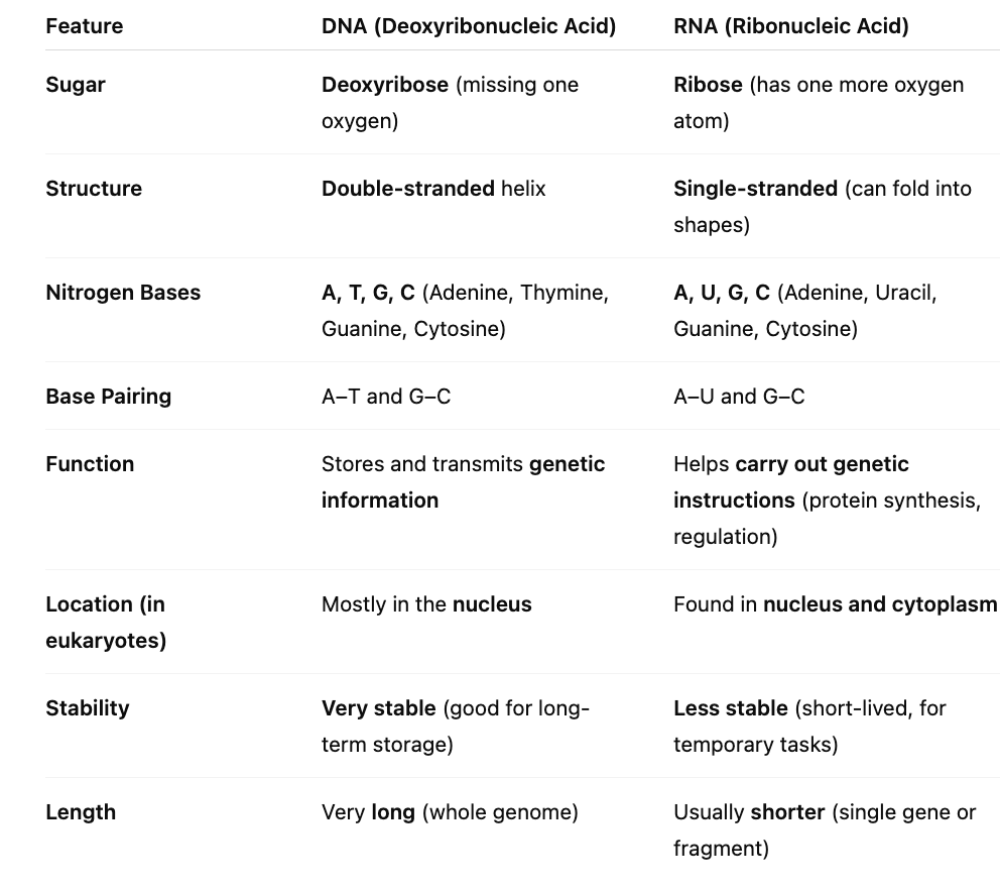
DNA also runs in an antiparallel arrangement (one side of the helix runs in the opposite direction of the other)
- 5′ to 3′ in one direction and 3′ to 5′ in the other direction
This is important in DNA synthesis (replication) and protein production
RNA
- single-stranded molecule that exists in helical form (can assume secondary and tertiary levels of complexity)
- Contains uracil (U) instead of thymine (T) as a complementary base to A
- Sugar is ribose rather than deoxyribose
Each strand provides a _______ for the replication of a new molecule guaranteeing accurate duplication
template
True or False: The precise sequence of bases constitutes a genetic program responsible for the unique qualities of each organism
True
What is the difference in replication forks and sites for prokaryotes vs. eukaryotes?
What is the similarity between both?
- The place in the helix where the strands are unwound and replication is taking place
- Each circular DNA molecule will have two replication forks
Eukaryotic DNA is larger and has multiple origins of replication, allowing replication to occur at several sites simultaneously. Prokaryotic DNA, which is circular, begins replication at a single origin called OriC. Despite these differences, both eukaryotic and prokaryotic DNA replication are semi-conservative, meaning each new DNA molecule contains one original strand and one newly synthesized strand.
Why do we study prokaryotic models compared to eukaryotic models?
- Simplicity – Prokaryotic replication systems are much simpler and easier to study than eukaryotic ones. They have fewer enzymes and regulatory steps, making it easier to understand the core mechanisms.
- Conservation – The basic principles and enzyme functions (like DNA polymerase, helicase, primase, ligase, etc.) are highly conserved between prokaryotes and eukaryotes. So, what we learn from bacteria applies broadly to all organisms.
- Experimental convenience – E. coli grows quickly, is easy to manipulate genetically, and allows for large-scale biochemical studies—making it an ideal model organism.
In short, prokaryotes are simpler and more accessible models that reveal the same fundamental mechanisms used in eukaryotic DNA replication.
Enzymes involved in prokaryote replication: Helicase
Unwinds the DNA by breaking the hydrogen bonds holding the two strands together, resulting in two seperate strands.
Enzymes involved in prokaryote replication: Primase
Synthesizes and lays down an RNA primer to add nucleotides which allow the nucleotides to continue replication.
- Primer: A length of RNA that is inserted initially during replication before being replaced by DNA
Enzymes involved in prokaryote replication: DNA Polymerase III
Adding bases to the new DNA chain and proofreading the chain for mistakes. Lays down DNA nucleotides for the new strand.
- Functions once the DNA helix strands are unwound and separated
- Synthesizes a new daughter strand of DNA using the parental strand as a template
- Can only add nucleotides to an existing chain—cannot begin synthesizing a chain of nucleotides
- Can only add nucleotides in the 5 ′ to 3 ′ direction
Enzymes involved in prokaryote replication: DNA Polymerase I
Removes the primer laid by primase, closes gaps, and repairs any mismatches
Enzymes involved in prokaryote replication: Ligase
Final binding of the nicks in DNA during synthesis and repair
Seals the primers and the strands together (especially in the lagging strand)
Enzymes involved in prokaryote replication: Topoisomerase 1
Make single-stranded DNA breaks to relieve supercoiling at the origin
Helicase unwinds the DNA strands.
As it does this, it
creates tension and supercoils ahead of the fork.
Topoisomerase
goes in after helicase to relieve this
tension.
It cuts and rejoins the DNA strands to
prevent twisting or tangling.
Enzymes involved in prokaryote replication: Topoisomerase 2 (DNA gyrase) and 4
Makes double-stranded DNA breaks to remove supercoiling ahead of origin and separate replicated daughter DNA molecules
What is the overall replication process?
It is known as ____________.
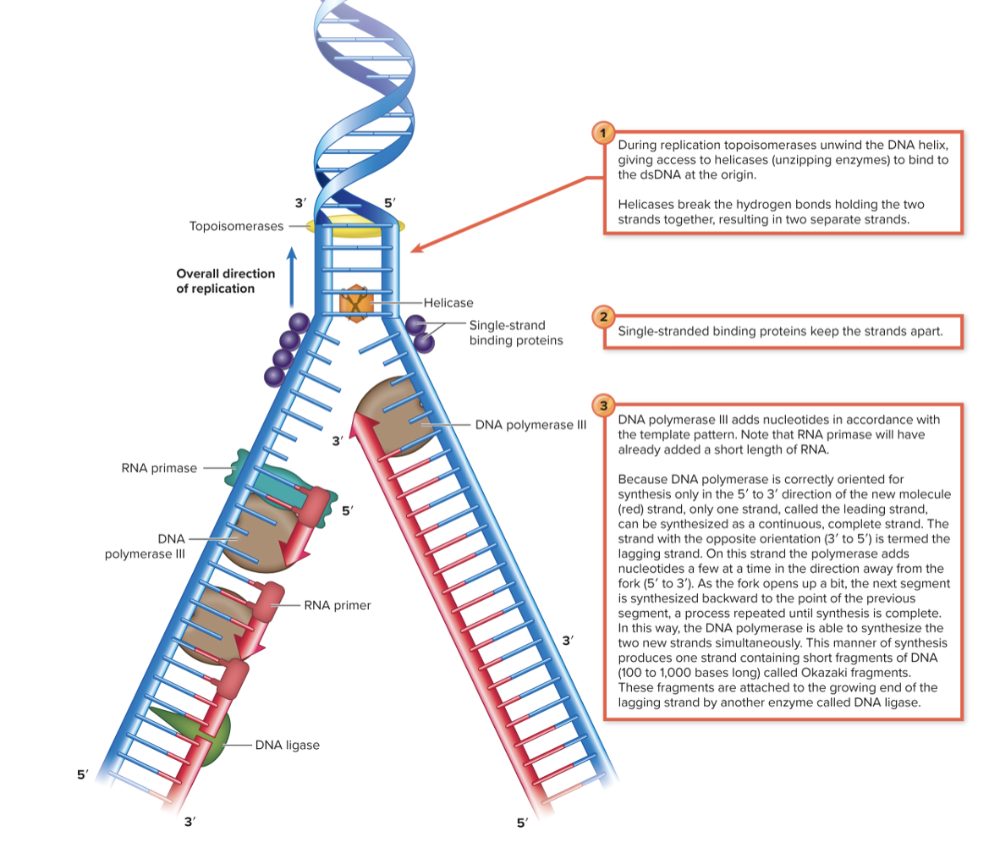
- DNA replication begins when helicase unzips the double helix by breaking the hydrogen bonds between the two strands. As the strands separate, single-strand binding proteins keep them apart so they don’t rejoin. Ahead of the replication fork, topoisomerase relieves the twisting tension that builds up as the DNA unwinds. Next, primase lays down short RNA primers to provide a starting point for DNA polymerase. DNA polymerase can only add new nucleotides in the 5′ to 3′ direction, meaning it reads the template strand in the 3′ to 5′ direction. This allows the leading strand to be synthesized continuously toward the replication fork. On the lagging strand, however, DNA polymerase must work in short segments, called Okazaki fragments, since it moves away from the fork. These fragments are later joined together by DNA ligase, forming one continuous strand.
- Semi-conservative replication: In the end, two identical DNA molecules are produced, each made of one original strand and one newly synthesized strand—this is called semi-conservative replication.
The template strand is an ________ parental DNA strand.
original
In DNA replication, what is the leading strand?
- The strand of new DNA that is synthesized continuously in a 5′ to 3′ direction
In DNA replication, what is the lagging strand?
- The strand of new DNA that must be synthesized in short segments (in a 5′ to 3′ direction)
- Later sealed together to form a strand in the 3′ to 5′ direction
In DNA replication, what are Okazaki fragments?
- Short segments of DNA synthesized in a 5′ to 3′ direction which are then sealed together to form the 3′ to 5′ strand
Picture associated with DNA replication
Explain elongation and termination of the daughter molecule in prokaryotes?
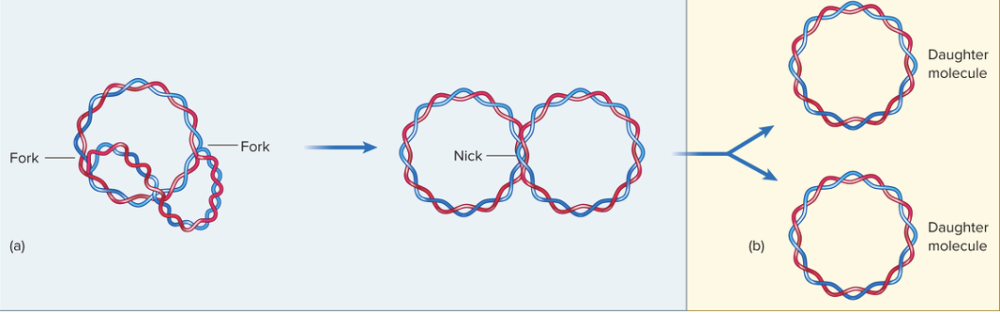
As DNA replication continues, the newly made DNA strands loop away from the original template because the replication forks move around the circular DNA molecule. In prokaryotes (like bacteria), the DNA is circular, so the two replication forks eventually meet on the opposite side of the circle—this is what it means when they “come full circle.”
Once replication is almost finished, DNA ligase connects all the Okazaki fragments on the lagging strands, making each daughter DNA strand continuous and complete. Finally, Topoisomerase IV makes a temporary double-stranded break to separate the two new circular DNA molecules that are still linked together. After cutting, it reseals the DNA so that each daughter cell gets one complete, separate DNA molecule.
Replication of eukaryotic DNA is similar to replication of _________ and ________ DNA. In what ways are they similar?
Replication of eukaryotic DNA is similar to replication of bacterial and archaeal DNA
- Uses a variety of DNA polymerases
- Replication proceeds in both directions but from multiple origins
- Topoisomerases are used to relieve tension in the strand and to recompact the molecule when it is fully replicated
Due to the unidirectional action of ___________, the 3′ end of linear DNA molecules, called _________, cannot be copied entirely
DNA polymerase
telomeres
Explain how the classical view of the “central dogma” of biology has been changed by recent science.
The classical view of the central dogma of biology states that information flows in one direction: DNA → RNA → protein. This means DNA is transcribed into RNA, and RNA is translated into proteins, which then carry out most cellular functions.
However, recent science has shown that this view is oversimplified. Not all RNA molecules are used to make proteins. In fact, a large portion of our genome produces noncoding RNAs that have important roles on their own. These include rRNA and tRNA (which help in translation), as well as miRNA, siRNA, and lncRNA, which help regulate gene expression, control which genes are turned on or off, and even modify other RNAs.
So today, we understand that the flow of genetic information is more complex: DNA can make RNA that doesn’t code for protein but still performs vital regulatory and structural functions. The modern view of the central dogma includes these noncoding RNAs as key players in controlling how genes are expressed and how cells function.
What is the "central dogma" of genetics?
Transcription is when DNA is used to synthesize RNA
Translation is when RNA is used for protein synthesis.
However, the "central dogma" is incomplete because while a wide variety of RNAs are used to regular gene function. Many genetic malfunctions that cause human disease are found in regulatory RNA, not in genes for proteins.
The DNA that codes for these crucial RNA molecules was once called "junk" DNA.
______________ regulate transcription and translation.
Micro RNA, interfering RNA, antisense RNA, and riboswitches
A protein's _______ structure determines its characteristic shape and function
primary structure
- Proteins ultimately determine phenotype
- DNA is mainly a blueprint that tells the cell which kinds of proteins to make and how to make them
_____________: the study of an organism’s complete set of expressed proteins
- Proteomics: the study of an organism’s complete set of expressed proteins
What is the simplified view of the DNA-Protein relationship
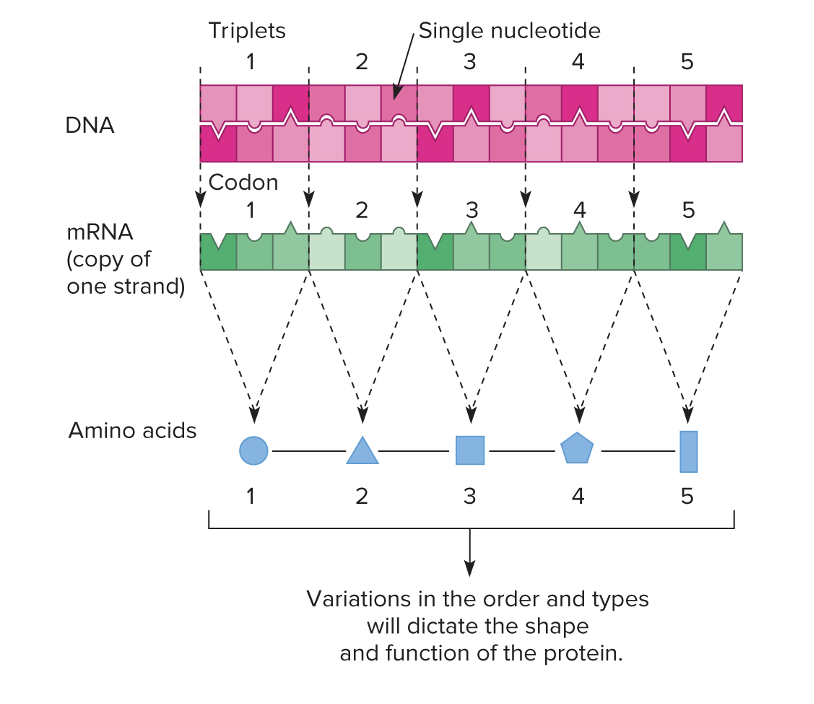
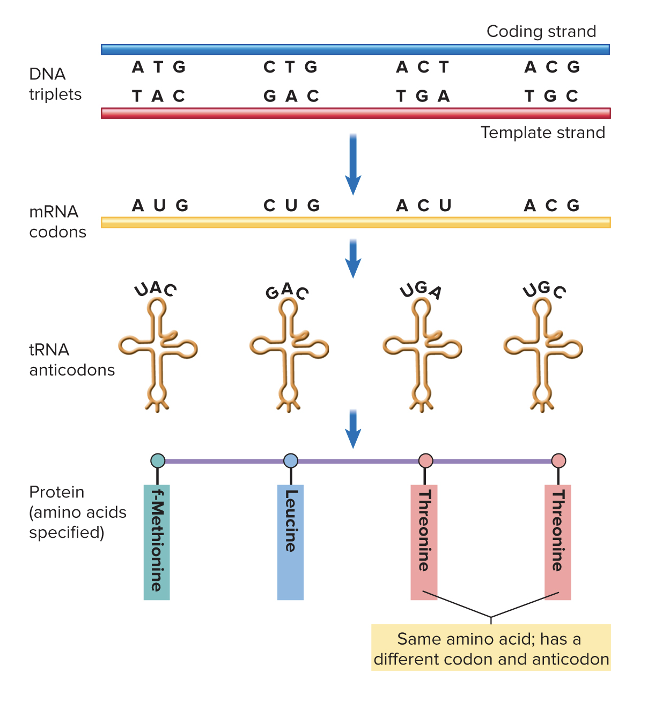
DNA codes into mRNA, and then three nucleotides make a codon. The tRNA carries the anti-codon which has the matching amino acid to the codon.
- The template strand of DNA is read by RNA polymerase to build the mRNA.
- The mRNA is complementary to the template strand.
- The coding strand (also called the sense strand) has the same sequence as the mRNA, except that DNA has T (thymine) instead of U (uracil).
DNA coding strand: 5′ – ATG GCA TTT – 3′
DNA template
strand: 3′ – TAC CGT AAA – 5′
mRNA: 5′ – AUG GCA UUU – 3′
What are the different participants in transcription and translation?
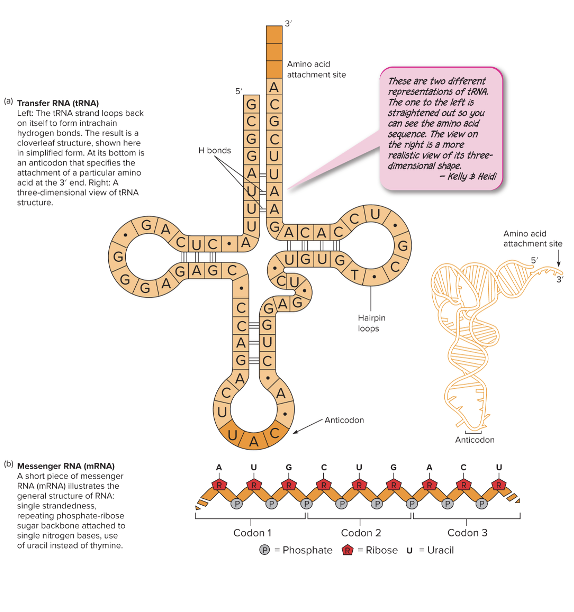
- Messenger RNA (mRNA)
- Transfer RNA (tRNA)
- Regulatory RNA (rRNA)
- Ribosomes
- Several types of enzymes
- Many raw materials
Which is the only type of RNA (ribonucleic acid) that can be translated?
mRNA
This is a transcript of a structural gene or genes in the DNA. Synthesized in a process similar to the leading strand during DNA replication.
Match the description to the type of RNA
Sequence of amino acids in protein. Transports the DNA master code to the ribosome
mRNA
Match the description to the type of RNA:
A cloverleaf tRNA to carry amino acids. Brings amino acids to ribosome during translation
tRNA
- Contains sequences of bases that form hydrogen bonds with complementary sections of the same tRNA strand
Match the description to the type of RNA:
Several large structural rRNA molecules. Forms the major part of a ribosome and participates in protein synthesis
rRNA
It is a long RNA molecule and proteins form complex 3D shapes to create two subunits of a ribosome.
The two subunits engage in the final translation of the genetic
Match the description to the type of RNA:
Regulation of gene expression and coiling of chromatin
Micro (miRNA), antisense, riboswitch, and small interfering (siRNA)
Regulatory RNA’s.
Match the description to the type of RNA:
An RNA that can begin DNA replication. Primes DNA
Primer
Match the description to the type of RNA: RNA enzymes, parts of splicer enzymes. Remove introns from other RNAs in eukaryotes
Ribozymes and spliceosomes (snRNA)
What are codons?
A series of triplet bases that hold the message of the transcribed mRNA
What are anticodons?
Found at the bottom of the cloverleaf. Designates the specificity of the tRNA and complements the mRNA codon
Describe the process of transcription and what is involved?
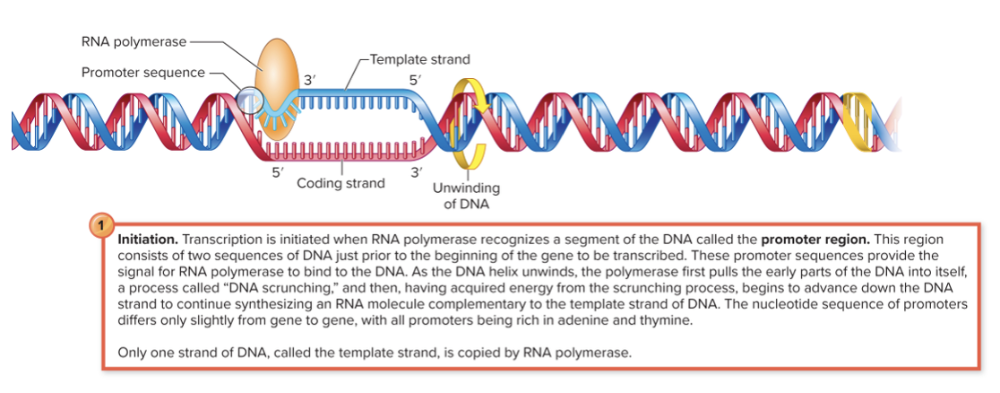
Initiation, Elongation, and Termination
RNA polymerase binds to the promoter region of a gene.
As it moves along the DNA, it unwinds a small section (about 10–20 base pairs at a time) by itself — no separate helicase enzyme is needed.
It then uses one strand (the template strand) to synthesize RNA.
The DNA re-anneals (zips back together) once RNA polymerase passes.
- RNA polymerase reads the DNA template strand in the 3′ to 5′ direction.
- As it reads, it builds the mRNA strand in the 5′ to 3′ direction (adding new RNA nucleotides to the 3′ end) which are complementary to DNA - ELONGATION
- Termination: RNA polymerase continues until it makes its way to a specific sequence that signals the end of a transcript (DNA sequence in the template strand)
- The main enzyme is RNA polymerase, and transcription factors and topoisomerase (Relieves the supercoiling tension that forms ahead of the transcription bubble) assist it.
The genetic code is _____ for bacteria, archea, eukaryotes, and viruses.
universal
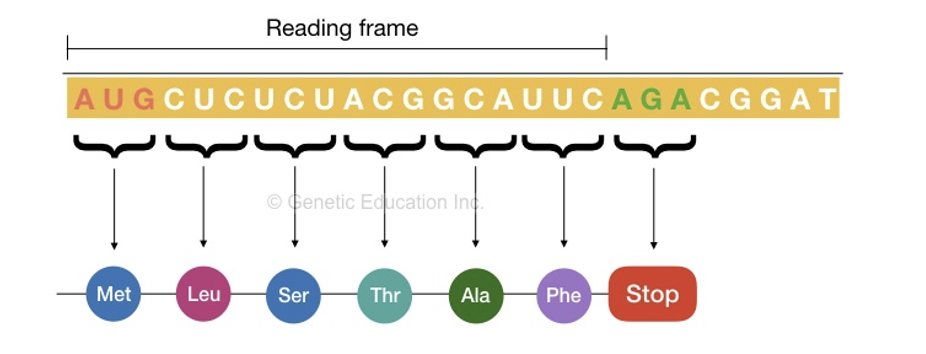
- Codon dictates which amino acids are added to the growing chain
- mRNA nucleotides are read in codons or groups of three based on the reading frame
What are the start codons?
What are the stop codons?
AUG (Met); f'methionine in prokaryotes
- In prokaryotes, the start codon (AUG) codes for a modified form of methionine called formyl-methionine (fMet). The formyl group distinguishes the initiating methionine (start) from internal methionines (which are just regular Met). After translation, the formyl group (and sometimes the entire fMet) is often removed from the finished protein.
Stop: UAA, UAG, UGA (these do not have an amino acid associated with them)
Explain how the master genetic code is redundant and what is the wobble base?
Redundancy:
- Certain amino acids are represented by multiple codons
- Allows for the insertion of correct amino acids even when mistakes occur in the DNA sequence
Wobble:
- Only the first two nucleotides are required to encode the correct amino acid
- The third nucleotide does not change its sense
- Permits some variation or mutation without altering the message
In the genetic code, several codons can code for the same amino acid—this is called redundancy or degeneracy of the genetic code. Because of this, if a mutation changes the third base in a codon (for example, from GAA to GAG), it often still codes for the same amino acid. This is known as the wobble effect. It helps protect cells, especially prokaryotes, from harmful mutations. Since the amino acid sequence of the protein doesn’t change, the structure and function of the protein stay the same, meaning the mutation doesn’t immediately harm or kill the cell.
Interpreting the DNA code
Describe the process of translation and what is needed.
mRNA, tRNA, amino acids, and ribosomes
Three stages include initiation, elongation, and termination
- Start/Stop Codons
- Translation: process of shifting the ribosome down the mRNA strand to read new codons
- tRNA does not bind without the ribosome, and it falls into the P site first. It sets up space for the next amino acid to come into the A site. A peptide bond will form, and the bond is cleaved, and the new amino acids go to the A site.
- As a result, the growing peptide chain is transferred to the tRNA in the A site, preparing the ribosome to shift and continue elongating the protein.
Process Summary
Translation is the process of making a protein from an mRNA sequence, and it occurs in three main stages: initiation, elongation, and termination.
During initiation, the small ribosomal subunit binds to the mRNA strand. In prokaryotes, it binds near the Shine-Dalgarno sequence, while in eukaryotes, it attaches to the 5′ cap and scans for the start codon (AUG), which codes for methionine. A tRNA carrying methionine pairs with the start codon using its anticodon (UAC). Then, the large ribosomal subunit joins to form a complete ribosome with three sites: the A site (aminoacyl site, where new tRNAs enter), the P site (peptidyl site, where the growing peptide chain is held), and the E site (exit site, where tRNAs leave).
During elongation, the ribosome moves along the mRNA in the 5′ to 3′ direction, reading one codon at a time. A new tRNA carrying an amino acid enters the A site, and the peptidyl transferase enzyme forms a peptide bond between the amino acid in the P site and the one in the A site. The ribosome then shifts, moving the tRNA with the growing chain into the P site, and the empty tRNA exits through the E site. This process repeats, adding amino acids one by one to the growing polypeptide chain.
Finally, during termination, the ribosome reaches a stop codon (UAA, UAG, or UGA). Since there is no tRNA for these codons, a release factor binds to the A site, causing the ribosome to release the newly made protein. The ribosome then separates into its large and small subunits, and the mRNA and tRNA are released. The result is a completed polypeptide chain that will fold into its proper shape to become a functional protein.
What are post-translational modifications?
- Proteins begin to fold upon themselves to achieve their tertiary conformation even before the peptide chain is released
- Formyl methionine may be clipped off ( fMet )
- Cofactors may be added
- Some join with other proteins to form a quaternary structure
Explain COVID-19 mRNA vaccines and how it uses translation.
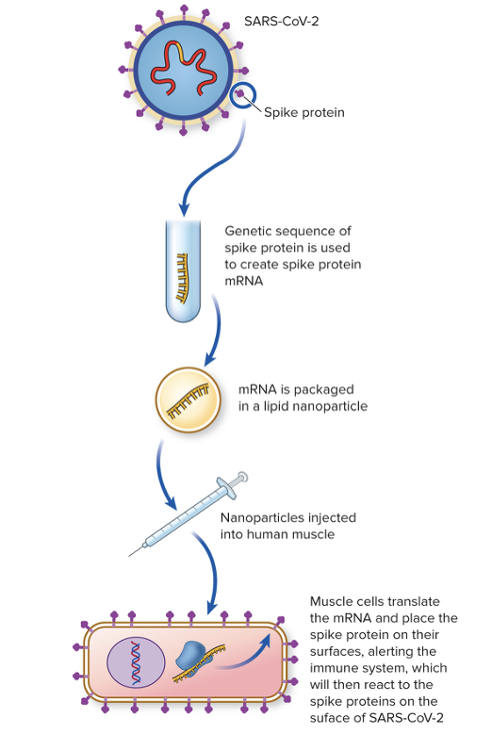
The COVID-19 vaccine uses viral mRNA that codes for a surface protein of the virus. Once injected into human areas, muscle cells use their translation machinery to create and place on their cell surface of the viral protein. This alerts the immune system, which will react to the spike proteins on surface of SARS-CoV2
- Normal immune system screening processes detect it and build specific immune defe
Co-translational translation only occurs in _________
Prokaryotes (bacteria and archea)
- In prokaryotes, co-translational translation means that transcription and translation happen at the same time. Because prokaryotic cells don’t have a nucleus, the DNA, mRNA, and ribosomes are all in the same space (the cytoplasm). As soon as RNA polymerase starts making an mRNA strand from DNA, ribosomes can immediately attach to that mRNA and begin translating it into a protein — even before transcription is finished.
- This means the cell doesn’t have to wait for the full mRNA to be completed or processed, like in eukaryotes. Everything happens simultaneously, allowing prokaryotes to make proteins very quickly and efficiently. This is possible only because prokaryotes lack a nucleus, so the ribosomes have direct access to the newly made mRNA as it’s being transcribed.
True or False: AUG codes for the same form of methionine in both prokaryotes and eukaryotes.
False; AUG codes for a different form of methionine in eukaryotes.
Fill in the blanks: Eukaryotic mRNA’s only code for _______ protein; bacterial mRNA’s often contain information from _________ in a series,
one
several genes
Monocistronic = one → Eukaryotes → one gene per mRNA (one gene per protein)
Polycistronic = many → Prokaryotes → many genes per mRNA
In eukaryotic transcription and translation, what are introns and exons?
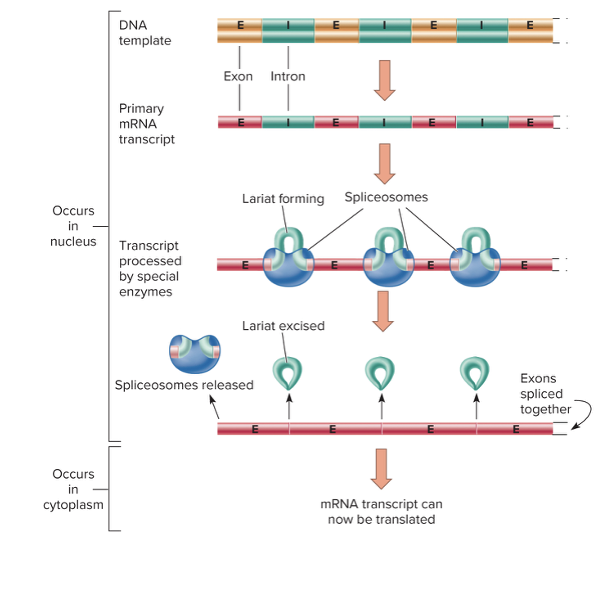
Most eukaryotic genes do not exist in an uninterrupted series of codons coding for a protein.
- Introns: intervening sequences of bases that do not code for protein
- Exons: coding regions
What is used to recognize the exon-intron junctions and enzymatically cut through them?
A spliceosome is used in eukaryotic translation and transcription. It loops introns into lariat-shaped pieces, excises them, and joins the exons end to end
- Completed mRNA strand can then proceed to the cytoplasm for translation
Define the term operon and explain one advantage it provides to a bacterial cell.
- Operons are a coordinated set of genes regulated as a single unit
- Found only in prokaryotes (archaea and bacteria)
- Can be inducible or repressible, depending on the environment surrounding the cell
________________________________
An operon is a group of genes that are controlled together and transcribed as a single mRNA molecule under the control of one promoter. These genes usually code for proteins that work in the same pathway or process.
The main advantage of an operon is that it allows a bacterial cell to coordinate the expression of related genes all at once. This means the cell can efficiently turn on or off an entire set of genes in response to environmental changes — saving energy and resources. For example, in the lac operon, bacteria only produce lactose-digesting enzymes when lactose is present, which helps the cell avoid wasting energy making unnecessary proteins.
What are inducible operons?
These operons contain genes that make proteins that help metabolize nutrients
- They are ALWAYS off, but can be turned on (induced) by the nutrient for which the structural gene encodes
- Enzymes needed to metabolize a nutrient are ONLY produced when the nutrient is present in the environment
What are repressible operons?
These operons contain genes that code for enzymes that synthesize amino acids. They are normally on, but can be turned OFF (repressed) when there is enough product synthesized by the enzyme and the nutrient is NO LONGER needed
In repressible operons, excess nutrient serves as a _______ to block the action of the operon.
co-repressor
- When tryptophan levels are high, some tryptophan molecules act as a corepressor — they bind to the repressor and activate it. The active repressor then binds to the operator, blocking RNA polymerase from transcribing the genes. When tryptophan levels drop, the repressor becomes inactive again, detaches from the operator, and transcription resumes.
What is the Lac Operon?
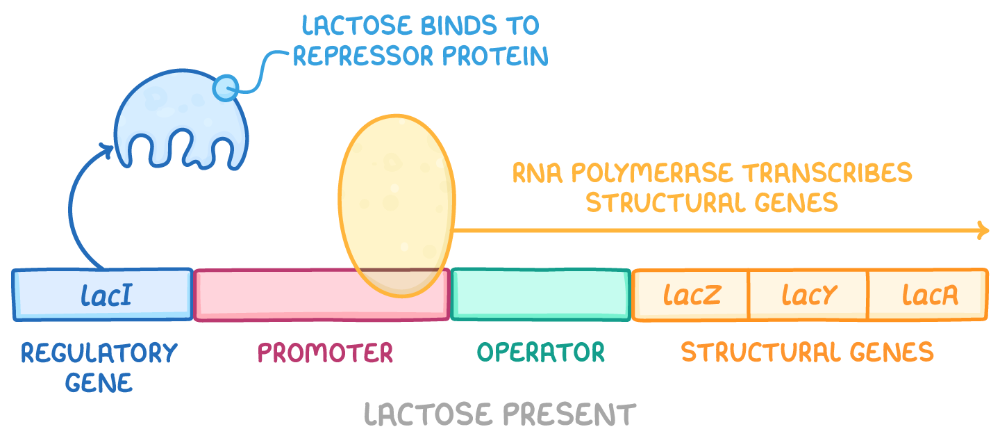
This operon is inducible, meaning it is off without lactose, but when lactose is present in the environment, it can be turned ON
- Regulator: composed of the gene that codes for the repressor, a protein capable of repressing the operon
- Control locus: promoter (recognized by RNA Polymerase) and operator (acts as the on/off switch) for transcription
- Structural Locus: made up of three genes, each coding for a different enzyme needed to catabolize lactose
- When lactose is present, it acts as an inducer, binds to the repressor to inactivate it, and allolactose (inducer) allows the transcription to happen (detach from operator)
- When lactose is not present, the repressor is bound to the operator, blocks RNA polymerase from transcribing the sequence to make mRNA.
The repressor protein is __________. What does this mean?
allosteric
This means that it has two binding sites: one for the operator sequence on the DNA and another for the lactose. Allosteric binding is when a molecule binds to a protein at a site other than the active site, causing a change in the protein's shape that affects its function, either by increasing or decreasing its activity.
- In the absence of lactose, the repressor binds to the operator, blocking transcription of structural genes
- The regulator gene lies upstream of the operator and is transcribed constitutively
- The regulator gene codes for the repressor protein — the molecule that can bind to the operator to turn the operon off. It is not part of the operon itself, but it’s closely linked to it. Upstream” means before the operator in the DNA sequence (in the 5′ direction, where transcription begins). So, the regulator gene is located before the operon that it controls. Even though it’s separate, the protein it makes (the repressor) can act on the operator region downstream.
In the lac operon, the __________ causes a conformational change which allows transcription of the structural genes.
binding of allolactose to the repressor
What is the Trp Operon?
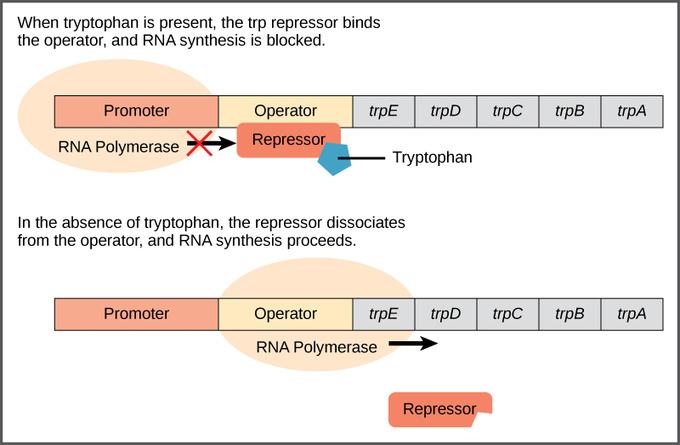
The trp operon is a group of genes in E. coli (and other bacteria) that control the production of the amino acid tryptophan. It contains five structural genes (trpE, trpD, trpC, trpB, and trpA), which code for the enzymes needed to synthesize tryptophan. These genes are all controlled by a single promoter and an operator region — together, this setup allows the cell to regulate tryptophan production efficiently.
Here’s how it works:
- When tryptophan levels are low, the repressor protein (made by the trpR gene) is inactive and cannot bind to the operator. This means RNA polymerase can bind to the promoter and transcribe the genes. The enzymes are made, and the cell produces more tryptophan.
- When tryptophan levels are high, tryptophan acts as a corepressor — it binds to the repressor protein, activating it. The now-active repressor binds to the operator, blocking RNA polymerase from transcribing the genes. This stops tryptophan synthesis since the cell already has enough.
In short, the trp operon is a repressible operon, meaning it’s usually on but can be turned off when the end product (tryptophan) is abundant. This allows bacteria to conserve energy by halting production of unnecessary enzymes when tryptophan is already available.
What are two methods of eukaryotic gene regulation?
- Transcription Factors: Insert into the grooves of the DNA molecule and enhance the transcription of specific genes. Regulate gene expression in response to environmental stimuli
- DNA "knot:" Cytosines bind to other cytosines forming a “knot” in the helix of DNA. Cytosines bind to other cytosines forming a “knot” in the helix of DNA
What are the four antibiotics that affect transcription and translation? ("mycins")
RA SE
- Drugs that inhibit protein synthesis: rifamycin (block RNA polymerase as it binds to bacterial RNA polymerase.This prevents the initiation of RNA synthesis, so the bacteria cannot make mRNA) and actinomycin D (blocks transcription as it binds to DNA at the transcription initiation complex. This prevents RNA polymerase from moving along the DNA and making RNA. As a result, mRNA synthesis is stopped, which also stops protein production downstream).
- Drugs that interfere with the ribosome: erythromycin (binds to 50S and prevents translocation, meaning ribosome can't move along mRNA) and spectinomycin (binds to 30S and prevents ribosome from properly reading mRNA).
What is recombination?
Recombination is an event in which one bacterium DONATES DNA to another bacterium.
The end result is a strain DIFFERENT from both the donor and recipient strain.
What are plasmids?
Extrachromosomal DNA adept at moving between cells (small, circular pieces)
Non-essential to the survival of the cell (but carry useful traits)
- Plasmids can replicate independently of the bacterial chromosome
- Allow transfer of DNA between cells
- Found in MOST bacteria and fungi
- Contain at most a few dozen genes
- Plasmids can give new virulence factors to better survive in hosts
What is a recombinant?
It is any organism that contains and expresses genes that originated in another organism.
What is horizontal gene transfer in bacteria, and what are the three examples?
Any transfer of DNA that results in organisms acquiring NEW genes that did not come DIRECTLY from the parent organisms.
- Eukaryotic organisms also engage in horizontal gene transfer, often aided by microbes such as viruses
- It's not about the bacterial gene chromosome, but about the plasmids
What is the ONE type of DIRECT horizontal gene transfer?
Conjugation, and direct meaning the donor and recipient are IN CONTACT during the exchange
What are the two types of INDIRECT horizontal gene transfer?
Transformation and Transduction
What is conjugation?
Factors Involved:
- Donor cell with pilus
- Fertility plasmid in donor
- Both donor and recipient alive
- Bridge forms between cells to transfer DNA
Examples of Products of Transferred Genes
- Drug resistance; resistance to metals; toxin production; enzymes; adherence molecules; degradation of toxic substances; uptake of iron
What is it?
- A mode of genetic exchange in which a plasmid or other genetic material is transferred from a donor to a recipient cell via a direct connection
- Can occur in both gram +/-
- F. Factor in E.Coli
Explain the process of conjugation with the F factor.
Conjugation is a process in which one bacterium transfers genetic material to another through direct contact. It requires a special piece of DNA called the F factor (fertility factor). The F factor is a plasmid, which means it is a small, circular piece of DNA separate from the bacterial chromosome. (F factor is from plasmid NOT bacterial chromosome)
Conjugation occurs between a donor cell (F⁺), which contains the F factor, and a recipient cell (F⁻), which does not. The F⁺ donor forms a thin bridge-like structure called a sex pilus that attaches to the F⁻ recipient. The pilus then pulls the two cells together, forming a direct connection. Once connected, the donor cell begins to copy its F factor plasmid. As replication occurs, one strand of the F factor DNA is transferred through the pilus into the recipient cell.
Both cells then synthesize the complementary strand of the DNA, so each ends up with a complete F factor plasmid. After the transfer, the recipient becomes F⁺, meaning it can now act as a donor in future conjugation events.
In summary, conjugation with the F factor allows bacteria to share genetic material, spreading traits like antibiotic resistance or new metabolic abilities — all without reproduction.
What are resistance plasmids in conjugation?
Resistance plasmids or factors
- Carry genes for resisting antibiotics or other drugs
- Commonly shared among bacteria through conjugation
- Can confer MULTIPLE resistance to antibiotics (no longer susceptible to that antibiotic)
- R factors can also carry genetic codes for resistance to heavy metals or for synthesizing virulence factors
What experiment discovered transformation?
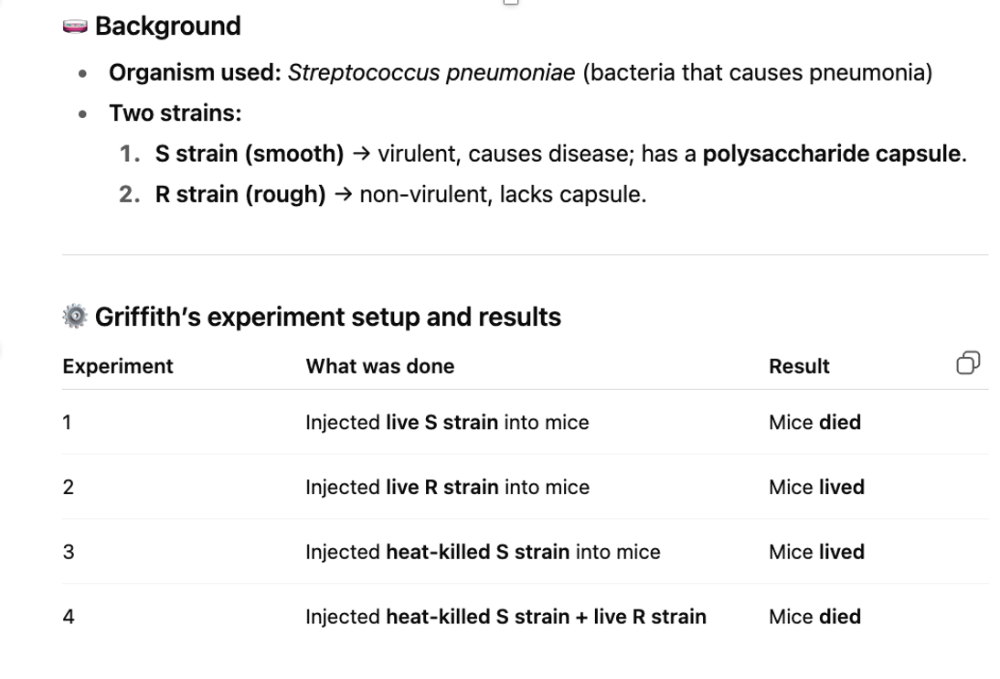
- Griffith experiment
- Worked with encapsulated (polysaccharide) and non-encapsulated S. pneumoniae and mice
- encapsulated strains = smooth (S) colony appearance
- non-encapsulated strains = rough (R) appearance
- Something from the dead S strain bacteria “transformed” the harmless R strain into a virulent S strain. This suggested that genetic material from the dead bacteria was taken up by the living R bacteria, giving them the ability to produce a capsule and become virulent.
What is transformation?
Factors Involved
- Free donor DNA (fragment)
- Live; competent recipient cell
Examples of Products of Transferred Genes:
- Polysaccharide capsule; unlimited with cloning techniques
What is it?
- The acceptance by a bacterial cell of small fragments of soluable DNA
- Once a bacteria dies, it will release it contents (including plasmids and fragment DNA). It will then be taken up by competent cells (those that are capable of accepting genetic material through transformation).
- No contact between the two lives cells.
- It will then integrate into the genome of the recipient cell.
What is transduction?
Factors Involved
- Donor is lysed bacterial cell; Defective bacteriophage is carrier of donor DNA; Live recipient cell of same species as donor
Examples of Products of Transferred Genes
- Toxins; enzymes for sugar fermentation; drug resistance
What is it?
- Bacteriophage (virus that infects bacteria) serves as a carrier of DNA from a donor cell to a recipient cell
- Occurs naturally in broad spectrum of bacteria
Participating bacteria in a single transduction event must be the ______ species. The two versions are:
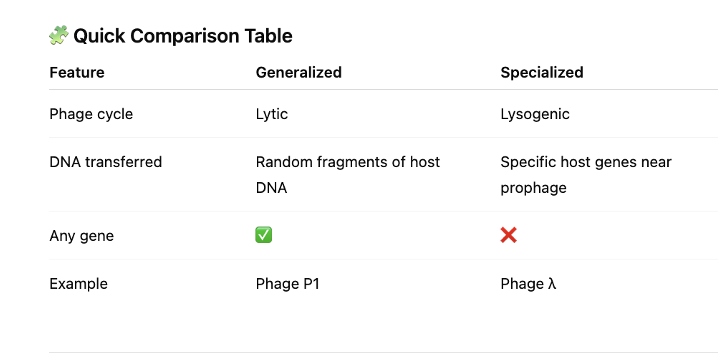
- same species
Generalized transduction
- Random fragments of disintegrating host DNA are taken up by a phage during assembly
- Any gene from the bacterium (host cell) can be transmitted
- Lytic cycle. The phage accidentally packages random fragments of the host bacterial DNA instead of its own viral DNA. When this phage infects a new bacterium, it injects bacterial DNA, which can recombine with the recipient’s genome.
Specialized transduction
- A highly specific part of the host genome is incorporated into the virus when the prophage DNA separates from the chromosome (carrying host genes with it)
- Host genome
- Occurs during lysogenic cycle with temperate phage.
- A highly specific part of the host genome is incorporated into the virus when the prophage DNA separates from the chromosome (carrying host genes with it)
What are transposons or transposable elements (TEs)?
"Jumping genes" shift from one part of the genome to another
- One chromosomal site to another
- chromosome to plasmid
- plasmid to chromosome
Proposed by Barbara McClintock
Widespread among cells and viruses
- Transposons, also known as jumping genes, are found within a single cell — they move from one location to another within the same genome.
- However, once a transposon lands on a plasmid, that plasmid can later be transferred to another cell (for example, during conjugation). In that way, transposons can indirectly spread between cells, but their movement — their actual “jumping” — happens inside one cell’s DNA.
What are the different types of transposable elements?
Transposons are pieces of DNA that can move around inside a cell’s genome.
Insertion elements:
- The smallest TEs consist only of two tandem repeats
- They only have the DNA needed to move, which includes two short repeated sequences at the ends. They don’t carry any extra genes — just what’s needed to “cut and paste” themselves to new spots in the DNA.
Retrotransposon:
- A type of TE that can transcribe DNA into RNA and then back into DNA for insertion in a new location
- These are a special type of transposon that move using an RNA copy. They first copy their DNA into RNA, then use an enzyme called reverse transcriptase to turn that RNA back into DNA, which is then inserted in a new place in the genome.
Other
- Other TEs contain genes that code for antibiotic resistance or toxin production
- Some transposons are larger and carry extra genes, such as ones that provide antibiotic resistance or make toxins. When these move, they can spread those useful (or harmful) traits to other bacteria.
What are the general effects of transposable elements?
Mix up genetic language
Can be beneficial or adverse, depending on:
- Where the insertion occurs in a chromosome
- What kind of genes are relocated
- The type of cell involved
What are the effects of transposable elements on bacteria?
- Changes in colony morphology, pigmentation, and antigenic characteristics
- Replacement of damaged DNA
- Transfer of drug resistance between bacteria
What are pathogenicity islands (PAI's)?
Pathogenicity islands (PAIs) are special sections of DNA found in some bacteria. These sections contain multiple genes that work together (coordinate) to give the bacteria a new ability/trait that makes it harmful (pathogenic).
For example:
- In Yersinia pestis (the plague bacterium), a PAI gives it the ability to take iron from its host.
- In Staphylococcus aureus, a PAI allows it to produce exotoxins that damage host tissues.
These DNA “islands” are often surrounded by transposon-like sequences, which means they may have been moved or transferred between bacteria in the past.
In short, pathogenicity islands are clusters of genes that can turn harmless bacteria into disease-causing ones by adding new traits like toxin production or nutrient stealing.
Islands flanked by sequences that look like genes for TE enzymes
- It means that pathogenicity islands are often surrounded by DNA sequences that look similar to transposon (TE) genes — the genes that help DNA move around. In other words, these surrounding sequences act like “handles” that could help the whole island jump or transfer from one place in the DNA to another, or even between bacteria. So, these flanking sequences suggest that the pathogenicity island may have originally been moved into the bacterium’s genome by a transposon or another mobile genetic element. That’s how bacteria can gain new traits (like toxin production or antibiotic resistance) from other organisms.
What is a mutation?
Any change to the nucleotide sequence in the genome
- Driving force of evolution
- In microorganisms, mutations show altered gene expression such as altered pigment production or development of resistance to a drug
What is the difference between the wild type vs mutant strain?
Wild type: (original)
- A microorganism that exhibits a natural, nonmutated characteristic
- The trait present in the highest numbers in a population
Mutant strain:
- An organism that bears a mutation
What are the two different causes of mutations?
- Spontaneous mutation: A random change in the DNA arising from errors in replication that occur randomly
- Induced mutation: Result from exposure to known physical or chemical agents that damage DNA (known as mutagens)
What are mutagens?
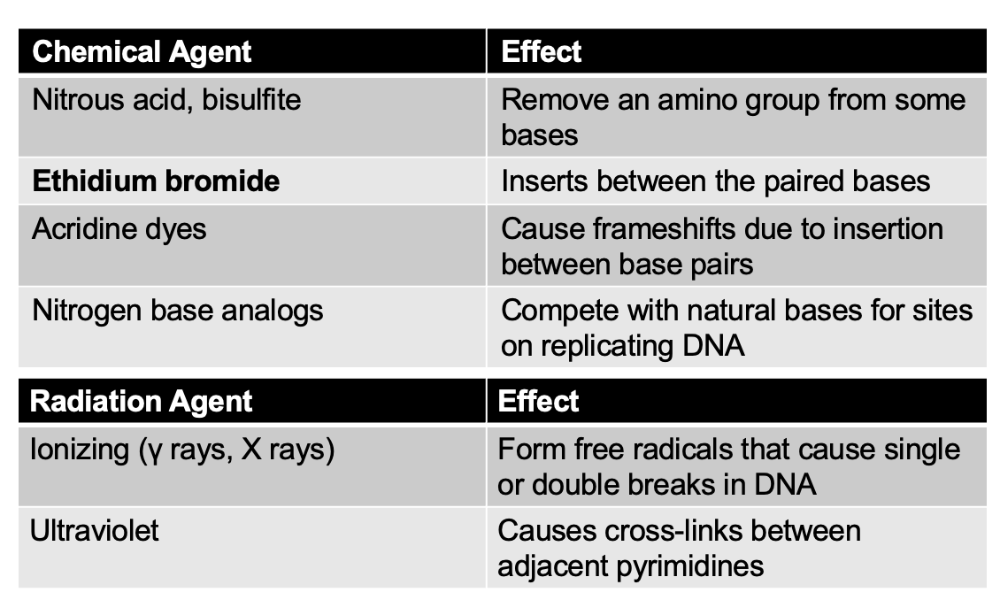
Physical and chemical agents that damage DNA leading to induced mutations
Three overarching categories of mutations: Point, Lethal, and Neutral. What do they mean
Point mutations:
- Small mutations that affect only a single base on a gene
- Involve addition, deletion, or substitution of single bases
Lethal mutation:
- Mutations that lead to cell dysfunction or death
Neutral mutation
- Produce neither adverse nor helpful changes
What is a missense, nonsense, silent, and back mutation?
Missense mutation: (changing amino acid)
- Any change in the code that leads to the placement of a different amino acid
Nonsense mutation:
- Changes a normal codon into a stop codon
Silent mutation:
- Alters a base but does not change the amino acid
- The redundancy of the code assures that certain amino acids will not be altered by a change in the third base of the codon
Back mutation:
- Occurs when a gene that has undergone a mutation reverses to its original base composition
What is a frameshift mutation?
- Occurs when one or more bases are inserted into or deleted from a newly synthesized DNA strand
- This alters the reading frame of the mRNA
- Nearly always result in a nonfunctional protein
- Every amino acid after the mutation is different from what is coded for in the original DNA
- Insertion of bases in multiples of three does not disturb the reading frame
- Shifts the reading frame
With damage caused by mutations, what are two ways to fix the repair?
1. Photo-activation (non-ionizing)
- Light repair of damage caused by UV radiation
- Requires visible light and a light sensitive enzyme (DNA photolyase) which can detect and attach to the damaged areas (thymine-thymine dimers)
2. Mismatch Repair
- A repair system that can located mismatched bases that were missed during proofreading
- Repair errors during DNA replication and changes the COPY and not the original
- Base must be replaced soon after the mismatch is made, or the repair enzymes won't recognize it (Right after replication, the newly made strand still carries subtle chemical “marks” that distinguish it from the original template strand. Repair enzymes use these marks to identify which base is wrong and needs to be removed. But those marks fade quickly. If too much time passes, both strands look the same, and the repair enzymes can’t tell which base is the mistake. Once that happens, the mismatch becomes permanent, turning into a mutation the cell can no longer correct.)
What is excision repair of mutations, and how is it different from mismatch repair?
- Mutations are excised by a series of enzymes that remove the incorrect bases and add the correct ones
- 2 or more nucleotides
- Bases are modified (deamination/oxidation)
- Mismatch repair and excision repair both involve cutting out and replacing damaged DNA, but they fix different types of problems and work at different times. Mismatch repair happens right after DNA replication. Its whole job is to fix mistakes the DNA polymerase made—like when the wrong base is paired (A with C instead of T). These errors occur only during replication, and mismatch repair relies on temporarily recognizing which strand is the new one so it knows which base to correct. Excision repair, on the other hand, fixes damage that happens any time, usually from external sources like UV light or chemicals. This includes things like thymine dimers or chemically modified bases. It doesn’t care about replication; it scans for abnormal or damaged bases and removes them.
What is the Ames Test?
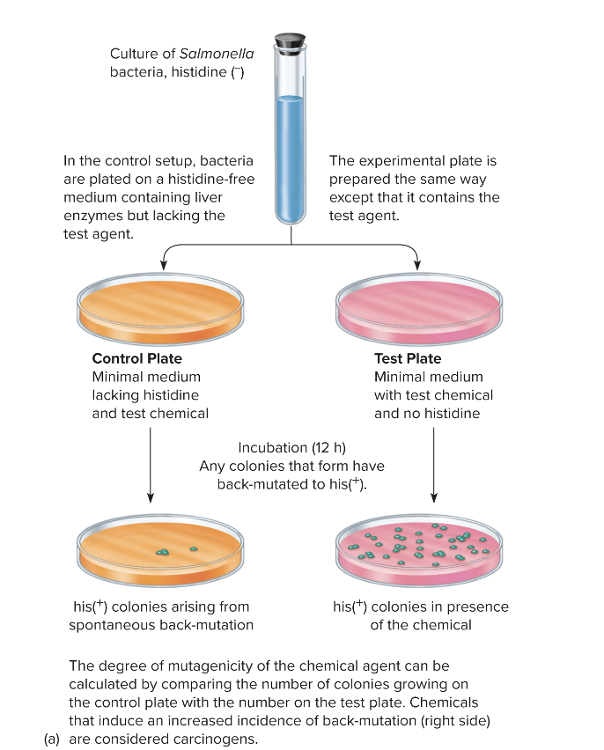
- Used to rapidly detect chemicals with carcinogenic potential (test to see if anything is a mutagen)
- Uses bacteria rather than experimental animals
- Allows easy observation and monitoring of gene expression and mutation rate
- Commonly uses Salmonella typhimurium because of the back mutation potential to synthesize the amino acid histidine
The Ames test is a lab test used to see if a chemical can cause mutations. Scientists care about this because mutagens often end up being carcinogens.
The test uses bacteria (Salmonella) that have a specific mutation preventing them from making histidine, which is an amino acid they need to grow. Because they can’t make histidine, these bacteria cannot grow on a plate that doesn’t have histidine in it — unless a new mutation “fixes” the original mutation.
This “fix” is called a reversion mutation.
The goal of the Ames test is to see whether a chemical causes more of these reversion mutations than would normally happen by chance.
Here’s how it works in a simple way:
- Scientists spread the mutated Salmonella on a plate with no histidine. Normally, almost none grow — only a tiny number spontaneously revert back to normal.
- They take the same bacteria and expose them to the chemical they want to test, then put them on another histidine-free plate.
- If way more colonies grow on the plate with the chemical, that means the chemical caused extra mutations.
- To mimic human metabolism, they usually add rat liver enzymes (S9 mix) because some chemicals only become harmful after the liver processes them.
So basically: more bacterial growth after chemical exposure = the chemical is likely a mutagen.
What are some of the positive and negative effects of mutations?
- Many mutations are not repaired
- Effects of mutations depend on the nature of the mutation and the strategies available to the organism
- Mutations are permanent and heritable
- Passed on to the offspring of organisms and new viruses and become a long-term part of the gene pool
- A small number of mutations contribute the success of the individual and the population
- Variant strains with alternate ways of expressing a trait can more readily adapt, survive, and reproduce
Chapter 21
Infectious Diseases Manifesting in the Cardiovascular and Lymphatic Systems
What are the different functions and features of the cardiovascular system?
- Pumps blood in a closed system
- Heart: pumps the blood
- Blood vessels: carry blood to and from all regions of the body
- Provides the tissues with oxygen and nutrients
- Carries away carbon dioxide and waste products
What are arteries?
Carry blood away from the heart
Arterioles - smaller branches
What are veins?
Carry blood toward the heart
Venules: smaller veins
What are capillaries?
Smallest blood vessel
Connect venules and arterioles
What are the components and functions of the lymphatic system?
- Major source of immune cells and fluids
- Mainly lymphatic vessel, which roughly parallel the blood vessels
- Lymph nodes: cluster at the groin, neck, armpit, and intestines
- Spleen
- Collects fluid that has left the blood vessels and entered tissues, filters it of impurities and infectious agents, and returns it to the blood
- Lymph fluid is collected from tissues throughout the body and directed through a network of lymphatic vessels that all ultimately flow in one direction—toward the heart. This unidirectional movement happens because lymphatic vessels contain valves similar to those in veins, which prevent backflow. As skeletal muscles contract and as pressure changes during breathing occur, these forces push lymph upward through larger lymphatic ducts, like the thoracic duct and right lymphatic duct, which then empty into the venous circulation near the heart (specifically at the junction of the internal jugular and subclavian veins). So the entire goal of the lymphatic system is to return excess interstitial fluid back into the bloodstream near the heart, not to move it away.
What are the defenses of the cardiovascular system?
- Defense: Blood-borne components of innate and adaptive immunity—including phagocytosis, adaptive immunity
- Normal Microbiota: Sparse; mostly in WBCs
- Highly protected from microbial infection
- Microbes that invade the system gain access to every part of the body and can affect every system causing systemic infections
- Defenses in
the bloodstream:
- 5,000 to 10,000 WBCs per ml of blood
- Lymphocytes: adaptive immunity
- Phagocytes: critical to innate and adaptive immune responses
What are the defenses of the lymphatic system?
- Defenses: numerous immune defenses reside there
- Normal Biota: Unknown
Lymph nodes filter lymph fluid and trap anything foreign—like pathogens, debris, or abnormal cells—so immune cells can destroy them. Inside lymph nodes, you have dense populations of lymphocytes (B cells and T cells), macrophages, and dendritic cells that identify antigens and mount immune responses. The flow of lymph itself also acts as a surveillance mechanism, constantly moving material from tissues to nodes where it can be inspected. Additionally, the lymphatic system contains the spleen, which filters blood and helps initiate immune responses, and the thymus, which produces T cells. The system also includes structural defenses like valves that help maintain one-way flow, preventing stagnation where pathogens could accumulate. So instead of microbiota, the lymphatic system is defended by an organized network of immune tissues and cells built specifically to detect and eliminate threats.
Medical conditions involving blood have the suffix _____
-emia.
What is viremia?
Viruses that cause meningitis
What is fungemia?
Fungi in the blood
What is bacteremia?
Presence of bacteria in the blood
What is septicemia?
Bacteria that are flourishing and growing (actively reproducing) in the bloodstream
This can lead to decreased blood pressure and septic shock.
True or False: The cardiovascular, lymphatic, and nervous system are closed, which means there is no normal biota. Microorganisms can be present transiently.
True
NO normal microbiota
It means that microbes may enter or appear in a system for a short period of time, but they do not stay, do not colonize, and do not become part of the normal microbiota. They’re just “passing through.”
Recent data from microbiome studies:
- The bloodstream is not completely sterile, even during periods of apparent health
- Low-level microbial “infections” may contribute to diseases for which no infectious cause has been found
What is COVID-19 caused by?
- Caused by the severe acute respiratory syndrome coronavirus #2 (SARS-CoV-2)
- Virus accesses the cardiovascular system and can spread throughout the body
- Thought that the virus has been circulating in bats for a long time, and it experienced one/or more mutations which made it capable of infecting, multiplying, and transmitting among humans
- Humans first contacted it in a wildlife market in China in 2019
- One of the seven members of the Coronaviridae family that infects humans
- Hundreds more infect other animals
- Enveloped, positive-sense RNA viruses with spike (S) proteins
- S protein of the virus attaches to the ACE-2 host cell protein and uses it to initiate its entry into the cell
- ACE-2 proteins are found on the surface of cells in the lungs, brain, heart, blood vessels, kidneys, liver, placenta, and gastrointestinal tract
- The viral particles are airborne and transmitted via respiratory droplets
What are the different variants of the SARS-CoV-2?
- Alpha: more contagious than the original virus
- Delta: twice as transmissible than the original and more deadly
- Omicron: BA2 dominated in North America for the first half of 2022
COVID-19 is caused by, and what are its other characteristics?
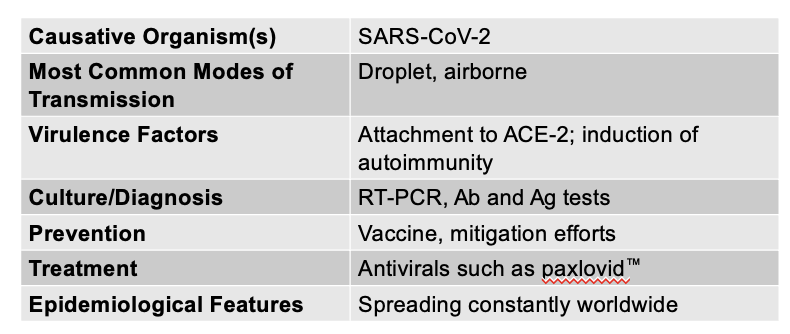
Prominent respiratory symptoms
- Infection can set off a cytokine storm, leading to hyperinflammation in both lungs and other organs (GI tract)
- Systemic effects: skin rashes, muscle pain, heart damage, joint pain, blood clots
- Neurotrophic: common symptoms can include loss of taste and smell, headaches, long-term cognitive decline, dementia
- Up to 1/3 of infections can be asymptomatic and many others are very mild
- Vaccinations: can include Pfizer and Moderna (mRNA coding for spike protein vaccine) and Johnson/Johnson (adenovirus viral vector vaccine coding for spike protein) and later Paxlovid (high risk COVID complications)
Endocarditis is caused by, and what are its other characteristics? (Main information - there are two subtypes)
- Inflammation of the inner lining of the heart (endocardium) - acute or subacute
- Damage to the heart valves or prosthetic heart valves predisposes patients to endocarditis. It can also be caused by vascular trauma or circulating immune complexes.
What is parenteral mode of transmission?
Parenteral transmission means a microorganism enters the body through a route other than the digestive tract, usually by punctures, injections, bites, cuts, or any break in the skin or mucosa. This includes things like needle sticks, IV drug use, contaminated medical equipment, animal bites, or traumatic injuries. The key idea is that the pathogen bypasses the normal protective barriers (skin and mucous membranes) and is delivered straight into deeper tissues or the bloodstream, which makes infection easier.
Acute endocarditis is caused by, and what are the other characteristics?
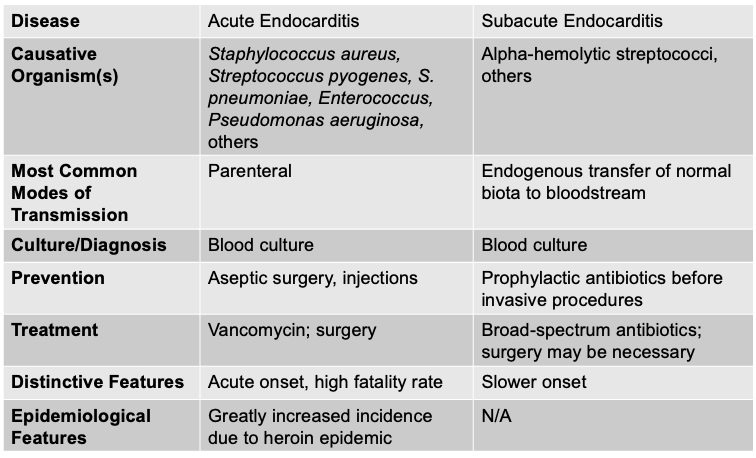
- Fever, anemia, abnormal heartbeat, symptoms of heart attack, SOB, chills
- Abdominal/side pain, JANEWAY lesions (painless, red or purple spots on the palms and soles), Osler's nodes (small, tender, raised, red or purple nodules that typically appear on the pulp of the fingers and toes)
- Acute endocarditis is a fast-moving, aggressive infection of the heart valves, usually caused by highly virulent organisms like Staphylococcus aureus. It can destroy valves within days, cause high fevers, sepsis, emboli, and is immediately life-threatening.
- Causative Organisms: S. aureus, S. pyogenes, S. pneumoniae, Enterococcus, Pseudomonas aeruginosa, others.
- Mode of Transmission: Parenteral
- Culture/Diagnosis: Blood culture
- Prevention: Aseptic surgery, injections
- Treatment: Vancomycin; surgery
- Distinctive Features: Acute onset; high fatality rate
- Epidemiological Features: greatly increased incidence due to heroin epidemic
Subacute endocarditis is caused by, and what are the other characteristics?
- Similar to symptoms of acute endocarditis
- Develop more slowly and are less pronounced
- Enlarged spleen, clubbed fingers, and toes (Endocarditis causes an enlarged spleen (splenomegaly) because the spleen is constantly filtering infected blood and trapping immune complexes, bacteria, and debris. The ongoing immune activation makes the spleen work overtime, causing it to swell. The clubbed fingers and toes come from long-standing inflammation that leads to increased blood flow and growth of soft tissue at the fingertips)
- Subacute endocarditis, on the other hand, is slower and less aggressive, usually caused by low-virulence organisms like viridans streptococci. It tends to develop over weeks to months, often on previously damaged valves, and symptoms are milder and more gradual.
- Causative Organisms: alpha-hemolytic streptococci, others.
- Mode of Transmission: Endogenous transfer of normal biota to bloodstream
- Culture/Diagnosis: Blood culture
- Prevention: Prophylactic antibiotics before invasive procedures
- Treatment: Broad-spectrum antibiotics; surgery may be necessary
- Distinctive Features: Slower onset
Does both gram- and gram + produce endotoxins? (Extra)
Endotoxin refers specifically to lipid A, the toxic portion of lipopolysaccharide (LPS), which is a major component of the outer membrane of Gram-negative bacteria. Gram-positive bacteria do not have an outer membrane at all, so they cannot produce endotoxin. Instead, Gram-positive bacteria may release other inflammatory molecules—like teichoic acids or superantigens—but these are not classified as endotoxins.
Sepsis is caused by, and what are the other characteristics?
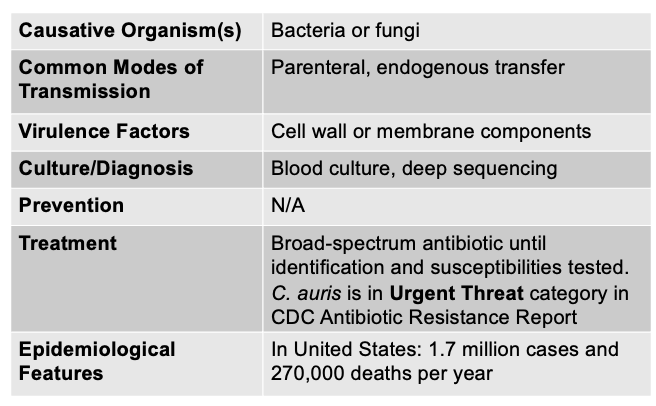
- also called septicemia
- occurs when organisms are actively multiplying in the blood (can be caused by many different bacteria and some fungi)
- Signs/Symptoms: fever, AMS, shaking, chills, GI symptoms, increased breathing rate, respiratory alkalosis, low BP resulting in loss of fluid from vasculature
- Causative Organisms: Bacteria or fungi
- Mode of Transmission: Parenteral, endogenous transfer
- Virulence Factors: Cell wall or membrane components
- Culture/Diagnosis: Blood culture, deep sequencing
- Prevention: N/A
- Treatment: Broad-spectrum antibiotic until identification and susceptibilities tested (C. auris in Urgent Threat)
- Distinctive Features: In United States: 1.7 million cases and 270,000 deaths per year
What is endotoxic shock?
- Results of gram (-) bacteria multiplying in the bloodstream and releasing endotoxin
- Stimulates massive inflammatory response mediated by cytokines
- Leads to drastic loss of BP
- Gram + bacteria can instigate similar series of events when fragments of cell wall are released into the bloodstream
Sepsis is a broad, body-wide inflammatory response to an infection—bacterial, viral, or fungal—that leads to organ dysfunction. It happens when the immune system overreacts to an infection and releases massive amounts of cytokines, causing fever, low blood pressure, clotting abnormalities, and organ damage. Endotoxic shock, on the other hand, is a subset of septic shock that occurs specifically during infections with Gram-negative bacteria that release endotoxin (lipid A from LPS). This endotoxin triggers an extreme immune reaction that causes severe vasodilation, a dangerous drop in blood pressure, DIC, and multi-organ failure. In other words, all endotoxic shock is sepsis, but not all sepsis is endotoxic shock—because sepsis can be caused by pathogens that don’t have endotoxin, like Gram-positive bacteria, fungi, or viruses.
What are the three manifestations of the plague? (PBS)
1. Pneumonic plague
- Respiratory disease
2. Bubonic plague
- Infection causes inflammation and necrosis of lymph node or bubo (swollen/inflamed lymph node) in the groin or axilla.
3. Septicemic plague
- Results in disseminated intravascular coagulation (DIC happens when the bloodstream becomes overwhelmed with inflammatory signals from a severe infection like septicemic plague (caused by Yersinia pestis). Widespread, uncontrolled clotting throughout the bloodstream. These signals activate the clotting cascade everywhere at once, causing tiny blood clots to form throughout the small vessels in the body. At first, this blocks blood flow to tissues and leads to organ damage. But because the body uses up all of its clotting factors and platelets making these abnormal clots, it eventually runs out of the materials needed to clot normally. Once those supplies are depleted, the patient begins to bleed uncontrollably—this is why DIC is described as both excessive clotting and excessive bleeding at the same time. In septicemic plague, this uncontrolled clotting and bleeding contribute to the rapid progression and high fatality of the disease.), subcutaneous hemorrhage, and purpura that degenerate into necrosis and gangrene
- Black DEATH
- 30-50% mortality w/ treatment
- 100% mortality w/o treatment
For the bubonic plague, the number of bacteria required to initiate infection in bubonic (or septicemic) cases is only ______ to ____ cells.
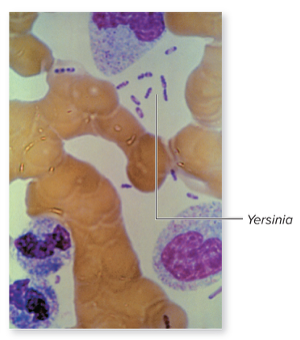
3 to 50 cells
Plague Disease is caused by, and what are the other characteristics
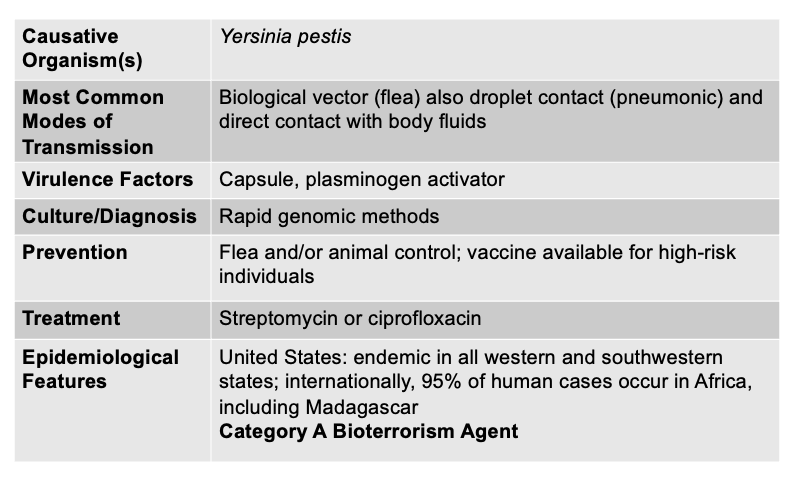
All three classical forms of plague (bubonic, septicemic, and pneumonic) are caused by the same bacterium: Yersinia pestis.
- Causative organisms: yersinia pestis
- Most common mode of transmission: biological vector (flea), droplet contact (pneumonic), direct contact with body fluids
- Virulence factor: capsule ( The capsule of Yersinia pestis is a protein-based outer layer that helps the bacterium avoid being eaten and destroyed by phagocytes like neutrophils and macrophages. By blocking phagocytosis, the capsule allows the bacteria to survive and multiply freely in tissues and lymph nodes. This immune evasion is what enables the rapid bacterial growth that leads to buboes, sepsis, and overwhelming inflammation.) and plasminogen activator (The Pla enzyme converts host plasminogen into plasmin, which breaks down fibrin clots and connective tissue. This allows the bacteria to spread more easily from the initial infection site into lymphatics and the bloodstream. Pla also degrades complement proteins, helping the bacteria avoid innate immune killing.)
- Culture/Diagnosis: rapid genomic methods
- Prevention: Flea and/or animal control; vaccine available for high-risk individuals
- Treatment: Streptomycin and ciprofloxacin
- Epidemiological Features: United States: endemic in all western and southwestern states; internationally, 95% of human cases occur in Africa, including Madagascar; Category A Bioterrorism Agent
What are some characteristics about Lyme Disease?
- First discovered in Old Lyme, Connecticut in the 1970s
- Slow-acting, progressive syndrome
- Fever, headache, stiff neck, and dizziness
- Progresses to cardiac and neurological symptoms
- Develops into crippling polyarthritis after several weeks to months
What is the early symptom of lyme disease?
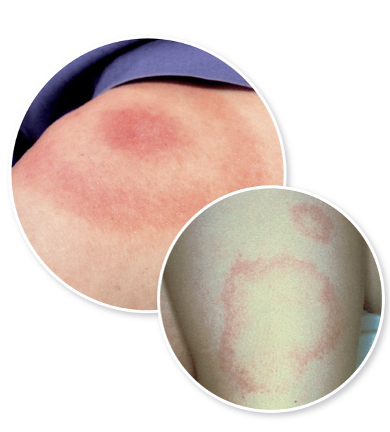
- Early symptom is a characteristic bull’s eye rash
What does lyme disease develop into after several weeks and months?
- Develops into crippling polyarthritis after several weeks to months
Lyme Disease is caused by what, and what are the unique characteristics
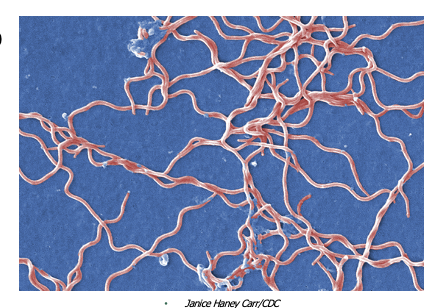
- Caused by a large spirochete with 3-10 irregularly spaced coils
- Evades the immune system by changing antigens (antigenic variation, where it repeatedly changes the surface proteins displayed on its outer membrane. Because antibodies are specific to a particular protein shape, these shifts prevent the immune system from recognizing and eliminating the bacteria effectively. This constant “costume change” allows the organism to persist in the body for months to years, contributing to the chronic, relapsing nature of Lyme disease symptoms.)
- Has multiple proteins for attachment to host cells (The bacterium produces a variety of outer surface proteins (Osps) that bind to different host tissues. Some help it attach to tick midguts, some help it enter the bloodstream, and others bind to human cells like fibroblasts, endothelial cells, and components of the extracellular matrix such as collagen. This wide range of adhesion proteins allows Borrelia to spread through the skin, joints, nervous system, and heart)
- Possible that immune response contributes to the pathology of the disease
- Causative organisms: Borrelia burgdorferi
- Most common modes of transmission: Biological vector (tick)
- Virulence Factors: adhesions, antigenic shifting
- Culture/Diagnosis: acute and convelescent sera testing
- Prevention: tick avoidance
- Treatment: Doxycycline and/or amoxicillin (3-4 weeks); also cephalosporins and penicillin
- Epidemiological Factors: In United States, 25,000–30,000 cases per year; endemic in North America, Europe, and Asia
Infectious mononucleosis is caused by what, and what are the unique characteristics
- Epstein-Barr virus
- Shares morphological and antigenic features with other herpes viruses (an icosahedral capsid, a double-stranded DNA genome, a tegument layer, and an outer envelope—just like herpes simplex virus and cytomegalovirus. It also expresses some antigens that resemble those found in related herpesviruses, which is why certain immune responses or diagnostic tests can show cross-reactivity. Overall, EBV looks and behaves like other herpesviruses because they share common evolutionary origins and structural proteins.)
- Contains a CIRCULAR form of DNA that is readily spliced into host cell DNA
- Latency and ability to splice into host cell DNA allows it to evade the host immune response
- More than 90% of the world's population has been infected with EBV
- Infection during teen years results in disease about 30-77% of the time
Causative organisms: Epstein-Barr virus
Mode of Transmission: Direct, Indirect, parenteral
Virulence: latency, ability to incorporate into host DNA
Culture/Diagnosis: differential blood count, MONOspot test for heterophile antibody, specific ELISA
Prevention: N/A
Treatment: Supportive
Distinctive Features: Lifelong persistence
Epidemiological Features: 500 cases per 100,000 per year
there’s no treatment for EBV because antiviral medications don’t work well against it, and the illness is mostly caused by your immune system reacting to the virus—not the virus actively replicating at high levels. Once EBV infects B-cells, it quickly enters a latent state, meaning it hides inside cells with almost no active replication. Antivirals can only target viruses that are actively making new copies, so they have virtually no effect on a virus that is lying dormant. Because the body’s immune system eventually controls the acute infection on its own, treatment focuses on rest, hydration, and supportive care rather than killing the virus directly.
Even though EBV establishes lifelong persistence, we don’t keep getting sick repeatedly because the virus stays in a controlled, latent phase within a small population of memory B-cells. In this state, the immune system—especially cytotoxic T-cells—constantly monitors and suppresses it. EBV only reactivates occasionally, and when it does, the immune system shuts it down before symptoms appear. That’s why you don’t keep getting “mono” again and again, and most reactivations are completely silent unless a person becomes severely immunocompromised. The immune system’s long-term surveillance keeps EBV from causing repeated illness despite its permanent presence.
Anthrax is caused by what, and what are the unique characteristics
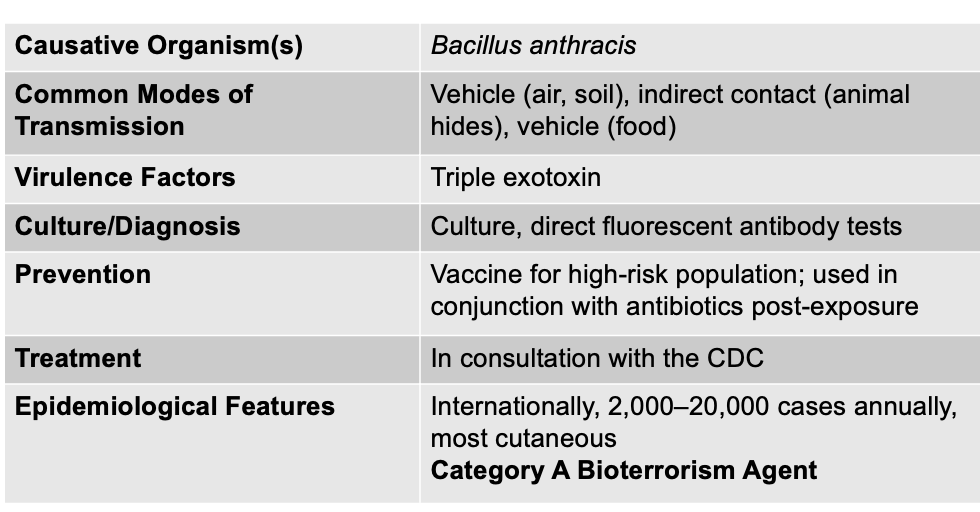
- Bacillus anthracis (+), endospore forming rod
- Aerobic and catalase positive
- Forms a tripartite toxin (PEL)
Causative agent: Bacillus anthracis
Mode of Transmission: Vehicle (air, soil), indirect (animal hides), and vehicle (food)
Virulence Factor: tripartite toxin (triple exotoxin)
Culture/Diagnosis: Culture; direct fluorescent antibody tests
Prevention: Vaccine for high-risk population; used in conjunction with antibiotics post-exposure
Treatment: in consultation with CDC
Epidemiological Features: Internationally, 2,000–20,000 cases annually, most cutaneous; Category A Bioterrorism Agent
Bacillus anthracis, an aerobic gram + endospore forming rod bacterium forms a tripartite toxin, which includes?
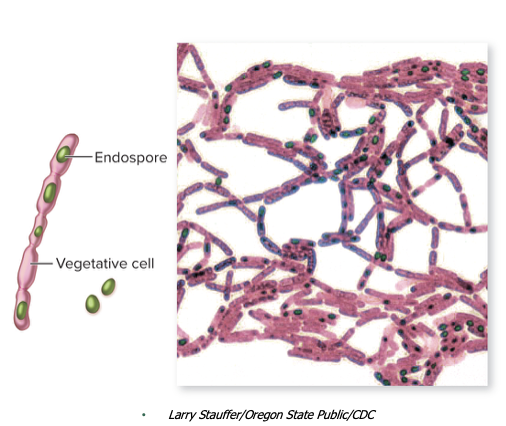
(PEL)
Protective antigen
Edema Factor
Lethal Factor
Bacillus anthracis forms a tripartite toxin, meaning it uses three separate proteins—protective antigen, edema factor, and lethal factor—that work together to damage host tissues. Protective antigen binds to host cells and creates a channel that allows the other two toxins inside. Edema factor increases cyclic AMP levels, causing massive fluid leakage and swelling. Lethal factor disrupts signaling pathways in immune cells, leading to cell death and systemic toxicity. None of the components are very harmful alone, but together they create the powerful anthrax toxin that causes severe edema, immune system collapse, and tissue damage.
What are hemorrhagic fevers?
These are agents that infect the blood and lymphatics
- Extreme fevers accompanied by internal hemorrhaging
- RNA enveloped viruses
- Distribution related to the distribution of Aedes genus of mosquito (all carried by this mosquito)
- Prevalence fluctuates due to global warming patterns
Yellow Fever is caused by what, and what are the unique characteristics?
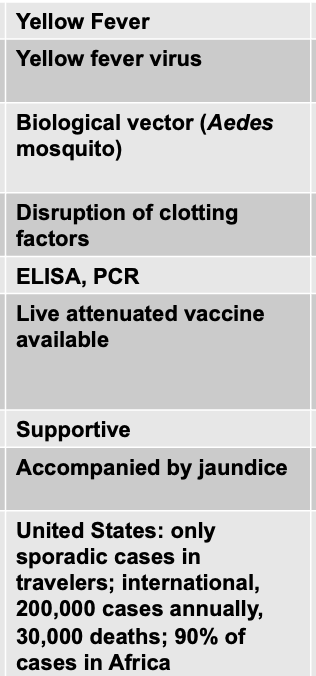
- Endemic in Africa, South America, and more frequent in rainy climates
Causative Agent: Yellow fever virus
Mode of Transmission: Biological vector (Aedes mosquito)
Virulence Factor: Disruption of clotting factors
- Yellow fever virus damages the liver, which is the main organ responsible for producing nearly all of the body’s clotting factors. When the virus infects and destroys hepatocytes, the liver can no longer make these proteins effectively. As clotting factors decrease, the blood loses its ability to clot normally, leading to internal bleeding, bruising, and the characteristic “black vomit” seen in severe yellow fever from gastrointestinal hemorrhage. This disruption of clotting isn’t just a symptom—it’s a virulence mechanism, because the virus’s attack on the liver directly causes coagulopathy, amplifying tissue damage and worsening disease severity.
Culture/Diagnosis: ELISA/PCR
Prevention: Live attenutated vaccine available
Treatment: Supportive
Distinctive Features: accompanied by jaundice
Epidemiological Features: only sporadic cases in travelers; international, 200,000 cases annually, 30,000 deaths; 90% of cases in Africa
What are non-hemorrhagic fevers?
- Diseases characterized by a high fever but without capillary fragility leading to hemorrhagic symptoms
- Mostly caused by multiple bacterial species and one protozoan (Babesia) species
Cat-Scratch disease is caused by what, and what are the unique characteristics? (NH)
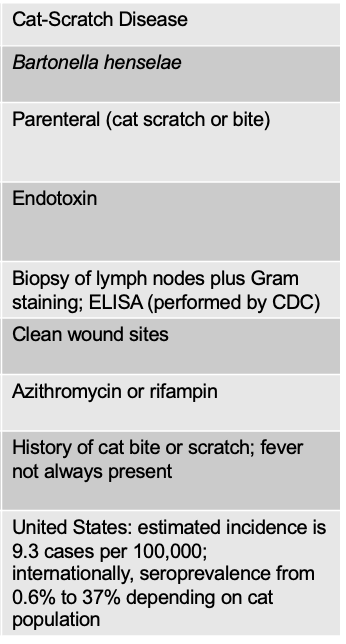
- Bartonella henselae
- Small, gram - bacteria, rod-shaped, FASTIDIOUS, grow on blood agar
- Infection connected with being clawed or bitten by a cat
- Present in over 40% of cats
- Symptoms start 1-2 weeks after: cluster of small papules at the inoculation site; lymph nodes swell and become pus-filled
- One-third of patients experience high-fever
Bartonella henselae
Mode of Transmission: Parenteral (cat scratch or bite)
Virulence Factor: Endotoxin ( endotoxin, which is a type of lipopolysaccharide (LPS) found on the outer membrane of all Gram-negative bacteria. This endotoxin triggers a strong inflammatory response when the bacteria enter the skin through a scratch or bite. The inflammation causes the characteristic swollen, tender lymph nodes (lymphadenitis). Bartonella also invades endothelial cells and can survive inside immune cells, which helps it avoid clearance. But the endotoxin is what drives much of the fever, malaise, and lymph node swelling because it activates the immune system and promotes localized inflammation.)
Culture/Diagnosis: Biopsy of lymph nodes plus Gram staining; ELISA (performed by CDC)
Prevention: Clean wound sites
Treatment: Azithromycin or rifampin
Distinctive Features: History of cat bite or scratch; fever not always present
Epidemiological: United States: estimated incidence is 9.3 cases per 100,000; internationally, seroprevalence from 0.6% to 37% depending on cat population
Spotted Fever Rickettsiosis is caused by what, and what are the unique characteristics? (NH)
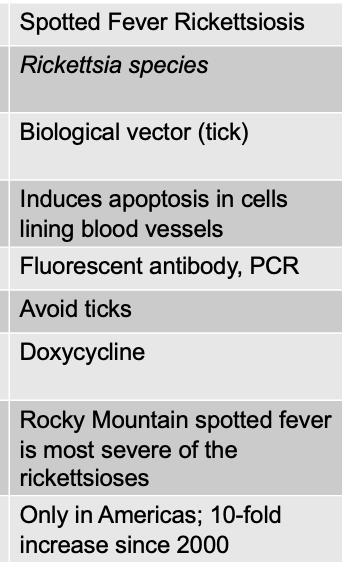
- Rocky Mountain Spotted Fever (RMSF) is most well-known
- Mainly occurs in the southeast and eastern seaboard regions of the U.S, Canada, Central/South America
- Rickettsia rickettsii is the causative agent transmitted by hard ticks
- Signs/symptoms: chills, fevers, headache, muscular pain
- Distinctive RASH occurs 2-4 days after prodromal symptoms
- If untreated, lesions merge and become necrotic
- Cardiovascular disruption: hypotension, thrombosis, hemorrhage
20% mortality if untreated, 5-10% mortality if treated
Causative agent: Rickettsia species
Mode of Transmission: Biological vector (tick)
Virulence Factors: Induces apoptosis in cells lining blood vessels (Because apoptosis does not tear or rupture the blood vessel wall, the vessels remain structurally intact. This means blood does not leak out into tissues, so you don’t get hemorrhage, bruising, or bleeding.) - causing these blood vessel–lining cells to undergo programmed cell death, the pathogen weakens the barrier enough to impair normal function—reducing blood flow, altering nutrient delivery, and helping the pathogen access deeper tissues—while avoiding the loud immune alarm that necrosis would cause.
Culture/Diagnosis: Fluorescent antibody, PCR
Prevention: Avoid ticks
Treatment: Doxycycline
Distinctive Features: Rocky Mountain spotted fever is most severe of the rickettsioses
Epidemiological: Only in Americas; 10-fold increase since 2000
What are some basic characteristics about HIV?
Human Immunodeficiency Virus
- Isolated in 1980s
- Retrovirus ( HIV is called a retrovirus because of the way it stores and copies its genetic material, which is the defining feature of the retrovirus family. HIV carries its genome as single-stranded RNA, but when it infects a human cell, it uses a special enzyme called reverse transcriptase to convert that RNA into double-stranded DNA. This process is “retro” because it goes backward compared to normal biology—cells usually go from DNA → RNA → protein, but HIV goes RNA → DNA. After the viral DNA is made, another viral enzyme called integrase inserts that DNA permanently into the host’s genome. Once it’s integrated, the host cell reads and copies the viral genes as if they were its own, allowing HIV to persist for life. This unusual replication strategy—RNA genome, reverse transcription, and integration into host DNA—is exactly what makes HIV a retrovirus.)
HIV causes _________?
- Causes acquired immune deficiency syndrome (AIDS)
What are the complex of symptoms caused by HIV?
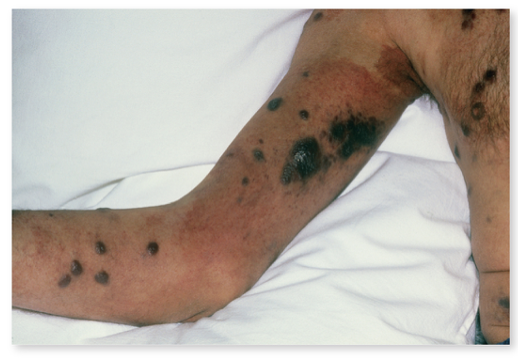
- Pneumonia caused by Pneumocystitis jiroveci
- Kaposi’s sarcoma (cancer of blood vessel–forming cells that happens because of infection with Human Herpesvirus-8 (HHV-8). It’s especially common in people with weakened immune systems, like those with untreated HIV/AIDS, because the immune system normally keeps HHV-8 under control. When immunity drops, the virus causes endothelial cells to grow abnormally, forming dark red, purple, or brown skin lesions that can appear on the legs, face, inside the mouth, or even in internal organs. These lesions are not just discolorations—they’re actual tumors made of proliferating vascular cells. Kaposi’s sarcoma is one of the classic AIDS-defining illnesses because it signals significant immune suppression and active HHV-8–driven cancer formation.)
- Sudden weight loss
- Swollen lymph nodes
- General loss of immune function
Signs and symptoms of HIV/AIDS are tied to the level of _____ in the blood and the level of ____ in the blood
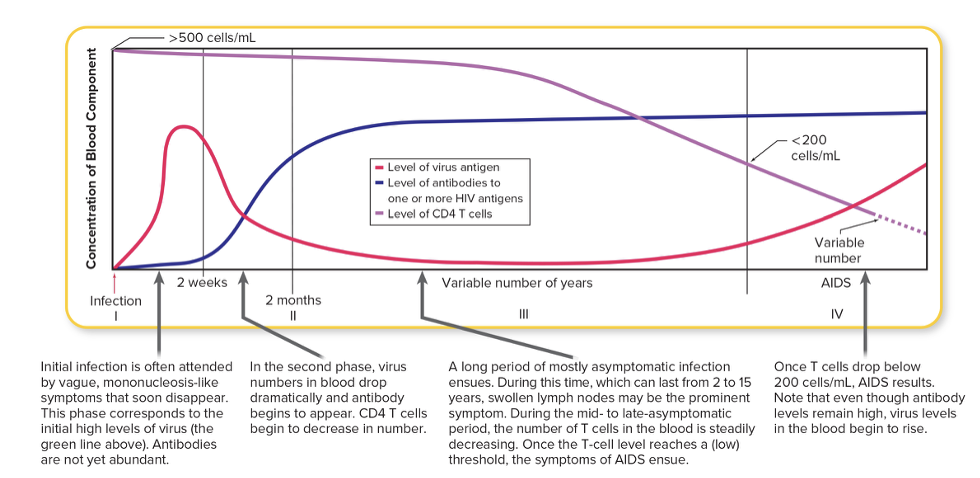
- Signs and symptoms are tied to the level of virus in the blood and the level of T cells in the blood
- High viral load = worse symptoms and faster progression
- Low CD4 count = more opportunistic infections and AIDS-defining illnesses
What are the different stages of HIV/AIDs disease progression?
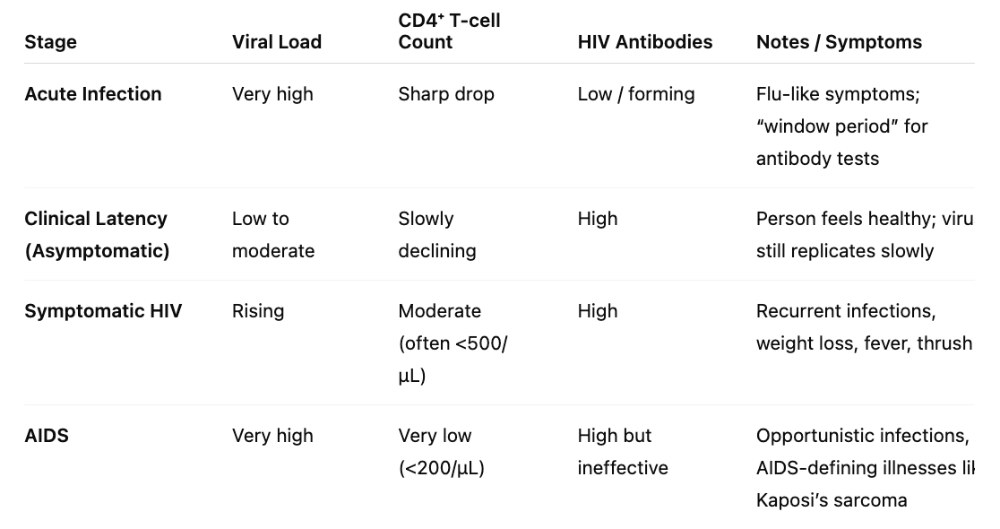
What are additional signs/symptoms for HIV Infection/AIDS?
- Initial symptoms: fatigue, diarrhea, weight loss, and neurological changes
- Opportunistic infections and neoplasms
- Severe immune deregulation, hormone imbalances, and metabolic disturbances
- Weight loss, diarrhea, and poor nutrient absorption
- Protracted fever, fatigue, sore throat, and night sweats
- Lesions on the brain, meninges, spinal column, and peripheral nerves
What is the causative agent of HIV Infection/AIDs?
- Retrovirus in the genus Lentivirus
- Contain reverse transcriptase that catalyzes the replication of double-stranded DNA from single-stranded RNA
- Viral genes become permanently integrated into the host genome
Two major types of HIV:
- HIV-1: most dominant form in the world
- Most related to simian immunodeficiency viruses in chimpanzees
- HIV-2
What is the general multiplication cycle of HIV?
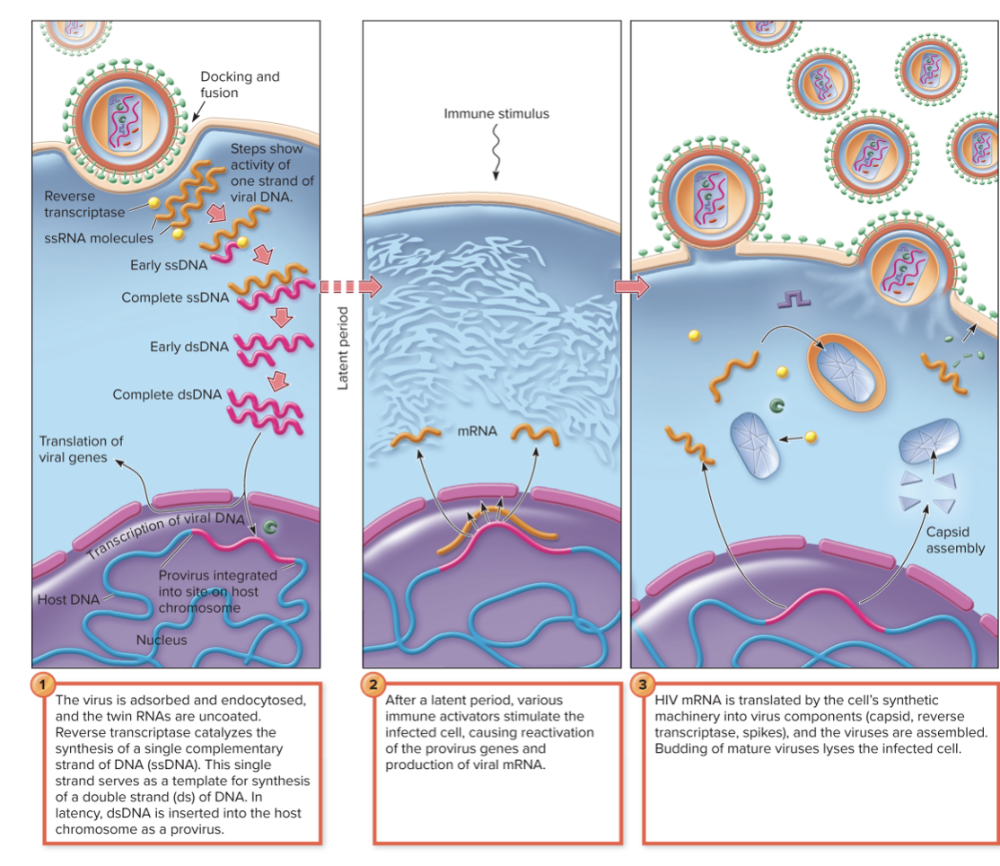
- Attachment: HIV finds a CD4⁺ T-cell and binds using its gp120 protein plus a co-receptor (CCR5 or CXCR4).
- Entry: The virus fuses with the cell membrane and releases its RNA and enzymes inside.
- Reverse Transcription: The viral RNA is converted into DNA by reverse transcriptase.
- Integration: The viral DNA (provirus) is inserted into the host’s genome using integrase. At this stage, the virus can remain latent, especially in memory CD4⁺ T-cells.
- Latency & Reactivation: While latent, the virus doesn’t produce new viruses. When the host immune system is stimulated—for example, by infections, inflammation, or T-cell activation—the latent provirus is reactivated.
- Replication: The host cell now transcribes and translates viral DNA into RNA and proteins.
- Assembly: New viral particles are assembled at the cell membrane.
- Budding & Maturation: Viruses bud off the cell, and protease cuts viral proteins so the new virus is infectious.
So the immune stimulus acts like an alarm that wakes up latent HIV, allowing it to replicate and spread again.
For HIV transmission, (T/F), urine, tears, sweat, and saliva are considered sources of infection.
FALSE
For HIV transmission, what is considered forms or sources of transmission?
Any form of intimate contact involving transfer of blood can be a potential source of infection
- Trauma and needle sharing
- Sexual transmission
- Breast milk
What is the culture and diagnosis for HIV?
A person is diagnosed as having HIV infection if they tested POSITIVE for exposure to HIV (diagnosis is NOT the same as having AIDS)
- Viral testing is based on detection of antibodies specific to the virus in serum or other fluids
- ELISA, Latex agglutination, Rapid antibody tests
What are the two criteria that diagnosis of AIDS is based on?
Diagnosis with Stage 3 HIV infection requires both:
- Test positive for the virus
- CD4 T-cells count of fewer than 200 cells per microliter of blood
AIDS is the most advanced stage of HIV infection. It’s diagnosed when CD4⁺ T-cell counts drop below 200/µL or when the person develops AIDS-defining illnesses like Kaposi’s sarcoma, Pneumocystis pneumonia, or other opportunistic infections.
So Stage 3 HIV = symptomatic but not always AIDS, whereas AIDS = end-stage HIV with severe immune compromise.
AIDS, on the other hand, is not a virus—it’s a syndrome, meaning a collection of conditions caused by advanced HIV infection. To determine if someone has progressed to AIDS, doctors look at CD4⁺ T-cell counts and check for AIDS-defining illnesses.
What are some prevention strategies for HIV Infection?
- Avoidance of unprotected sexual contact with infected persons
- Barrier protection should be used when having sex with anyone whose HIV status is unknown
- Not sharing needles or by cleaning needles with bleach and then rinsing before another use
- HIV-positive individuals with uninfected partners should begin a regimen of antiretroviral drugs
- Clinical trials of various vaccines are ongoing
What is the treatment plan for HIV infection and AIDS? What is the three drug cocktail?
- Treatment should begin immediately after HIV diagnosis
- Antiviral chemotherapy and a variety of drugs to prevent or treat opportunistic infections and other complications such as wasting disease
- Three-drug cocktail containing two nucleoside analog reverse transcriptase inhibitors and one nonnucleoside reverse transcriptase inhibitor
What are the three main mechanisms of action for Anti-HIV drugs?
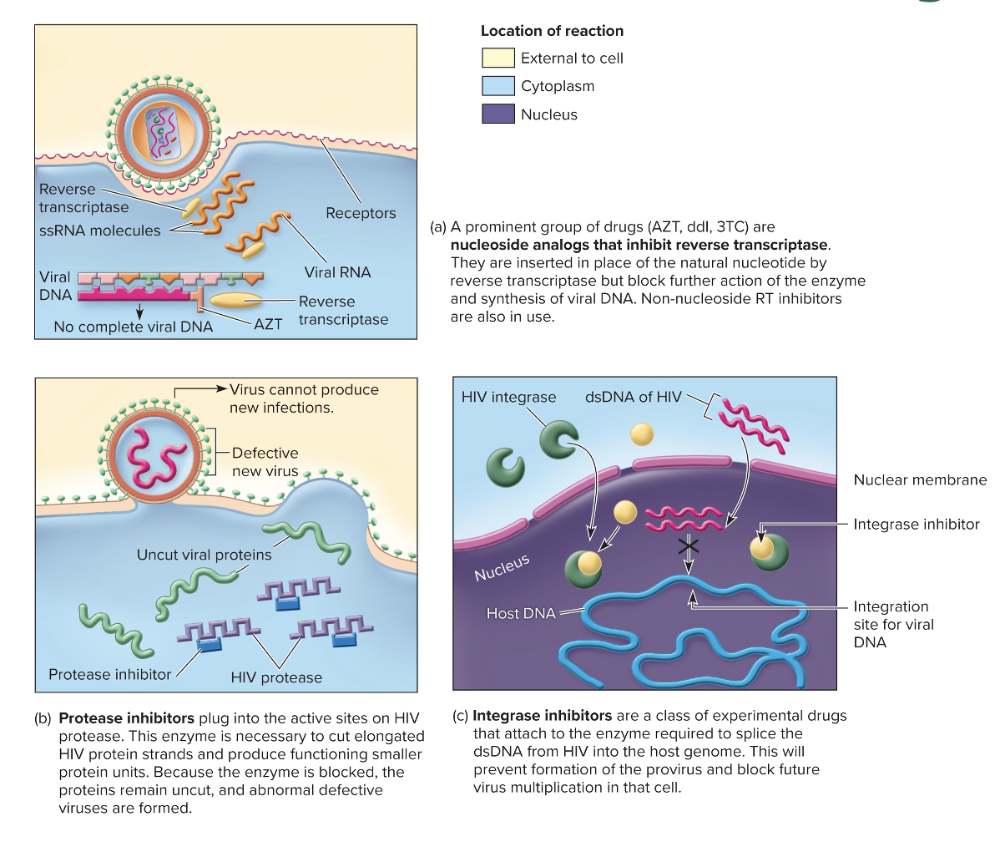
- Integrase inhibitors: These drugs block integrase, the enzyme HIV uses to insert its viral DNA into the host’s genome. Without integration, the viral DNA can’t hijack the host cell to make new viruses.
- Nucleoside (or nucleotide) analogs that inhibit reverse transcriptase: These are incorporated into the viral DNA during reverse transcription, but because they lack a proper chemical structure, they terminate DNA synthesis, preventing the viral RNA from becoming DNA.
- Protease inhibitors: These drugs block protease, the enzyme that processes viral proteins into their functional forms. Without protease activity, new HIV particles remain immature and non-infectious, so they cannot spread to other cells.
FINALLY ... HIV Infection and AIDS is caused by what, and what are the unique characteristics?
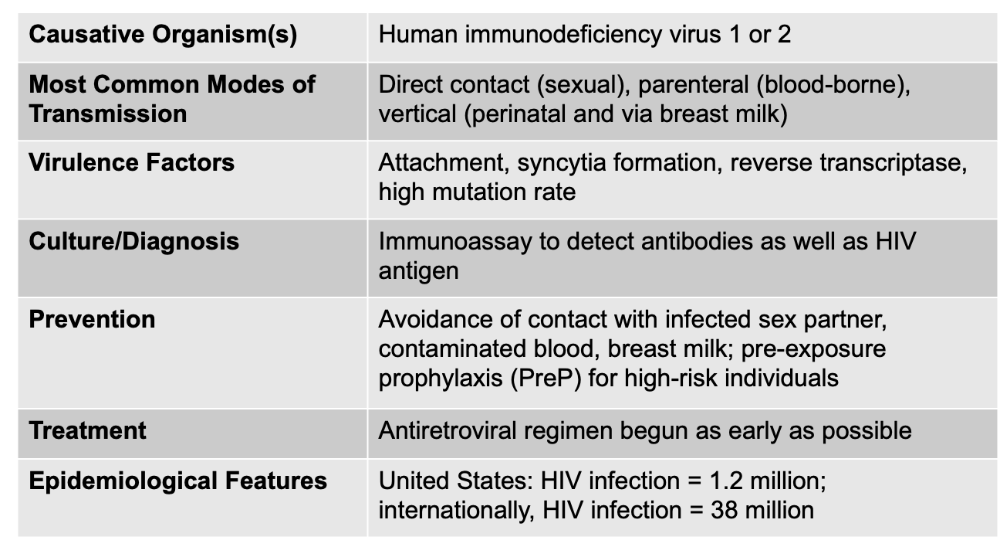
Virulence Factors:
Attachment, syncytia formation, reverse transcriptase, high mutation rate
- Attachment is critical: the virus uses its gp120 protein to specifically bind to CD4 receptors and co-receptors (CCR5 or CXCR4) on T-cells, which allows it to enter the host cell. Once inside, HIV can trigger syncytia formation, causing infected T-cells to fuse with neighboring uninfected cells; this spreads the virus directly and destroys immune cells without exposing the virus to antibodies. The enzyme reverse transcriptase is another virulence factor, because it converts the viral RNA genome into DNA that can integrate into the host genome, creating a provirus that can remain latent for years. Finally, HIV has a high mutation rate due to the error-prone reverse transcriptase, allowing the virus to rapidly evolve and escape immune detection or antiviral drugs.
* PreP (pre-exposure prophylaxis) for high-risk individuals
Bacillus anthracis is ....
Gram Positive Endospore Forming Bacteria
Aerobic
Rod-Shaped
Anthrax
Staphylococcus aureus is ..
Gram Positive
Acute Endocarditis
Streptococcus pneumoniae
Gram Positive
diplococci joined end to end
Acute Endocarditis
Virulence: Capsule OR hemolysin
- Capsule – Some bacteria like Streptococcus pneumoniae have a polysaccharide capsule that helps them avoid phagocytosis by immune cells, allowing them to survive and multiply in the middle ear.
- Hemolysin – Certain bacteria (like S. pneumoniae or S. pyogenes) produce hemolysins, which are toxins that damage host cells, including those in the ear tissues.
Yersinia pestis is ..
Gram Negative
Plague (Pneumonic, Bubonic, Septicemic)
Borrelia burgdorferi is
Gram Negative
Lyme Disease
Bartonella henselae is
Gram Negative
Cat-Scratch Disease
Rickettsia species is
Gram Negative
Spotted fever rickettsiosis
Epstein-Barr Virus is ...
DNA virus
Infectious mononucleosis
SARS-CoV2 is ...
RNA virus
COVID-19
Yellow Fever virus is...
RNA virus
Yellow Fever
Human immunodeficiency virus 1 and 2 is a ...
Retrovirus
HIV infection and AIDS