Anatomy JV Exam 3: Nasal Cavities
The anterosuperior portion of the nose is innervated by the __________ nerve, specifically through the anterior and posterior __________ nerves, which are branches of the __________ nerve.
ophthalmic, ethmoidal, nasociliary
Most of the external nose, including the dorsum and apex, is supplied by CN __________ via the __________ nerve and the external nasal branch of the __________ ethmoidal nerve.
V1, infratrochlear, anterior
The alae of the nose are supplied by nasal branches of the __________ nerve, which is a branch of CN __________.
infraorbital, V2
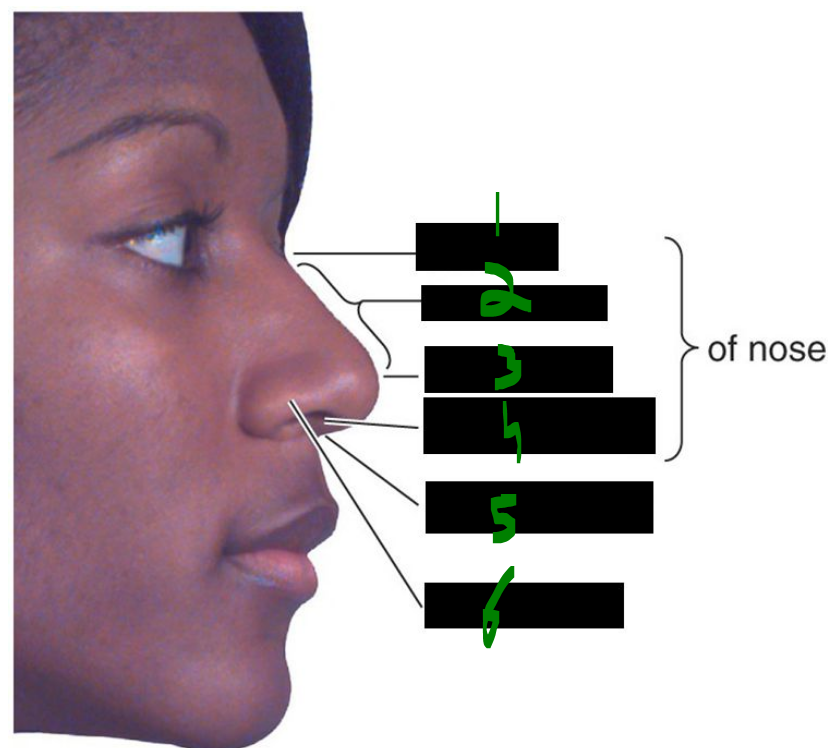
What is 1?
root
What is 2?
dorsum
What is 3?
apex
What is 4?
naris
What is 5?
nasal septum
What is 6?
ala of nose
what is the flexible tissue around the nares called?
_______-_______ _______
fibro-areolar tissue
The __________ procedure is used to ensure complete removal of __________ or __________ cell carcinoma of the nose, and it is often __________, requiring reconstructive __________.
Mohs, squamous, basal, disfiguring, surgery
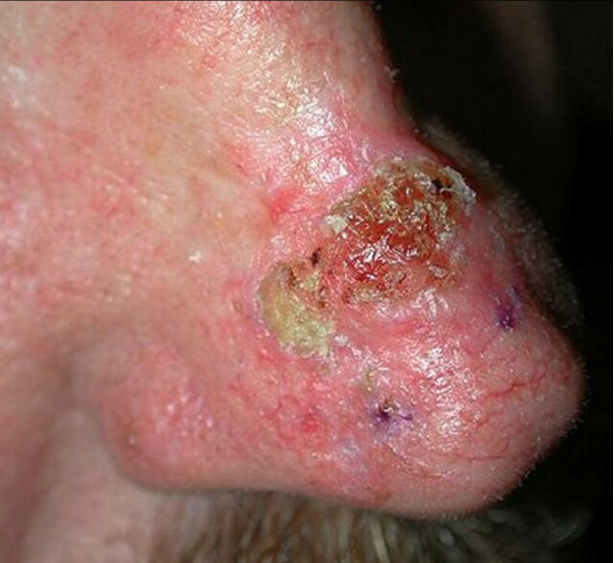
What is this associated with?
Mohs procedure
During nasal reconstructive surgery, __________ cartilage is usually used to replace cartilaginous tissue, though __________ cartilage from the __________ ear may occasionally be used.
rib, conchal, external
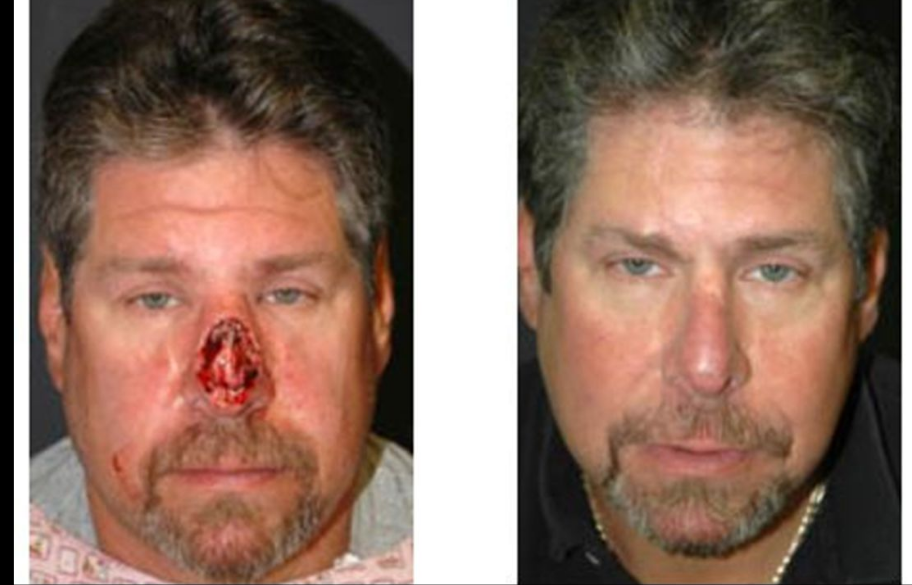
What was likely used here?
conchal cartilage or rib cartilage
what are the regions of each chamber of the nasal cavity?
_______
_______ segment
_______ segment
vestibuler
espiratory segment
olfactory segment
what separates the nasal chambers from one another?
____ & ____ ____
bony & cartilagenous septum
The nasal vestibule is lined with __________ __________ epithelium and contains __________ that help prevent large __________ from entering the nasal cavities.
stratified squamous, hairs, particulates
The vestibule communicates with the external environment through the __________ __________, and at its end, the epithelium transitions from stratified squamous to __________ __________ __________ epithelium with __________ cells.
external nares, pseudostratified columnar ciliated, goblet
Normal respiratory epithelium is __________ __________ __________ epithelium with __________ cells and begins where the __________ ends.
pseudostratified columnar ciliated, goblet, vestibule
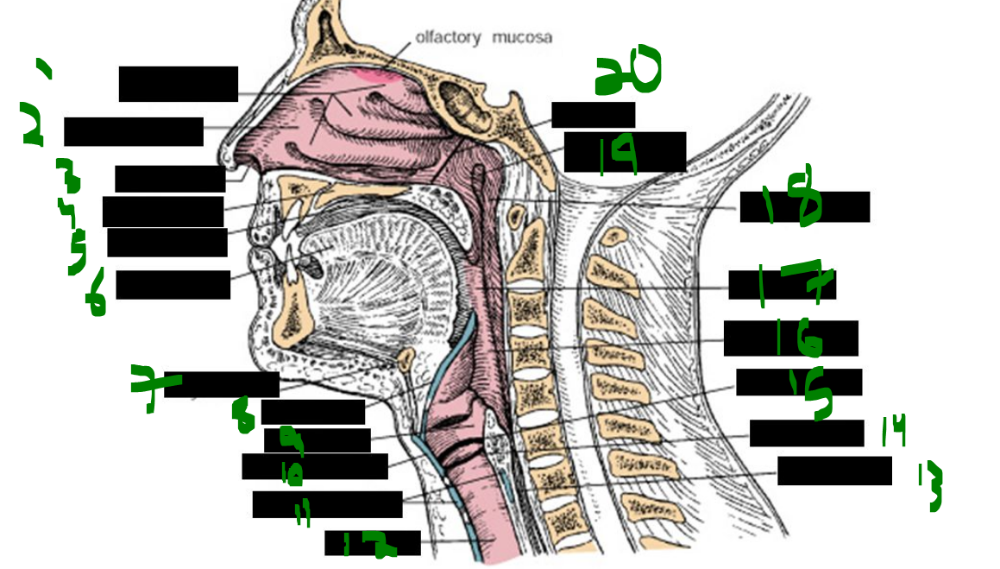
What is 1?
conchae
What is 2?
nasal mucosa
What is 3?
vestibule
What is 4?
hard palate
What is 5?
soft palate
What is 6?
oral cavity
What is 7?
hyoid bone
What is 8?
epiglottis
What is 9?
larynx
What is 10?
thyroid cartilage
What is 11?
cricoid cartilage
What is 12?
trachea
What is 13?
esophagus
What is 14?
vocal fold
What is 15?
ventricular fold
What is 16?
laryngopharynx
What is 17?
oropharynx
What is 18?
nasopharynx
What is 19?
orfice of auditory tube
What is 20?
choanae
In the respiratory segment, the medial wall is formed by the __________ __________, while the lateral wall is formed by the __________, which increase __________ __________ and cause __________ in airflow for better warming and moisturizing.
nasal septum, conchae, surface area, turbulence
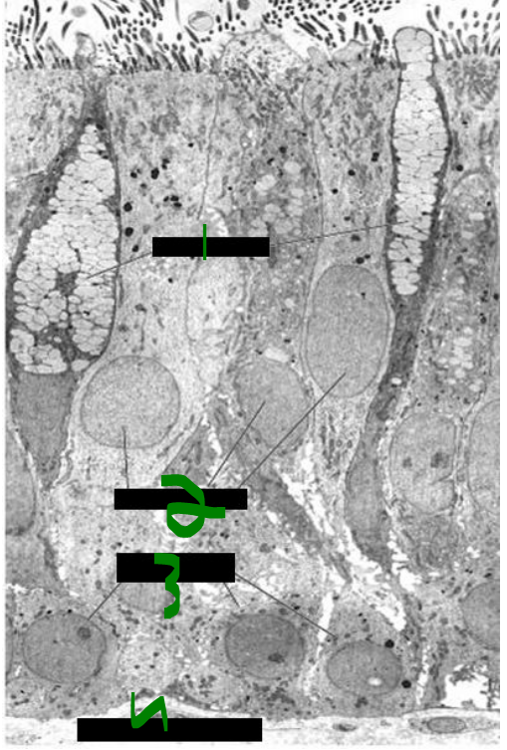
What is 1?
goblet cells
What is 2?
ciliated cells
What is 3?
basal cells
What is 4?
CT
The lamina propria of the nasal cavity is highly __________ to help __________ inspired air and contains mucous glands with __________ __________ that secrete __________, an antibacterial enzyme.
vascular, warm, serous demilunes, lysozyme
During allergic reactions and viral infections, blood vessels in the nasal cavity lamina propria become excessively __________ and __________, causing distension that makes __________ more difficult.
engorged, leaky, breathing
The olfactory segment is lined with __________ __________ epithelium that contains specialized cells including __________ cells (special visceral sensory), __________ cells (provide mechanical and metabolic support), and __________ cells (mitotic cells for renewal).
pseudostratified columnar, olfactory, sustentacular, basal
In the olfactory epithelium, __________ cells function in general sensory input, are innervated by CN __________, and detect __________; they are also found in respiratory epithelium.
brush, V, touch
Olfactory cells in the olfactory epithelium are __________ __________ sensory cells responsible for detecting odors, while supporting or __________ cells provide __________ and __________ support to these sensory cells.
special visceral, sustentacular, mechanical, metabolic
Basal cells in the olfactory epithelium are __________ cells that renew __________ and __________ cells, and brush cells are general sensory cells innervated by CN __________ that signal __________ from the olfactory epithelium.
mitotic, sensory, sustentacular, V, touch
The olfactory nerve (CN I) is formed by axons arising from the __________ ends of olfactory __________ that join together and penetrate the __________ plate of the __________ bone to synapse in the olfactory __________.
basal, cells, cribiform, ethmoid, bulb
Unlike most neurons in adult humans, olfactory neurons have the ability to __________.
regenerate
At the apical end of olfactory cells is the olfactory __________, which contains non-motile __________ that serve as sites of olfactory __________.
vesicle, cilia, receptors
At the basal end of olfactory cells is the __________ that joins axons from adjacent cells to form the __________ nerve (CN I).
axon, olfactory
what is this?
olfactory epithlium (olfactory glands = Bowman's glands)
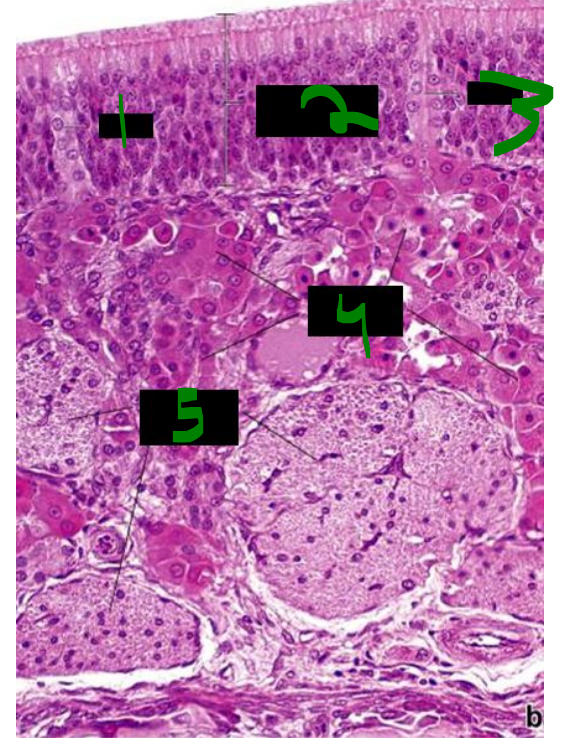
What is 1?
duct
What is 2?
olfactory epithelium
What is 3?
duct
What is 4?
olfactory glands
What is 5?
olfactory nerves
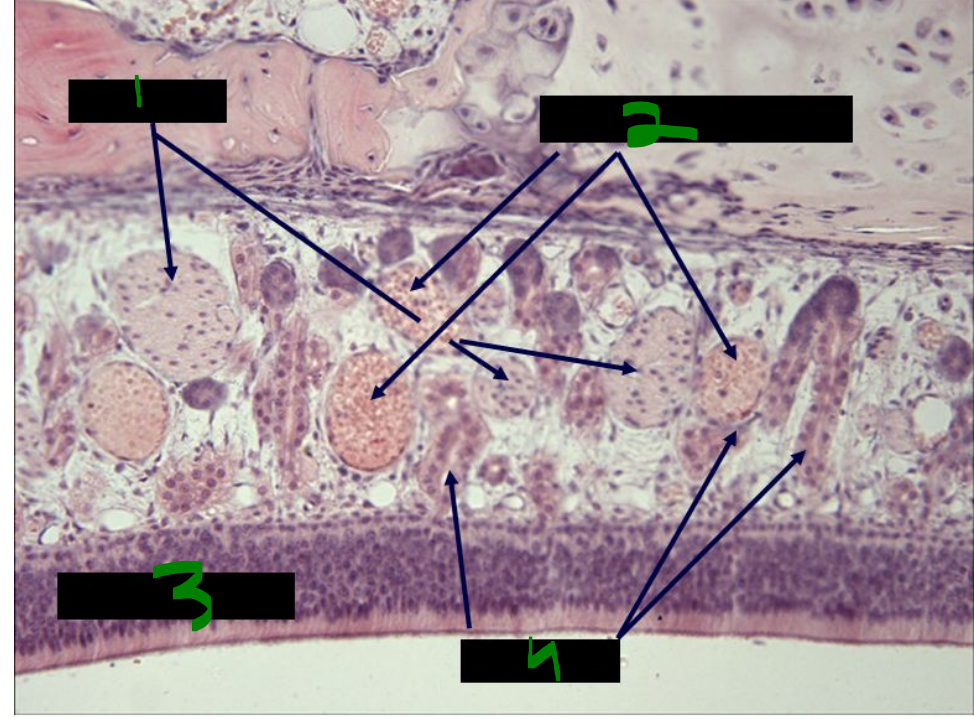
what is this?
olfactory epithelium
glands = Bowman's glands
What is 1?
nerves
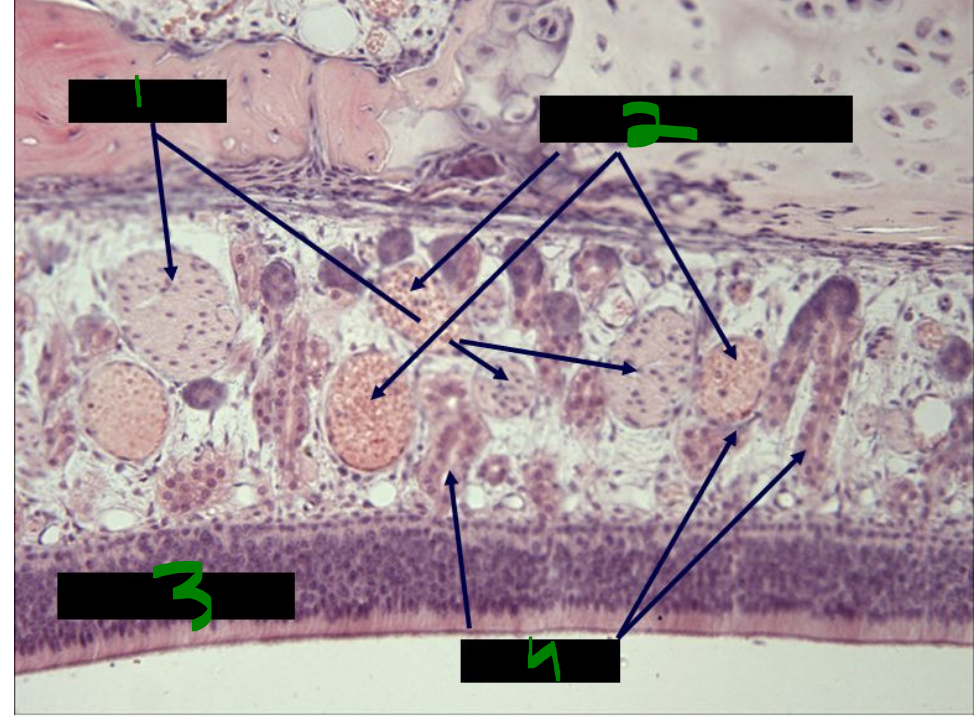
What is 2?
blood vessels
What is 3?
epithelium
What is 4?
glands
what are the external nose & posterior nasal cavity composed of?
external nose - _____ _____
posterior nasal cavity - _____ _____
predominantly cartilagenous
predominantly bone
what are the posterior openings of the nasal cavities into the nasopharynx?
_____
choanae
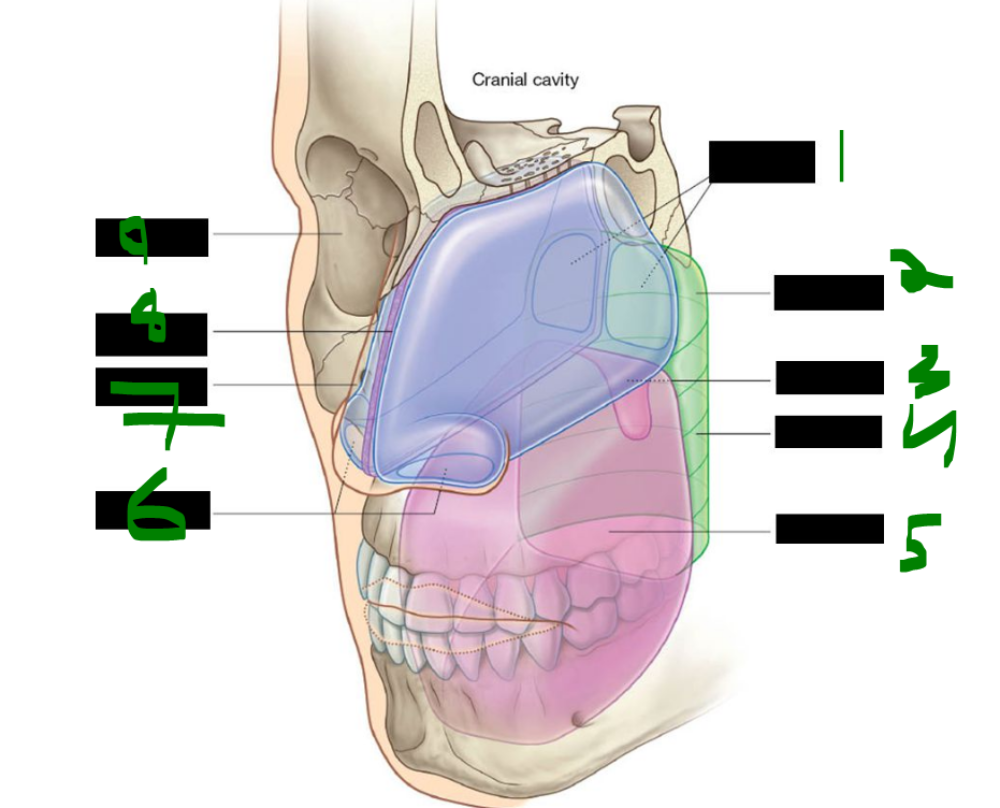
What is 1?
choanae
What is 2?
nasopharynx
What is 3?
soft palate
What is 4?
oropharynx
What is 5?
oral cavity
What is 6?
nares
What is 7?
external nose
What is 8?
nasal septum
What is 9?
right orbit
The major components forming the medial wall of the nasal septum are the __________ __________, the __________, and the __________ __________ of the __________ bone.
septal cartilage, vomer, perpendicular plate, ethmoid
Small contributions to the medial nasal septum come from the __________ bones, nasal __________ of the __________ bone, nasal __________ of the __________ and __________ bones, the __________ of the __________ bone, and the __________ crest of the __________.
nasal, spine, frontal, crests, maxillary, palatine, rostrum, sphenoid, incisor, maxilla
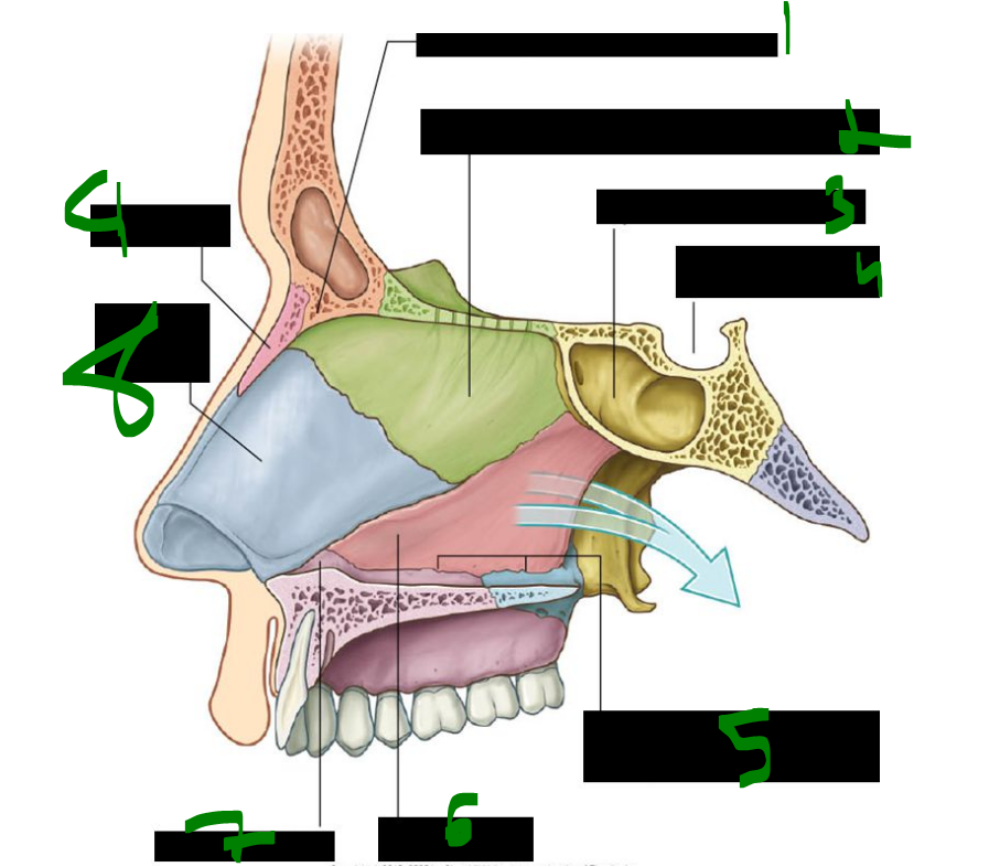
What is 1?
nasal spine of frontal bone
What is 2?
perpendicular plate of ethmoid bone
What is 3?
sphenoidal sinus
What is 4?
pituitary fossa
What is 5?
nasal crest of maxillary and palatine bones
What is 6?
vomer
What is 7?
incisor crest
What is 8?
septal cartilage
What is 9?
nasal bone
The highest point forming the roof of the nasal cavity is the __________ __________ of the __________ bone.
cribiform plate, ethmoid
More anteriorly, the roof of the nasal cavity is formed by the nasal __________ of the __________ bone, the __________ bone, lateral processes of the __________ bone, and the major __________ cartilages.
spine, frontal, nasal, septal, alar
The __________ __________ rests on the cribiform plate of the __________ bone and is the site where olfactory nerves passing through the olfactory __________ synapse.
olfactory bulb, ethmoid, foramina
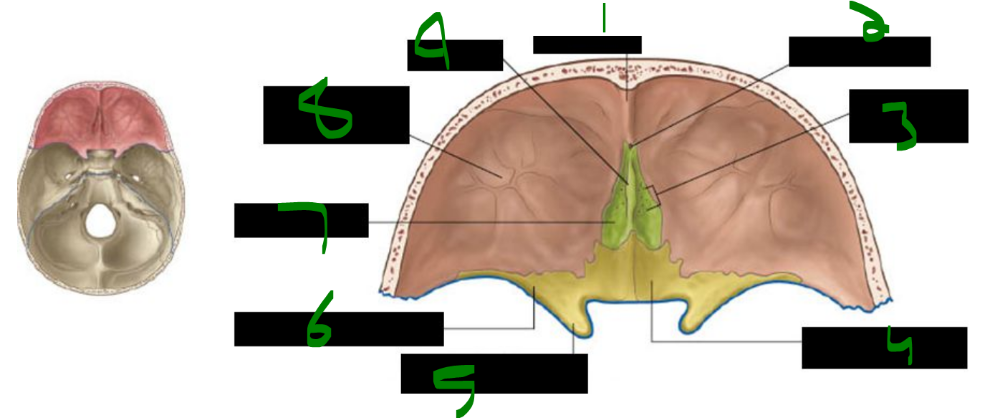
What is 1?
frontal crest
What is 2?
foramen cecum
What is 3?
foramina of cribiform plate
What is 4?
body of sphenoid
What is 5?
anterior clinoid process
What is 6?
lesser wing (of sphenoid)
What is 7?
cribiform plate
What is 8?
orbital part (of frontal bone)
What is 9?
crista galli
The floor of the nasal cavities is formed by the soft tissue of the __________ __________ and the upper surface of the hard palate, which includes the __________ process of the __________ bone and the __________ plate of the __________ bone.
external nose, palatine, maxillary, horizontal, palatine
The lateral wall of the nasal cavities includes the __________ bone, the __________ bone (specifically the labyrinth and uncinate process), and the __________ bone with its perpendicular plate.
nasal, ethmoid, palatine
Additional contributors to the lateral wall of the nasal cavities are the __________ bone (medial surface), __________ bone (medial plate of pterygoid process), __________ bone (medial surface), and the __________ nasal concha.
lacrimal, sphenoid, maxilla, inferior
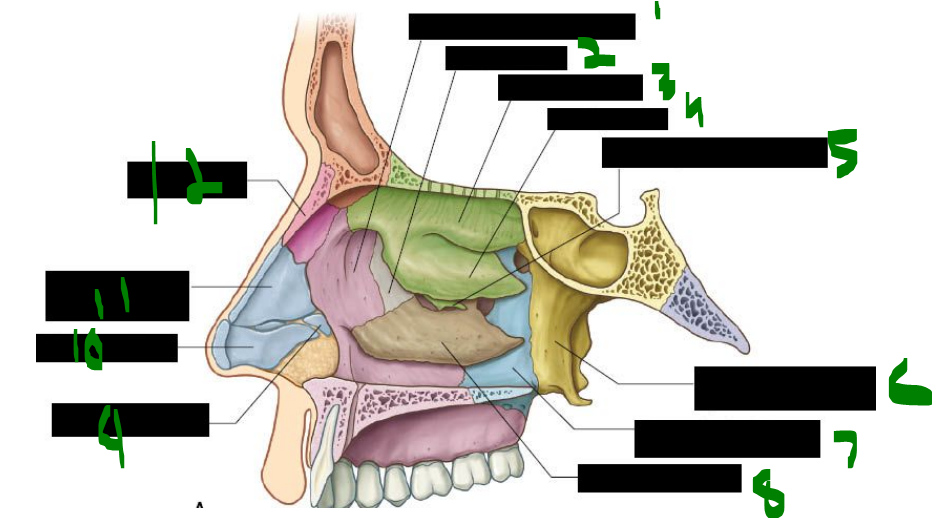
What is 1?
frontal process of maxilla
What is 2?
lacrimal bone
What is 3?
superior concha
What is 4?
middle concha
What is 5?
uncinate process of ethmoid
What is 6?
medial pterygoid plate of sphenoid bone
What is 7?
perpendicular plate of palatine bone
What is 8?
inferior concha
What is 9?
minor alar cartilage
What is 10?
major alar cartilage
What is 11?
lateral process of septal cartilage
What is 12?
nasal bone
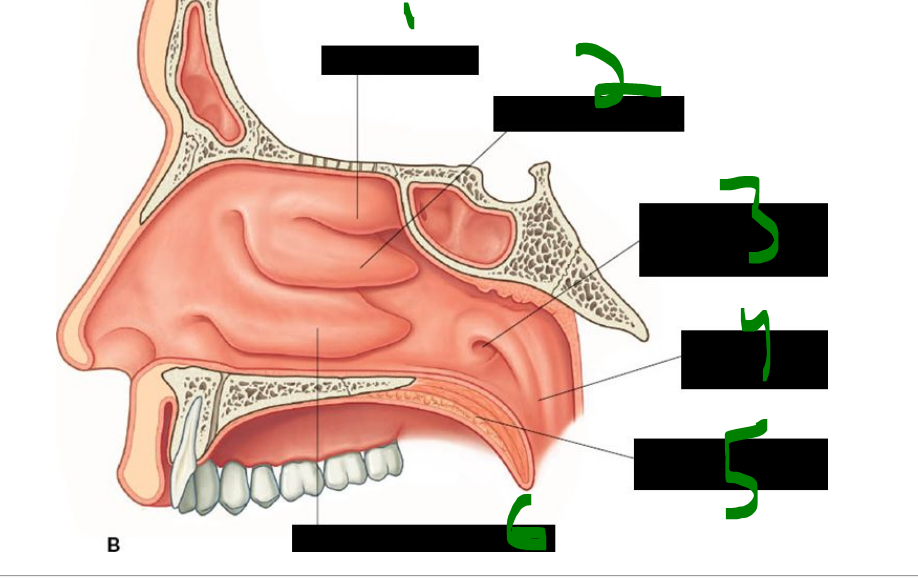
What is 1?
superior concha
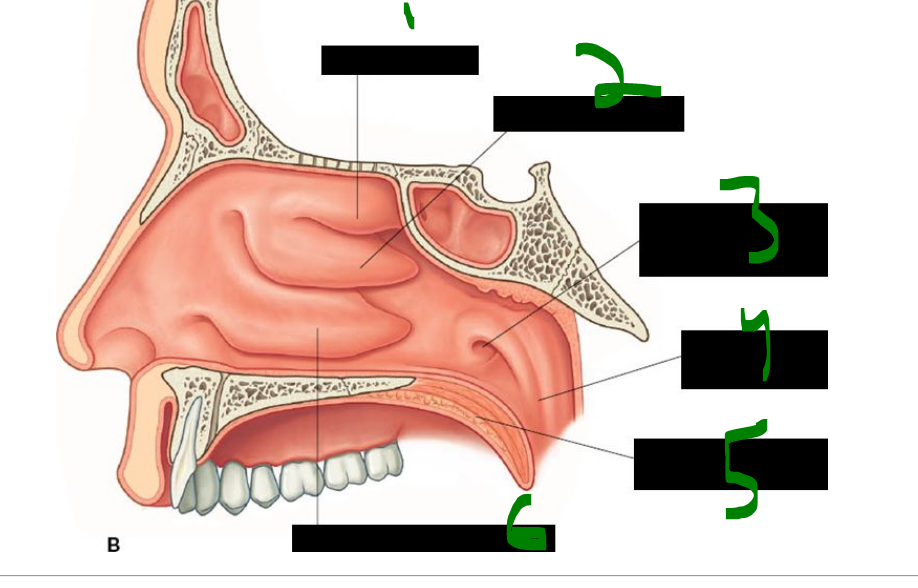
What is 2?
middle concha
What is 3?
opening of pharyngotympanic tube
What is 4?
nasopharynx
What is 5?
soft palate
What is 6?
inferior concha
The paranasal sinuses include the __________, __________ air cells (anterior, middle, posterior), __________, and __________ sinuses.
frontal, ethmoidal, maxillary, sphenoidal
All paranasal sinuses drain into the __________ __________.
nasal cavities
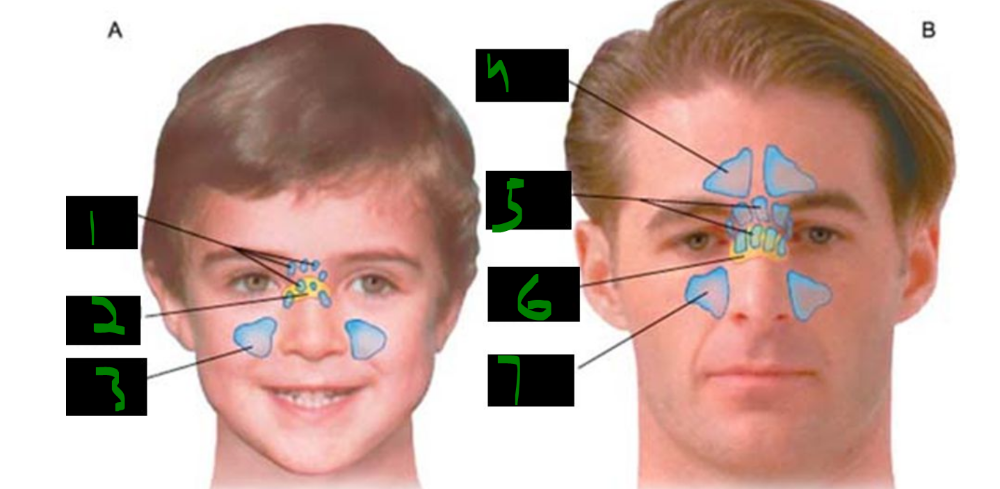
What is 1?
ethmoid sinsues
What is 2?
sphenoid sinus
What is 3?
maxillary sinuses
What is 4?
frontal sinuses
What is 5?
ethmoid sinuses
What is 6?
sphenoid sinus
What is 7?
maxillary sinuses
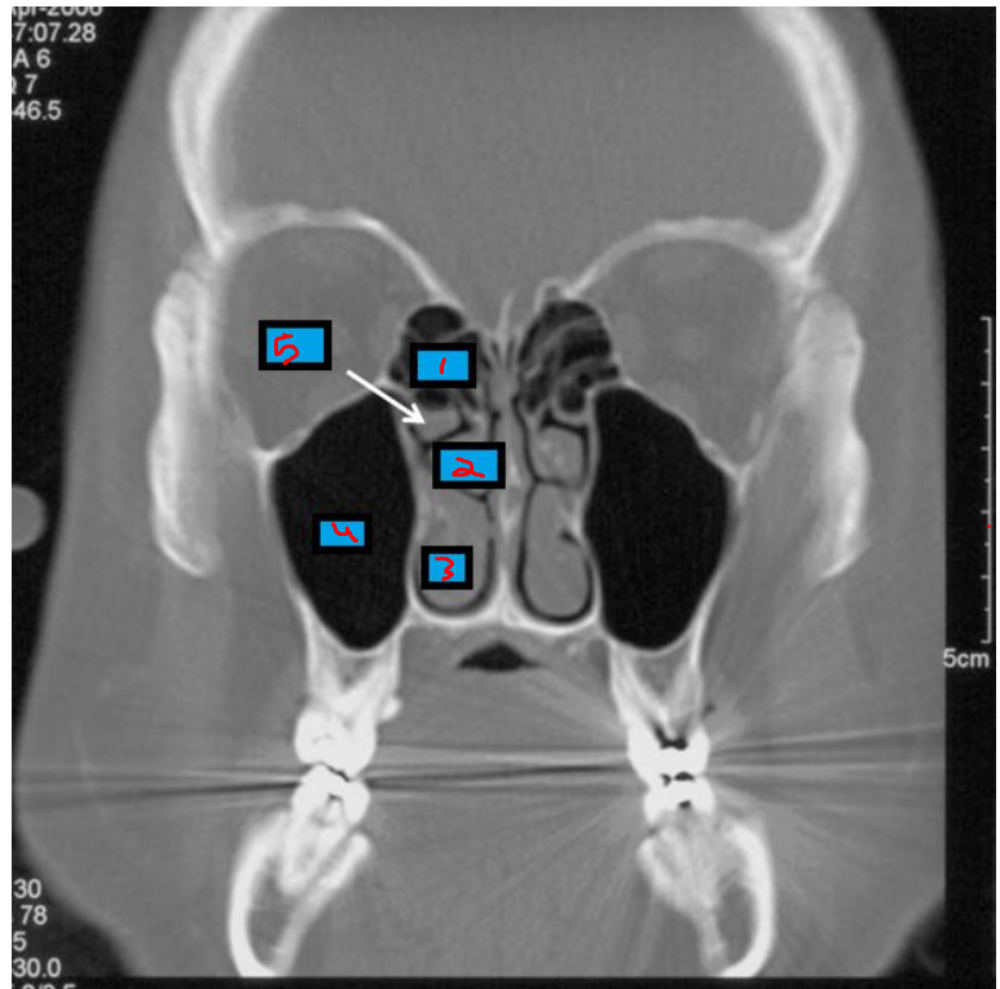
What is 1?
ethmoid sinuses
What is 2?
middle concha
What is 3?
inferior concha
What is 4?
maxillary sinus
What is 5?
superior concha
The frontal sinus drains via the __________ __________ into the __________ __________ of the nasal cavity.
frontonasal duct, middle meatus
The anterior ethmoidal air cells drain into the __________ __________ or the __________, while the middle ethmoidal air cells drain onto the __________ __________. The posterior ethmoidal air cells drain onto the __________ wall of the __________ __________ in the nasal cavity.
frontonasal duct, infundibulum, ethmoidal bulla, lateral, superior meatus
where does the maxillary sinus drain?
into __________ __________
into semilunar hiatus
where does the sphenoid sinus drain?
into __________ -__________ __________
into spheno-ethmoidal recess
The frontal sinus is innervated by branches of the __________ nerve (a branch of CN __________), while the ethmoidal sinuses are innervated by branches of the __________ nerve (V1) and orbital branches of CN __________ from the __________ ganglion.
supraorbital, V1, nasociliary, V2, pterygopalatine
The maxillary sinus is innervated by the __________ and __________ branches of CN __________, while the sphenoidal sinus is innervated by the __________ __________ branch of CN __________ and orbital branches of CN __________ from the pterygopalatine ganglion.
infraorbital, alveolar, V2, posterior ethmoidal, V1, V2
An alternative to craniotomy for removing a pituitary tumor is a __________ __________, which involves going under the __________ __________, through the __________ __________, and then through the posterior wall of the __________ __________ to access the pituitary mass.
transsphenoidal hypophysectomy, upper lip, nasal cavity, sphenoid sinus
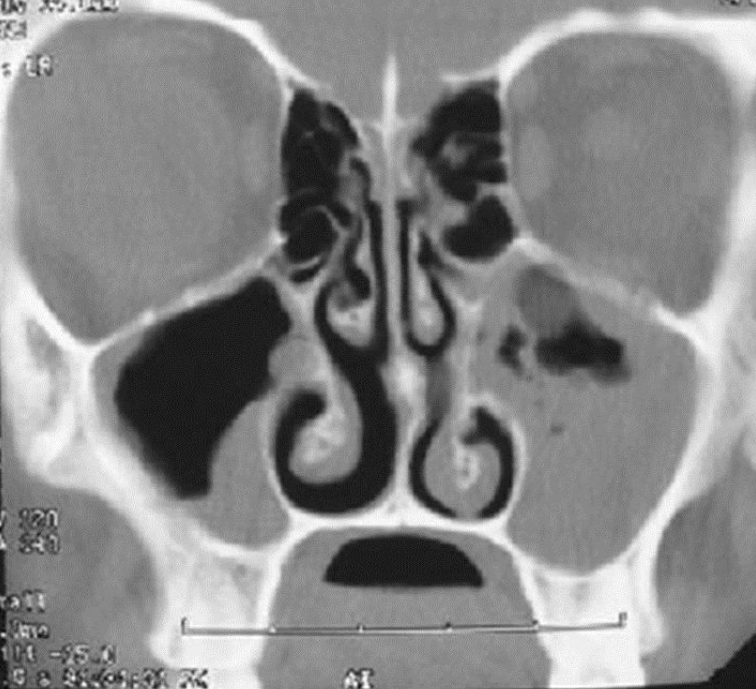
what has happened to this patient?
bilateral maxillary sinusitis (worse on left than right)
The ostium of the maxillary sinus is located near the __________ part of the sinus, making __________ __________ essential for proper drainage; impaired clearance can lead to __________ __________.
upper, ciliary motility, maxillary sinusitis
The terminal branch of the maxillary artery is the __________ artery, which is the major __________ __________ to the nasal cavity.
sphenopalatine, blood supply
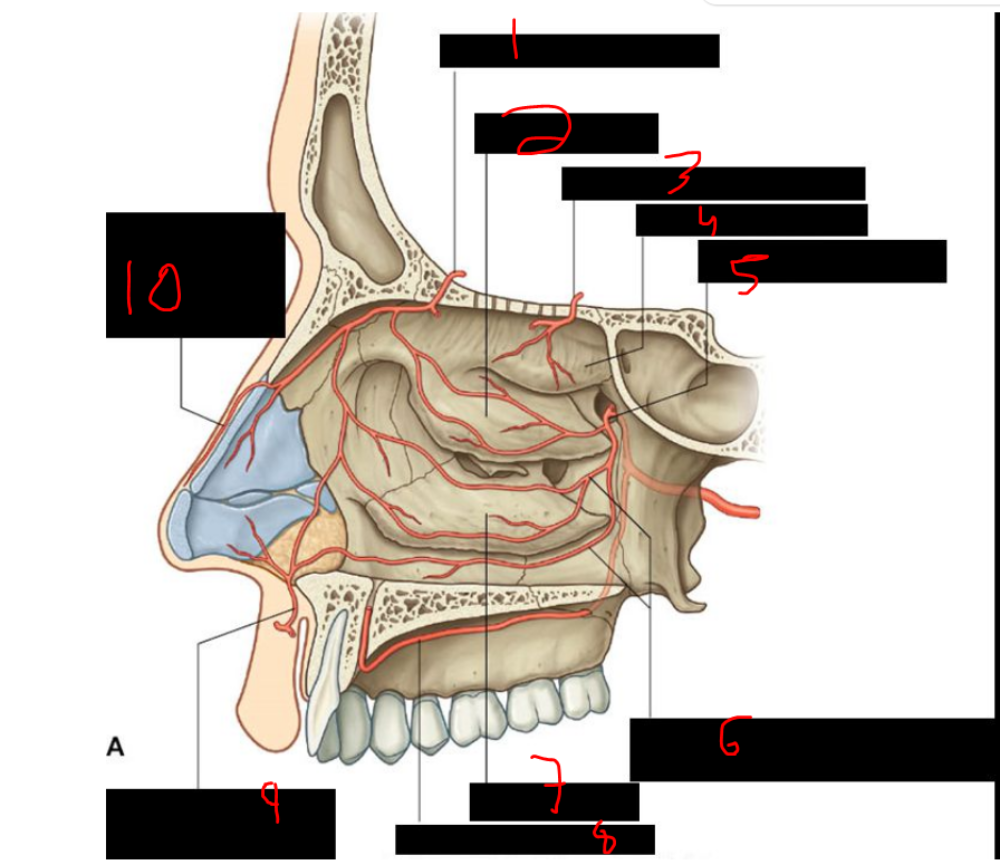
What is 1?
anterior ethmoidal artery
What is 2?
middle concha
What is 3?
posterior ethmoidal artery
What is 4?
superior concha
What is 5?
sphenopalatine artery
What is 6?
posterior lateral nasal branches of sphenopalatine artery
What is 7?
inferior concha
What is 8?
greater palatine artery
What is 9?
alar branch of lateral nasal artery
What is 10?
external nasal artery from anterior ethmoidal artery
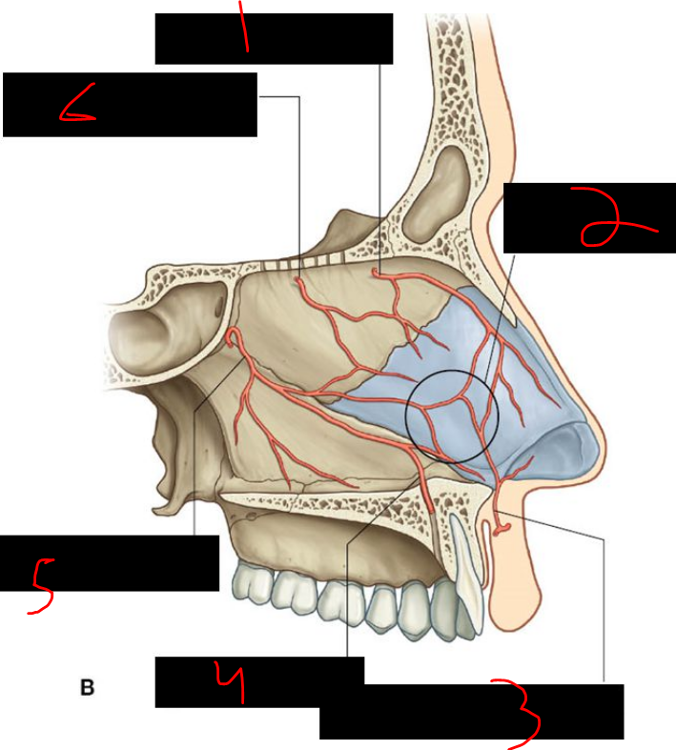
What is 1?
septal branch of anterior ethmoidal artery
What is 2?
area of significant anastomoses (prone to nose bleeds)
What is 3?
septal branch from nasal artery from superior labial artery
What is 4?
terminal part of palatine artery
What is 5?
posterior septal branch of sphenopalatine artery
What is 6?
septal branch of posterior ethmoidal artery
The sphenopalatine artery, the largest vessel supplying the nasal cavity, gives rise to two branches: the __________ __________ nasal artery and the __________ __________ artery.
posterior lateral, posterior septal
The greater palatine artery travels from the __________ __________ through the __________ __________ foramen, runs along the roof of the __________ __________, and enters the nasal cavity via the __________ foramen.
pterygopalatine fossa, greater palatine, oral cavity, incisive
what branches of the maxillary a. supply the nasal cavity?
__________ artery, __________ __________ artery
sphenopalatine artery, greater palatine artery
The greater palatine artery is a branch of the __________ artery; it travels from the __________ __________ through the __________ __________ foramen, runs along the roof of the __________ __________, and enters the nasal cavity via the __________ foramen.
maxillary, pterygopalatine fossa, greater palatine, oral cavity, incisive
The anterior ethmoidal artery, a branch of the __________ artery, enters the nasal cavity through a foramen just lateral to the __________ __________ of the __________ bone and gives off a branch to the __________ and a __________ branch.
ophthalmic, crista galli, ethmoid, septum, lateral
The posterior ethmoidal artery, also a branch of the ophthalmic artery, supplies the upper posterior __________ __________ and the __________ of the nasal cavity.
lateral wall, septum
__________ __________ is the site of anterior nosebleeds that are easily stopped by pinching the nose; it is an area of anastomoses of arteries in the __________ __________.
Kiesselbach’s plexus, anterior septum
Blood from the nasal cavity mostly drains posteriorly into the __________ __________ or the __________ __________.
pterygoid plexus, cavernous sinus
Infections from the external nose or nasal cavity can drain back to the __________ __________, potentially leading to __________ __________ __________, a serious late complication.
cavernous sinus, cavernous sinus thrombosis
The maxillofacial death pyramid, also known as the "__________ __________," is significant because infections in this area can spread posteriorly via __________ drainage into the __________ __________, potentially causing __________ __________ thrombosis.
danger zone, venous, cavernous sinus, cavernous sinus
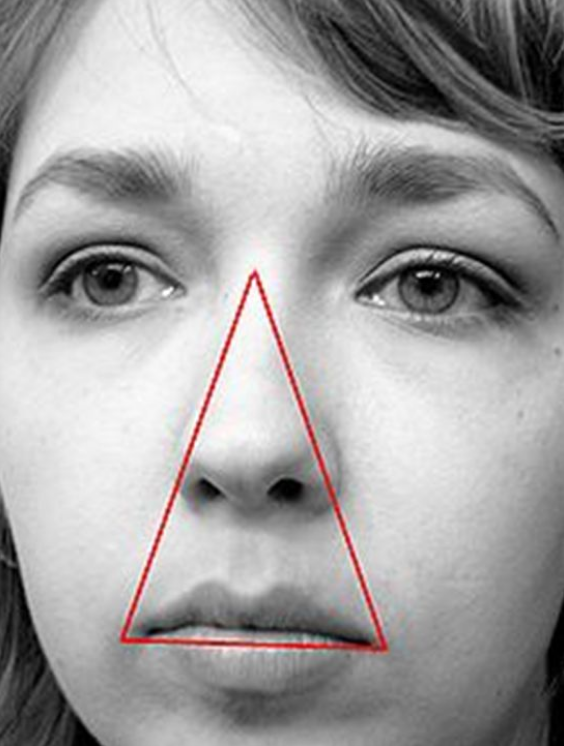
What is this?
maxillofacial death pyramid
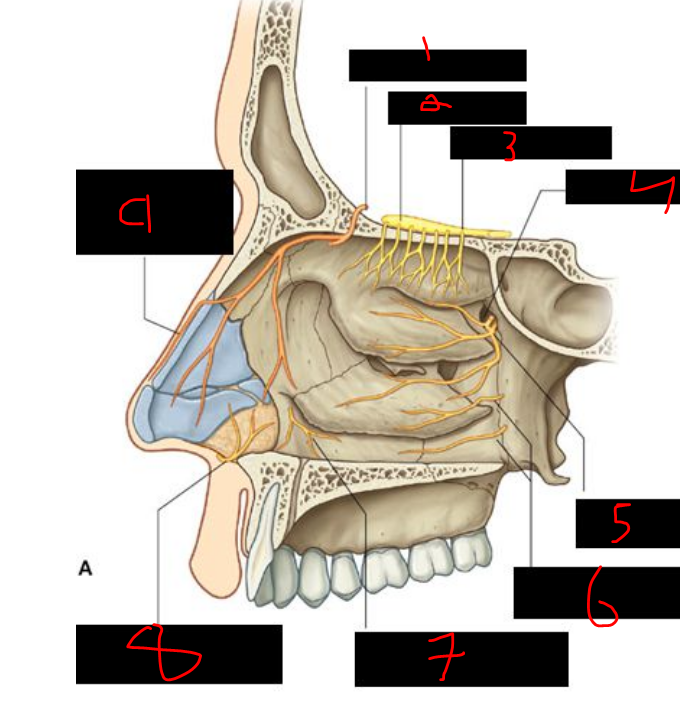
What is 1?
anterior ethmoid
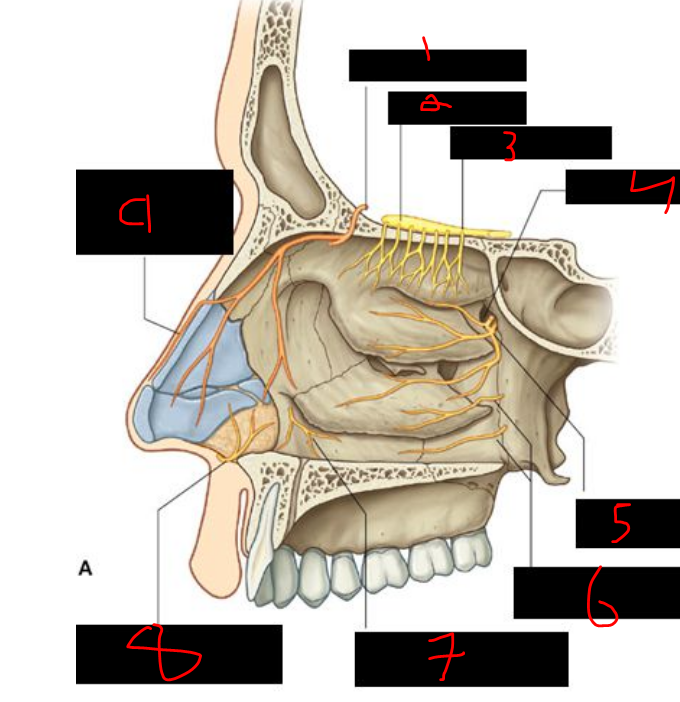
What is 2?
olfactory bulb
What is 3?
olfactory nerve (1)
What is 4?
sphenopalatine foramen
What is 5?
posterior superior lateral nasal nerves
What is 6?
posterior inferior lateral nasal nerves
What is 7?
nasal branch of anterior superior alveolar nerve
What is 8?
internal nasal branches of infra-orbital nerve
What is 9?
external nasal branch of anterior ethmoid
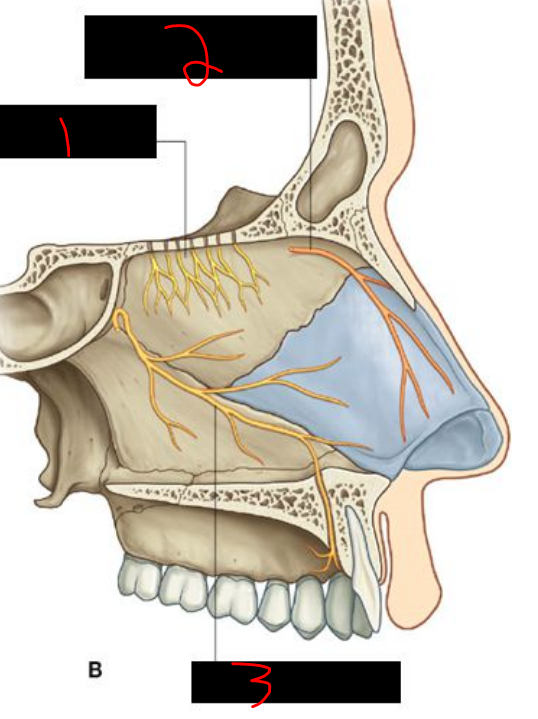
What is 1?
olfactory nerve (1) (septal branches)
What is 2?
septal branch of anterior ethmoidal nerve
What is 3?
nasopalatine nerve
Parasympathetic preganglionic axons run in the __________ __________ nerve (CN __________), while postganglionic neurons reside in the __________ __________ ganglion; their secretomotor axons travel with branches of CN __________ that enter the nasal cavity and paranasal sinuses.
greater petrosal, VII, pterygopalatine, V
Sympathetic preganglionic neurons originate at the spinal cord level __________ and synapse in the __________ __________ ganglion; postganglionic axons travel in the __________ plexus.
T1, superior cervical, carotid
Postganglionic sympathetic axons travel via the __________ __________ nerve, which joins the __________ __________ nerve to form the nerve of the __________ __________; these axons travel with parasympathetics in branches of CN __________ and have __________ function.
deep petrosal, greater petrosal, pterygoid canal, V, vasomotor
where does the nasolacrimal duct drain?
into __________ __________ __________
into inferior nasal meatus
Kiesselbach's plexus is formed by the anastomoses of the septal branches of the __________ __________ and __________ arteries, the __________ artery (from the superior labial artery), and the terminal branch of the __________ __________ artery.
anterior ethmoidal, sphenopalatine, nasal, greater palatine
At the point where the nasal vestibule ends, the __________ __________ epithelium is replaced by __________ __________ __________ __________ epithelium containing __________ cells.
stratified squamous, pseudostratified columnar ciliated, goblet
The embryonic origin of the nasal sinuses is __________ of the __________ __________ of the nasal cavity, also called __________ of the lining of the nasal cavity.
evaginations, mucous membrane, diverticulum
Functions of the nasal cavities include __________ the voice, serving as a site of __________, and helping to __________ the weight of the skull.
resonating, infection, lighten
Posterior nosebleeds account for about __________% of nosebleeds and often require the uncomfortable procedure of __________ __________ for management.
10, nasal packing