Print Options

Card layout: ?

← Back to notecard set|Easy Notecards home page

Instructions for Side by Side Printing
  1. Print the notecards
  2. Fold each page in half along the solid vertical line
  3. Cut out the notecards by cutting along each horizontal dotted line
  4. Optional: Glue, tape or staple the ends of each notecard together
  1. Verify Front of pages is selected for Viewing and print the front of the notecards
  2. Select Back of pages for Viewing and print the back of the notecards
    NOTE: Since the back of the pages are printed in reverse order (last page is printed first), keep the pages in the same order as they were after Step 1. Also, be sure to feed the pages in the same direction as you did in Step 1.
  3. Cut out the notecards by cutting along each horizontal and vertical dotted line
To print: Ctrl+PPrint as a list

29 notecards = 8 pages (4 cards per page)

Viewing:

2-Development-Embryonic Period

front 1

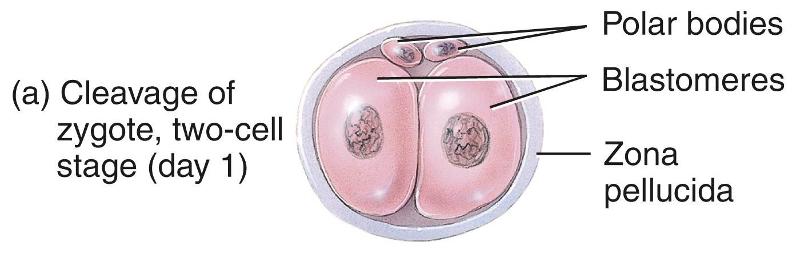
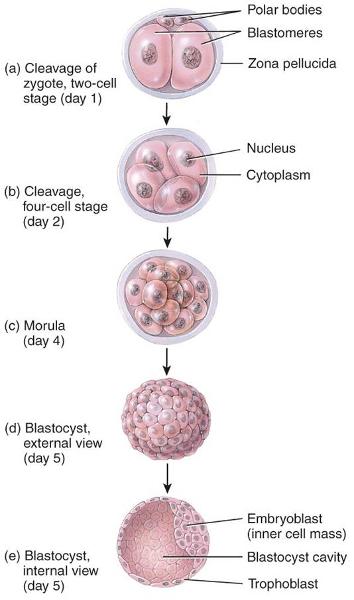
Cleavage

back 1

The rapid mitotic division of the zygote, starting the first week of development

front 2

Blastomeres

back 2

Progressively smaller cells produced by cleavage

front 3

Morula

back 3

A solid ball of cells formed 3-4 days after fertilization

front 4

Blastocyst

back 4

  • A fluid filled ball of cells that enters the uterine cavity
  • Occurs a day after the morula is formed

front 5

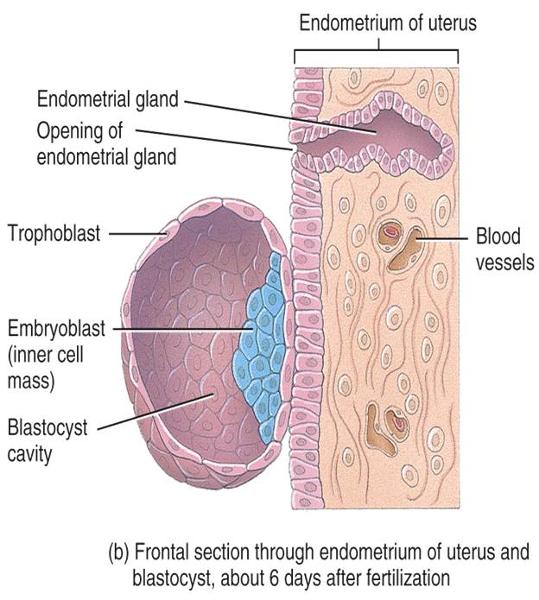
Implantation

back 5

The attachment of the blastocyst to the endometrium 6–8 days after fertilization

front 6

Inner cell mass

back 6

  • Where the blastocyst attaches to the endometrium
  • Embryoblast

front 7

How does the endometrium respond to the blastocyst

back 7

  • Becomes more vascularized
  • Endometrial glands enlarge

front 8

Decidua

back 8

The portion of the endometrium that is modified after implantation

front 9

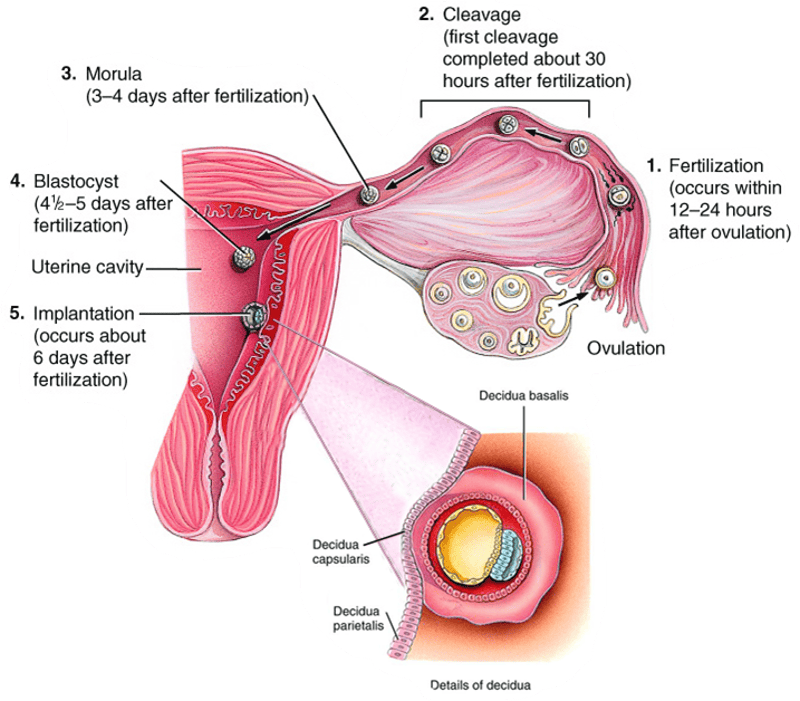
Week One - 12-24 hours after ovulation

back 9

Fertilization

front 10

Week One - 30 hours after fertilation

back 10

Cleavage

front 11

Week One - 3-4 Days after fertilization

back 11

Morula

front 12

Week One - 4 1/2 - 5 days after fertilization

back 12

Blastocyst enters uterine cavity

front 13

Week One - 6 days after fertilization

back 13

Implantation

front 14

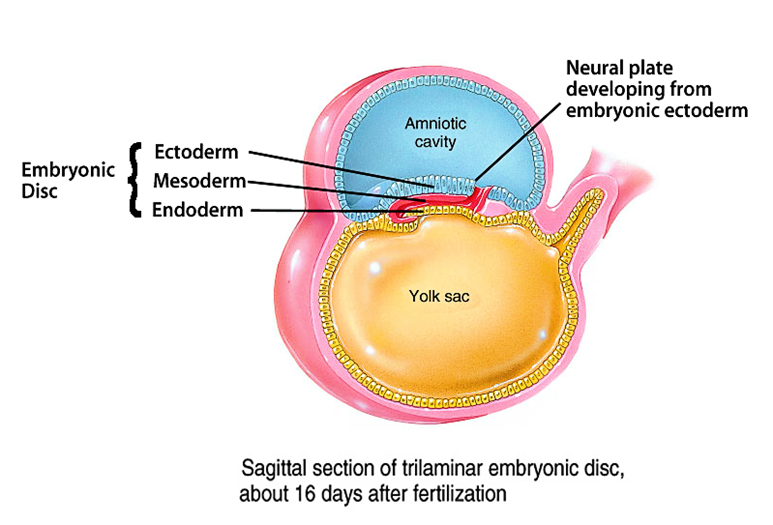
Trilaminar embryonic disc

back 14

  • Formed during growth of developing embryo
  • Composed of cells which develop to become the fetus
  • visible 3 weeks post-fertilization

front 15

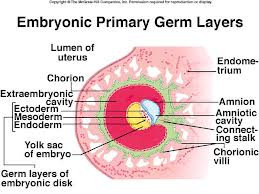
Three primary germ layers of Trilaminar embryonic disc

back 15

  • The ectoderm is the superficial layer
  • The mesoderm is in the middle
  • The endoderm forms the inner layer

front 16

Ectoderm

back 16

  • The superficial layer of the Trilaminar embryonic disc
  • Differentiates into the tissues of the brain and nerves, and the epidermis of the skin

front 17

Mesoderm

back 17

  • The middle layer of the Trilaminar embryonic disc
  • Matures to form blood, muscles, bones, and other connective tissue derivatives

front 18

Endoderm

back 18

  • The inner layer of the Trilaminar embryonic disc
  • Gives rise to the epithelial lining of the digestive tract, respiratory tract, and several other organs; also the endothelial lining of blood vessels

front 19

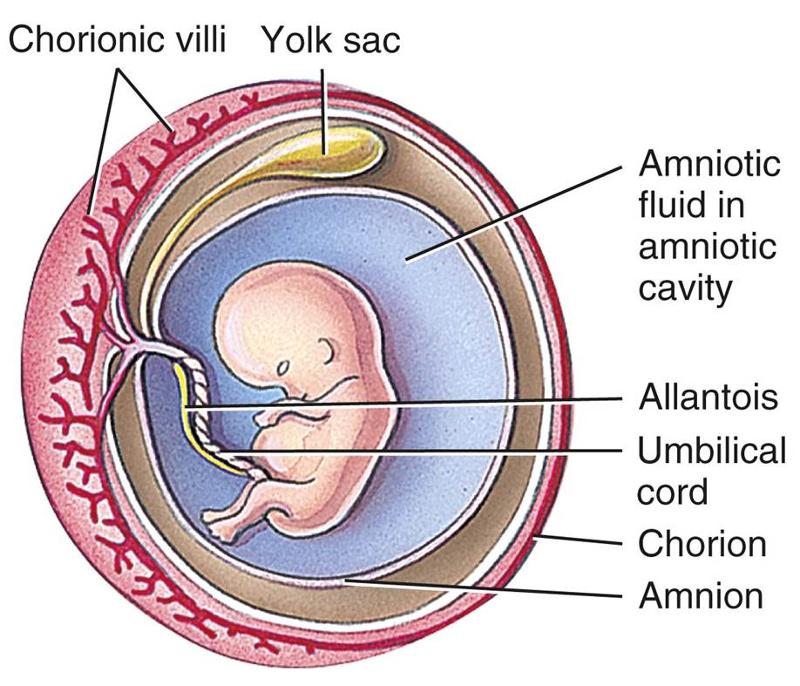
Extraembryonic membranes

back 19

Formed during growth of developing embryo

  • amnion - Innermost layer
  • yolk sac
  • allantois
  • chorion - Outermost layer

front 20

Amnion

back 20

  • Innermost Extraembryonic membrane
  • Forms a protecting amniotic cavity (filled with amniotic fluid) around the embryo

front 21

Yolk sac

back 21

  • Layer of Extraembryonic membrane
  • Provides nutrients and becomes the site of early blood formation

front 22

Allantois

back 22

  • Layer of Extraembryonic membrane
  • Helps form the umbilical cord, works gas exchange and waste removal

front 23

Chorion

back 23

  • Outermost layer of Extraembryonic membrane
  • Forms the fetal portion of the placenta and takes over production of hCG

front 24

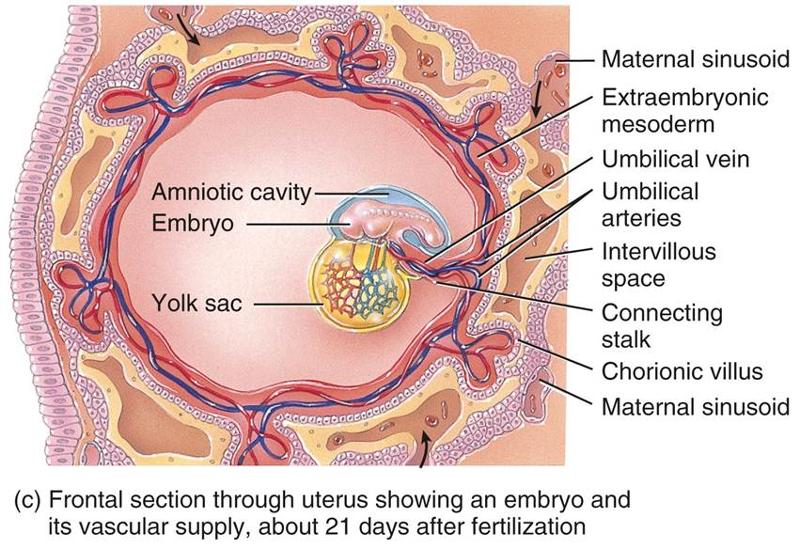
Where does the placenta develop from

back 24

The chorionic villi of the embryo and endometrium of the mother

front 25

What is managed in the placenta

back 25

  • Nutrients and wastes are managed
  • Mixing of fetal and mothers blood is prevented

front 26

What hormone secretion is taken over by the placenta

back 26

Occurs as the corpus luteum in the ovary gradually atrophies.

  • hCG
  • estrogen
  • progesterone

front 27

Organogenesis

back 27

The 4th-8th weeks of development

front 28

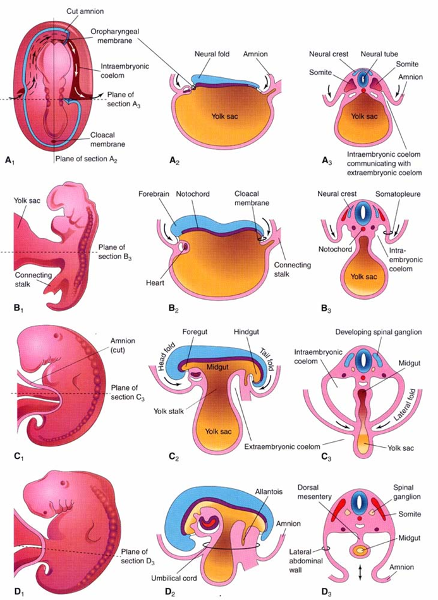
When does embryonic folding occurs (head, laterals, tail)

back 28

During week 4

front 29

When have all major body systems started to develop

back 29

By the end of week 8