Instructions for Side by Side Printing
- Print the notecards
- Fold each page in half along the solid vertical line
- Cut out the notecards by cutting along each horizontal dotted line
- Optional: Glue, tape or staple the ends of each notecard together
Victimology Midterm
front 1 Uniform Crime Report | back 1 Provides information on number of deaths (murders) |
front 2 Characterological self-blame is: a person ascribes blame to modifiable sources such as behavior. | back 2 False |
front 3 For PTSD to be diagnosed, certain symptoms must persist for no longer than a month. | back 3 False |
front 4 How victims react to victimization depends on his/her interpretation of the event | back 4 True |
front 5 Social Learning Theory**** is behavior learned through interactions with other people | back 5 False For that definition to be true it must include: and their environment. |
front 6 Subculture of Violence Theory: is a belief in the acceptability & necessity of violence. | back 6 True |
front 7 Who was the first to publish the term "Victimology"? | back 7 Fredrick Wertham |
front 8 This rule requires only the most serious offenses in an incident be reported to the UCR. | back 8 Hierarchy Rule |
front 9 Routine Activity Theory and Lifestyles Theory argues that offending increases the risk of offenders being Victimized, why? | back 9 Offending can be viewed as part of a risky lifestyle |
front 10 Who recognized the overlap between and victimization with in homicide? | back 10 Marvin Wolfgang |
front 11 Crime victims may experience loss of productivity in which of the following areas? School, Work, Place of employment All of the above | back 11 All of the above |
front 12 _________is not a reason victims choose to report crime? | back 12 A) To protect others B) To stop the offender C) Prevent future violence D) Fear of Reprisal (retaliation) |
front 13 Female Victims are particularly vulnerable to reductions in self-esteem following victimization. | back 13 True |
front 14 Standard of proof needed for civil litigation cases | back 14 Preponderance of evidence |
front 15 Most states don't provide for remedies if a victims rights are violated | back 15 True |
front 16 the term "victimology" has two elements Victima (latin)= victim logos (Greek)= Teaching/ system of knoweldge | back 16 consequences of victimization
|
front 17 When was the term victimology was first used? | back 17 By Benjamin Mendelson in a speech 1947--(but it was not published). |
front 18 Fredrick Wertham was the first to publish the term victimology.. | back 18 in 1949 in his book "The shadow of Violence" |
front 19 What does Victimology Study? | back 19 Victimology, is the scientific study of victims and victimization (and the reactions to both of those). |
front 20 societal reactions to victims & victimization Informal reactions-- (family, friends, community) Formal Reactions-- ( victims laws) | back 20 no data |
front 21 Lex Talionis | back 21 An eye for an eye. victims & their kin handled the problem & were the beneficiaries of any payment |
front 22 Retribution | back 22 offender would suffer in proportion to the degree of harm caused A criminal is punished because he or she deserve it, and the punishment is equal to the harm caused. |
front 23 Restitution | back 23 making a payment in an amount sufficient to render the victim "whole" again Money or services paid to victims of crimes by the offenders. |
front 24 Code of Hammurabi | back 24 Early Babylonian code that emphasized the restoration of equality between the offender and the victim. |
front 25 Victim Precipitation | back 25 The extent to which a victim is responsible for his her own victimization |
front 26 Victim Facilitation | back 26 When a victim unintentionally makes it easier for an offender to commit a crime |
front 27 Victim Provocation | back 27 When a person does something that incites another person to commit an illegal act. |
front 28 Hans von Hentig | back 28 Developed a victim typology based on characteristics of the victim that increase the risk of victimization |
front 29 Benjamin Mendelsohn | back 29 "Father of Victimology" coined the term Victimology in the mid 1940s |
front 30 Stephen Schafer | back 30 Argued that victims have a functional responsibility not to provoke others into victimizing or harming them and that they also should actively attempt to prevent that from occurring |
front 31 Marvin Wolfgang | back 31 Used philadelphia homicide data to conduct the first empirical investigation of victim precipitation |
front 32 Subintentional homicide | back 32 The victim facilitates her or his own death by using poor judgement, placing himself or herself at risk, living a risky lifestyle, or using alcohol or drugs. |
front 33 Menachem Amir | back 33 Studied victim provocation in rapes. |
front 34 National Crime Survey | back 34 1st ever government-sponsored victimization survey; relied on the victims to recall their own victimization experiences |
front 35 Women's movement | back 35 Recognized the need for female victims of crime to receive special attention and help due to fact that victimizations such as sexual assault & domestic violence are by products of sexism, traditional sex roles, emphasis on traditional family values, and the economic subjugation of women. |
front 36 Civil rights movement | back 36 Advocated against racism & discrimination, noting that all Americans have rights that are protected by the U.S. constitution. |
front 37 victim's right movement | back 37 Movement centered on giving victims a voice in the criminal justice system & providing them rights. |
front 38 costs of crime | back 38 Mental, physica, & money loss that victims of crime incur |
front 39 Chapter 2 Uniform Crime Report (UCR) | back 39 Annual reports of the amount of crime reported to or known by the police in a year--- reports submitted by the FBI monthly |
front 40 National Crime Victimization Survey (NCVS) | back 40 National survey of households that is used to generate annual estimates of victimization in the U.S. |
front 41 Bounding | back 41 Giving a time frame to reference in order to aid recall |
front 42 Screen Questions | back 42 Used to cue respondents or jog their memories as to whether they experienced any of 7 types of criminal victimization in the previous six months. |
front 43 Hierarchy Rule | back 43 If more than one Part I offense occurs in the same incident report, only the most serious offense will be counted in the reporting process. |
front 44 Incident Report | back 44 Detailed questions about a victimization experience |
front 45 Routine Activities and Life-styles theory*** | back 45 A persons routine activities & lifestyle place him/her at risk of being victimized. Risk is highest when motivated offenders, lack of capable guardianship, & suitable targets coalesce in time & space. |
front 46 Victimization Theory | back 46 Generally, a set of testable propositions designed to explain why a person is victimized. |
front 47 Motivated Offenders | back 47 People who will commit crime if given an opportunity |
front 48 Suitable Targets | back 48 Victims chosen by offenders based on their attractiveness in the situation/ crime |
front 49 Capable Guardianship | back 49 Means by which a person or target can be effectively guarded to prevent a victimization from occurring. |
front 50 Principle of homogamy | back 50 People who share characteristics of offenders are more at risk of victimization, given that they are more likely to come into contact with offenders |
front 51 neighborhood context | back 51 Features of neighborhoods that impact risk for victimization |
front 52 hot spots | back 52 Areas that are crime prone |
front 53 family structure | back 53 Household style or shape |
front 54 structural density | back 54 The % of units in structures of five or more units |
front 55 residential mobility | back 55 The % of persons 5years & older living in a different house from 5 years before. |
front 56 delinquent peers | back 56 People involved in delinquency with whom a person spends time, having such peer increases one's likelihood of victimization |
front 57 control-balance theory | back 57 The amount control one possess over others and the amount of control to which one is subject, the ratio of control influences the risk of engaging in deviant behavior. |
front 58 Control ratio | back 58 Control surplus and control deficit considered. |
front 59 Control Surplus | back 59 When the control one has exceeds the amount of control one is subject to |
front 60 Control deficit | back 60 When the amount of control a person exercises is outweighed by the control he or she is subject to |
front 61 social interactionist perspective | back 61 proposes that distressed individuals behave aggressively, which then elicits an aggressive response from others |
front 62 life-course perspective | back 62 examines the development of and desistance from offending and other behaviors over time |
front 63 general-theory of crime | back 63 Proposes that a person with low self-control will engage in crime if given the opportunity |
front 64 age-graded theory of adult social bonds | back 64 proposes that marriage and employment can help one desist from criminal behavior. |
front 65 gene x environment interaction | back 65 Genes interact with environmental features to shape behavior. |
front 66 Chapter 3 Physical injury | back 66 physical harm suffered that may include bruises, soreness, scratches, cuts, broken bones, contracted diseases, and stab or gunshot wounds. |
front 67 depression | back 67 a mood disorder characterized by sleep disturbances, changes in eating habits, feelings of guilt and worthlessness, and irritability. These symptoms interfere with a person's everyday life. |
front 68 self-worth | back 68 a person's own perception of his or her worth or value. |
front 69 self-esteem | back 69 beliefs and emotions about a person's own self-worth or value. |
front 70 anxiety | back 70 an affective disorder or state often experienced as irrational & excessive fear and worry, which may coupled with feelings of tension and restlessness, vigilance, irritability and difficulty concentrating. |
front 71 Posttraumatic stress disorder (PTSD) | back 71 Psychiatric anxiety disorder caused by experiencing traumatic events such as war, violence, etc. |
front 72 stressor | back 72 a traumatic event |
front 73 intrusive recoollection | back 73 Reexperienceing trauma through recurring or intrusive recollections or nightmares, feelings as though the event were recurring, and/or intense psychological distress when exposed to cues that symbolize or resemble a component of the traumatic event. |
front 74 avoidance/ numbing symptoms | back 74 Regular avoidance of stimuli associated with the traumatic event & numbness of response |
front 75 hyperarousal | back 75 persistent arousal symptomology; for example, not being able to sleep, being hyper-vigilant , and having problems concentrating. |
front 76 self-blame | back 76 victims believe they are responsible for their own victimization |
front 77 characterological self-blame | back 77 person ascribes blame to a non-modifiable source, such as one's character. |
front 78 behavioral self-blame | back 78 When a person believes she or he did something to cause victimization |
front 79 learned helplessness | back 79 victims believe they are unable to change the situation & stop trying to resist |
front 80 economic costs | back 80 Financial costs associated with victimization |
front 81 direct property losses | back 81 When victims' possessions are taken or damaged |
front 82 medical care costs | back 82 costs associated with treating victims of crime |
front 83 mental health care costs | back 83 psychiatric care required as a result of being victimized |
front 84 lost productivity | back 84 being unable to work, go to school, or complete everyday tasks because of being victimized |
front 85 system costs | back 85 costs paid by society in response to victimization (e.g., law enforcement, insurance costs). |
front 86 recurring victimization* | back 86 when a person or place is victimized more than once in any way |
front 87 repeat victimization* | back 87 when person is victimized more than once in the same way |
front 88 revictimization* | back 88 when a person is victimized more than once over the course of the life span |
front 89 risk heterogeneity | back 89 characteristics about a person that, if left unchanged, place him or her at greater risk of being victimized repeatedly |
front 90 state dependence | back 90 the way a victim and offender respond to an incidence of victimization effects their likelihood of being involved in future victimization |
front 91 vicarious victimization | back 91 the effect one person's victimization has on others |
front 92 homicide survivors | back 92 people whose love ones have been murdered |
front 93 reporting | back 93 disclosing the victimization to the police |
front 94 fear of crime | back 94 an emotional response to being afraid of being victimized |
front 95 perceived risk | back 95 the perceived likelihood that a person will be victimized |
front 96 incivilities | back 96 low-level breaches of community standards that show that conventionally accepted norms and values have eroded in an area |
front 97 physical incivilities | back 97 disorderly physical surroundings in an area |
front 98 social incivilities | back 98 disruptive social behaviors in an area |
front 99 avoidance behaviors (constrained behaviors) | back 99 regular avoidance of stimuli associated with the traumatic event and numbness of response |
front 100 defensive behaviors/ (protective behaviors) | back 100 behaviors to guard against victimization, such as purchasing a weapon |
front 101 Chapter 4 ploy-victimization** | back 101 when a person, usually in childhood or during the same developmental time period, experiences multiple forms of victimization (generally happening w/in the same time period) |
front 102 near-repeat victimization | back 102 a victimization that occurs near a place that was recently victimized |
front 103 crime-switching | back 103 pg 65 |
front 104 victim proneness | back 104 pg 65 |
front 105 risk heterogeneity | back 105 characteristics about a person that, if left unchanged, place him or her at greater risk of being victimized repeatedly. |
front 106 flag explanation | back 106 no data |
front 107 state dependence | back 107 the way a victim & offenders respond to an incidence of victimization effects their likelihood of being involved in future victimization |
front 108 boost explanation | back 108 no data |
front 109 delayed repeat victimization | back 109 repeat victimization incident that occurs more then 30 days after the initial incident |
front 110 Chapter 5 victims's rights | back 110 rights given to victims to enhance their privacy, protection, & participation |
front 111 notification | back 111 the right of victims to be kept apprised of key events in their cases |
front 112 participation & consultation | back 112 rights given to victims to encourage participation in the CJS; also provide victims rights to discuss their cases with the prosecutor and/or judge before key decisions are made |
front 113 right to protection | back 113 safety measures provided to victims |
front 114 right to a speedy trial | back 114 victims' interest are considered when judges rule on postponement of trial dates |
front 115 Federal victim Witness Protection Act (1982) | back 115 developed & implemented guidelines for how officials respond to victims & witnesses |
front 116 Victims of Crime Act (1984) | back 116 Created the Office for Victims of Crime and provided funds for victim compensation |
front 117 Child Victims' Bill of Rights (1990) | back 117 gave victims' rights to children who were victims & witnesses |
front 118 Crime Control Act (1990) | back 118 created a federal bill of rights for victims |
front 119 Victims' Rights & Restitution Act (1990) | back 119 guaranteed victims the right to restitution |
front 120 Violent Crime Control & Law Enforcement Act (1994) | back 120 increased funds for victim compensation & created the national sex offender registry |
front 121 Violence Against Women Act (1994) | back 121 provided funding for rape prevention & education & domestic violence victims & included Internet Stalking as a crime |
front 122 Antiiterrorism and Effective Death Penalty Act (1996) | back 122 required restitution for violent crimes and increased funds available to victims of terrorism |
front 123 Victims' Right Clarification Act (1997) | back 123 allowed victims to make impact statements & attend their offenders' trial |
front 124 Violence Against Women Act (2000) | back 124 gave $$ to programs for prevention & treatment of female victims |
front 125 Justice for All Act (2004) | back 125 enforced victims' rights & provided funds to test the backlog of rape kits |
front 126 Victim Compensation | back 126 the right of victims to have monies that they lost due to victimization repaid to them by the state |
front 127 Restitution* | back 127 money or services paid to victims of crimes by the offenders |
front 128 Civil Litigation | back 128 victims may sue their offenders in civil court to recoup costs & to compensate for emotional harm |
front 129 Victim impact statement (VIS) | back 129 statement made to the court by the victim or his or her family about the harm caused and the desired sentence for the offender |
front 130 Victim/ Witness assistance programs (VWAPs) | back 130 provide aid to victims during the investigation & criminal justice process |
front 131 Restorative justice | back 131 a movement recognizing that crime is a harm caused not just to the state but to the victim & his or her community. It seeks to use all entities in response to crime & allows for input from the offender, the victim, & community members harmed by the offense in making a determination of how to repair the harm caused by the offender. |
front 132 family or community group conferencing | back 132 victim, offender, family, friends, and supporters talk about the impact & consequences of a crime. |
front 133 Peacemaking circle | back 133 gathering of victim, offender, community members, and sometimes criminal justice officials to promote healing. |
front 134 sentencing circle | back 134 gathering of victim, offender, community members, & |
front 135 victim-offender mediation programs | back 135 sessions led by a 3rd party in which the victim & offender meet face-to-face to come to a mutually satisfactory agreement as to what should happen to the offender--often through the development of a restitution plan |
front 136 diversion | back 136 offender not formally charged if she/he completes required programs |
front 137 social learning theory**** | back 137 Robert Akers (1973) Behavior is learned through our interactions with other people and our environment. |
front 138 social learning theory argues that criminal behavior is learned behavior (4 components) ex:intimate partner violence | back 138 Differential Association- spending time with criminals Definition- meaning & attitudes to certain behaviors Reinforcement- rewards vs punishment Imitation- behavior after observation of similar behavior |
front 139 Psychological damages of victimization
| back 139 psychological damage is the most serious 3 common responses
|
front 140 Theoretical explanations of recurring victimization
| back 140 Risk heterogeneity (diverse in character content) focuses on qualities or characteristics of the victim, (that initially place the victim @ risk will keep that person at risk of subsequent victimization) |
front 141 state/event dependent explanation | back 141 the characteristics of the victim are not important, but how the reactions of both offender and victim after the event are important |
front 142 victims rights treated with dignity & respect notification of all rights (vic is provided info about their case) date & location of court proceedings compensation & or restitution victim impact statement before sentencing | back 142 victims rights attend court & sentencing hearings consult with court personnel protection (physical & employment) speedy trial NOT ALL STATES AWARD ALL RIGHTS TO VICTIMS |
front 143 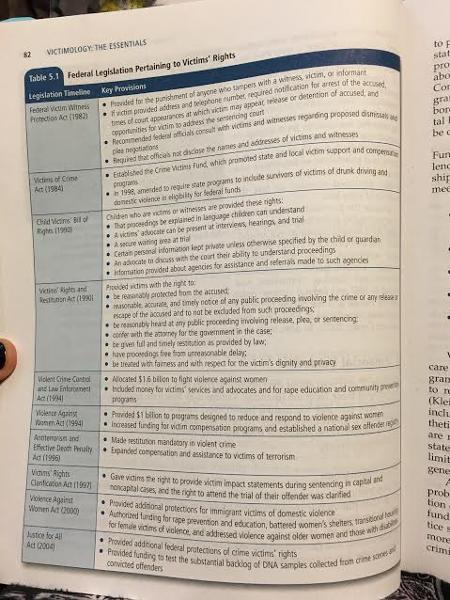 Table 5.1 Timeline of Federal Legislation | back 143 no data |