Print Options

Card layout: ?

← Back to notecard set|Easy Notecards home page

Instructions for Side by Side Printing
  1. Print the notecards
  2. Fold each page in half along the solid vertical line
  3. Cut out the notecards by cutting along each horizontal dotted line
  4. Optional: Glue, tape or staple the ends of each notecard together
  1. Verify Front of pages is selected for Viewing and print the front of the notecards
  2. Select Back of pages for Viewing and print the back of the notecards
    NOTE: Since the back of the pages are printed in reverse order (last page is printed first), keep the pages in the same order as they were after Step 1. Also, be sure to feed the pages in the same direction as you did in Step 1.
  3. Cut out the notecards by cutting along each horizontal and vertical dotted line
To print: Ctrl+PPrint as a list

118 notecards = 30 pages (4 cards per page)

Viewing:

Chapter 7-10 Biology Final

front 1

Some regions of the plasma membrane, called lipid rafts, have a higher concentration of cholesterol molecules. As a result, these lipid rafts
A) are more fluid than the surrounding membrane.
B) are more rigid than the surrounding membrane.
C) are able to flip from inside to outside.
D) detach from the plasma membrane and clog arteries.
E) have higher rates of lateral diffusion of lipids and proteins into and out of the lipid rafts.

back 1

Answer : B

front 2

Which of the following types of molecules are the major structural components of the cell membrane?
A) phospholipids and cellulose
B) nucleic acids and proteins
C) phospholipids and proteins
D) proteins and cellulose
E) glycoproteins and cholesterol

back 2

Answer : C

front 3

When biological membranes are frozen and then fractured, they tend to break along the middle of the bilayer. The best explanation for this is that
A) the integral membrane proteins are not strong enough to hold the bilayer together.
B) water that is present in the middle of the bilayer freezes and is easily fractured.
C) hydrophilic interactions between the opposite membrane surfaces are destroyed on freezing.
D) the carbon-carbon bonds of the phospholipid tails are easily broken.
E) the hydrophobic interactions that hold the membrane together are weakest at this point.

back 3

Answer : E

front 4

The presence of cholesterol in the plasma membranes of some animals
A) enables the membrane to stay fluid more easily when cell temperature drops.
B) enables the animal to remove hydrogen atoms from saturated phospholipids.
C) enables the animal to add hydrogen atoms to unsaturated phospholipids.
D) makes the membrane less flexible, allowing it to sustain greater pressure from within the cell.
E) makes the animal more susceptible to circulatory disorders.

back 4

Answer : A

front 5

According to the fluid mosaic model of cell membranes, which of the following is a true statement about membrane phospholipids?
A) They can move laterally along the plane of the membrane.
B) They frequently flip-flop from one side of the membrane to the other.
C) They occur in an uninterrupted bilayer, with membrane proteins restricted to the surface of the membrane.
D) They are free to depart from the membrane and dissolve in the surrounding solution.
E) They have hydrophilic tails in the interior of the membrane.

back 5

Answer : A

front 6

Which of the following is one of the ways that the membranes of winter wheat are able to remain fluid when it is extremely cold?
A) by increasing the percentage of cholesterol molecules in the membrane

B) by increasing the percentage of unsaturated phospholipids in the membrane

C) by decreasing the number of hydrophobic proteins in the membrane

D) by cotransport of glucose and hydrogen

E) by using active transport

back 6

Answer : B

front 7

In order for a protein to be an integral membrane protein it would have to be
A) hydrophilic.
B) hydrophobic.
C) amphipathic, with at least one hydrophobic region.
D) completely covered with phospholipids.
E) exposed on only one surface of the membrane.

back 7

Answer : C

front 8

Which of the following is a reasonable explanation for why unsaturated fatty acids help keep any membrane more fluid at lower temperatures?
A) The double bonds form kinks in the fatty acid tails, preventing adjacent lipids from packing tightly.
B) Unsaturated fatty acids have a higher cholesterol content and therefore more cholesterol in membranes.
C) Unsaturated fatty acids are more polar than saturated fatty acids.
D) The double bonds block interaction among the hydrophilic head groups of the lipids.
E) The double bonds result in shorter fatty acid tails and thinner membranes.

back 8

Answer : A

front 9

The primary function of polysaccharides attached to the glycoproteins and glycolipids of animal cell membranes is
A) to facilitate diffusion of molecules down their concentration gradients.
B) to actively transport molecules against their concentration gradients.
C) to maintain the integrity of a fluid mosaic membrane.
D) to maintain membrane fluidity at low temperatures.
E) to mediate cell-to-cell recognition.

back 9

Answer : E

front 10

Which of these are not embedded in the hydrophobic portion of the lipid bilayer at all?
A) transmembrane proteins
B) integral proteins
C) peripheral proteins
D) integrins
E) glycoproteins

back 10

Answer : C

front 11

The cell membranes of Antarctic ice fish might have which of the following adaptations?
A) very long chain fatty acids
B) branched isoprenoid lipids
C) a high percentage of polyunsaturated fatty acids
D) a higher percentage of trans-fatty acids
E) no cholesterol

back 11

Answer : C

front 12

The formulation of a model for a structure or for a process serves which of the following purposes?
A) It asks a scientific question.
B) It functions as a testable hypothesis.
C) It records observations.
D) It serves as a data point among results.
E) It can only be arrived at after years of experimentation.

back 12

Answer : B

front 13

Cell membranes are asymmetrical. Which of the following is the most likely explanation?
A) The cell membrane forms a border between one cell and another in tightly packed tissues such as epithelium.
B) Cell membranes communicate signals from one organism to another.
C) The two sides of a cell membrane face different environments and carry out different functions.
D) The "innerness" and "outerness" of membrane surfaces are predetermined by genes.
E) Proteins can only be associated with the cell membranes on the cytoplasmic side.

back 13

Answer : C

front 14

Why are lipids and proteins free to move laterally in membranes?
A) The interior of the membrane is filled with liquid water.
B) Lipids and proteins repulse each other in the membrane.
C) Hydrophilic portions of the lipids are in the interior of the membrane.
D) There are only weak hydrophobic interactions in the interior of the membrane.
E) Molecules such as cellulose can pull them in various directions.

back 14

Answer : D

front 15

What kinds of molecules pass through a cell membrane most easily?
A) large and hydrophobic
B) small and hydrophobic
C) large polar
D) ionic
E) monosaccharides such as glucose

back 15

Answer : B

front 16

Which of the following is a characteristic feature of a carrier protein in a plasma membrane?
A) It is a peripheral membrane protein.
B) It exhibits a specificity for a particular type of molecule.
C) It requires the expenditure of cellular energy to function.
D) It works against diffusion.
E) It has few, if any, hydrophobic amino acids.

back 16

Answer : B

front 17

Which of the following statements is correct about diffusion?
A) It is very rapid over long distances.
B) It requires an expenditure of energy by the cell.
C) It is a passive process in which molecules move from a region of higher concentration to a region of lower concentration.
D) It is an active process in which molecules move from a region of lower concentration to one of higher concentration.
E) It requires integral proteins in the cell membrane.

back 17

Answer : C

front 18

Water passes quickly through cell membranes because
A) the bilayer is hydrophilic.
B) it moves through hydrophobic channels.
C) water movement is tied to ATP hydrolysis.
D) it is a small, polar, charged molecule.
E) it moves through aquaporins in the membrane.

back 18

Answer : E

front 19

Celery stalks that are immersed in fresh water for several hours become stiff and hard. Similar stalks left in a 0.15 M salt solution become limp and soft. From this we can deduce that the cells of the celery stalks are
A) hypotonic to both fresh water and the salt solution.
B) hypertonic to both fresh water and the salt solution.
C) hypertonic to fresh water but hypotonic to the salt solution.
D) hypotonic to fresh water but hypertonic to the salt solution.
E) isotonic with fresh water but hypotonic to the salt solution.

back 19

Answer : C

front 20

Mammalian blood contains the equivalent of 0.15 M NaCl. Seawater contains the equivalent of 0.45 M NaCl. What will happen if red blood cells are transferred to seawater?
A) Water will leave the cells, causing them to shrivel and collapse.
B) NaCl will be exported from the red blood cells by facilitated diffusion.
C) The blood cells will take up water, swell, and eventually burst.
D) NaCl will passively diffuse into the red blood cells.
E) The blood cells will expend ATP for active transport of NaCl into the cytoplasm.

back 20

Answer : A

front 21

When a plant cell, such as one from a peony stem, is submerged in a very hypotonic solution, what is likely to occur?
A) The cell will burst.
B) The cell membrane will lyse.
C) Plasmolysis will shrink the interior.
D) The cell will become flaccid.
E) The cell will become turgid.

back 21

Answer : E

front 22

Which of the following membrane activities require energy from ATP hydrolysis?
A) facilitated diffusion of chloride ions across the membrane through a chloride channel
B) movement of water into a cell
C) Na⁺ ions moving out of a mammalian cell bathed in physiological saline
D) movement of glucose molecules into a bacterial cell from a medium containing a higher concentration of glucose than inside the cell
E) movement of carbon dioxide out of a paramecium

back 22

Answer : C

front 23

The phosphate transport system in bacteria imports phosphate into the cell even when the concentration of phosphate outside the cell is much lower than the cytoplasmic phosphate concentration. Phosphate import depends on a pH gradient across the membrane–more acidic outside the cell than inside the cell. Phosphate transport is an example of
A) passive diffusion.
B) facilitated diffusion.
C) active transport.
D) osmosis.
E) cotransport.

back 23

Answer : E

front 24

Glucose diffuses slowly through artificial phospholipid bilayers. The cells lining the small intestine, however, rapidly move large quantities of glucose from the glucose-rich food into their glucose-poor cytoplasm. Using this information, which transport mechanism is most probably functioning in the intestinal cells?
A) simple diffusion
B) phagocytosis
C) active transport pumps
D) exocytosis
E) facilitated diffusion

back 24

Answer : E

front 25

What is the voltage across a membrane called?
A) water potential
B) chemical gradient
C) membrane potential
D) osmotic potential
E) electrochemical gradient

back 25

Answer : C

front 26

The sodium-potassium pump is called an electrogenic pump because it
A) pumps equal quantities of Na⁺ and K⁺ across the membrane.
B) pumps hydrogen ions out of the cell.
C) contributes to the membrane potential.
D) ionizes sodium and potassium atoms.
E) is used to drive the transport of other molecules against a concentration gradient.

back 26

Answer : C

front 27

Which of the following would increase the electrochemical potential across a membrane?
A) a proton pump
B) a sucrose-proton cotransporter
C) a chloride channel
D) a potassium channel
E) both a proton pump and a potassium channel

back 27

Answer : A

front 28

White blood cells engulf bacteria through what process?
A) exocytosis
B) phagocytosis
C) pinocytosis
D) osmosis
E) receptor-mediated exocytosis

back 28

Answer : B

front 29

Familial hypercholesterolemia is characterized by which of the following?
A) defective LDL receptors on the cell membranes
B) poor attachment of the cholesterol to the extracellular matrix of cells
C) a poorly formed lipid bilayer that cannot incorporate cholesterol into cell membranes
D) inhibition of the cholesterol active transport system in red blood cells
E) a general lack of glycolipids in the blood cell membranes

back 29

Answer : A

front 30

The difference between pinocytosis and receptor-mediated endocytosis is that
A) pinocytosis brings only water molecules into the cell, but receptor-mediated endocytosis brings in other molecules as well.
B) pinocytosis increases the surface area of the plasma membrane whereas receptor-mediated endocytosis decreases the plasma membrane surface area.
C) pinocytosis is nonselective in the molecules it brings into the cell, whereas receptor-mediated endocytosis offers more selectivity.
D) pinocytosis requires cellular energy, but receptor-mediated endocytosis does not.
E) pinocytosis can concentrate substances from the extracellular fluid, but receptor-mediated endocytosis cannot.

back 30

Answer : C

front 31

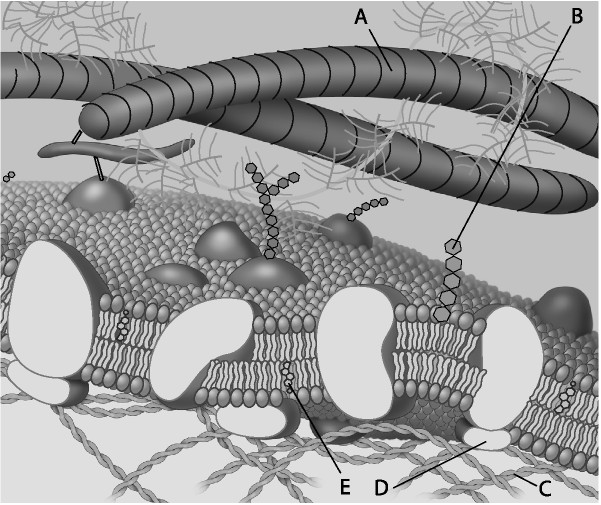
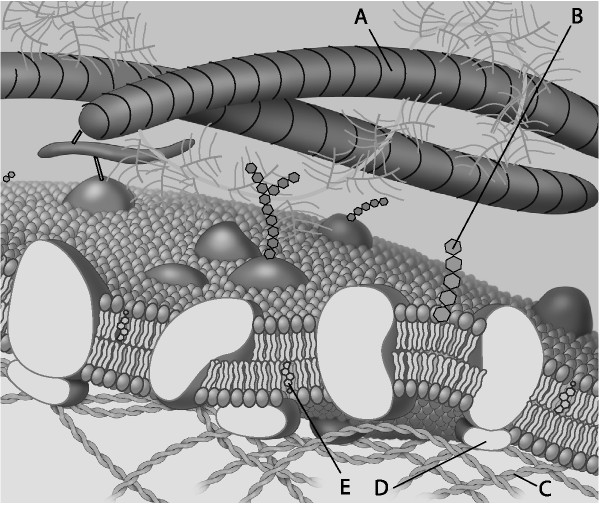
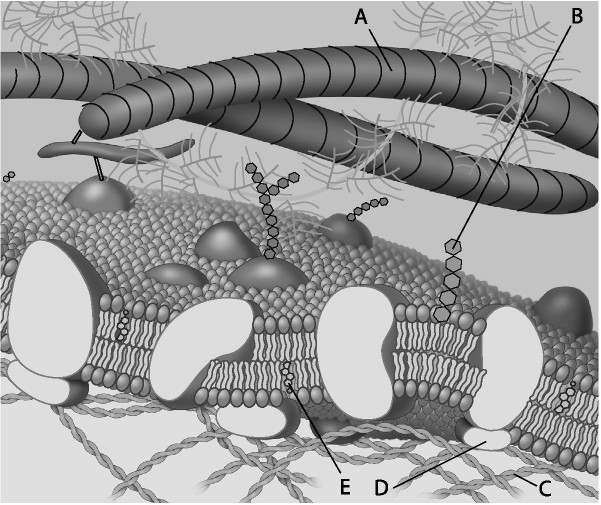
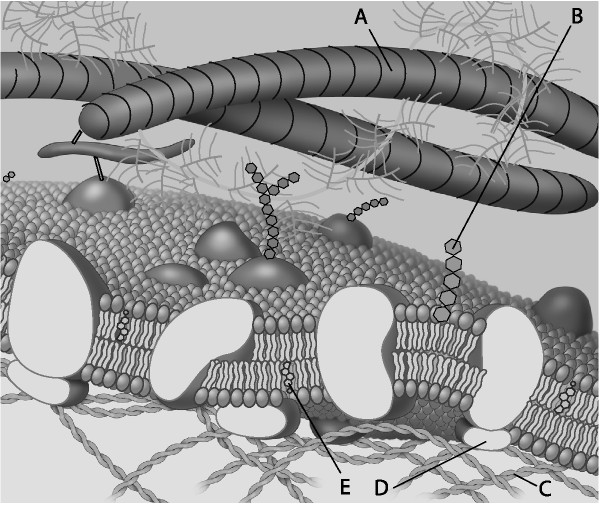
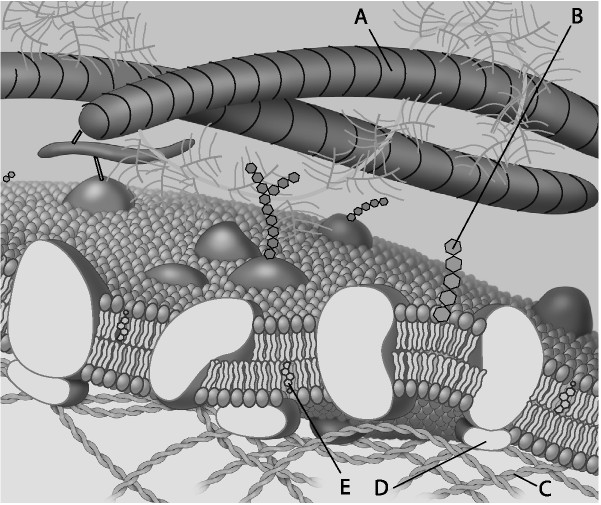
Which component is the peripheral protein?
A) A
B) B
C) C
D) D
E) E

back 31

Answer : D

front 32

Which component is cholesterol?
A) A
B) B
C) C
D) D
E) E

back 32

Answer : E

front 33

Which component is the fiber of the extracellular matrix?
A) A
B) B
C) C
D) D
E) E

back 33

Answer : A

front 34

Which component is a microfilament of the cytoskeleton?
A) A
B) B
C) C
D) D
E) E

back 34

Answer : C

front 35

Which component is a glycolipid?
A) A
B) B
C) C
D) D
E) E

back 35

Answer : B

front 36

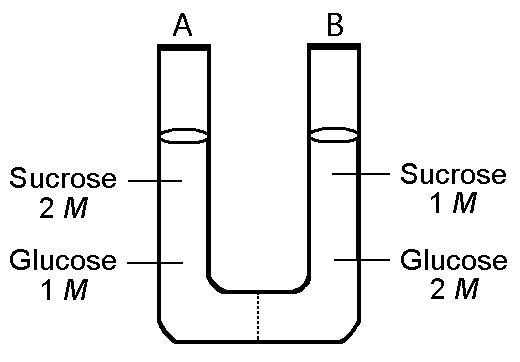
The solutions in the two arms of this U-tube are separated by a membrane that is permeable to water and glucose but not to sucrose. Side A is half-filled with a solution of 2 M sucrose and 1 M glucose. Side B is half-filled with 1 M sucrose and 2 M glucose. Initially, the liquid levels on both sides are equal.

Initially, in terms of tonicity, the solution in side A with respect to that in side B is
A) hypotonic.
B) plasmolyzed.
C) isotonic.
D) saturated.
E) hypertonic.

back 36

Answer : C

front 37

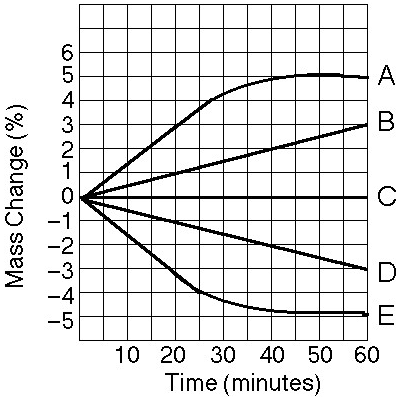
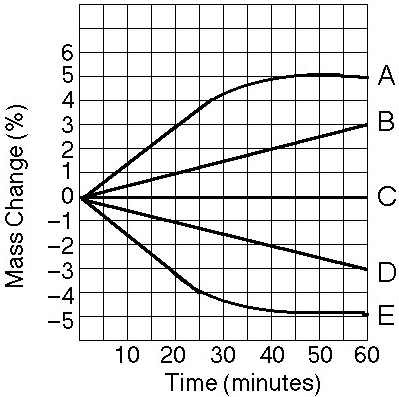
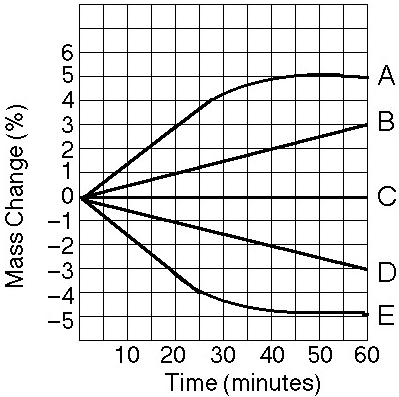
Five dialysis bags, constructed from a semipermeable membrane that is impermeable to sucrose, were filled with various concentrations of sucrose and then placed in separate beakers containing an initial concentration of 0.6 M sucrose solution. At 10-minute intervals, the bags were massed (weighed) and the percent change in mass of each bag was graphed.

Which line in the graph represents the bag that contained a solution isotonic to the 0.6 M solution at the beginning of the experiment?
A) A
B) B
C) C
D) D
E) E

back 37

Answer : C

front 38

Which line in the graph represents the bag with the highest initial concentration of sucrose?
A) A
B) B
C) C
D) D
E) E

back 38

Answer : A

front 39

Which line or lines in the graph represent(s) bags that contain a solution that is hypertonic at 50 minutes?
A) A and B
B) B
C) C
D) D
E) D and E

back 39

Answer : B

front 40

A patient has had a serious accident and lost a lot of blood. In an attempt to replenish body fluids, distilled water–equal to the volume of blood lost–is transferred directly into one of his veins. What will be the most probable result of this transfusion?
A) It will have no unfavorable effect as long as the water is free of viruses and bacteria.
B) The patient's red blood cells will shrivel up because the blood fluid has become hypotonic compared to the cells.
C) The patient's red blood cells will swell because the blood fluid has become hypotonic compared to the cells.
D) The patient's red blood cells will shrivel up because the blood fluid has become hypertonic compared to the cells.
E) The patient's red blood cells will burst because the blood fluid has become hypertonic compared to the cells.

back 40

Answer : C

front 41

Which term most precisely describes the cellular process of breaking down large molecules into smaller ones?
A) catalysis
B) metabolism
C) anabolism
D) dehydration
E) catabolism

back 41

Answer : E

front 42

Which of the following is (are) true for anabolic pathways?
A) They do not depend on enzymes.
B) They are usually highly spontaneous chemical reactions.
C) They consume energy to build up polymers from monomers.
D) They release energy as they degrade polymers to monomers.
E) They consume energy to decrease the entropy of the organism and its environment.

back 42

Answer : C

front 43

Whenever energy is transformed, there is always an increase in the
A) free energy of the system.
B) free energy of the universe.
C) entropy of the system.
D) entropy of the universe.
E) enthalpy of the universe.

back 43

Answer : D

front 44

Which of the following types of reactions would decrease the entropy within a cell?
A) anabolic reactions
B) hydrolysis
C) respiration
D) digestion
E) catabolic reactions

back 44

Answer : A

front 45

Which of the following is true for all exergonic reactions?
A) The products have more total energy than the reactants.
B) The reaction proceeds with a net release of free energy.
C) The reaction goes only in a forward direction: all reactants will be converted to products, but no products will be converted to reactants.
D) A net input of energy from the surroundings is required for the reactions to proceed.
E) The reactions are rapid.

back 45

Answer : B

front 46

Why is ATP an important molecule in metabolism?
A) Its hydrolysis provides an input of free energy for exergonic reactions.
B) It provides energy coupling between exergonic and endergonic reactions.
C) Its terminal phosphate group contains a strong covalent bond that, when hydrolyzed, releases free energy.
D) Its terminal phosphate bond has higher energy than the other two.
E) It is one of the four building blocks for DNA synthesis.

back 46

Answer : B

front 47

Which of the following is most similar in structure to ATP?
A) a pentose sugar
B) a DNA nucleotide
C) an RNA nucleotide
D) an amino acid with three phosphate groups attached
E) a phospholipid

back 47

Answer : C

front 48

When chemical, transport, or mechanical work is done by an organism, what happens to the heat generated?
A) It is used to power yet more cellular work.
B) It is used to store energy as more ATP.
C) It is used to generate ADP from nucleotide precursors.
D) It is lost to the environment.
E) It is transported to specific organs such as the brain.

back 48

Answer : D

front 49

What is the difference (if any) between the structure of ATP and the structure of the precursor of the A nucleotide in RNA?
A) The sugar molecule is different.
B) The nitrogen-containing base is different.
C) The number of phosphates is three instead of one.
D) The number of phosphates is three instead of two.
E) There is no difference.

back 49

Answer : E

front 50

Which of the following statements is true about enzyme-catalyzed reactions?
A) The reaction is faster than the same reaction in the absence of the enzyme.
B) The free energy change of the reaction is opposite from the reaction that occurs in the absence of the enzyme.
C) The reaction always goes in the direction toward chemical equilibrium.
D) Enzyme-catalyzed reactions require energy to activate the enzyme.
E) Enzyme-catalyzed reactions release more free energy than noncatalyzed reactions.

back 50

Answer : A

front 51

Reactants capable of interacting to form products in a chemical reaction must first overcome a thermodynamic barrier known as the reaction's
A) entropy.
B) activation energy.
C) endothermic level.
D) equilibrium point.
E) free-energy content.

back 51

Answer : B

front 52

A solution of starch at room temperature does not readily decompose to form a solution of simple sugars because
A) the starch solution has less free energy than the sugar solution.
B) the hydrolysis of starch to sugar is endergonic.
C) the activation energy barrier for this reaction cannot be surmounted.
D) starch cannot be hydrolyzed in the presence of so much water.
E) starch hydrolysis is nonspontaneous.

back 52

Answer : C

front 53

Which of the following statements regarding enzymes is true?
A) Enzymes increase the rate of a reaction by making the reaction more exergonic.
B) Enzymes increase the rate of a reaction by lowering the activation energy barrier.
C) Enzymes increase the rate of a reaction by reducing the rate of reverse reactions.
D) Enzymes change the equilibrium point of the reactions they catalyze.
E) Enzymes make the rate of a reaction independent of substrate concentrations.

back 53

Answer : B

front 54

The active site of an enzyme is the region that
A) binds allosteric regulators of the enzyme.
B) is involved in the catalytic reaction of the enzyme.
C) binds noncompetitive inhibitors of the enzyme.
D) is inhibited by the presence of a coenzyme or a cofactor.

back 54

Answer : B

front 55

According to the induced fit hypothesis of enzyme catalysis, which of the following is correct?
A) The binding of the substrate depends on the shape of the active site.
B) Some enzymes change their structure when activators bind to the enzyme.
C) A competitive inhibitor can outcompete the substrate for the active site.
D) The binding of the substrate changes the shape of the enzyme's active site.
E) The active site creates a microenvironment ideal for the reaction.

back 55

Answer: D

front 56

Mutations that result in single amino acid substitutions in an enzyme
A) can have no effect on the activity or properties of the enzyme.
B) will almost always destroy the activity of the enzyme.
C) will often cause a change in the substrate specificity of the enzyme.
D) may affect the physicochemical properties of the enzyme such as its optimal temperature and pH.
E) may, in rare cases, cause the enzyme to run reactions in reverse.

back 56

Answer : D

front 57

Increasing the substrate concentration in an enzymatic reaction could overcome which of the following?
A) denaturization of the enzyme
B) allosteric inhibition
C) competitive inhibition
D) saturation of the enzyme activity
E) insufficient cofactors

back 57

Answer : C

front 58

When you have a severe fever, what grave consequence may occur if the fever is not controlled?
A) destruction of your enzymes' primary structure
B) removal of amine groups from your proteins
C) change in the tertiary structure of your enzymes
D) removal of the amino acids in active sites of your enzymes
E) binding of your enzymes to inappropriate substrates

back 58

Answer : C

front 59

How does a noncompetitive inhibitor decrease the rate of an enzyme reaction?
A) by binding at the active site of the enzyme
B) by changing the shape of the enzyme's active site
C) by changing the free energy change of the reaction
D) by acting as a coenzyme for the reaction
E) by decreasing the activation energy of the reaction

back 59

Answer : B

front 60

The mechanism in which the end product of a metabolic pathway inhibits an earlier step in the pathway is most precisely described as
A) feedback inhibition.
B) metabolic inhibition.
C) allosteric inhibition.
D) noncooperative inhibition.
E) reversible inhibition.

back 60

Answer : A

front 61

Besides turning enzymes on or off, what other means does a cell use to control enzymatic activity?
A) cessation of cellular protein synthesis
B) localization of enzymes into specific organelles or membranes
C) exporting enzymes out of the cell
D) connecting enzymes into large aggregates
E) hydrophobic interactions

back 61

Answer : B

front 62

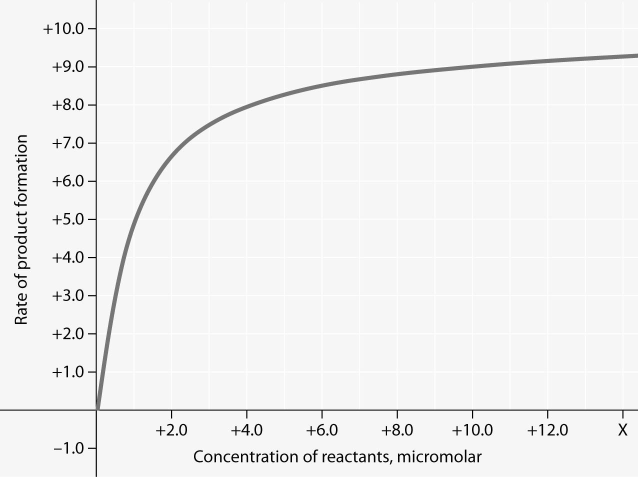
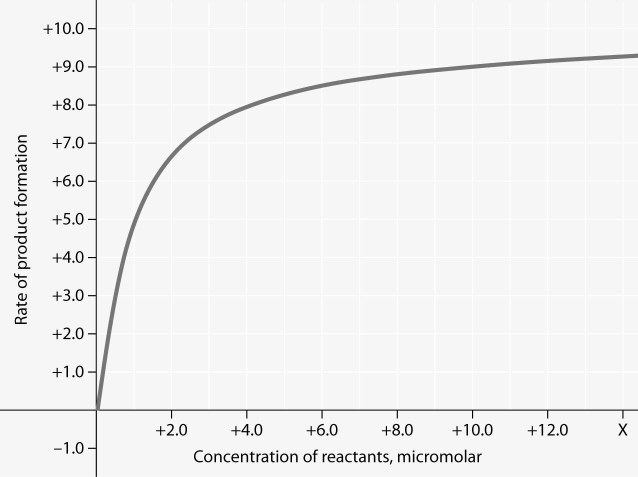
For the enzyme-catalyzed reaction shown in the figure, which of these treatments will cause the greatest increase in the rate of the reaction, if the initial reactant concentration is 1.0 micromolar?
A) doubling the activation energy needed
B) cooling the reaction by 10°C
C) doubling the concentration of the reactants to 2.0 micromolar
D) doubling the enzyme concentration
E) increasing the concentration of reactants to 10.0 micromolar, while reducing the concentration of enzyme by 1/2

back 62

Answer : D

front 63

In the figure, why does the reaction rate plateau at higher reactant concentrations?
A) Feedback inhibition by product occurs at high reactant concentrations.
B) Most enzyme molecules are occupied by substrate at high reactant concentrations.
C) The reaction nears equilibrium at high reactant concentrations.
D) The activation energy for the reaction increases with reactant concentration.
E) The rate of the reverse reaction increases with reactant concentration.

back 63

Answer : B

front 64

What is the term for metabolic pathways that release stored energy by breaking down complex molecules?
A) anabolic pathways
B) catabolic pathways
C) fermentation pathways
D) thermodynamic pathways
E) bioenergetic pathways

back 64

Answer : B

front 65

When electrons move closer to a more electronegative atom, what happens?
A) The more electronegative atom is reduced, and energy is released.
B) The more electronegative atom is reduced, and energy is consumed.
C) The more electronegative atom is oxidized, and energy is consumed.
D) The more electronegative atom is oxidized, and energy is released.
E) The more electronegative atom is reduced, and entropy decreases.

back 65

Answer : A

front 66

Which of the following statements describes the results of this reaction?
C₆H₁₂O₆ + 6 O₂ → 6 CO₂ + 6 H₂O + Energy
A) C₆H₁₂O₆ is oxidized and O₂ is reduced.
B) O₂ is oxidized and H₂O is reduced.
C) CO₂ is reduced and O₂ is oxidized.
D) C₆H₁₂O₆ is reduced and CO₂ is oxidized.
E) O₂ is reduced and CO₂ is oxidized.

back 66

Answer : A

front 67

When a glucose molecule loses a hydrogen atom as the result of an oxidation-reduction reaction, the molecule becomes
A) hydrolyzed.
B) hydrogenated.
C) oxidized.
D) reduced.
E) an oxidizing agent.

back 67

Answer : C

front 68

When a molecule of NAD⁺ (nicotinamide adenine dinucleotide) gains a hydrogen atom (not a proton), the molecule becomes
A) dehydrogenated.
B) oxidized.
C) redoxed.
D) reduced.
E) hydrolyzed.

back 68

Answer : D

front 69

Where does glycolysis take place in eukaryotic cells?
A) mitochondrial matrix
B) mitochondrial outer membrane
C) mitochondrial inner membrane
D) mitochondrial intermembrane space
E) cytosol

back 69

Answer : E

front 70

The oxygen consumed during cellular respiration is involved directly in which process or event?
A) glycolysis
B) accepting electrons at the end of theelectron transport chain
C) the citric acid cycle
D) the oxidation of pyruvate to acetyl CoA
E) the phosphorylation of ADP to form ATP

back 70

Answer : B

front 71

Which process in eukaryotic cells will proceed normally whether oxygen (O₂) is present or absent?
A) electron transport
B) glycolysis
C) the citric acid cycle
D) oxidative phosphorylation
E) chemiosmosis

back 71

Answer : B

front 72

Substrate-level phosphorylation accounts for approximately what percentage of the ATP formed by the reactions of glycolysis?
A) 0%
B) 2%
C) 10%
D) 38%
E) 100%

back 72

Answer : E

front 73

In addition to ATP, what are the end products of glycolysis?
A) CO₂ and H₂O
B) CO₂ and pyruvate
C) NADH and pyruvate
D) CO₂ and NADH
E) H₂O, FADH₂, and citrate

back 73

Answer : C

front 74

In glycolysis, for each molecule of glucose oxidized to pyruvate
A) two molecules of ATP are used and two molecules of ATP are produced.
B) two molecules of ATP are used and four molecules of ATP are produced.
C) four molecules of ATP are used and two molecules of ATP are produced.
D) two molecules of ATP are used and six molecules of ATP are produced.
E) six molecules of ATP are used and six molecules of ATP are produced.

back 74

Answer : B

front 75

Why is glycolysis described as having an investment phase and a payoff phase?
A) It both splits molecules and assembles molecules.
B) It attaches and detaches phosphate groups.
C) It uses glucose and generates pyruvate.
D) It shifts molecules from cytosol to mitochondrion.
E) It uses stored ATP and then forms a net increase in ATP.

back 75

Answer : E

front 76

Which of the following intermediary metabolites enters the citric acid cycle and is formed, in part, by the removal of a carbon (CO₂) from one molecule of pyruvate?
A) lactate
B) glyceraldehydes-3-phosphate
C) oxaloacetate
D) acetyl CoA
E) citrate

back 76

Answer : D

front 77

How many carbon atoms are fed into the citric acid cycle as a result of the oxidation of one molecule of pyruvate?
A) two
B) four
C) six
D) eight
E) ten

back 77

Answer : A

front 78

Carbon dioxide (CO₂) is released during which of the following stages of cellular respiration?
A) glycolysis and the oxidation of pyruvate to acetyl CoA
B) oxidation of pyruvate to acetyl CoA and the citric acid cycle
C) the citric acid cycle and oxidative phosphorylation
D) oxidative phosphorylation and fermentation
E) fermentation and glycolysis

back 78

Answer : B

front 79

During aerobic respiration, electrons travel downhill in which sequence?
A) food → citric acid cycle → ATP → NAD⁺
B) food → NADH → electron transport chain → oxygen
C) glucose → pyruvate → ATP → oxygen
D) glucose → ATP → electron transport chain → NADH
E) food → glycolysis → citric acid cycle → NADH → ATP

back 79

Answer : B

front 80

What fraction of the carbon dioxide exhaled by animals is generated by the reactions of the citric acid cycle, if glucose is the sole energy source?
A) 1/6
B) 1/3
C) 1/2
D) 2/3
E) 100/100

back 80

Answer : D

front 81

Where are the proteins of the electron transport chain located?
A) cytosol
B) mitochondrial outer membrane
C) mitochondrial inner membrane
D) mitochondrial intermembrane space
E) mitochondrial matrix

back 81

Answer : C

front 82

In cellular respiration, the energy for most ATP synthesis is supplied by
A) high energy phosphate bonds in organic molecules.
B) a proton gradient across a membrane.
C) converting oxygen to ATP.
D) transferring electrons from organic molecules to pyruvate.
E) generating carbon dioxide and oxygen in the electron transport chain.

back 82

Answer : B

front 83

The primary role of oxygen in cellular respiration is to
A) yield energy in the form of ATP as it is passed down the respiratory chain.
B) act as an acceptor for electrons and hydrogen, forming water.
C) combine with carbon, forming CO₂.
D) combine with lactate, forming pyruvate.
E) catalyze the reactions of glycolysis.

back 83

Answer : B

front 84

During aerobic respiration, H₂O is formed. Where does the oxygen atom for the formation of the water come from?
A) carbon dioxide (CO₂)
B) glucose (C₆H₁₂O₆)
C) molecular oxygen (O₂)
D) pyruvate (C₃H₃O₃-)
E) lactate (C₃H₅O₃-)

back 84

Answer : C

front 85

Energy released by the electron transport chain is used to pump H⁺ into which location in eukaryotic cells?
A) cytosol
B) mitochondrial outer membrane
C) mitochondrial inner membrane
D) mitochondrial intermembrane space
E) mitochondrial matrix

back 85

Answer : D

front 86

Where is ATP synthase located in the mitochondrion?
A) cytosol
B) electron transport chain
C) outer membrane
D) inner membrane
E) mitochondrial matrix

back 86

Answer : D

front 87

How many oxygen molecules (O₂) are required each time a molecule of glucose (C₆H₁₂O₆) is completely oxidized to carbon dioxide and water via aerobic respiration,?
A) 1
B) 3
C) 6
D) 12
E) 30

back 87

Answer : C

front 88

Approximately how many molecules of ATP are produced from the complete oxidation of two molecules of glucose (C₆H₁₂O₆) in aerobic cellular respiration?
A) 2
B) 4
C) 15
D) 30-32
E) 60-64

back 88

Answer : E

front 89

If a cell is able to synthesize 30 ATP molecules for each molecule of glucose completely oxidized by carbon dioxide and water, how many ATP molecules can the cell synthesize for each molecule of pyruvate oxidized to carbon dioxide and water?
A) 0
B) 1
C) 12
D) 14
E) 15

back 89

Answer : C

front 90

Which of the following normally occurs regardless of whether or not oxygen (O₂) is present?
A) glycolysis
B) fermentation
C) oxidation of pyruvate to acetyl CoA
D) citric acid cycle
E) oxidative phosphorylation (chemiosmosis)

back 90

Answer : A

front 91

The ATP made during fermentation is generated by which of the following?
A) the electron transport chain
B) substrate-level phosphorylation
C) chemiosmosis
D) oxidative phosphorylation
E) aerobic respiration

back 91

Answer : B

front 92

In the absence of oxygen, yeast cells can obtain energy by fermentation, resulting in the production of
A) ATP, CO₂, and ethanol (ethyl alcohol).
B) ATP, CO₂, and lactate.
C) ATP, NADH, and pyruvate.
D) ATP, pyruvate, and oxygen.
E) ATP, pyruvate, and acetyl CoA.

back 92

Answer : A

front 93

One function of both alcohol fermentation and lactic acid fermentation is to
A) reduce NAD⁺ to NADH.
B) reduce FAD⁺ to FADH₂.
C) oxidize NADH to NAD⁺.
D) reduce FADH₂ to FAD⁺.
E) do none of the above.

back 93

Answer : C

front 94

An organism is discovered that thrives both in the presence and absence of oxygen in the air. Curiously, the consumption of sugar increases as oxygen is removed from the organism's environment, even though the organism does not gain much weight. This organism
A) must use a molecule other than oxygen to accept electrons from the electron transport chain.
B) is a normal eukaryotic organism.
C) is photosynthetic.
D) is an anaerobic organism.
E) is a facultative anaerobe.

back 94

Answer : E

front 95

When an individual is exercising heavily and when the muscle becomes oxygen-deprived, muscle cells convert pyruvate to lactate. What happens to the lactate in skeletal muscle cells?
A) It is converted to NAD⁺.
B) It produces CO₂ and water.
C) It is taken to the liver and converted back to pyruvate.
D) It reduces FADH₂ to FAD⁺.
E) It is converted to alcohol.

back 95

Answer : C

front 96

Phosphofructokinase is an allosteric enzyme that catalyzes the conversion of fructose 6-phosphate to fructose 1,6-bisphosphate, an early step of glycolysis. In the presence of oxygen, an increase in the amount of ATP in a cell would be expected to
A) inhibit the enzyme and thus slow the rates of glycolysis and the citric acid cycle.
B) activate the enzyme and thus slow the rates of glycolysis and the citric acid cycle.
C) inhibit the enzyme and thus increase the rates of glycolysis and the citric acid cycle.
D) activate the enzyme and increase the rates of glycolysis and the citric acid cycle.
E) inhibit the enzyme and thus increase the rate of glycolysis and the concentration of citrate.

back 96

Answer : A

front 97

Which of the following are products of the light reactions of photosynthesis that are utilized in the Calvin cycle?
A) CO₂ and glucose
B) H₂O and O₂
C) ADP, Pi, and NADP⁺
D) electrons and H⁺
E) ATP and NADPH

back 97

Answer : E

front 98

Photosynthesis is not responsible for
A) oxygen in the atmosphere.
B) the ozone layer.
C) most of the organic carbon on Earth's surface.
D) atmospheric CO₂.
E) fossil fuels.

back 98

Answer : E

front 99

Where does the Calvin cycle take place?
A) stroma of the chloroplast
B) thylakoid membrane
C) cytoplasm surrounding the chloroplast
D) interior of the thylakoid (thylakoid space)
E) outer membrane of the chloroplast

back 99

Answer : A

front 100

In any ecosystem, terrestrial or aquatic, what group(s) is (are) always necessary?
A) autotrophs and heterotrophs
B) producers and primary consumers
C) photosynthesizers
D) autotrophs
E) green plants

back 100

Answer : D

front 101

When oxygen is released as a result of photosynthesis, it is a direct by-product of
A) reducing NADP⁺.
B) splitting water molecules.
C) chemiosmosis.
D) the electron transfer system of photosystem I.
E) the electron transfer system of photosystem II.

back 101

Answer : B

front 102

Which of the events listed below occurs in the light reactions of photosynthesis?
A) NADP is produced.
B) NADPH is reduced to NADP⁺.
C) Carbon dioxide is incorporated into PGA.
D) ATP is phosphorylated to yield ADP.
E) Light is absorbed and funneled to reaction-center chlorophyll a.

back 102

Answer : E

front 103

Reduction of NADP⁺ occurs during
A) photosynthesis.
B) respiration.
C) both photosynthesis and respiration.
D) neither photosynthesis nor respiration.
E) photorespiration.

back 103

Answer : A

front 104

The splitting of carbon dioxide to form oxygen gas and carbon compounds occurs during
A) photosynthesis.
B) respiration.
C) both photosynthesis and respiration.
D) neither photosynthesis nor respiration.
E) photorespiration.

back 104

Answer : D

front 105

Generation of proton gradients across membranes occurs during
A) photosynthesis.
B) respiration.
C) both photosynthesis and respiration.
D) neither photosynthesis nor respiration.
E) photorespiration.

back 105

Answer : C

front 106

What is the relationship between wavelength of light and the quantity of energy per photon?
A) They have a direct, linear relationship.
B) They are inversely related.
C) They are logarithmically related.
D) They are separate phenomena.
E) They are only related in certain parts of the spectrum.

back 106

Answer : B

front 107

The reactions that produce molecular oxygen (O₂) take place in
A) the light reactions alone.
B) the Calvin cycle alone.
C) both the light reactions and the Calvin cycle.
D) neither the light reactions nor the Calvin cycle.
E) the chloroplast, but are not part of photosynthesis.

back 107

Answer : A

front 108

What is the primary function of the Calvin cycle?
A) use ATP to release carbon dioxide
B) use NADPH to release carbon dioxide
C) split water and release oxygen
D) transport RuBP out of the chloroplast
E) synthesize simple sugars from carbon dioxide

back 108

Answer : E

front 109

The NADPH required for the Calvin cycle comes from
A) reactions initiated in photosystem I.
B) reactions initiated in photosystem II.
C) the citric acid cycle.
D) glycolysis.
E) oxidative phosphorylation.

back 109

Answer : A

front 110

Reactions that require CO₂ take place in
A) the light reactions alone.
B) the Calvin cycle alone.
C) both the light reactions and the Calvin cycle.
D) neither the light reactions nor the Calvin cycle.
E) the chloroplast, but is not part of photosynthesis.

back 110

Answer : B

front 111

Which of the following statements best represents the relationships between the light reactions and the Calvin cycle?
A) The light reactions provide ATP and NADPH to the Calvin cycle, and the cycle returns ADP, Pi, and NADP⁺ to the light reactions.
B) The light reactions provide ATP and NADPH to the carbon fixation step of the Calvin cycle, and the cycle provides water and electrons to the light reactions.
C) The light reactions supply the Calvin cycle with CO₂ to produce sugars, and the Calvin cycle supplies the light reactions with sugars to produce ATP.
D) The light reactions provide the Calvin cycle with oxygen for electron flow, and the Calvin cycle provides the light reactions with water to split.
E) There is no relationship between the light reactions and the Calvin cycle.

back 111

Answer : A

front 112

In the process of carbon fixation, RuBP attaches a CO₂ to produce a six-carbon molecule, which is then split to produce two molecules of 3-phosphoglycerate. After phosphorylation and reduction produces glyceraldehyde 3-phosphate (G3P), what more needs to happen to complete the Calvin cycle?
A) addition of a pair of electrons from NADPH
B) inactivation of RuBP carboxylase enzyme
C) regeneration of ATP from ADP
D) regeneration of RuBP
E) regeneration of NADP⁺

back 112

Answer : D

front 113

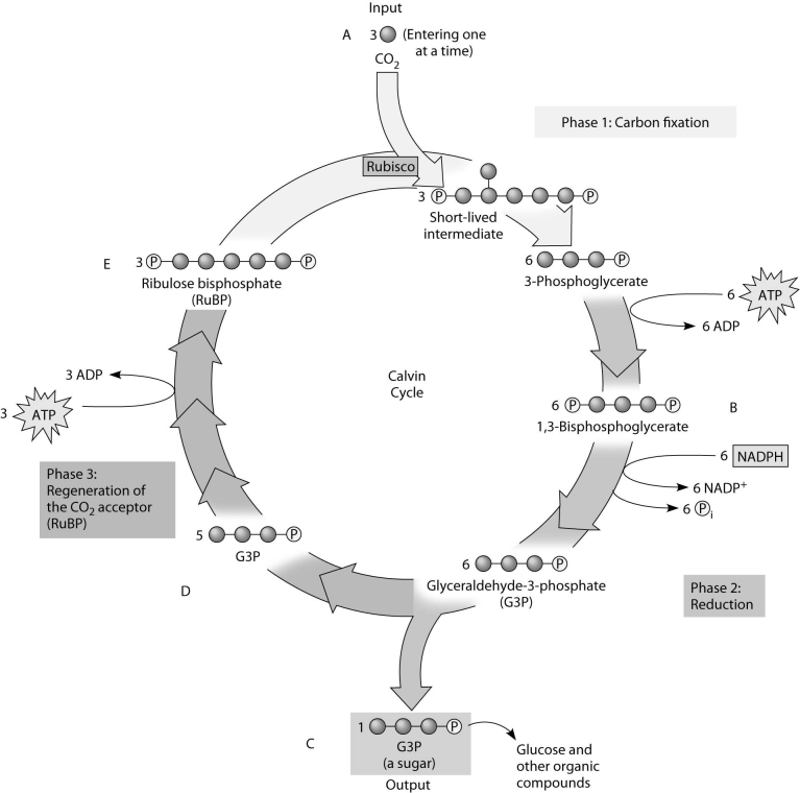
Which molecule(s) of the Calvin cycle is (are) also found in glycolysis?
A) B, C, E, and 3-phosphoglycerate
B) B, C, and E only
C) 3-phosphoglycerate only
D) B, C, D, and 3-phosphoglycerate only
E) E only

back 113

Answer : D

front 114

A gardener is concerned that her greenhouse is getting too hot from too much light, and seeks to shade her plants with colored translucent plastic sheets. What color should she use to reduce overall light energy, but still maximize plant growth?
A) green
B) blue
C) yellow
D) orange
E) any color will work equally well

back 114

Answer : B

front 115

Theodor W. Engelmann illuminated a filament of algae with light that passed through a prism, thus exposing different segments of algae to different wavelengths of light. He added aerobic bacteria and then noted in which areas the bacteria congregated. He noted that the largest groups were found in the areas illuminated by the red and blue light.

What did Engelmann conclude about the congregation of bacteria in the red and blue areas?
A) Bacteria released excess carbon dioxide in these areas.
B) Bacteria congregated in these areas due to an increase in the temperature of the red and blue light.
C) Bacteria congregated in these areas because these areas had the most oxygen being released.
D) Bacteria are attracted to red and blue light and thus these wavelengths are more reactive than other wavelengths.
E) Bacteria congregated in these areas due to an increase in the temperature caused by an increase in photosynthesis.

back 115

Answer : C

front 116

Theodor W. Engelmann illuminated a filament of algae with light that passed through a prism, thus exposing different segments of algae to different wavelengths of light. He added aerobic bacteria and then noted in which areas the bacteria congregated. He noted that the largest groups were found in the areas illuminated by the red and blue light.

An outcome of this experiment was to help determine
A) the relationship between heterotrophic and autotrophic organisms.
B) the relationship between wavelengths of light and the rate of aerobic respiration.
C) the relationship between wavelengths of light and the amount of heat released.
D) the relationship between wavelengths of light and the rate of photosynthesis.
E) the relationship between the concentration of carbon dioxide and the rate of photosynthesis.

back 116

Answer : D

front 117

A spaceship is designed to support animal life for a multiyear voyage to the outer planets of the solar system. Plants will be grown to provide oxygen and to recycle carbon dioxide.

Since the spaceship will be too far from the sun for photosynthesis, an artificial light source will be needed. What wavelengths of light should be used to maximize plant growth with a minimum of 12 energy expenditure?
A) full-spectrum white light
B) green light
C) a mixture of blue and red light
D) yellow light
E) UV light

back 117

Answer : C

front 118

A spaceship is designed to support animal life for a multiyear voyage to the outer planets of the solar system. Plants will be grown to provide oxygen and to recycle carbon dioxide.

If the power fails and the lights go dark, what will happen to CO₂ levels?
A) CO₂ will rise as a result of both animal and plant respiration.
B) CO₂ will rise as a result of animal respiration only.
C) CO₂ will remain balanced because plants will continue to fix CO₂ in the dark.
D) CO₂ will fall because plants will increase CO₂ fixation.
E) CO₂ will fall because plants will cease to respire in the dark.

back 118

Answer : A