Print Options

Card layout: ?

← Back to notecard set|Easy Notecards home page

Instructions for Side by Side Printing
  1. Print the notecards
  2. Fold each page in half along the solid vertical line
  3. Cut out the notecards by cutting along each horizontal dotted line
  4. Optional: Glue, tape or staple the ends of each notecard together
  1. Verify Front of pages is selected for Viewing and print the front of the notecards
  2. Select Back of pages for Viewing and print the back of the notecards
    NOTE: Since the back of the pages are printed in reverse order (last page is printed first), keep the pages in the same order as they were after Step 1. Also, be sure to feed the pages in the same direction as you did in Step 1.
  3. Cut out the notecards by cutting along each horizontal and vertical dotted line
To print: Ctrl+PPrint as a list

117 notecards = 30 pages (4 cards per page)

Viewing:

Nutrition Final Exam Review

front 1

Health

back 1

  • a state of complete physical, mental, and social well-being

front 2

Wellness

back 2

  • a lifestyle that enhances our level of health

front 3

Lifestyle

back 3

  • pattern of behaviors

front 4

Primary Prevention

back 4

  • prevent initial development of a disease or poor health
  • ex:
    • diet
    • exercise

front 5

Secondary Prevention

back 5

  • early detection to halt, reduce, or reverse the effects of a disease or poor health
  • manages disease

front 6

Essential Nutrients

back 6

  • body CAN NOT synthesize
  • must be obtained from diet

front 7

Nonessential Nutrients

back 7

  • nutrients that the body can synthesize

front 8

Dietary Standards

back 8

  • a guide to adequate nutrient intake levels against which to compare nutrient values of foods consumed

front 9

Recommended Dietary Allowance (RDA)

back 9

  • the amount of nutrient and calorie intake per day considered necessary for maintenance of good health
  • amount of nutrient needed to satisfy the needs of almost healthy individuals at a life stage or gender study

front 10

Estimated Average Requirement (EAR)

back 10

  • The daily intake of a specific nutrient estimated to meet the requirement in 50% of healthy people in an age- and gender-specific group

front 11

Adequate Intake (AI)

back 11

  • A recommended intake value based on observed or experimentally determined approximations or estimates of nutrient intake by a group of healthy people
  • used when recommended allowance is not determined

front 12

Tolerable Upper Intake Level (UL)

back 12

  • is the level of nutrient intake that should not be exceeded to prevent adverse health risks

front 13

Acceptable Macronutrient Distribution Range (AMDR)

back 13

  • daily percent of calories intake that should come from carbs, lipids, and proteins

front 14

daily kcal intake for carbs

back 14

  • 45-65%

front 15

daily kcal intake for saturated fats

back 15

  • 10% or less

front 16

daily kcal intake for lipids/fats

back 16

  • 20-35%

front 17

daily kcal intake for proteins

back 17

  • 10-35%

front 18

Estimated Energy Requirement (EER)

back 18

  • the DRI for dietary energy intake

front 19

Nutrient Density

back 19

  • ratio comparison of a food's nutrient content with the kcal value that the food contains
  • nutrient value vs caloric value

front 20

Overnutrition

back 20

  • consumption of too many nutrients and too much energy in comparison with DRI values

front 21

Malnutrition

back 21

  • condition resulting from an imbalanced nutrient and/or energy intake

front 22

Undernutrition

back 22

  • consumption of not enough energy or nutrients in comparison with DRI values

front 23

Four Themes of MyPlate

back 23

  1. Variety
  2. Proportionality
  3. Moderation
  4. Activity

front 24

Variety (MyPlate Theme)

back 24

  • eat foods from all food groups and subgroups

front 25

Proportionality (MyPlate Theme)

back 25

  • eat more of some foods and less of others

front 26

Moderation (MyPlate Theme)

back 26

  • choose types of foods that limit intake of saturated or trans fats, added sugars, cholesterol, salt, and alcohol

front 27

Activity (MyPlate Theme)

back 27

  • be physically active every day

front 28

Food Labels

back 28

  • a way for consumers to see how individual foods fit their nutritional needs

front 29

Metabolism

back 29

  • enzyme mediated chemical reactions
  • cells use energy to build and acquire energy from the breakdown of organic molecules
  • absorbed nutrients are used by the body for energy and to form and maintain body structures and functions

front 30

Anabolism

back 30

  • process of synthesis from which substances are formed
  • uses energy to build organic molecules
  • endothermic

front 31

Catabolism

back 31

  • breakdown of food components into smaller molecular particles
  • acquires energy breaking down organic molecules
  • exothermic

front 32

GER (gastroesophagel reflux)

back 32

  • A backflow of the contents of the stomach into the esophagus, caused by relaxation of the lower esophageal sphincter

front 33

Strategies to prevent GER

back 33

  • avoid high-fat meals
  • avoid overeating
  • avoid laying down after eating
  • avoid pressure on stomach
  • avoid eating too fast

front 34

3 Elements found in Carbohydrates

back 34

  • Carbon, Hydrogen, and Oxygen

front 35

Ratio of elements in Carbs

back 35

  • 1:2:1

front 36

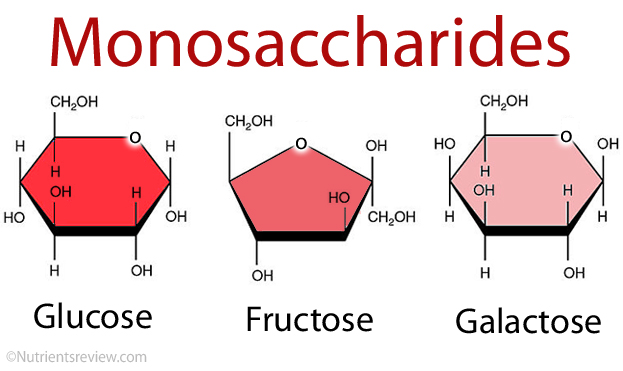
Monosaccharides (simple carbohydrates)

back 36

  • composed of single carbohydrate units
  • ex: glucose, fructose, galactose

front 37

Disaccharides (simple carbohydrates)

back 37

  • consists of two single carbohydrates bound together
  • ex: sucrose, maltose, lactose

front 38

Polysaccharides (complex carbohydrates)

back 38

  • consists of many subunits of monosaccharides joined together
  • ex: starch, fiber, glycogen

front 39

Glycogen

back 39

  • storage form of carbohydrate energy
  • stored in the liver and muscles
  • retrieved as needed for energy

front 40

Glycogenesis

back 40

  • the process of converting glucose to glycogen

front 41

Carbohydrates

back 41

  • provides energy (function)
  • protein-sparing effect
    • If enough carbohydrate is provided to meet the energy needs of the body, protein can be spared or saved to use for specific protein functions
  • the CNS functions best from glucose
  • the GI tract has the role of digesting carbs into monosaccharides for easy absorption

front 42

Blood glucose homeostasis

back 42

  • between 70 to 100 mg/dL

front 43

Glycogenolysis

back 43

  • the process of converting glycogen back to glucose

front 44

Glycolysis

back 44

  • a metabolic process that breaks down carbohydrates through a series of reactions to either pyruvic acid or lactic acid and releases energy for the body in the form of ATP

front 45

Gluconeogenesis

back 45

  • the process of producing glucose from fats or protein

front 46

Ketone Bodies

back 46

  • created when fatty acids are broken down for energy when sufficient carbs are unavailable

front 47

Glucose

back 47

  • simple carbs (monosaccharides)
  • blood sugar
  • rapidly absorbed into the bloodstream
  • food sources: fruits, sweeteners

front 48

Fructose

back 48

  • simple carbs (monosaccharides)
  • fruit sugars
  • food sources: fruits, honey, syrups, vegetables

front 49

Galactose

back 49

  • simple carbs (monosaccharides)
  • food sources: part of lactose, found in milk

front 50

Sucrose

back 50

  • simple carbs (disaccharides)
  • glucose + fructose
  • table sugar
  • food sources: sugarcane, sugar beets, fruits, vegetables

front 51

Lactose

back 51

  • simple carbs (disaccharides)
  • milk sugar
  • food sources: milk and milk products
  • glucose + galactose

front 52

Maltose

back 52

  • simple carbs (disaccharides)
  • malt sugar
  • food sources: germinating grains
  • glucose + glucose

front 53

Starches

back 53

  • complex carbohydrates
  • strings of glucose
  • storage form of plant carbohydrate
  • food sources: grains, legumes, potatoes

front 54

Fiber

back 54

  • roughage
  • strings of monosaccharides, usually glucose
  • cannot be broken down by human digestive enyzmes
  • Insoluble vs Soluble Fiber
  • food sources: legumes, whole grains, fruits, vegetables

front 55

Blood Glucose

back 55

  • a source of energy to all cells

front 56

Ketoacidosis/Ketosis

back 56

  • the result build up of ketones leading to acid-base imbalances in the body

front 57

Insulin

back 57

  • hormone
  • produced by the beta cells of the islets of Langerhans
  • lowers/decrease blood glucose levels by enhancing the conversion of excess glucose to glycogen (glycogenesis)

front 58

Glucagon

back 58

  • hormone
  • increases blood glucose levels
  • stimulates conversion of liver glycogen to glucose
  • assists regulation of blood glucose throughout the night

front 59

Somatostatin effect on blood glucose

back 59

  • hormone
  • secreted from the hypothalamus and pancreas
  • inhibits the functions of insulin and glucagon

front 60

Epinephrine effect on the liver

back 60

  • hormone
  • enhances the fast conversion of liver glycogen to glucose (glycogenolysis)

front 61

Steroid Hormones (Insulin Inhibitor)

effect on blood glucose

back 61

  • functions against insulin
  • promotes glucose formation from protein

front 62

Adrenocorticotrophic Hormone (ACTH)

effect on blood glucose

back 62

  • insulin inhibitor
  • promotes glucose formation from protein

front 63

Thyroid Hormones effect on blood absorption

back 63

  • affects blood glucose level by enhancing intestinal absorption of glucose and releasing epinephrine

front 64

Growth Hormones effect on blood glucose

back 64

  • insulin inhibitor
  • increase gluconeogenesis from protein

front 65

Glycemic Index

back 65

  • rankings of foods according to the level to which a food raises blood glucose levels
  • measures a single component of food

front 66

Glycemic Load

back 66

  • considers the total glycemic index effect of a mixed meal of dietary plan
  • whole thing

front 67

What happens to fructose in the liver?

back 67

  • liver cels rearrange fructose into glucose

front 68

What happens to starch in the digestive tract?

back 68

  • it is broken down to provide glucose

front 69

Insoluble FIber

back 69

  • fiber that does not dissolve in fluids

front 70

Soluble Fiber

back 70

  • fiber that dissolves in fluids
  • thickens substances
  • provides structure and protection for plants

front 71

Health Effects of Dietary Fiber

back 71

  • obesity
  • constipation
  • diverticular disease
  • colon cancer
  • heart disease
  • diabetes control

front 72

Since the 1940s ______ grains are generally enriched with niacin, folate, thiamine, riboflavin, and iron.

back 72

refined

front 73

______/______ grains are sources of magnesium, riboflavin, niacin, thiamin, vitamin B6, zinc, and some protein that are k=lost when refined.

back 73

whole/unrefined

front 74

Palatibility (Lipids)

back 74

  • fats make food taste and smell good

front 75

Satiety (Lipids)

back 75

  • hormones released in response to the consumption of fat causes us to feel full and satisfied

front 76

Satiation (Lipids)

back 76

  • increases our desire to eat more fatty food

front 77

Emulsifier

back 77

  • a substance that works by being soluble in water and fat at the same time

front 78

Lipoproteins

back 78

  • carriers or transporters of lipids

front 79

Lecithin

back 79

  • a phospholipid
  • extensive role as an emulsifier
  • part of lipoproteins

front 80

Triglycerides (structure)

back 80

  • composed of a glycerol and three fatty acids

front 81

How can you tell the difference between carbohydrates and triglycerides by looking at the chemical formula?

back 81

no data

front 82

What elements are found in triglycerides?

back 82

  • carbon
  • hydrogen
  • oxygen

front 83

Physiologic Function of Triglycerides

back 83

  • stored energy
  • organ protection
  • temperature regulation
  • insulation

front 84

Function(s) of Phospholipids

back 84

  • form part of all cell membrane structure
  • serve as emulsifiers to keep fats dispersed in body fluids

front 85

Function(s) of Sterols

back 85

  • provides basic material to make bile, vitamin D, sex hormones, and cells in brain and nerve tissue

front 86

What elements are found in fatty acids?

back 86

  • carbon atoms

front 87

Cholesterol

back 87

  • a vital part of all cell membrane, nerve tissue, and building block for hormones

front 88

How many carbons are found in glycerol?

back 88

  • there are three carbon atoms in glycerol
  • tri = 3

front 89

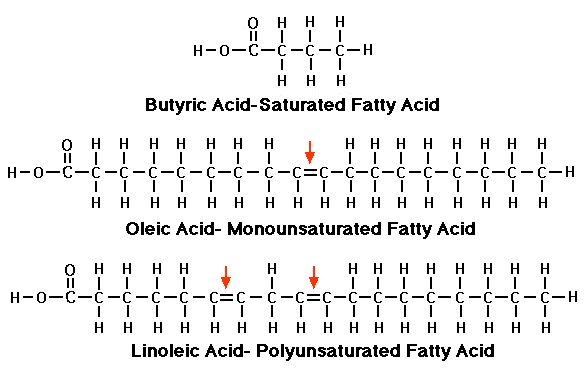
Saturated Fatty Acid

back 89

  • has a single-bonded carbon chain
  • fully saturated b/c hydrogen atoms are attached to all available bonding sites
  • contained in meats, butterfat, shortening, and vegetable oils

front 90

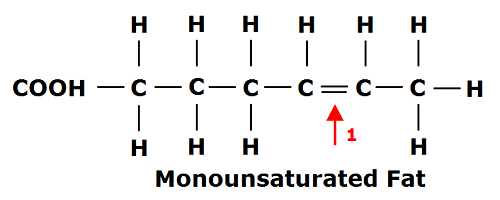
Monounsaturated Fatty Acid (MUFA)

back 90

  • a carbon chain has only one unsaturated double bond
  • dietary sources: olive oil, peanuts, and canola oil

front 91

Polyunsaturated Fatty Acid (PUFA)

back 91

  • a carbon chain has two or more unsaturated double bonds
  • characterized by the location of the unsaturation in the molecular structure
  • dietary sources: vegetable oils, fish, and margarine

front 92

What two categories of polyunsaturated fatty acids are essential?

back 92

  • omega-3 (linolenic)
  • omega-6 (linoleic)

front 93

Americans consume a large amount of Omega-____.

back 93

omega-6 (linoleic)

front 94

Americans consumption of Omega-___ is low.

back 94

omega-3 (linolenic)

front 95

Types of Omega-_ help prevents heart disease.

back 95

omega-3 (linolenic)

front 96

Rich sources of Omega-__ are deep water fish such as salmon, tuna, sardines, and herring. Omega-__ can also be obtained from plant sources such as canola oil, some nuts such as walnuts, soybean and soybean oils, and extra virgin or virgin oils.

back 96

omega-3; omega-3

front 97

Hydrogenation

back 97

  • process which forces hydrogen atoms to break a double bond and attach to the carbons
  • creates saturated fat
  • makes fats more solid/stable

front 98

Dietary Sources of Saturated Fatty Acids

back 98

  • meats
  • butterfat
  • shortening
  • vegetable oils
  • beef
  • poultry
  • pork
  • lamb
  • egg yolks
  • dairy products

front 99

Catabolism of Lipids

back 99

  • involves the hydrolysis of triglycerides into two-carbon units that become part of acetyl coenzyme A (acetyl CoA)

front 100

Acetyl CoA (Lipids)

back 100

  • an intermediate byproduct in metabolism
  • formed from the breakdown of glucose, fatty acids, and certain amino acids
  • enters the TCA cycle

front 101

Lipogenesis

back 101

  • synthesis of lipids
  • results in the formation of triglycerides, phospholipids, cholesterol, and prostaglandins

front 102

When found in excess, glucose and amino acids are converted to what form of lipid?

back 102

  • triglycerides and phosphates

front 103

Lipid metabolism is primarily regulated by _______, ____ _____, and ______ ______ ______.

back 103

insulin; growth hormones; adrenal cortex hormones

front 104

Role of Bile Emulsification (Lipids)

back 104

  • bile emulsifies fat to facilitate digestion

front 105

Chylomicrons

back 105

  • the first lipoproteins formed after the absorption of lipids from food
  • transport fats from the intestinal wall to the liver cells

front 106

Most Americans consume between _______ and _______ % of total energy as fat. How does this compare to the suggested ADMR?

back 106

  • 35 to 40%
  • it exceeds the ADMR for fat which is 20-35%

front 107

Very Low-Density Lipoproteins (VLDL)

back 107

  • large lipoproteins rich in triglycerides;
  • VLDLs circulate through the blood giving up their triglycerides to fat and muscle tissue until the VLDL remnants are modified and converted into LDL
  • leaves the liver cells full of fats and lipid components to transfer newly made triglycerides to the cells

front 108

Low Density Lipoproteins (LDL)

back 108

  • a lipoprotein that t ransports cholesterol in the blood; composed of moderate amount of protein and a large amount of cholesterol;
  • high levels are thought to be associated with increased risk of coronary heart disease and atherosclerosis

front 109

Protease

back 109

  • protein enzymes
  • secreted in the mouth, stomach, and small intestine

front 110

Amino Acids (20)

back 110

  • organic compounds
  • contain carbon, hyrdrogen, oxygen, and nitrogen

front 111

Essential Amino Acids (9)

back 111

  • must be eaten in food

front 112

Nonessential Amino Acids (11)

back 112

  • liver can create as long as the structural components (including nitrogen) are available

front 113

Amino Acid Pool

back 113

  • a collection of amino acids that is constantly resupplied with EAAs and NEAAs
  • allows cells to build proteins easily

front 114

Functions of Proteins

back 114

  • growth and maintenance
    • All growth depends on a sufficient supply of amino acids. The amino acids are needed to make the proteins required to support muscle, tissue, bone formation, and the cells themselves
  • creation of communicators and catalysts
  • immune system response
  • fluid anf electrolyte balance
  • acid-base balance
  • transportation

front 115

Complete Protein

back 115

  • contains all nine EAAs in sufficient quantities that best support growth and maintenance

front 116

Incomplete Protein

back 116

  • lacks one or more of the nine essential amino acids

front 117

Protein Energy Malnutrition (PEM)

back 117

no data