Instructions for Side by Side Printing
- Print the notecards
- Fold each page in half along the solid vertical line
- Cut out the notecards by cutting along each horizontal dotted line
- Optional: Glue, tape or staple the ends of each notecard together
Art Appreciation: Chapters 13-15 Test Preparation
front 1  The Tomb of Emperor Qin Shihuangdi shows an extraordinary grouping of what type of work? | back 1 Ceramics |
front 2 Louis Sullivan utilized which type of construction in the late 19th century in Chicago to build increasingly tall buildings? | back 2 steel and reinforced concrete |
front 3  What do Robert Smithson's "Spiral Jetty" and the "Great Serpent Mound" have in common? | back 3 They are both earthworks. |
front 4 Frank Lloyd Wright designed several houses that were based on the "vastness of the western landscape" and were "of the land, not just on the land." What did he call this style of house? | back 4 the Prairie House |
front 5 Originally, when an artist worked in "the crafts," it meant that they | back 5 produced functional objects. |
front 6 The International Style is a type of architecture marked by | back 6 austere geometric simplicity. |
front 7 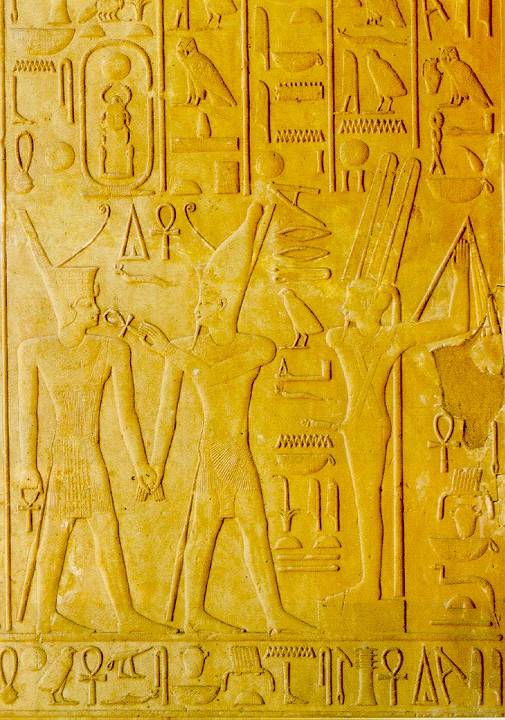 The Egyptian limestone carving, "Senwosret I led by Atum to Atum-Re," is an example of | back 7 low relief sculpture. |
front 8 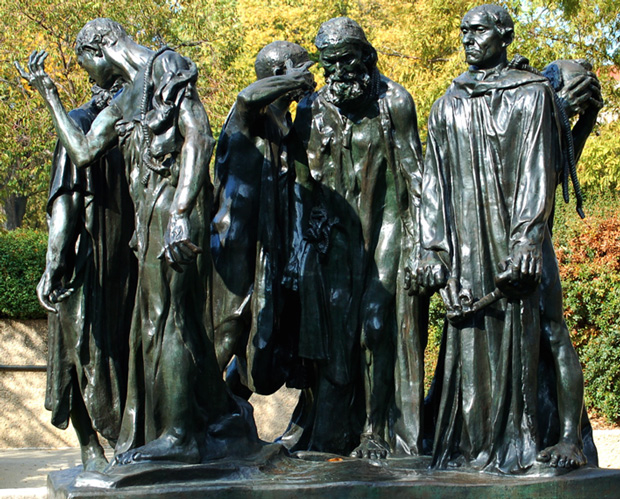 Auguste Rodin's "The Burghers of Calais" is a remarkable example of which type of sculpture? | back 8 in-the-round |
front 9 Wood and stone carvings are examples of | back 9 subtractive sculpture. |
front 10 The Arts and Crafts Movement was started in England by | back 10 William Morris. |
front 11 Most ceramic objects are created by one of which three methods? | back 11 slab construction, coiling, and throwing |
front 12 When a sculpture is created by building up the form with a material such as clay, the process is called | back 12 additive. |
front 13 All fiber arts evolved from | back 13 weaving. |
front 14 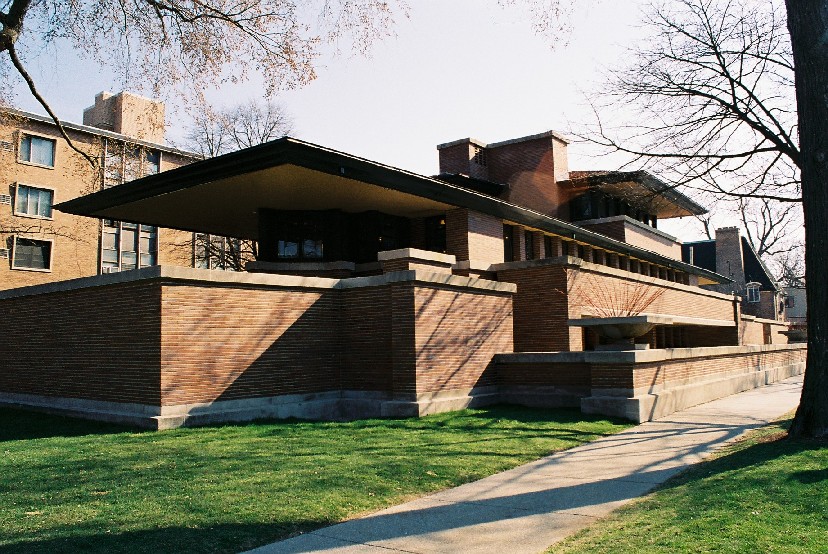 "Robie House" is a typical work by the architect | back 14 Frank Lloyd Wright. |
front 15 A sculptural space that you can actually enter is referred to as | back 15 an environment. |
front 16 How does "assemblage" primarily differ from other sculptural processes? | back 16 It utilizes "found" objects. |
front 17 The sculptural material most commonly associated with "modeling" or additive processes is | back 17 clay. |
front 18 By the late fourteenth century, the African kingdom of Benin had developed tremendous refinement in the art of | back 18 brass casting. |
front 19  Notre Dame Cathedral, in Paris, is an example of which architectural style? | back 19 Gothic |
front 20 What are the three primary types of ceramics (clay bodies)? | back 20 Earthenware, stoneware, and porcelain. |
front 21 Name the three Greek architectural orders. | back 21 Doric order, Ionic order, and Corinthian order. |