Instructions for Side by Side Printing
- Print the notecards
- Fold each page in half along the solid vertical line
- Cut out the notecards by cutting along each horizontal dotted line
- Optional: Glue, tape or staple the ends of each notecard together
Campbell Biology 10th Edition Flashcards Unit 6 Flashcards Flashcards Flashcards
front 1 EN1H-Biological systems use free energy based on empirical data that all organisms require a constant energy input. The first law of thermodynamics states that energy can be neither created nor destroyed. For living organisms, which of the following statements is an important consequence of this first law? | back 1 The organism must ultimately obtain all the necessary energy for life from its environment. |
front 2 EN1H-The synthesis of ATP by oxidative phosphorylation, using the energy released by movement of protons across the membrane down their electrochemical gradient, is an example of ____. | back 2 an endergonic reaction coupled to an exergonic reaction |
front 3 EN1H-Why is ATP an important molecule in metabolism? | back 3 It provides energy coupling between exergonic and endergonic reactions. |
front 4 EN1H-Which of the following statements is representative of the second law of thermodynamics? | back 4 Cells require a constant input of energy to maintain their high level of organization. |
front 5 EN1I-The process of photosynthesis probably originated ____. | back 5 in prokaryotes |
front 6 EN1I-Which of the following sequences correctly represents the flow of electrons during photosynthesis? | back 6 H2O to NADPH to Calvin-Benson cycle |
front 7 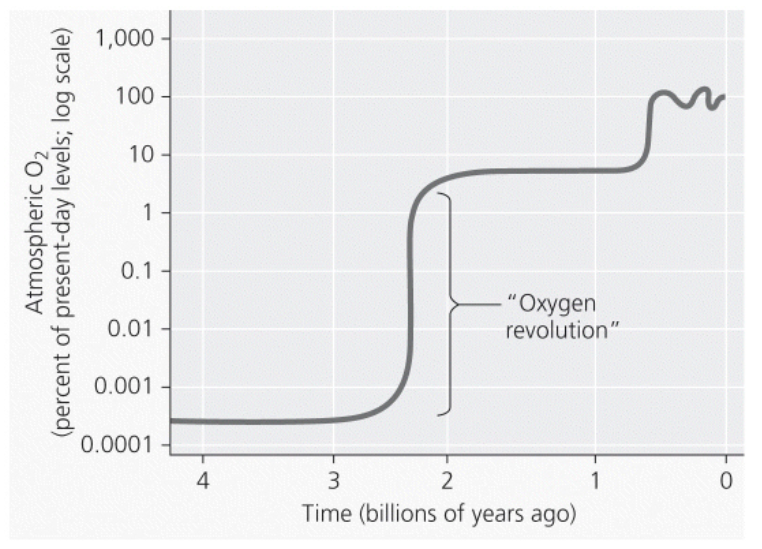 EN1I-The gradual rise in global oxygen concentrations is believed to have occurred as a result of early photosynthetic bacteria and then an “oxygen revolution” arose as photosynthetic eukaryotes evolved. Which type of data could be used to justify the graph shown here? | back 7 Measurement of bands of iron in sedimentary rock from dissolved iron precipitating as rust due to increased oxygen. |
front 8 EN1I-Which of the following are products of the light reactions of photosynthesis that are utilized in the Calvin-Benson cycle? | back 8 ATP and NADPH |
front 9 EN1J-If photosynthesizing green algae are provided with CO2 containing heavy oxygen (18O), later analysis will show that all of the following molecules produced by the algae contain 18O EXCEPT ____. | back 9 O2 |
front 10 EN1J-As electrons are passed through the system of electron carriers associated with photosystem II, they lose energy. What happens to this energy? | back 10 It is used to establish and maintain a proton gradient. |
front 11 EN1J-Which process is most directly driven by light energy? | back 11 removal of electrons from chlorophyll pigment molecules |
front 12 EN1J-Some photosynthetic organisms contain chloroplasts that lack photosystem II, yet are able to survive. The best way to detect the lack of photosystem II in these organisms would be to ____. | back 12 test for the release of O2 in the presence of light |
front 13
Use the following information to answer the question below. | back 13 the extraction of energy from high-energy electrons remaining from glycolysis and the citric acid cycle |
front 14 EN1K-When hydrogen ions are pumped from the mitochondrial matrix across the inner membrane and into the intermembrane space, the result is the ____. | back 14 creation of a proton-motive force |
front 15 EN1K-Why is glycolysis considered to be one of the first metabolic pathways to have evolved? | back 15 It does not involve organelles or specialized structures, does not require oxygen, and is present in most organisms. |
front 16 EN1K-In mitochondria, chemiosmosis moves protons from the matrix into the intermembrane space, whereas in chloroplasts, chemiosmosis moves protons from the ____. | back 16 stroma to the thylakoid space |
front 17 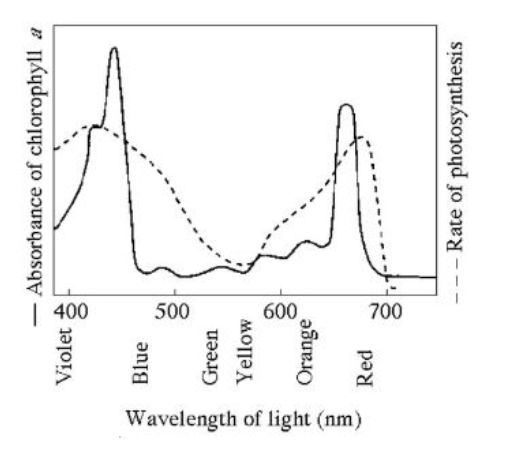
Use the following figure to answer the questions below.
| back 17 Other pigments absorb light in addition to chlorophyll a. |
front 18 S3A-Why are there several structurally different pigments in the reaction centers of photosystems? | back 18 This arrangement enables the plant to absorb light energy of a variety of wavelengths. |
front 19 S3A-Why are C4 plants able to photosynthesize with no apparent photorespiration? | back 19 They use PEP carboxylase to initially fix CO2. |
front 20 S3A-Compared to C3 plants, C4 plants ____. | back 20 can continue to fix CO2 even at lower CO2 concentrations and higher oxygen concentrations |
front 21 S1F-In a plant cell, where are the ATP synthase complexes located? | back 21 thylakoid membrane and inner mitochondrial membrane |
front 22 S1F-In mitochondria, chemiosmosis moves protons from the matrix into the intermembrane space, whereas in chloroplasts, chemiosmosis moves protons from the ____. | back 22 stroma to the thylakoid space |
front 23 S1F-Which of the following are directly associated with photosystem I? | back 23 receiving electrons from the thylakoid membrane electron transport chain |
front 24 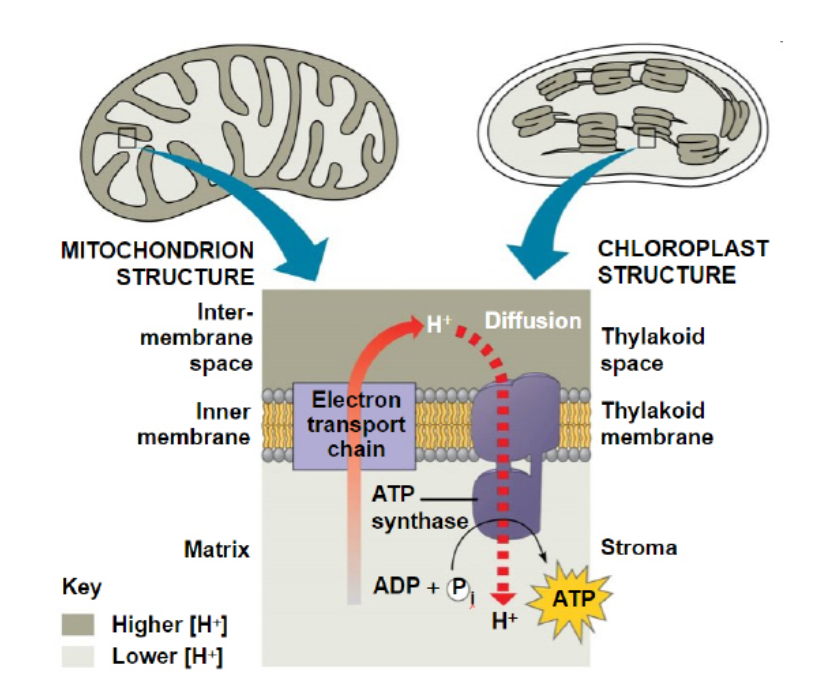 S1F - Identify a structural feature of the mitochondrion that allow organisms to capture, store, and use energy. | back 24 Electron transport and ATP synthesis occur on the inner mitochondrial membrane. |
front 25 EV1B - Which of the following is the strongest evidence supporting the endosymbiont hypothesis? | back 25 Mitochondria have their own DNA and divide independently of the cell. |
front 26 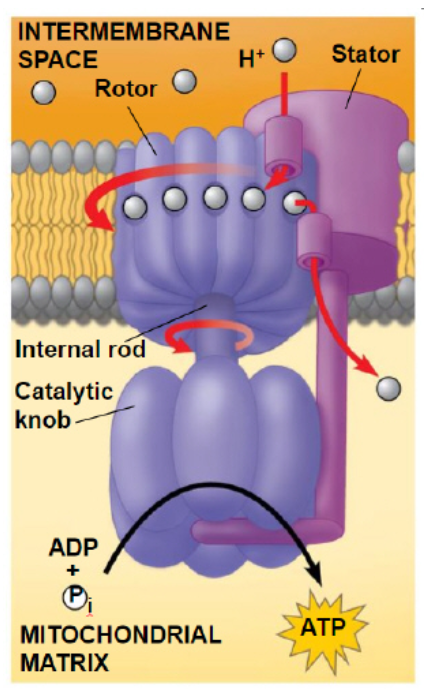 EV1B-Prokaryotes produce ATP by generating proton gradients across their plasma membrane. A similar process is observed in mitochondria. This would suggest | back 26 Membrane-bound organelles like mitochondria evolved from previous free-living prokaryotic cells via endosymbiosis. |
front 27 EV1B-Identify evidence from the figure above that support the claim endosymbiosis of previously free-living prokaryotic cells resulted in membrane-bound organelles such as mitochondrion and chloroplast. | back 27 Both organelles possess an inner and outer membrane. |
front 28 EV1B - Which of the following best supports the statement that mitochondria are descendants of endosymbiotic bacteria-like cells? | back 28 Mitochondria and bacteria possess similar ribosomes and DNA. |
front 29 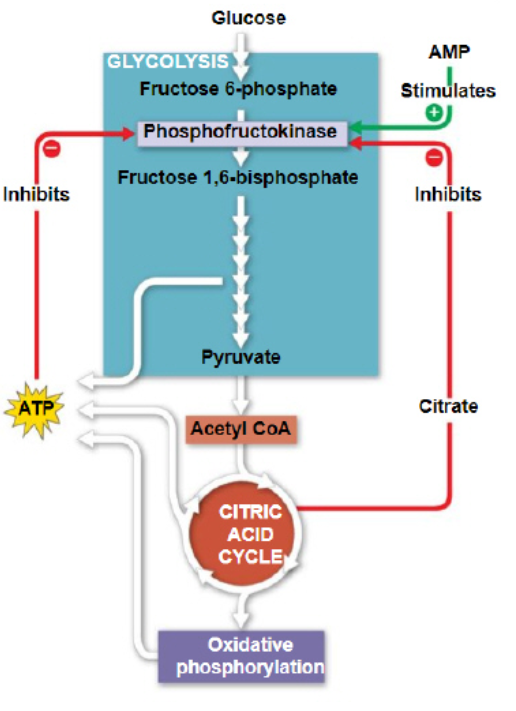 EN3B-Negative feedback mechanisms maintain homeostasis for a particular condition by regulating physiological processes. These processes operate at the molecular and cellular levels. Based on the model of cellular respiration depicted above, | back 29 High levels of ATP and citrate promote the allosteric inhibition of phosphofructokinase. |
front 30 EN3B-Glycolysis is active when cellular energy levels are ____; the regulatory enzyme, phosphofructokinase, is ____ by ATP. | back 30 low; inhibited |
front 31 EN3B-Explain the consequence of high levels of ATP on the production of pyruvate. | back 31 Negative feedback mechanisms will decrease the production of pyruvate. |
front 32 EN3B-High levels of citric acid inhibit the enzyme phosphofructokinase, a key enzyme in glycolysis. Citric acid binds to the enzyme at a different location from the active site. This is an example of ____. | back 32 allosteric regulation |
front 33 EN2K-Besides turning enzymes on or off, what other means does a cell use to control enzymatic activity? | back 33 localization of enzymes into specific organelles or membranes |
front 34 EN2L-Explain how the inner membrane of the mitochondrion and thylakoid membrane of the chloroplast contribute to the proper functioning of the cell. | back 34 Both membranes are involved in the formation of proton gradients used to power ATP synthesis by ATP synthase. |
front 35 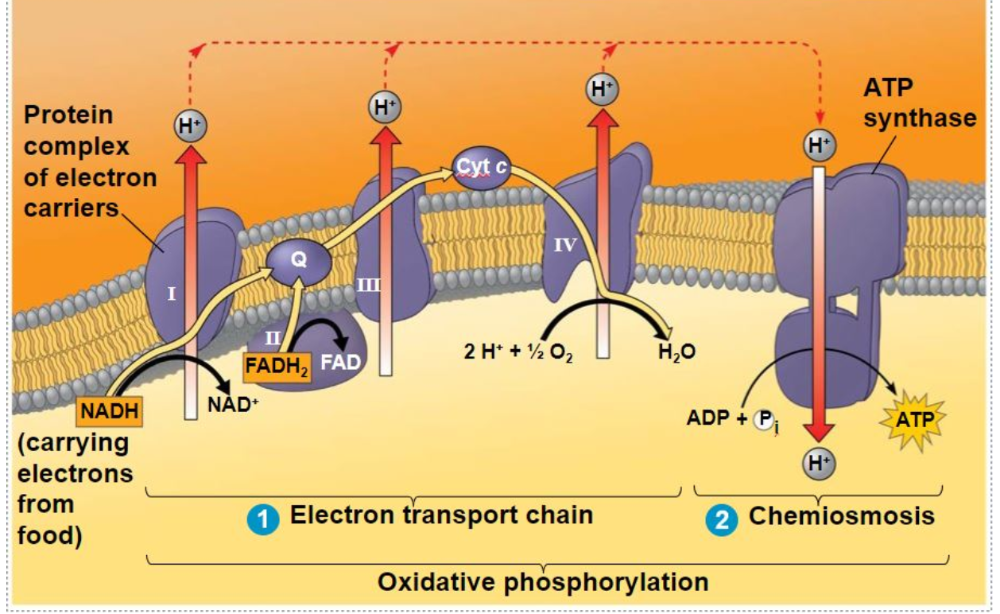 EN2L - Researchers working on metabolic disorders discover natural compounds that alter the surface area of the inner mitochondrial membrane. Explain how changing concentrations of these natural compounds inside muscle cells might affect the metabolic rate of an organism. | back 35 If the compouds increase the surface area of the inner mitochondrial membrane, the metabolic rate will increase. |
front 36 EN2L-In liver cells, the inner mitochondrial membranes are about five times the area of the outer mitochondrial membranes. What purpose must this serve? | back 36 It increases the surface for oxidative phosphorylation. |
front 37 EN1L-Even though plants cells photosynthesize, they still use their mitochondria for oxidation of pyruvate. This will occur in ____. | back 37 all cells all the time |
front 38 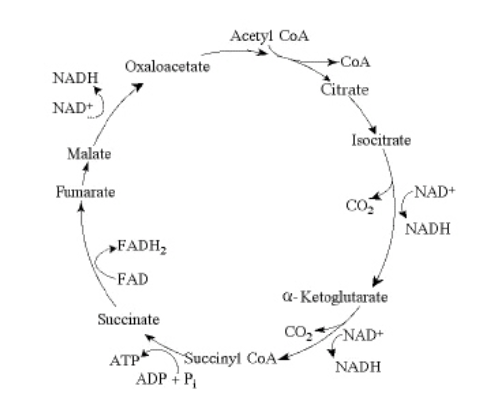
The citric acid cycle. | back 38 Oxaloacetate will accumulate and citrate will decrease. |
front 39 EN1L-Fatty acids usually have an even number of carbons in their structures. They are catabolized by a process called beta-oxidation. The end products of the metabolic pathway are acetyl groups of acetyl CoA molecules. These acetyl groups ____. | back 39 directly enter the citric acid cycle |
front 40 EN1L-A young dog has never had much energy. He is brought to a veterinarian for help and she decides to conduct several diagnostic tests. She discovers that the dog's mitochondria can use only fatty acids and amino acids for respiration, and his cells produce more lactate than normal. Of the following, which is the best explanation of the dog's condition? | back 40 His mitochondria lack the transport protein that moves pyruvate across the outer mitochondrial membrane. |