Print Options

Card layout: ?

← Back to notecard set|Easy Notecards home page

Instructions for Side by Side Printing
  1. Print the notecards
  2. Fold each page in half along the solid vertical line
  3. Cut out the notecards by cutting along each horizontal dotted line
  4. Optional: Glue, tape or staple the ends of each notecard together
  1. Verify Front of pages is selected for Viewing and print the front of the notecards
  2. Select Back of pages for Viewing and print the back of the notecards
    NOTE: Since the back of the pages are printed in reverse order (last page is printed first), keep the pages in the same order as they were after Step 1. Also, be sure to feed the pages in the same direction as you did in Step 1.
  3. Cut out the notecards by cutting along each horizontal and vertical dotted line
To print: Ctrl+PPrint as a list

174 notecards = 44 pages (4 cards per page)

Viewing:

BMD 330 Chapter 6 - Microbial Genetics

front 1

True or False: Genetics only takes place at the DNA level.

back 1

False

  • Genetics takes place on several levels, including organismal, cellular, chromosomal, and molecular

front 2

Organismal Genetics

back 2

Observes heredity of the whole organism

front 3

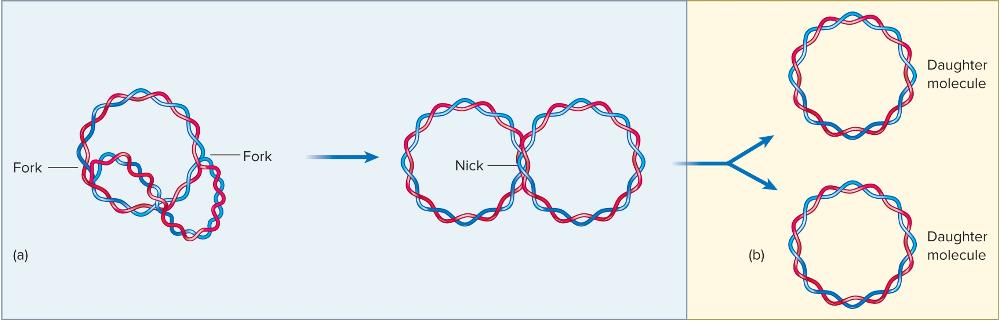
Cellular Genetics

back 3

Looks at single cells

front 4

Chromosomal Genetics

back 4

Examines the characteristics and actions of chromosomes

front 5

Molecular Genetics

back 5

Deals with biochemistry of genes

front 6

_______ is the sum total of genetic material of an organism.

back 6

Genome is the sum total of genetic material of an organism.

front 7

Most of the genome exists in the form of ________ while some may appear in ______________ forms (plasmids, organelles)

back 7

Most of the genome exists in the form of chromosomes while some may appear in nonchromosomal forms (plasmids, organelles)

front 8

______ tiny extra pieces of DNA

back 8

Plasmids

front 9

What two organelles have their own DNA?

back 9

  • Mitochondria
  • Chloroplast

front 10

Genomes of cells are made of ____, but viruses contain ______ or _____.

back 10

Genomes of cells are made of DNA, but viruses contain either DNA or RNA.

front 11

The study of an organism's entire genome is known as...

back 11

Genomics

front 12

_______ is a distinct cellular structure composed of a neatly packaged DNA molecule.

back 12

Chromosome

front 13

How do eukaryotic and bacterial chromosome differ?

back 13

  • The structure of eukaryotic chromosomes consists of DNA tightly wound around histone proteins, whereas a bacterial chromosome is condensed and jammed into a packet form by means of histonelike proteins.
  • Eukaryotic chromosomes are located in the nucleus; they vary in number from a few to hundreds; they can occur in pairs (diploid) or singles (haploid); and they have a linear appearance.
  • Most bacteria have a single, circular (double-stranded) chromosome, although many bacteria have multiple, circular chromosomes and some have linear chromosomes.

front 14

____ site on the chromosome that provides basic information for a certain cell function.

back 14

Gene

front 15

Genes fall into three categories:

back 15

  • Structural genes that code for protein
  • Genes that code for the RNA machinery used in protein production
  • Regulatory genes that control gene expression

front 16

_________ is the sum of all types of genes constituting an organism's distinctive genetic makeup.

back 16

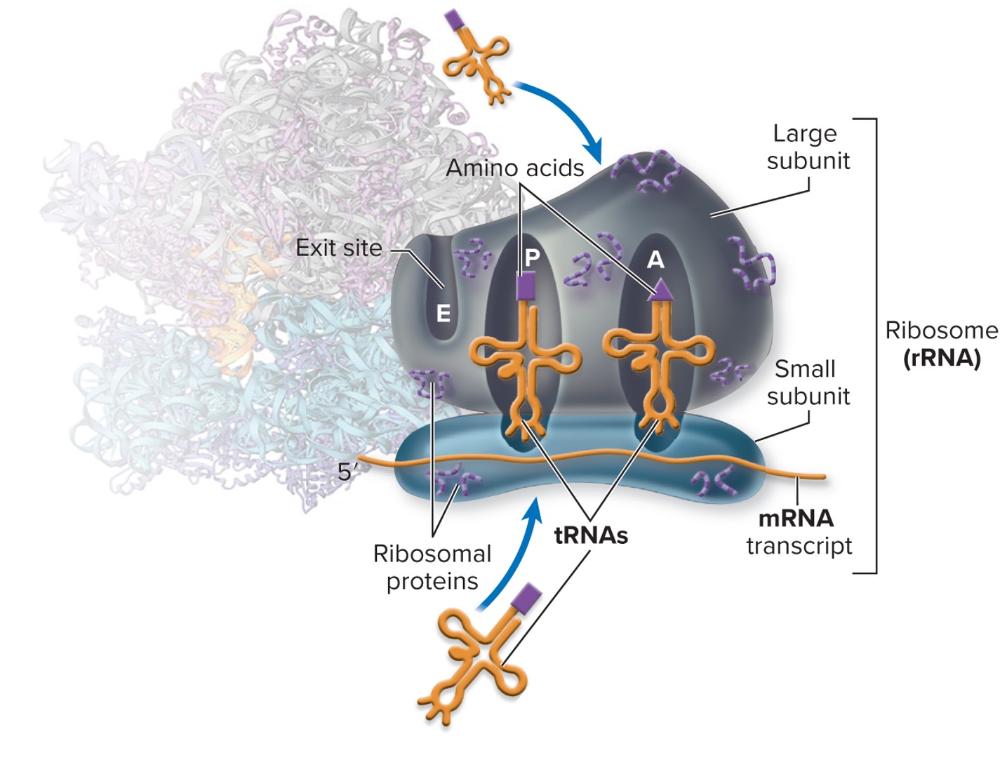
Genotype is the sum of all types of genes constituting an organism's distinctive genetic makeup.

front 17

_______ is the expression of the genotype that creates certain structures or functions (traits).

back 17

Phenotype is the expression of the genotype that creates certain structures or functions (traits).

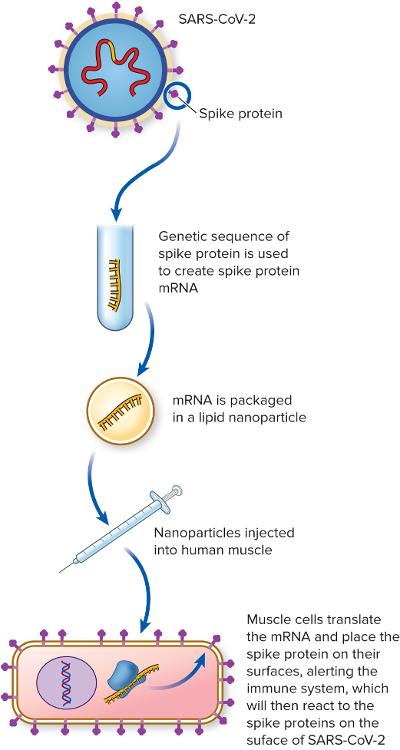
front 18

True or False:

All organisms contain more genes in their phenotype than are manifested as a genotype at any given time.

back 18

False

All organisms contain more genes in their genotypes than are manifested as a phenotype at any given time

front 19

What does this statement mean?

  • All organisms contain more genes in their genotypes than are manifested as a phenotype at any given time

back 19

The phenotype can change depending on which genes are "turned on" (expressed)

front 20

The basic unit of a DNA is....

back 20

Nucleotide

front 21

A nucleotide consists of:

back 21

  • Phosphate
  • Deoxyribose sugar
  • Nitrogenous base

front 22

What are the two types of nitrogenous bases?

back 22

  • Purines (A, G)
  • Pyrimidines (C, T)
  • Adenine (A) always pairs with Thymine (T)
  • Guanine (G) always pairs with Cytosine (C)

front 23

What is an important characteristic of DNA?

back 23

DNA is arranged antiparallel

  • One side of the helix runs in the opposite direction of the other: 5′ to 3′ in one direction and 3′ to 5′ in the other direction
  • Significant factor in DNA synthesis and protein production

front 24

Two significances of the antiparallel DNA structure

back 24

  • Maintaining the code during reproduction - Each strand provides a template for the replication of a new molecule guaranteeing accurate duplication
  • Providing variety - The precise sequence of bases constitutes a genetic program responsible for the unique qualities of each organism

front 25

Most DNA is replicated in a _____-_________ manner, meaning that one strand will always be the original strand and the other strand will be the newly synthesized strand.

back 25

Semi-Conservative

front 26

Steps of the replication (simplified)

back 26

  • Circular DNA has a special origin site where replication begins. When strands are separated, two replication forks form, and a DNA polymerase III complex enters at each fork. The DNA polymerases proceed in both directions along the DNA molecule, attaching the correct nucleotides according to the pattern of the template.

front 27

Helicase

back 27

Unzipping the DNA helix

front 28

Primase

back 28

Synthesizing RNA primer

front 29

DNA Pol III

back 29

Adding bases to the new DNA chain and proofreading the chain for mistakes

front 30

DNA Pol I

back 30

Removing primer, closing gaps, and repairing mismatches

front 31

Ligase

back 31

Final binding of nicks in DNA during synthesis and repair

front 32

Topoisomerase I

back 32

Making single-stranded DNA breaks to relieve supercoiling at origin

front 33

Topoisomerase II (DNA gyrase) and 4

back 33

Making double-stranded DNA breaks to remove supercoiling ahead of origin and separate replicated daughter DNA molecules

front 34

In the semi-conservative model...

back 34

  • Each daughter molecule is identical to the parent in composition
  • Neither is completely new
  • The template strand is an original parental DNA strand

front 35

True or False: DNA pol III can only add nucleotides in 3' to 5' direction.

back 35

False

  • DNA pol III can only add nucleotides in 5' to 3' direction

front 36

Functions of DNA pol lll:

back 36

  • Functions once the DNA helix strands are unwound and separated
  • Synthesizes a new daughter strand of DNA using the parental strand as a template
  • Can only add nucleotides to an existing chain—cannot begin synthesizing a chain of nucleotides
  • Can only add nucleotides in the 5′ to 3′ direction

front 37

Replication Fork

back 37

  • The place in the helix where the strands are unwound and replication is taking place
  • Each circular DNA molecule will have two replication forks

front 38

Primer

back 38

  • A length of RNA that is inserted initially during replication before being replaced by DNA
  • This RNA is eventually replaced by DNA after replication.

front 39

True or False: Both eukaryotes and prokaryotes have replication forks.

back 39

True

  • Eukaryotes have multiple sites where replication forks are
  • Prokaryotes only have one site

front 40

The strand of new DNA that is synthesized continuously in a 5' to 3' direction

back 40

Leading Strand

front 41

The strand of new DNA that must be synthesized in short segments (in a 5' to 3' direction)

back 41

Lagging Strand

  • This strand is later sealed together to form a strand in the 3' to 5' direction

front 42

What are Okazaki fragments?

back 42

Short segments of DNA synthesized in a 5' to 3' direction which are then sealing together to form the 3' to 5' strand

front 43

DNA Replication Steps

back 43

1. During replication topoisomerases unwind the DNA helix, giving access to helicase (unzipping enzymes) to bind to the dsDNA at the origin. Helicases break the hydrogen bonds holding the two strands together, resulting in two separate strand.

2. Single-stranded binding proteins keep the strand apart.

3. DNA pol III adds nucleotides in accordance with teh template pattern. Note that RNA primase will have already added a short length of RNA. Because DNA polymerase is correctly oriented for synthesis only in the 5' to 3' direction of the new molecule strand, only one strand, called the leading strand, can be synthesized as a continuous, complete strand. The strand with the opposite orientation (3' to 5') is the lagging strand.

  • On the lagging strand, polymerase adds nucleotides a few at a time in the direction away from the fork (5' to 3'). As the fork opens up a bit, the next segment is synthesized backward to the point of the previous segment, a process repeated until synthesis is complete.
  • In this way, DNA polymerase is able to synthesize the two new strands simultaneously.

front 44

____ begin linking fragments, and ___________ causes a double-stranded DNA break separating the two fully replicated daughter molecules.

back 44

Ligases begin linking fragments, and Topoisomerase IV causes a double-stranded DNA break separating the two fully replicated daughter molecules.

front 45

How is replication of eukaryotic DNA similar to replication of bacterial and archaeal DNA?

back 45

  • Uses a variety of DNA polymerases
  • Replication proceeds in both directions but from multiple origins
  • Topoisomerases are used to relieve tension in the strand and to recompact the molecule when it is fully replicate

front 46

Due to the unidirectional action of DNA polymerase, the 3' end of linear DNA molecules, called ______, cannot be copied entirely

back 46

Due to the unidirectional action of DNA polymerase, the 3' end of linear DNA molecules, called telomeres, cannot be copied entirely

front 47

_____________: DNA is used to synthesize RNA

_____________: RNA used to produce proteins

back 47

Transcription: DNA is used to synthesize RNA

Translation: RNA used to produce proteins

front 48

Why is the central dogma incomplete?

back 48

  • A wide variety of RNAs are used to regulate gene function
  • Many genetic malfunctions that cause human disease are found in regulatory RNA, not in genes for proteins
  • The DNA that codes for these crucial RNA molecules was once called “junk” DNA

front 49

What is the central dogma?

back 49

DNA --> RNA --> Protein

front 50

Describe the flow of genetic information in microbes.

back 50

  • DNA is the ultimate storehouse and distributor of genetic information
  • DNA must be deciphered into usable language. It does this by transcribing its code into RNA helper molecules that translate that code into protein
  • Other sections of the DNA produce very important RNA molecules that regulate genes and their products

front 51

What is the connection between gene and protein? In other words, what is the connection between DNA and an organism's trait?

back 51

  • A protein's primary structure determine its characteristic shape and function
  • Proteins ultimately determine phenotype (Proteomics is the study of an organism's complete set of expressed proteins)
  • DNA is mainly a blueprint that tells the cell which kinds of proteins to make and how to make them

front 52

The DNA molecule is a continuous chain of base pairs, but the sequence must be interpreted in groups of ____ base pairs (a ____). Each _____ as copied into ____ codons will translate into one amino acid.

back 52

The DNA molecule is a continuous chain of base pairs, but the sequence must be interpreted in groups of three base pairs (a triplet). Each triplet as copied into mRNA codons will translate into one amino acid.

front 53

What are the major participants in transcription and translation?

back 53

  • mRNA (messenger RNA) - Creator of proteins
  • tRNA (transfer RNA) - Adds the amino acids that build your proteins. Coded from mRNA codons
  • rRNA (regulatory RNA) - Ribosomal RNA that translates the mRNA using tRNAs
  • Ribosomes
  • Several types of enzymes
  • Many raw material

front 54

What is the only type of RNA that is translated?

back 54

mRNA (Messenger RNA)

front 55

Description and Function of mRNA

back 55

  • Description - Sequence of amino acids in protein
  • Function - Transports DNA master code to the ribosome

front 56

Description and Function of tRNA (Transfer RNA)

back 56

  • Description - A cloverleaf tRNA to carry amino acids
  • Function - Brings amino acids to ribosome during translation

front 57

Description and Function of rRNA (Ribosomal RNA)

back 57

  • Description - Several large structural rRNA molecules
  • Function - Forms the major part of a ribosome and participates in protein synthesis

front 58

Description and Function of Micro (miRNA), antisense, riboswitch, and small interfering (siRNA)

back 58

  • Description - Regulatory RNA
  • Function - Regulation of gene expression and coiling of chromatin

front 59

Description and Function of Primer

back 59

  • Description - An RNA that can begin DNA replication
  • Function - Primes DNA

front 60

Description and Function of Ribozymes and Spliceosomes (snRNA)

back 60

  • Description - RNA enzymes, parts of splicer enzymes
  • Function - Remove introns form other RNAs in eukaryotes

front 61

How are RNAs different from DNA?

back 61

  • Single stranded molecules that exists in helical form (can assume secondary and tertiary levels of complexity)
  • Contains uracil (U) instead of thymine as the complementary base pair to adenine
  • Sugar is ribose rather than deoxyribose

front 62

Messenger RNA (mRNA)

back 62

  • A transcript of a structural gene or genes in the DNA
  • Synthesized in a process similar to synthesis of the leading strand during DNA replication

front 63

_____ are a series of triplet bases that hold the message of the transcribed mRNA that will be translated into an amino acid.

back 63

Codons are a series of triplet bases that hold the message of the transcribed mRNA that will be translated into an amino acid.

front 64

tRNA are known as the _______ molecule.

back 64

Adapter

front 65

Which type of RNA contains sequences of bases that form hydrogen bonds with complementary sections of the same tRNA strand?

back 65

Transfer RNA (tRNA)

front 66

Where is the anticodon found?

back 66

  • Found at the bottom loop of the cloverleaf
  • Designates the specificity of the tRNA and complements the mRNA codon

front 67

What is the function of rRNA?

back 67

  • A long RNA molecule and proteins form complex three-dimensional shapes to create the two subunits of the ribosome
  • A metabolically active bacterial cell can contain up to 20,000 70S ribosomal units
  • The two subunits engage in the final translation of the genetic code
  • Basically the large subunit and the small subunit come together to for the rRNA

front 68

Three steps of transcription are:

back 68

  • Initiation
  • Elongation
  • Termination

front 69

When is transcription initiated?

back 69

  • Transcription is initiated when RNA polymerase recognizes a segment of the DNA called the promoter region.
  • This region consists of two sequences of DNA just prior to the beginning of the gene to be transcribed. These promoter sequences provide the signal for RNA polymerase to bind to the DNA. As the DNA helix unwinds, the polymerase first pulls the early parts of the DNA into itself, a process called "DNA scrunching," and then, having acquired energy from the scrunching process, begins to advance down the DNA strand to continue synthesizing an RNA molecule complementary to the template strand DNA. The nucleotide sequence of promoters differs only slightly from gene to gene, with all promoters being rich in adenine and thymine.
  • Only one strand of DNA, called the template strand, is copied by RNA polymerase.

front 70

What happens during the elongation step of transcription?

back 70

  • During elongation, which proceeds in the 5' to 3' direction (with regard to the growing RNA molecule), the mRNA is assembled by the addition of nucleotides that are complementary to the DNA template.
  • Remember that uracil is placed as adenine's complement.
  • As elongation continues, the part of DNA already transcribed is rewound into its original helical form

front 71

What happens during the termination step of transcription?

back 71

  • RNA polymerase continues to make its way down the template strand until it reaches a specific sequence that signals the end of the transcript.
  • There is more than one mechanism for ending the process, but it is always signaled by the DNA sequence in the template strand.

front 72

After the mRNA is made from _______, the mRNA is now ready to be _________.

back 72

After the mRNA is made from transcription, the mRNA is now ready to be translated.

front 73

Central principle of translation:

back 73

  • mRNA nucleotides are read in codons or groups of three
  • The codon dictates which amino acids are added to the growing chain
  • Except for a very few cases, this code is universal for bacteria, archaea, eukaryotes, or viruses

front 74

In prokaryotes, the start codon is...

back 74

AUG which is f-methionine

front 75

What are the three stop codons?

back 75

UGA, UAG, UAA

front 76

The master genetic code is:

back 76

  • Redundancy
  • Wobble

front 77

What is meant by the redundancy concept of codons?

back 77

  • Certain amino acids are represented by multiple codons
  • Allows for the insertion of correct amino acids even when mistakes occur in the DNA sequence

front 78

What is meant by the wobble hypothesis?

back 78

  • Only the first two nucleotides are required to encode the correct amino acid
  • The third nucleotide does not change its sense
  • Permits some variation or mutation without altering the message

front 79

What are the three stages of translation?

back 79

  • Initiation
  • Elongation
  • Termination

front 80

What are all the elements needed to synthesize a protein?

back 80

  • mRNA
  • tRNA
  • Amino Acids
  • Ribosomes

front 81

Start Codon

back 81

  • The first three RNA nucleotides that signal the beginning of the message
  • Always A U G

front 82

Stop Codon

back 82

  • Nonsense codons: one of three codons that has no corresponding tRNA and causes translation to be terminated
  • U A A, U A G, and U G A

front 83

Translocation

back 83

  • The process of shifting the ribosome down the mRNA strand to read new codons

front 84

Can tRNA bind without the presence of ribosome?

back 84

NO

front 85

Brief Steps of Translation

back 85

1. Entrance of tRNAs 1 and 2

2. Formation of peptide bond

3. Discharge of tRNA 1 at E site

4. First translocation

5. Formation of peptide bond

6. Discharge of tRNA 2; second translocation; enter tRNA 4

7. Formation of peptide bond

front 86

A little more in depth of translation:

back 86

  • Initiation – The ribosome assembles and binds the 5’ end of the mRNA. Once it hits the start codon, it can now begin to recruit tRNAs associated with the codons marking initiation. There are three sites: EPA, for a tRNA entrance, peptide bonding, and exit. Note that bacteria have the F-methionine, which is usually cleaved afterwards.
  • After initiation is elongation. This begins with the second tRNA entering the A site. The amino acid attached to both tRNAs form a peptide bond and the F-methaionine, or basically that tRNA in that P site, is transferred to the A site and the corresponding tRNA in that A site. Then, the translocation of the ribosome complex moves the empty tRNA from the P to the E site. Now the tRNA with two amino acid moves to P site. Now, A site to open and another amino acid can enter.
  • At the end, a special enzyme, not a tRNA, comes in and cleaves the peptide chain from the tRNA in the P site.

front 87

Explain the entirety of translation

back 87

1. The mRNA molecule leaves the DNA transcription site and is transported to ribosomes in the cytoplasm. Ribosomal subunits come together and form sites to hold the mRNA and tRNAs. The ribosome begins to scan the mRNA by moving in the 5' to 3' direction along the mRNA. The first codon it encounters called the start codon. With the mRNA message in place on the assembled ribosome, the next step in translation involves entrance of tRNAs with their amino acids. The pool of cytoplasm contains a complete array of tRNAs, previously charged by having the correct amino acid attached. The step in which the complementary tRNA meets the mRNA code is guided by the two sites on the large subunit of the ribosome called the P site and the A site. The ribosome also has an exit or E site where used tRNAs are released.

2. Rules of pairing dictate that the anticodon of tRNA must be complementary to the mRNA codon. The ribosome shifts its "reading frame" to the right along the mRNA from one codon to the next. This brings the next codon into place on the ribosome and makes a place for the next tRNA to enter the A position. A peptide bond is formed between the amino acids on the adjacent tRNAs, and the polypeptide grows.

Elongation beings with the filling of the A site by a second tRNA. The identify of this tRNA and its amino acid is dictated by the second mRNA codon.

3. The entry of tRNA into the A site brings two adjacent tRNAs in favorable proximity for a peptide bond to form between the amino acids they carry.

For the next step to proceed, some room must be made on the ribosome, and the next codon in sequence must be brought into position for reading. This process is accomplished by translocation, the enzyme-directed shifting of the ribosome to the right along the mRNA strand, which causes the blank tRNA 1 to be discharged from the ribosome at the E site.

4. Dipeptide moves to P site. Site A is empty. tRNA that has been released is now free to drift off into the cytoplasm and become recharged with an amino acid for later additions to this or another protein.

The stage is now set for the insertion of tRNA 3 at site A as directed by the third mRNA codon. This insertion is followed once again by peptide bond formation between the dipeptide and amino acid 3 (making a tripeptide), splitting of the peptide from tRNA 2, and translocation.

5. Releases tRNA 2, shifts mRNA to next position, moves tRNA 3 to position P, and opens position A for next tRNA.

6. From this point on, peptide elongation proceeds. 7. The termination is brought by presence of at least one special codon occurring just after the codon for the last amino acid. When this codon is reached, a special enzyme breaks the bond between the final tRNA and the finished polypeptide chain, releasing it from the ribosome.

front 88

What happens after protein synthesis?

back 88

Posttransitional modifications

  • Proteins begin to fold upon themselves to achieve their tertiary conformation even before the peptide chain is released
  • Formyl methionine may be clipped off
  • Cofactors may be added
  • Some join with other proteins to form a quaternary structure, meaning that there are multiple proteins making up one functional enzyme

front 89

Why is protein assembly line in bacteria faster?

back 89

  • There are multiple ribosomes attached to one mRNA which speeds up the process of protein production, making it a much more efficient process.
  • The mRNA transcript encounters ribosomal parts immediately as it leaves the DNA.
  • The ribosomal factories assemble along the mRNA in a chain, each ribosome reading the message and translating it into protein. Many products will thus be well along the synthetic pathway before transcription has even terminated.

front 90

COVID-19 viruses have...

back 90

  • Contains a viral mRNA that codes for the surface protein of the virus

front 91

How does the COVID-19 mRNA vaccine work?

back 91

  • Once injected into human arms, muscle cells use their translation machinery to create and place on their cell surface the viral protein
  • Normal immune system screening processes detect it and build specific immune defenses against that protein

front 92

What are differences between prokaryotic and eukaryotic transcription and translation?

back 92

  • Co-transcriptional translation only occurs in bacteria and archeae
  • A U G codes for a different form of methionine in eukaryotes
  • Eukaryotic mRNA’s only code for one protein; bacterial mRNA’s often contain information from several genes in a series

front 93

____ are the coding regions whereas the _____ are intervening sequences of bases that do not code for protein.

back 93

Exons are the coding regions whereas the introns are intervening sequences of bases that do not code for protein.

front 94

What recognizes the exon-intron junctions and enzymatically cuts them?

back 94

Spliceosome

  • Loops introns into lariat-shaped pieces, excises them, and joins the exons end to end
  • Completed mRNA strand can then proceed to the cytoplasm for translation

front 95

Operons

back 95

  • A coordinated set of genes regulated as a single unit
  • Found only in bacteria and archaea
  • Can be inducible or repressible, determined by how transcription is affected by the environment surrounding the cell

front 96

Inducible Operons

back 96

  • Contain genes that make proteins that help metabolize nutrients
  • Operon is turned on (induced) by the nutrient for which the structural genes encode
  • Enzymes needed to metabolize a nutrient are only produced when that nutrient is present in the environment
  • Naturally turned off and only turned on when those nutrients are available in the environment

front 97

Repressible Operons

back 97

  • Contain genes coding for enzymes that synthesize amino acids
  • Their normal state is “on”
  • When there is enough product synthesized by the enzyme the operon is turned off (repressed)

front 98

What type of operon contains genes that make proteins that help metabolize nutrients?

back 98

Inducible Operons

front 99

What type of operon contain genes that synthesize amino acids

back 99

Repressible

front 100

Three features of the lac operon:

back 100

  • Regulator
  • Control Locus
  • Structural Locus

front 101

Regulator

back 101

Composed of the gene that codes for the repressor, a protein capable of repressing the operon

front 102

Control Locus

back 102

  • Promoter: recognized by RNA polymerase
  • Operator: acts as an on/off switch for transcription

front 103

Structural Locus

back 103

Made up of three genes, each coding for a different enzyme needed to catabolize lactose

front 104

What is the main purpose of the lactose operon?

back 104

  • The main purpose of this system is to switch from glucose metabolism to lactose once glucose is not available.
  • This operon has the regulator, which makes the repressor protein, and that repressor protein binds to the operator, and has the control locus, which contains the promotor lac-P and the operator lac-O portions of the operon.
  • Three genes that are needed to make sure the bacteria can use lactose are called collectively the structural genes or the structural locus.
  • Normally, it will use glucose when glucose is present, however, if there is no glucose and high levels of lactose, this system will be turned on.

front 105

The repressor protein for the lactose operon is...

back 105

Allosteric

front 106

What does allosteric protein do in a lactose operon?

back 106

It is the repressor protein:

  • Two binding sites: one for the operator sequence on the DNA and another for lactose
  • In the absence of lactose, the repressor binds to the operator, blocking transcription of structural genes
  • The regulator gene lies upstream of the operator and is transcribed constitutively
  • If lactose is bound and available, then the lactose portion is bound and the operator sequence is free.
  • Repressor protein is usually always active and blocks RNA polymerase from being able to transcribe that operon.

front 107

Describe the lac operon in bacteria

back 107

1. This operon is normally in an "off" mode and does not initiate transcription when the appropriate substrate is absent.

2. If lactose is added to the cell's environment, it triggers events that turn the operon on.

3. The structural genes are transcribed in a single unbroken transcript coding for all three enzymes. (During translation, however, each protein is synthesized separately).

front 108

The lac operon is usually... inducible.

back 108

  • So, the lactose or the lac operon in bacteria, you have the regulator that produces the repressor protein (normally, this repressor protein is always bound to a portion of operator, blocking RNA polymerase from being able to transcribe and translate the structural genes). However, in the absence of glucose and presence of lactose, lactose induces and binds to the repressor protein, causing a conformational change, where now the repressor protein no longer binds to the operator, leaving it free and open for RNA polymerase to bind and become active (and being able to transcribe and translate the structural proteins).
  • If that lactose is then depleted and there’s no more binding, then the system returns back to normal where it is now being repressed

front 109

Repressible operon

back 109

  • Repressible operons are usually in the on mode
  • Will only be turned off only when the nutrient is no longer required
  • Excess nutrient serves as a corepressor to block the action of the operon

front 110

Repressible Operon: Control of a Gene Through Excess Nutrients

back 110

  • Operon on. A repressible operon remains on when its nutrients products are in great demand by the cell because the repressor is unable to bind to the operator at low nutrient levels
  • Operon off. The operon is repressed when nutrient builds up, serving as a corepressor, activates the repressor. The repressor complex affixes to the operator and blocks RNA polymerase and further transcription of genes for nutrient synthesis.

front 111

What two ways do eukaryote cells regulate genes?

back 111

  • Transcription Factors
  • DNA "knot"

front 112

Transcription Factors

back 112

  • Insert into the grooves of the DNA molecule and enhance the transcription of specific genes
  • Regulate gene expression in response to environmental stimuli

front 113

DNA "knot"

back 113

  • Cytosines bind to other cytosines forming a “knot” in the helix of DNA
  • Blocks the promoter region of genes in order to stop transcription

front 114

Phase Variation

back 114

The result of bacteria turning on or off a complement of genes that leads to phenotypic changes

  • Heritable—passed down to subsequent generations
  • Involves turning on genes mediated by regulatory proteins, as described with operons

front 115

What are the drugs the interfere with ribosome?

back 115

  • Erythromycin
  • Spectinomycin

front 116

What are the drugs that inhibit protein synthesis?

back 116

  • Rifamycin
  • Actinomycin D

front 117

An event in which one bacterium donates DNA to another bacterium.

back 117

Recombination

front 118

What is the result of recombination?

back 118

The end result is a strain different from both the donor and the recipient strain

front 119

What is the extrachromosomal DNA adept at moving between cells called?

back 119

Plasmids

front 120

Any organism that contains and expresses genes that originated in another organism is known as...

back 120

Recombinant

front 121

What is horizontal gene transfer?

back 121

Any transfer of DNA that results in organisms acquiring new genes that did not come directly from parent organisms

front 122

Horizontal gene transfer does not include chromosomes. It is about ______.

back 122

Plasmids

front 123

Can eukaryotic organisms also engage in horizontal gene transfer?

back 123

Eukaryotic organisms also engage in horizontal gene transfer, often aided by microbes such as viruses

front 124

What are the three types of horizontal gene transfer?

back 124

  • Conjugation
  • Transformation
  • Transduction

front 125

Small, circular pieces of DNA that can replication independently of the bacterial chromosome are...

back 125

Plasmids

  • Allow transfer of DNA between cells
  • Found in most bacteria and in some fungi
  • Contain at most a few dozen genes
  • Not necessary for survival, but often carry useful traits

front 126

Conjugation

back 126

  • Bacterial "sex"
  • Involves a pilli
  • Must have a + and - bacteria

front 127

Transformation

back 127

  • "scavenger"
  • Free DNA is taken up

front 128

Transduction

back 128

  • Virus 3rd party
  • Virus brings DNA from another cell

front 129

What type of horizontal gene transfer?

  • Donor cell with pilus
  • Fertility plasmid in donor
  • Both donor and recipient alive
  • Bridge forms between cells to transfer DNA

back 129

Conjugation

front 130

What type of horizontal gene transfer?

  • Free donor DNA (fragment)
  • Live; competent recipient cell

back 130

Transformation

front 131

What type of horizontal gene transfer?

  • Donor is lysed bacterial cell; Defective bacteriophage is carrier of donor DNA; Live recipient cell of same species as donor

back 131

Transduction

front 132

What is the only type of horizontal gene transfer that is direct?

back 132

Conjugation

front 133

Some examples of products of transferred genes for conjugation include:

back 133

  • Drug Resistance
  • Resistance to metals
  • Toxin production
  • Enzymes
  • Adherence molecules
  • Degradation of Toxic Substances
  • Uptake of Iron

front 134

Some examples of products of transferred genes for transformation include:

back 134

  • Polysaccharide capsule; unlimited with cloning techniques

front 135

Some examples of products of transferred genes for transduction include:

back 135

  • Toxins
  • Enzymes for sugar fermentation
  • Drug resistance

front 136

Conjugation

back 136

  • A mode of genetic exchange in which a plasmid or other genetic material is transferred from a donor to a recipient cell via a direct connection
  • Can occur in both gram-positive and gram-negative cells

front 137

An example of conjugative plasmids is:

back 137

F factor in E. coli

front 138

Describe the conjugation of the F factor:

back 138

  • The F factor or the sex factor happens between a donor (marked with F+) and a recipient (marked with F-)
  • There is a bridge that is created by the donor and that is by a pilus. The donor F factor is then copied and nicked, and one strand of the F factor is inserted into the recipient. And then once that F factor is copied and put into the recipient, that bridge is broken. And now that F- becomes a F+.
  • For high-frequency transfer, sometimes that plasmid can be integrated into the host chromosomal DNA. So instead of having a separate plasmid, now you will have an actual integrated F-factor inside of host chromosome.
  • Conjugation only happens when you have a F factor that is part of the plasmid. The plasmid is transferred into recipient.

front 139

Conjugation: Resistance (R) plasmids or factors carry what type of genes?

back 139

  • Carry genes for resisting antibiotics or other drugs
  • Commonly shared among bacteria through conjugation
  • Can confer multiple resistance to antibiotics
  • R factors can also carry genetic codes for resistance to heavy metals or for synthesizing virulence factors

front 140

Transformation

back 140

  • The acceptance by a bacterial cell of small fragments of soluble DNA from the surrounding environment
  • Competent: cells that are capable of accepting genetic material through transformation
  • This is the uptake of free, usually chromosomal DNA, into a recipient and it’s also eventually integrated.
  • Once a cell dies, it releases its contents and gets inside of the new host (recipient). Sometimes, it can get integrated into bacterial chromosomes or can be a stand alone plasmid.

front 141

How was transformation discovered?

back 141

  • Worked with encapsulated and nonencapsulated Streptococcus pneumoniae and laboratory mice
  • Encapsulated strains have a smooth (S) colony appearance
  • Strains lacking a capsule have a rough (R) appearance

front 142

Transduction

back 142

  • The process by which a bacteriophage serves as a carrier of DNA from a donor cell to a recipient cell
  • Occurs naturally in a broad spectrum of bacteria
  • The participating bacteria in a single transduction event must be the same species

front 143

There are two versions of transduction:

back 143

  • Generalized transduction
  • Specialized transduction

front 144

In generalized transduction, ...

back 144

  • Random fragments of disintegrating host DNA are taken up by a phage during assembly
  • Any gene from the bacterium can be transmitted

front 145

Steps of Generalized Transduction

back 145

Cell A

  1. A phage infects cells A (the donor cell) by injecting its DNA into it.
  2. While replicating its own genome and assembling new phage particles inside the bacterium, a phage particle incorporates a segment of bacterial DNA by mistake
  3. Cell A then lyses and releases mature phages, including the one with bacterial cell's DNA

Cell B

4. The altered phage attaches to another host cell (cell B), injecting the DNA from cell A rather than the viral nucleic acid.

5. Cell B receives this donated DNA, which recombines with its own DNA. Because the virus is defective (biologically inactive as a virus), it is unable to complete a lytic cycle. The transduced cell survives and can use this new genetic material.

front 146

What is specialized transduction?

back 146

A highly specific part of the host genome is incorporated into the virus when the prophage DNA separates from the chromosome (carrying host genes with it)

front 147

Steps of specialized Transduction

back 147

Cell A

  1. Phage DNA within bacterial chromosome
  2. Excised phage DNA contains some bacterial DNA
  3. New viral particles are synthesized. Some contain bacterial DNA in addition to phage DNA
  4. Cell A lyses and releases all new bacteriophages

Cell B

5. Infection of recipient cell transfers bacterial DNA to a new cell

6. Recombination results in two possible outcomes: either bacterial DNA or a combination of viral and bacterial DNA being incorporated into the bacterial chromosome.

front 148

What are transposable elements?

back 148

“Jumping genes” shift from one part of the genome to another

  • From one chromosomal site to another
  • From a chromosome to a plasmid
  • From a plasmid to a chromosome

front 149

What are types of transposable elements?

back 149

  • Insertion Elements - Smallest TEs consist only of two tandem repeats
  • Retrotransposon - A type of TE that can transcribe DNA into RNA and then back into DNA for insertion in new location
  • Other TEs contain genes that code for antibiotic resistance or toxin production

front 150

What are some general effects of transposable elements?

back 150

Scramble genetic language

Can be beneficial or adverse, depending on:

  • Where the insertion occurs in a chromosome
  • What kind of genes are relocated
  • The type of cell involved

front 151

What are effects of transposable elements in bacteria?

back 151

  • Changes in colony morphology, pigmentation, and antigenic characteristics
  • Replacement of damaged DNA
  • Transfer of drug resistance between bacteria

front 152

What are pathogenicity islands?

back 152

Contain multiple genes that are coordinated to create a new trait in the bacterium, making it pathogenic

front 153

Examples of PAIs include:

back 153

  • Ability to scavenge iron in Yersinia pestis
  • Ability to produce exotoxins Staphylococcus aureus

front 154

Mutation

back 154

  • Any change to the nucleotide sequence in the genome
  • The driving force of evolution
  • In microorganisms, mutations become evident in altered gene expression, such as altered pigment production or development of resistance to a drug

front 155

Wild Type

back 155

  • A microorganism that exhibits a natural, nonmutated characteristic
  • The trait present in the highest numbers in a population

front 156

Mutant Strain

back 156

An organism that bears a mutation

front 157

What are two causes of mutations?

back 157

  • Spontaneous mutation: A random change in the DNA arising from errors in replication that occur randomly
  • Induced mutations: Result from exposure to known physical or chemical agents that damage DNA (known as mutagens)

front 158

Point Mutations

back 158

  • Small mutations that affect only a single base on a gene
  • Involve addition, deletion, or substitution of single bases

front 159

Three types of point mutations:

back 159

  • Missense
  • Silent
  • Nonsense

front 160

Lethal Mutations

back 160

Mutations that lead to cell dysfunction or death

front 161

Neutral Mutation

back 161

Produce neither adverse nor helpful changes

front 162

Missense Mutation

back 162

Any change in the code that leads to the placement of a different amino acid

front 163

Nonsense Mutation

back 163

Changes a normal codon into a stop cod

front 164

Silent Mutation

back 164

  • Alters a base but does not change the amino acid
  • The redundancy of the code assures that certain amino acids will not be altered by a change in the third base of the codon

front 165

Back Mutation

back 165

Occurs when a gene that has undergone a mutation reverses to its original base composition

front 166

This type of mutation occurs when one or more bases are inserted into or deleted from a newly synthesized DNA strand

back 166

Frameshift Mutation

front 167

Frameshift Mutation

back 167

  • This alters the reading frame of the mRNA
  • Nearly always result in a nonfunctional protein
  • Every amino acid after the mutation is different from what is coded for in the original DNA
  • Insertion of bases in multiples of three does not disturb the reading frame

front 168

Photoactivation

back 168

  • Light repair of damage caused by ultraviolet radiation
  • Requires visible light and a light-sensitive enzyme called DNA photolyase, which can detect and attach to the damaged areas

front 169

Mismatch Repair

back 169

  • A repair system can locate mismatched bases that were missed during proofreading
  • The base must be replaced soon after the mismatch is made, or the repair enzymes will not recognize it

front 170

Excision Repair

back 170

  • Mutations are excised by a series of enzymes that remove the incorrect bases and add the correct ones
  • These bases are modified (deamination/oxidation)

front 171

What is the Ames Test?

back 171

Used to rapidly detect chemicals with carcinogenic potential

  • Uses bacteria rather than experimental animals
  • Allows easy observation and monitoring of gene expression and mutation rate
  • Commonly uses Salmonella typhimurium because of the back mutation potential to synthesize the amino acid histidine

front 172

How is Ames test done?

back 172

  • There is one culture of Salmonella that lacks histidine (-)
  • Then, there are two setups. In the control plate, the Salmonella is plated on a histidine-free medium containing liver enzymes but no test agent. In the experimental/test plate, it is prepared the same way but now it contains the test agent.
  • Incubate for 12 hours. Any colonies that for have back-mutated to his(+)

front 173

What is the Ames test used for?

back 173

To test whether something is a mutagen or not

front 174

Positive and Negative Effects of Mutations

back 174

Many mutations are not repaired

  • Effects of mutations depend on the nature of the mutation and the strategies available to the organism

Mutations are permanent and heritable

  • Passed on to the offspring of organisms and new viruses and become a long-term part of the gene pool

A small number of mutations contribute the success of the individual and the population

  • Variant strains with alternate ways of expressing a trait can more readily adapt, survive, and reproduce