Instructions for Side by Side Printing
- Print the notecards
- Fold each page in half along the solid vertical line
- Cut out the notecards by cutting along each horizontal dotted line
- Optional: Glue, tape or staple the ends of each notecard together
Electricity and magnetism | IGSCE Physics
front 1 Direction of field lines on a bar magnet. | back 1 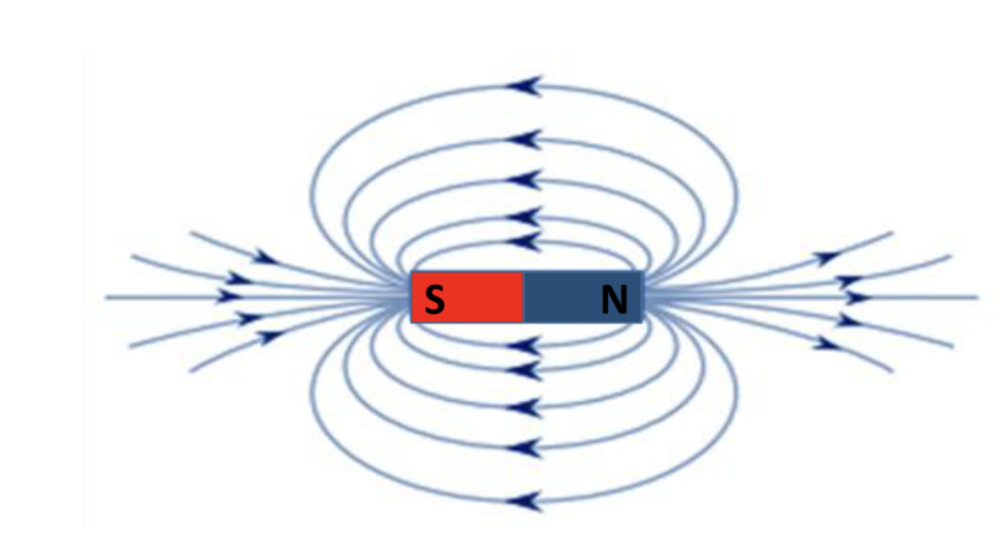 from north to south, effect of north on each |
front 2 Induced magnetism | back 2 When a magnetic material becomes temporarily magnetised in the presence of a magnetic field. |
front 3 Types of magnetic materials and the type of magnets they create. | back 3 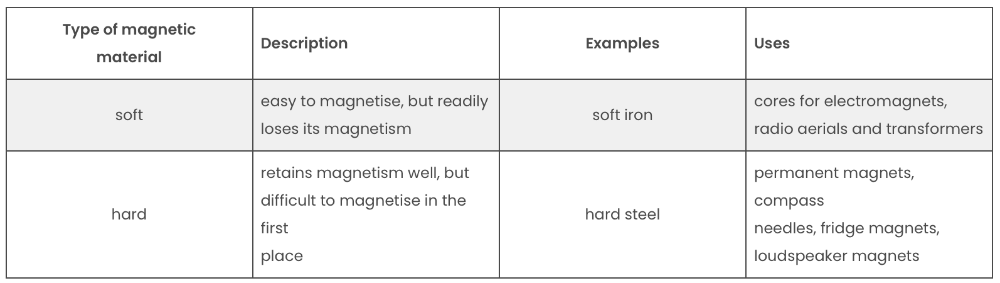 |
front 4 Magnetic field | back 4 A region in which a magnetic pole experiences a force. |
front 5 State the difference between magnetic and non-magnetic materials | back 5 Magnetic materials can be magnetised or attracted to magnets. Non-magnetic aren't affected by magnetic fields. |
front 6 How to show lines of bar magnet magnetic fields | back 6 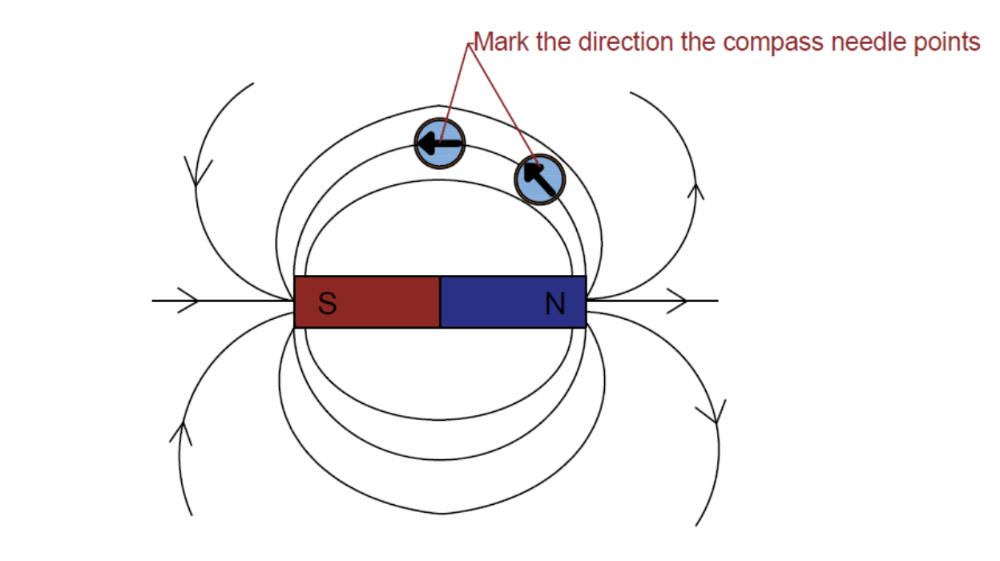 1. Place the plotting compass near the magnet on a piece of
paper Always points to South Pole
|
front 7 What are permanent magnets used in | back 7 Used in devices that require a stable magnetic field, such as in motors, Loudspeakers, door latches and Fridge magnets. |
front 8 What are electromagnets magnets used in | back 8 Used where variable magnetism is needed, such as in cranes, Electric buzzers and bells and speakers, as they can be turned on and off by controlling the electric current. |
front 9 How to increase strength of magnets | back 9 There is no way to change the strength of a permanent magnet, but there are three ways to increase the strength of an electromagnet: 1. Increase the current flowing through it: the greater
the current, the greater the strength of the field. |
front 10 How magnetic forces arise | back 10 Magnetic forces arise due to interactions between magnetic fields. When two fields overlap, their interactions can cause either attraction or repulsion, depending on the field orientations, opposites attract etc. |
front 11 What charge is measured in | back 11 coulombs (c) |
front 12 Describe an electric field | back 12 a region in which an electric charge experiences a force |
front 13 Describe experiments to show the production of electrostatic charges | back 13
This kind of attraction is called electrostatic attraction. This happens because of the charges on the materials. When insulating materials rub against each other they become electrically charged. Electron get ‘rubbed off’ one material and on to the other. The material that gains electrons becomes negatively charged. The material that loses electrons is left with a positive charge. |
front 14 direction of electric field | back 14 the direction of an electric field at a point is the direction of the force on a positive charge at that point. away from positive and towards negative |
front 15 Describe simple electric field patterns around a point charge | back 15 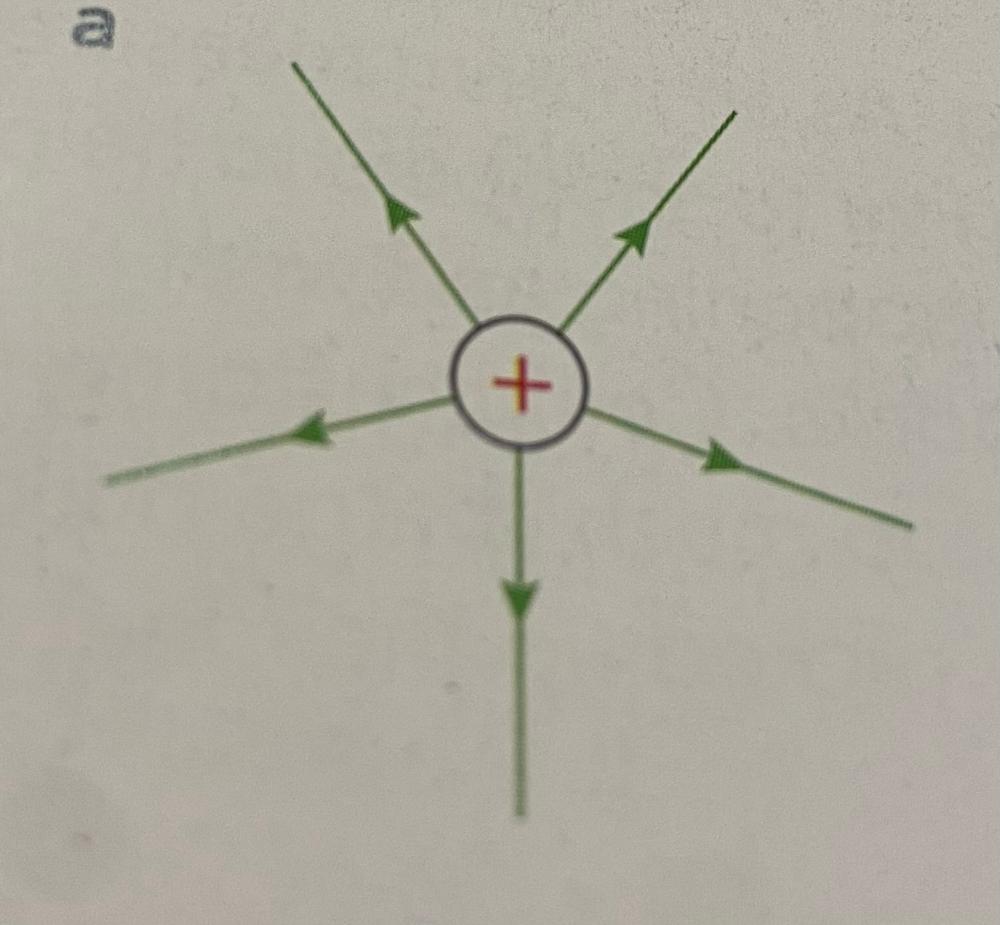 |
front 16 Describe simple electric field patterns around a charged conducting sphere | back 16 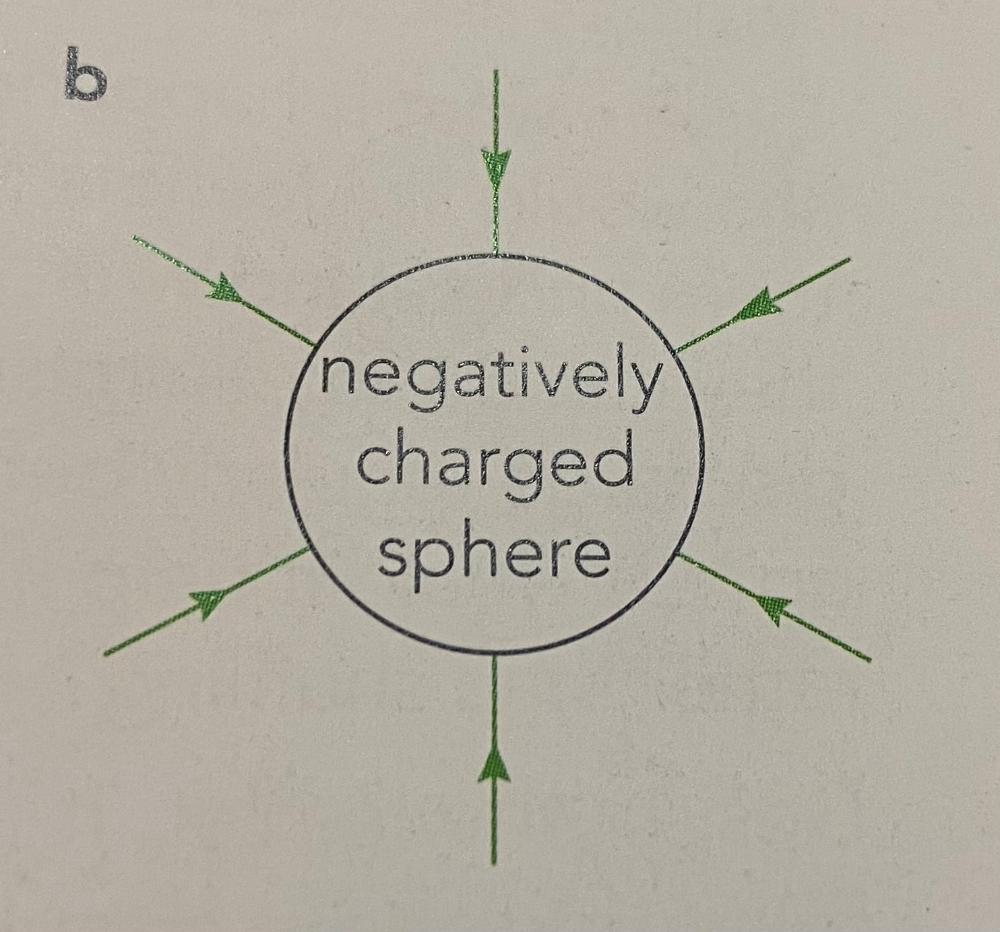 |
front 17 Describe simple electric field patterns between two oppositely charged parallel conducting plates | back 17  |
front 18 Describe an experiment to distinguish between electrical conductors and insulators | back 18 Set up a circuit with a light and a gap in the circuit where a material can be added with claw clips, if the light lights its a conductor, if not insulator. |
front 19 Define electric current | back 19 Define electric current as the charge passing a point per unit time. Current (I) = charge (Q) / time (t) |
front 20 Describe the types of ammeters (analogue and digital) with different ranges | back 20 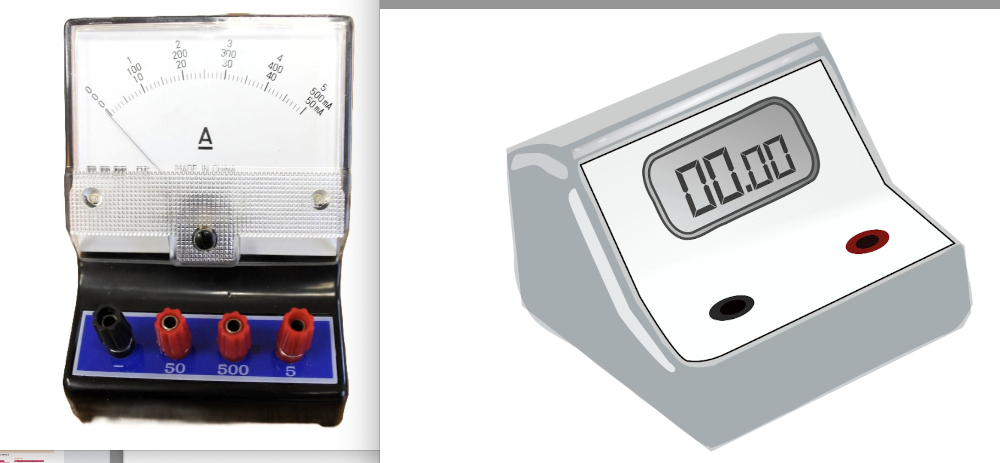 ammeter is used to measure electric current.
Digital Ammeter: display reading so less room for error. Galvanometer: Measures very small currents and has a different symbol (needle- like arrow). |
front 21 How to connect ammeter and unit | back 21 Connected in circuit correct way round so reading not backwards, measures in amperes /amps (A). |
front 22 Direction of currents in circuit | back 22 Conventional current is from positive to negative and that the flow of free electrons is from negative to positive. |
front 23 the difference between direct current (d.c.) and alternating current (a.c.) | back 23 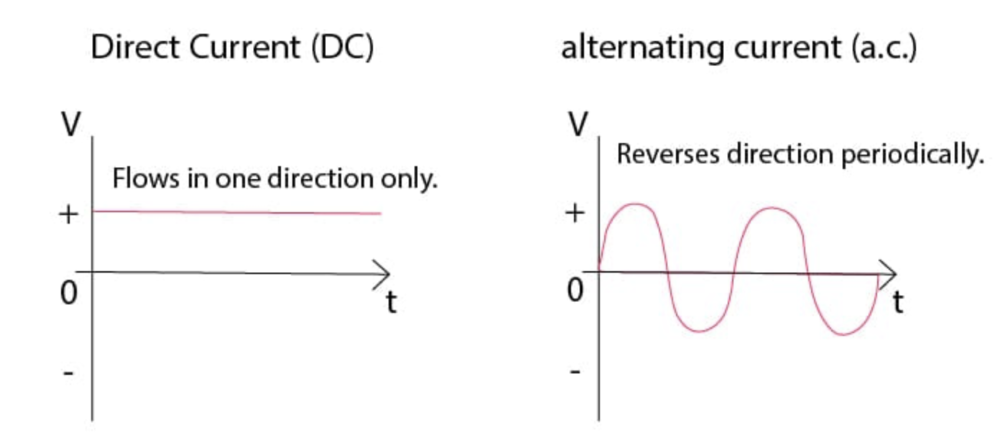 Direct Current (d.c.): Flows in one direction only. • Found in batteries and most small electronic circuits. Alternating Current (a.c.): Reverses direction periodically. •Used in mains electricity (e.g., 50 Hz frequency means direction changes 100 times per second). |
front 24 Define electromotive force (e.m.f.) and equation | back 24 the electrical work done by a source in moving a unit charge around a complete circuit (voltage across a source) measured in volts (V) e.m.f. (E) = work (W) / charge (Q) |
front 25 Define potential difference (p.d.) and equation | back 25 Define potential difference (p.d.) as the work done by a unit charge passing through a component. ie.voltage between two points measured in volts (V) p.d. (V) = work (W) / charge (Q) |
front 26 How to measure potential difference (p.d.) | back 26 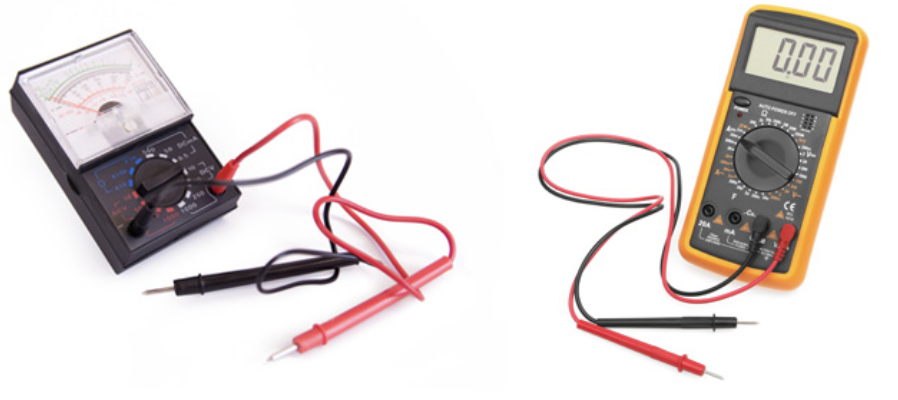 With a voltmeter, (V) connected in parallel with component being measured analogue or digital like ammeters with same errors and pros |
front 27 the equation for resistance | back 27 R = V/I Resistance = voltage / current |
front 28 Describe an experiment to determine resistance using a voltmeter and an ammeter and do the appropriate calculations. | back 28 Measure voltage and current, then apply Ohm's Law to calculate resistance.
Turn on the power supply and record the current from the ammeter and resistance from voltmeter. Then use formula to calculate. |
front 29 State the relationship of the resistance of a metallic wire to its length and to its cross-sectional area. and magnitude it effects | back 29
|
front 30 Sketch and explain the current–voltage graphs for a resistor of constant resistance, a filament, lamp and a diode. | back 30 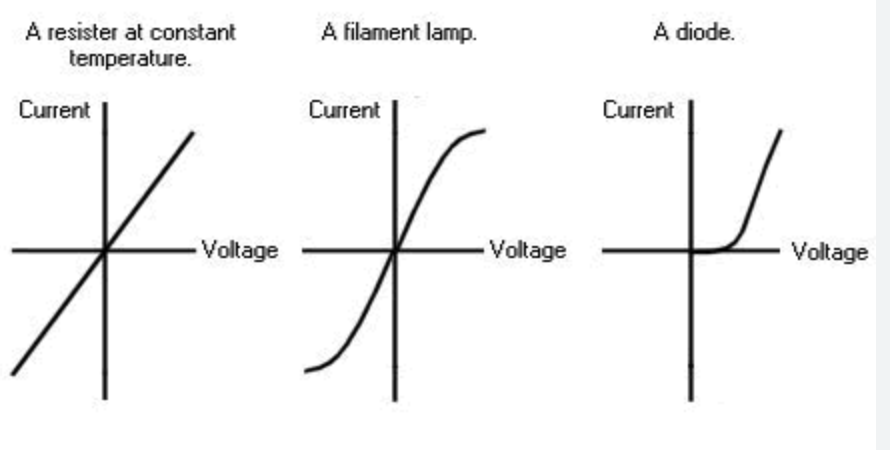 Resistor with Constant Resistance:
Filament Lamp:
Diode:
|
front 31 Recall and use the equation for electrical power | back 31 P = IV Power = current x voltage |
front 32 Recall and use the equation for electrical energy or energy transferred | back 32 E = IVt Energy transferred (J) joules = current x voltage x time |
front 33 Define the kilowatt-hour (kW h) and calculate the cost of using electrical appliances where the energy unit is the kW h | back 33
3. Calculating the Cost:
|
front 34 Cell and battery function and diagram | back 34 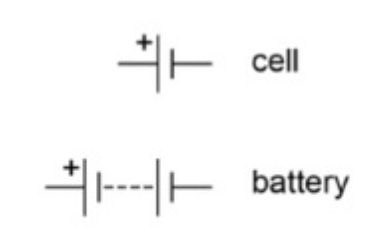 Cells are the basic units that provide electrical energy, converting stored chemical energy into electrical potential energy. Batteries are multiple cells connected together.They create a potential difference (voltage) that drives the flow of electric current. |
front 35 Power Supplies diagrams and function | back 35 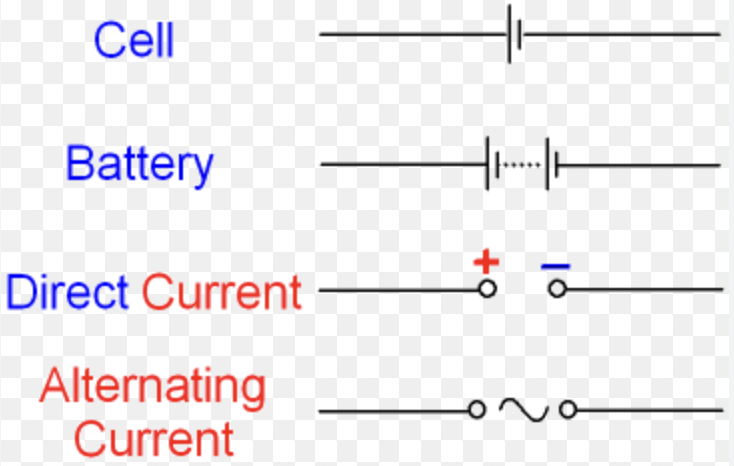 An electrical device that provides electrical energy to a circuit, converting electrical energy from a source to the desired voltage, current, and frequency to operate electrical components. It essentially acts as a source of electrical power, "pushing" the charge (current) through the circuit. |
front 36 Generator definition | back 36 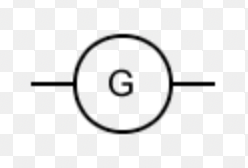 Generators convert mechanical energy into electrical energy, typically by rotating a coil of wire within a magnetic field. |
front 37 Potential dividers definition and diagrams | back 37 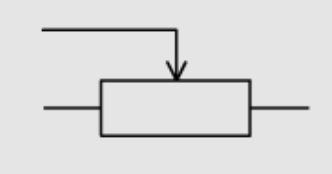 Potential dividers (or voltage dividers) are circuits that use resistors to create a specific voltage output from a higher input voltage. |
front 38 Switches definition and diagrams | back 38 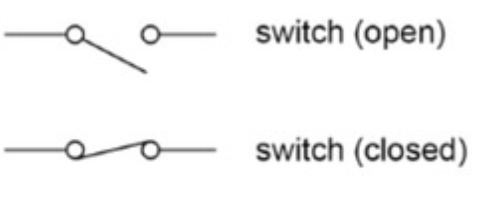 Switches are devices used to open or close a circuit, controlling the flow of current. |
front 39 Types of resistors definition and diagrams | back 39  Resistors limit the flow of current in a circuit.
|
front 40 Heaters definition and diagrams | back 40 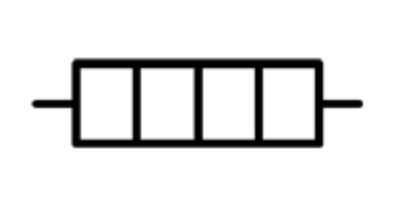 Heaters convert electrical energy into thermal energy, causing a temperature increase in the surrounding environment. |
front 41 Motor definition and diagrams | back 41 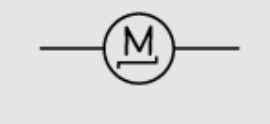 A component that converts electrical energy into mechanical energy. |
front 42 Magnetising Coil definition and diagrams | back 42 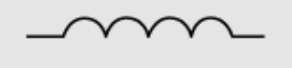 A coil of wire that creates a magnetic field when current flows through it. |
front 43 Transformers definition and diagrams | back 43  Transformers are devices that transfer electrical energy between circuits through electromagnetic induction, typically using coils of wire. |
front 44 Fuse definition and diagrams | back 44 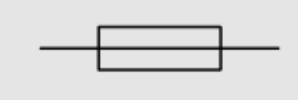 Fuses are safety devices designed to break a circuit if the current exceeds a certain level, protecting other components from damage. |
front 45 Relay definition and diagrams | back 45 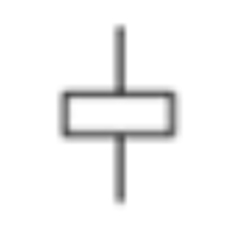 Relays are electrically operated switches that use a small current to control a larger current circuit. |
front 46 Diode definition and diagrams | back 46  A diode only allows current to flow in one direction (the direction the triangle points in the symbol) and blocks it in the reverse direction |
front 47 Light emitting diode definition and diagrams | back 47 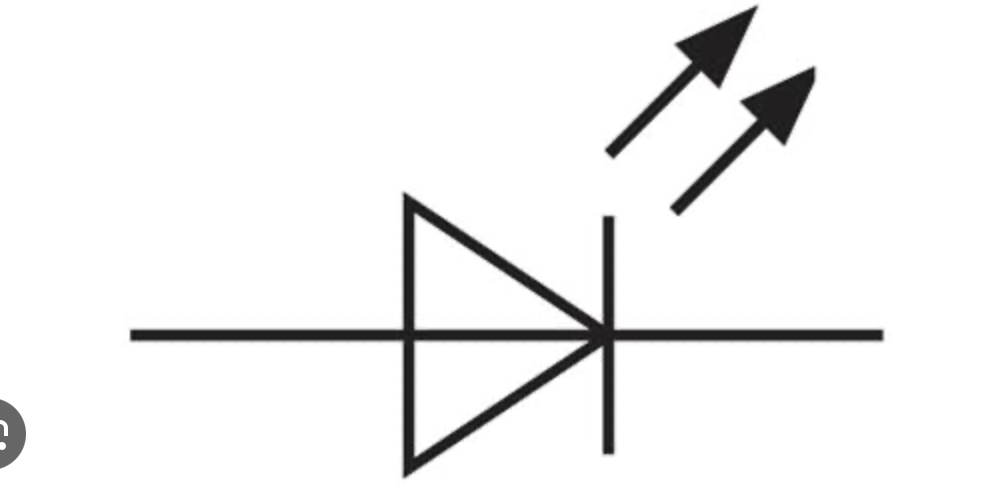 A type of diode that emits light when a current flows through it. |
front 48 series and parallel circuit rules | back 48
|
front 49 Calculate the effective resistance of two resistors in parallel. | back 49 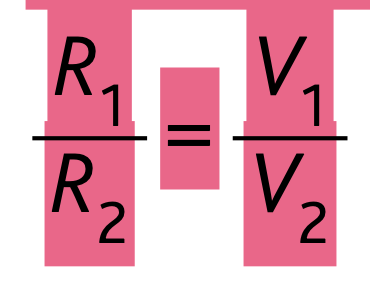 |
front 50 State the advantages of connecting lamps in parallel in a lighting circuit | back 50
|
front 51 Describe the action of a variable potential divider | back 51 It consists of two resistors connected in series, with the output voltage taken from the junction between them. This setup splits the input voltage into smaller parts, with the division of voltage being proportional to the resistance values of the two resistors. |
front 52 the wires in a mains circuit and which a switch has tube connected to | back 52
|
front 53 Use of trip switch and fuses | back 53 Trip switch: Often on fuse boxes. when current exceeds a certain value the switch trips breaking the circuit. Fuse: A device that breaks the circuit of the current exceeds a limit. It is a piece of metal wire that melts when too much current flows through. Thicker wore lets more through. rating of fuse should be just over the value of the current that flows though it when appliance is operating normally. |
front 54 State the factors affecting the magnitude of an induced e.m.f | back 54
|
front 55 Describe an experiment to demonstrate electromagnetic induction. | back 55 Apparatus Needed: A coil of wire, a magnet, and an ammeter. Steps: Conclusion: An e.m.f. is only induced when there is relative motion between the magnet and the coil. |
front 56 Directions of induced current (e.m.f.) | back 56 Lenz's law - the direction of an induced e.m.f. opposes the change causing it. If bring magnet to a coil the current will create a field that repels it, and if taking it away the current will attract it. |
front 57 Fleming's Right-Hand Rule: | back 57 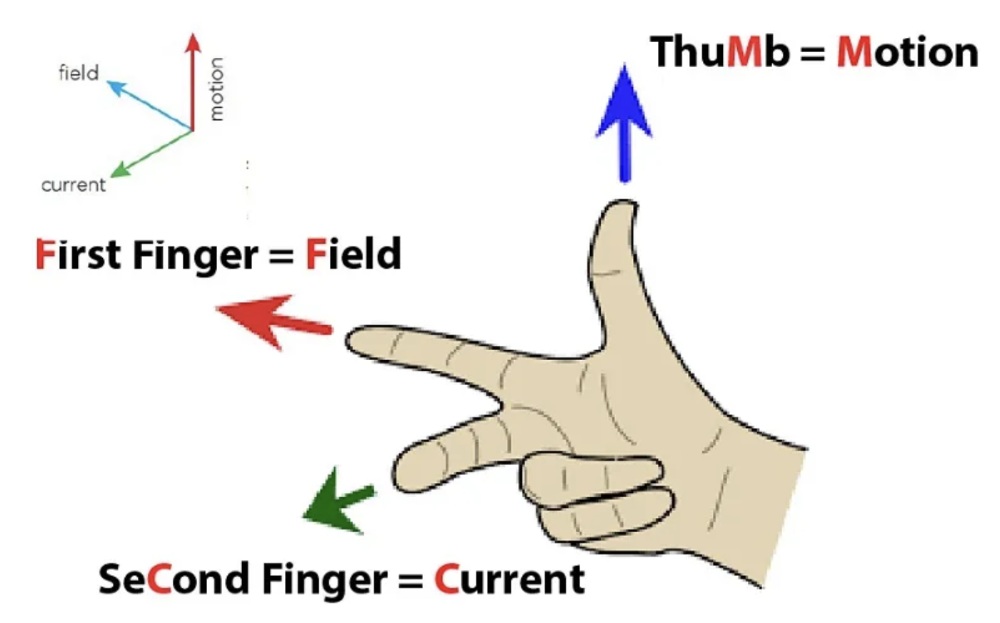 Used when dealing with electric generation • Thumb: Direction of Force (Motion of the conductor). How to Use: |
front 58 Describe a simple form of a.c. generator | back 58 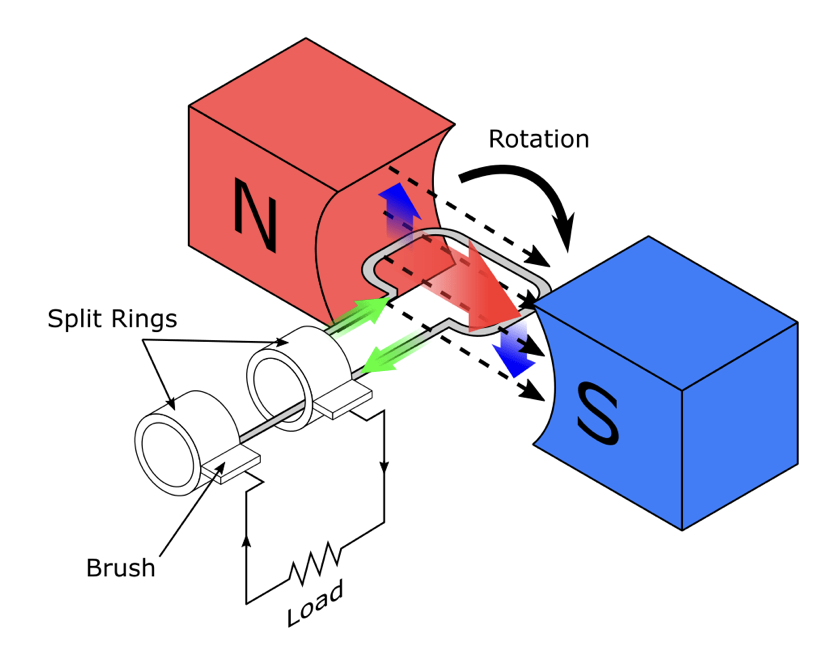 An a.c. generator converts mechanical energy into alternating electrical energy by electromagnetic induction. A simple generator consists of either a rotating coil in a magnetic field or a rotating magnet near a fixed coil.
|
front 59 Describe a simple form of d.c. generator | back 59 
When the coil is vertical, it moves parallel to the magnetic field, producing no force. This would tend to make the motor come to a stop, but two features allow the coil to continue rotating:
|
front 60 Sketch and interpret graphs of e.m.f. for simple a.c. generators and relate the position of the generator coil to the peaks, troughs and zeros. | back 60 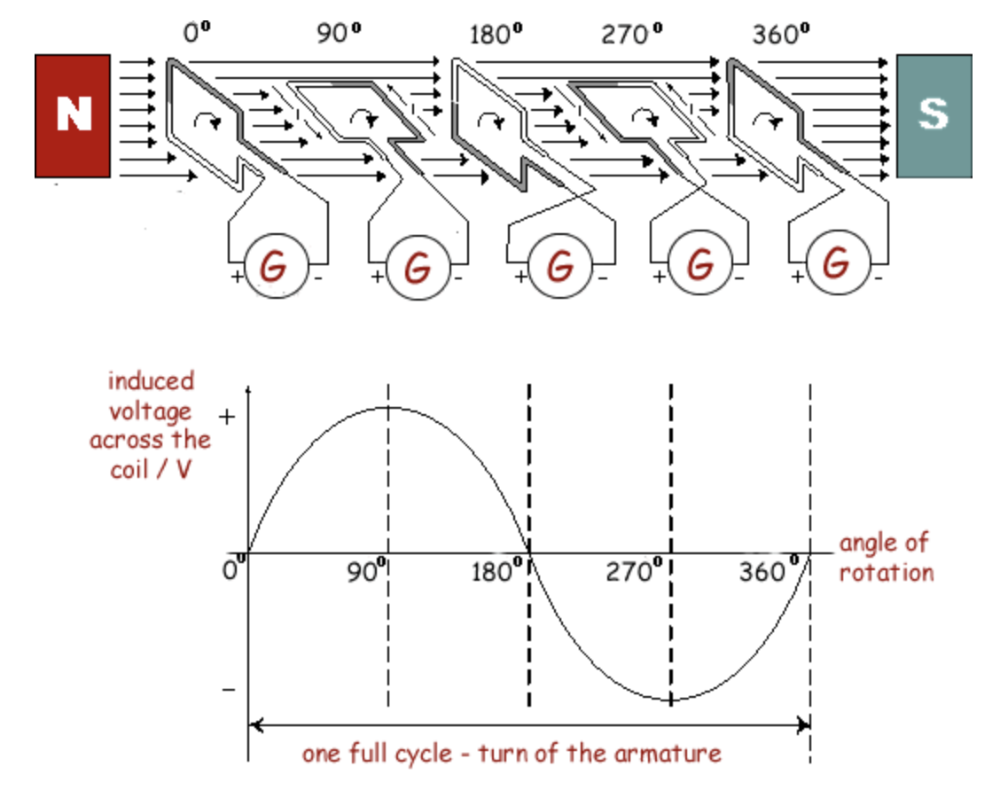
|
front 61 Pattern and direction of the magnetic field due to current in straight wires | back 61 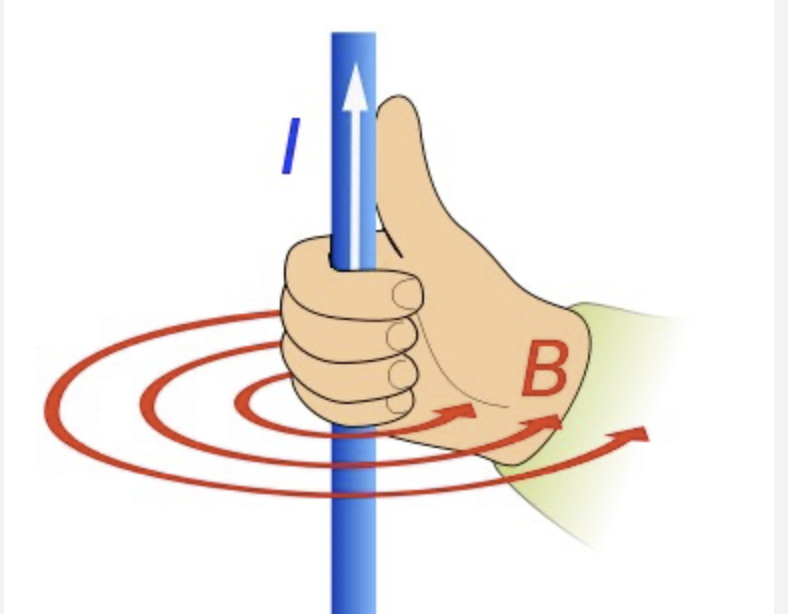 Wire has circular magnetic field around it with stronger nearest wire. Grab wire with right hand with thumb in direction of current to find direction of these field lines. |
front 62 Pattern and direction of the magnetic field due to current in solenoids | back 62 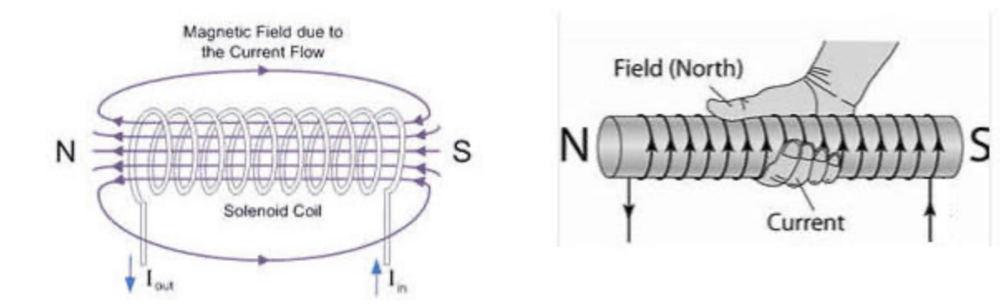 To determine North of solenoid wrap right hand fingers in direction of current and thumb will point to north. |
front 63 how the magnetic effect of a current is used in loudspeakers | back 63
|
front 64 What changes magnetic filled strength of solenoid | back 64
|
front 65 Describe an experiment to show that a force acts on a current-carrying conductor in a magnetic field, including the effect of reversing: how to calculate which way it will shift. | back 65 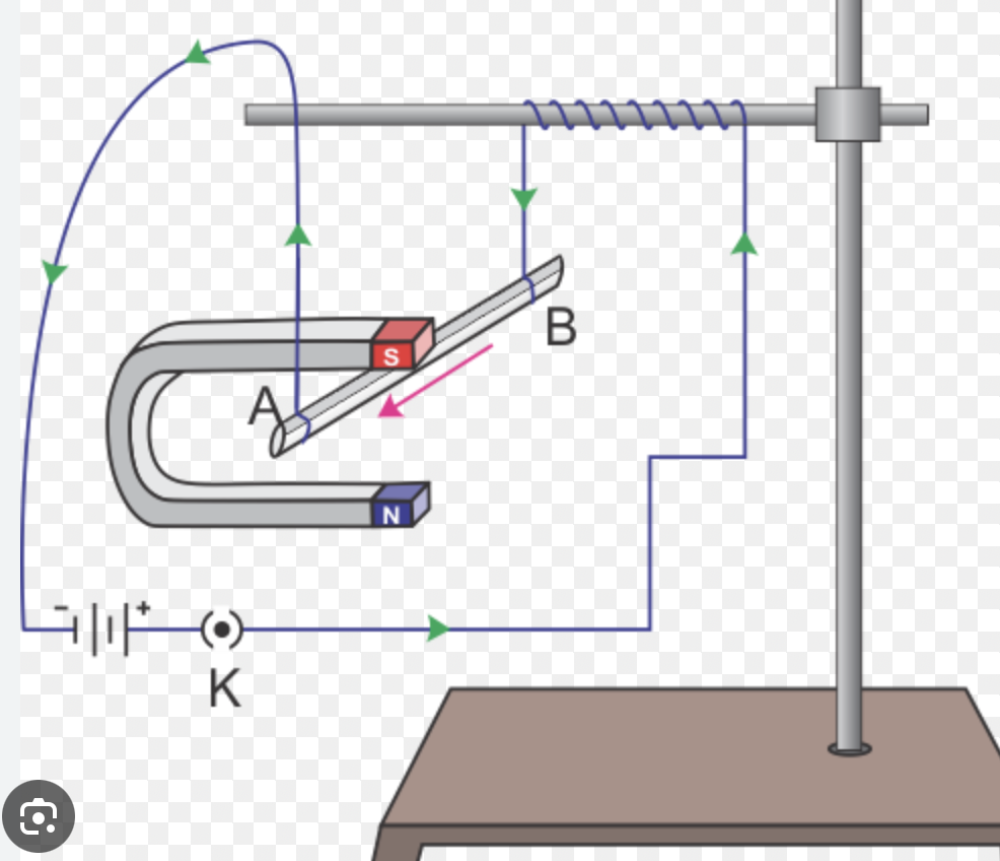
|
front 66 Fleming's Left-Hand Rule | back 66 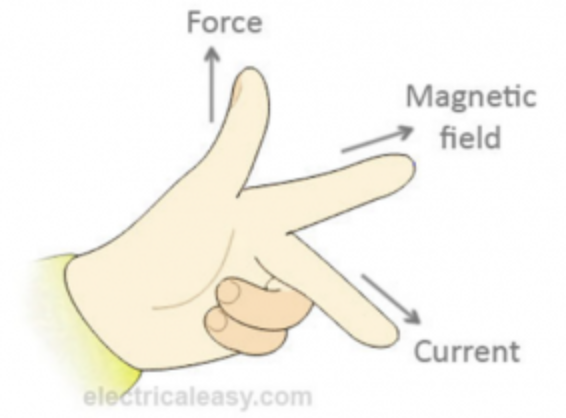 Done when dealing with electric motors.
The current is the positively charged and the flow of electrons (negative particles is opposite this) |
front 67 Turning effect in a motor is increased by: | back 67 The turning effect can be increased by increasing the:
|
front 68 simple transformer, describe | back 68 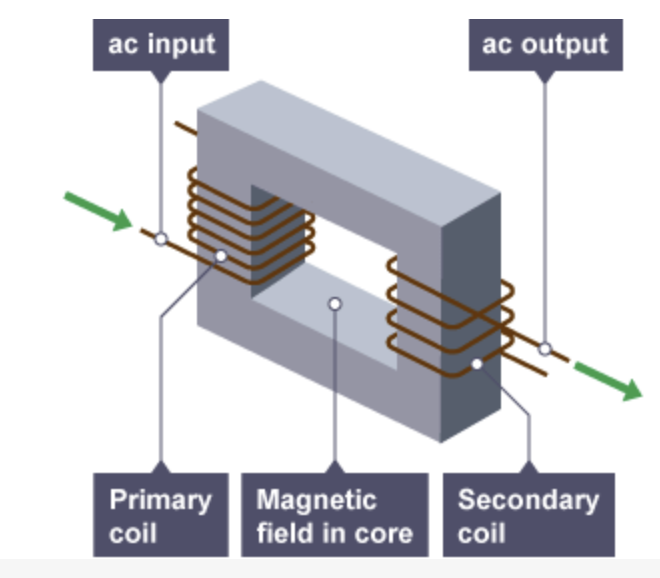 Alternating current goes through primary coil therefor its an electromagnet and produces a alternating magnetic field, this goes to the secondary coil through the core which allows a current to be generated. If its stepped up or down depends on wether number of coils has increased on the second coil or reduced. |
front 69 Equation for transformer voltage and turns on coil. | back 69  |
front 70 Recall and use the equation for 100% efficiency in a transformer | back 70 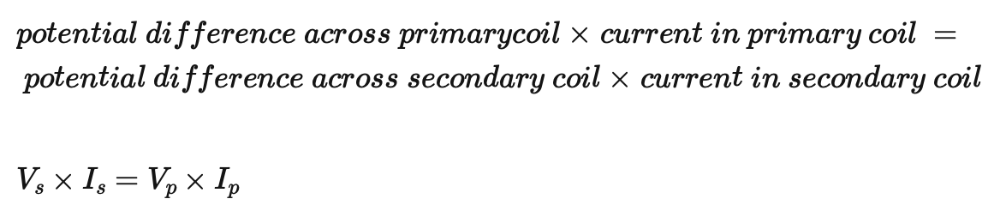 |
front 71 Equation for power loss in a cable, why higher voltage better, when used | back 71 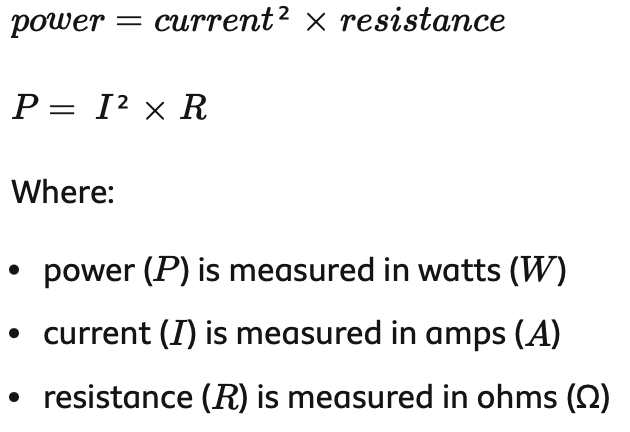 High voltage means lower current and lower current means less energy transferred to surroundings by heating and less wasted as well as safer. This is why higher voltage better. Step-up transformers can be used to increase the voltage from power stations to thousands of volts, which lowers the current in the transmission cables. Step-down transformers are then used to decrease the voltage from the transmission cables, so it is safer to distribute to homes and businesses. |
front 72 combined resistance of resistors in parallel | back 72 1/combined resistance = 1/R1 + 1/R2 then after adding find the reciprocal to get the combined resistance |
front 73 chsznge in resistance | back 73 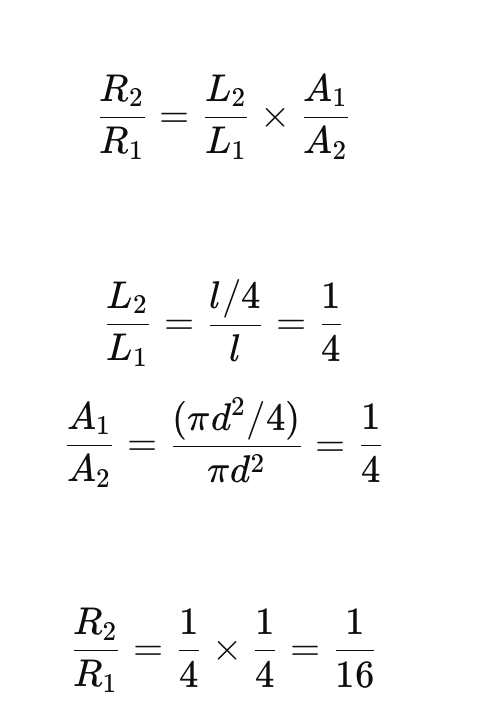 |