Instructions for Side by Side Printing
- Print the notecards
- Fold each page in half along the solid vertical line
- Cut out the notecards by cutting along each horizontal dotted line
- Optional: Glue, tape or staple the ends of each notecard together
physics igsce
front 1 Describe the life cycle of a star. | back 1 (a) a star is formed from interstellar clouds of gas and dust that contain hydrogen (b) a protostar is an interstellar cloud collapsing and increasing in temperature as a result of its internal gravitational attraction (c) a protostar becomes a stable star when the inward force of gravitational attraction is balanced by an outward force due to the high temperature in the centre of the star (d) all stars eventually run out of hydrogen as fuel for the nuclear reaction (e) most stars expand to form red giants and more massive stars expand to form red supergiants when most of the hydrogen in the centre of the star has been converted to helium (f) a red giant from a less massive star forms a planetary nebula with a white dwarf star at its centre (g) a red supergiant explodes as a supernova, forming a nebula containing hydrogen and new heavier elements, leaving behind a neutron star or a black hole at its centre (h) the nebula from a supernova may form new stars with orbiting planets |
front 2 Length of one light year. | back 2 One light-year is equal to 9.5 × 10^15m |
front 3 Define the Hubble constant | back 3 The ratio of the speed at which the galaxy is moving away from the Earth, to its distance from the Earth. |
front 4 Equation and estimate of Hubbles constant. | back 4 H = v/d Know that the current estimate for H is 2.2 × 10^–18 per second. |
front 5 opposite of Hubbles constant to find age of universe. equation Represents an estimate for the age of the Universe and that this is evidence for the idea that all the matter in the Universe was present at a single point. | back 5 1/H = d/v |
front 6 The eight planets and their order from the Sun. | back 6 Mercury, Venus, Earth, Mars, Jupiter, Saturn, Uranus, and Neptune. |
front 7 Contents of solar system: | back 7 (a) one star, the Sun (b) the eight named planets (c) minor planets that orbit the Sun, including dwarf planets such as Pluto and asteroids in the asteroid belt. (d) moons (e) smaller Solar System bodies, including comets and natural satellites |
front 8 Define average orbital speed of a planet with the equation | back 8 v = 2πr/T where T is the orbital period |
front 9 Describe how radioactive materials are moved, used, and stored in a safe way. | back 9
|
front 10 Explain how the type of radiation emitted and the half-life of an isotope determine which isotope is used for household fire (smoke) alarms. | back 10
|
front 11 Explain how the type of radiation emitted and the half-life of an isotope determine which isotope is used for sterilisation of equipment using gamma rays | back 11
|
front 12 Explain how the type of radiation emitted and the half-life of an isotope determine which isotope is used for measuring and controlling thicknesses of materials with the choice of radiations used linked to penetration and absorption. | back 12
|
front 13 Explain how the type of radiation emitted and the half-life of an isotope determine which isotope is used for diagnosis and treatment of cancer. | back 13 Beams of gamma rays are directed at the cancerous tumour
|
front 14 Explain how the type of radiation emitted and the half-life of an isotope determine which isotope is used for irradiating food to kill bacteria. | back 14
|
front 15 Variable resistor | back 15 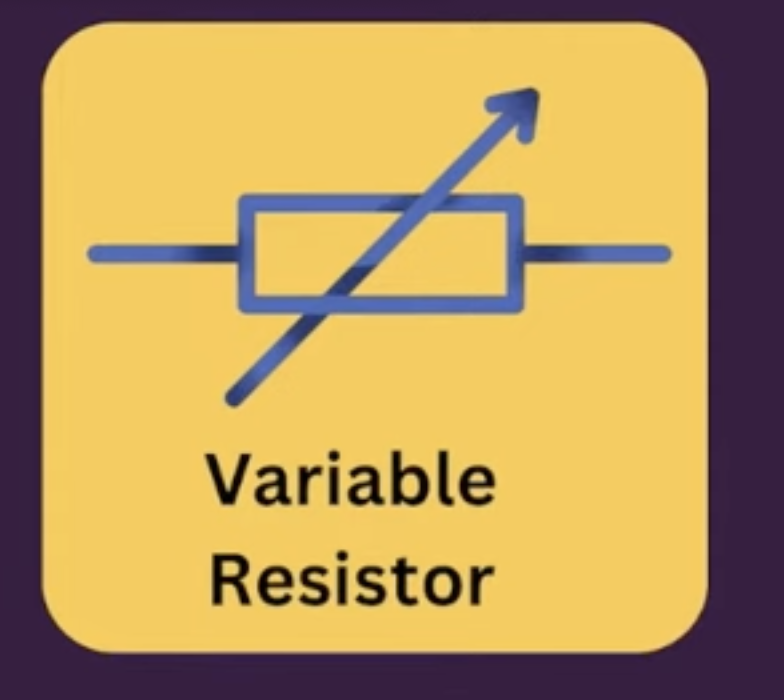 A resistor whose resistance can be changed, for example by turning a knob or a slider. |
front 16 Light dependant resistor | back 16 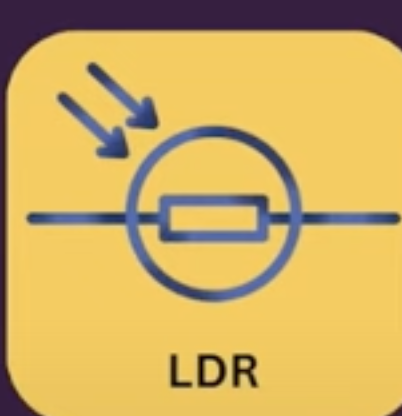 A resistor whose resistance is depending on the amount of light falling on it. |
front 17 Thermistor | back 17 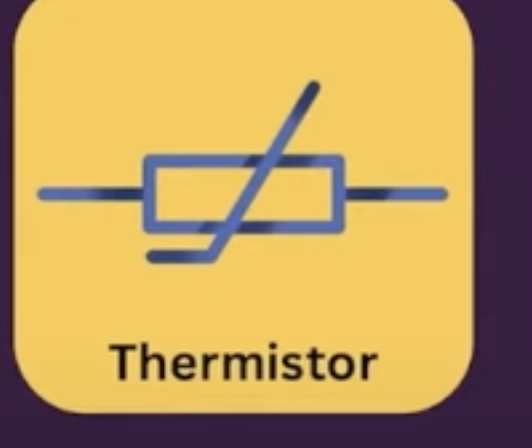 a type of resistor whose electrical resistance varies significantly with temperature |
front 18 Diode | back 18 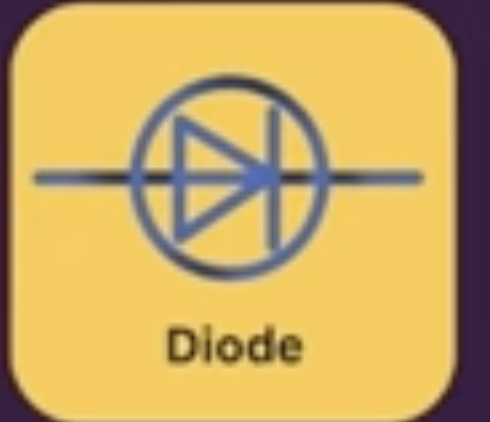 An electrical component that allows electricity to flow in one direction only. |
front 19 which way current flows in a circuit and electrons. | back 19 Current from the positive terminal to the negative terminal, electrons from negative to positive. |
front 20 Light emitting diode | back 20 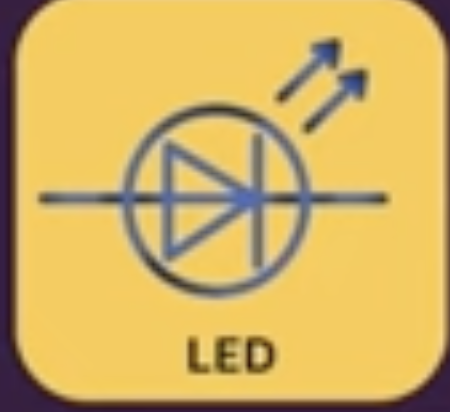 Diode that emits light when current going through it. |
front 21 Calculate resistance in parallel circuit | back 21 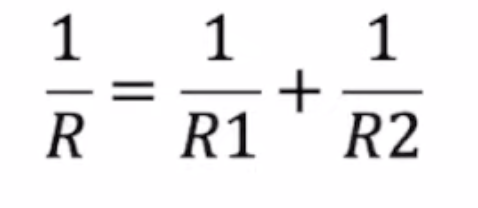 |
front 22 Calculating voltage formula | back 22 Voltage = current x resistance (V=IxR) |
front 23 Potential divider | back 23 Two resistors connected in series to get a smaller voltage than supplied. |
front 24 ratio | back 24 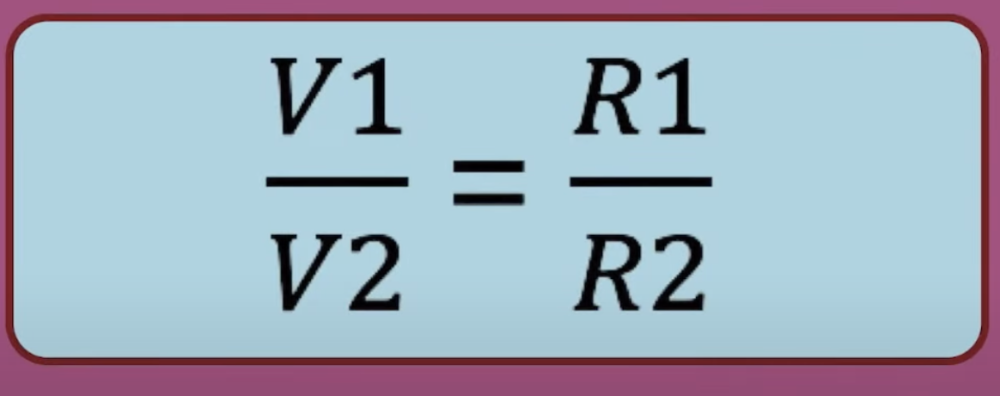 |