Instructions for Side by Side Printing
- Print the notecards
- Fold each page in half along the solid vertical line
- Cut out the notecards by cutting along each horizontal dotted line
- Optional: Glue, tape or staple the ends of each notecard together
Arky 1000: Methodology Terms
front 1 Uniformitarianism | back 1 the theory that the processes that change the Earth's crust and surface over time remain uniform and continuous - James Hutton |
front 2 Three Age system | back 2 CJ Thomsen - Stone, Bronze, Iron |
front 3 Typology | back 3 Sir John Evans - Classification of items based on their shared features, placing them into chronological categories. |
front 4 Ethnography | back 4 Theory of evolving societies; Savagery, Barbarism, Civilization |
front 5 Stratigraphy | back 5 using the order in which things come on a time scale to make an analysis - rock layers, written records, etc - Heinrich Schliemann |
front 6 Seriation | back 6 Arranges artifacts into chronological orders based on changes in their styles and abundance from across time. - Sir Williams Flinders Petrie |
front 7 Direct Historical | back 7 interprets the past by tracing links between cultures and documented historical periods and assuming they are related. |
front 8 Neolithic Revolution | back 8 A period of exponential growth in agricultural methods and technology that increased the yields and efficiency of crops allowing for populations to thrive |
front 9 Ecological Approach | back 9 focuses on the complex relationship between societies of the past and their environments |
front 10 Culture Ecology | back 10 studies cultural activities and cultural changes due to the environment and changes in the environment - Julian Steward |
front 11 Radiocarbon dating | back 11 analysis of the constant rate of decay of radiocarbon atoms in an organic sample to identify how much has decayed since the organism died. |
front 12 Processual Archaeology | back 12 Provision of explanations rather than details and the culmination of testable theories, frequently questioning and scrutinizing ideas to make them as accurate as possible to the truth |
front 13 Artifacts | back 13 Objects that are made, modified, or used; transportable |
front 14 Ecofacts | back 14 Biological remains associated with subsistence / the natural environment; organic remains |
front 15 Features | back 15 Modified aspect of the site that is not transportable and has no added material; like a hole or tree stump |
front 16 Structures | back 16 Constructed elements of the site that are not transportable; has added materials |
front 17 Sites | back 17 Any spots that humans have been, past or present |
front 18 Regions | back 18 Area with several occupation sites, often linked by some cultural association |
front 19 Tell site | back 19 some kind of formation or feature that can identify that humans have been there |
front 20 Context | back 20 Relationships between the matrix surrounding the cultural remains and the remains themselves |
front 21 Matrix | back 21 Sediments and Soils |
front 22 Primary context | back 22 context that describes an undisturbed artifact, feature, or site |
front 23 Secondary Context | back 23 Context that describes the disturbance of an artifact, feature, or site since its creation |
front 24 Provenience | back 24 The 3D location of the archaeology remains (Horizontal and Vertical) |
front 25 Association | back 25 Relationship between the cultural and natural aspects of the site |
front 26 Cultural Formation Process | back 26 Changes in artifacts, features, or sites caused by primary or secondary human activity |
front 27 Natural Formation Process | back 27 Changes in Artifacts, features, or sites caused by exposure to the elements |
front 28 Waterlogging | back 28 Anaerobic conditions are not ideal for bacterial growth and decomposition, allowing from things to be preserved for much longer |
front 29 Frozen Preservation | back 29 Lack of liquid water and low temperature is not ideal for bacterial growth and decomposition, allowing things to be preserved for longer |
front 30 Arid Preservation | back 30 Lack of water is not ideal for bacterial growth and decomposition, allowing for things to preserved for longer |
front 31 Research Design | back 31 Hypothesis and Formulation of a research strategy around a discovery |
front 32 Ground Reconnaissance | back 32 Consultation of documentary sources and locals, then creating a survey plan based off this data |
front 33 Salvage archaeology | back 33 the excavation of a site that is under threat of being lost and destroyed |
front 34 Unsystematic Survey (non-probabilistic sampling) | back 34 choosing survey samples based on criteria |
front 35 Systematic Survey | back 35 Choosing Survey samples by a selective pattern |
front 36 Extensive Survey | back 36 combines results of neighboring sites or regions |
front 37 intensive Survey | back 37 aims for the comprehensive coverage of a site or area |
front 38 Aerial Reconnaissance | back 38 Data attained from elevated analysis of the surface (satellites, planes, etc) |
front 39 Checkerboard Excavation | back 39 Excavates every other square space in a checkerboard pattern |
front 40 Wheeler-box Excavation | back 40 use of baulks between squares, often used for sites with structures |
front 41 Running Section Method | back 41 creation of a vertical section where needed for revealing a structure or feature. used in situ with Wheeler box or Checkerboard |
front 42 Step Trench Method | back 42 Required for particularly deep sites for safety reasons; used in situ with Wheeler box or Checkerboard |
front 43 Assemblage | back 43 a grouping of the Archaeological remains belonging to the same occupation phase / activity |
front 44 Relative Dating | back 44 dating of an artifact or occupation phase in relation to another; either older or younger |
front 45 Absolute Dating | back 45 Chronometric aging of an artifact or matrix |
front 46 Gregorian (Christian) Calendar's year 1 | back 46 AD (CE) 1 |
front 47 Muslim Calendar's year 1 | back 47 CE 622 |
front 48 Greek Calendar's year 1 | back 48 776 BCE |
front 49 Mayan Calendar's year 1 | back 49 3114 BCE |
front 50 Egyptian Calendar's year 1 | back 50 year one begins with each pharaoh |
front 51 BC | back 51 before christ |
front 52 AD | back 52 Anno Domini (in the year of the lord) |
front 53 CE | back 53 common era |
front 54 BCE | back 54 before common era |
front 55 BP | back 55 Before present, 1950 |
front 56 Law of Superposition | back 56 sediments accumulate into layers over time; a deeper layer is older than a nearer one |
front 57 Biostratigraphic units | back 57 numbering of artifacts placing them into chronological order |
front 58 Contextual Seriation | back 58 Seriation based on the duration of appearances of an object and changes in appearances of an object |
front 59 Frequency Seriation | back 59 Traces the abundance changes of a feature or object through time, creates a battleship curve when graphed |
front 60 Lexicostatistics | back 60 tracing of the changes of vocabulary in written records over time |
front 61 Glottochronology | back 61 use of statistical data to date the divergence of languages from the their parent languages, defined in years |
front 62 Climate Chronology | back 62 Analysis of Deep sea and ice core samples to detect change in the climate over time |
front 63 Saw tooth climate curve | back 63 a graph that shows the changes in climate over thousands of years |
front 64 Pollen dating (palynology) | back 64 use of preserved pollen spores to create a dateable pollen zone sequence, or pollen profile. can range drastically by region. |
front 65 Faunal Dating | back 65 Tracing of the presence or absence of animals in regions, and the evolution of these animals |
front 66 Chronometric Dating | back 66 A system linked to a 'year' that follows a regularly repeating timeable process |
front 67 Floating Calendar | back 67 A calendar that cannot be linked to another calendar that is not floating |
front 68 In Situ | back 68 "In place" describes an undisturbed artifact, site, or feature. |
front 69 Terminus Post Quem | back 69 "Date After-which" |
front 70 Terminus Ante Quem | back 70 "Date before which" |
front 71 Dendrochronology | back 71 using tree growth rings in connection with a master sequence and other such factors to deduce a date |
front 72 Radioactive Dating | back 72 analysis of the constant radioactive decay of elements in a sample to discern an accurate date |
front 73 Formation of Radiocarbon | back 73 Sub atomic particles interact with a particle in the upper atmosphere producing a high energy neutron. The neutron reacts with an N-14 molecule to produce a C-14 molecule, which reacts with oxygen to produce an isotopic molecule of carbon dioxide which are ultimately ingested by animals through plants that utilized the radiocarbon dioxide molecule. |
front 74 Half life of C-14 | back 74 5730yrs (then releasing a beta particle) |
front 75 Radiocarbon AMS | back 75 A machine accelerates ions of the sample to extremely high kinetic energies before mass analysis for dating small samples |
front 76 Potassium-Argon Decay | back 76 Radioactive potassium is created when igneous material is formed. there is no argon gas at that point because the formation heat drives all of it off. Potassium decays to Argon gas by a half life of 1.25 billion years |
front 77 Argon-Argon Decay | back 77 used for dating volcanic eruptions and deposits of ash and igneous rock, Argon-39 decays Argon-40 by a half life of 269 years |
front 78 Uranium Series Decay | back 78 The decay of Radioactive uranium-238 down into lead-82, through protactinium-231 or Thorium-230 |
front 79 Optically Stimulated Luminescence | back 79 the absorption of radiation into the voids of silt and sand grains after they have been exposed to light |
front 80 Thermoluminescence | back 80 the absorption of radiation into the voids of clay after it has been heated to over 500 degrees celsius |
front 81 Obsidian Hydration | back 81 the absorption of water into obsidian creating hydration rings in the rock |
front 82 Social Archaeology | back 82 Studies the relationships between groups of people; how the are organized internally and externally. |
front 83 Polity | back 83 an organized society |
front 84 Histogram (Scale) | back 84 number of small sites vs. large sites connected within the settlement pattern |
front 85 Settlement Pattern | back 85 groupings of similar sites in a region |
front 86 Four-Fold Classification | back 86 Band, Segmentary, Chiefdom, State |
front 87 Band Society | back 87 Small site, >1000 pop, Hunter / gathering nature. (before 10,000 BP all sites were bands.) |
front 88 Segmentary Society | back 88 Larger than Bands, ~1000 pop, Horticulturalistic, Agriculturalistic, Pastoralistic nature. Egalitarian. Relied on domestication (no site dominance) |
front 89 Segmentary Isolated | back 89 A dispersed Segmentary society |
front 90 Segmentary Grouped | back 90 A nucleated or agglomerated Segmentary society |
front 91 Egalitarianism | back 91 The belief that rank is achieved through life achievements and not through birthright |
front 92 Chiefdom Society | back 92 Varying site size, 5000-20,000 pop, people of power, reliance on domestication, prestige of lineage |
front 93 State Society | back 93 Varying Site size, 20,000 to millions pop, political center, leader and laws, separation of religion and ruling, economic specializations, social classes, |
front 94 Ecosystem | back 94 a community of living organisms that live and interact with a specific environment |
front 95 Ecozone | back 95 A distinct geographic area with specific groups of organisms living together |
front 96 Ecotone | back 96 where two ecozones overlap; an area of transition |
front 97 Paleoenvironment | back 97 A past environmental system |
front 98 Paleoclimate | back 98 A past climate system |
front 99 Climate | back 99 Changes in weather and environment over time; long term |
front 100 Cultural Ecology | back 100 Similarities in cultures in a given environment and their connections to the nature of that environment |
front 101 Human Ecology | back 101 Cultural and societal interactions between human and non-human communities |
front 102 Micro-Botanical Remains | back 102 small plants remains like phytoliths, spores, or charcoal |
front 103 Arboreal Pollen | back 103 Pollen from trees and shrubs |
front 104 Non-arboreal Pollen | back 104 pollen from herbs and grasses |
front 105 Macro-Botanical Remains | back 105 Larger plant remains like seeds, fruit, and wood |
front 106 Micro-Faunal Remains | back 106 Smaller animal remains like rodent, bat, and insectivore remains. |
front 107 Palaeoentomology | back 107 study of the remains of worms and insects to create connections with micro-climates |
front 108 Macro-Faunal Remains | back 108 Larger animal remains like rabbits, bears, or large fish |
front 109 First fire | back 109 Koobi Fora, Kenya (1.7 mya) or Zhoukoudian, China (500,000 BP) |
front 110 Site Catchment Analysis | back 110 total area from which the site's contents have been derived |
front 111 Site exploitation Territory | back 111 the area around a site that would be exploited by the sites inhabitants for dietary needs and immediate needs |
front 112 Carrying Capacity | back 112 the number and density of individuals that land can support |
front 113 Zooarchaeology | back 113 the study of animals of the past through evidence left behind by them |
front 114 Bioanthropology | back 114 the study of humans of the past through what they left behind |
front 115 Coprolites | back 115 any evidence that something was consumed |
front 116 U-Shape | back 116 carnivore mark |
front 117 V-Shape | back 117 butcher mark |
front 118 NISP | back 118 Number of identified Specimens |
front 119 MNI | back 119 Minimum Number of Individuals |
front 120 Taphonomy | back 120 The analysis of the process of fossilization |
front 121 Human Dry Weight | back 121 approx. 25-30% of live weight |
front 122 Rickets | back 122 Vitamin D Defiency |
front 123 Scurvy | back 123 Vitamin C deficiency |
front 124 Antemortem | back 124 Healed trauma at the time of death |
front 125 Perimortem | back 125 Unhealed trauma at the time of death |
front 126 Postmortem | back 126 Desiccative trauma after death |
front 127 The Homos | back 127 Homo Habilis (2.5-1.7mya, East Africa) Homo Ergaster (1.8-0.6mya, Africa) Homo Erectus (1.8mya-27ka, Africa, far east Indonesia) Homo Heidelbergensis (500-200ka, Africa, Europe) Homo Neanderthalensis (200-28ka, Europe) Homo Sapiens (500ka, everywhere) |
front 128 The Australopithecines | back 128 Australo Anamensis (~4.4mya, East Africa) Australo Afarensis (~3.5mya, East Africa) Austral Africanus (~2.8mya, South Africa) |
front 129 The Paranthropines | back 129 Paran Aethiopicus (2.7-2.3mya, East Africa) Paran Boisei (2.3-0.7mya, East Africa) Paran Robustus (1.8-1mya, South Africa) |
front 130 Bipedal | back 130 Two-legged |
front 131 Quadrapedal | back 131 Four-legged |
front 132 Cranium | back 132 to do with the head (skull) |
front 133 Postcranium | back 133 excluding the skull |
front 134 Foramen Magnum | back 134 A hole in the bottom of the skull where the brain connects to the spine |
front 135 Pelvis | back 135 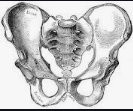 |
front 136 Femur | back 136 Thigh bone connecting to the Pelvis |
front 137 Tibia | back 137 Larger shin bone connecting to the femur |
front 138 Fibia | back 138 Smaller Shin bone located to the side of the Tibia |
front 139 Condyles | back 139 the sides of the femur joint |