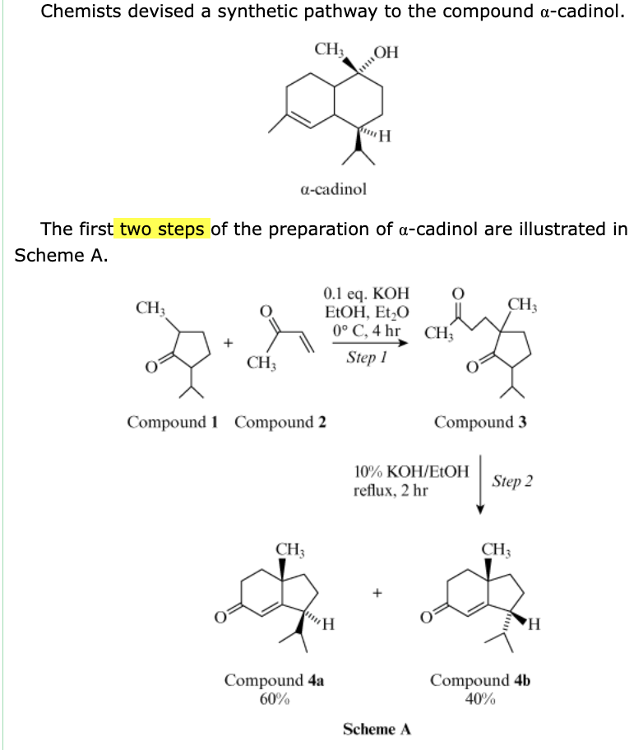
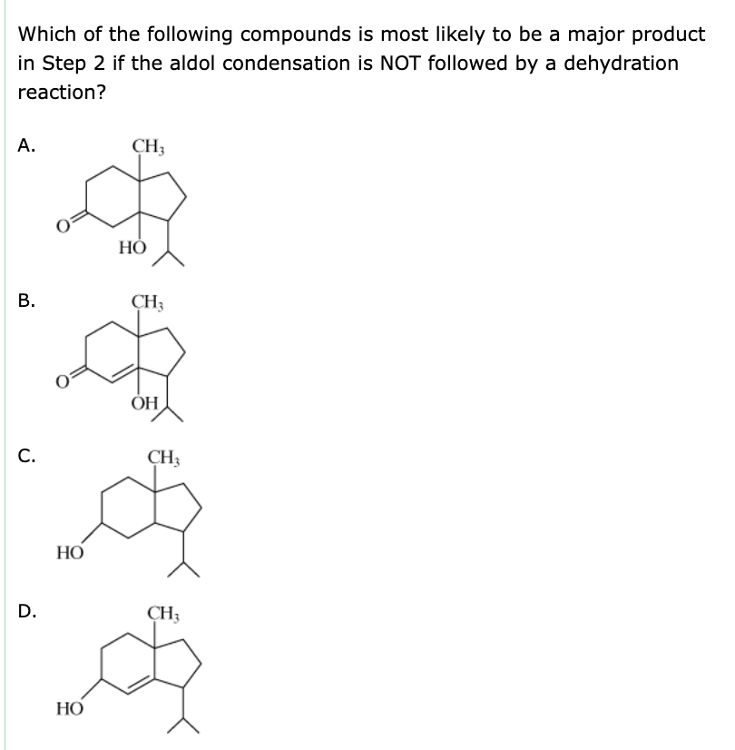
front 1 Which of the following compounds is most likely to be a major product
in Step 2 if the aldol condensation is NOT followed by a dehydration reaction? | back 1
Solution: The correct answer is A.
-
During an aldol reaction, the α-methyl carbon of the acyclic
ketone becomes a nucleophilic enolate ion which then proceeds to
attack the electrophilic cyclopentanone ketone. This process
creates a new carbon–carbon single bond, and the cyclopentanone
ketone is converted into the hydroxy group located on the
β-carbon, producing a β-hydroxy ketone.
- This
compound has a double bond between the α and β carbons, which would
result from the loss of the hydroxyl functional group in a
dehydration reaction.
- In this option, the hydroxy
functional group is present instead of the ketone functional group,
which is missing, and both should be present after an aldol addition
reaction.
- This product is an allylic alcohol, which is a
reduced form of the aldol condensation product rather than the
β-hydroxy ketone obtained from the aldol addition reaction.
|
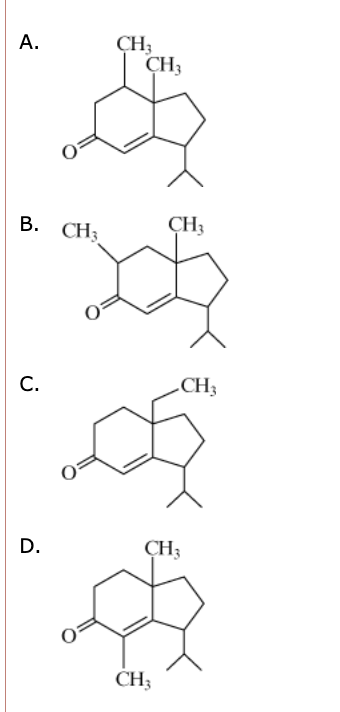
front 2 If Compound 2 is replaced with Compound
X, what will be the structure of the final product of
steps 1 and 2? (Note: Assume that the yields of steps 1 and 2 are not
affected by the substitution.) | back 2
Solution: The correct answer is A.
-
This is the product obtained in two steps, beginning with a
Michael addition reaction between compounds 1 and 2, followed by
an intramolecular aldol condensation. The addition of a methyl
group on Compound 2 does not change the reaction mechanism of the
first step, and there will be an additional methyl present in the
product on the δ-carbon (C5 from the ketone counting clockwise) of
the six-membered ring.
- This product has the new
methyl group present on a different carbon than on Compound
X.
- The methyl group was shifted from its
original position in Compound X to the methyl group
in Compound 1.
- The methyl group on
Compound X was moved to the α-carbon of the
α,β-unsaturated ketone instead of remaining on the δ-carbon (C5 of
the six-membered ring).
|
front 3 What is the equation for energy stored in a capacitor? | back 3 E = 1/2CV^2
- E is the energy stored in the capacitor (in joules),
- C is the capacitance of the capacitor (in farads),
- V is
the voltage across the capacitor (in volts).
|
front 4 How many mF in 1 Faraday? | |
front 5 Suppose that the railcar passes by a horn that is emitting a sound
with frequency f. Which of the following describes the
frequency f that the person on the railcar hears?
- A. f > f before passing the horn,
f < f after passing it
- B. f < f before passing the
horn, f > f after passing it
- C. f = f before passing the
horn, f = f after passing it
- D. f > f before passing the
horn, f > f after passing it
| back 5
Solution: The correct answer is A.
-
Due to the Doppler effect, the frequency that the person on
the railcar hears before passing the horn is larger than the
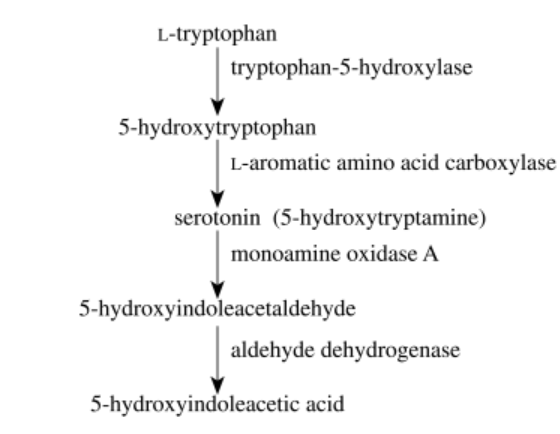
actual frequency of the sound emitted, while the person hears a
frequency lower than the actual frequency after passing the
horn.
- These relationships between the perceived
frequencies and the frequency of the emitted sound are in direct
contradiction to the consequences of the Doppler effect which causes
the frequency that the person on the railcar hears before passing
the horn be larger than the actual frequency of the sound emitted,
while the frequency heard by the person after passing the horn be
lower than the actual frequency.
- The fact that the
perceived frequencies are identical to the emitted frequency
actually implies the person does not move relative to the horn.
-
According to the Doppler effect, the frequency perceived by
the moving person cannot be the same both when approaching and
when departing from the horn, given that in one instance the
person moves along with the propagating sound wave, whereas in the
other case it moves in a direction opposite to that of the sound
wave.
|
front 6 What is another equation for power required to maintain constant
velocity is given by the equation: | back 6 P = Fv
- P is the power (in watts, W),
- F is the force
required to overcome friction or resistive forces (in newtons,
N).
- v is the velocity (in meters per second, m/s).
|
front 7 Text: After the locomotive releases the railcar, two systems are
available to slow the moving railcar. The first system connects an
electric generator to the railcar’s wheels to charge a 12 V battery
mounted on the railcar. Engaging the generator to the wheels puts a
decelerating force of 5000 N at 40 m/s, and the force declines
linearly with speed. This generator transfers about 80% of the kinetic
energy dissipated by this braking force to the battery. The second
system allows the person to slow the railcar by the friction of its
wheels against a stationary surface in a manner similar to that of the
brakes on an automobile. This system can generate a maximum braking
force of 14,000 N. The rolling friction of the wheels and the internal
friction between the wheels and axles contribute a continuous 1000 N
decelerating force any time that the railcar is in motion.
If no braking occurs, a total of how much power would be required
to keep the railcar moving at 40 m/s?
- A.16 kW
- B.40 kW
- C.600 kW
- D.800
kW
| back 7
Solution: The correct answer is B.
- The work done by the friction force that tends to slow down
the railcar is equal to the decelerating force multiplied by the
constant speed, so 1000 N × 40 m/s = 40 kW. 16 kW is less than 40 kW
required to keep the railcar moving at the constant speed of 40 m/s,
therefore the railcar will not achieve the speed of 40 m/s.
-
The power required must match the work done by the friction
force that tends to slow down the railcar, which is equal to the
decelerating force multiplied by the constant speed, so 1000 N ×
40 m/s = 40 kW.
- The work done by the friction
force that tends to slow down the railcar is equal to the
decelerating force multiplied by the constant speed, so 1000 N × 40
m/s = 40 kW. 600 kW is more than 40 kW required to keep the railcar
moving at the constant speed of 40 m/s, therefore the railcar would
keep increasing its speed above 40 m/s.
- The work done by
the friction force that tends to slow down the railcar is equal to
the decelerating force multiplied by the constant speed, so 1000 N ×
40 m/s = 40 kW. 800 kW far exceeds the 40 kW required to keep the
railcar moving at the constant speed of 40 m/s and causes the
railcar to increase its speed beyond 40 m/s.
|
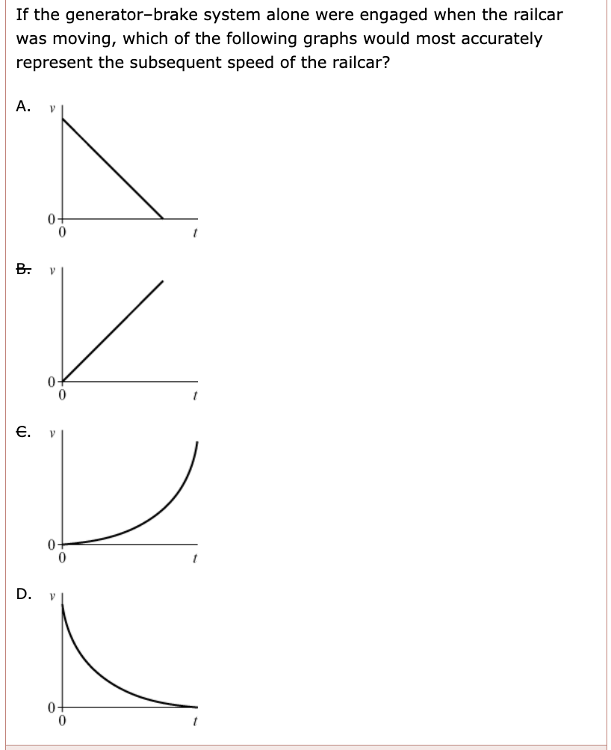
front 8 Text: Engaging the generator to the wheels puts a decelerating force
of 5000 N at 40 m/s, and the force declines linearly with speed. | back 8 This would mean that the line would look like ...
Solution: The correct answer is D.
- The constant slope of this graph indicates a constant
deceleration, hence a constant decelerating force that does not
depend on speed. However, the passage indicates that the
decelerating force decreases linearly with speed.
- The speed
cannot increase in time at a constant rate when the brake is engaged
because it defies the purpose of braking.
- This graph
suggests that an increasing power is supplied to the railcar, not
taken away by the generator brake as indicated in the question.
-
The speed of the car decreases in time such that the
decelerating force declines linearly with speed, according to the
passage. Because the decelerating force is directly proportional
to the acceleration that causes the decrease in speed, it follows
that the acceleration that causes the decrease in speed itself
declines linearly with speed. Finally, because the acceleration
that slows down the object is the rate of change of velocity, or
the slope of the velocity vs. time graph, then the slope of the
graph must decrease in time.
|
front 9 The relative thermodynamic stability of isomeric organic compounds
can be inferred from which of the following types of experimental data?
- A.Boiling points
- B.UV–visible absorption
spectra
- C.Mass spectroscopic fragmentation patterns
- D.Heats of combustion
| back 9
Solution: The correct answer is D.
- The boiling points of isomeric compounds indicate their
relative intermolecular forces but not their thermodynamic
stability. This is because boiling points measure the energy
required to overcome intermolecular forces, while thermodynamic
stability measures the energy to break bonds within a molecule.
- UV-Visible absorption spectra can be used to determine the
presence of functional groups in organic compounds as it is a
measure of the energy of the photons that are absorbed by the
compound. The energy of the absorbed photons is not directly related
to the thermodynamic stability of the compound, as isomeric
compounds may have different UV-Visible absorption spectra because
of different functional groups.
- Mass spectroscopic
fragmentation patterns can be used to infer the structure of an
organic compound based on the mass-to-charge ratio but not the
thermodynamic stability because it is not a direct measure of the
energy of the compound.
-
The heat of combustion of an organic compound is a measure
of the energy released when the compound is combusted with oxygen.
More stable isomeric compounds will have lower heats of
combustion.
|
| back 10
Solution: The correct answer is A.
-
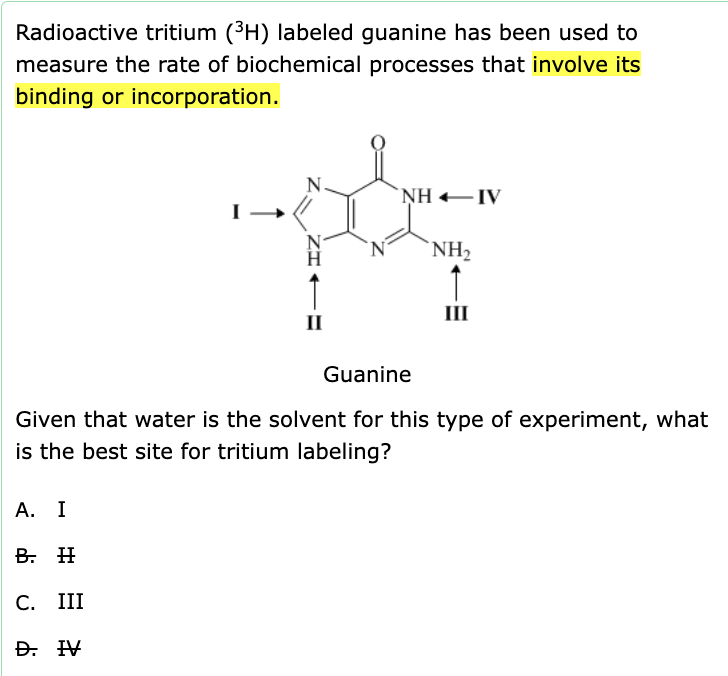
To perform this experiment, the tritium (T) label should not
readily exchange by reacting with water. Only replacing the C–H
bond with C–T works because the acidity/basicity is too low in
water for proton–tritium exchange.
- Due to
resonance stabilization of the conjugate base, this N–H bond is
sufficiently acidic to allow for the N–T bond to undergo
proton–tritium exchange in water. For tritium to remain in guanine
to be detected in binding experiments, the tritium label must not be
lost by proton–tritium exchange in water.
- Due to extensive
conjugation on the nitrogen lone pair with pi bonds in the ring,
these N–H bonds are sufficiently acidic to allow for the N–T bond to
undergo proton–tritium exchange in water. For tritium to remain in
guanine to be detected in binding experiments, the tritium label
must not be lost by proton–tritium exchange in water.
- Due
to the nitrogen lone pair resonating to C=O as well as C=N, this N–H
bond is sufficiently acidic to allow for the N–T bond to undergo
proton–tritium exchange in water. For tritium to remain in guanine
to be detected in binding experiments, the tritium label must not be
lost by proton–tritium exchange in water.
|
front 11 What is the relationship between wavelength and energy?
What is the conversion factor between nm and m? | back 11 Shorter wavelength, means more energy.
1 nm = 1 x 10^-9 m
The wavelength should be in meters (m) to ensure
the units are consistent
1 m = 1x 10^9 nm |
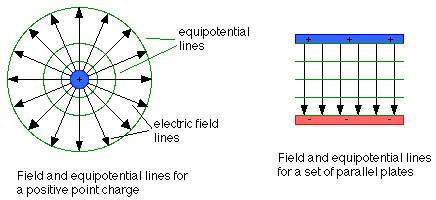
front 12 That the electric field is uniform between the electrodes means that
the electric field lines:
- A.are more closely spaced at the positive electrode than at
the negative one.
- B.intersect halfway between the
electrodes.
- C.are more closely spaced at the negative
electrode than at the positive one.
- D.are equally spaced at
both electrodes and between them.
| back 12
Solution: The correct answer is D.
- This implies the intensity of the electric field is higher
at the positive electrode than at the negative one. However, the
question states that the electric field is uniform, meaning the
intensity is the same everywhere.
- Two or more electric
field lines can intersect only at a location where an electric
charge exists. There is no electric charge halfway between the
electrodes.
- This implies the intensity of the electric field
intensity is higher at the negative electrode than at the positive
one. However, the question states that the electric field is
uniform, meaning the intensity is the same everywhere.
-
By definition, the electric field lines are equally spaced
in a uniform field.
|
front 13 What is the total mass of D-glucose dissolved in a 2-μL aliquot of
the solution used for this experiment?
- A.3.6 × 10–7 g
- B.1.4 × 10–4
g
- C.3.6 × 10–4 g
- D.1.4 × 10–1
g
| back 13
Solution: The correct answer is B.
- This value is obtained if 72 g•L–1 is divided and
not multiplied by 2.
-
In the second paragraph, the glucose is supplied at a
concentration of 72 g•L–1. If it is dissolved in a 2 μL
aliquot, then the amount of glucose can be found by
.
- If 72 g•L–1 is divided and not multiplied by 2
and the volume conversion factor is wrong, this value is
obtained.
- This option is obtained if the conversion factor
from μL to L was too large.
|
| back 14 A hydrolase uses water to break a covalent bond in the substrate. |
| back 15 A transferase relocates a functional group from one substrate to
another without changing the oxidation state of either substrate. |
| back 16 An isomerase converts one substrate into a different constitutional isomer. |
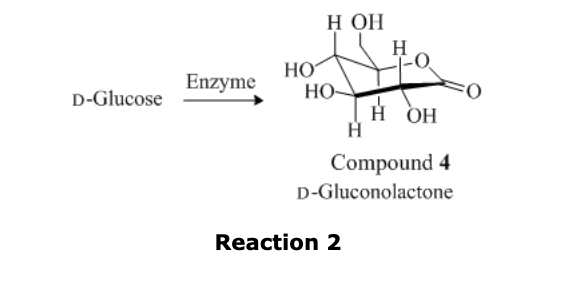
front 17 The glucose meter measures the current produced during Reaction 2. If
0.67 μmol of electrons were measured, what mass of glucose was present
in the sample? (Note: The molar mass of glucose is 180 g/mol = 180 μg/μmol.)
- A.20 μg
- B.60 μg
- C.90 μg
- D.270
μg
| back 17
Solution: The correct answer is B.
- This option is obtained if the mass of glucose is multiplied
by the number of moles of electrons transferred twice for each
electron transferred via 0.33 × 180 μg•μmol–1 × 0.33 = 20
μg, approximately 1/9 of the molar mass of glucose.
-
If 0.67 μmol of electrons were measured, then 0.33 μmol of
electrons were transferred. The mass of glucose can be calculated
by multiplying the number of moles of electrons transferred by the
molar mass of glucose via 0.33 μmol of electrons × 180
μg•μmol–1 to give 60 μg.
- If the molar
mass of glucose was multiplied by 0.5 μmol instead of 0.33 μmol,
this value is obtained.
- The value for this option would be
obtained if the molar mass of glucose was divided by the number of
electrons measured via 180 μg•μmol–1/ 0.67 μmol.
|
front 18 Text:
It measures the amount of Reaction 2, a two-electron oxidation,
that takes place. Based on the total amount of Reaction 2 and the
volume of the sample, the concentration of glucose can be measured
and displayed.
What additional substance is necessary for Reaction 2 to take place?
- A.FAD
- B.NADH
- C.H2O
- D.Acetyl-CoA
| back 18
Solution: The correct answer is A.
-
Because D-glucose is oxidized in Reaction 2, a cofactor is
necessary that acts as an oxidizing agent. Of the options
provided, only FAD is an oxidizing agent. It will remove two
hydrogen atoms from D-glucose to form D-gluconolactone and
FADH2.
- The cofactor required in Reaction
2 is an oxidizing agent. NADH is a reducing agent.
- Reaction
2 is not a hydrolysis reaction, so water is not necessary.
- Acetyl-CoA transfers acetyl groups to substrates. Because
D-glucose does not receive an acetyl group when it forms
D-gluconolactone, acetyl-CoA is not needed.
|
front 19 What are the common oxidizing agents? | |
front 20 What are the common reducing agents? | |
front 21 The pH of a 1 L phosphate buffer solution was measured as 7.6, but
the experimental procedure calls for a pH 7.2 buffer. Which method
will adjust the solution to the proper pH? (Note: The pK
a values for phosphoric acid are 2.2, 7.2, and 12.3.)
- A.Add enough 1 M Na2HPO3 to increase
the phosphate anion concentration ten-fold.
- B.Add 1 M NaOH
to neutralize a portion of the hydronium ions found in the
solution.
- C.Alter the ratio of monosodium/disodium phosphate
added to favor the monosodium species.
- D.Add 100 mL
distilled, deionized water to dilute the basicity of the
buffer.
| back 21
Solution: The correct answer is C.
- If more Na2HPO3 is added, then the pH
will go up, not down. According to the Henderson Hasselbalch
equation, pH = pK a + log [base]/[acid] and
when the concentration of the base increases, the log [base]/[acid]
value increases, which in turn will increase the pH.
- If
NaOH is added to the solution, the pH will increase, not decrease,
as it is a strong base.
-
The ratio of the
[Na2HPO4]/[NaH2PO4]
must be altered to obtain a ratio that will decrease the pH of the
solution. In this instance, pH should equal pK
a, so the pH needs to be decreased by adding more of
the acidic buffer component.
- Adding 100 mL of
distilled water will not change the relative concentrations of the
acid or conjugate base, and thus will not change the [base]/[acid]
ratio.
|
front 22 What is loss when a peptide bond forms? | back 22 A water molecule (18 amu) |
front 23 Which experimental condition is NOT necessary to achieve reliable
data for Michaelis–Menten enzyme kinetics?
- A.Initial velocity is measured under steady state
conditions.
- B.Solution pH remains constant at all substrate
concentrations.
- C.The concentration of enzyme is lower than
that of substrate.
- D.The reaction is allowed to reach
equilibrium before measurements are taken.
| back 23
Solution: The correct answer is D.
- Without steady state conditions, the assumptions that
underlie Michaelis–Menten enzyme kinetics fail.
- The
solution pH must remain constant or the data will be a mixture of
V o versus [S]o at different pH
values, preventing determination of K M and
V max at a fixed pH. Only near initial time is
the [S] approximately [S]o and then the reaction rate is
a good estimate of V o.
- The
concentration of enzyme must be lower than that of substrate,
otherwise V max cannot be obtained in a plot of
V o versus [S]o. Only near initial
time is the [S] approximately [S]o and then the reaction
rate is a good estimate of V o.
-
Once the reaction reaches equilibrium, measurement of the
initial rate (V o) will be impossible, and
Michaelis–Menten enzyme kinetics data is a plot of V
o versus [S]o. Only near initial time is the
[S] approximately [S]o and then the reaction rate is a
good estimate of V o.
|
front 24 Text:
Researchers studied the kinetics of SidA-catalyzed Reaction 1.
They discovered that the reaction proceeds in two steps. In the first
step, NADPH reacts with FAD to form NADP+ and
FADH–. FADH– quickly reacts with O2
and H+ to form FADH–OOH. This step is pH-independent and
occurs at the same rate regardless of which, if any, substance
occupies the active site. At this point, FADH–OOH either hydroxylates
Compound 1 or decomposes nonproductively to form
H2O2 if any other substance (such as L-lysine)
occupies the active site. The pH dependence of the second step, which
regenerates FAD, was investigated (Figure 1).
What is the balanced equation for the nonproductive reaction when
lysine is the substrate?
- A.H+ + NADPH + O2 → NADP+ +
H2O2
- B.2H+ + O2 →
H2O2
- C.FAD + NADPH + H+ →
FADH2 + NADP+
- D.2H2O +
O2 → 2H2O2
| back 24
Solution: The correct answer is A.
-
In the nonproductive reaction, although it is used in the
elementary steps of the reaction mechanism, FAD is a regenerated
cofactor (not in the balanced equation). Overall, NADPH is
oxidized to NADP+ is reduced to
H2O2.
- The substrate NADPH and
product NADP+ are missing, and the charges are not
balanced.
- FAD is a regenerated cofactor; there is no net
formation of FADH2. Also, this reaction does not show
O2 as a reactant or H2O2 as a
product.
- Water is not a reactant in the nonproductive
reaction, and both the reactant NADPH and the product
NADP+ are missing.
|
front 25 What does acetylation refer to? | back 25 Acetylation refers to the process of adding an acetyl group (–COCH₃)
to a molecule, typically to a protein or other organic compound. |
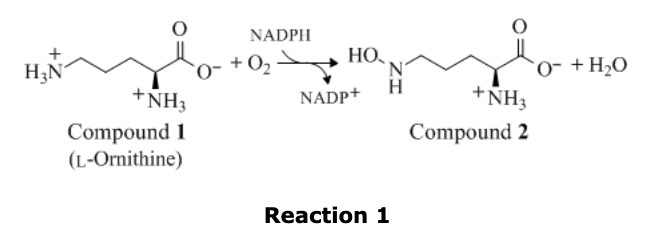
front 26 What is the identity of the substance that has undergone net
reduction after the Reaction 1 is complete?
- A.NADP+
- B.FAD
- C.H2O2
- D.O2
| back 26
Solution: The correct answer is D.
- NADP+ is a product of the net oxidation of
NADPH.
- Although FAD is reduced to FADH2 at one
stage in the elementary steps of Reaction 1, this cofactor is
regenerated, so there is no net reduction.
- This is not a
reactant in Reaction 1.
-
Because O2 is converted to H2O in
Reaction 1, there is a net reduction because the oxidation state
of oxygen in O2 is 0 and in H2O it is
–2.
|
front 27 If an amino acid has a side chain that has an amine, which can be
protonated in water, these are _______ | |
front 28 Text: The substrate binding site of HRP interacts with aromatic rings
of incoming substrates. HRP catalyzes the oxidation of aromatic amines
and phenols. The oxidation occurs at the ring substituent.
The side chain of which amino acid is most likely to be a
substrate for HRP?
| back 28
Solution: The correct answer is C.
- Lysine (Lys) has an amine in its side chain, not a phenol or
aniline.
- Leucine (Leu) has an isobutyl side chain, not a
phenol or aniline.
-
HRP oxidizes the side chain of a phenol to a radical, and
tyrosine (Tyr) has a phenol in its side chain.
- Glutamine (Gln) has an amide side chain, not a phenol or
aniline.
|
front 29 Which atom is most likely involved in the coordination of calcium
ions found in HRP?
- A.Hydrogen
- B.Carbon
- C.Nitrogen
- D.Oxygen
| back 29 - A hydrogen atom does not have a lone pair and thus cannot act
as a Lewis base, which is essential for coordinating calcium
ion.
- A carbon atom does not have a lone pair and thus cannot
act as a Lewis base, which is essential for coordinating calcium
ion.
- Although the nitrogen atom in the peptide backbone is a
Lewis base, it has a partially positive charge due to resonance, and
is thus less likely to coordinate calcium ions.
-
An atom must be a Lewis base to coordinate to calcium ions,
and oxygen is the only Lewis basic atom present in the side chains
or backbones of the listed amino acids that has either a partially
negative charge (in the peptide backbone or Ser side chain) or a
negative charge (in the Asp side chain). The only other Lewis
basic atom present is nitrogen, which has a partially positive
chain in the peptide backbone due to resonance and is thus less
likely to coordinate calcium ions.
|
| back 30
Solution: The correct answer is A.
-
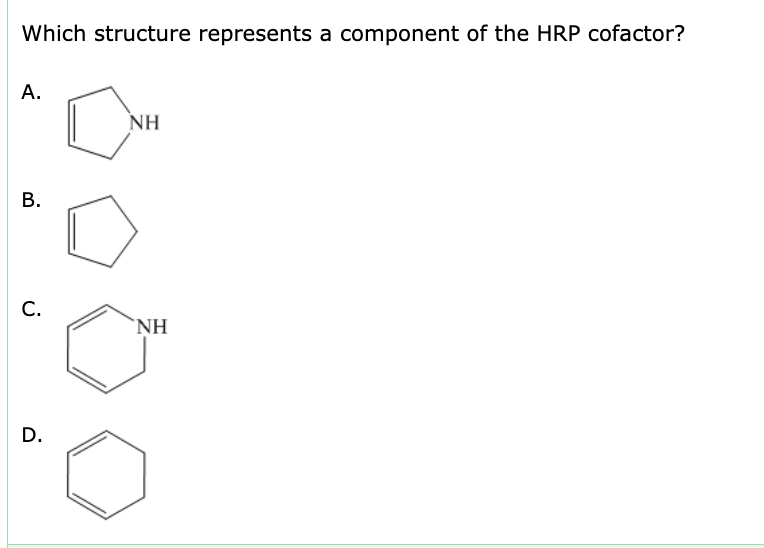
The HRP cofactor is heme, which contains a porphyrin ring.
Porphyrin is composed of four pyrroles, which are five-membered
rings containing one nitrogen atom.
- Although the
porphyrin ring in the heme cofactor of HRP has four five-membered
rings, each of these rings contains one nitrogen atom.
- Although the porphyrin ring in the heme cofactor of HRP has four
rings, each containing one nitrogen atom, these rings are
five-membered.
- The porphyrin ring in the heme cofactor of HRP
has four five-membered rings, each of these rings contains one
nitrogen atom. There are no six-membered carbocyclic rings in
porphyrin.
|
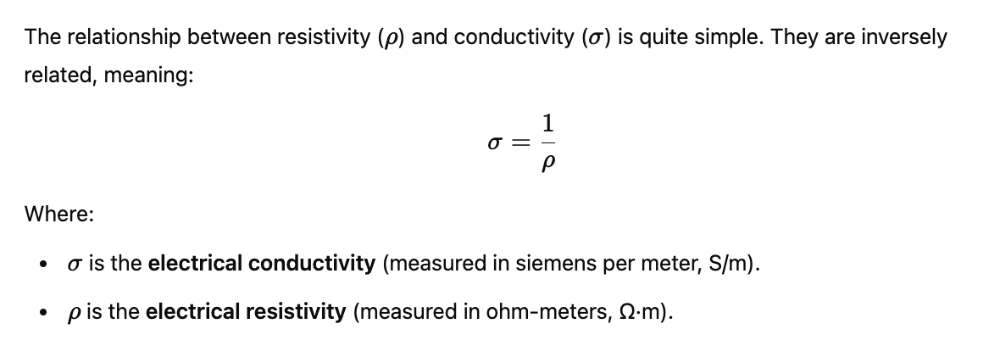
front 31 What is the relationship between electrical conductivity and resistivity? | |
front 32 Text: The best-performing PANI had a maximum conductivity of 5.0 ×
10–3 (Ω∙cm)–1.
What is the resistivity of the best-performing PANI described in
the passage?
- A.0.002 Ω•cm
- B.50 Ω•cm
- C.200 Ω•cm
- D.500 Ω•cm
| back 32
Solution: The correct answer is C.
- Given that resistivity is the inverse of the conductivity, a
resistivity of 0.002 Ω•cm implies a conductivity of whereas the
passage states that the best performing PANI had a conductivity of
5.0 × 10⁻³ (Ω ∙cm)−1.
- Resistivity is
the inverse of conductivity. Resistivity of 50 Ω •cm implies a
conductivity of whereas the passage states that the best
performing PANI had a conductivity of 5.0 × 10⁻³ (Ω
∙cm)−1.
-
The best performing PANI had a conductivity of 5.0 ×
10−3 (Ω ∙cm)−1. Resistivity is the inverse
of the conductivity, that is .
- A resistivity
of 500 Ω ∙cm corresponds to a conductivity of , whereas the best
performing PANI had a conductivity of 5.0 × 10⁻³ (Ω
∙cm)−1, according to the passage.
|
front 33 TEXT: In mammalian cells, iMs have been shown to be subject to two
epigenetic modifications: methylation and hydroxymethylation. It is
possible that the presence of 5-methylcytosine (5mC) or
5-hydroxymethylcytosine (5hmC) within a C-rich DNA sequence can affect
iM stability.
Which two classes of enzymes are needed in the two-step
conversion of cytosine to 5hmC?
- A.Transferase and oxidoreductase
- B.Hydrolase and
ligase
- C.Oxidoreductase and hydrolase
- D.Transferase
and ligase
| back 33
Solution: The correct answer is A.
-
To convert cytosine to 5hmC in two steps, first a
methyltransferase is needed to place a 5-methyl group on cytosine
and then an oxidoreductase is needed to oxidize 5-methyl to
5-hydroxymethyl.
- A hydrolase uses water to break a
covalent bond, and a ligase uses ATP to connect two substrates
together. Neither of these reactions are involved in the conversion
of cytosine to 5hmC.
- Although an oxidoreductase is
essential for the second step, the oxidation of 5-methylcytosine to
5hmC, the first step is not a reaction involving water breaking a
covalent bond and therefore does not utilize a hydrolase.
- Although the first step is a transferase catalyzing the transfer
of a methyl group from one substrate to cytosine, forming
5-methylcytosine, the second step is an oxidation, not a
ligation.
The conversion can be seen as follows:
CH₃ (methyl) → CH₂OH (hydroxymethyl)
This change adds a hydroxyl group (-OH) to the methyl group,
turning it into a hydroxymethyl group.
In terms of chemistry, this could happen in a reaction where a
methyl group is oxidized or undergoes a substitution to form a
hydroxymethyl group. |
front 34 Based on the information in the passage and in Figure 1, what effect
does epigenetic modification have on iM pH-dependent denaturation?
- A.Both methylation and hydroxymethylation result in
significantly decreased stability because cytosine is more readily
deprotonated.
- B.Both methylation and hydroxymethylation
result in significantly decreased stability because cytosine is more
readily protonated.
- C.Only hydroxymethylation results in
significantly decreased stability because cytosine is more readily
deprotonated.
- D.Only hydroxymethylation results in
significantly decreased stability because cytosine is more readily
protonated.
| back 34
Solution: The correct answer is C.
- Although it is true that 5hmC-WT has decreased stability
because it is more readily deprotonated due to its lower
pK, 5-mC-WT does not have significantly decreased stability
compared to WT.
- Although it is true that, with a slightly
larger pK, 5mC-WT is more readily protonated than WT,
5mC-WT has very similar pH stability to WT. Also, 5hmC-WT has
decreased stability because it is more readily deprotonated due to
its lower pK.
-
Because 5hmC-WT has the lowest pK,
5-hydroxymethylcytosine is more readily deprotonated, and because
5hmC-WT also has the lowest stability as pH increases, this
decreased stability is due to how easily 5-hydroxymethylcytosine
is deprotonated.
- Although hydroxymethylation
results in significantly decreased stability, it is because it is
more readily deprotonated (lowest pK), not protonated.
|
front 35 What is circular dichroism spectroscopy used for? | back 35 CD is particularly useful for:
-
Determining the secondary structure of proteins:
For example, it can distinguish between alpha-helices, beta-sheets,
and random coils in proteins.
-
Studying protein folding: It helps understand how
proteins fold into their functional 3D structures.
-
Analyzing chiral molecules: In addition to
biological molecules, CD is used to analyze the structure of chiral
chemicals.
|
front 36 When pH is less than pI, particles are _____ charged. | |
front 37 A common column material used in size-exclusion chromatography is
dextran, a polysaccharide of glucose. Which type of interaction most
likely occurs between proteins and the dextran column material?
- A.Aromatic
- B.Hydrophobic
- C.Salt
bridge
- D.Hydrogen bonding
| back 37
Solution: The correct answer is D.
- Dextran has no aromatic rings in its structure to form
aromatic interactions (pi stacking) with proteins.
- Dextran
is a polysaccharide; thus, it is hydrophilic, not hydrophobic.
- Dextran has no charged groups in its structure, therefore it
cannot form a salt bridge with a protein.
-
Because dextran is a polysaccharide, it has numerous
hydroxyl groups that will hydrogen bond to the peptide backbone of
proteins.
|
front 38 Which of the following properties of a 2.3 MHz ultrasound wave
remains unchanged as it passes into human tissues?
- A.Frequency
- B.Wave speed
- C.Amplitude
- D.Wavelength
| back 38
Solution: The correct answer is A.
-
The frequency of a wave is a characteristic of the wave
source, not of the medium surrounding the source. Therefore,
frequency is not changed by the medium through which the wave
propagates.
- The wave speed depends on the properties
of the medium in which the wave propagates, therefore it would
change if the medium changes.
- The wave amplitude depends on
the properties of the medium in which the wave propagates according
to the phenomenon of attenuation, therefore it would change if the
medium changes.
- The wavelength is the ratio of the wave
speed and wave frequency. As the speed depends on the properties of
the medium in which the wave propagates, wavelength would change if
the medium changes.
|
front 39 Assume that in the study with the rat tissues, fluid flows at a speed
of 0.30 mm/s through a typical capillary opening caused by a burst
microbubble. Given this, which of the following is closest to the
volume flow rate of fluid passing through the opening?
- A.4.5 × 106 μm3/s
- B.7.5 ×
106 μm3/s
- C.1.2 × 107
μm3/s
- D.4.5 × 107 μm3/s
| back 39
Solution: The correct answer is B.
- This numerical value is consistent with the calculation 1.5
× 104μm2 × 0.30 mm/s.
-
The volume flow rate is given by the expression
cross-sectional area of the tube multiplied by the flow speed =
2.5 × 104 μm2 × 0.30 mm/s = 7.5 ×
106 μm3/s.
- This numerical
value is consistent with the calculation 4.0 × 10⁴
μm2 × 0.30 mm/s.
- This volume flow rate is
consistent with the calculation 15 × 104 μm2 ×
0.30 mm/s.
|
front 40 The volume flow rate (Q) is given what expression? | back 40 Q = A x v
- Q is the volume flow rate,
- A is the
cross-sectional area of the opening,
- v is the fluid
velocity.
|
front 41 What are the different two expressions used for turbulent flow and
laminar flow? | back 41
For laminar flow (where fluid flows smoothly in
layers, typically at low velocities), you may encounter
Poiseuille's Law or the general expression.
For turbulent flow (where the flow is chaotic,
typically at higher velocities), the flow rate can still be expressed
using the basic formula Q=A⋅vQ = A \cdot vQ=A⋅v, but the velocity
profile and other factors (such as friction factors) become more complex. |
front 42 Given that the speed of sound in the rat tissues was 1500 m/s, the
wavelength of the ultrasound wave used in the study was closest to:
- A.34.5 mm.
- B.6.5 mm.
- C.1.5 mm.
- D.0.65 mm.
| back 42
Solution: The correct answer is D.
- This value is consistent with the multiplication 15 × 2.3 =
34.5 and the arbitrary assigning of the units mm.
- This is
consistent with using the incorrect frequency of 0.23 MHz in the
calculation (1500 m/s)/(0.23 MHz).
- This is consistent with
the calculation (1500 m/s)/(1.0 MHz).
-
The wavelength is given by the expression (1500 m/s)/(2.3
MHz) = 0.65 mm.
|
front 43 What formula is also used to find frequency? | back 43 f = c / wavelength
wavelength = c / frequency |
front 44 1 MHz (Mega) = _______ Hz | |
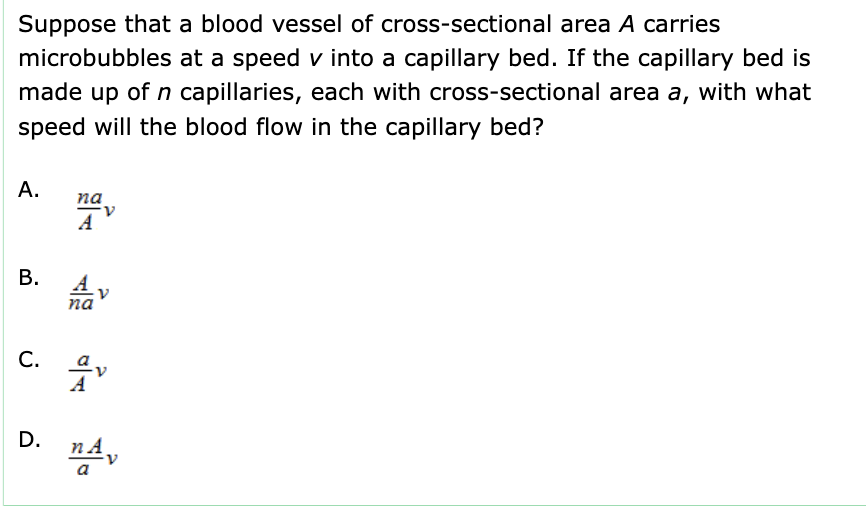
| back 45
Solution: The correct answer is B.
- The question states that v is the flow speed in the
capillary bed, and the response option uses u for the speed
of flow in the capillary bed, therefore the continuity equation is
A × v = n × a × u.
This response incorrectly uses u as the flow speed in the
blood vessel of cross-sectional area A and v as
the flow speed in the capillary bed.
-
According to the continuity equation, if u is the
speed of flow in the capillary bed, then A × v =
n × a × u, so u = A ×
v/(n × a).
- This
response fails to take into account the number of capillaries
n and therefore implies there is only one capillary.
- This response transposes the position of A and
a, when using the continuity equation. This would only be
correct if a capillary has cross-sectional area A and the
blood vessel has cross-sectional area a. This is contrary
to the information presented in the question.
|
front 46 If the reaction is spontaneous, K will be | back 46 greater than 1...
-
When a reaction is spontaneous, ΔG will be
negative. This is because ΔG = –RTlnK,
and K must be greater than 1. This indicates that the
forward reaction and the resulting products are preferable to the
reverse reaction.
- When K is less than
1, the reactants are favored at equilibrium and ΔG would be
greater than zero. Therefore, the reaction would be nonspontaneous
based on the equation ΔG = –RTlnK.
|
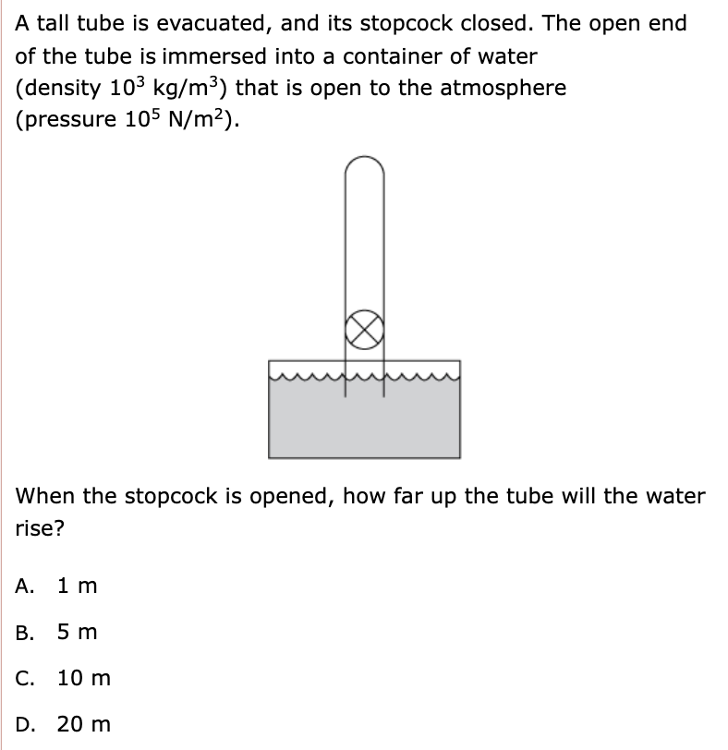
| back 47
Solution: The correct answer is C.
- This implies the atmospheric pressure is 104
N/m2 instead of 105 N/m2 as given
in the question.
- This implies the gravitational
acceleration is 20 m/s2 instead of 10
m/s2.
-
The water will rise to a height such that the weight (mass
multiplied by gravitational acceleration) of the water column
equals the atmospheric pressure multiplied by the tube
cross-sectional area A. Because mass is density times
volume, it follows that 103 kg/m3 ×
h × A × 10 m/s2 = 105
N/m2 × A, where h is the height
sought. Solving for h yields h = (105
N/m2)/(104 N/m3 ) = 10
m.
- This implies the water density is 500
kg/m3 instead of 103 kg/m3 as given
in the question.
|
front 48 Which of the following is a second period element that is a covalent
network solid in its standard state?
- A.Carbon
- B.Phosphorous
- C.Oxygen
- D.Iodine
| back 48
Solution: The correct answer is A.
-
Carbon has several allotropes in its standard state, such as
diamond and graphite. These are covalent network solids that
contain strong covalent bonds.
- Phosphorus is an
element in the third period of the periodic table, not the second
period.
- While oxygen is a second period element, it exists as
a diatomic gas in its standard state.
- Iodine is an element
found in the fifth period, not the second.
|
front 49 Which of the following animal pairs best illustrates the outcome of
convergent evolution?
A.The dolphin and the shark
B.The domestic sheep and the mountain goat
C.The polar bear and the panda bear
D.The light-colored and the dark-colored forms of the peppered moth | back 49
Solution: The correct answer is A.
-
Convergent evolution is defined as a process whereby
distantly related organisms independently evolve similar traits to
adapt to similar needs. Dolphins and sharks are genetically
different, the dolphin being a mammal and the shark being a fish.
Both of them, however, have developed similar structures to be
able to survive in a similar environment.
- The
domestic sheep and the mountain goat are both mammals and they live
in different environments, thus they have developed slightly
different features to survive.
- Polar bears and panda bears
are both mammals and live in different environments, thus they have
developed different anatomical structures to survive.
- Light-colored and dark-colored moths belong to the same species,
thus the concept of convergent evolution does not apply in this
case.
|
| back 50 - Lyases are enzymes that do not break chemical bonds with
hydrolysis and oxidation, but they rather form double bonds or ring
structures. Thus, lyases do not break molecules.
|
| back 51 Hydrolases cleave bonds using water, like proteases cleave peptide
bonds using water. |
front 52 Which type of catalytic activity is most likely missing from cFLIP?
A.Oxidoreductase activity
B. Lyase
C. Isomerase
D. Hydrolase | back 52
Solution: The correct answer is D.
- Oxidoreductases are responsible for the transfer of electrons
or protons from one molecule to another; they do not possess
catalytic activities to break molecules.
- Lyases are enzymes
that do not break chemical bonds with hydrolysis and oxidation, but
they rather form double bonds or ring structures. Thus, lyases do
not break molecules.
- Isomerases convert a molecule from one
isomer to the other; they do not break molecules.
-
According to the passage, cFLIP is a homologue of caspase-8
which is a protease. However, cFLIP lacks catalytic activity.
Therefore, cFLIP lacks hydrolase activity that is exhibited by
caspase-8.
|
front 53 The transcript produced in an operon (or prokaryotes) DOES NOT
undergo alternative splicing. Transcription and translation occur at
the same time. ____________ is a marker of eukaryotic transription. | back 53 Alternative splicing
Prokaryotes - a single mRNA transcribed from a single promoter
sequence within the operon. |
front 54 Eukaryotes produce seperate mRNA transcripts for different genes.
These are known as _____. E. lenta is a prokaryote and produces ________ | back 54 monocistronic mRNA transcripts
polycistronic mRNA. |
front 55 Which action(s) could contribute to the positive inotropic effect of
digoxin on cardiac myocytes?
- Decrease transport of Ca2+ to the extracellular
environment.
- Increase availability of intracellular
Ca2+ to bind to troponin.
- Increase overall
Ca2+ stores in the sarcoplasmic reticulum.
| back 55
Solution: The correct answer is D.
- Intracellular Ca2+ levels are critical for muscle
contraction. However, decreasing the transport of Ca2+ to
the extracellular environment and increasing Ca2+ storage
in the cell will also contribute to having more Ca2+
intracellularly.
- Increasing the overall Ca2+
storage in the sarcoplasmic reticulum is not the only
mechanism to increase intracellular Ca2+ levels.
- Decreasing the transport of Ca2+ to the extracellular
environment and increasing the availability of intracellular
Ca2+ to bind to troponin are not the only mechanisms that
will result in more calcium availability of the cell.
-
The ionotropic effect of digoxin on cardiac myocytes is most
likely due to an increase in intracellular Ca2+ levels.
All three mechanisms listed will result in higher levels of
intracellular Ca2+.
|
front 56 What is primary vs. secondary active transport? | back 56 -
TPase is an example of primary active transport by using ATP
to move solutes against their concentration
gradients.
- Secondary active transport is a transport
mechanism by which the cell uses the energy of a molecule moving
down its concentration gradient to power the movement of a separate
molecule against its concentration gradient.
Na+K+ ATPase does not use this mechanism to
perform work.
|
front 57 Target: Butyrate exerts its function by inhibiting histone
deacetylases (HDACs), which counter the effects of histone
acetyltransferases (HATs) in controlling chromatin structure in
histone and non-histone proteins. HDACs and HATs modify basic residues
on target proteins.
HDACs change chromatin by:
- A.decreasing its coiling and promoting DNA replication.
- B.increasing its condensation and inhibiting transcription.
- C.decreasing charge repulsion between acetyl groups, which
increases transcription.
- D.loosening the attachment of DNA
to nucleosome core particles.
| back 57
Solution: The correct answer is B.
- Removal of acetylation would increase, not decrease, coiling.
This would inhibit, not promote, DNA replication.
-
Removal of acetyl groups from lysines in the histones
increases its positive charge, thus increasing the interaction
between the histone and the DNA, which is negatively
charged.
- HDAC works by removing acetyl groups. As a
result, there will be a stronger interaction between histones and
DNA, thus inhibiting transcription.
- The action of HDAC will
increase, rather than loosen, the interaction between DNA and
nucleosomes.
|
front 58 If HDAC inhibition by βOHB is a physiological response in living
animals, the information in the passage indicates it is likely to
occur when:
- A.there is sustained fatty acid oxidation.
- B.the
pentose phosphate shunt is activated.
- C.there is increased
gluconeogenesis.
- D.the Cori cycle is occurring.
| back 58
Solution: The correct answer is A.
-
Because βHOB is a component of ketone bodies and ketone
bodies are generated from sustained oxidation of fatty acids, it
follows that the βHOB-mediated inhibition of HDAC is associated
with sustained oxidation of fatty acids.
- The
pentose phosphate shunt is used for production of several
macromolecules such as amino acids, fatty acids, and nucleotides,
but not βHOB.
- Gluconeogenesis is a pathway that generates
glucose, not βHOB.
- The Cori cycle is a pathway that uses
lactic acid to generate glucose, not ketone bodies such as
βHOB.
|
front 59 The average osmotic pressure of ocean water is 28 atm corresponding
to a concentration of 0.50 M solutes (approximated as NaCl). What is
the approximate concentration of solutes (also approximated as NaCl)
present in blood with an osmotic pressure of 7 atm?
- A.0.12 M
- B.0.25 M
- C.2.0 M
- D.3.5
M
| back 59
Solution: The correct answer is A.
-
Osmotic pressure is directly proportional to solute
concentration. This means that since the osmotic pressure of blood
is approximately ¼ of the osmotic pressure of ocean water, the
solute concentration will be ¼ × 0.50 M = 0.12 M.
- This would be the solute concentration if the osmotic pressure
of blood was 14 atm.
- Since osmotic pressure is directly
proportional to solute concentration, lower osmotic pressure in
blood should result in a lower, not higher, solute
concentration.
- This concentration is obtained if the osmotic
pressure of blood is multiplied by the solute concentration in ocean
water rather than approximately ¼ of the osmotic pressure of ocean
water.
|
front 60 Text: HIF is a nuclear factor that specifically binds to a CCCCGGGC
target sequence.
Which type(s) of restriction enzyme(s) can recognize the HIF binding
sequence? A restriction enzyme that has:
- a four-base recognition sequence
- a six-base
recognition sequence
- an eight-base recognition
sequence
- A.I only
- B.II only
- C.III only
- D.I
and II only
| back 60
The palindrome has to be:
sequence = reverse of the
complement sequence
- A.I only
- B.II only
- C.III only
-
D.I and II only
|
front 61 Restriction enzymes recognize specific sequences such as ________ | back 61 palindromes
For example:
5' - GAATTC - 3'
3' - CTTAAG - 5'
in DNA, a palindrome isn’t exactly the same as in regular words, but
it still follows a similar concept! A palindromic DNA
sequence is one where the sequence of nucleotides reads the
same on both strands when read in the 5' to 3'
direction on one strand and 3' to 5' on the complementary strand.
This is the recognition sequence for the restriction enzyme
EcoRI, which cuts between G and A. These sequences
are important in molecular biology, especially in genetic engineering
and restriction enzyme activity! |
front 62 Text: In addition to its role as a citric acid cycle intermediate,
succinate functions as an oxygen sensor in the cell and regulates the
activation of several important genes involved in cell division and
the formation of new blood vessels in hypoxic environments. In this
function, succinate modulates the level of hypoxia-inducible factor
(HIF) by competitively inhibiting HIF hydroxylase, an enzyme that
modifies HIF on specific amino acid residues and targets it for
degradation. HIF is a nuclear factor that specifically binds to a
CCCCGGGC target sequence.
Overexpression of which enzyme is likely to result in increased
levels of HIF?
- A.Succinyl decarboxylase
- B.Succinyl-CoA
synthetase
- C.Succinate dehydrogenase
- D.Succinate
carboxylase
| back 62
Solution: The correct answer is B.
- Succinyl-CoA synthetase, not succinyl decarboxylase, is the
enzyme responsible for increased production of succinate and hence
increased levels of HIF. Decarboxylases are responsible for the loss
of a carboxylic acid group, creating carbon dioxide and an alkyl
group.
-
The passage notes that succinate is a positive regulator of
HIF levels. Overexpression of succinyl-CoA synthetase results in
increased production of succinate and increased HIF
levels.
- Succinate dehydrogenase is the enzyme
responsible for conversion of succinate to fumarate. Therefore, its
overexpression would result in decreased, not increased, succinate
and HIF levels.
- Succinyl-CoA synthetase, not succinyl
carboxylase is the enzyme that converts succinyl-CoA to succinate
thus increasing HIF levels. Carboxylases are responsible for
addition of carbon dioxide molecules to substrates.
|
front 63 Which statement best accounts for the hereditary transmission of
SDH-linked paraganglioma in a parent specific manner? SDH is:
- A.an imprinted gene.
- B.a Y-linked gene.
- C.an
X-linked gene.
- D.a tumor suppressor gene.
| back 63
Solution: The correct answer is A.
-
Parent-specific transmission of traits are due to gene
imprinting, which is an epigenetic process.
- Since the passage indicates that both parents can transmit the
mutated SDH gene, this hereditary transmission cannot be
Y-linked.
- Since the passage indicates that only paternal
transmission of the gene segregates with paraganglioma, it follows
that this hereditary transmission cannot be X-linked as males only
transmit their X chromosomes to their daughters and not to their
sons. That is, if this hereditary transmission was X-linked, only
female progenies would be affected.
- Tumor suppressor genes
are not involved in parent-specific genetic transmissions.
|
front 64 What is an imprinted gene? | back 64 An imprinted gene is a gene where only one
allele is expressed, while the other is
silenced based on whether it was inherited from the
mother or the father. This happens due to epigenetic
modifications (like DNA methylation) that tag the gene during
gamete formation. |
front 65 Assuming that protein synthesis was under way when the radioactive
amino acids were added, which of the following best describes how the
radioactivity was distributed in one of the first molecules of Protein
X that was completely translated?
- A.Radioactive amino acids were randomly located throughout the
molecule.
- B.Radioactive amino acids were located only at one
end of the molecule.
- C.Radioactive amino acids were located
at both ends, but not in the middle, of the molecule.
- D.Radioactive amino acids were located in the middle, but not at
either end, of the molecule.
| back 65
Solution: The correct answer is B.
- The amino acids would have been located randomly if the
radioactive amino acids were added before the beginning of protein
synthesis.
-
The radioactive amino acids were added while protein
synthesis was occurring; these radioactive amino acids were only
able to incorporate into the C-terminal of the
protein.
- Radioactive amino acids were added to the
flask while protein synthesis was occurring. Therefore, the
radiolabeled amino acids would incorporate only into the
C-terminal end and possibly the middle of the protein, not
the N-terminal end.
- Because the radiolabeled amino
acids were added while protein synthesis was already occurring,
these radiolabeled amino acids would most likely be incorporated at
the end of the protein (C-terminal) and possibly in the
middle.
|
front 66 Certain viruses contain RNA as their genetic material. One of the
ways these RNA viruses replicate themselves is to:
- A.code for or carry a transcriptase that copies viral
RNA.
- B.infect microorganisms possessing RNA as their genetic
material.
- C.alter the host cell’s polymerase in order to
synthesize progeny viral RNA from the viral RNA template.
- D.stimulate the transcription of specific sequences of the
host’s DNA, which, in turn, direct the assembly of viral
particles.
| back 66
Solution: The correct answer is A.
-
RNA viruses require a type of transcriptase (reverse
transcriptase) to replicate themselves.
- Only
viruses have RNA as genetic material. Microorganisms contain DNA as
their genetic material.
- Viruses can use the host cell
polymerases, but they do not need to alter them.
- This
mechanism is unknown, but it is more likely that proteins, rather
than RNA, could direct the assembly of viral particles.
|
front 67 Large amounts of protein are found in the urine of a patient. Based
on this information, which portion of the nephron is most likely malfunctioning?
- A.Collecting duct
- B.Distal tubule
- C.Glomerulus
- D.Loop of Henle
| back 67
Solution: The correct answer is C.
- The collecting duct is not involved in protein reabsorption.
Furthermore, the collecting duct is not part of the nephron.
- The distal tubule is involved in reabsorbing solutes and water
from the filtrate. The distal tubule does not influence whether
proteins enter the filtrate.
-
The glomerulus is the portion of the nephron that will
filter the circulating proteins. In the glomerulus, small
structures called fenestrae will allow molecules smaller than the
protein albumin to pass into the filtrate while proteins, and also
other bigger molecules, are retained in the blood. Thus, normally,
proteins should not be part of the filtrate and, as such, the
presence of protein in the blood indicates glomerular
dysfunction.
- In the loop of Henle, only ions and
water are reabsorbed, not proteins.
|
| back 68 -
Goblet cells are specialized epithelial cells that produce
mucus in the respiratory tract and pneumocytes II are another type
of specialized epithelial cells that produce surfactant in the
lungs.
|
front 69 A drug that inhibits the activity of which of the following enzymes
would be most likely to relieve depression in some people, assuming
the chemical reactions in Figure 1 are irreversible?
- A.Aldehyde dehydrogenase
- B.Monoamine oxidase A
- C.L-Aromatic amino acid carboxylase
- D.Tryptophan-5-hydroxylase
| back 69
Solution: The correct answer is B.
- Aldehyde dehydrogenase acts after monoamine oxidase, which is
the first enzyme that metabolizes serotonin.
-
Monoamine oxidase is the first enzyme that metabolizes
serotonin, thus if the action of this enzyme is inhibited, the
availability of serotonin will increase.
- Inhibition of L-aromatic amino acid carboxylase would result in
a decrease, not an increase, of serotonin.
- Inhibition of
tryptophan-5-hydroxylase results in a decrease in serotonin
production and thus will exacerbate, rather than relieve,
depression.
|
front 70 One consequence of advanced malnutrition is reduced amounts of plasma
proteins in the blood. This condition would most likely cause the
osmotic pressure of the blood to:
- A.decrease, resulting in a decrease of fluid in the body
tissues.
- B.increase, resulting in a decrease of fluid in the
body tissues.
- C.decrease, resulting in an increase of fluid
in the body tissues.
- D.increase, resulting in an increase
of fluid in the body tissues.
| back 70
Solution: The correct answer is C.
- If the levels of circulatory proteins decrease, the osmotic
pressure of blood also decreases. This will also result in an
increase, not a decrease, of fluid in the body tissues.
- Lower levels of protein in the blood will cause a decrease, not
an increase, of blood osmotic pressure.
-
Reduced circulatory protein levels will result in a
decreased blood osmotic pressure. If the blood osmotic pressure
decreases to be lower than the fluid located in the body tissues,
there will be more liquid leaving the blood to compensate for the
higher levels of solute in the tissue fluid.
- If
the levels of circulatory proteins decrease, blood osmotic pressure
also decreases.
|
front 71 What is the difference between hydrostatic and osmotic pressure? | back 71 Osmotic pressure is the sucking force that pulls fluid into the
vessels. If the osmotic pressure decreases, the hydrostatic pressure
will force fluid out of the vessel without a return back into the
vessel at the veinus end
- Hydrostatic Pressure:
- Think of it as the
pushing force exerted by a fluid against a
barrier.
- In blood vessels, it's the pressure that
pushes water out of the
capillaries into the surrounding tissue.
- Example:
Blood pressure generated by the heart that
forces fluid out of capillaries at the arterial end.
- Osmotic Pressure:
- This is the pulling
force created by solutes (like proteins) that draw
water into a compartment.
- In blood
vessels, plasma proteins (like albumin) create
osmotic pressure to pull water back into
capillaries from the tissues.
- Example: Oncotic
pressure (a type of osmotic pressure) pulls water back
into the bloodstream at the venous end of capillaries.
|
front 72 Which series shows the order in which filtrate passes through the
tubular regions of a nephron?
- A.Bowman’s capsule → loop of Henle → proximal tubule → distal
tubule → collecting duct
- B.Proximal tubule → collecting
duct → loop of Henle → Bowman’s capsule → distal tubule
- C.Collecting duct → Bowman’s capsule → loop of Henle → proximal
tubule → distal tubule
- D.Bowman’s capsule → proximal tubule
→ loop of Henle → distal tubule → collecting duct
| back 72
Solution: The correct answer is D.
- The loop of Henle comes after the proximal tubule and before
the distal tubule. The collecting duct is positioned after the
distal tubule.
- The Bowman’s capsule is the first location
where filtrate enters the nephron, followed by proximal tubule, loop
of Henle, and distal tubule. The collecting duct follows the distal
tubule.
- The collecting duct comes after the glomerulus,
proximal tubule, loop of Henle, and distal tubule.
-
This is the correct flow of the filtrate: glomerulus,
proximal tubule, loop of Henle, distal tubule, and then collecting
duct.
|
front 73 A researcher attempts to replicate studies 1 and 2 with a group of
5-year-olds by using simplified versions of the games. Which cognitive
limitation is most likely to inhibit the participants’ performance on
the dependent variables?
- A.Lack of object permanence
- B.Limited understanding
of conservation
- C.Centration
- D.Egocentrism
| back 73
Solution: The correct answer is D.
- The dependent variables in the studies were participants’
success rates in the war/social coalition games. Object permanence
refers to an understanding that objects continue to exist even when
they are out of view. This is not relevant to the dependent
variables in the studies. Furthermore, object permanence is
typically achieved by 8 months of age, and thus would not be a
cognitive limitation for 5-year-olds.
- Conservation refers
to an understanding that physical quantities (such as volume or
mass) remain the same even if their appearance changes. Although
Piaget would predict that 5-year-olds would have limited
understanding of conservation, this is not relevant to the dependent
variables of the studies.
- Centration refers to the tendency
to focus on just one feature of a problem, neglecting other
important aspects. Given that researchers used a simplified,
age-appropriate version of the games, this is less likely to be
relevant to participants’ performance on the dependent
variables.
-
According to Piaget’s theory of cognitive development,
five-year-olds are in the preoperational stage of development, in
which they are presumed to be limited by egocentrism (viewing the
world only from their own perspective). This limitation is likely
to interfere with performance on the tasks in studies 1 and 2,
both of which require some degree of perspective
taking.
|
| back 74 (Pre-Operational) Centration refers to the tendency to focus on just
one feature of a problem, neglecting other important aspects.
Centration is a concept from Piaget’s theory
of cognitive development, specifically in the
preoperational stage (ages 2-7). It refers to a
child's tendency to focus on only one aspect of a
situation while ignoring other important factors.
Example:
Imagine a child is shown two glasses of water—one tall and skinny,
the other short and wide—both containing the same amount of
water. A child displaying centration might only focus
on height and believe the taller glass has more water,
completely ignoring the width.
Centration is why young kids struggle with conservation
tasks (realizing quantity remains the same despite changes in
shape or appearance). Over time, as they develop
decentration, they learn to consider multiple
aspects of a situation at once! |
front 75 In what stage, are kids egocentric? | back 75 -
Preoperational Stage (2-7 years) → Kids are highly
egocentric, meaning they struggle to see things
from others' perspectives. Example: A child assumes you see exactly
what they see, even if you’re on the other side of a table.
-
Concrete Operational Stage (7-11 years) →
Egocentrism declines as kids develop theory
of mind and understand that others have different
thoughts, feelings, and viewpoints.
|
front 76 Text:In Study 2, participants described how they had heard about a
disaster one day after it had occurred. They answered specific
questions about key details. Two-and-a-half years later, the memories
of nearly half of those participants were reassessed. Each
participant’s second account was compared with his or her first
account. Consistency across the two reports was used as a measure of
accuracy. Although participants expressed confidence in the accuracy
of their second accounts, there were many discrepancies. Only three
participants provided the same account on both occasions, and 25% were
wrong about every key detail. Half of the participants got one key
detail right (for example, who told them), while getting all the
others wrong. In addition to omission errors, such as failing to
report something that was said, many of the errors were intrusions,
such as a detail that was consistent with the situation but missing
from the initial report.
Which statement is the most reasonable explanation for the
observation of intrusion errors in Study 2?
- A.False information was encoded.
- B.Memory is
prospective.
- C.Memory is reconstructive.
- D.Repressed
information was retrieved.
| back 76
Solution: The correct answer is C.
- The passage states, “In addition to omission errors, such as
failing to report something that was said, many of the errors were
intrusions, such as a detail that was consistent with the situation
but missing from the initial report.” This does not support false
information being encoded, given the details were accurate.
- Memory for this event is unlikely to have been shaped by
expectations of what was going to happen in the future.
-
Intrusions of false information into episodic memories of
events (referred to as false memories) that are consistent with
the accurate information suggests that episodic memory for first
learning about the event is being combined with semantic memory
about information learned later. This is an example of the
reconstructive nature of memory.
- Given that the
information was not present in initial reports, it is not plausible
that it was repressed.
|
front 77 Controlling for potential confounding variables is important for _______. | back 77 determining causal relationships between variables, but NOT generalizability |
front 78 The finding from Study 3 regarding the differential effect of
emotional arousal on memory for central and peripheral details is best
explained by which mechanism? Increasing emotional arousal:
- A.causes a restriction of the focus of attention.
- B.improves memory, but only up to an optimal level of
arousal.
- C.impairs the encoding of peripheral details.
- D.enhances the retrieval of encoded central details.
| back 78
Solution: The correct answer is A.
-
The passage states, “In Study 3, participants who viewed a
sequence of slides involving a violent car accident remembered
more central aspects of the event (for example, a car involved in
the accident) and fewer peripheral details (for example, the
street).” Emotional arousal seems to focus a person’s attention on
the central features of an event.
- Study 3 did
not measure degree of participant arousal. Furthermore, this would
not explain why memories for central details were recalled better
than peripheral details.
- The effects on encoding of
peripheral details are a consequence of reduced attention rather
than the primary mechanism through which emotional arousal impacts
memory.
- Emotional arousal occurred during the stage of
encoding, not retrieval.
|
front 79 What is generalized anxiety disorder characterized by? | back 79 - Generalized anxiety disorder is characterized by pervasive
worry experienced for most of the day, but not by the acute symptoms
described by the question.
|
front 80 What is panic disorder characterized by? | back 80 -
Panic disorder is characterized by recurrent panic attacks,
the symptoms of which are described by the question.
-
Symptoms include a pounding heart, chest pain, shortness of
breath, sweating, and feeling dizzy.
|
front 81 What is self-fulfilling prophecy? | back 81 -
The passage states, “One goal of the CT might be to help the
patient break the cycle of worrying about sleeplessness, which
leads to more sleeplessness and hence more worry.” A
self-fulfilling prophecy is a belief that leads to its own
fulfillment, which is what is described by the cycle of
worrying.
|
front 82 A strong, rather than reduced, external locus of control is
associated with _________ | |
front 83 Validity refers to ________ | back 83 whether a measure is capturing the construct that it is intended to.
While it is plausible to hypothesize that there may be a positive
correlation between rates of emotional problems in a classroom and
reading level, this would not establish the validity of the teachers’ ratings. |
front 84 What is the standard version of a dichotic listening task? | back 84 -
This is the definition of a dichotic listening task, which
involves presenting different auditory stimuli to each
ear.
|
front 85 Which hypothetical finding would pose the greatest challenge to the
theory that race/ethnicity is socially constructed?
- A.During data collection for a large national survey,
participants’ self-chosen racial/ethnic category often differed from
the racial/ethnic designation made by in-person interviewers.
- B.People who identified with one racial/ethnic group were found
to have a significantly different genome than people who identified
with another racial/ethnic group.
- C.During data collection
for an experiment on facial recognition, participants failed to
consistently identify the racial/ethnic category of people from
other parts of the world.
- D.The medically evaluated health
status of a representative sample of individuals from two different
racial/ethnic groups was found to differ significantly between the
groups.
| back 85
Solution: The correct answer is B.
- This option does not refer to the social construction of
race/ethnicity but to individual differences in categorization of
racial/ethnic background. Therefore, this option would not pose the
greatest challenge to the social construction of
race/ethnicity.
-
The social construction of race refers to the idea that
there is little logical basis for race (or ethnicity). Instead,
racial/ethnic categories mostly result from history, culture, and
society. If a significant logical basis (specifically for this
question, a genetic basis) to racial categories were discovered,
however unlikely that might be, it would challenge the idea that
race is socially constructed.
- This option points
to the results of an experiment; however, it does not clarify
whether the outcome can be generalized to the society. Therefore,
this option would not pose the greatest challenge to the social
construction of race/ethnicity.
- This finding would not
challenge the social construction of race/ethnicity but point to the
differences in health outcomes among racial/ethnic communities.
|
front 86 Which statement best applies conditioning principles to explain the
progression from alcohol experimentation in adolescence to alcohol
dependence in adulthood?
- A.Early alcohol use begins with stimulus discrimination, while
later use is maintained by stimulus generalization.
- B.Early
alcohol use is initiated by modeling, while later use is modified by
shaping.
- C.Early alcohol use begins with positive
reinforcement, while later use is maintained by negative
reinforcement.
- D.Early alcohol use is an unconditioned
response, while later use is a conditioned response.
| back 86
Solution: The correct answer is C.
- The passage states, “For adolescents who experiment with
alcohol in peer groups, sensation-seeking behaviors may become
associated with alcohol’s positive effects on mood. Some researchers
hypothesize that dependence develops later in life when alcohol is
consumed to alleviate negative emotions.” Stimulus discrimination
occurs when a stimulus-controlled behavior occurs specifically to
the original controlling stimulus and is not elicited by stimuli
that resemble the original stimulus. Stimulus generalization is when
the stimulus-controlled behaviors occur in response to stimuli
resembling the original stimuli. This is not relevant to what is
described by the passage.
- Modeling is the acquisition of
behavior based on observing others engaging in the behavior, while
shaping is when a complex behavior is learned via successive
acquisition of simpler behaviors. This is not relevant to what is
described by the passage.
-
Positive reinforcement occurs when the introduction of an
appetitive stimulus increases the likelihood of the preceding
behavior occurring in the future. Alcohol’s positive influence on
mood may serve as a positive reinforcer for adolescent alcohol
experimentation. Negative reinforcement occurs when removal of an
aversive stimulus increases the likelihood of the preceding
behavior occurring in the future. Alcohol consumption reducing the
experience of negative emotions may serve as a negative reinforcer
of adult alcohol dependence.
- An unconditioned
response is one that occurs naturally in response to an
unconditioned stimulus, while a conditioned response is one that
occurs after classical conditioning has taken place. This is not
relevant to what is described by the passage.
|
front 87 Which statement is NOT consistent with a conflict theoretical
analysis of the findings in the passage?
- A.Religion is an instrument of social control.
- B.Religion helps to legitimate inequality in society.
- C.Religion encourages passive acceptance of material
conditions.
- D.Religion helps to increase social
solidarity.
| back 87
Solution: The correct answer is D.
- A conflict perspective focuses on the social institutions that
maintain social inequalities; therefore, the social control of
reactions against those inequalities would be consistent with a
conflict perspective.
- A conflict perspective would be
interested in analyzing narratives that legitimize social
inequalities and draw attention to these narratives.
- The
passive acceptance of inequalities in material conditions would be a
topic of analysis from a conflict viewpoint.
-
This option represents a functionalist understanding of
religion, with the reference to social solidarity.
|
front 88 The concentration of neurotransmitters and postsynaptic receptors
most strongly ________________ | |
front 89 What is intergenerational mobility? | back 89 - Intergenerational mobility refers to a change in socioeconomic
status from one generation to another within a community. The
question prompt does not discuss socioeconomic differences between
different generations.
|
front 90 What is intragenerational mobility? | back 90 - Intragenerational mobility refers to socioeconomic changes
experienced by an individual within their own generation. The
explanation in the question prompt is most consistent with
intragenerational mobility.
- Ex. When an individual moves
from one social class to another over the course of his or her
lifetime
|
front 91 What is structural mobility? | back 91 - Structural mobility refers to the changes in the socioeconomic
status of the whole population. Structural mobility is not discussed
in the question prompt.
|
front 92 What is horizontal mobility? | back 92 - Horizontal mobility refers to the change in an individual’s
position without a change in their socioeconomic status. Horizontal
mobility is not discussed in the question prompt.
|
front 93 Urine from inbred strain (Strain A) male mice was swabbed every day
for one week on the nostrils of female mice of inbred strain (Strain
B). Compared to unswabbed, female Strain B mice, uterine weight, but
not total body weight, increased in the swabbed mice. Strain A male
urine had no effect on uterine weight or body weight of inbred, female
Strain C mice. Which statement best explains these results?
- A.Conserved evolution of pheromones preserves the ability of
male mice to elicit pheromone-mediated behaviors in female
mice.
- B.The molecular profile of puberty-accelerating,
chemosensory neurons differs between mouse strains.
- C.Pheromone-mediated stimulation causes accelerated female
reproductive development in Strain C mice compared to Strain B
mice.
- D.Genetic variation between Strain A male mice resulted
in inconsistent pheromone concentration in the urine applied to the
female groups of mice.
| back 93
Solution: The correct answer is B.
- Urine from Strain A male mice only elicited a response in
Strain B female mice. This response was not observed in Strain C
female mice, indicating that this effect is not conserved across
evolution.
-
Exposure to Strain A male urine led to increased uterine
weight of Strain B, but not Strain C, female mice. Exposure to
urine is likely to activate chemosensory neurons, while increased
uterine weight occurs during puberty. Therefore, it is likely that
Strain B and Strain C mice exhibit molecular differences in
puberty-accelerating chemosensory neurons.
- Strain B, not Strain C, mice exhibited higher uterine weight.
This is indicative of accelerated female development in Strain B
mice compared to Strain C mice, not the other way around.
There is no information provided to support the notion that genetic
variations exist with Strain A male mice. Instead, genetic variations
are more likely to occur between Strain B and Strain C female mice. |
front 94 Conscientiousness is associated with __________. Neuroticism is
associated with high rates of _________ | back 94 diligence, organization, and self-regulation
negative emotionality |
| back 95 Role engulfment indicates that a social role dominates the other
roles an individual carries in their life.
- A caregiver (like an older sibling or a
parentified child) who loses their own sense of
self because they’re always taking care of others.
- A student-athlete who only sees
themselves as an athlete, and if they get injured, they
struggle with identity loss.
- A person labeled as a
"troublemaker" who starts acting out even
more because that’s how others see them.
|
front 96 Which response represents a symbolic interactionist’s interpretation
of the research findings in the passage?
- A.The spike in holiday deaths is part of the natural cycle of
increased deaths during the winter season.
- B.The practices
and rituals of the holiday celebrations are in some way correlated
with the spike in holiday deaths.
- C.Travel during the
holiday season increases external environmental factors than can
lead to an overall spike in cardiac deaths.
- D.The spike in
holiday cardiac deaths is related to macro-structural factors that
are exacerbated during the holidays.
| back 96
Solution: The correct answer is B.
- This explanation is based on logical factors, which is not
consistent with a symbolic interactionist perspective.
-
Studying the practices and rituals of the holiday
celebrations would require a micro-level observation of those
practices. Symbolic interactionism, which is interested in
micro-level interactions among social actors, is more directly
related to studying social practices and rituals.
- Because this option focuses on a macro-level dynamic as an
independent variable, it is not the most consistent explanation with
a symbolic interactionist perspective.
- Structural factors
such as unequal access to healthcare would be most consistent with a
conflict perspective, instead of a symbolic interactionist one.
|
front 97 What is learned helplessness? | back 97
Learned helplessness is when someone feels
powerless to change a situation because they’ve repeatedly
experienced failure or lack of control in the past. Over time, they
stop trying—even when they do have the ability to
change things.
- A student who keeps failing math tests might stop
studying, believing they’re just "bad at
math."
- Someone in a toxic relationship may feel like
nothing will ever change, so they stop seeking
help or trying to leave.
|
front 98 When studying education as a social institution, the hidden
curriculum constitutes:
- A.a manifest function of schools.
- B.an equalizing
function of schools.
- C.a latent function of schools.
- D.a discriminatory function of schools.
| back 98 - Manifest functions are the intended outcomes of social
practices. Hidden curriculum refers to the indirect positive
outcomes of schooling, which is not a manifest function.
- An
equalizing function would refer to anti-discriminatory practices in
social institutions. The hidden curriculum is not described as
practices addressing discrimination in educational
institutions.
-
A latent function is an unintended positive outcome of a
social practice. Hidden curriculum refers to the unintended
positive consequences of learning experiences in educational
institutions, such as learning how to behave in a formal setting
and cooperation among peers. Therefore, the hidden curriculum is
best described as a latent function of education.
- Discrimination is the unfair treatment of an individual due to
their social background. This is not consistent with the definition
of the hidden curriculum.
|
front 99 In order to balance on one foot, many people need to have their eyes
open. This is an example of:
- A.motion parallax.
- B.sensory interaction.
- C.vestibular sense.
- D.perceptual maladaptation.
| back 99
Solution: The correct answer is B.
- Motion parallax is a form of depth perception cue and is not
relevant to balancing on one foot.
-
Sensory interaction is the idea that one sensory modality
(e.g., vision) may influence another (e.g.,
balance).
- Vestibular sense is required for balance
but does not explain why balancing is aided by keeping eyes
open.
- Perceptual maladaptation, which occurs when perceptual
systems are not functioning optimally, cannot explain why sense of
balance would be enhanced when someone has their eyes open.
|