Instructions for Side by Side Printing
- Print the notecards
- Fold each page in half along the solid vertical line
- Cut out the notecards by cutting along each horizontal dotted line
- Optional: Glue, tape or staple the ends of each notecard together
Chapter 1: Introduction to Medical Language
front 1 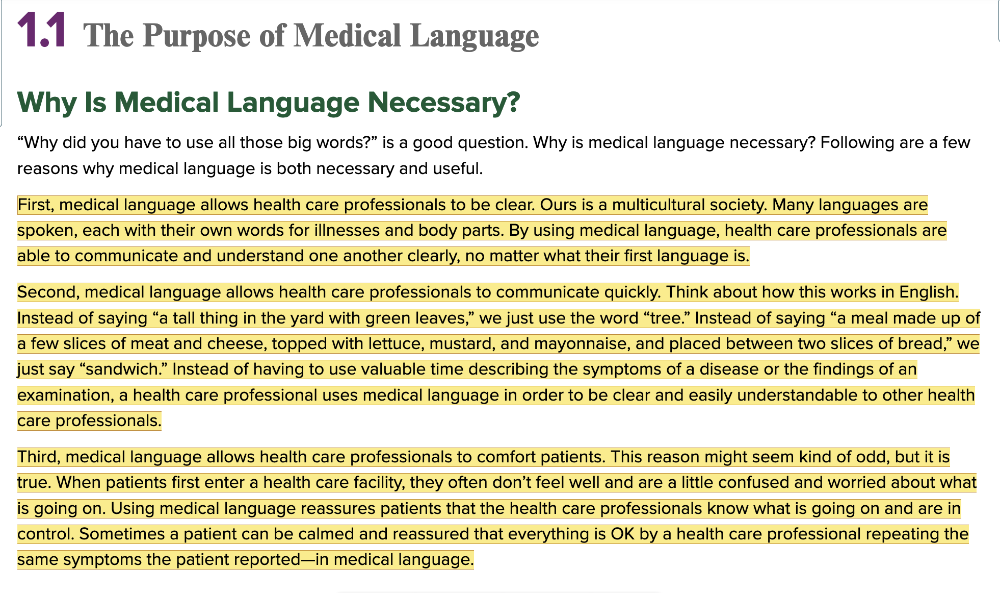 Chapter 1.1 The Purpose of Medical Language | back 1 no data |
front 2 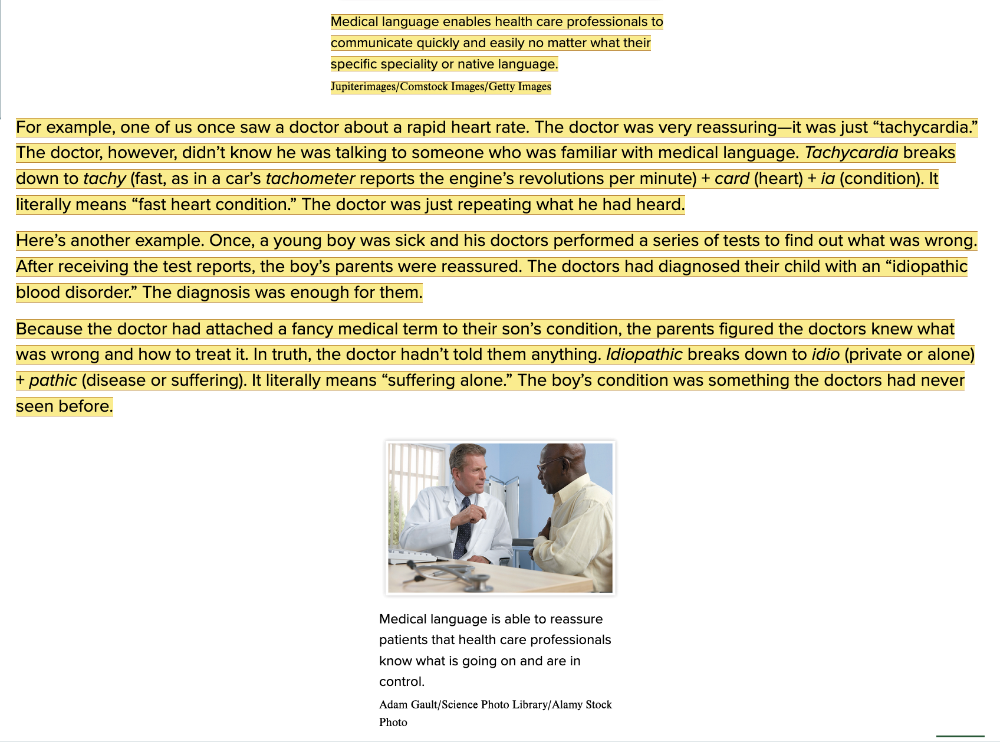 Chapter 1.1 The Purpose of Medical Language | back 2 no data |
front 3 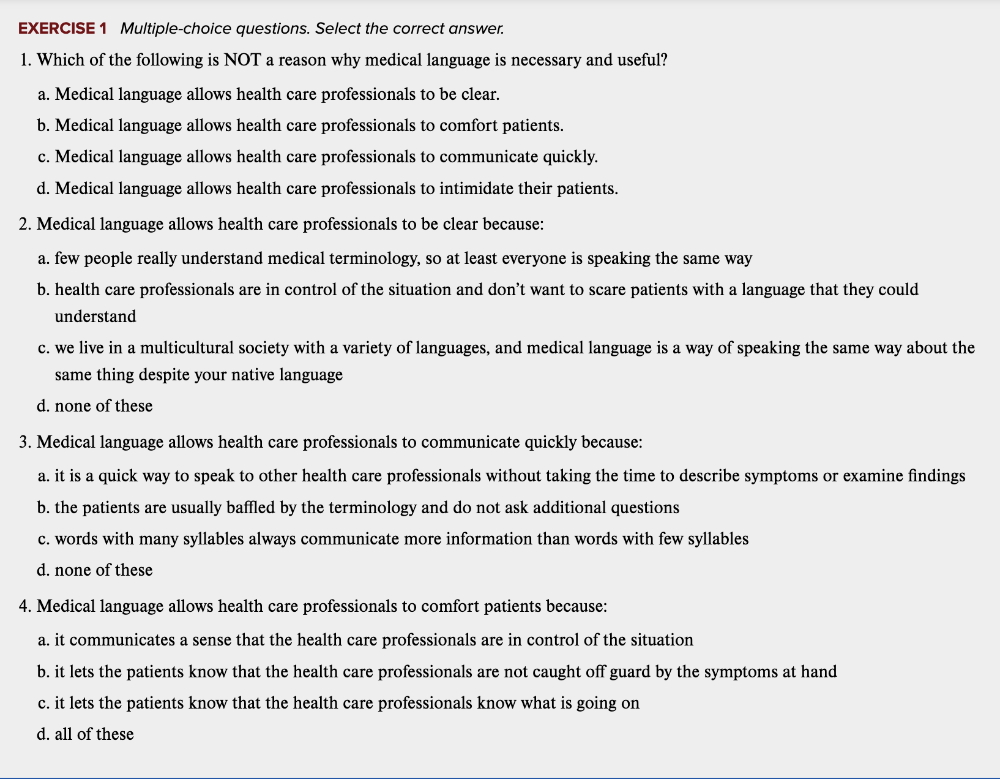 Learning Outcome 1.1 Exercises | back 3 1. d 2. c 3. a 4. d |
front 4 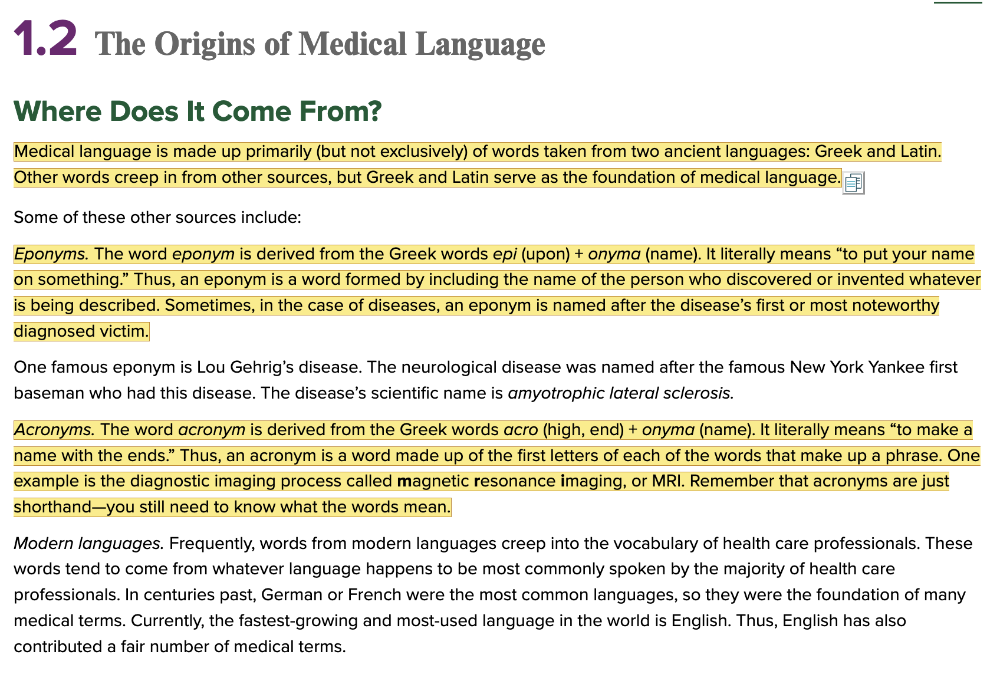 Chapter 1.2 The Origins of Medical Language | back 4 no data |
front 5 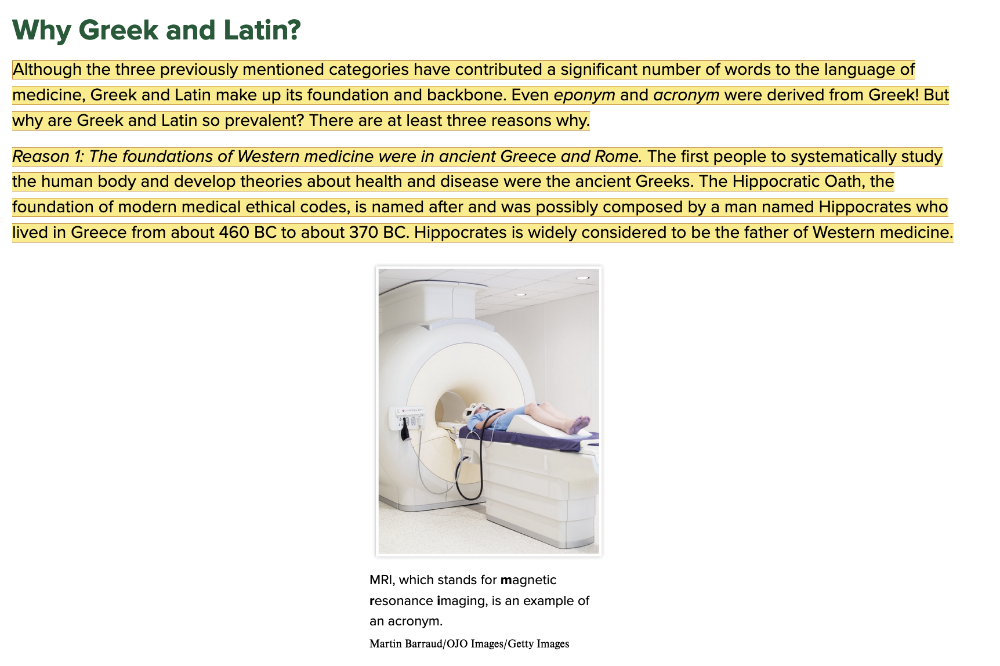 Chapter 1.2 The Origins of Medical Language | back 5 no data |
front 6 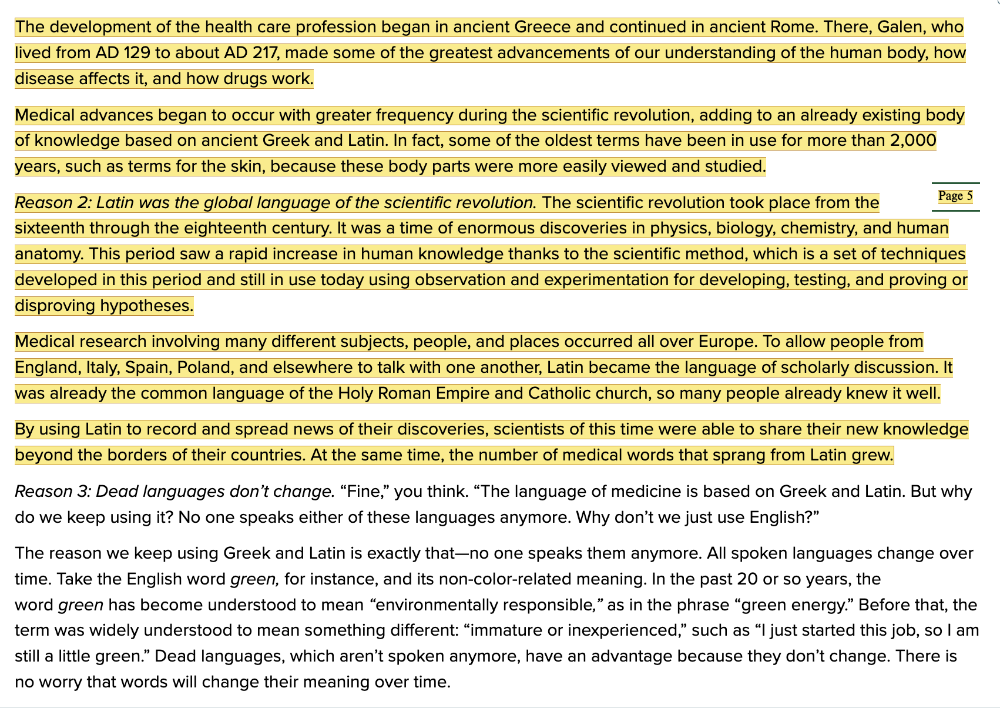 Chapter 1.2 The Origins of Medical Language | back 6 no data |
front 7  Learning Outcome 1.2 Exercises | back 7 1. True 2. True 3. True 4. False, it is an acronym. 5. True 6. True 7. True 8. False, Latin was. 9. True 10. False 11. True |
front 8  Chapter 1.3 The Principles of Medical Language | back 8 no data |
front 9 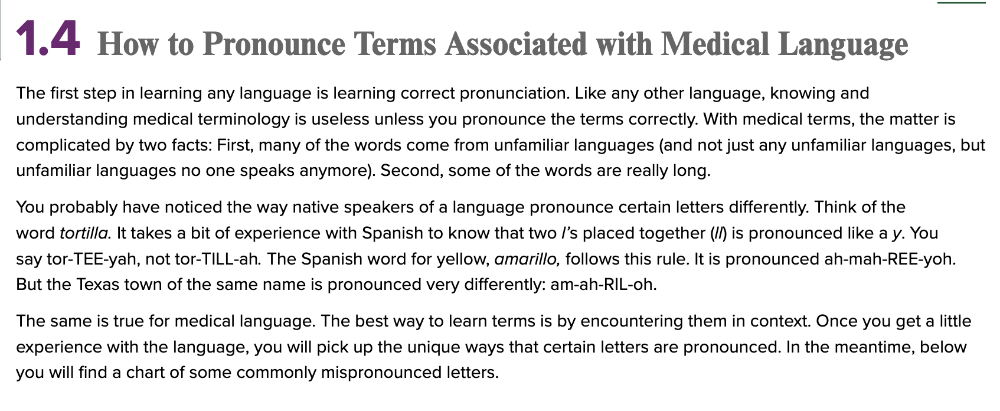 Chapter 1.4 How to Pronounce Words Associated with Medical Language | back 9 no data |
front 10 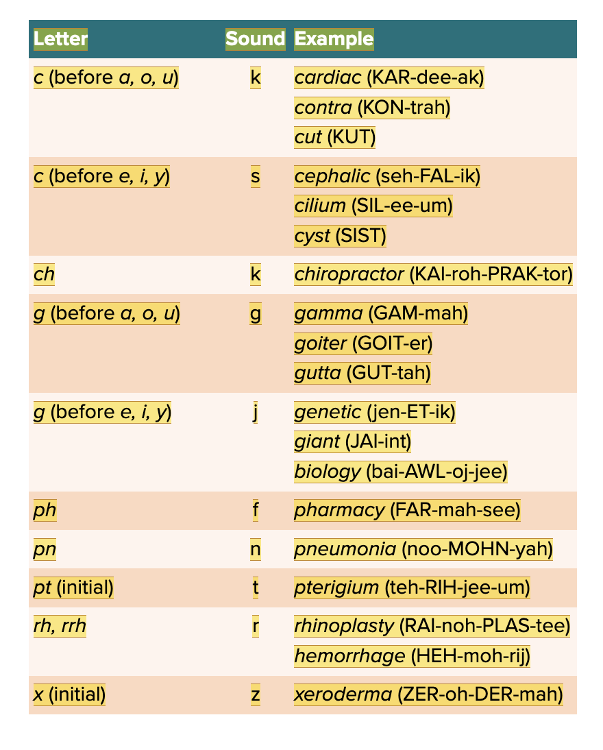 Chapter 1.4 How to Pronounce Words Associated with Medical Language | back 10 no data |
front 11 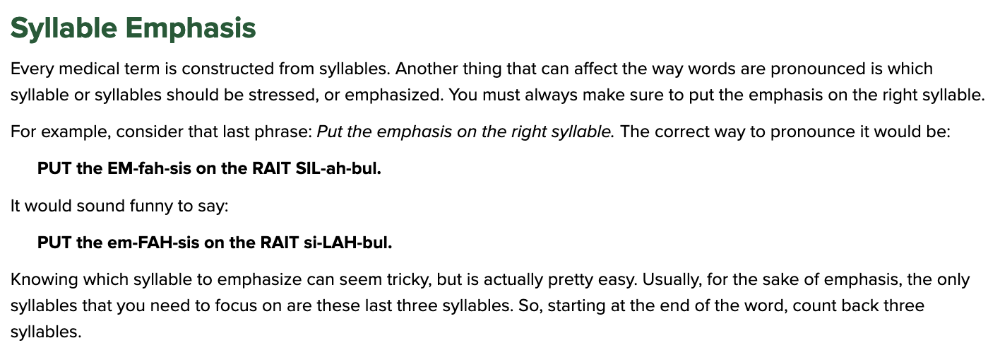 Chapter 1.4 How to Pronounce Words Associated with Medical Language | back 11 no data |
front 12 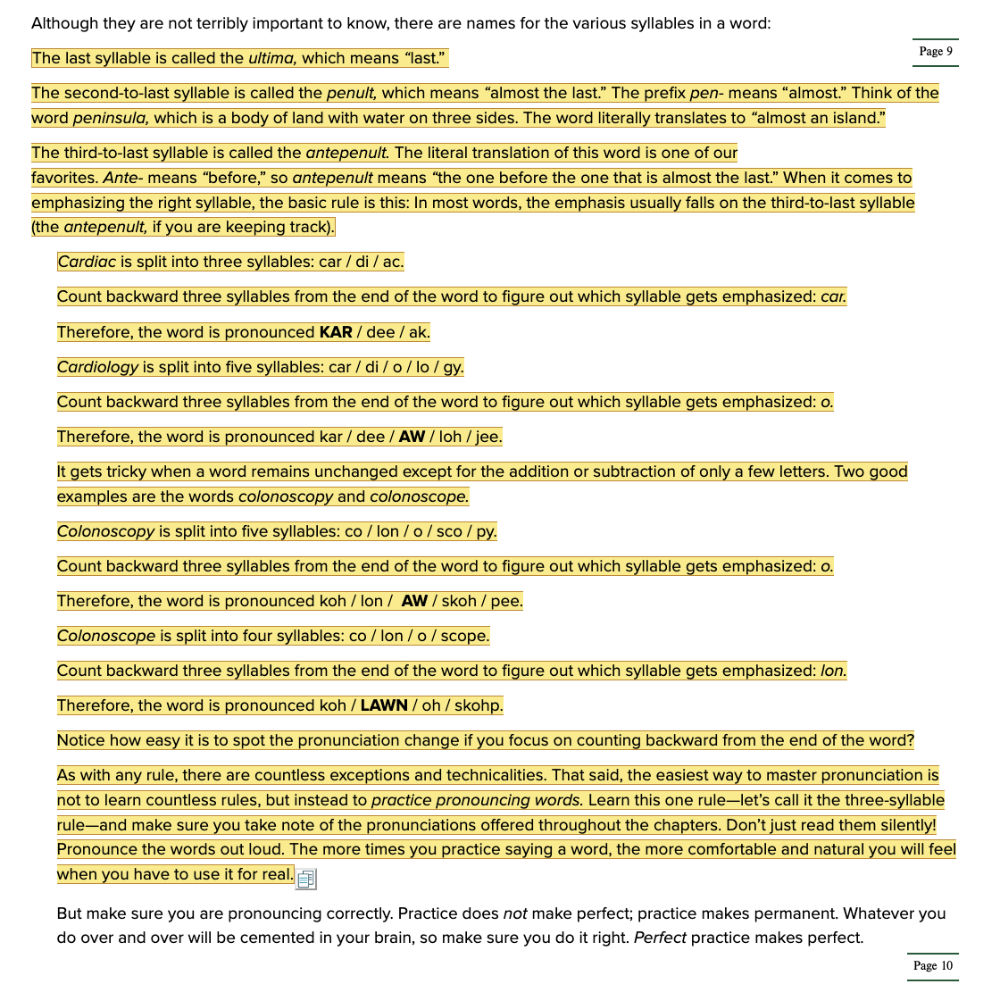 Chapter 1.4 How to Pronounce Words Associated with Medical Language | back 12 no data |
front 13 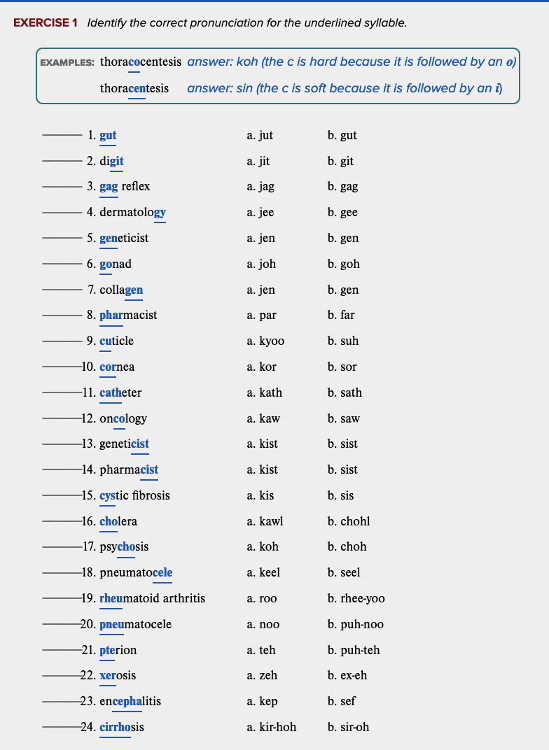 Learning Outcome 1.4 Exercises: Exercise 1 | back 13 1. b. gut 2. a. jit 3. b. gag 4. a. jee 5. a. jen 6. b. goh 7. a. jen 8. b. far 9. a. kyoo 10. a. kor 11. a. kath 12. a. kaw 13. b. sist 14. b. sist 15. b. sis 16. a. kawl 17. a. koh 18. b. seel 19. a. roo 20. a. noo 21. a. teh 22. a. zeh 23. b. sef 24. b. sir-oh |
front 14 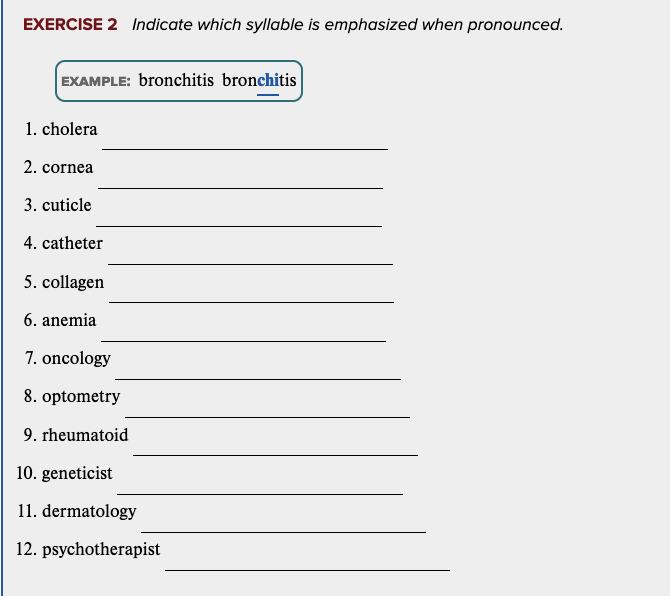 Learning Outcome 1.2 Exercises: Exercise 2 | back 14 1. cholera 2. cornea 3. cuticle 4. catheter 5. collagen 6. anemia 7. oncology 8. optometry 9. rheumatoid 10. geneticist 11. dermatology 12. psychotherapist |
front 15 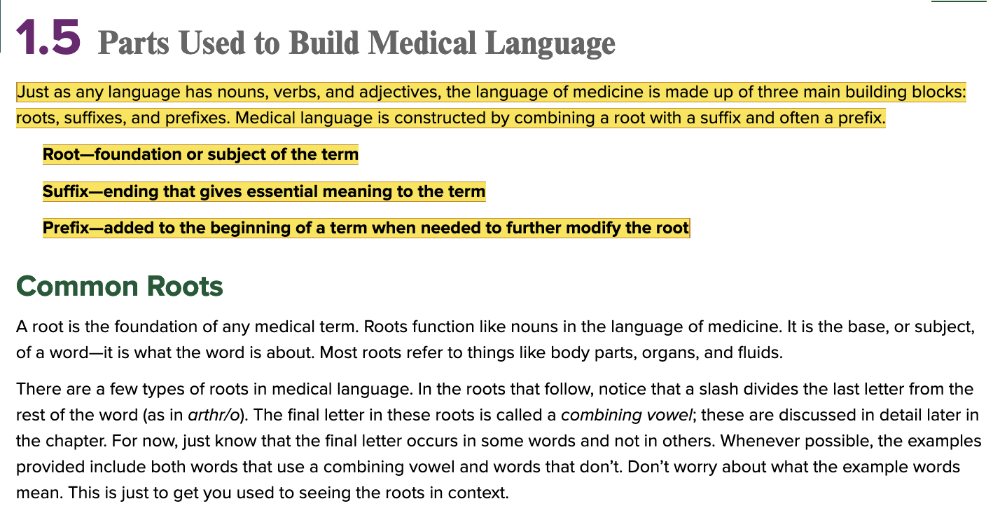 Chapter 1.5 Parts Used to Build Medical Language | back 15 no data |
front 16 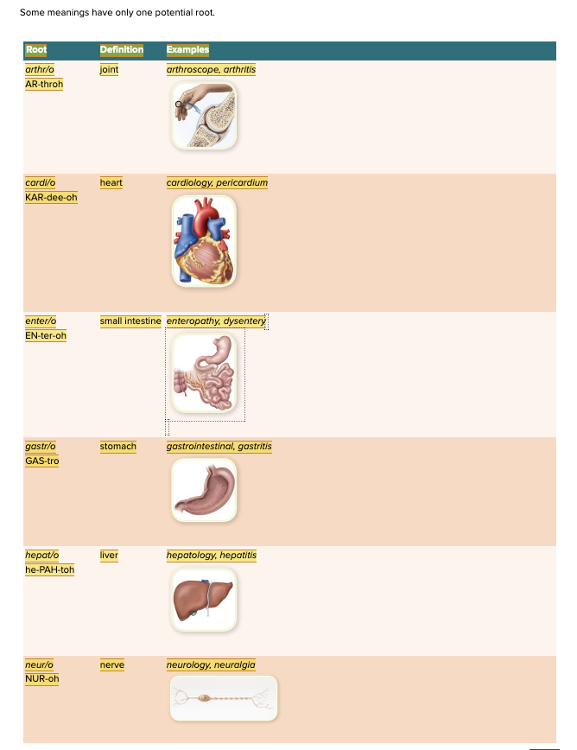 Chapter 1.5 Parts Used to Build Medical Language: Common Roots - Some meanings have only one potential root. | back 16 no data |
front 17 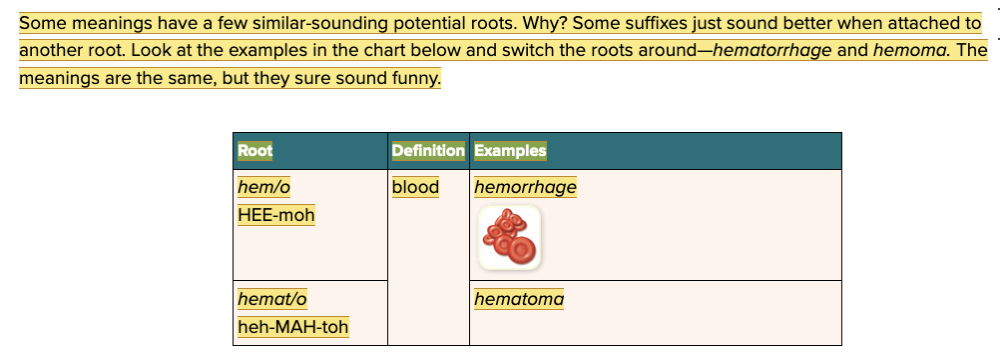 Chapter 1.5 Parts Used to Build Medical Language: Common Roots - Some meanings have a few similar-sounding potential roots. | back 17 no data |
front 18 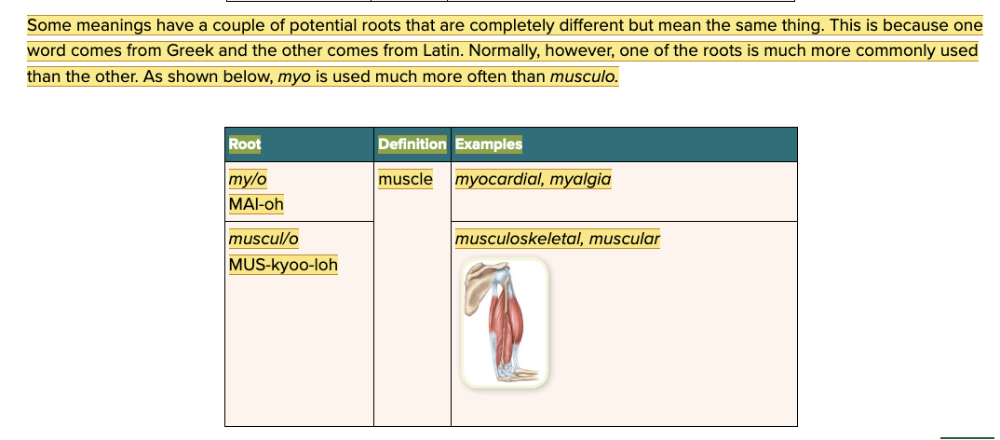 Chapter 1.5 Parts Used to Build Medical Language: Common Roots - Some meanings have a couple of potential roots that are completely different but mean the same thing. | back 18 no data |
front 19 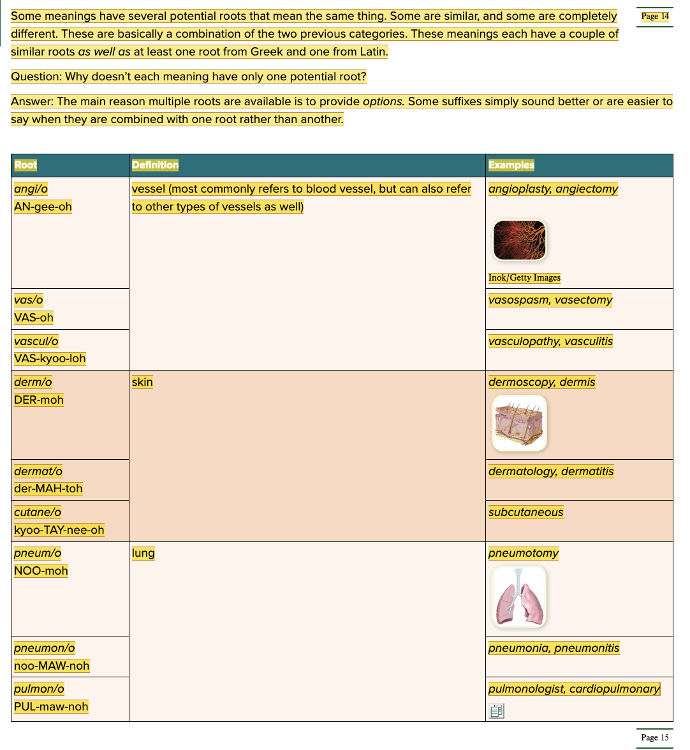 Chapter 1.5 Parts Used to Build Medical Language: Common Roots - Some meanings have several potential roots that mean the same thing. | back 19 no data |
front 20 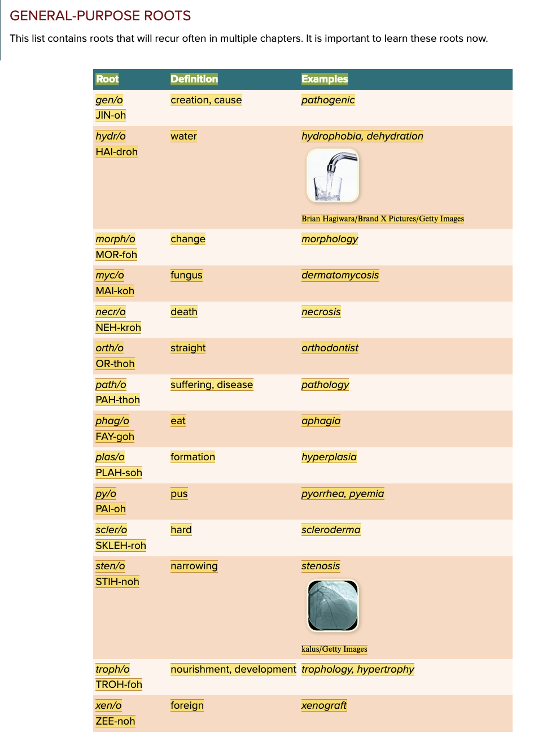 Chapter 1.5 Parts Used to Build Medical Language: Common Roots -
| back 20 no data |
front 21 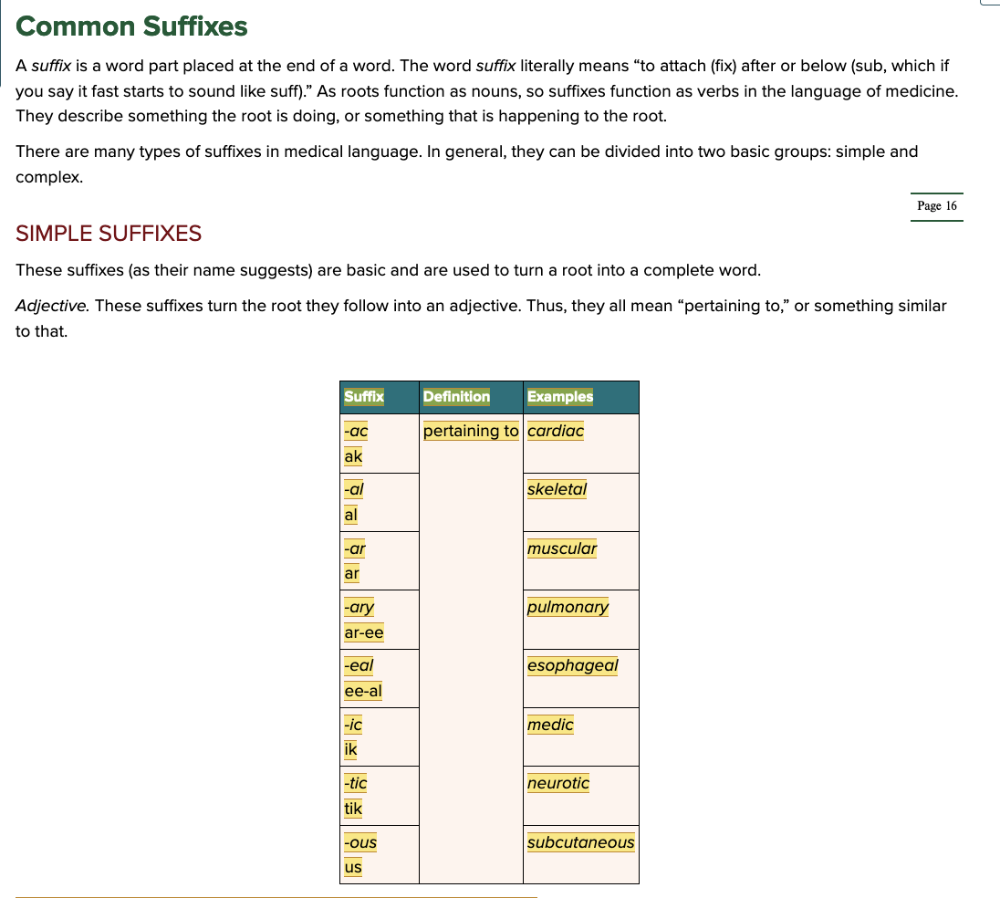 Chapter 1.5 Parts Used to Build Medical Language: Common Suffixes -
| back 21 no data |
front 22 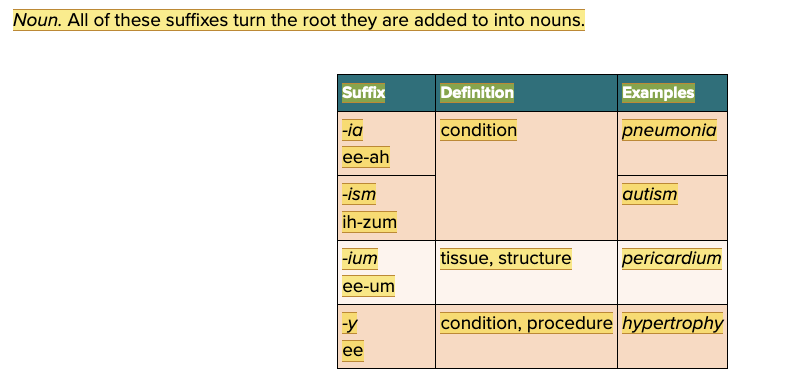 Chapter 1.5 Parts Used to Build Medical Language: Common Suffixes -
| back 22 no data |
front 23 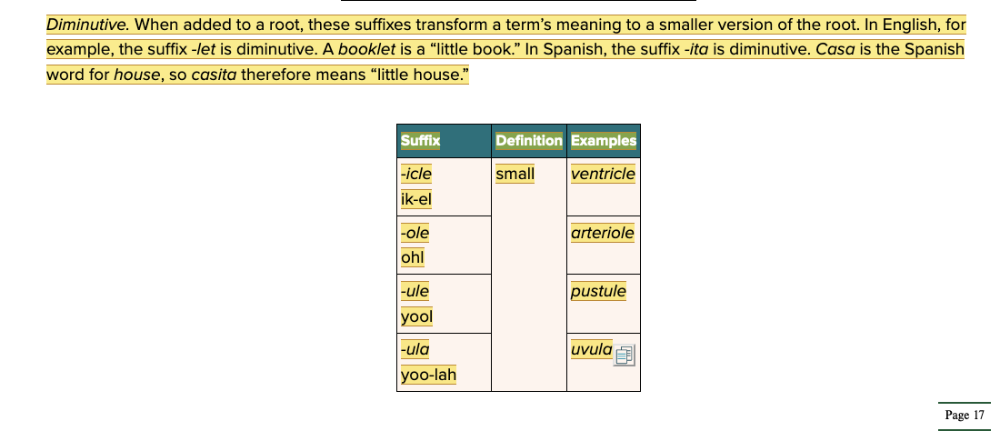 Chapter 1.5 Parts Used to Build Medical Language: Common Suffixes -
| back 23 no data |
front 24 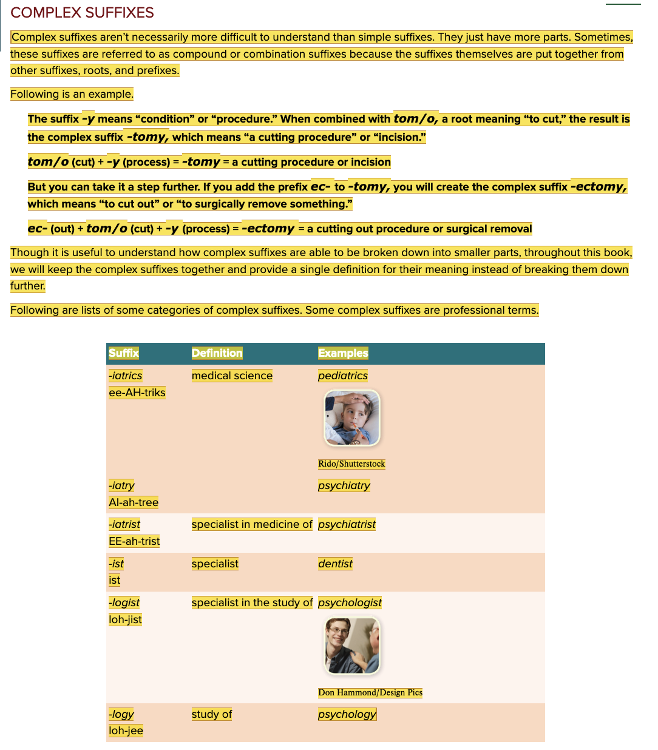 Chapter 1.5 Parts Used to Build Medical Language: Common Suffixes -
| back 24 no data |
front 25 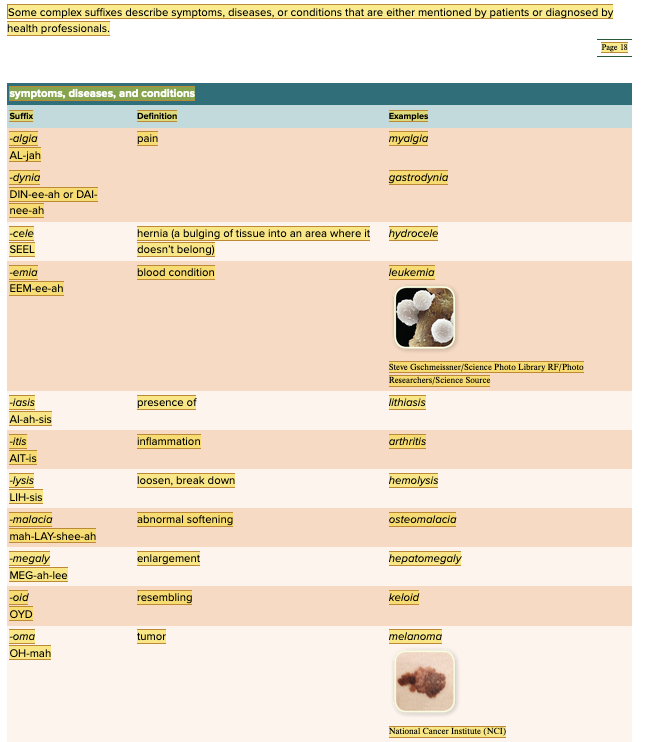 Chapter 1.5 Parts Used to Build Medical Language: Common Suffixes -
| back 25 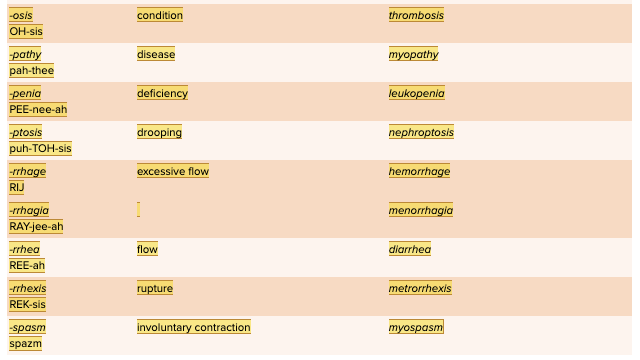 |
front 26 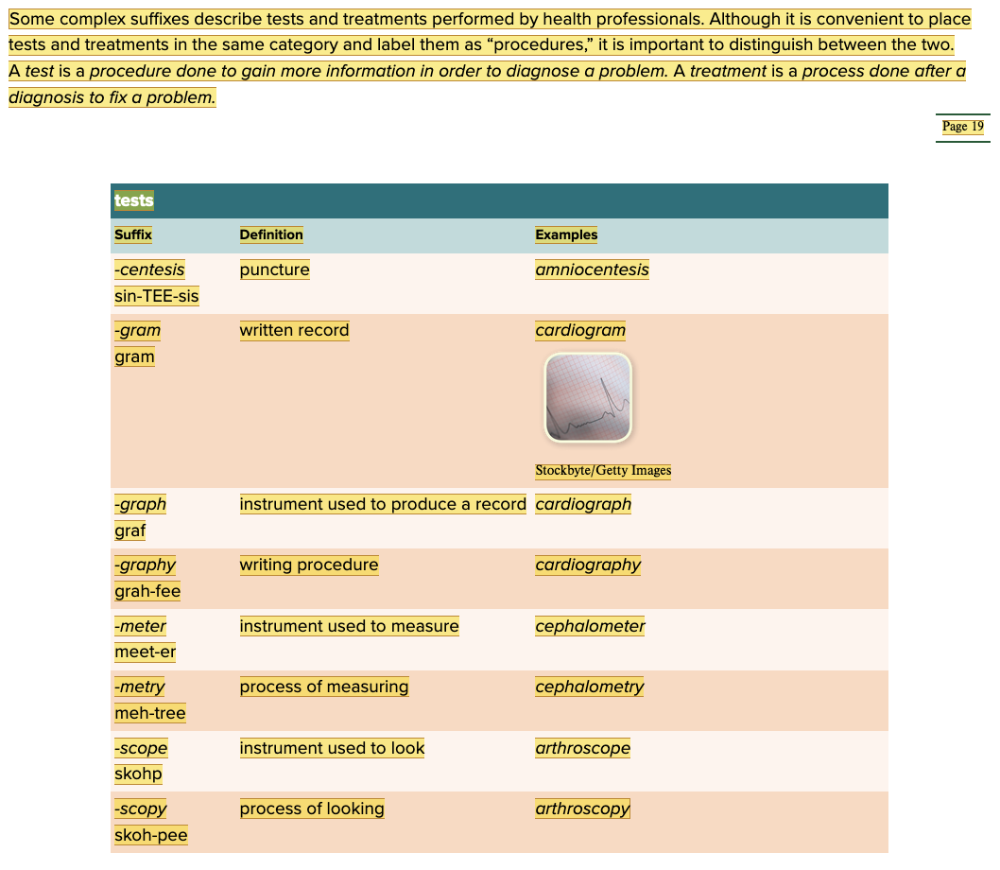 Chapter 1.5 Parts Used to Build Medical Language: Common Suffixes -
| back 26 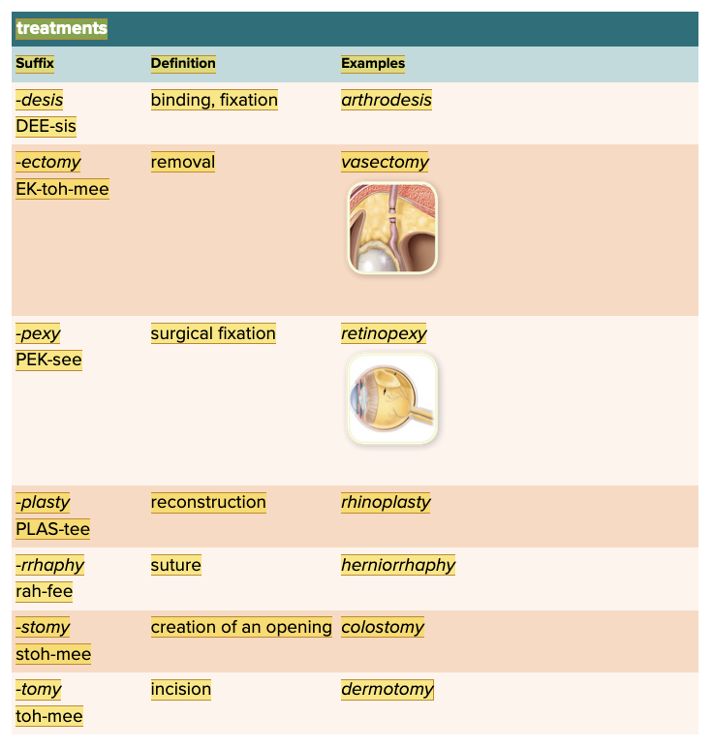 |
front 27 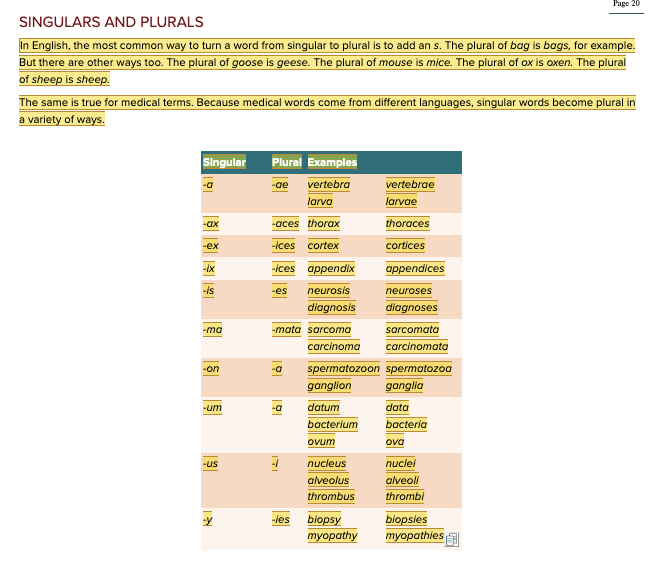 Chapter 1.5 Parts Used to Build Medical Language: Common Suffixes -
| back 27 no data |
front 28  Chapter 1.5 Parts Used to Build Medical Language: Common Prefixes - a prefix is a word part placed at the beginning of a word. They function like adjectives in the language of medicine. | back 28 no data |
front 29 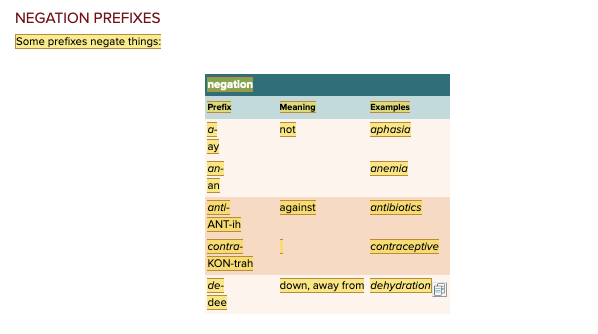 Chapter 1.5 Parts Used to Build Medical Language: Common Prefixes - a prefix is a word part placed at the beginning of a word. They function like adjectives in the language of medicine.
| back 29 no data |
front 30 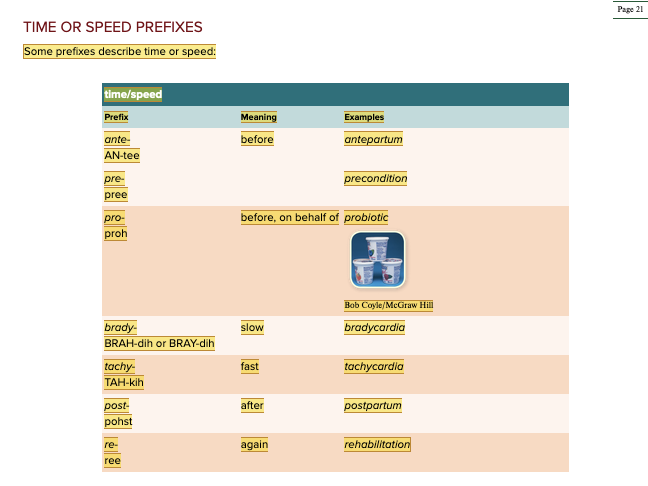 Chapter 1.5 Parts Used to Build Medical Language: Common Prefixes - a prefix is a word part placed at the beginning of a word. They function like adjectives in the language of medicine.
| back 30 no data |
front 31 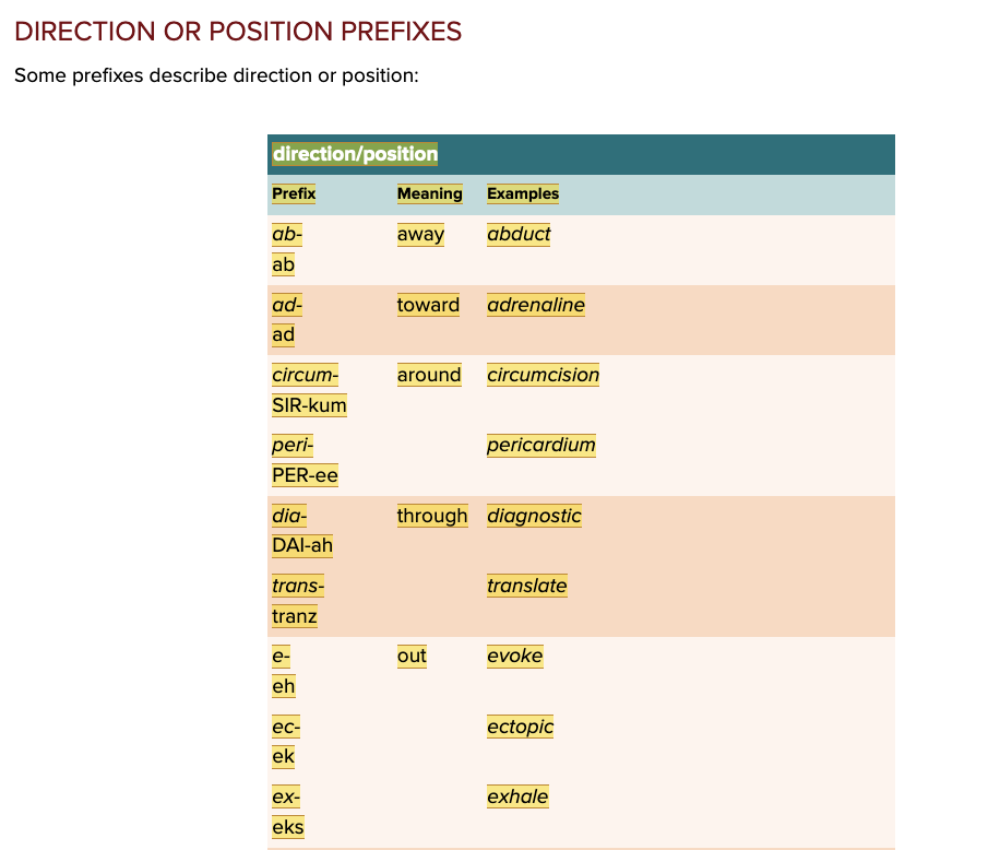 Chapter 1.5 Parts Used to Build Medical Language: Common Prefixes - a prefix is a word part placed at the beginning of a word. They function like adjectives in the language of medicine.
| back 31 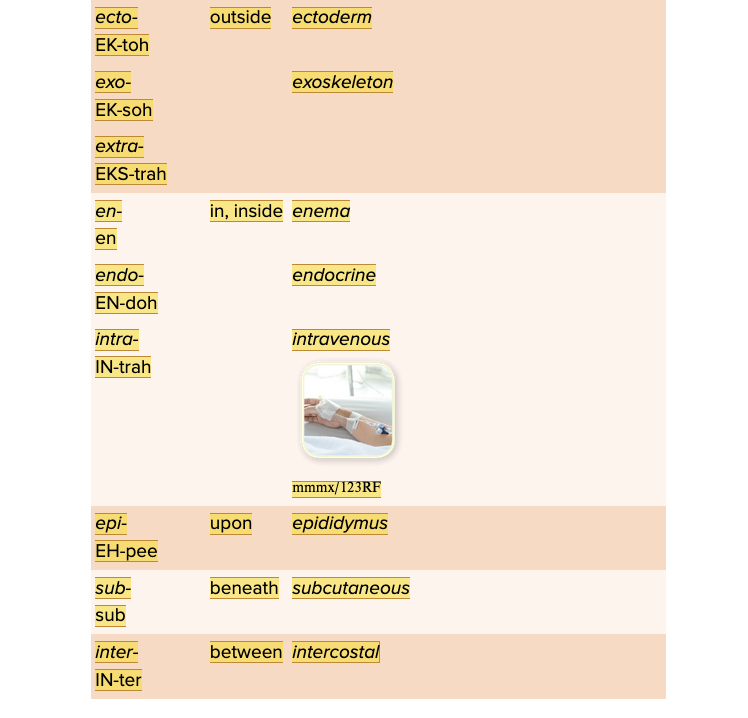 |
front 32 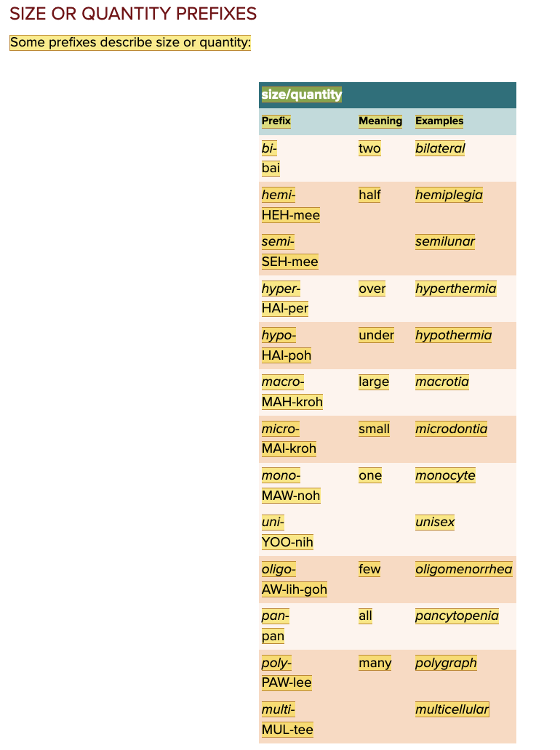 Chapter 1.5 Parts Used to Build Medical Language: Common Prefixes - a prefix is a word part placed at the beginning of a word. They function like adjectives in the language of medicine.
| back 32 no data |
front 33 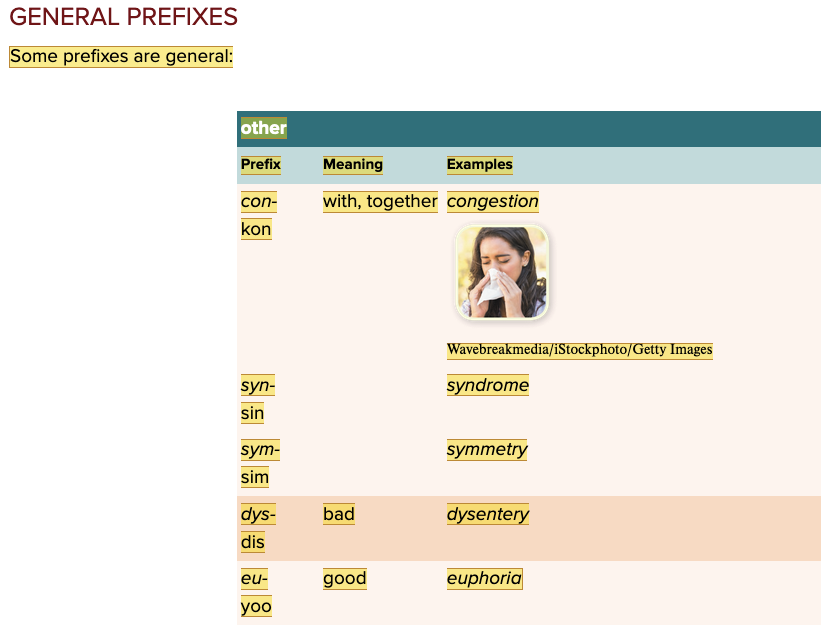 Chapter 1.5 Parts Used to Build Medical Language: Common Prefixes - a prefix is a word part placed at the beginning of a word. They function like adjectives in the language of medicine.
| back 33 no data |
front 34 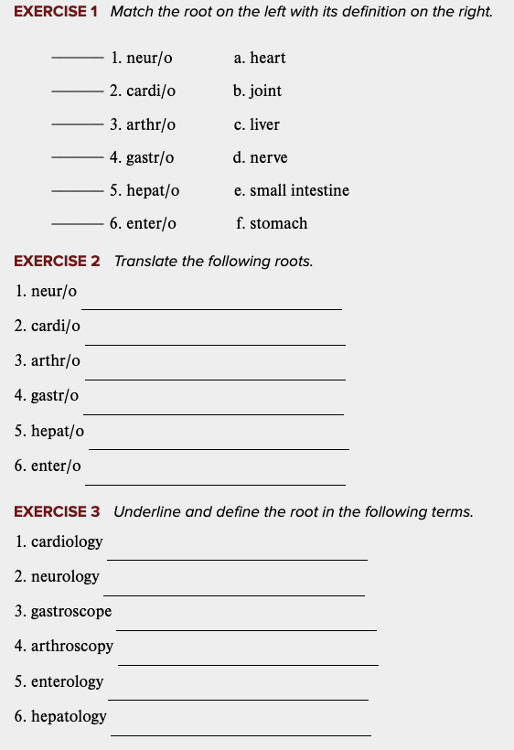 Learning Outcome 1.5 Exercises: Exercise 1, 2, 3. | back 34 Exercise 1
Exercise 2
Exercise 3
|
front 35 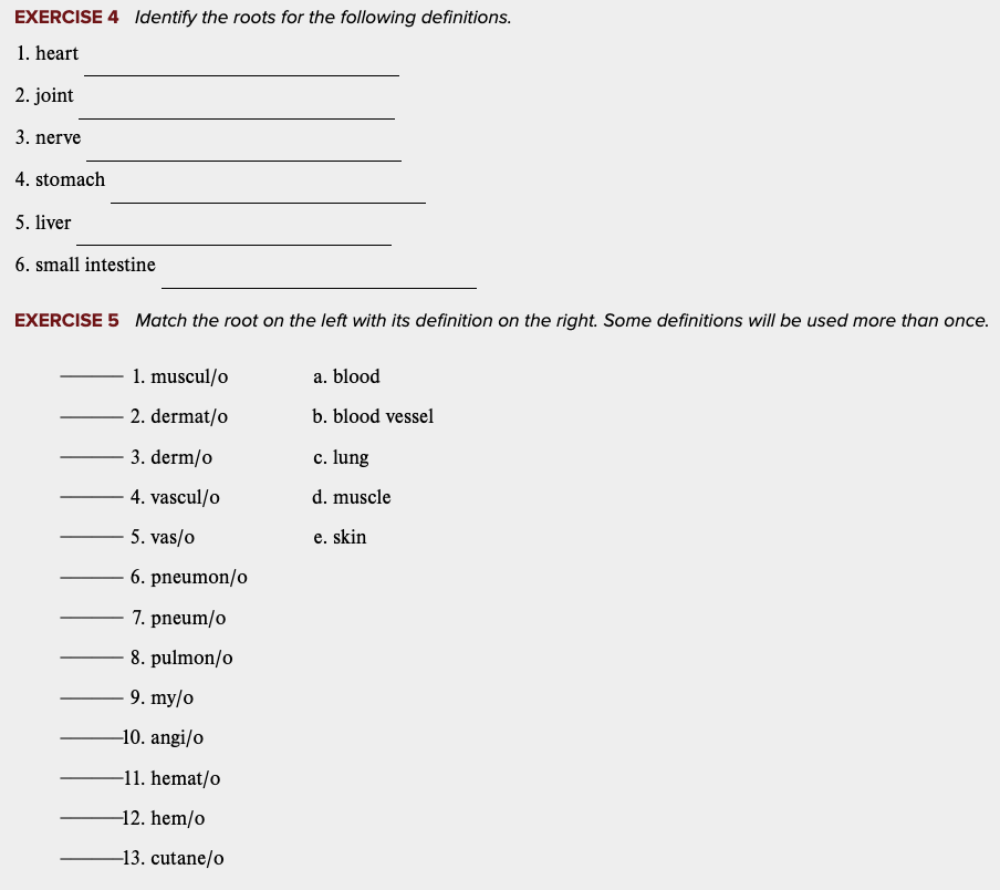 Learning Outcome 1.5 Exercises: Exercise 4, 5, 6. | back 35 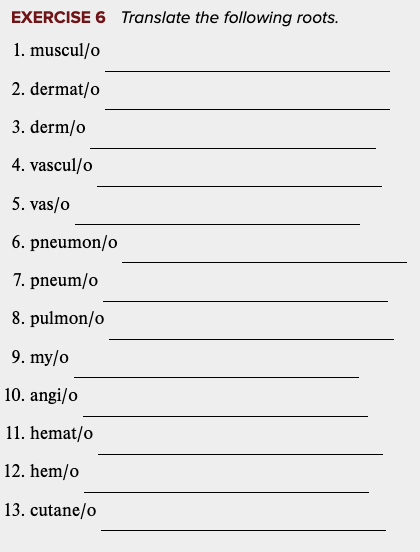 Exercise 4 Exercise 5 Exercise 6 |
front 36 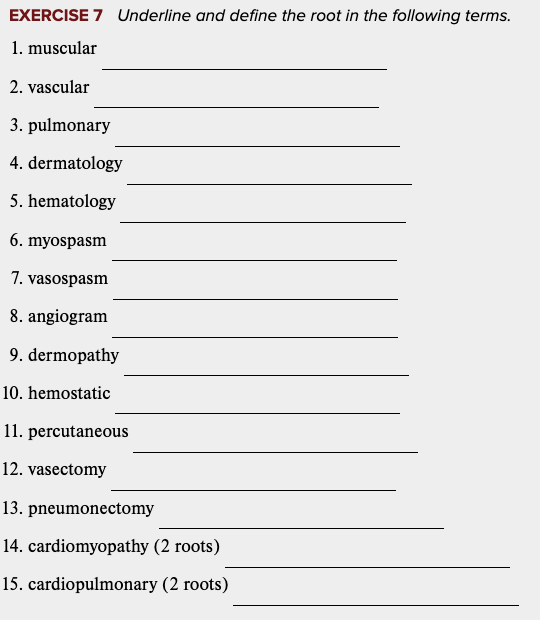 Learning Outcome 1.5 Exercises: Exercise 7, 8, 9. | back 36 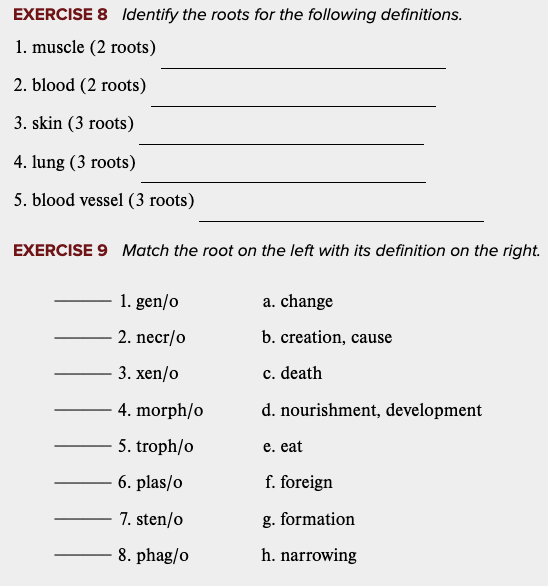 Exercise 7 Exercise 8 Exercise 9 |
front 37 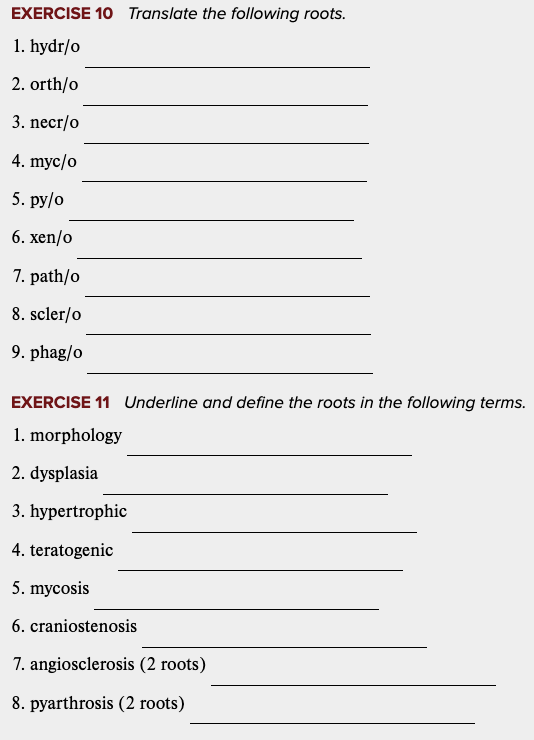 Learning Outcome 1.5 Exercises: Exercise 10, 11, 12. | back 37 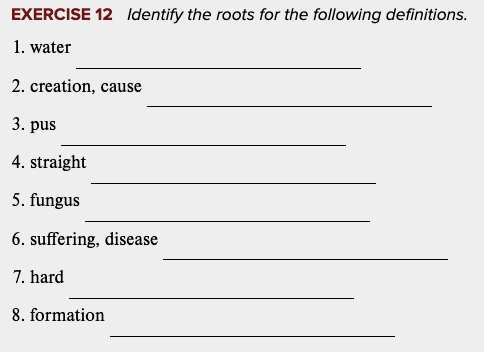 Exercise 10 Exercise 11 Exercise 12 |
front 38 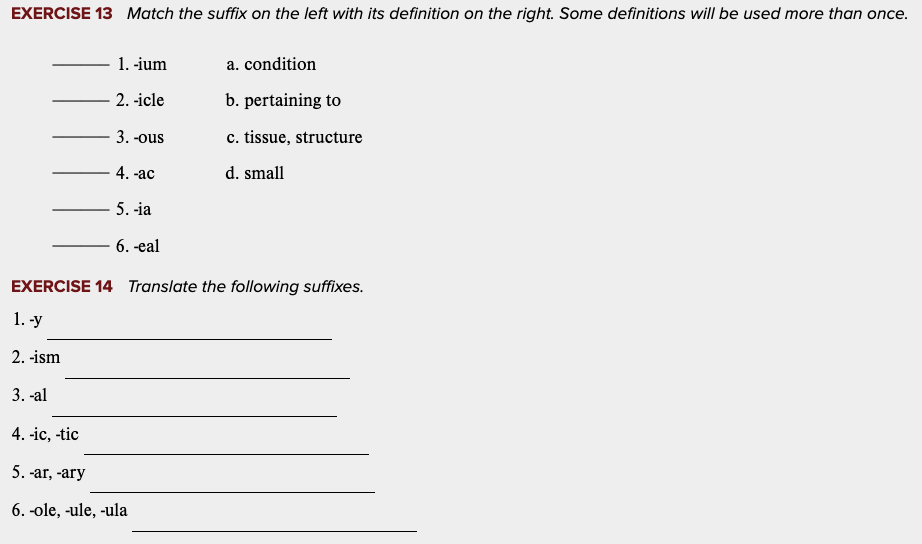 Learning Outcome 1.5 Exercises: Exercise 13, 14, 15. | back 38 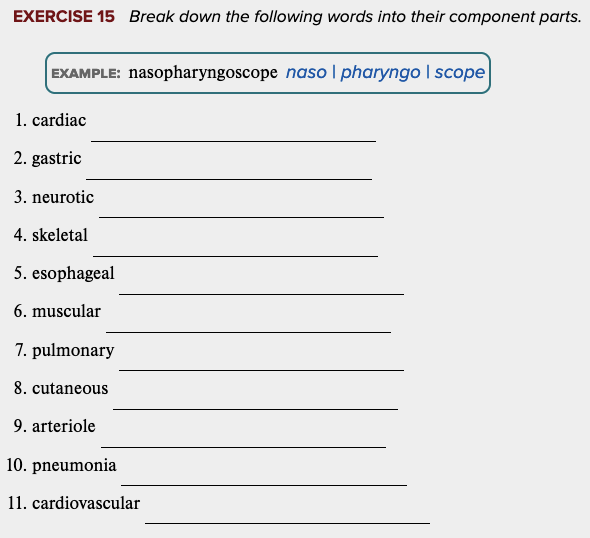 Exercise 13 Exercise 14 Exercise 15 |
front 39 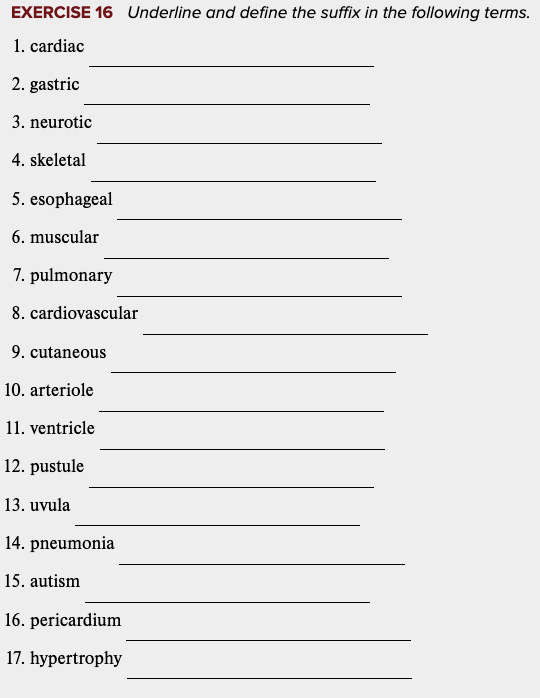 Learning Outcome 1.5 Exercises: Exercise 16, 17, 18. | back 39 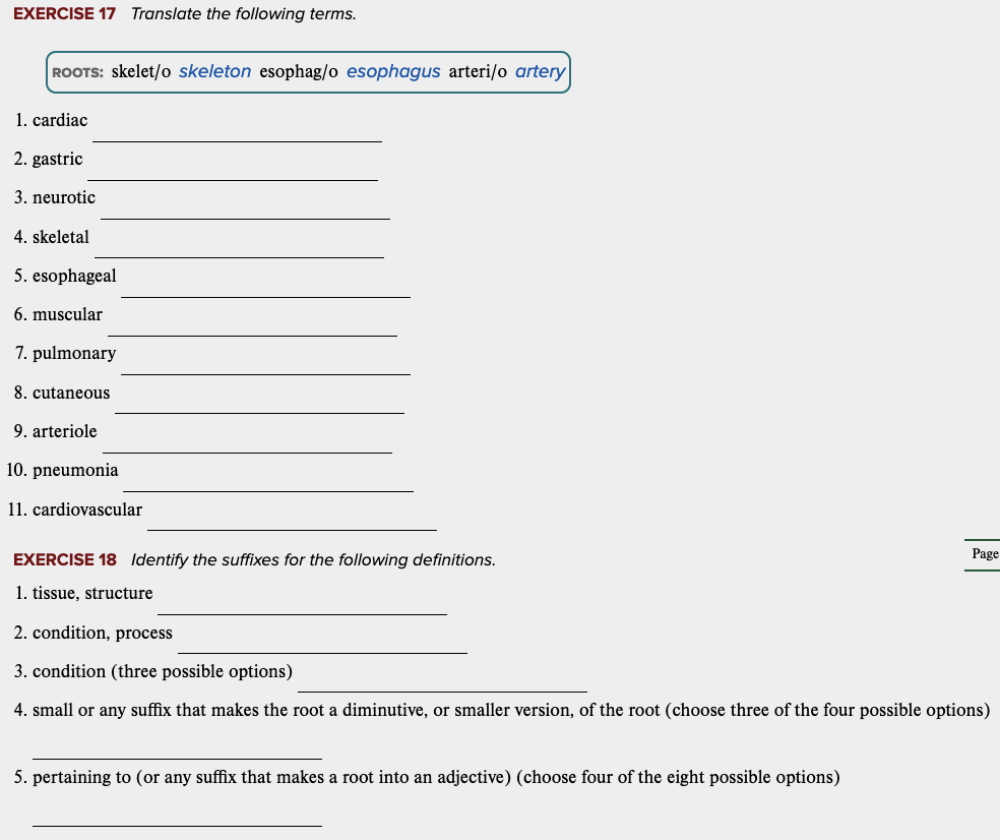 Exercise 16 Exercise 17 Exercise 18 |
front 40 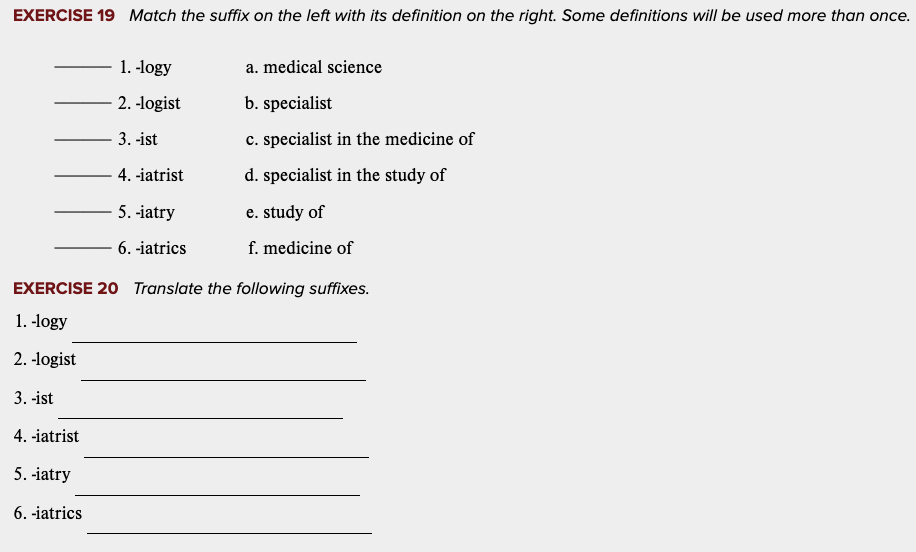 Learning Outcome 1.5 Exercises: Exercise 19, 20, 21. | back 40 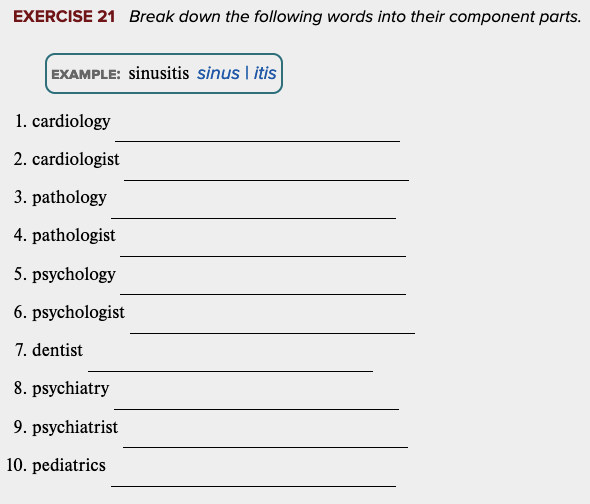 Exercise 19 Exercise 20 Exercise 21 |
front 41 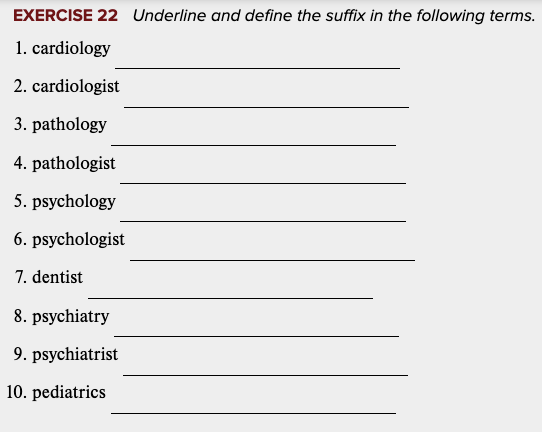 Learning Outcome 1.5 Exercises: Exercise 22, 23, 24. | back 41 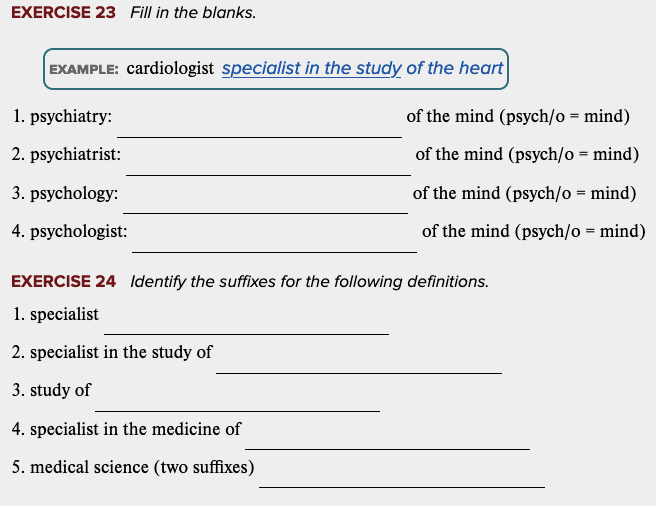 Exercise 22 Exercise 23 Exercise 24 |
front 42 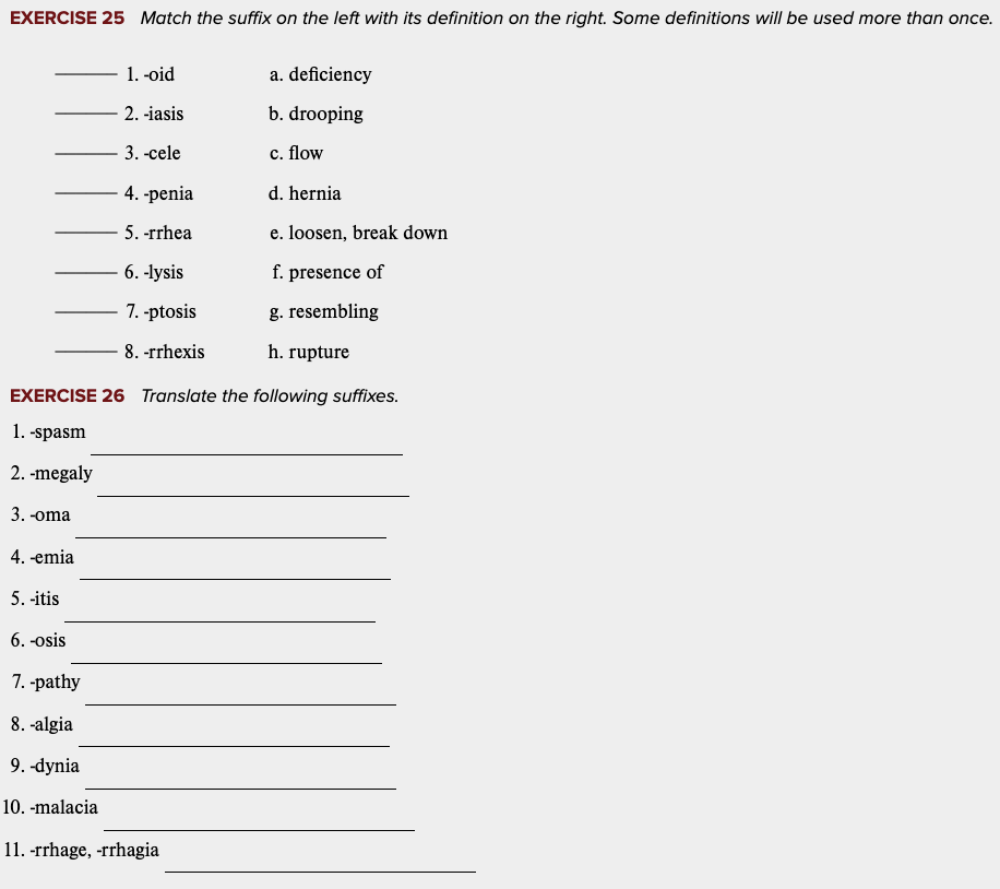 Learning Outcome 1.5 Exercises: Exercise 25, 26, 27. | back 42 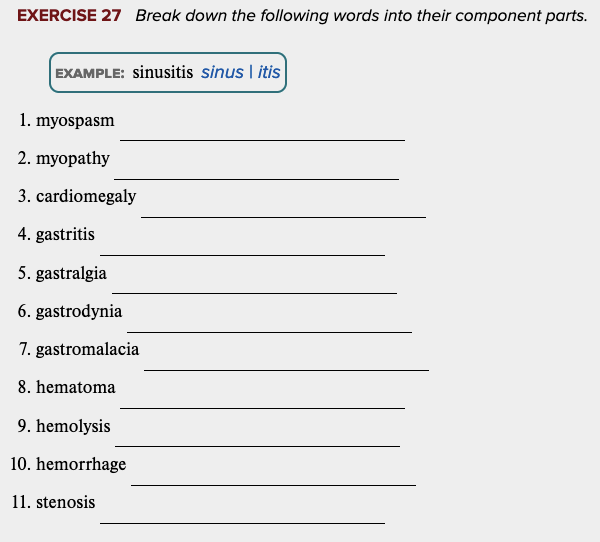 Exercise 25 Exercise 26 Exercise 27 |
front 43 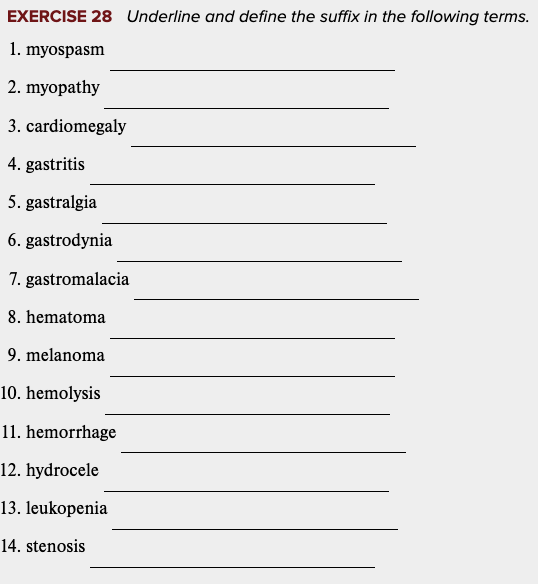 Learning Outcome 1.5 Exercises: Exercise 28, 29, 30. | back 43 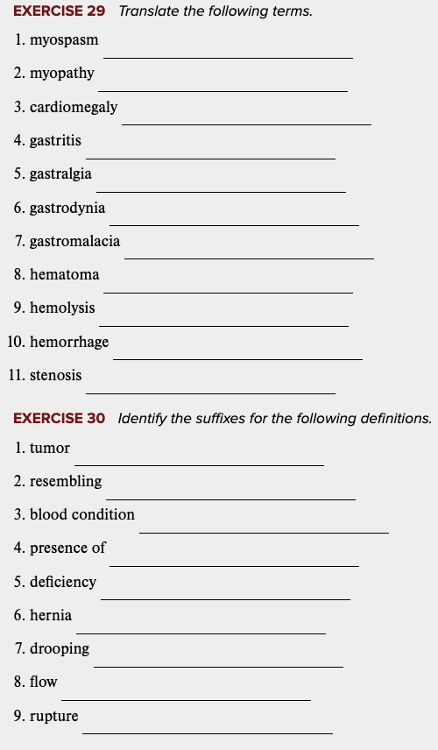 Exercise 28 Exercise 29 Exercise 30 |
front 44 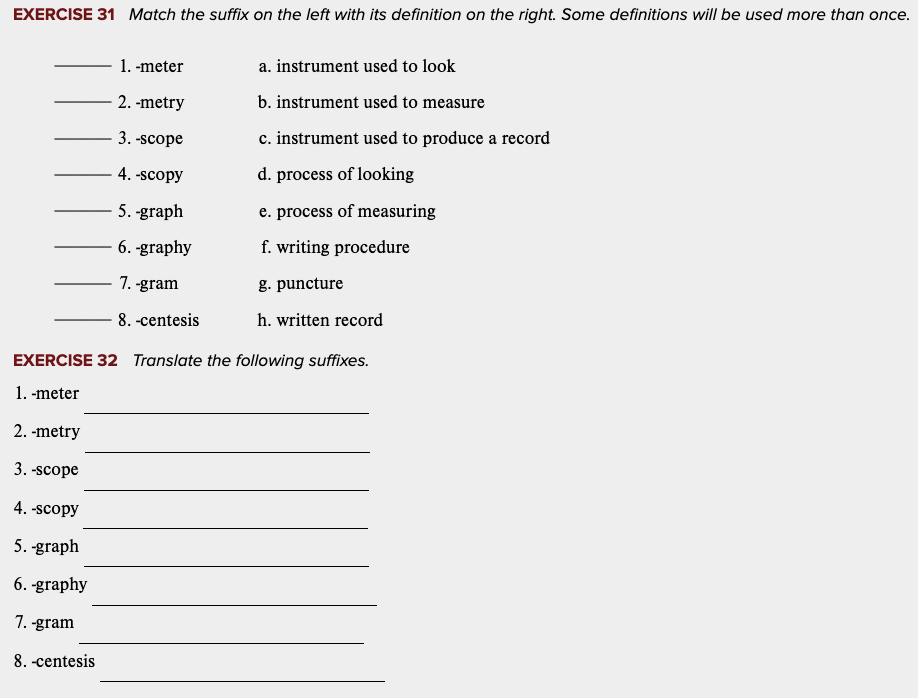 Learning Outcome 1.5 Exercises: Exercise 31, 32, 33. | back 44 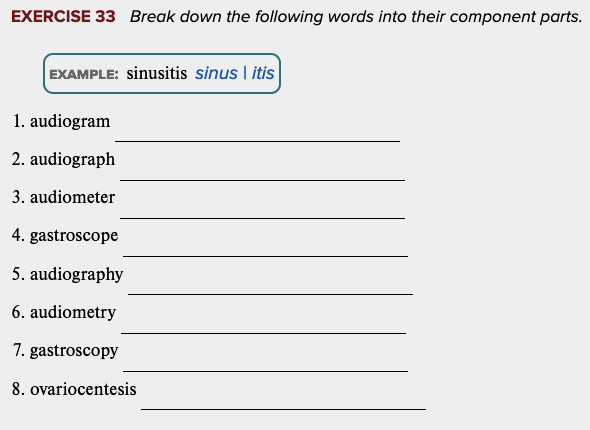 Exercise 31 Exercise 32 Exercise 33 |
front 45 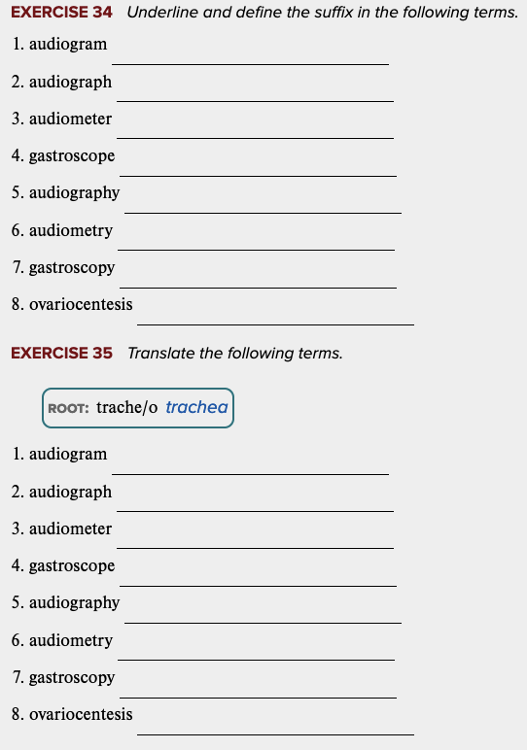 Learning Outcome 1.5 Exercises: Exercise 34, 35, 36. | back 45 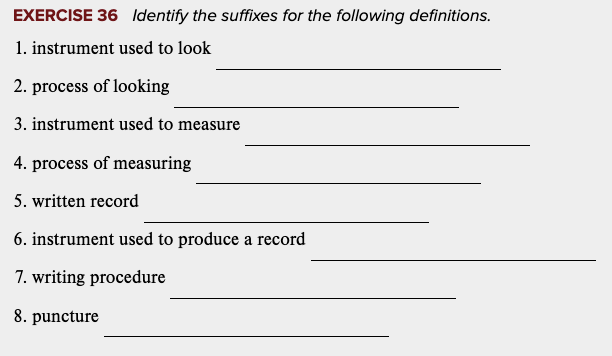 Exercise 34 Exercise 35 Exercise 36 |
front 46 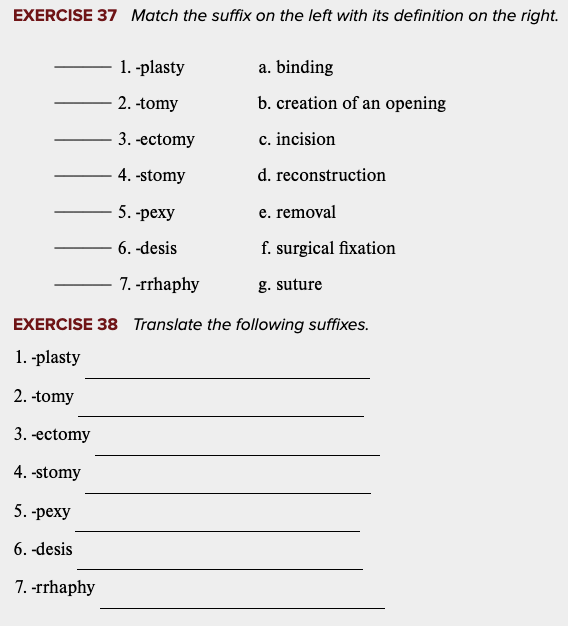 Learning Outcome 1.5 Exercises: Exercise 37, 38, 39. | back 46 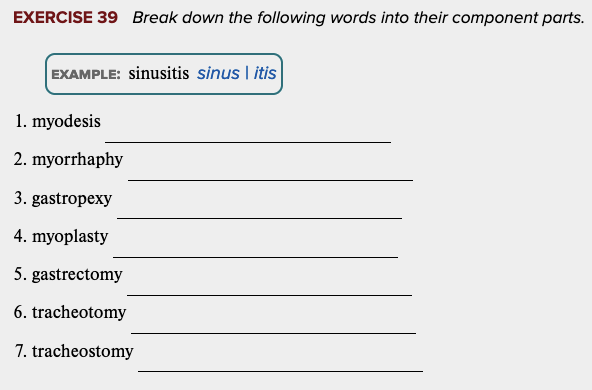 Exercise 37 Exercise 38 Exercise 39 |
front 47 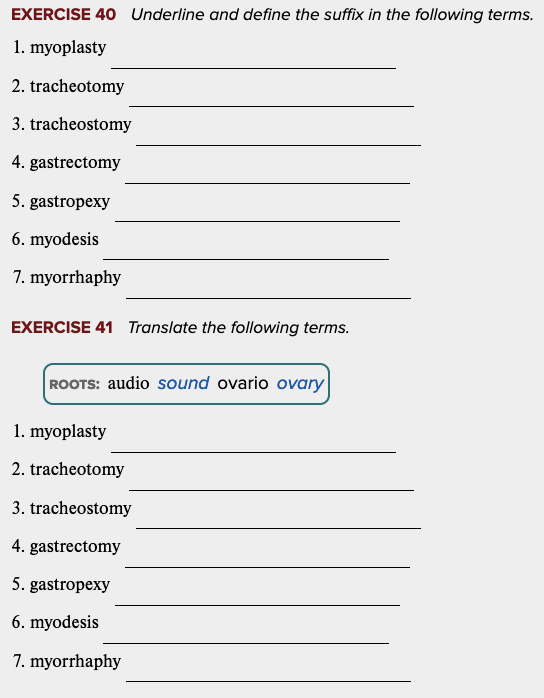 Learning Outcome 1.5 Exercises: Exercise 40, 41, 42. | back 47 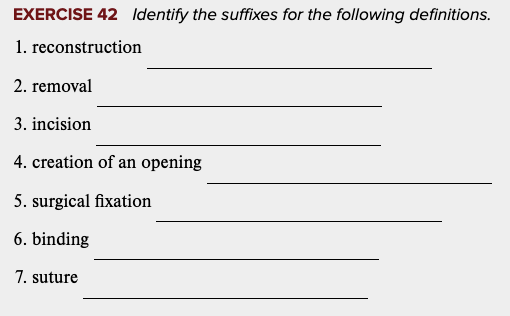 Exercise 40 Exercise 41 Exercise 42 |
front 48 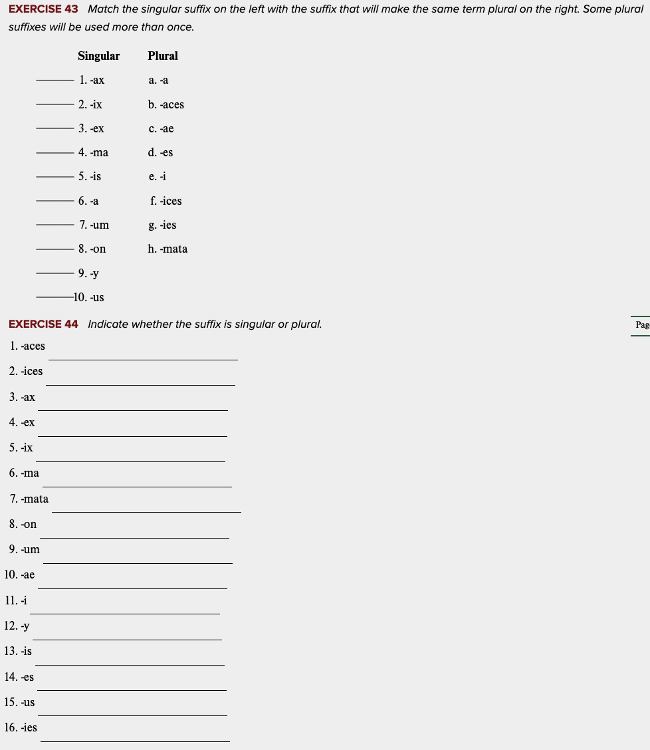 Learning Outcome 1.5 Exercises: Exercise 43, 44, 45. | back 48 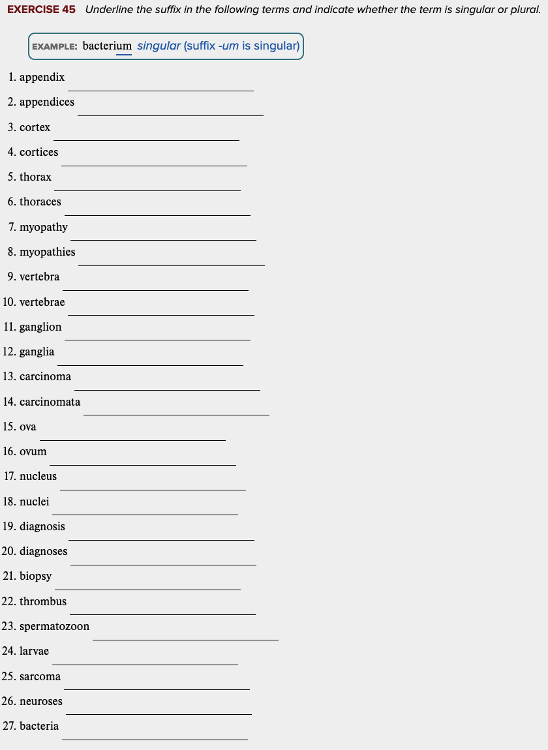 Exercise 43 Exercise 44 Exercise 45 |
front 49 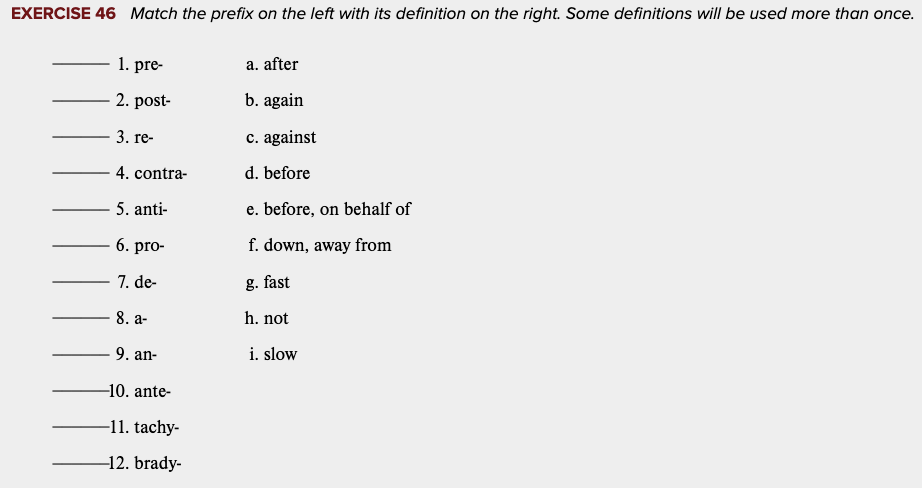 Learning Outcome 1.5 Exercises: Exercise 46, 47, 48. | back 49 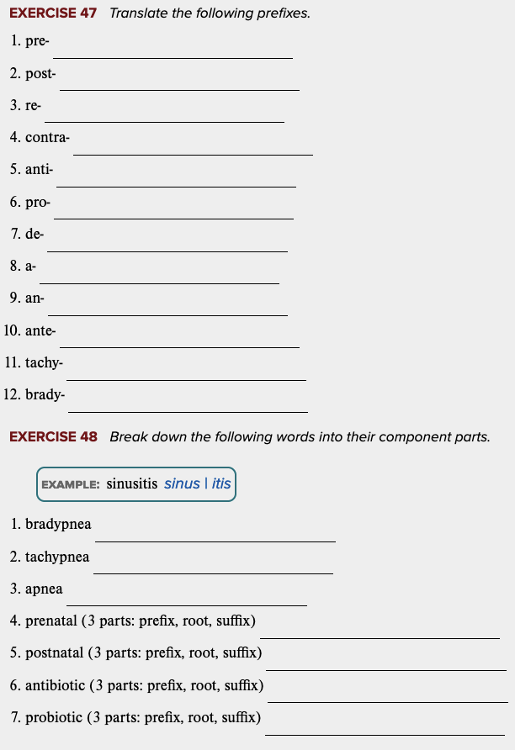 Exercise 46 Exercise 47 Exercise 48 |
front 50 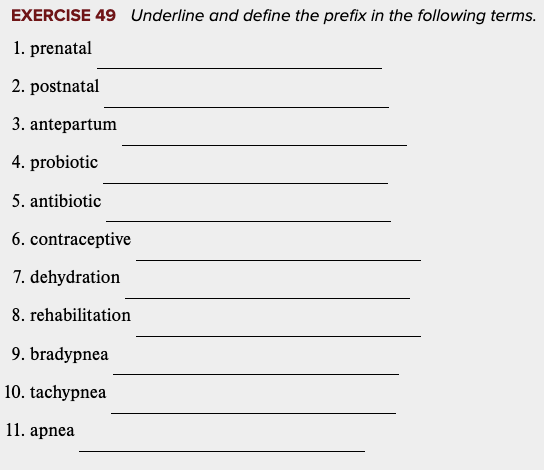 Learning Outcome 1.5 Exercises: Exercise 49, 50, 51. | back 50 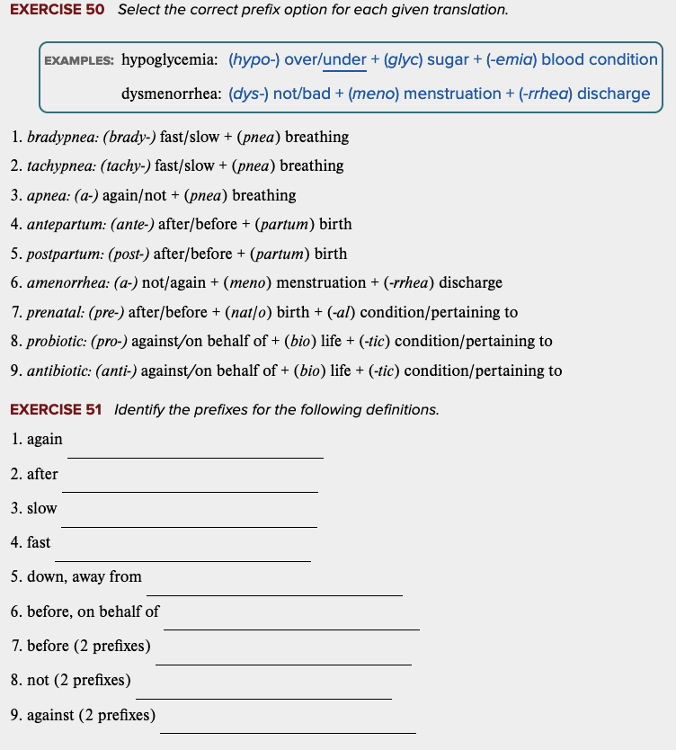 Exercise 49 Exercise 50 Exercise 51 |
front 51 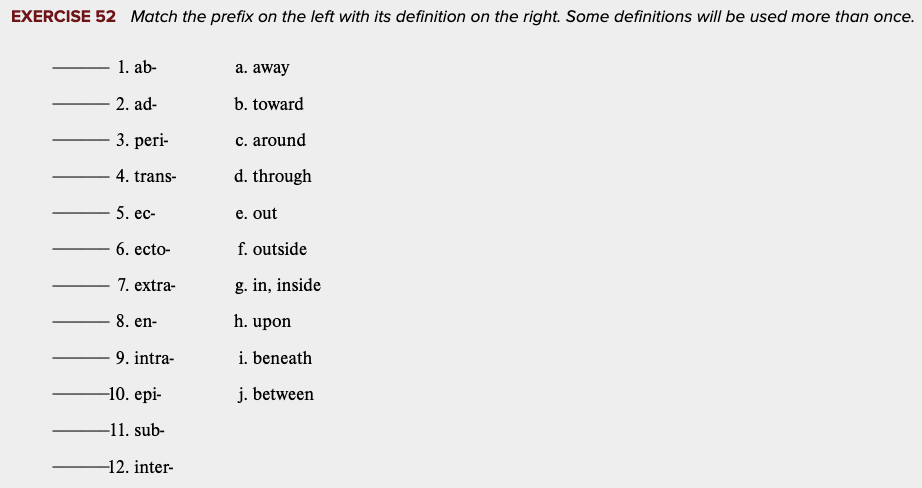 Learning Outcome 1.5 Exercises: Exercise 52, 53, 54. | back 51 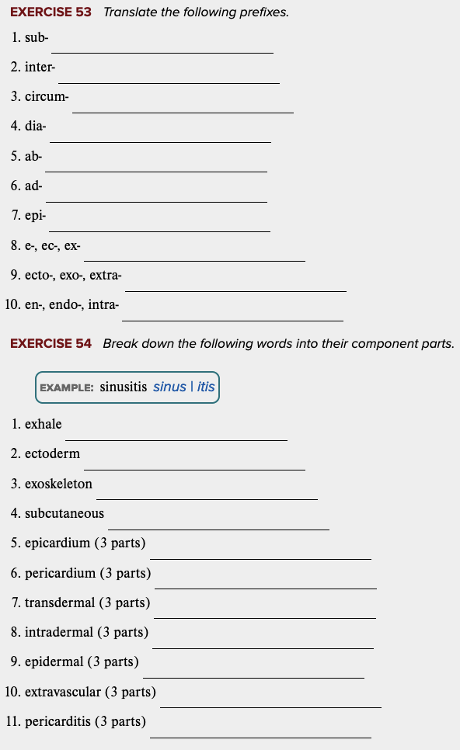 Exercise 52 Exercise 53 Exercise 54 |
front 52 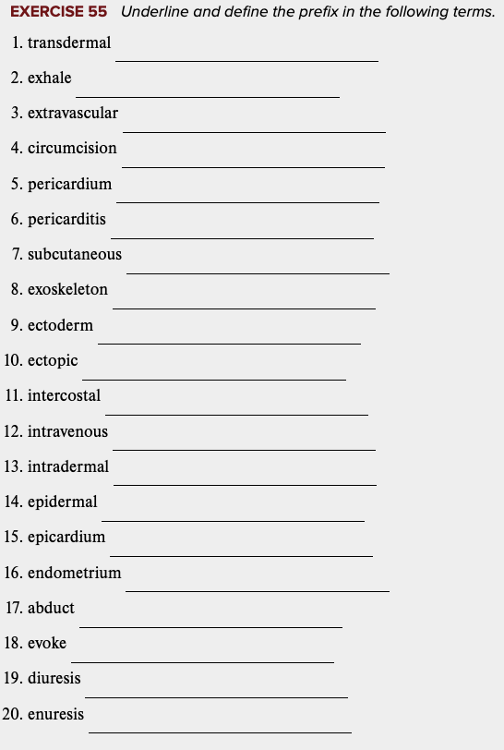 Learning Outcome 1.5 Exercises: Exercise 55, 56, 57. | back 52 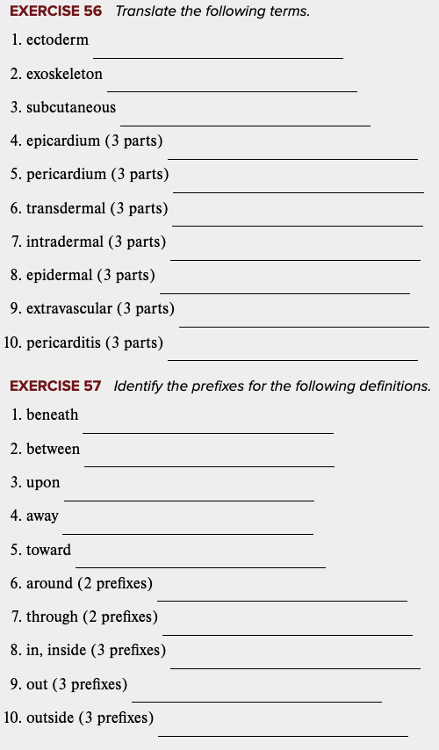 Exercise 55 Exercise 56 Exercise 57 |
front 53 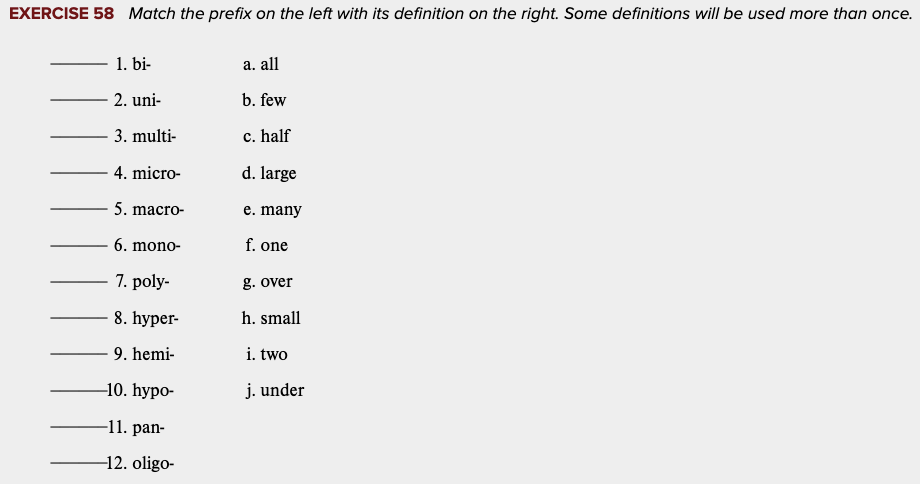 Learning Outcome 1.5 Exercises: Exercise 58, 59, 60. | back 53 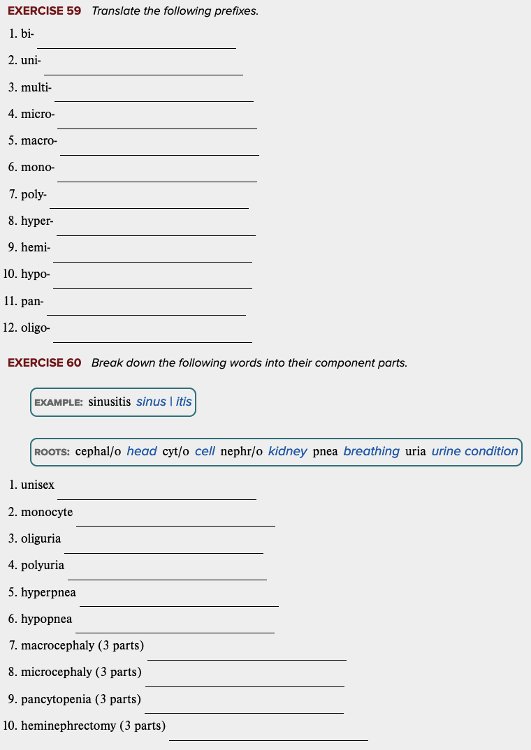 Exercise 58 Exercise 59 Exercise 60 |
front 54 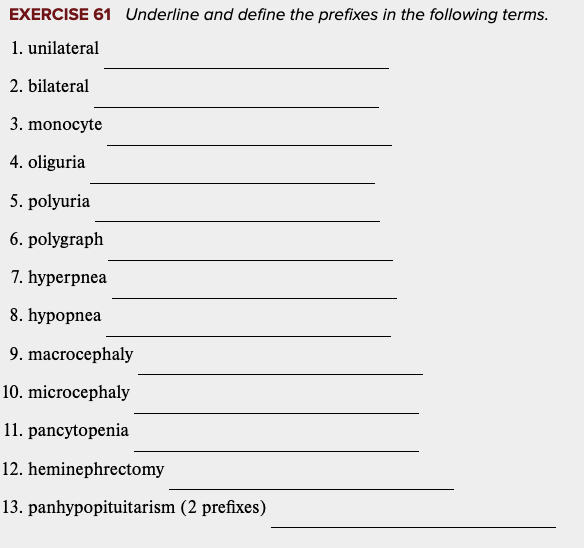 Learning Outcome 1.5 Exercises: Exercise 61, 62, 63. | back 54 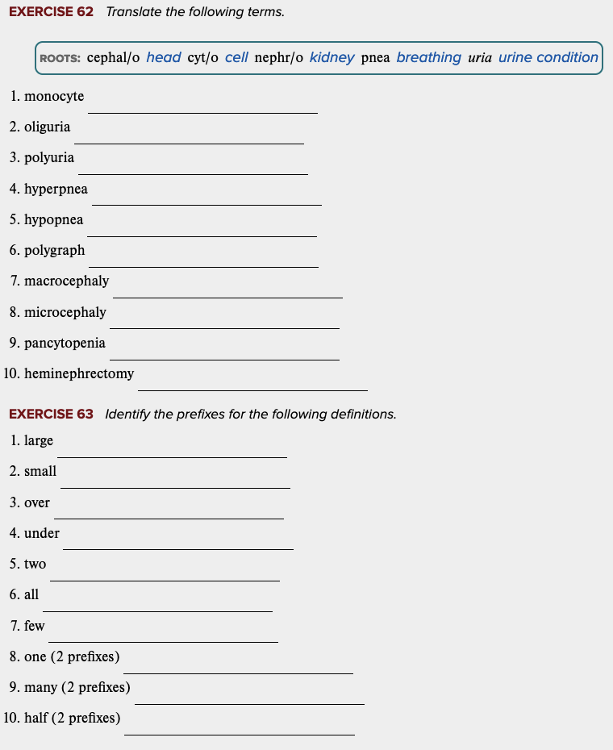 Exercise 61 Exercise 62 Exercise 63 |
front 55 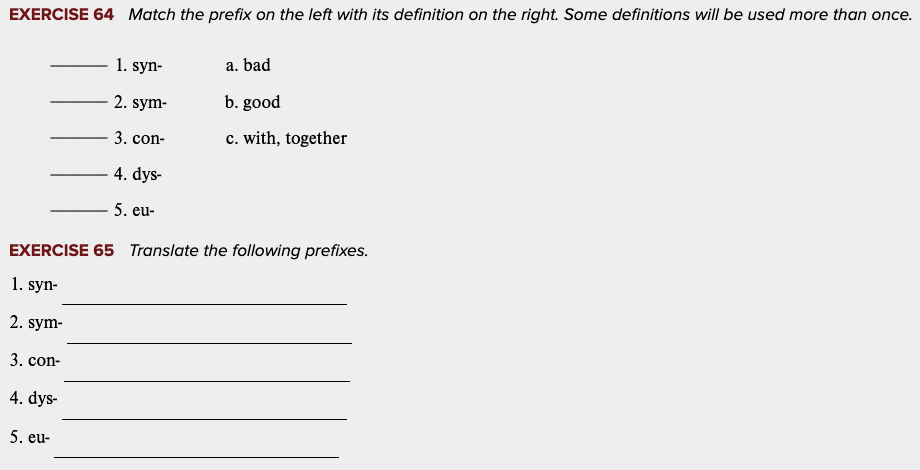 Learning Outcome 1.5 Exercises: Exercise 64, 65, 66. | back 55 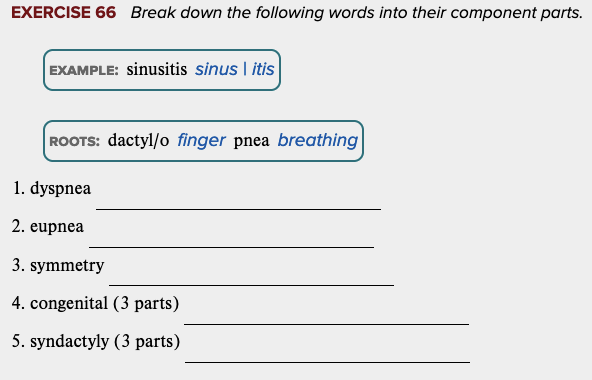 Exercise 64 Exercise 65 Exercise 66 |
front 56 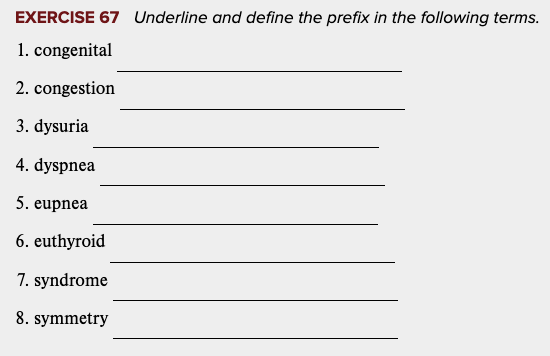 Learning Outcome 1.5 Exercises: Exercise 67, 68, 69. | back 56 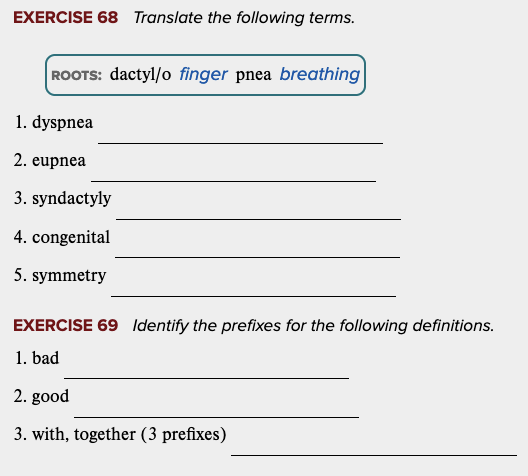 Exercise 67 Exercise 68 Exercise 69 |
front 57 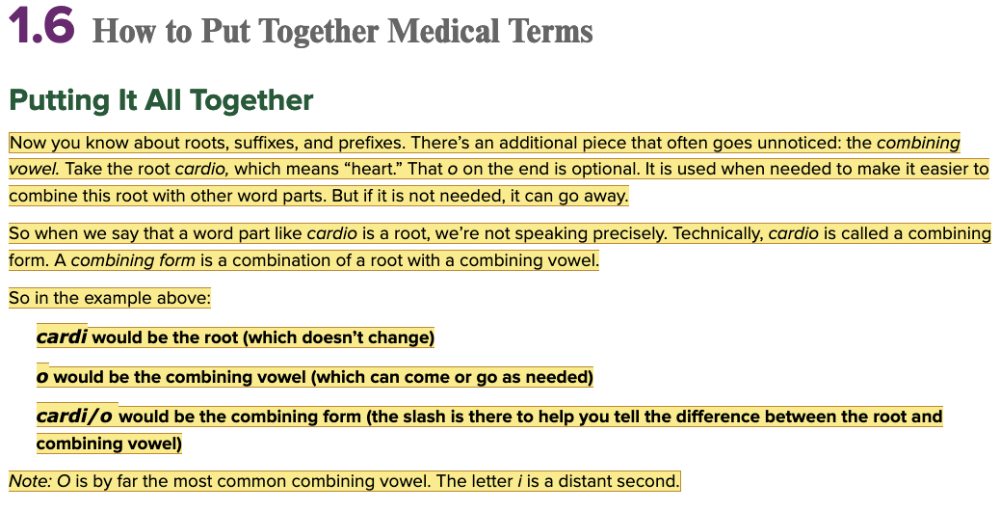 Chapter 1.6 How to Put Together Medical Terms: Putting It All Together - There's an additional piece called the combining vowel. | back 57 no data |
front 58 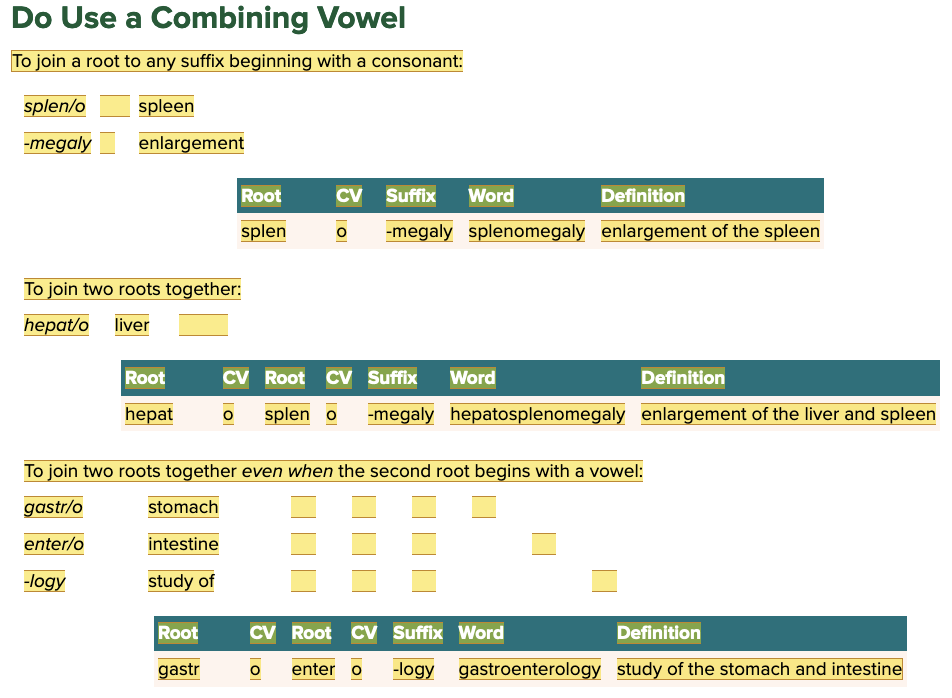 Chapter 1.6 How to Put Together Medical Terms: Do Use a Combining Vowel - To join a root to any suffix beginning with a consonant. | back 58 no data |
front 59 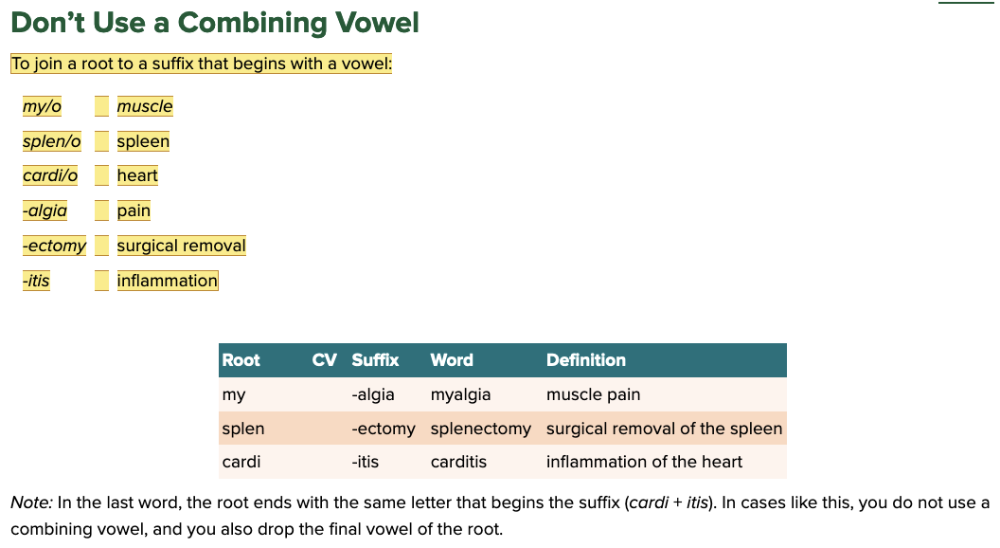 Chapter 1.6 How to Put Together Medical Terms: Don't Use a Combining Vowel - To join a root to a suffix that begins with a vowel. | back 59 no data |
front 60 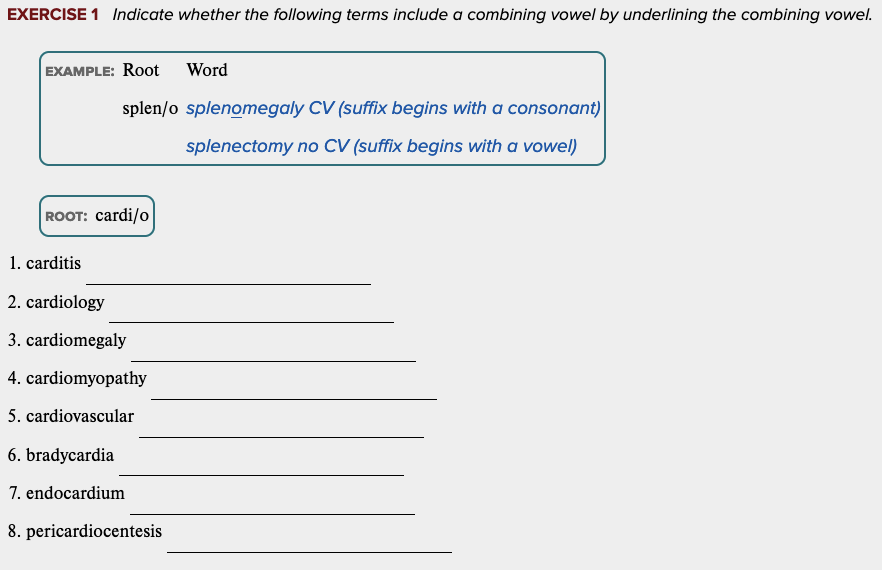 Learning Outcome 1.6 Exercises: Exercise 1 | back 60 no data |
front 61 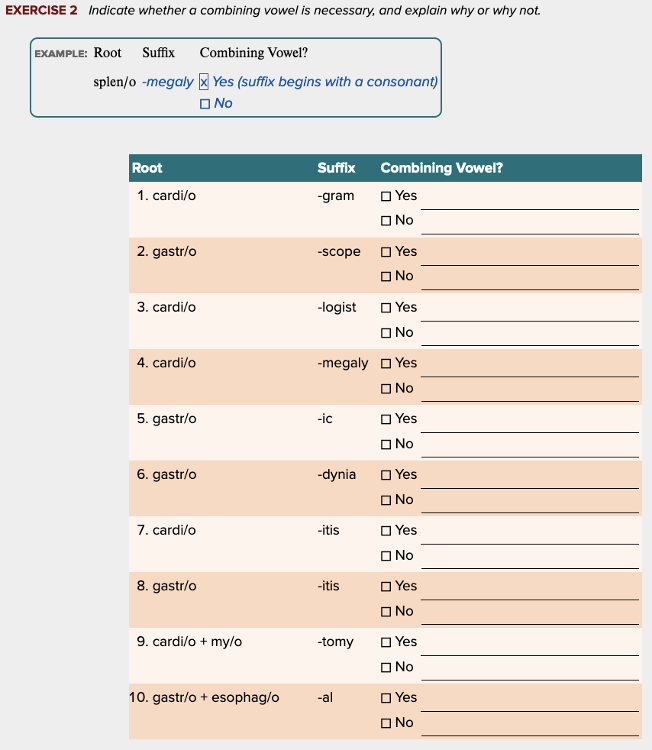 Learning Outcome 1.6 Exercises: Exercise 2 | back 61 no data |
front 62 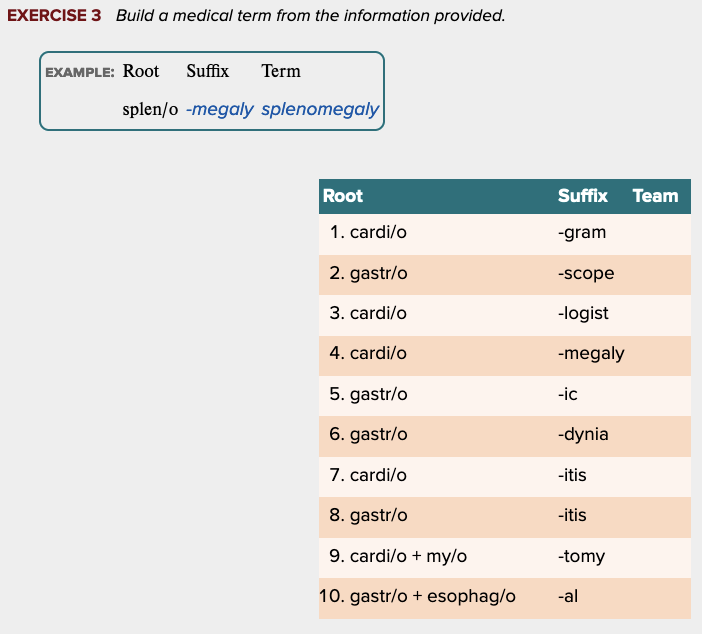 Learning Outcome 1.6 Exercises: Exercise 3 | back 62 no data |
front 63 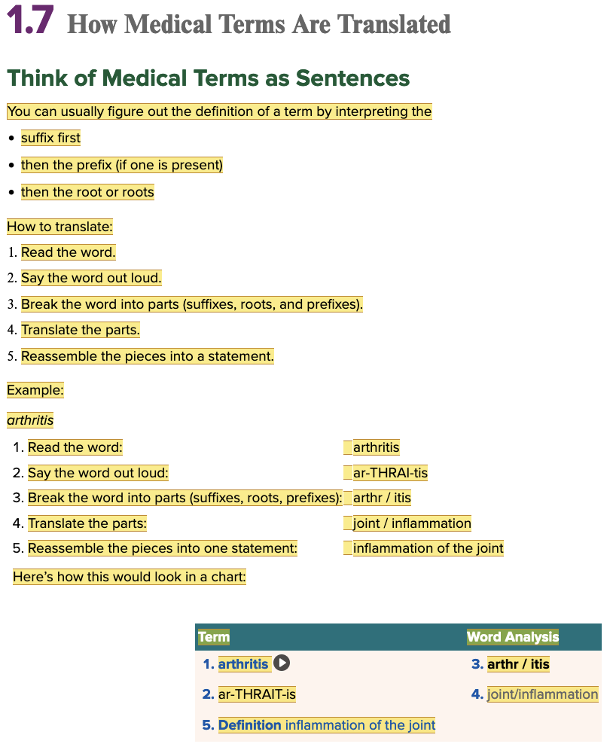 Chapter 1.7 How Medical Terms Are Translated: Think of Medical Terms as Sentences | back 63 no data |
front 64 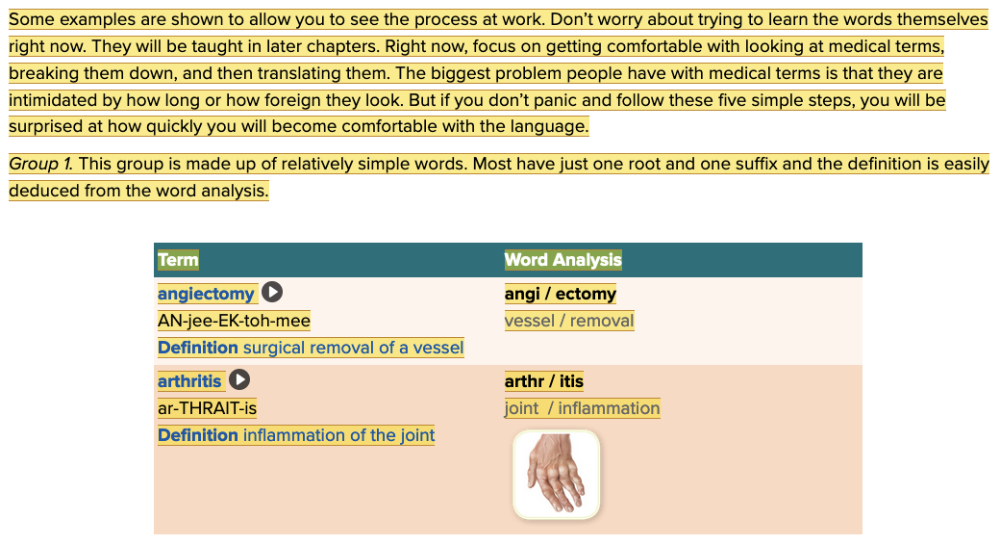 Chapter 1.7 How Medical Terms Are Translated: Think of Medical Terms as Sentences -
| back 64 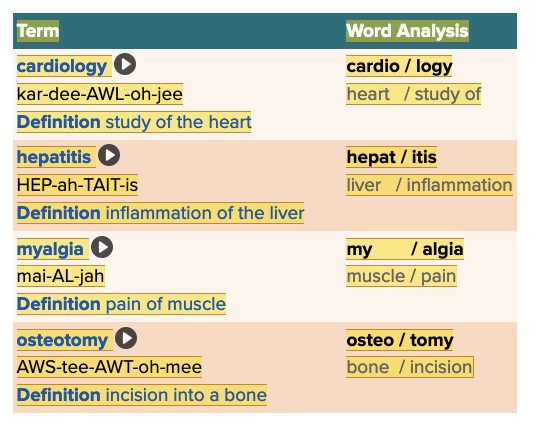 |
front 65 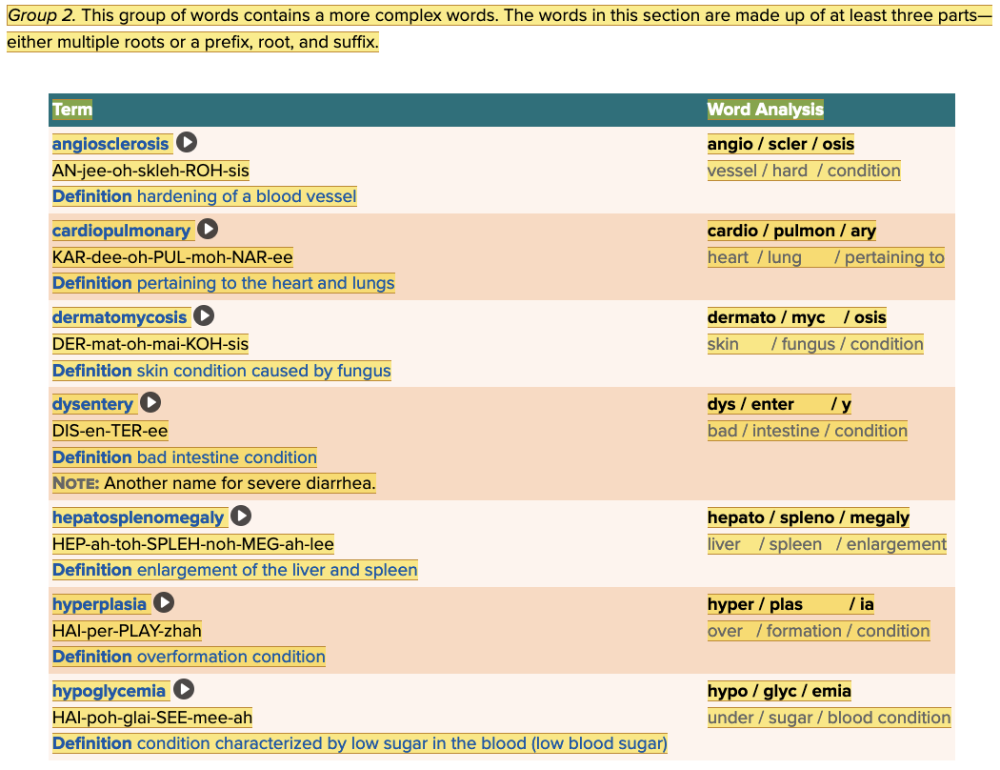 Chapter 1.7 How Medical Terms Are Translated: Think of Medical Terms as Sentences -
| back 65 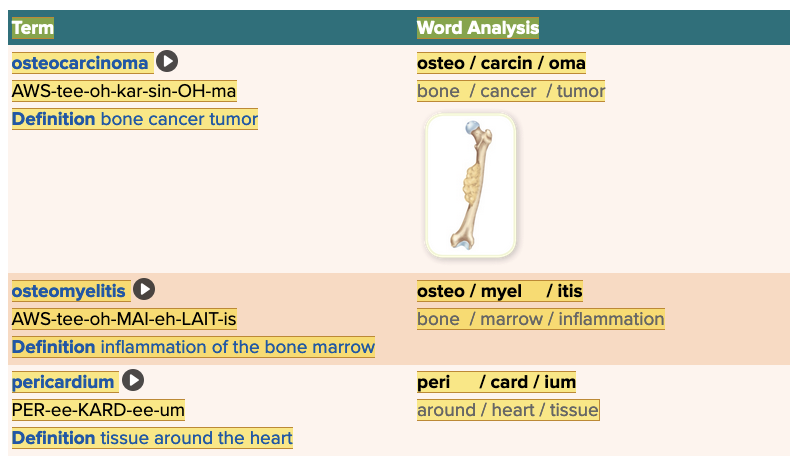 |
front 66 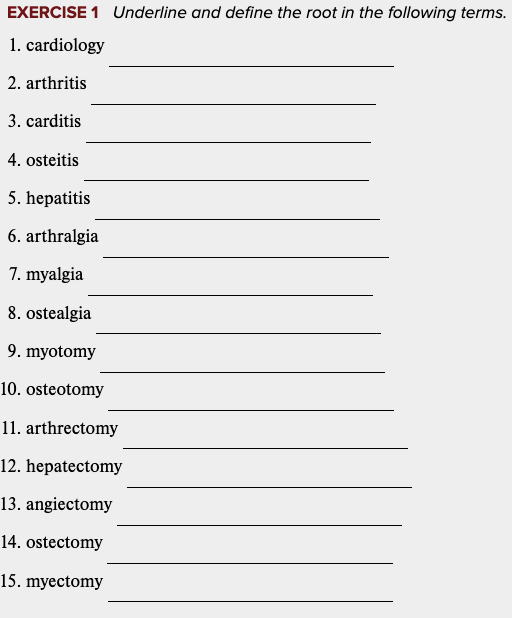 Learning Outcome 1.7 Exercises: Exercise 1 | back 66 no data |
front 67 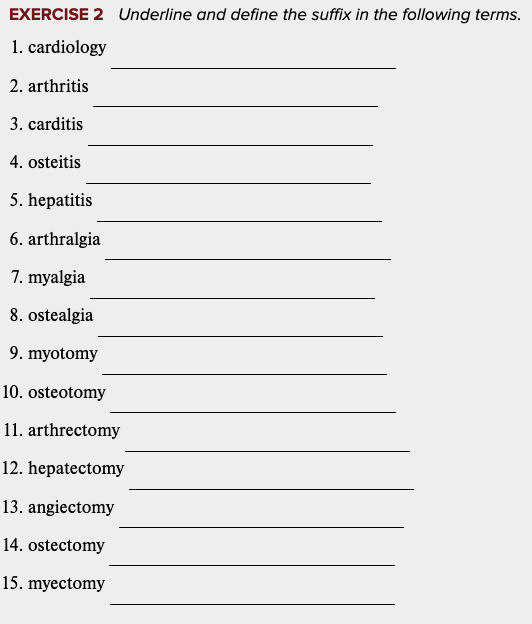 Learning Outcome 1.7 Exercises: Exercise 2 | back 67 no data |
front 68 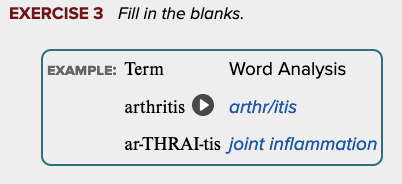 Learning Outcome 1.7 Exercises: Exercise 3 | back 68 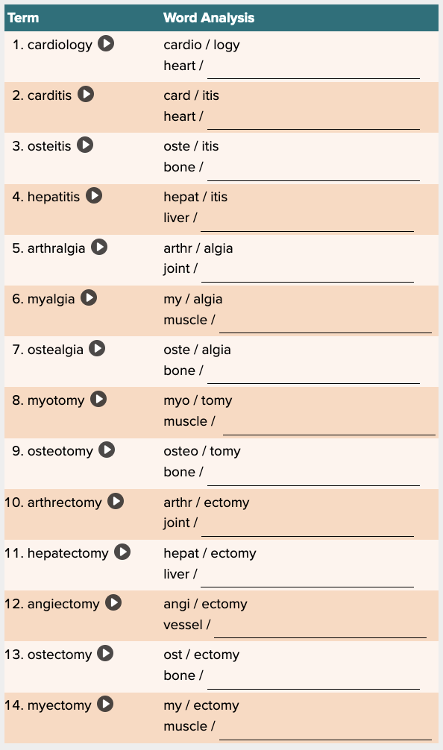 |
front 69 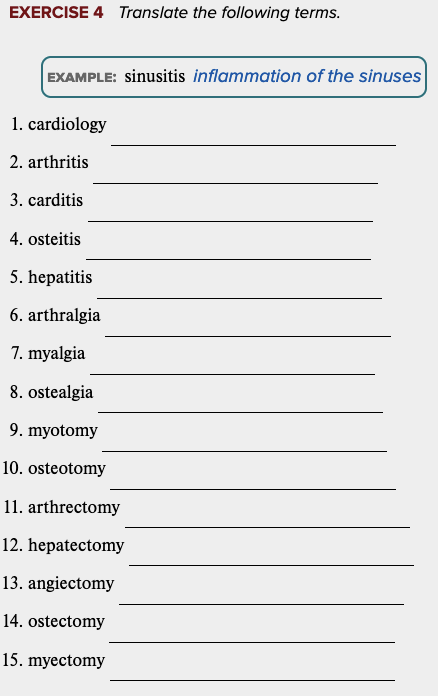 Learning Outcome 1.7 Exercises: Exercise 4 | back 69 no data |
front 70 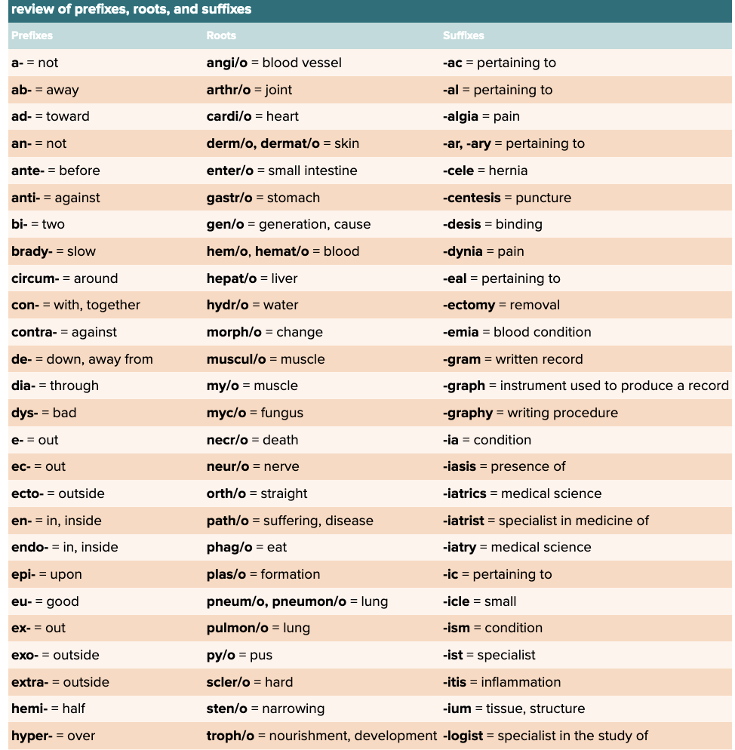 Chapter 1 Review of Prefixes, Roots, and Suffixes. | back 70 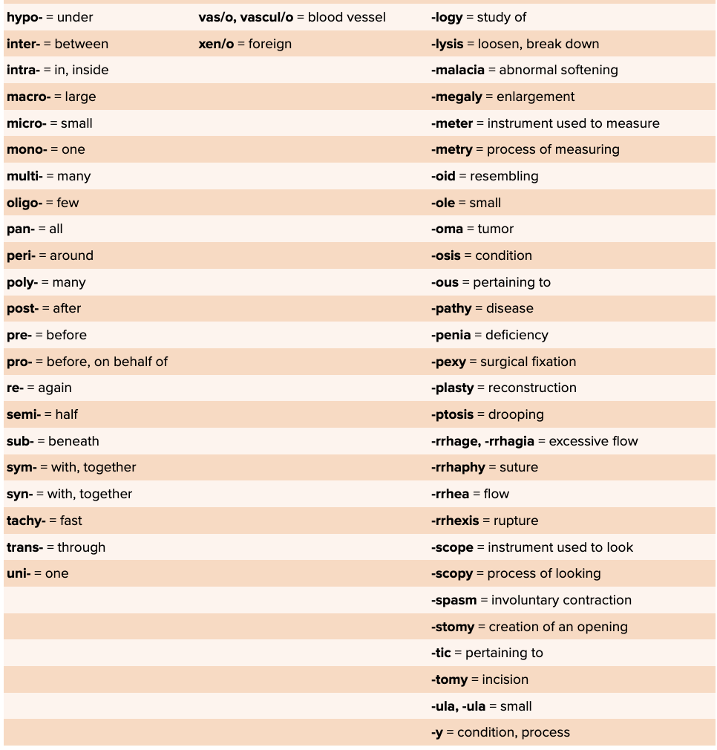 |
front 71 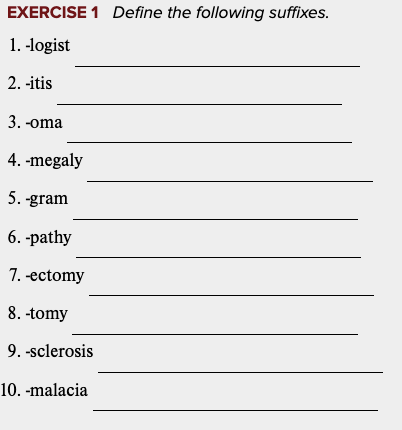 Chapter 1 Review Exercises: Exercise 1 | back 71 no data |
front 72 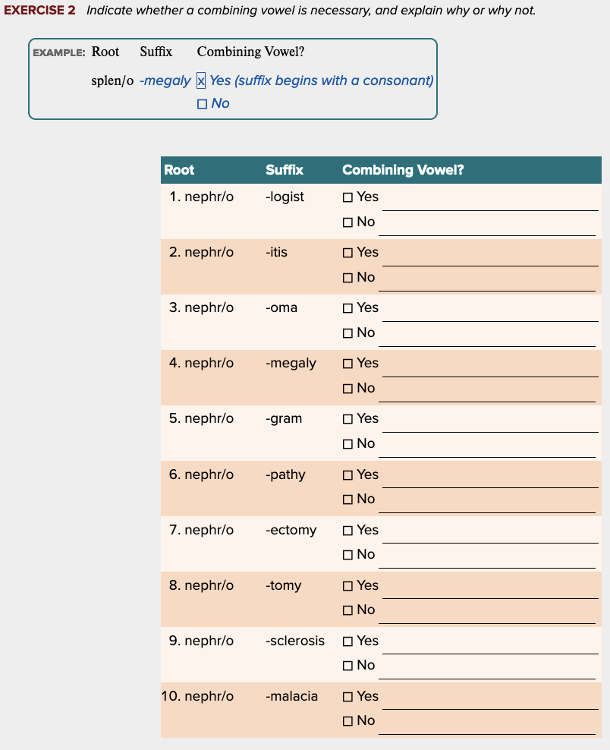 Chapter 1 Review Exercises: Exercise 2 | back 72 no data |
front 73 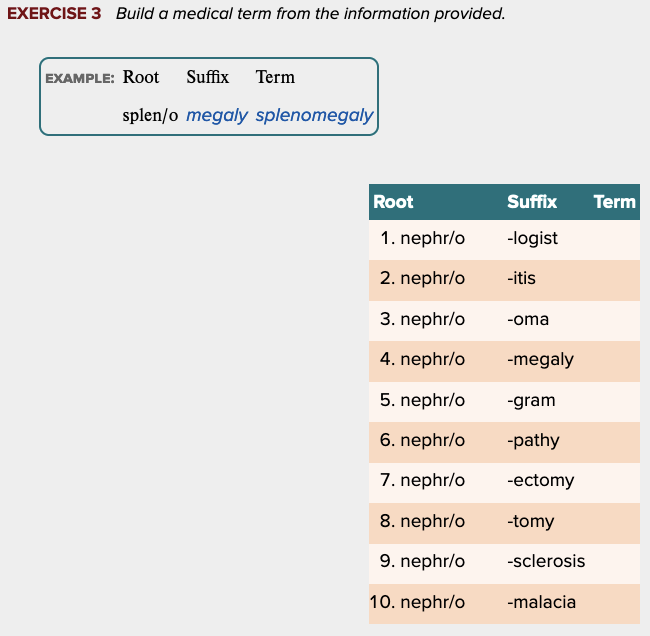 Chapter 1 Review Exercises: Exercise 3 | back 73 no data |
front 74 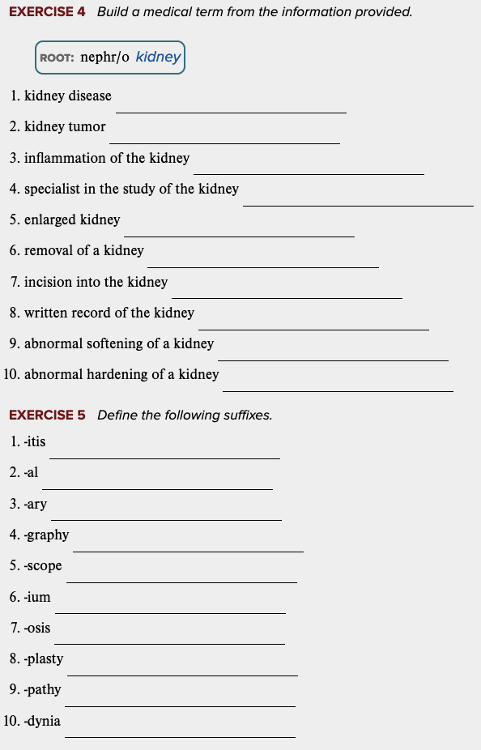 Chapter 1 Review Exercises: Exercise 4, 5 | back 74 no data |
front 75 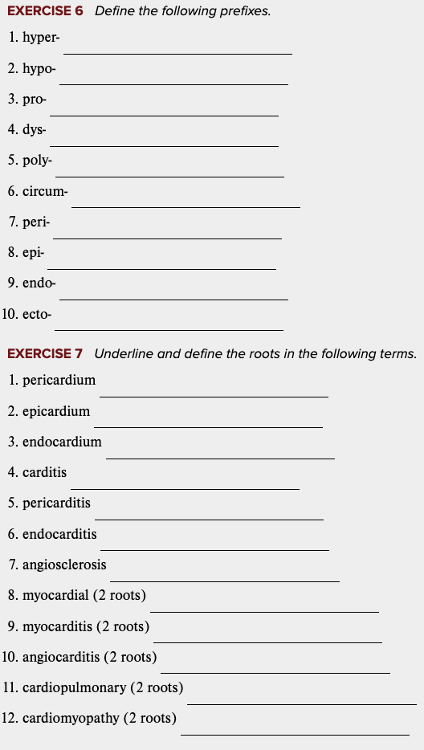 Chapter 1 Review Exercises: Exercise 6, 7 | back 75 no data |
front 76 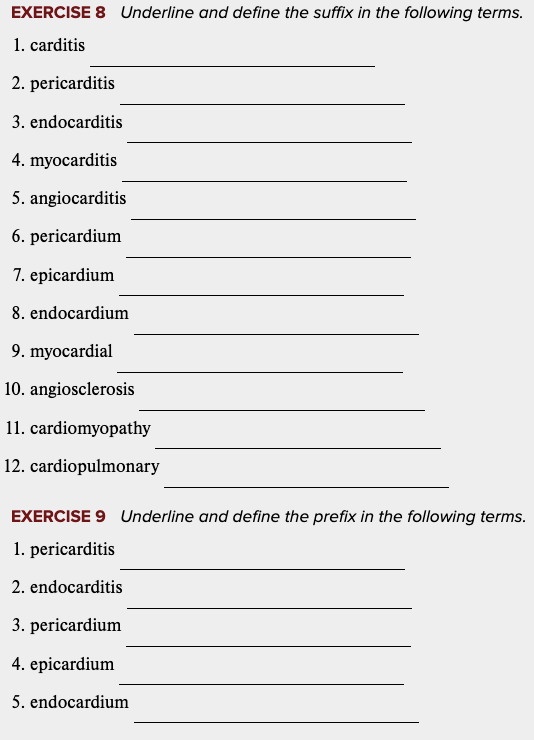 Chapter 1 Review Exercises: Exercise 8, 9 | back 76 no data |
front 77 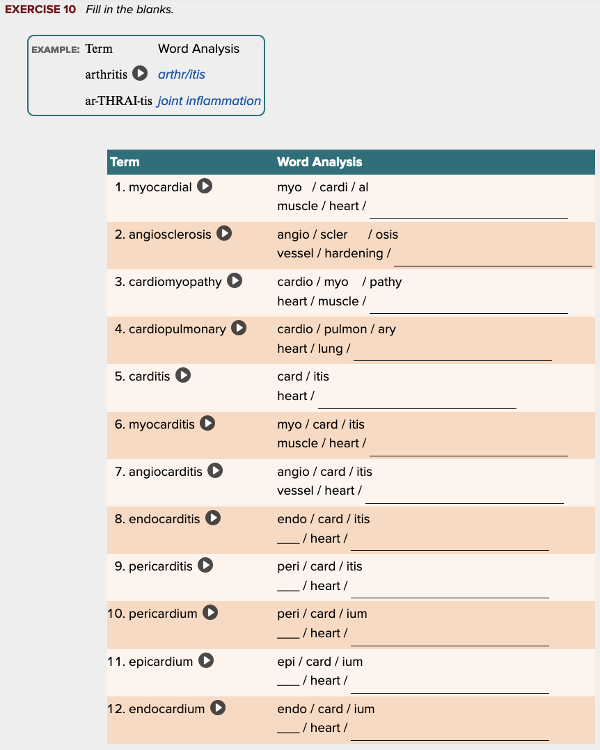 Chapter 1 Review Exercises: Exercise 10 | back 77 no data |
front 78 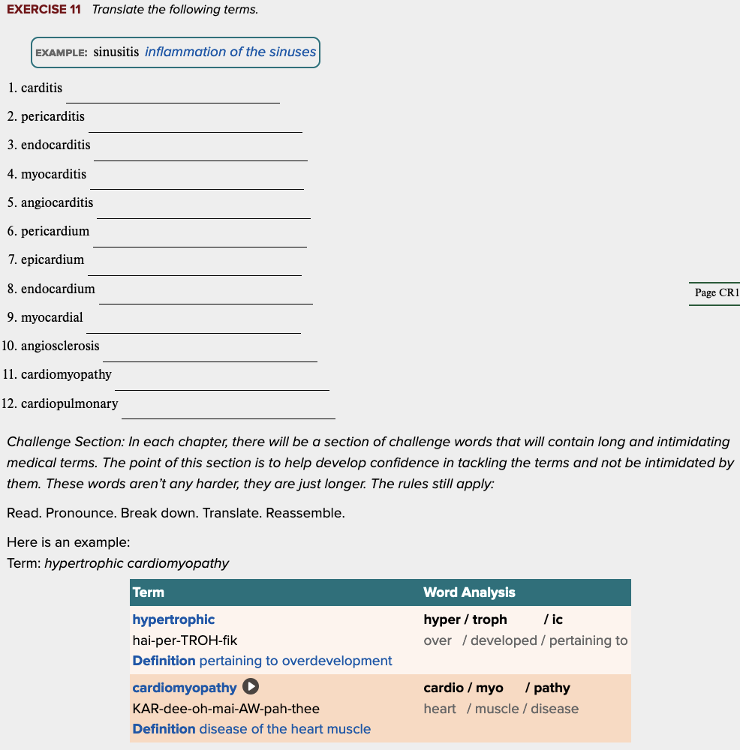 Chapter 1 Review Exercises: Exercise 11 | back 78 no data |
front 79 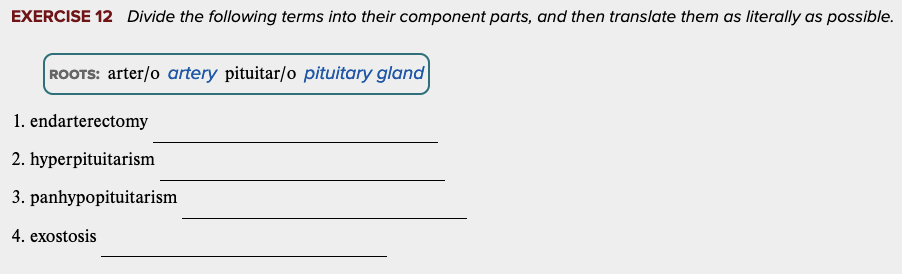 Chapter 1 Review Exercises: Exercise 12 | back 79 no data |
front 80 Medical language allows health care professionals to communicate quickly because ______. Multiple choice question.
| back 80 it uses a common understanding of the terms |
front 81 Medical language is comprised primarily of words from the Latin and ______ languages. Fill in the Blank Question. | back 81 Greek |
front 82 A word formed by using the name of the person who discovered or invented what is being described is a(n) ______. Multiple choice question.
| back 82 eponym |
front 83 The word acronym is derived from the Greek words "acro-" meaning "high, end" and "onyma" meaning ______. | back 83 name |
front 84 The first people to study the human body and develop theories about health and disease were the ancient ______. | back 84 Greeks |
front 85 Which of the following is true of medical language? Multiple select question.
| back 85
|
front 86 Medical language is primarily made up of words taken from how many ancient languages? Multiple choice question.
| back 86 Two |
front 87 In what centuries did the scientific revolution occur? Multiple select question.
| back 87
Occurred through the sixteenth to eighteenth century. |
front 88 An eponym is formed by using the inventor's or discoverer's Multiple choice question.
| back 88 name. |
front 89 You should not think of medical language as words to be memorized. Instead, think of it as sentences to be ______. | back 89 translated |
front 90 A word made up of the first letters of each of the words that make up a phrase is a(n) ______. Multiple choice question.
| back 90 acronym |
front 91 The letter "G" is pronounced like a "J" when followed by which vowels? Multiple select question.
| back 91
|
front 92 The foundations of western medicine were from which ancient areas? Multiple select question.
| back 92
|
front 93 The syllables in the word "colonoscopy" are co / lon/ o/ sco/ py. The syllable that is the ultima is ______. | back 93 py, last, or pee |
front 94 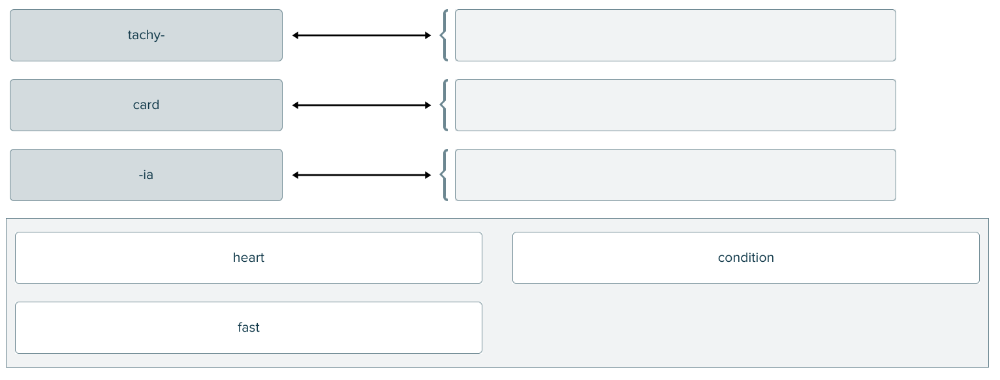 Match the word parts of the term "tachycardia" with their meanings. | back 94 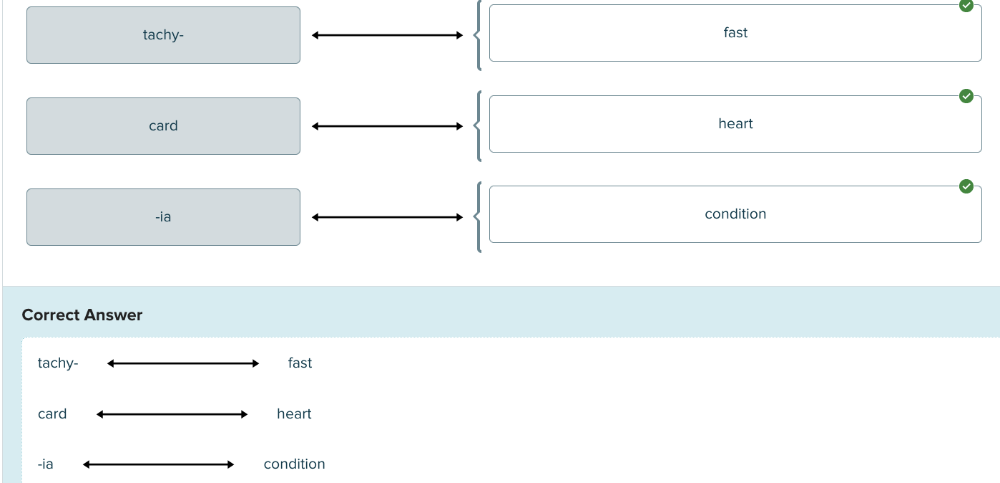 |
front 95 The most important thing to do in order to master the pronunciation of medical words is Blank______. Multiple choice question.
| back 95 practice saying them out loud |
front 96 Which of the following was the global language of the scientific revolution? Multiple choice question.
| back 96 Latin |
front 97 The type of word part at the end of the word that gives essential meaning to the term is the ______. | back 97 suffix |
front 98 Which of the following are true about understanding how medical language works? Multiple select question.
| back 98
|
front 99 A prefix is found ______ of a word. Multiple choice question.
| back 99 at the beginning |
front 100 The letters "ph" are pronounced as the letter ______. | back 100 f |
front 101 The roots that mean "vessel" are vascul/o or ______. Multiple choice question.
| back 101 angi/o |
front 102 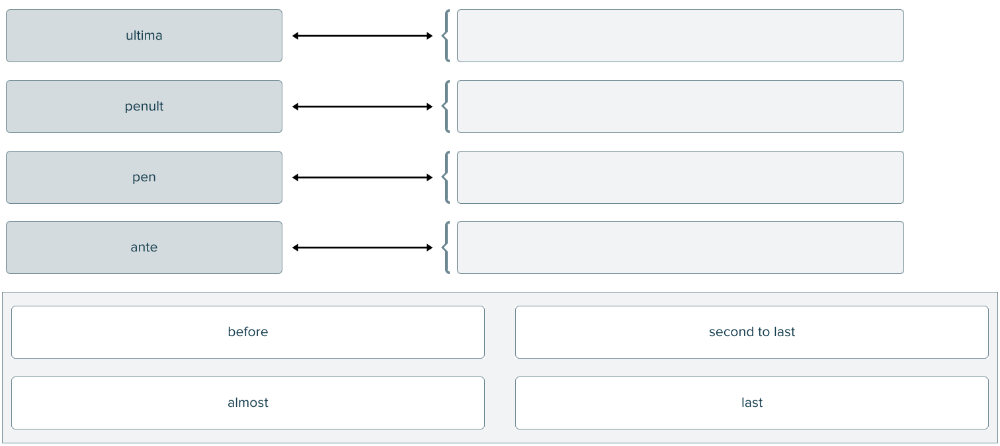 Match the terms related to syllables with their meanings. | back 102 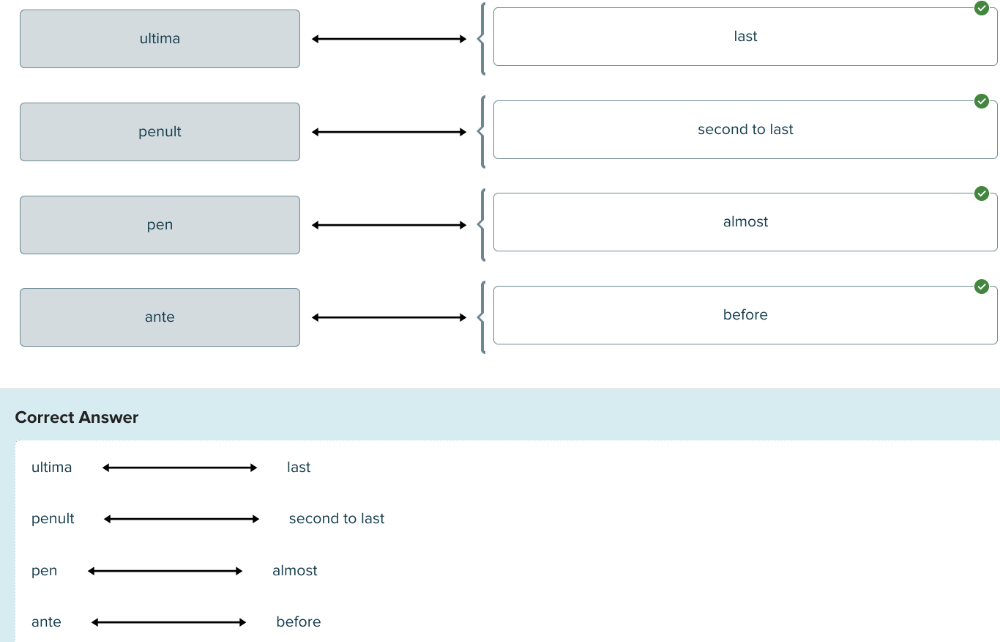 |
front 103 The word "colonoscope" has four syllables. Deconstruct the word by separating the syllables with hyphens. ______. | back 103 co-lon-o-scope |
front 104 The part added to the beginning of a term is the Multiple choice question.
| back 104 prefix. |
front 105 The root in the term "dermatitis" means ______. | back 105 skin |
front 106 Which of the following create the foundation or subject of medical terms? Multiple select question.
| back 106
|
front 107 Both of the combining forms "pneum/o-" and "pulmon/o-" refer to the ______. | back 107 lung or lungs |
front 108 The root "orth/o-" means ______. | back 108 straight |
front 109 When deciding how to pronounce a word, the emphasis usually falls on the ______. Multiple choice question.
| back 109 antepenult |
front 110 Which of the following suffixes means "small"? Multiple choice question.
| back 110 -ole |
front 111 The word "cardiology" has five syllables. Deconstruct the word by separating the syllables with hyphens. ______-______-______-______-______-______-______-______-______. | back 111 Blank 1: car Blank 2: - or / Blank 3: di Blank 4: - or / Blank 5: o Blank 6: - or / Blank 7: lo Blank 8: - or / Blank 9: gy |
front 112 The suffix "-iatrist" is an example of which type of suffix? Multiple choice question.
| back 112 Complex |
front 113 Which is the root in the term "subcutaneous"? Multiple choice question.
| back 113 Cutane/o |
front 114 The suffix "-logy" means Multiple choice question.
| back 114 study of. |
front 115 A ______ is the ending of a medical word that gives essential meaning to the term. | back 115 Blank 1: suffix |
front 116 The suffix "-megaly" means Multiple choice question.
| back 116 enlargement. |
front 117 The root "myc/o-" means Multiple choice question.
| back 117 fungus. |
front 118 The suffix that means "instrument used to produce a record" is Multiple choice question.
| back 118 -graph. |
front 119 Which of the following suffixes mean "pertaining to"? Multiple select question.
| back 119
|
front 120 In the word "appendectomy", the suffix "-ectomy" means ______. | back 120 Blank 1: removal or cutout |
front 121 Which of the following is true about complex suffixes? Multiple choice question.
| back 121 They have more parts. |
front 122 Which of the following medical terms are singular? Multiple select question.
| back 122
|
front 123 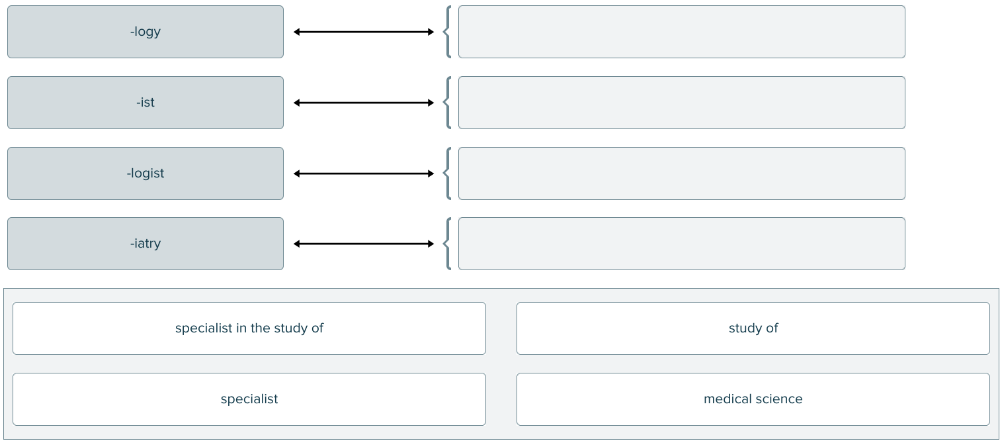 Match each of the suffixes with the correct definition. | back 123 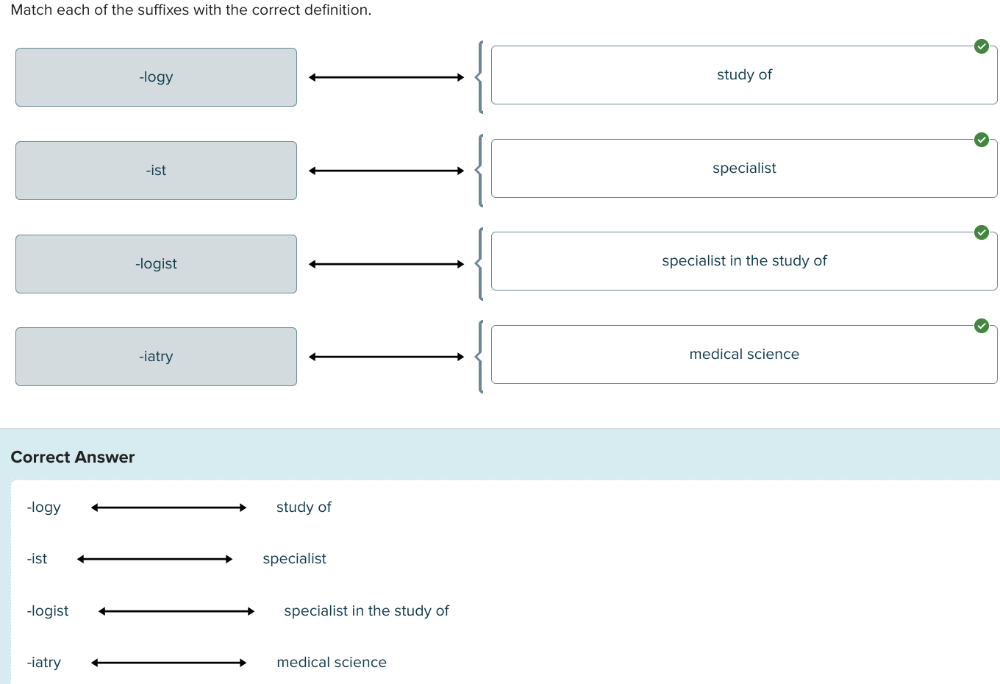 |
front 124 The prefixes "anti-" and "contra-" mean ______. | back 124 Blank 1: against |
front 125 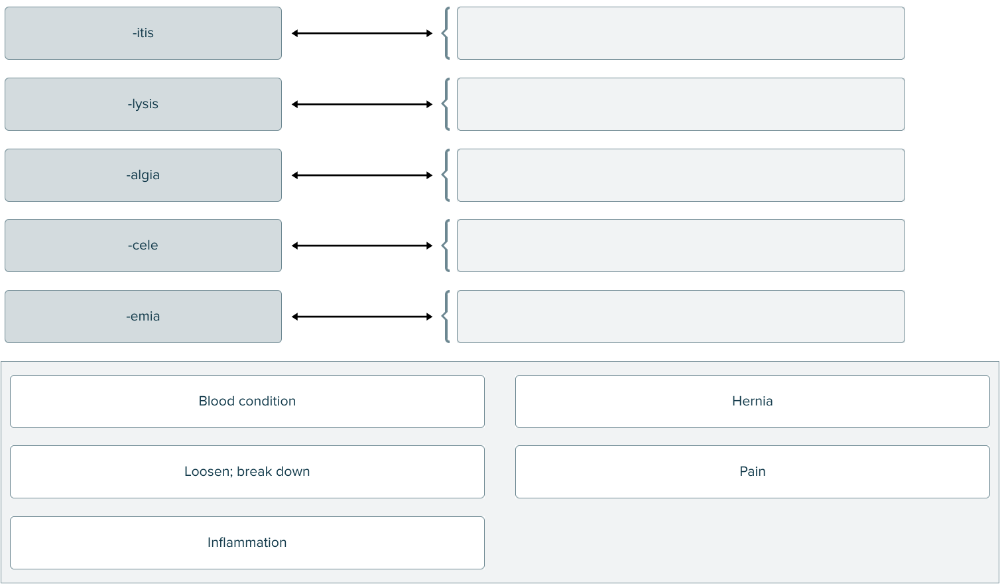 Match the suffix with the meaning. | back 125 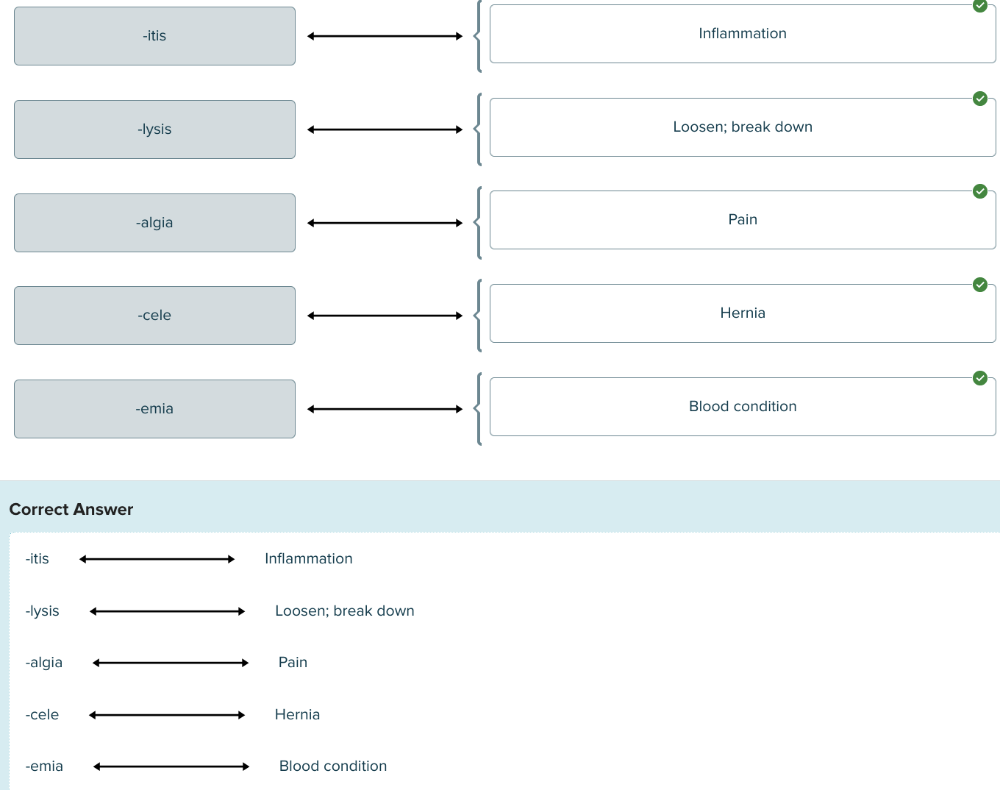 |
front 126 A patient with bradycardia has a ______ heartbeat. Multiple choice question.
| back 126 slow |
front 127 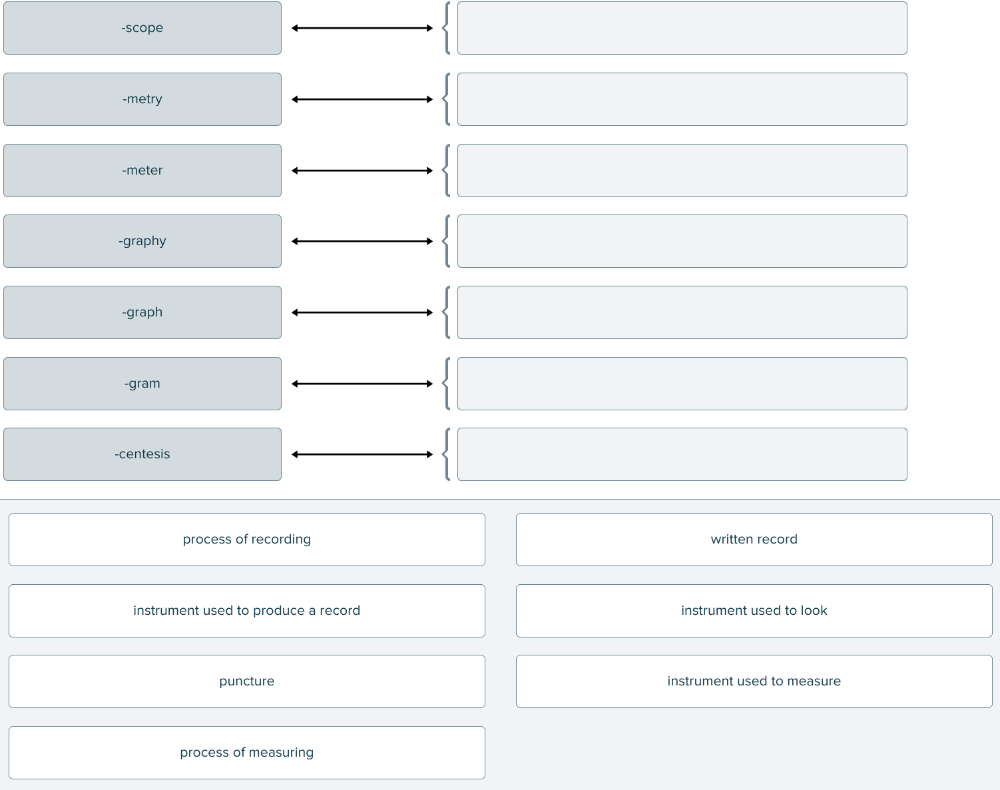 Match each test suffix with the correct definition. | back 127 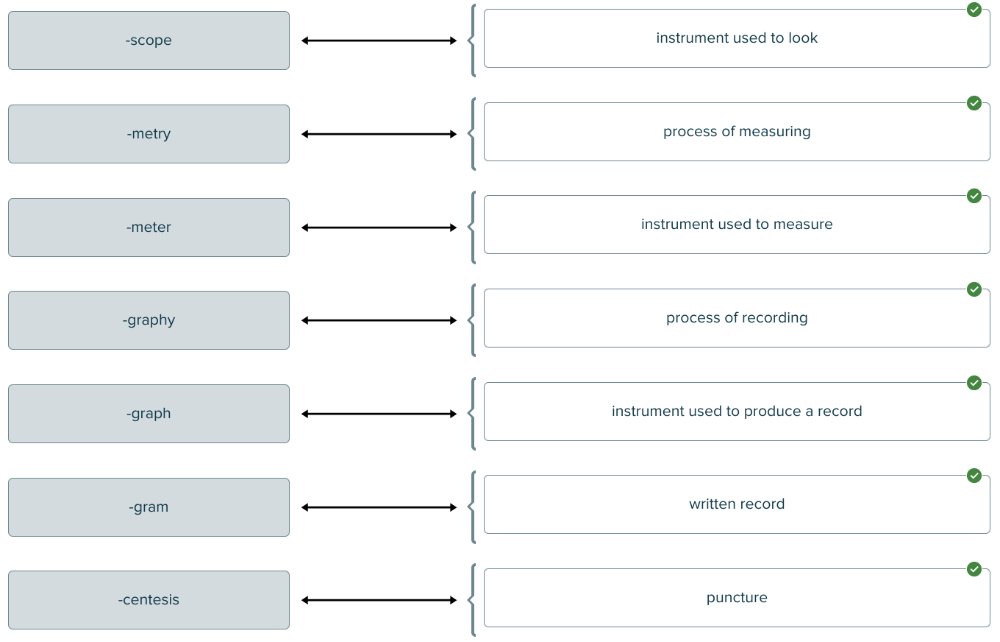 |
front 128 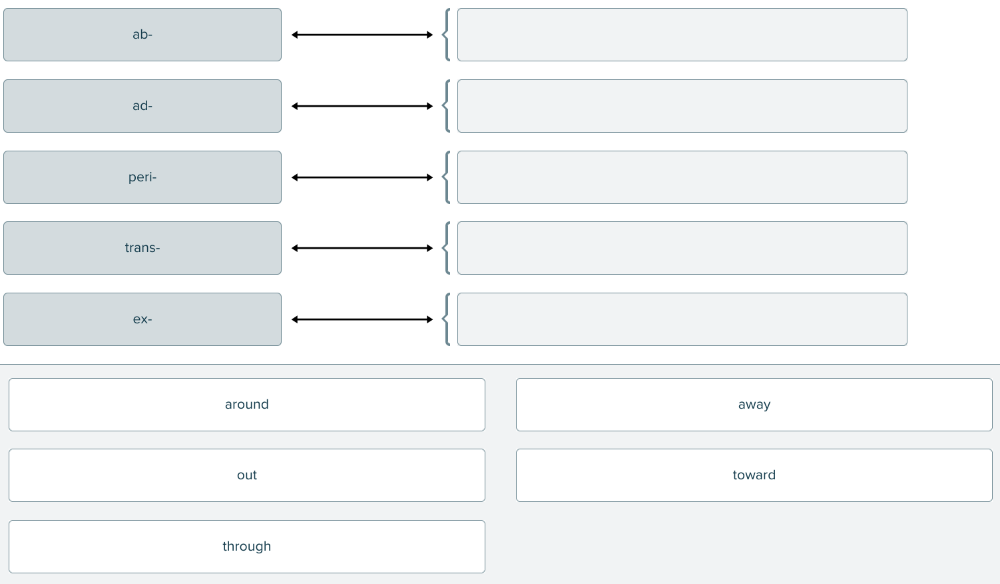 Match each prefix about direction or position with the correct definition. | back 128 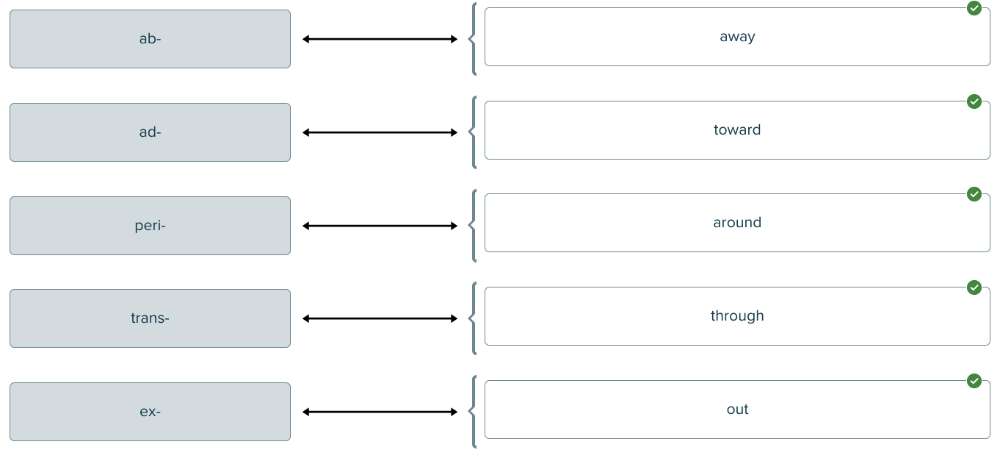 |
front 129 Deconstruct the word "rhinoplasty" by separating the combining form and the suffix with a hyphen. ______. | back 129 Blank 1: rhino-plasty |
front 130 The plural form of the word "ganglion" is Multiple choice question.
| back 130 ganglia |
front 131 Which of the following prefixes means "not"? Multiple select question.
| back 131
|
front 132 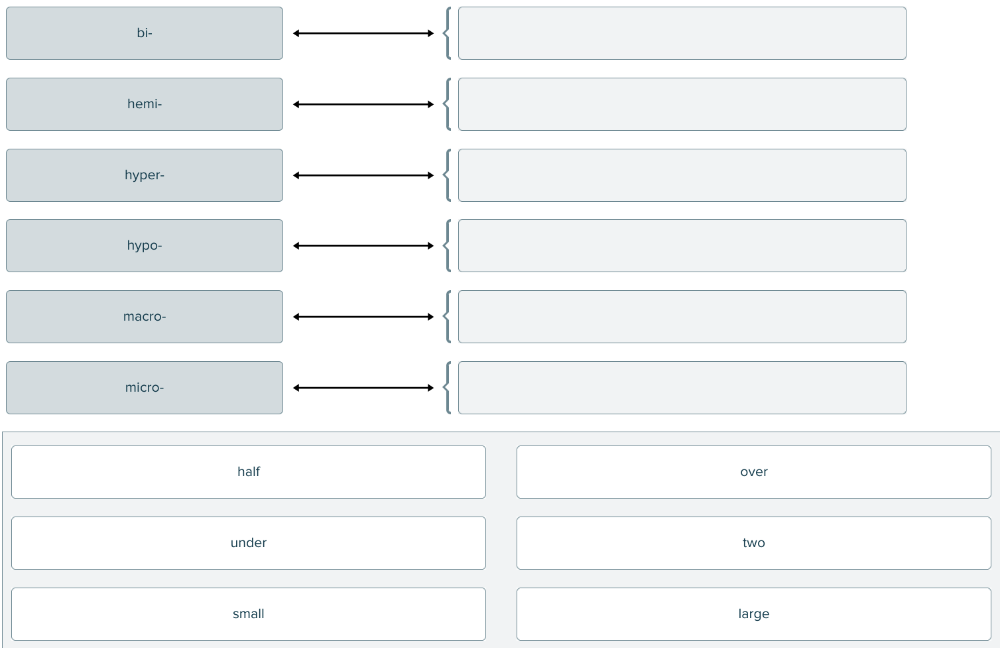 Match each size or quantity prefix with the correct definition. | back 132 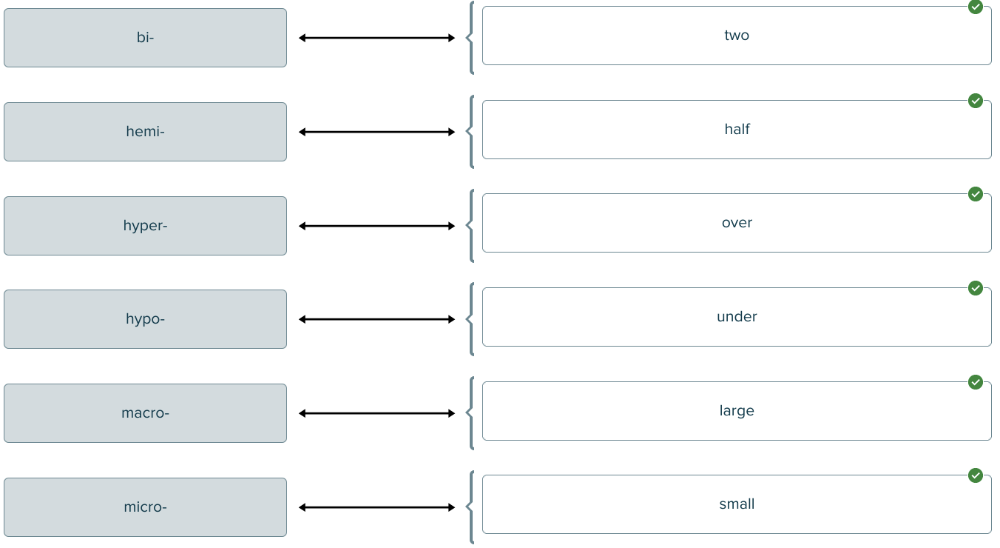 |
front 133 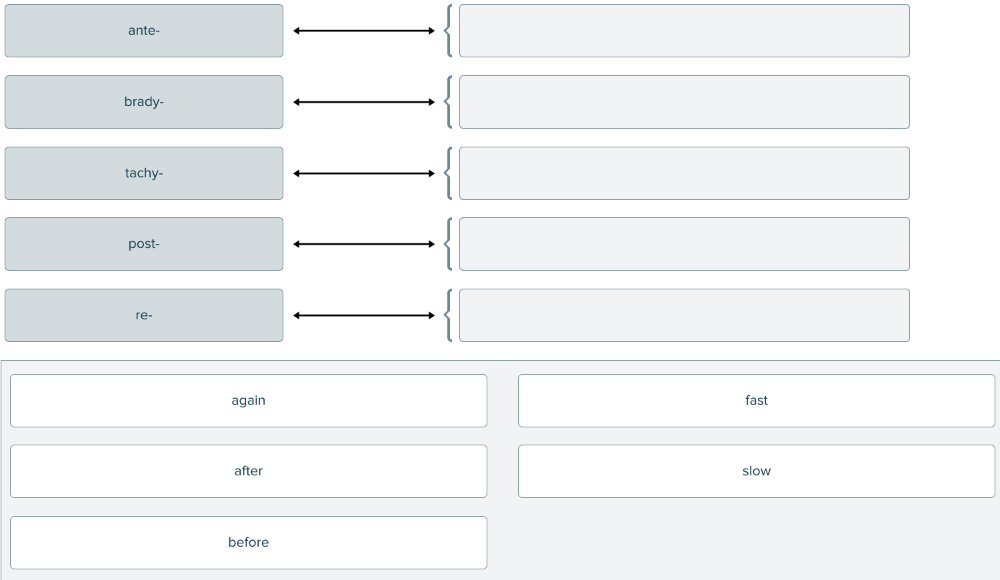 Match each prefix related to time or speed with the correct definition. | back 133 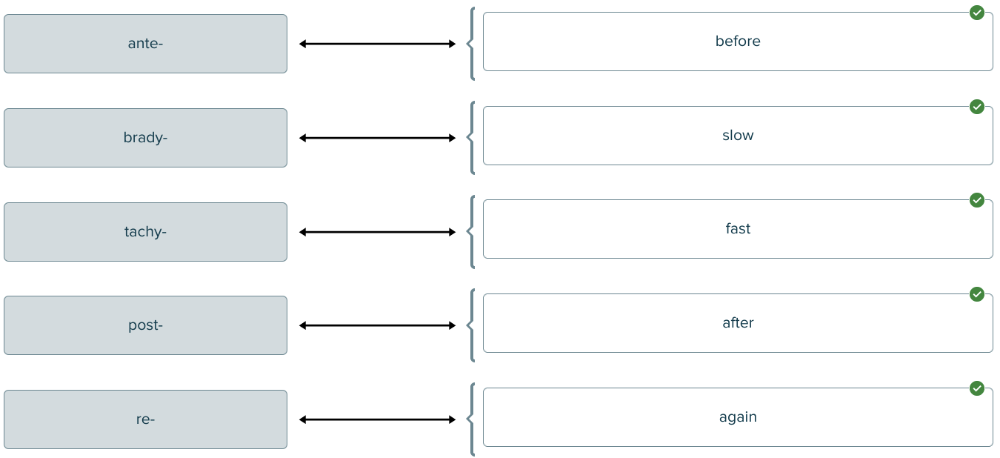 |
front 134 Which of the following prefixes mean "with" or "together"? Multiple select question.
| back 134
|
front 135 Which of the following prefixes mean "around"? Multiple select question.
| back 135
|
front 136 The combining vowel is found at the end of the ______. Multiple choice question.
| back 136 root |
front 137 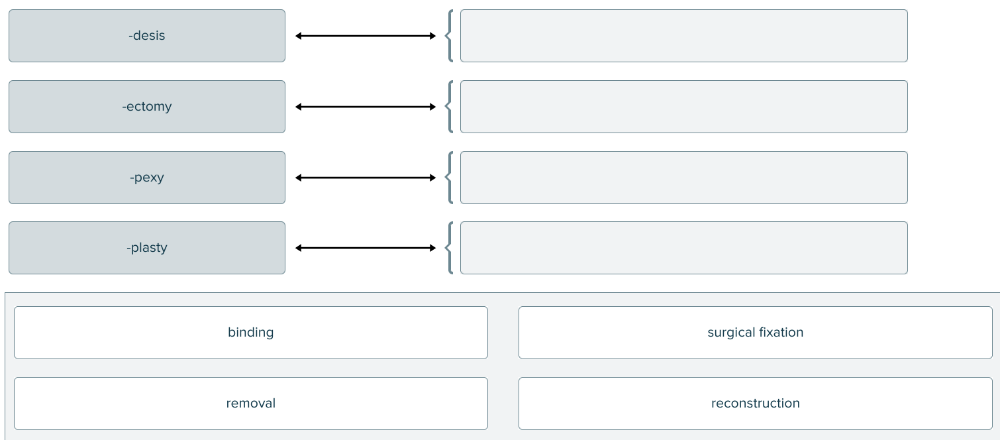 Match the treatment suffix with the correct definition. | back 137 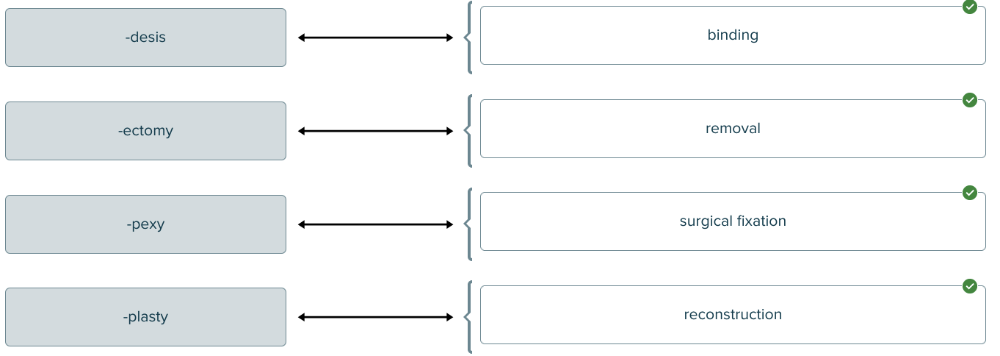 |
front 138 Which of the following medical terms are plurals? Multiple select question.
| back 138
|
front 139 The two word parts in the word "monocyte" mean "______" and "cell." | back 139 Blank 1: one or single |
front 140 In the word gastroenterology, the two combining forms mean Blank______. Multiple select question.
| back 140
|
front 141 Which of the following prefixes mean "with" or "together"? Multiple select question.
| back 141
|
front 142 A combining vowel is NOT used when connecting a root to which of the following suffixes? Multiple choice question.
| back 142 -ectomy |
front 143 A combining form is a combination of a __ with a combining vowel. Multiple choice question.
| back 143 root |
front 144 In the word "arthritis," the suffix means ______. | back 144 Blank 1: inflammation |
front 145 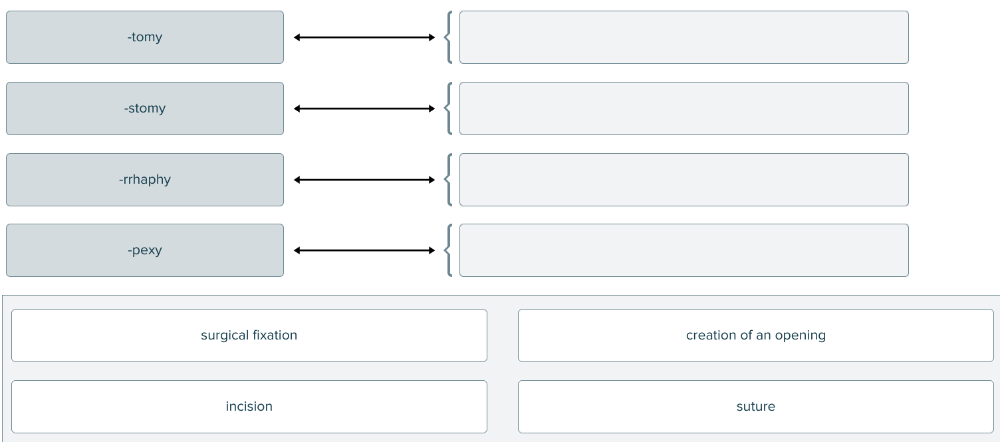 Match the correct definition to the suffix for treatments. | back 145 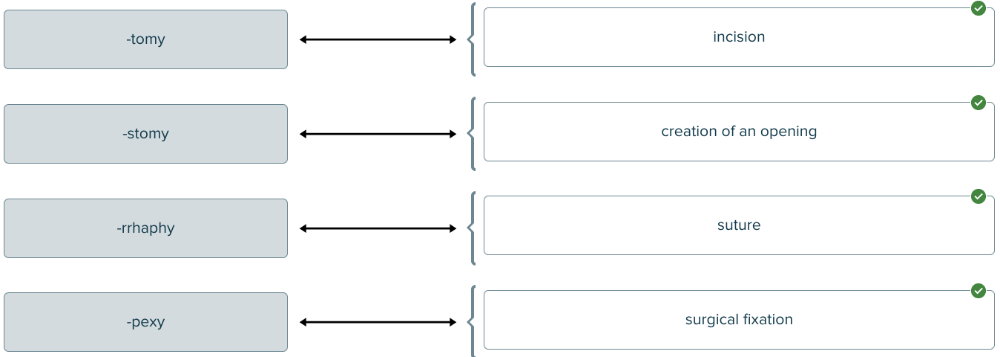 |
front 146 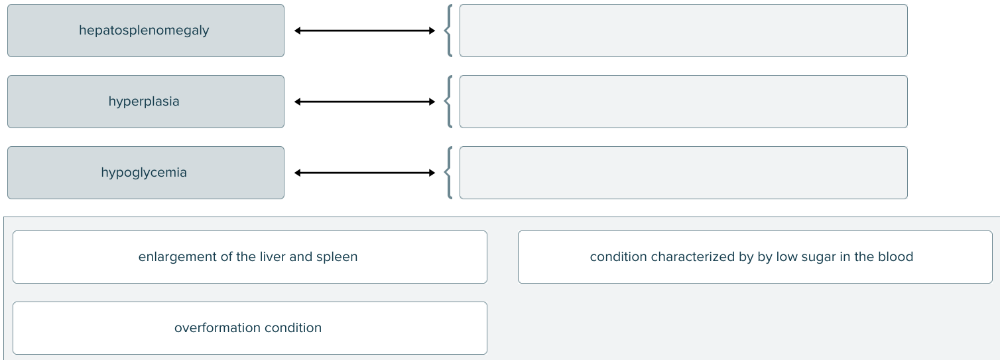 Match the medical term to the definition. | back 146 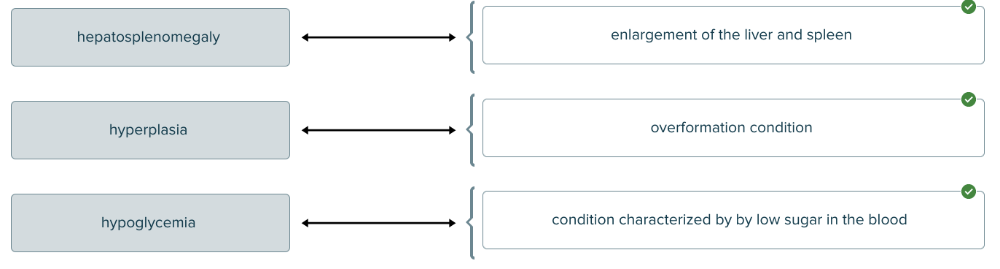 |
front 147 The plural form of the word "ganglion" is Multiple choice question.
| back 147 ganglia |
front 148 When is a combining vowel used? Multiple select question.
| back 148
|
front 149 When is a combining vowel NOT used? Multiple choice question.
| back 149 To join a root to a suffix that begins with a vowel. |
front 150 Deconstruct the word "myalgia". Enter hyphens or slashes in the appropriate blanks. ______ ______ ______. | back 150 Blank 1: my Blank 2: - or / Blank 3: algia |
front 151 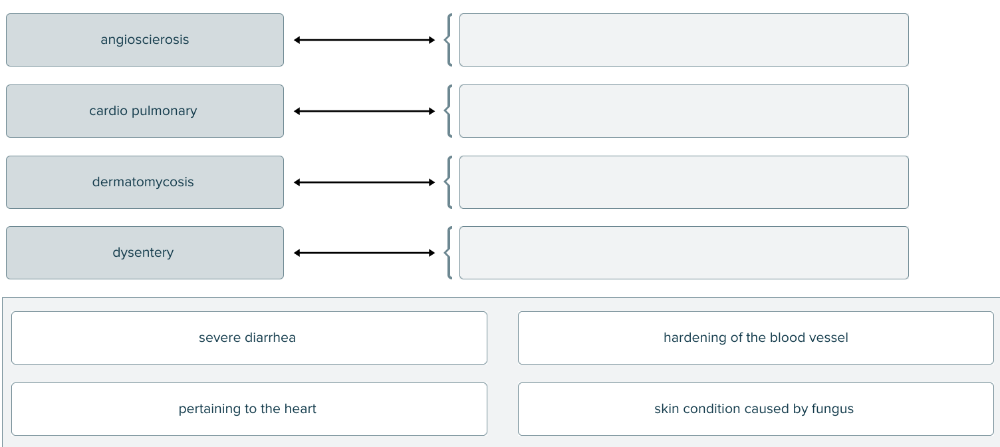 Match the general term condition to the definition. | back 151 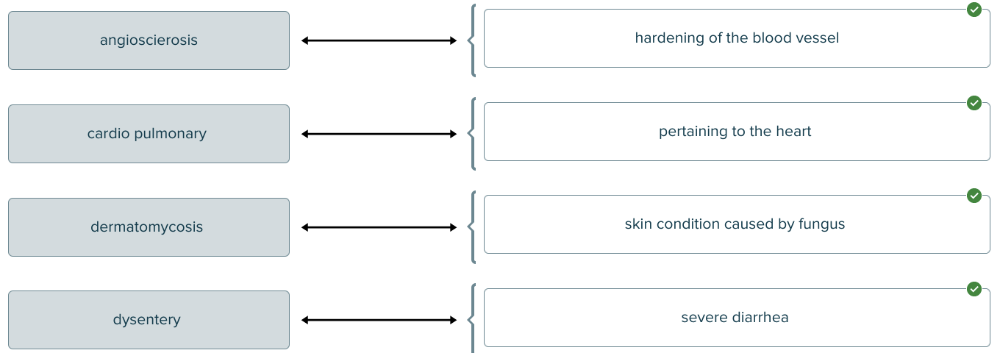 |
front 152 The combining form in the word "hepatomegaly" means ______. | back 152 Blank 1: liver |
front 153 A combining vowel is used when joining a root with which of the following suffixes? Multiple choice question.
| back 153 -megaly |