Instructions for Side by Side Printing
- Print the notecards
- Fold each page in half along the solid vertical line
- Cut out the notecards by cutting along each horizontal dotted line
- Optional: Glue, tape or staple the ends of each notecard together
anatomy exam 2
front 1 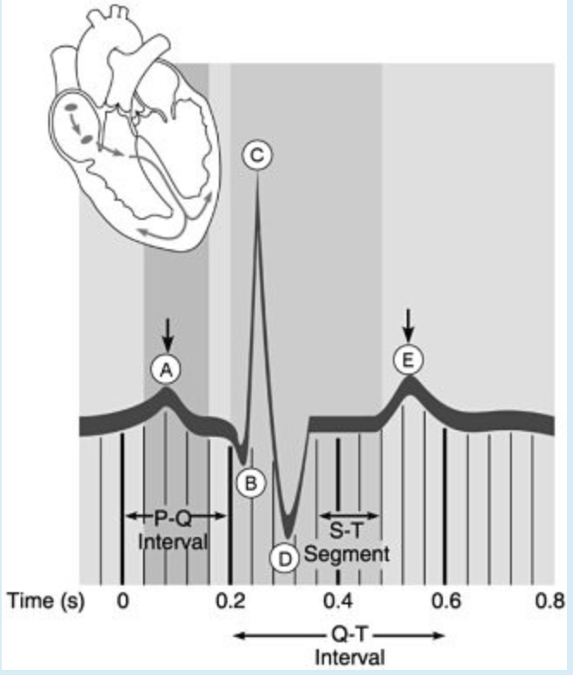 Figure 18.2 Using Figure 18.2, match the following: Point that represents the "dup" sound made by the heart. | back 1 E |
front 2 Which of the following receive(s) blood during ventricular
systole? | back 2 D |
front 3 The source of blood carried to capillaries in the myocardium would be
the ________. | back 3 A |
front 4 Select the correct statement about the function of myocardial
cells. | back 4 A |
front 5 Transport proteins like transferrin (that carries iron ions) or others that bind to lipids or fat-soluble vitamins. Adverse reaction of donor blood cells with recipient plasma. Main contributor to osmotic pressure. Necessary for coagulation. | back 5 - alpha and beta globulins - agglutination - albumin - fibrinogen |
front 6 What organ in the body regulates erythrocyte production? | back 6 B |
front 7 The P wave of a normal electrocardiogram indicates
________. | back 7 A |
front 8 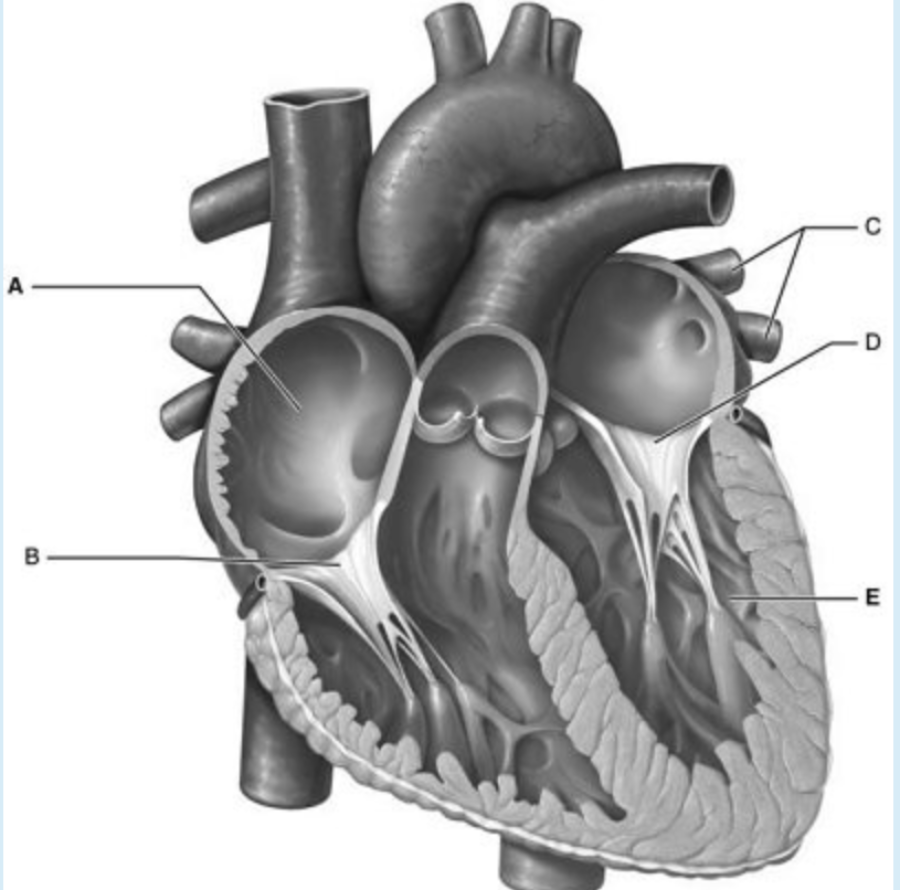 Figure 18.4 Using Figure 18.4, match the following: Mitral (bicuspid) valve. | back 8 D |
front 9 Figure 18.4 Using Figure 18.4, match the following: Right atrium. | back 9 A |
front 10 With a patient that is administered an injection of erythropoietin
(EPO) you would expect to see ________. | back 10 B |
front 11 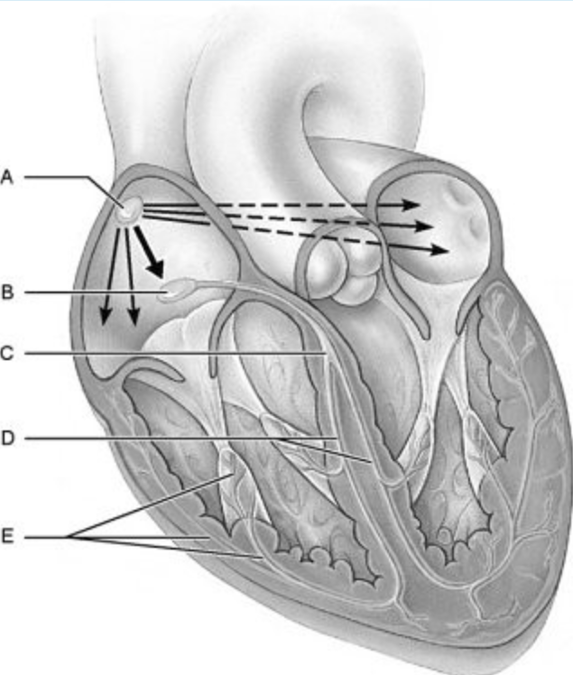 Figure 18.1 Using Figure 18.1, match the following: Atrioventricular (AV) node. | back 11 B |
front 12 Hemolytic disease of the newborn will not be possible in which of the
following situations listed below? | back 12 B |
front 13 Figure 18.4 Using Figure 18.4, match the following: Pulmonary veins. | back 13 C |
front 14 The left ventricular wall of the heart is thicker than the right wall
in order to ________. | back 14 D |
front 15 Blood reticulocyte counts provide information regarding
________. | back 15 C |
front 16 The atrioventricular (AV) valves are closed ________. | back 16 D |
front 17 Given an end diastolic volume (EDV) of 120 ml / beat and an end
systolic volume (ESV) of 50 ml / beat, the stroke volume (SV) would be
________. | back 17 A |
front 18 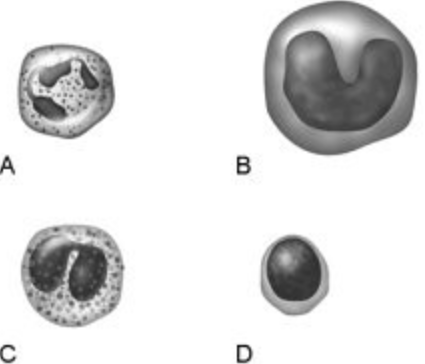 Figure 17.1 Using Figure 17.1, match the following: When activated becomes a macrophage that fights infection. | back 18 B |
front 19 Damage to the ________ causes heart block. | back 19 B |
front 20 If you centrifuge (spin) whole blood you will find the band of white
blood cells and platelets (the Buffy coat) is much thinner than the
packed red blood cells below it. This difference reflects the fact
that ________. | back 20 B |
front 21 If the vagal nerves to the heart were cut, the result would be that
________. | back 21 D |
front 22 All of the following can be expected with polycythemia except
________. | back 22 A |
front 23 With a patient that is administered an injection of erythropoietin
(EPO) you would expect to see ________. | back 23 D |
front 24 Figure 17.1 Using Figure 17.1, match the following: A granulocyte, phagocyte and the most common white blood cell found in whole blood. | back 24 A |
front 25 The term for pain associated with deficient blood delivery to the
heart that may be caused by the transient spasm of coronary arteries
is ________. | back 25 A |
front 26 Figure 17.1 Using Figure 17.1, match the following: Main bacteria killer during acute infections. | back 26 A |
front 27 Figure 18.1 Using Figure 18.1, match the following: Sinoatrial (SA) node. | back 27 A |
front 28 A person with an extremely high count of neutrophils is likely
suffering ________. | back 28 A |
front 29 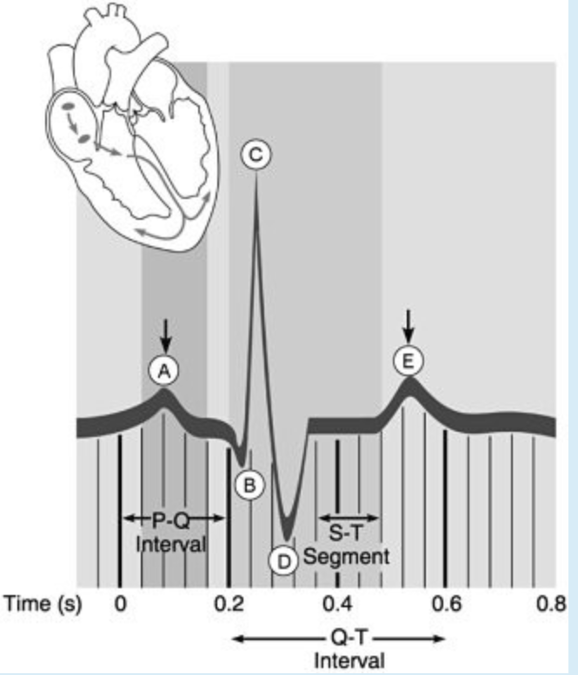 Figure 18.2 Using Figure 18.2, match the following: Atrial depolarization. | back 29 A |
front 30 No visible cytoplasmic granules are present in ________. | back 30 B |
front 31 Loss of fibrinogen within the plasma would most likely cause which of
the following? | back 31 D |
front 32 During contraction of heart muscle cells ________. | back 32 A |
front 33 Figure 17.1 Using Figure 17.1, match the following: Neutrophil. | back 33 A |
front 34 Damage to the ________ causes heart block. | back 34 B |
front 35 The heart is called a "double pump" because there are two functionally separate circulations. Trace the pathway of each of these circulations and include the following information: heart chambers involved, major blood vessels involved, and general areas through which the blood flows. Begin with the right atrium. | back 35 1) Right atrium > tricuspid valve > right ventricle > pulmonary SL valve > lungs to pick up O2 and dispel CO2 > 2) Pulmonary veins > left atrium > bicuspid valve > left ventricle > aortic SL valve > aorta > body tissues |
front 36 Select the correct statement about the structure of the heart
wall. | back 36 C |
front 37 Figure 18.1 Using Figure 18.1, match the following: Bundle branches. | back 37 D |
front 38 Figure 18.4 Using Figure 18.4, match the following: Left ventricle. | back 38 E |
front 39 Figure 18.1 Using Figure 18.1, match the following: Subendocardial conducting network (Purkinje fibers). | back 39 E |
front 40 Figure 18.2 Using Figure 18.2, match the following: Ventricular repolarization. | back 40 E |
front 41 What is the functional importance of the intercalated discs of cardiac muscle? What is the functional importance of the fibrous cardiac skeleton of the heart? | back 41 1) The intercalated discs hold the gap junctions, which are for ions to enter and leave the cell as well as to allow the heart to be a functional syncytium. The intercalated discs also have desmosomes, which prevent the cell from shifting. 2) The fibrous cardiac skeleton allows it to withstand stress and support the heart muscles when it constantly contracts. |
front 42 Figure 18.4 Using Figure 18.4, match the following: Tricuspid valve. | back 42 B |
front 43 Prevents backflow into the left atrium. Prevents backflow into the left ventricle. Prevents backflow into the right atrium. Prevents backflow into the right ventricle. | back 43 - bicuspid valve - aortic semilunar valve - tricuspid valve - pulmonary semilunar valve |
front 44 Compared to skeletal muscle, cardiac muscle ________. | back 44 D |
front 45 During exercise, which of the following would occur on an
electrocardiogram (ECG) compared to an individual at rest? | back 45 B |
front 46 If we were able to artificially alter the membrane permeability of
pacemaker cells so that sodium influx is more rapid,
________. | back 46 D |
front 47 All of the following conditions impair coagulation except
________. | back 47 C |
front 48 Figure 17.1 Using Figure 17.1, match the following: Releases granules that kill parasitic worms. | back 48 C |
front 49 Hemorrhage with a large loss of blood causes ________. | back 49 C |
front 50 When viewing a dissected heart, it is easy to visually discern the
right and left ventricles by ________. | back 50 D |
front 51 Figure 18.1 Using Figure 18.1, match the following: Atrioventricular (AV) bundle. | back 51 C |
front 52 Figure 18.2 Using Figure 18.2, match the following: Point after which pressure begins to rise in the aorta. | back 52 D |
front 53 During the period of ventricular filling ________. | back 53 D |
front 54 Which blood type is generally called the universal donor? | back 54 D |
front 55 Higher viscosity of blood will increase the amount of stress placed
on the heart while it is pumping. Viscosity of blood is highest when
________. | back 55 D |
front 56 If the length of the absolute refractory period in cardiac muscle
cells was the same as it is for skeletal muscle cells,
________. | back 56 D |
front 57 If the length of the absolute refractory period in cardiac muscle
cells was the same as it is for skeletal muscle cells,
________. | back 57 C |
front 58 The left ventricular wall of the heart is thicker than the right wall
in order to ________. | back 58 C |
front 59 Normal heart sounds are caused by which of the following
events? | back 59 A |
front 60 Figure 17.1 Using Figure 17.1, match the following: Mounts a humoral immune response by producing antibodies. | back 60 D |
front 61 A total WBC count and a differential WBC count have been ordered for Mrs. Johnson. What information is obtained from the differential count that the total count does not provide? | back 61 The differential count determines the relative proportion of individual leukocyte types (a valuable diagnostic tool). The total WBC count indicates an increase or decrease in number of WBCs. |
front 62 A person who drinks a lot of alcoholic beverages must urinate frequently. Why? | back 62 Alcohol inhibits ADH secrection |