Lab Practical: Epithelial Tissue
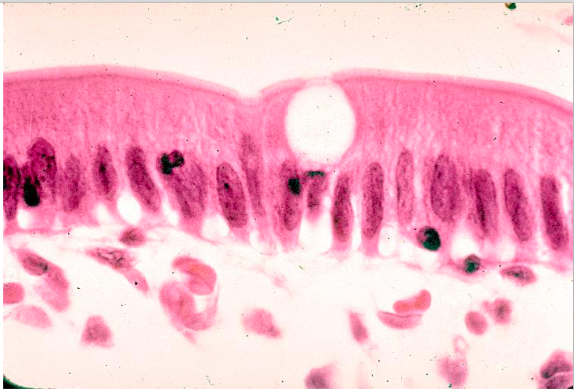
Identify the type of epithelial tissue
State the function/location
Simple Columnar Epithelium
A single layer of column-shaped cells,
Found in the digestive tract and excretory ducts of some glands.
Ciliated columnar cells line the fallopian tubes, bronchi, and spinal cord.
Basal nuclei are oval in cross section
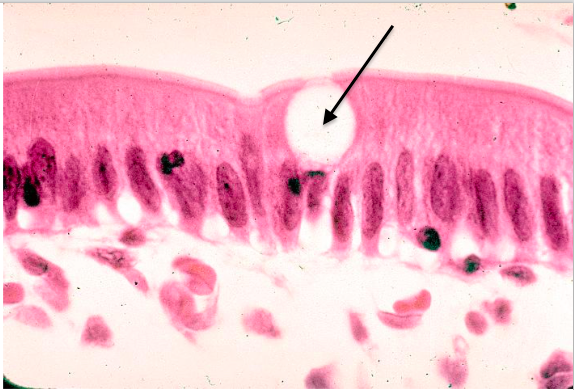
What is the arrow pointing to?
The Goblet cells which secrete mucus
located in the simple columnar epithelium
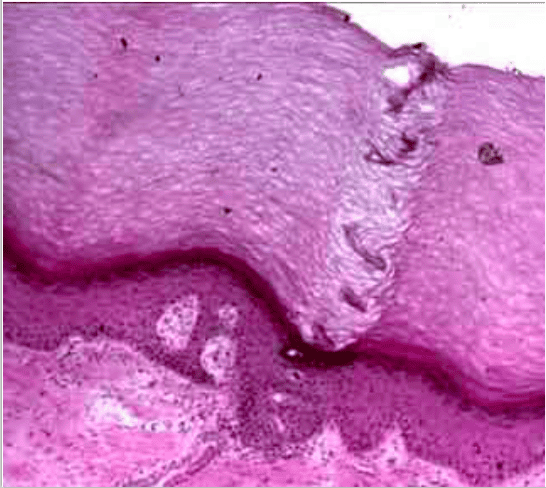
Identify the type of epithelial tissue
State the function/location
Stratified Squamous Epithelial
Found in the skin (epidermis)
Found in the vaginal, oral, and anal canal (friction)
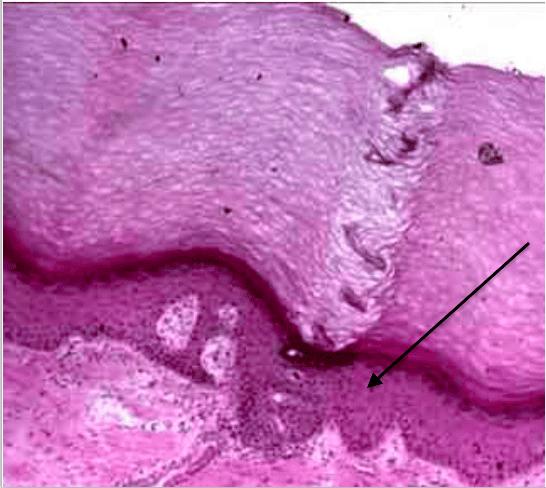
What is the arrow pointing to?
Stratum Granolusum
it produces keratin (H2O proof) and melanin (protects from sun)
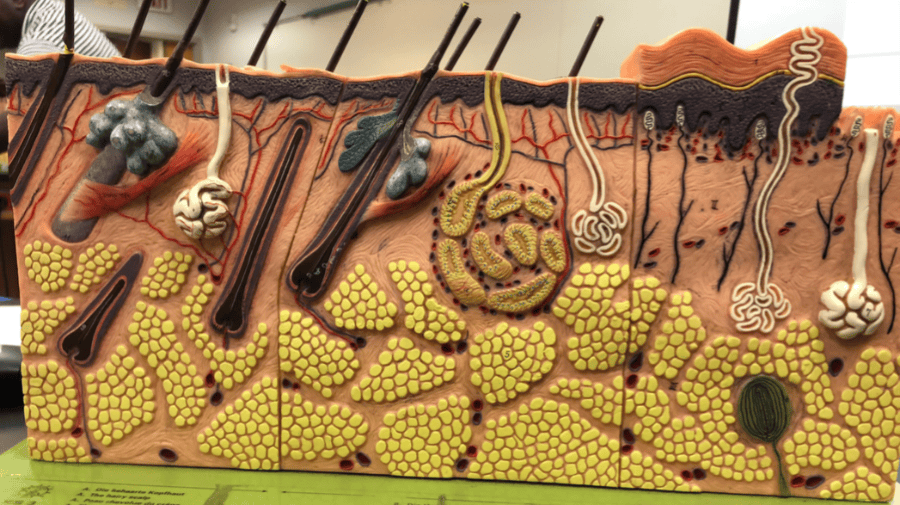
What are the general layers of the skin?
Epidermis:
S. Corneum (Apical Surface)
S. lucidum
S. granulosum
S. spinosum
S. basale (Basal Surface)
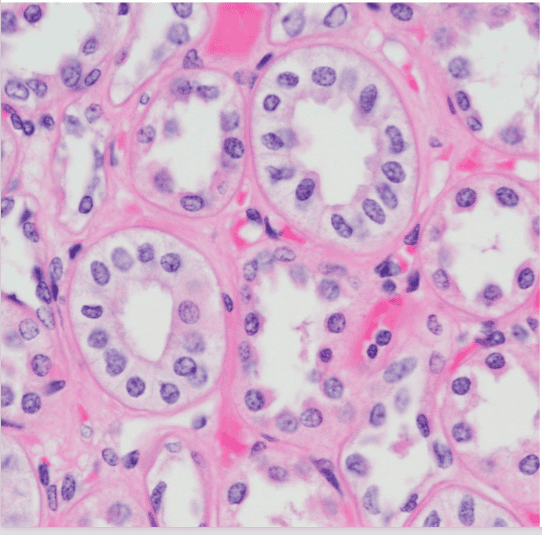
Identify epithelial tissue
State location and function
Simple Cuboidal Tissue
A single layer of cube-shaped cells, with central spherical nuclei.
Found in Kidney Tubules, ducts of glands and surface of the ovary.
Excretion and Secretion
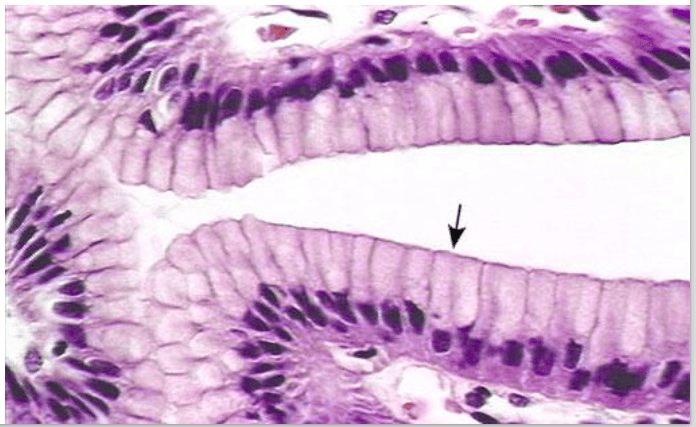
Identify epithelial tissue
State location and function
Simple Columnar Epithelium.
The arrow points to the apical surface
Found in the GI tract
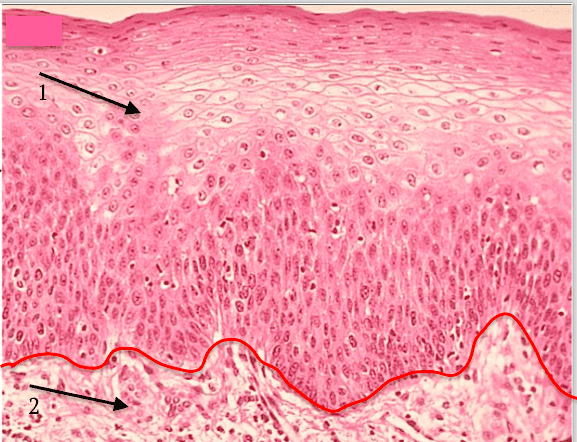
Identify the tissue
Identify Arrow 1 & 2
Identify Red line
Stratified Squamous
Arrow 1: Epithelial Tissue
Arrow 2: Connective Tissue
Redline: Basement Membrane
Epithelial tissue lies on the Basement membrane and under is the Connective tissue.
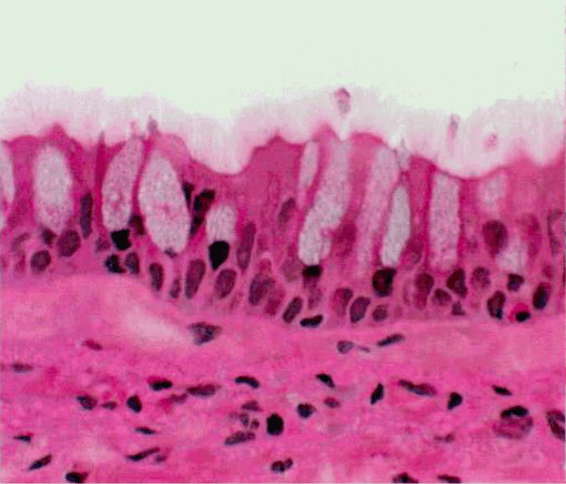
Identify epithelial tissue
State location and function
Pseudostratified Columnar Epithelium
Found in the trachea, the lining of the respiratory tract, and ducts of some glands
Protects much of the respiratory system
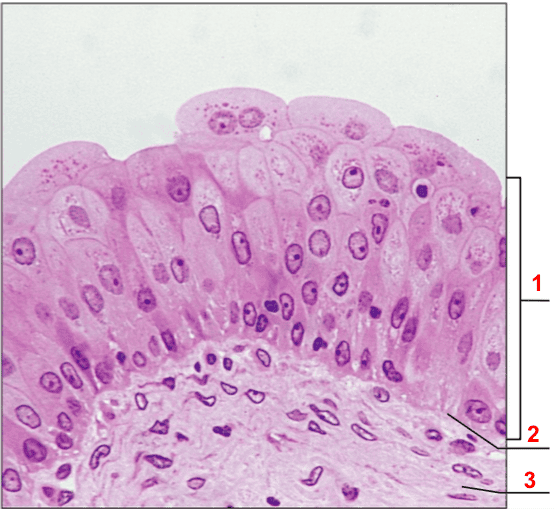
Identify epithelial tissue
State location and function
Identify # 1, 2, 3
Transitional Epithelium
Located in the urinary bladder
Look like stratified squamous epi. when stretched and stratified cuboidal when relaxed.
1: Epithelial Tissue
2: Basement Membrane
3. Connective Tissue
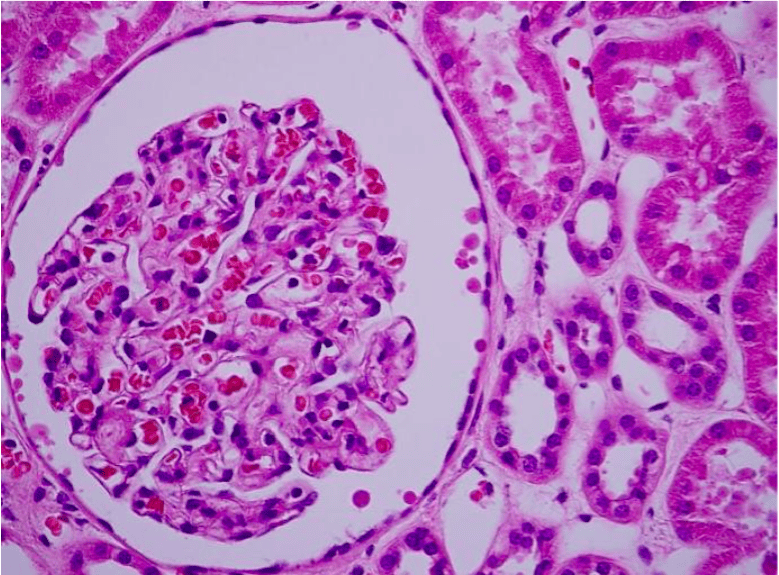
identify epithelial tissue
State location and function
Simple Squamous
Found in lungs and kidneys
Function is: exchange of materials
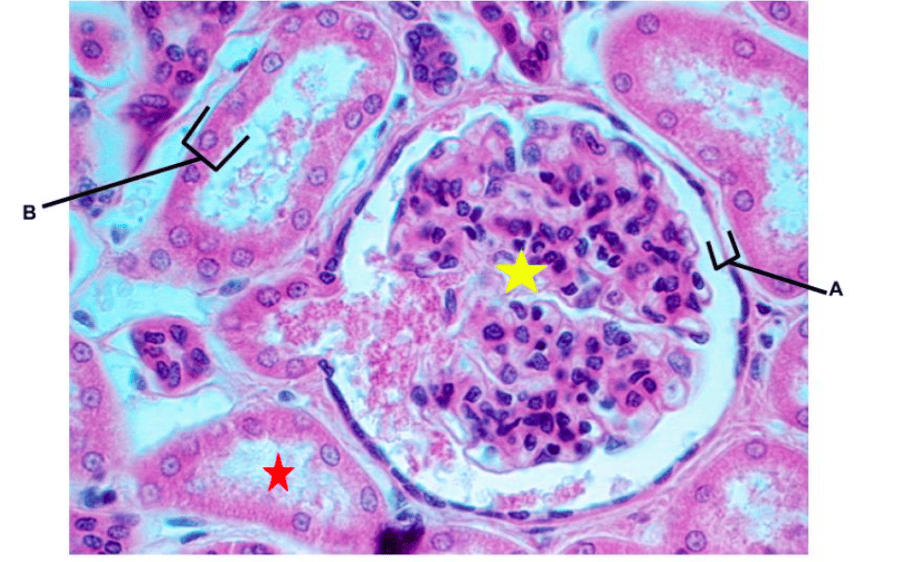
Identify the tissue indicated by the letter A.
Simple Squamous Epithelium
Identify the structure that is also indicated by the letter A.
Glomerular Capsule
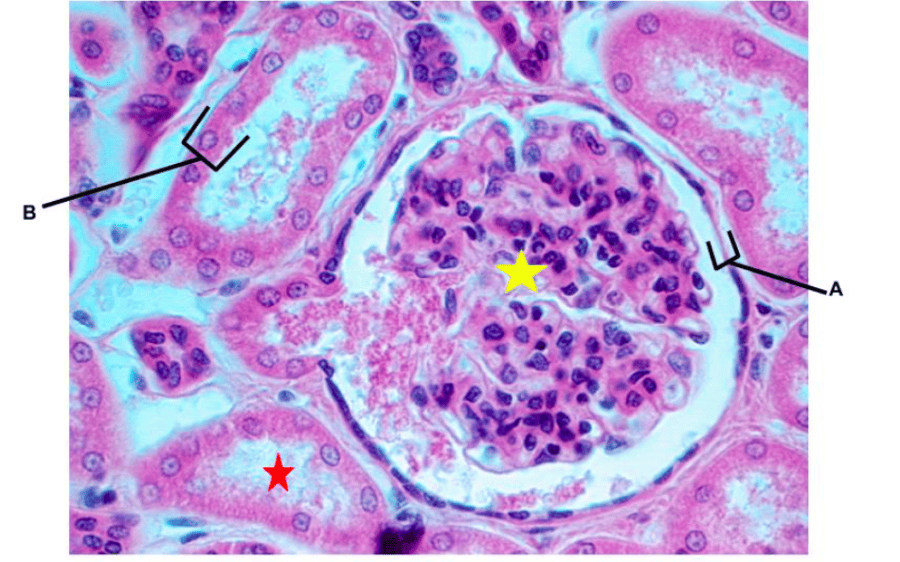
Identify the structure indicated by the yellow star
Glomerulus; bundles of capillaries surrounded by the glomerular capsule
What occurs at the structure indicated by the yellow star
Filtration of blood
Identify the tissue indicated by the letter B.
Simple Cuboidal Epithelium
The red star is in the lumen of what structure?
Renal Tubule
What liquid is found in the lumen indicated by the red star?
Filtrate
What organ is this slide from?
Kidney
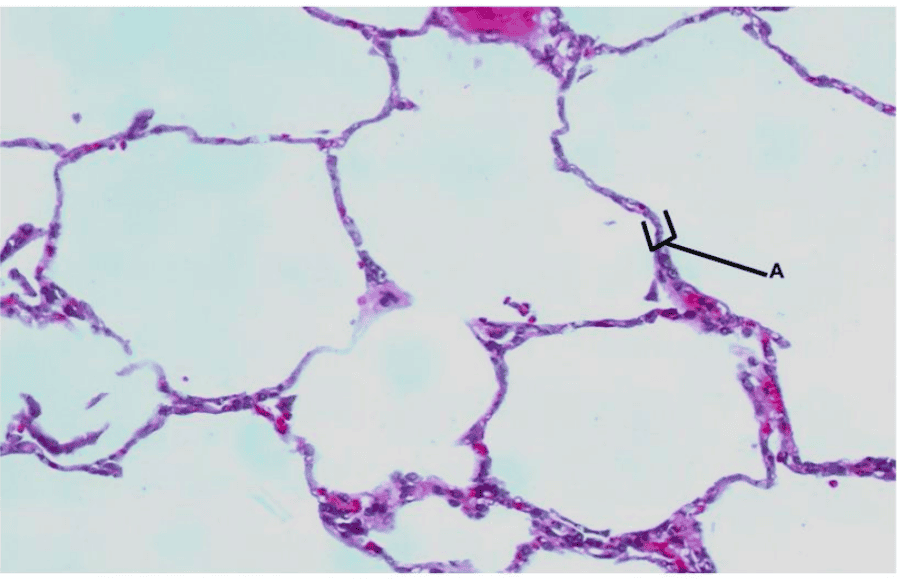
Identify the tissue indicated by the letter A.
Simple Squamous Epithelium
identify the structure that is also indicated by the letter A.
Aveolus
What organ is this slide from?
Lung
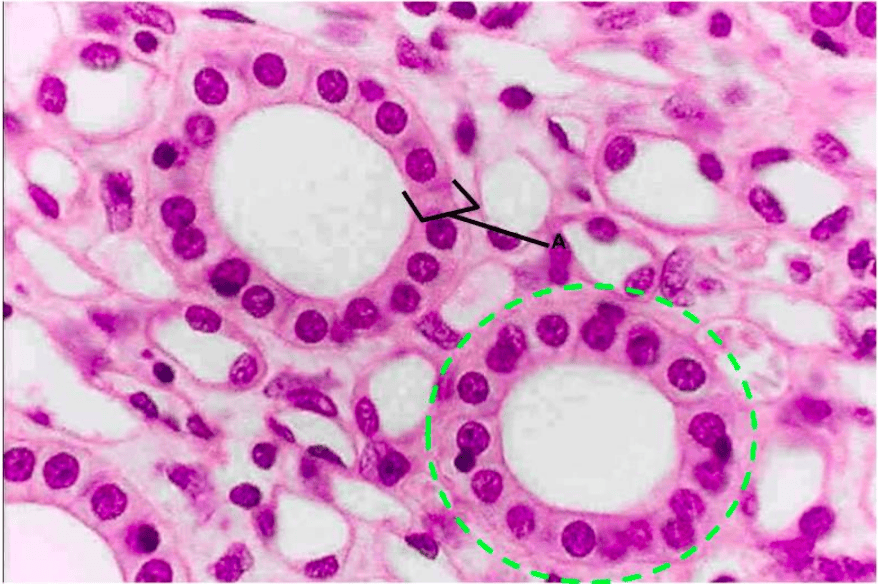
Identify the tissue indicated by the letter A.
Simple Cuboidal Epithelium
What is the function of this tissue?
Absorption and Secretion
Identify the structure indicated by the green ring.
Renal Tubule
What organ is this slide
Kidney
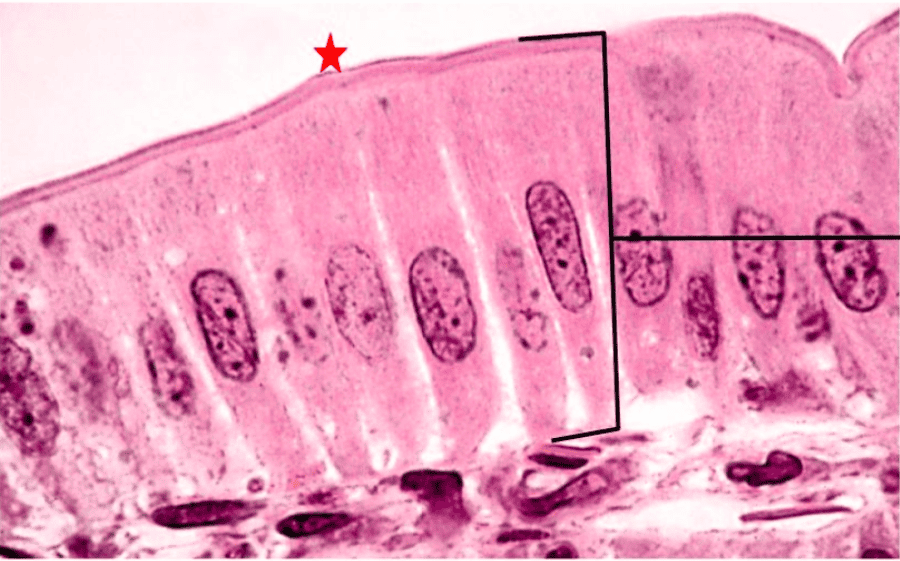
Identify the tissue indicated by the letter A.
Simple Columnar Epithelium
What is the function of this tissue
Absorption & Secretion
What accounts for the fuzziness adjacent to the red star?
Microvilli
What is the function of the structure from the previous question?
Increase Surface Area for more secretion and absorption
What would be found in the lumen indicated by the red star?
Chyme
What organ is this slide from?
small intestine
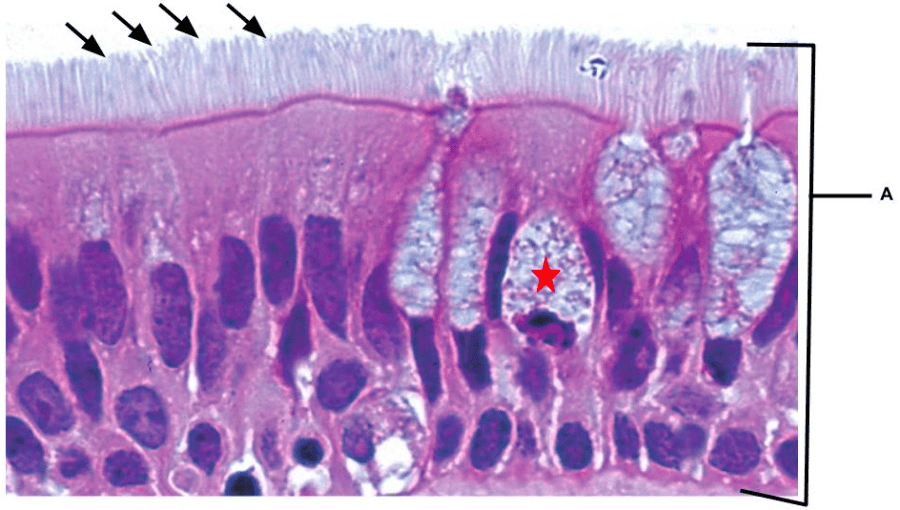
Identify the tissue type indicated by the letter A.
Pseudostratified Columnar Epithelium
Do all the cells in this tissue type touch the basement membrane?
yes
What specific structures are indicated by the black arrows?
Cilia
What is their function?
upward sweeping of mucus
identify the cell indicated by the red star.
Goblet cell
What is the function of the cell indicated by the red star.
Secrete mucus
What organ is this slide from?
Trachea
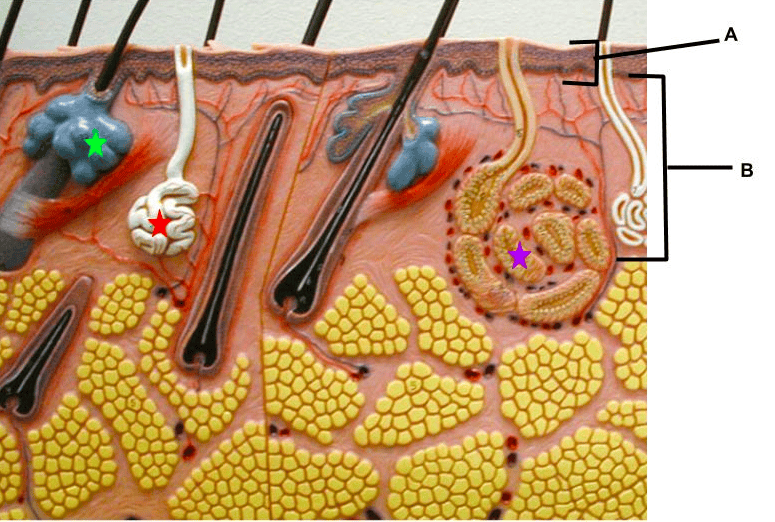
Identify the skin layer indicated by the letter A.
epidermis
Identify the tissue indicated by the letter A.
stratified squamous epithelium
Identify the skin layer indicated by the letter B.
Dermis
Is this a model of thin skin or thick skin?
thin skin
What specific structure is indicated by the green star?
Sebaceous gland
What part of the skin lacks the structures indicated by the green star?
anterior hands and plantar surfaces (thick skin; palms and soles)
What is the function of the structure indicated by the green star?
Secretion of sebum - a moisturizing oil
Identify the specific structure indicated by the red star.
Merocrine sweat gland
What is the function of the structure indicated by the red star.
Secrete sweat to lower body temperature
Where are red star structures found?
all over the skin
Identify the specific structure indicated by the purple star.
apocrine sweat gland
What is the function of the structure indicated by the purple star?
none
Where are purple star structures found?
Primarily axillary, pubic, and anal regions
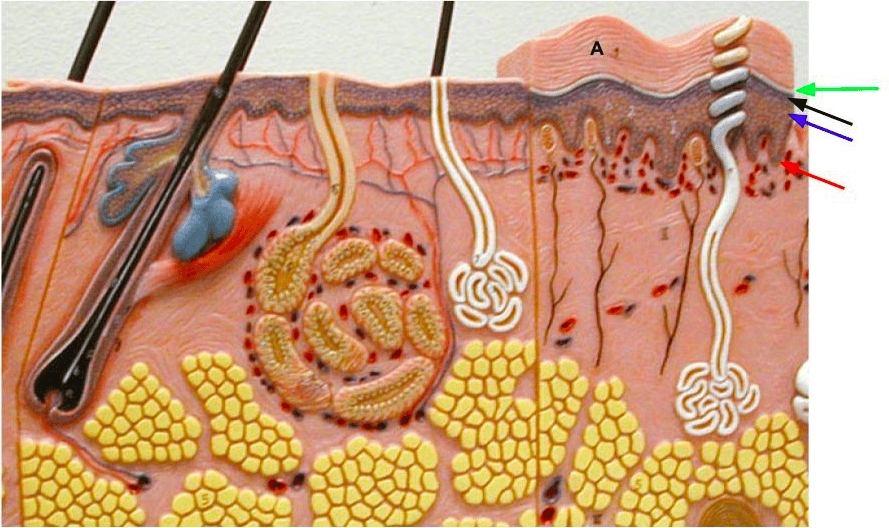
Identify the epidermal layer indicated by the letter A.
Stratum corneum
Identify the epidermal layer indicated by the red arrow
Stratum basale
Identify the epidermal layer indicated by the black arrow.
Stratum granulosum
Identify the epidermal layer indicated by the blue arrow.
Stratum spinosum
Identify the epidermal layer indicated by the green arrow.
Stratum lucidum
Identify the epidermal layer that is absent in thin skin.
Stratum lucidum
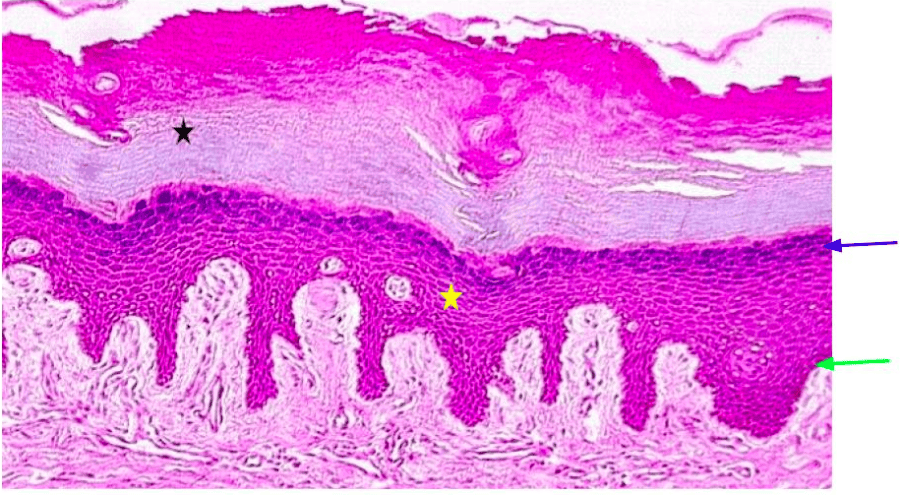
Identify the epidermal layer indicated by the black star.
Stratum corneum
Identify the epidermal layer indicated by the green arrow.
Stratum Basale
Identify the epidermal layer indicated by the blue arrow.
Stratum granulosum
Identify the epidermal layer indicated by the yellow star
Stratum spinosum
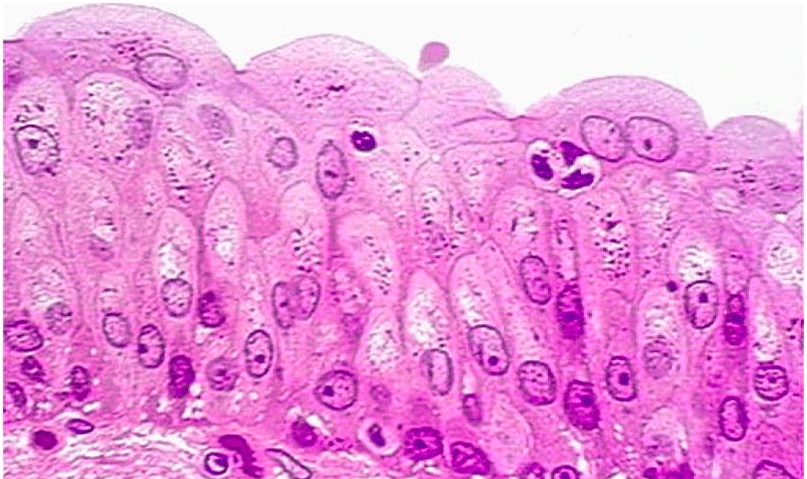
Identify the tissue
Transitional Epithelium
What is awesome about the above tissue?
it can stretch alot
What organ contains the above tissue?
urinary bladder
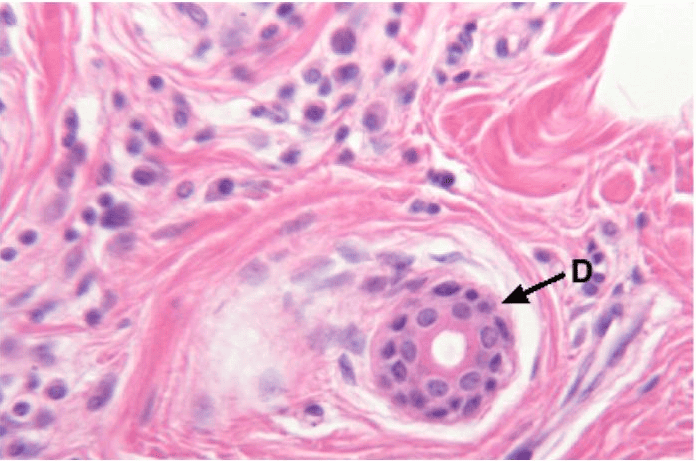
Identify the tissue indicated with the D.
Stratified Cuboidal Epithelium
What organ is indicated with the D?
Duct of a sweat gland