final
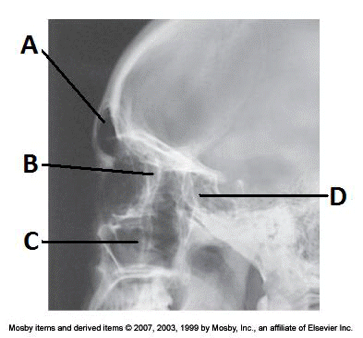
4. Examine the image of the paranasal sinuses below. The letter D labels the:
a. maxillary sinuses
b. ethmoid sinuses
c. sphenoid sinuses
d. frontal sinuses
c. sphenoid sinuses
____ 5. How many bones comprise the bony orbit?
a. 11
b. 7
c. 9
d. 5
bb. 7
____ 6. The parietoacanthial projection (Waters method) of the sinuses requires the orbitomeatal line to be placed how many degrees from the plane of the IR?
a. 30 degrees
b. 20 degrees
c. 27 degrees
d. 37 degrees
dd. 37 degrees
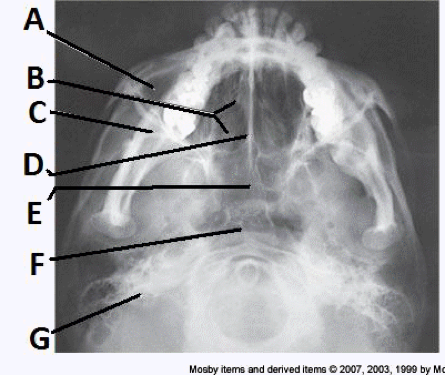
__ 7. Examine the image of the paranasal sinuses below. The letter B labels the:
a. ethmoid sinuses
b. sphenoid sinuses
c. maxillary sinuses
d. frontal sinuses
a. ethmoid sinuses
____ 9. The OML forms an angle of how many degrees from the plane of the IR for an open-mouth parietoacanthial (Waters method) projection?
a. 45 degrees
b. 25 degrees
c. 35 to 40 degrees
d. 37 degrees
dd. 37 degrees
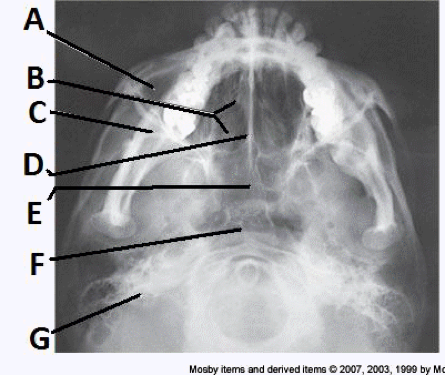
____ 10. Examine the image of the paranasal sinuses below. The letter D labels the:
a. crista galli
b. vomer
c. cribriform plate
d. perpendicular plate of the ethmoid bone
bb. vomer
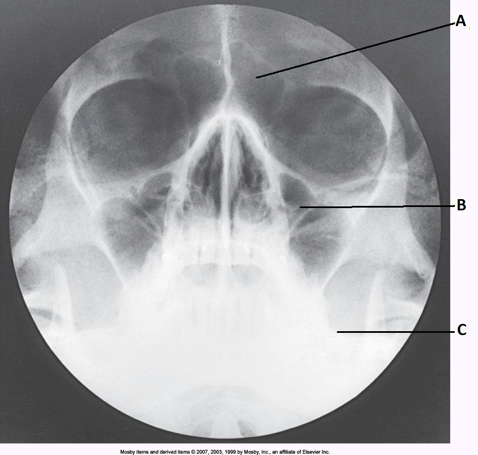
____ 11. Examine the image of the paranasal sinuses below. What projection (method) is demonstrated?
a. PA axial (Caldwell)
b. parietoacanthial (Waters)
c. SMV
d. lateral
b
b. parietoacanthial (Waters)
____ 12. The two ethmoidal sinuses are located within which bone?
a. maxillary
b. sphenoid
c. frontal
d. ethmoid
dd. ethmoid
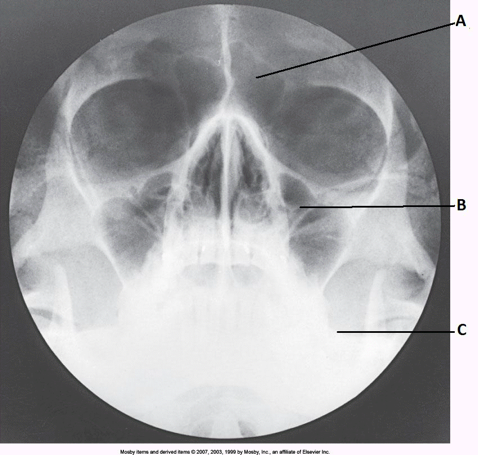
____ 13. Examine the image of the paranasal sinuses below. The letter A labels the:
a. sphenoid sinuses
b. frontal sinuses
c. ethmoid sinuses
d. maxillary sinuses
bb. frontal sinuses
____ 185. Which reference line is positioned perpendicular to the angled IR for the PA axial (Caldwell method) projection of the sinuses?
a. AML
b. OML
c. MML
d. IOML
bb. OML
____ 23. Which of the following foramina will be demonstrated in the orbit on a parietoacanthial (Waters method) radiograph?
a. ovale
b. spinosum
c. jugular
d. rotundum
dd. rotundum
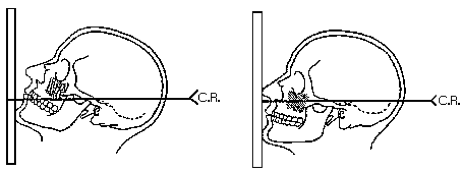
____ 30. Which drawing in the figure below demonstrates the correct head position for the Waters method?
a. left
b. right
aa. left
____ 31. Which of the following are included as functions of the sinuses?
(1) decrease the weight of the skull
(2) warm and moisten inhaled air
(3) provide a resonating chamber for voice
a. 1 and 2
b. 1 and 3
c. 1, 2, and 3
d. 2 and 3
cc. 1, 2, and 3
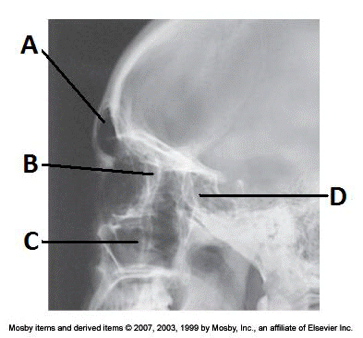
____ 32. Examine the image of the paranasal sinuses below. The letter A labels the:
a. sphenoid sinuses
b. frontal sinuses
c. crista galli
d. ethmoid sinuses
bb. frontal sinuses
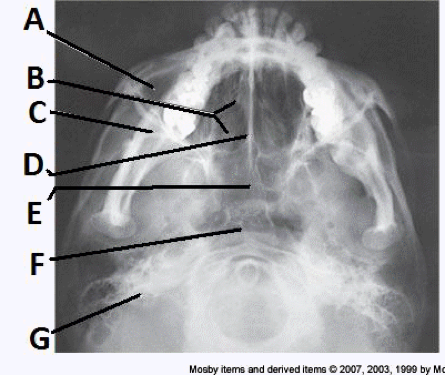
____ 37. Examine the image of the paranasal sinuses below. The letter F labels the:
a. maxillary sinuses
b. sphenoid sinuses
c. ethmoid sinuses
d. pharynx
dd. pharynx
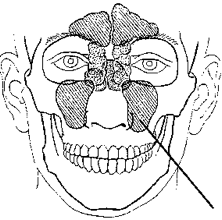
____ 43. The sinus identified in the figure below is the:
a. ethmoidal
b. frontal
c. sphenoidal
d. maxillary
dd. maxillary
____ 44. The central ray forms an angle of how many degrees with the OML for the PA axial (Caldwell) projection of the sinuses?
a. 12 degrees
b. 15 degrees
c. 5 degrees
d. 20 degrees
bb. 15 degrees
____ 46. Which of the following reference lines is placed perpendicular to the IR for a parietoacanthial (Waters method) projection?
a. OML
b. AML
c. IOML
d. MML
dd. MML
____ 50. Which sinus is projected through the mouth on the open-mouth modification of the Waters method?
a. maxillary
b. sphenoidal
c. frontal
d. ethmoidal
b. sphenoidal
____ 56. At what age are all of the sinuses completely developed?
a. 18
b. 10
c. 8
d. 14
aa. 18
____ 60. Which of the following should be clearly demonstrated on a lateral projection of the paranasal sinus?
(1) all four sinus groups
(2) superimposed orbital roofs
(3) superimposed mandibular rami
a. 2 and 3
b. 1, 2, and 3
c. 1 and 3
d. 1 and 2
bb. 1, 2, and 3
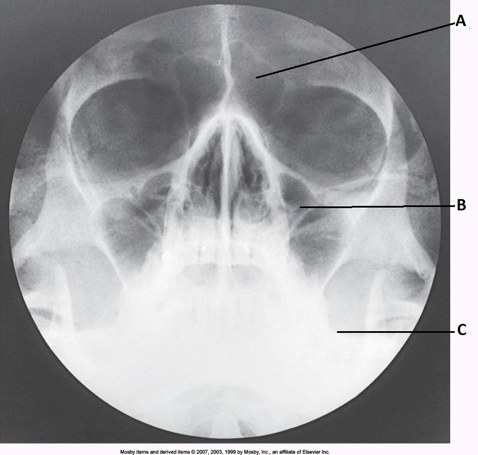
____ 61. Examine the image of the paranasal sinuses below. The letter C labels the:
a. petrous ridge
b. vomer
c. sphenoid sinuses
d. condyle of the mandible
aa. petrous ridge
____ 62. Which of the following must be projected below the maxillary sinuses for the parietoacanthial projection (Waters method) of the sinuses?
a. sphenoidal sinuses
b. petrous pyramids
c. inferior orbital margin
d. zygomatic bones
bb. petrous pyramids
____ 168. What projection (method) of the facial bones is demonstrated in the image below?
a. AP axial (Towne)
b. PA axial (Caldwell)
c. parietoacanthial (modified Waters)
d. parietoacanthial (Waters)
delete
cc. parietoacanthial (modified Waters)
____ 79. The most effective way to protect the patient from unnecessary radiation during sinus radiography is to use:
(1) low kVp
(2) proper collimation
(3) short exposure times
a. 3 only
b. 1 only
c. 1, 2, and 3
d. 2 only
dd. 2 only
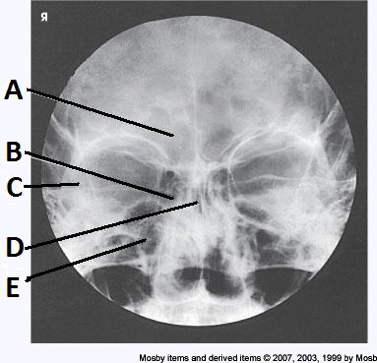
____ 84. Examine the image of the paranasal sinuses below. The letter A labels the:
a. maxillary sinuses
b. ethmoid sinuses
c. sphenoid sinuses
d. frontal sinuses
dd. frontal sinuses
____ 101. Which of the sinuses is developed at birth and visible radiographically?
a. maxillary
b. sphenoidal
c. frontal
d. ethmoidal
aa. maxillary
____ 192. To successfully demonstrate the ethmoidal and sphenoidal sinuses on the SMV projection, which of the following must occur?
(1) the patient must be recumbent
(2) the infraorbitomeatal line must be parallel with the IR
(3) the central ray must be perpendicular to the infraorbitomeatal line and horizontal
a. 2 and 3
b. 1 and 2
c. 1 and 3
d. 1, 2, and 3
aa. 2 and 3
____ 112. Which projection will best demonstrate the frontal and anterior ethmoidal sinuses?
(1) PA
(2) parietoacanthial (Waters)
(3) PA axial (Caldwell)
a. 1 only
b. 2 only
c. 3 only
d. 1, 2, and 3
c
c. 3 only
____ 125. Where are the petrous ridges seen on a parietoacanthial (Waters method) radiograph?
a. in the lower two thirds of the maxillary sinuses
b. inferior to the floor of the maxillary sinuses
c. superior to the maxillary sinuses
d. in the middle of the maxillary sinuses
bb. inferior to the floor of the maxillary sinuses
____ 127. Which sinus is located immediately below the sella turcica?
a. maxillary
b. ethmoidal
c. sphenoidal
d. frontal
cc. sphenoidal
____ 129. For the open-mouth modification of the Waters method, the central ray should exit the:
a. acanthion
b. glabella
c. nasion
d. open mouth
dd. open mouth
____ 130. Patients who are having an examination of the paranasal sinuses should always be examined in the upright position to:
(1) demonstrate the presence or absence of fluid
(2) differentiate between fluid and other pathological conditions
(3) make it easier for the radiographer to position the patient
a. 1 and 2
b. 2 and 3
c. 1 and 3
d. 1, 2, and 3
aa. 1 and 2
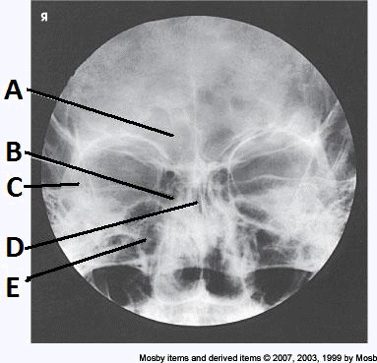
____ 136. Examine the image of the paranasal sinuses below. The letter B labels the:
a. frontal sinuses
b. maxillary sinuses
c. ethmoid sinuses
d. sphenoid sinuses
cc. ethmoid sinuses
____ 137. The respiration phase for all projections of the facial bones and sinuses is:
a. inspiration
b. shallow breathing
c. suspended
d. expiration
c. suspended
___ 142. Which reference line is positioned horizontal to ensure proper extension of the head during a lateral projection of the sinuses?
a. MML
b. AML
c. OML
d. IOML
dd. IOML
____ 148. Which projections will demonstrate the ethmoidal sinuses?
(1) lateral
(2) PA axial (Caldwell)
(3) SMV
a. 1 and 2
b. 2 and 3
c. 1, 2, and 3
d. 1 and 3
cc. 1, 2, and 3
____ 159. The largest sinus is the:
a. frontal
b. maxillary
c. sphenoidal
d. ethmoidal
bb. maxillary
____ 165. The central ray is directed perpendicular to which reference line for the SMV projection of the sinuses?
a. OIML
b. MML
c. AML
d. OML
aa. OIML
____ 168. What projection (method) of the facial bones is demonstrated in the image below?
a. AP axial (Towne)
b. PA axial (Caldwell)
c. parietoacanthial (modified Waters)
d. parietoacanthial (Waters)
cc. parietoacanthial (modified Waters)
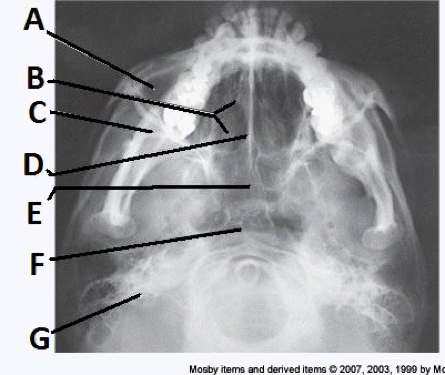
____ 174. Examine the image of the paranasal sinuses below. The letter E labels the:
a. sphenoid sinuses
b. ethmoid sinuses
c. frontal sinuses
d. maxillary sinuses
aa. sphenoid sinuses
____ 177. When using the angled grid technique for the PA axial (Caldwell method) projection of the sinuses, the vertical grid device must be angled:
a. 20 degrees
b. 7 degrees
c. 15 degrees
d. 10 degrees
cc. 15 degrees
____ 179. At which level should the central ray enter the base of the skull for the SMV projection of the sinuses?
a. inch anterior to the level of the EAM
b. 1 inch below the mental protuberance
c. inch below the mental protuberance
d. inch posterior to the level of the EAM
aa. inch anterior to the level of the EAM
____ 182. Where is the IR centered for the parietoacanthial (Waters method) projection of the sinuses?
a. nasion
b. acanthion
c. inion
d. glabella
bb. acanthion
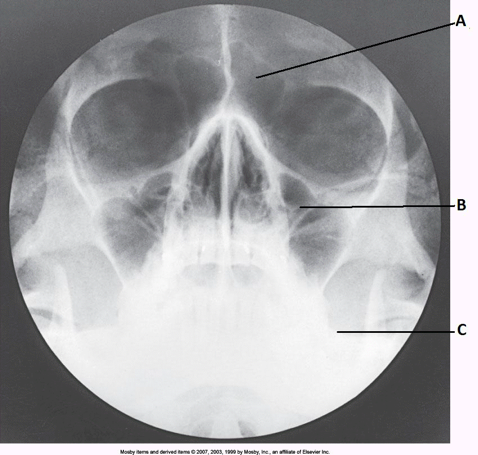
____ 184. Examine the image of the paranasal sinuses below. The letter B labels the:
a. maxillary sinuses
b. sphenoid sinuses
c. frontal sinuses
d. ethmoid sinuses
aa. maxillary sinuses
____ 185. Which reference line is positioned perpendicular to the angled IR for the PA axial (Caldwell method) projection of the sinuses?
a. AML
b. OML
c. MML
d. IOML
bb. OML
____ 187. Which of the following projections will best demonstrate the maxillary sinuses?
(1) parietoacanthial (Waters)
(2) PA axial (Caldwell)
(3) submentovertical
a. 2 only
b. 3 only
c. 1 only
d. 1, 2, and 3
cc. 1 only
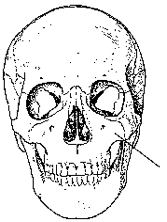
____ 188. The bone identified in the figure below is the:
a. maxilla
b. ethmoid
c. frontal
d. mandible
aa. maxilla
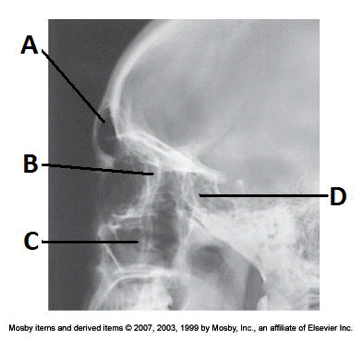
____ 191. Examine the image of the paranasal sinuses below. The letter C labels the:
a. ethmoid sinuses
b. maxillary sinuses
c. petrous ridge
d. sphenoid sinuses
bb. maxillary sinuses
Which of the following statements is (are) true regarding a PA Axial projection of the paranasal sinuses?
1. the OML is elevated 15 degrees from the horizontal
2. the petrous pyramids completely fill the orbits
3. the frontal and ethmoidal sinuses are visualized
a. 1 only
b. 1 and 2 only
c. 1 and 3 only
d. 1, 2, and 3
c. 1 and 3 only
inflammation of one or more of the paranasal sinuses describes
a. parasitis
b. sinusitis
c. nasalitis
d. mucusitis
b. sinusitis