MYOLOGY: Head & Neck Muscles
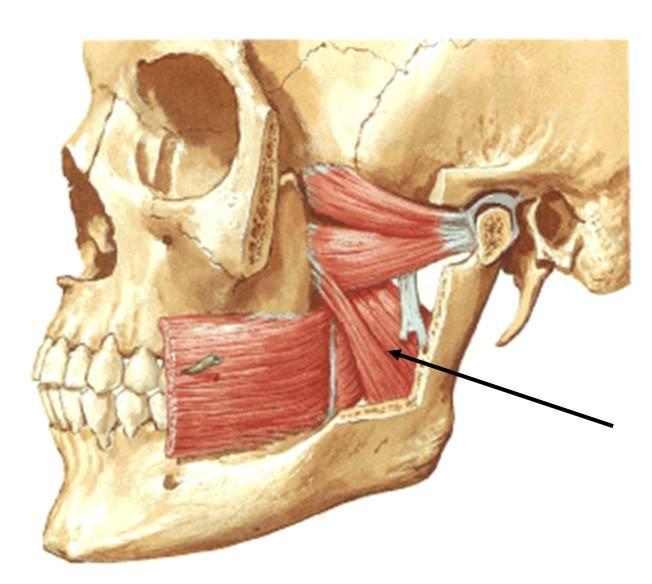
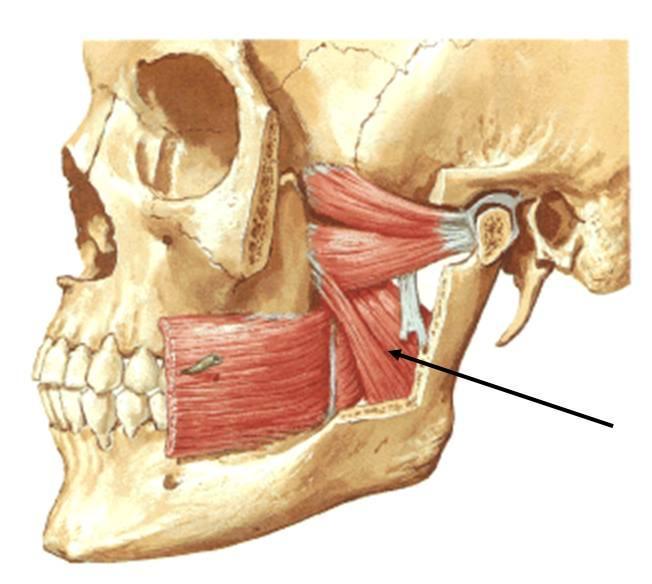
Identify and state the innervation of (A):
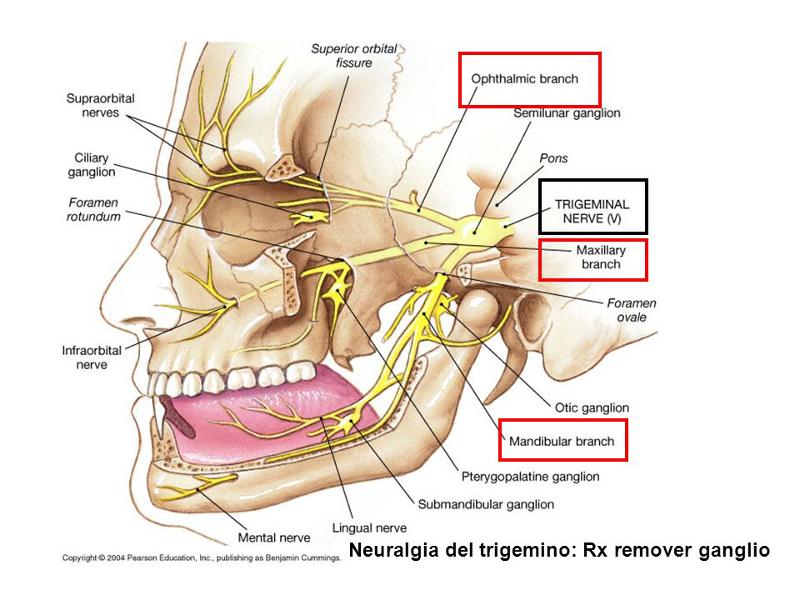
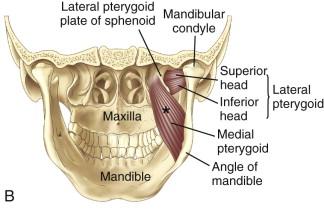
A) Medial Pterygoid Muscle
B) Trigeminal Nerve (CNV)
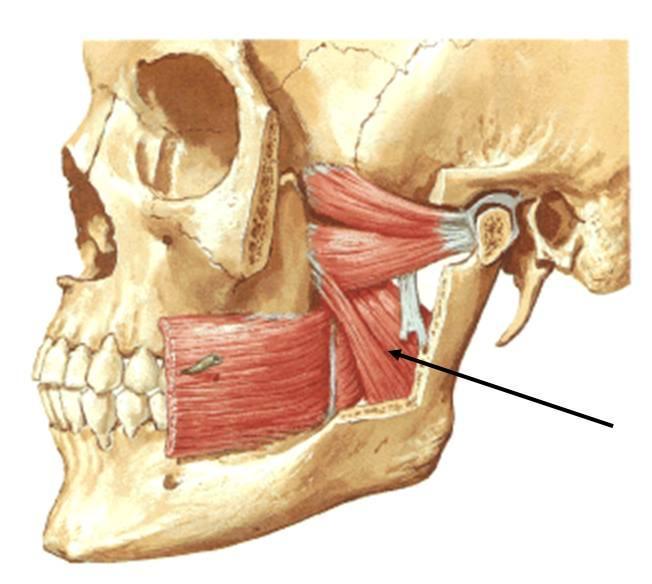
State TWO actions of (A):
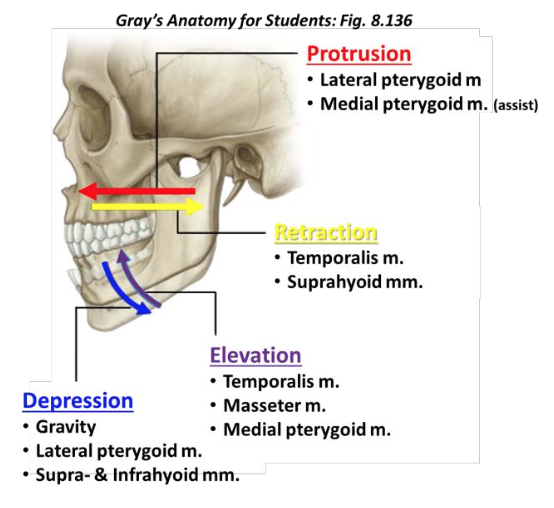
Protrusion and Elevation of the Mandible
What is the origin & insertion of (A)?
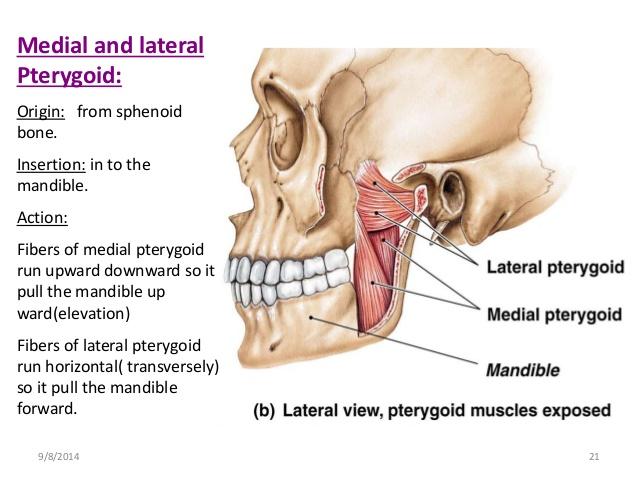
A) Origin: Medial aspect of Lateral Pterygoid plate, Sphenoid Bone
B) Insertion: medial ramus of mandible
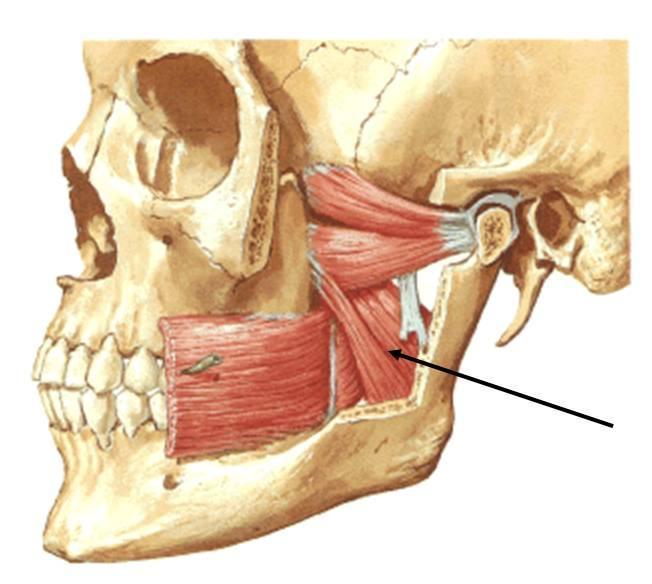
What are the unilateral actions of A?
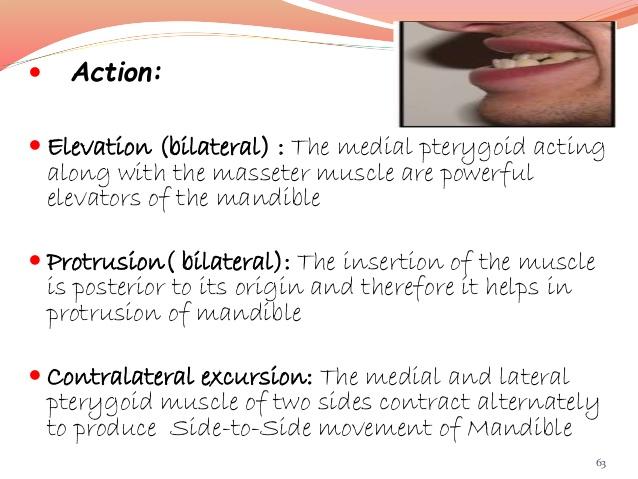
Contralateral deviations
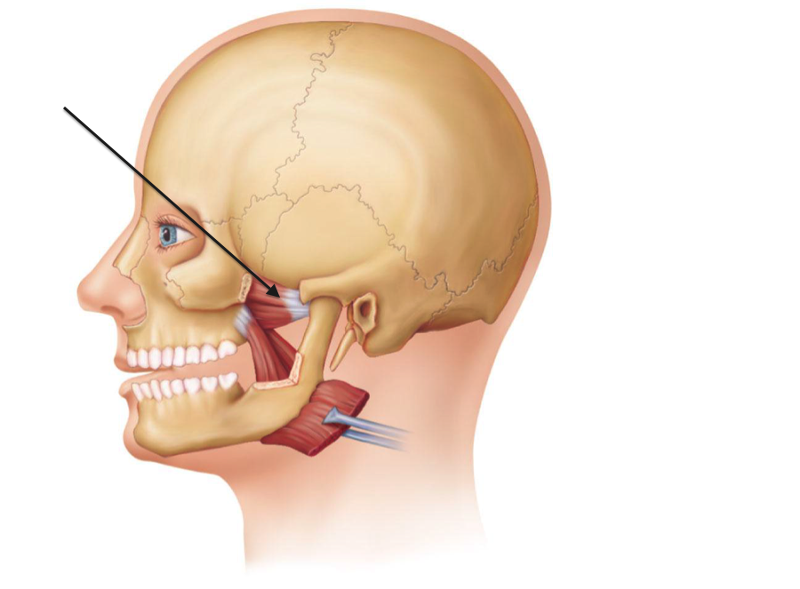
Identify and state the innervation of (C):
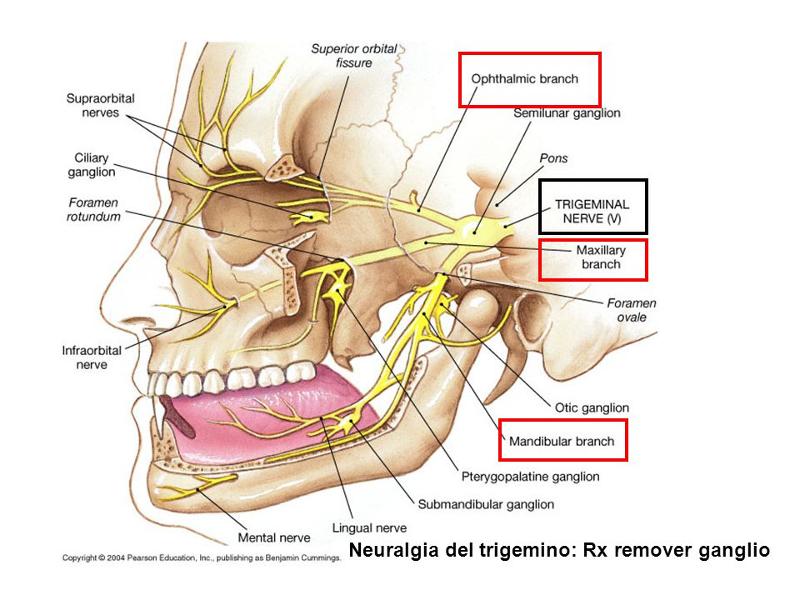
A) Lateral Pterygoid Muscle
B) Trigeminal Nerve (CNV)
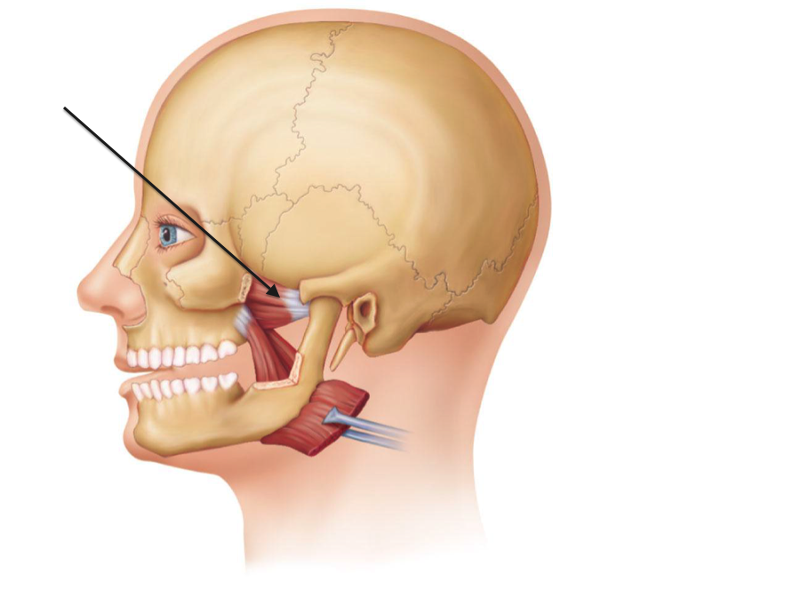
What is the origin AND insertion of (C)?

A) Origin: Lateral aspect of Lateral Pterygoid plate, Sphenoid Bone
B) Insertion: neck of mandible & TMJ capsule & disc
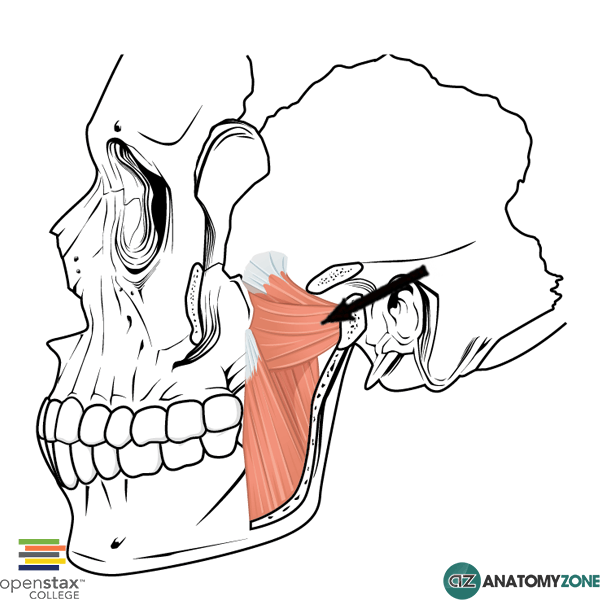
State two actions of C?
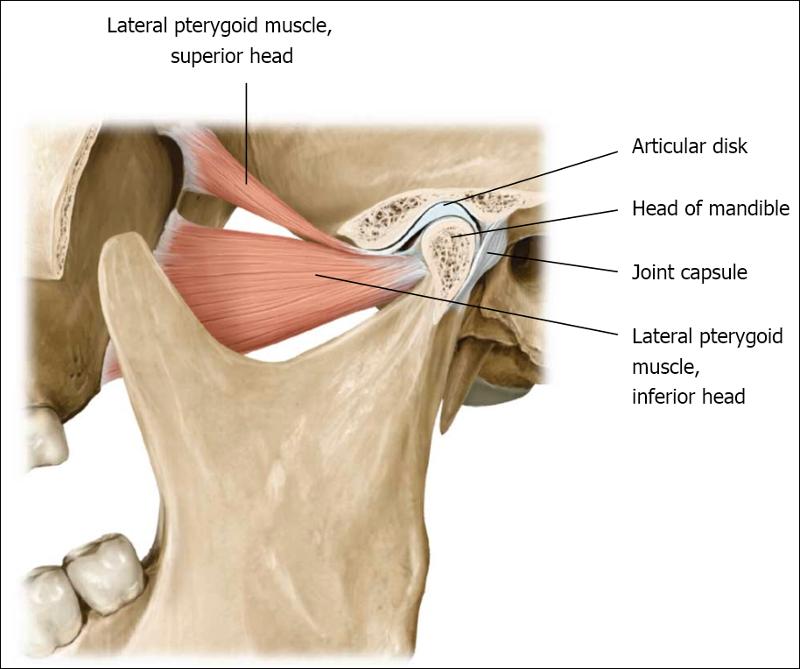
A) protrude mandible
B) protrude intra‐articular disc
What are the unilateral actions of C?
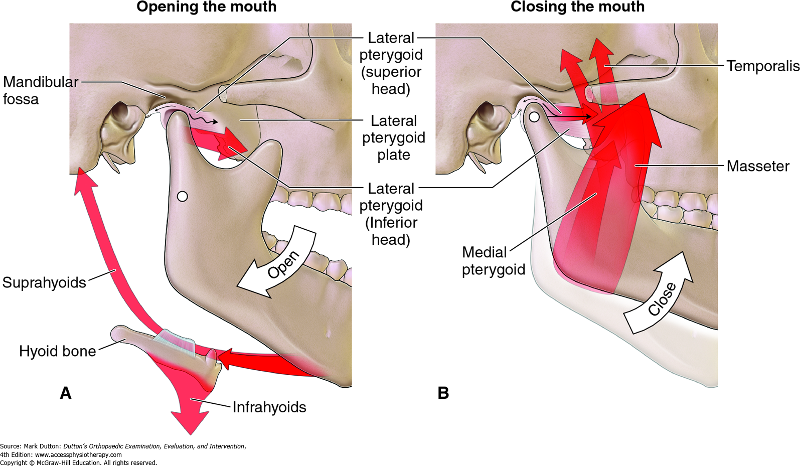
Contralateral deviation
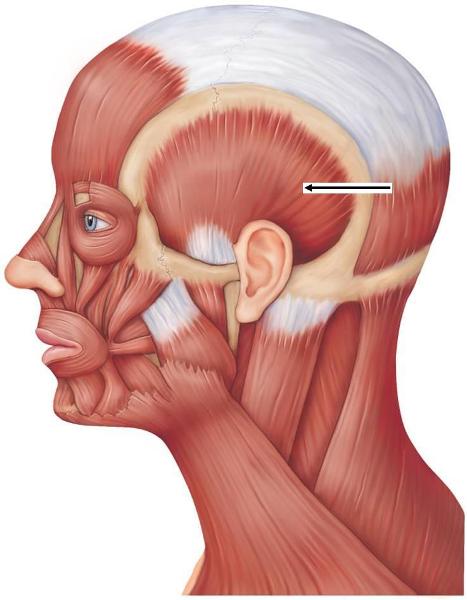
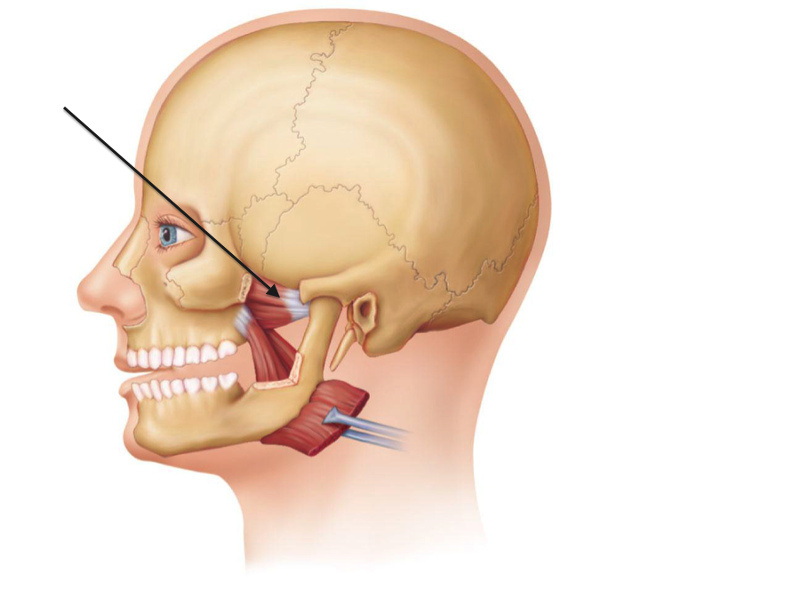
Identify and state TWO actions of (A)?
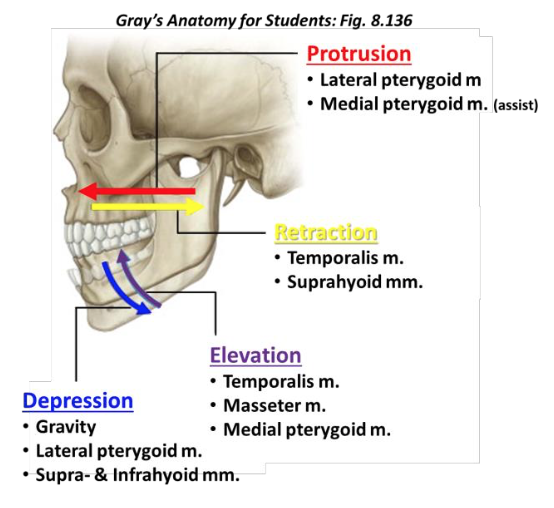
A) Temporalis Muscle
B) Elevation & Retraction of the Mandible
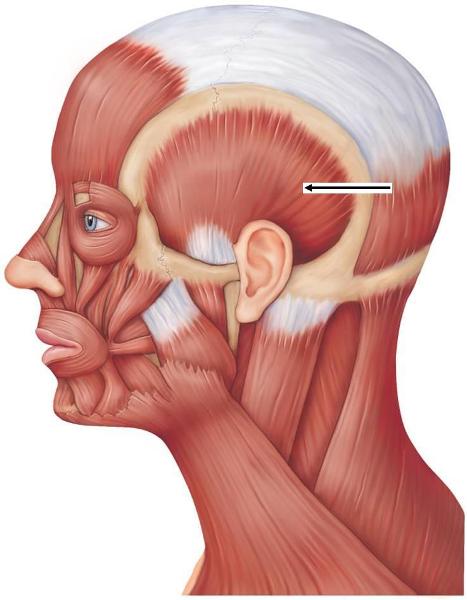
What is the origin and insertion of (A)?
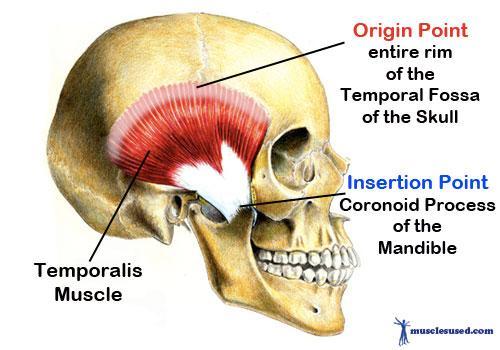
A) Temporal fossa of the skull
B) Coronoid Process of Mandible
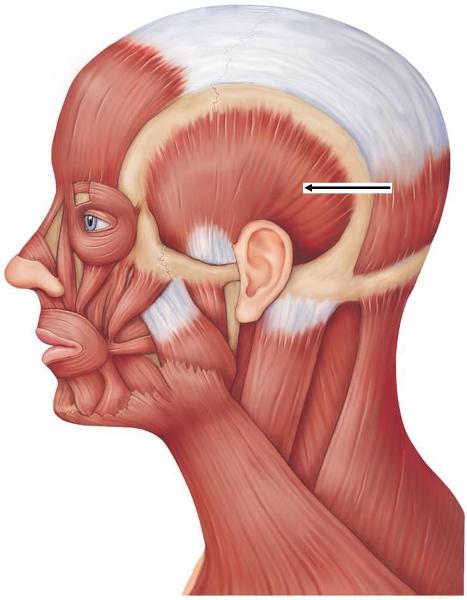
What are the unilateral actions of A?

Ipsilateral deviation
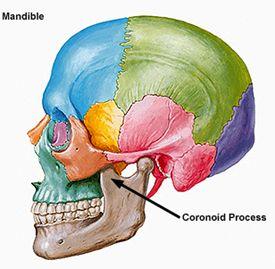
What muscle attaches to (C)?
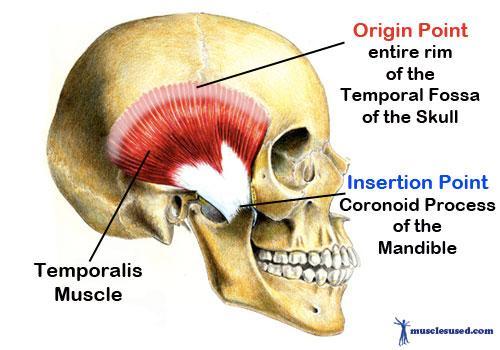
Temporalis Muscle
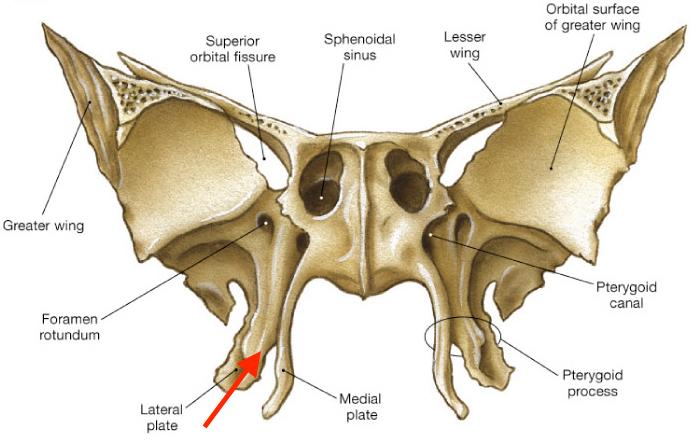
What muscle attaches to (D)?
Medial Pterygoid Muscle
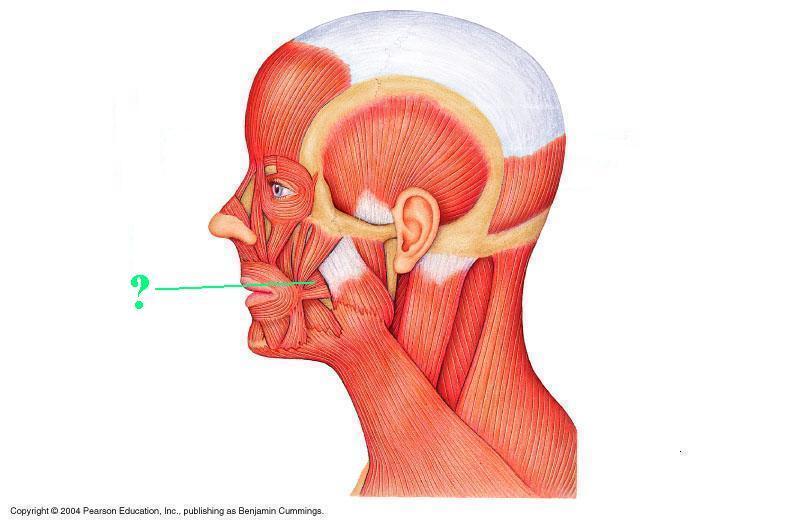
Identify and state the function of (A):
A) Buccinator – muscle
B) To compress the cheeks
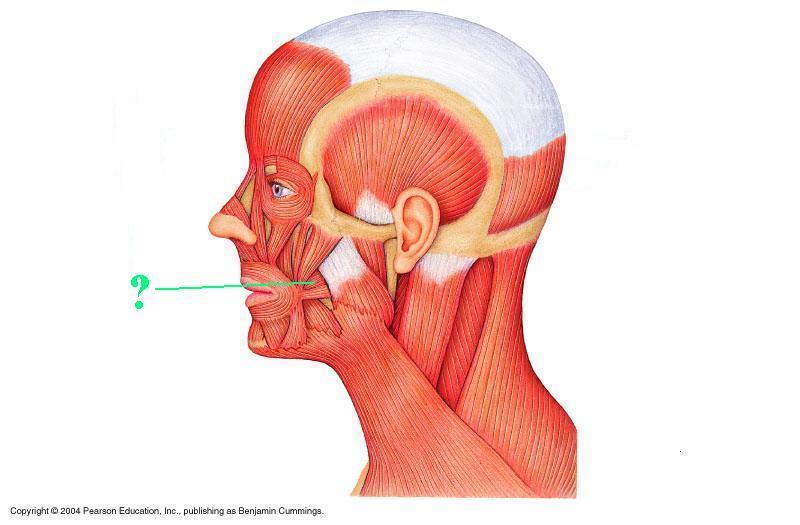
Identify and state the innervation of (C):
A) Buccinator – muscle
B) Facial Nerve
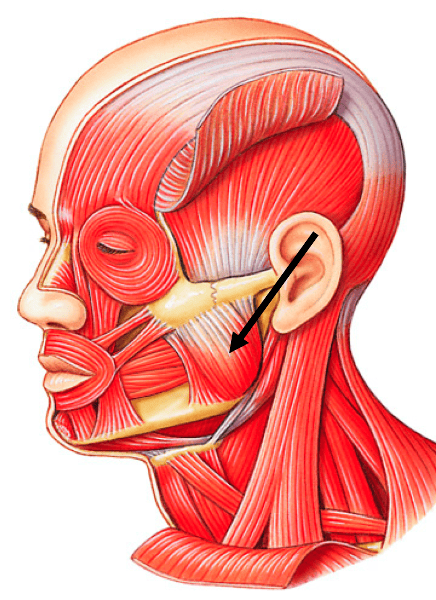
State the origin AND insertion of (B):
Origin: Zygomatic Arch
Insertion: Lateral Ramus & Angle of the Mandible
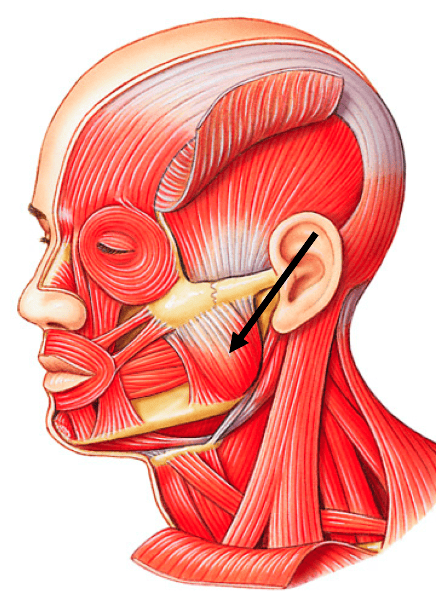
State 2 actions and the innervation of A?
A) elevates & protrude Mandible
B) Mandibular Nerve (Trigeminal)
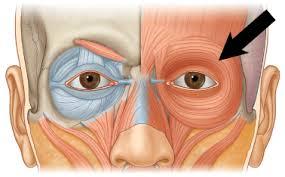
Identify and state the function and innervation of (B)?
A) Orbicularis Occuli – muscle
B) To close the eyelids
C) Facial Nerve
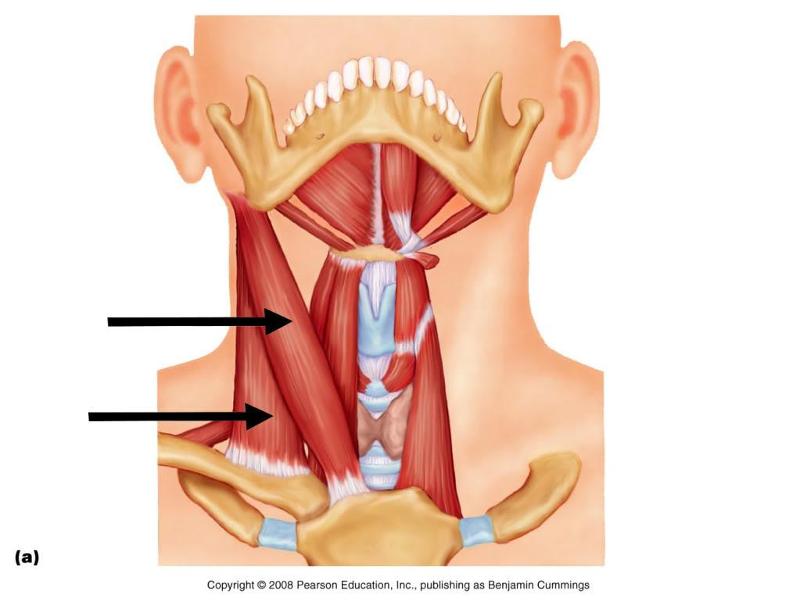
Identify and state the origin & insertion of (A):
A) Sternocleidomastoid – muscle
B) Manubrium & mediale clavicle
C) Mastoid Process & superior nuchal line – insertion
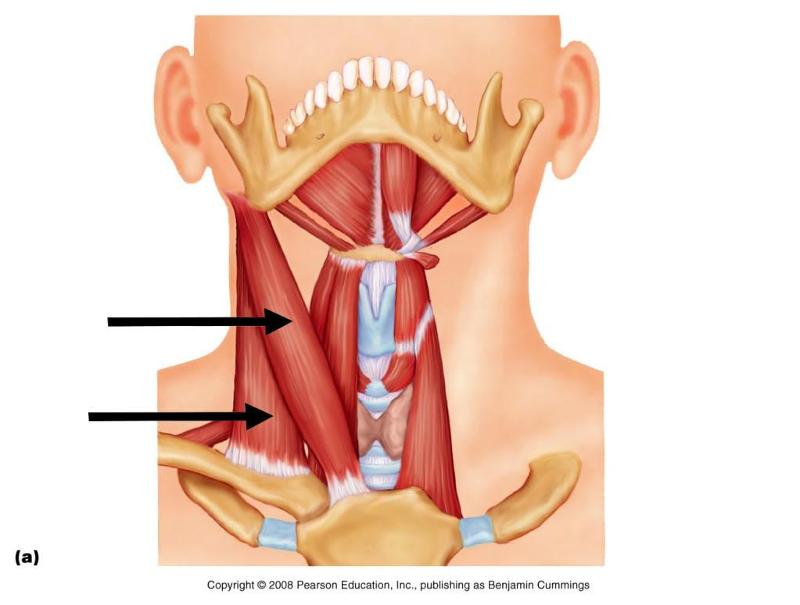
What is the shape AND fibre arrangement of (A)?
A) Strap – Shape
B) Parallel – Fibre Arrangement
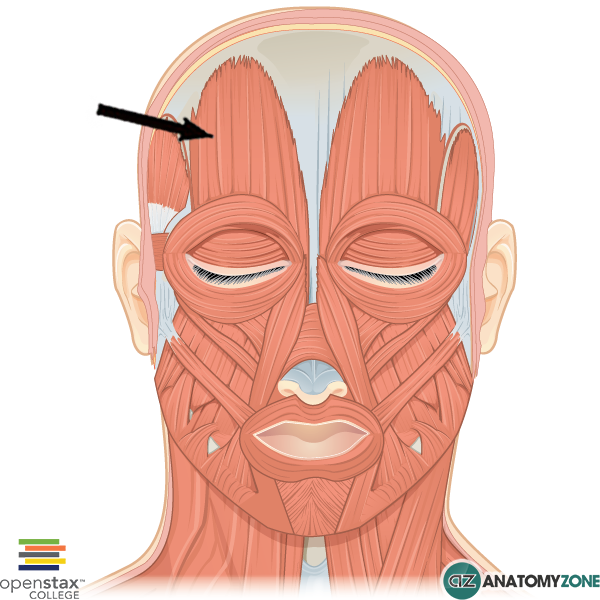
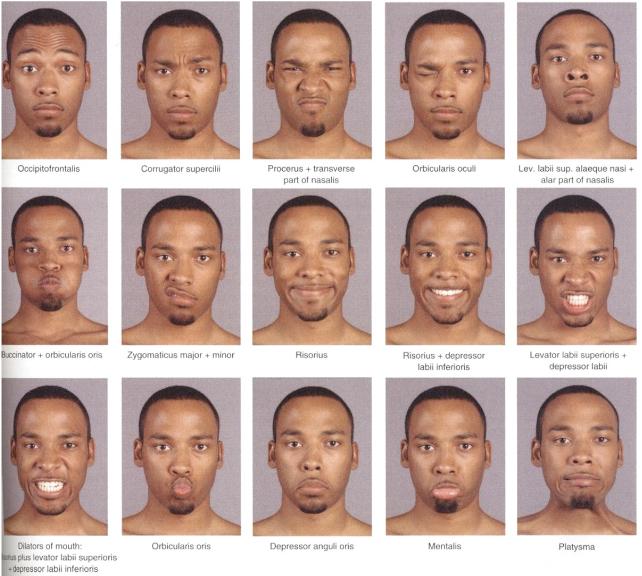
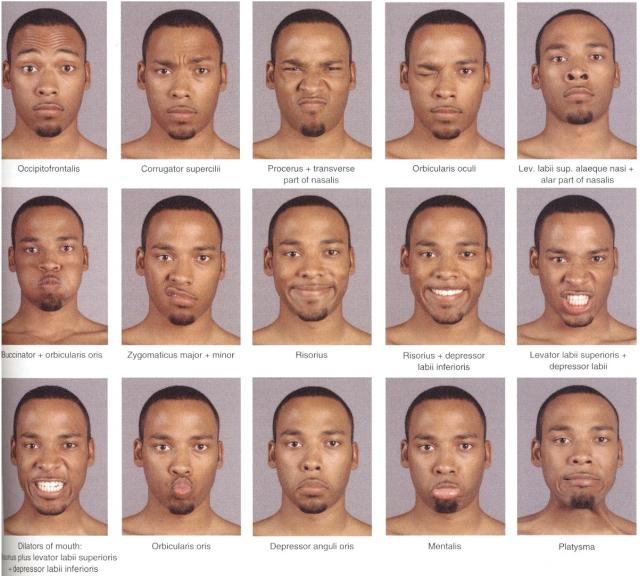
Identify (C) and state what emotional expression it executes?
A) Frontalis (Frontal Belly of Occipitofrontalis)
B) Surprise
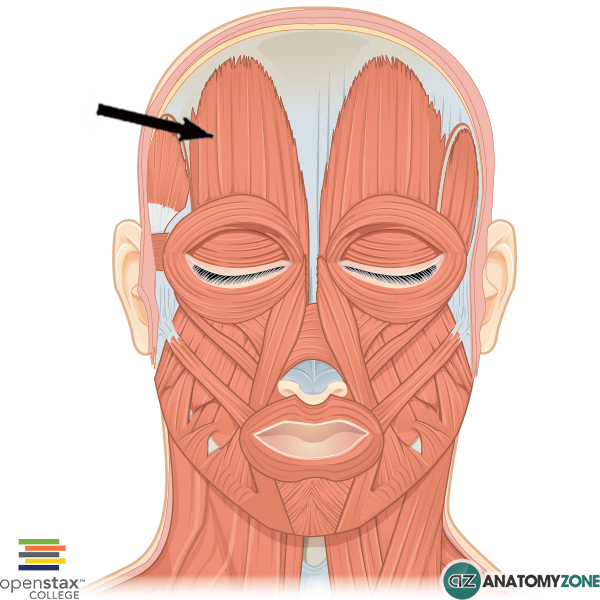
State TWO actions and the innervation of C?
A) moves scalp & elevates eyebrows
B) facial nerve
What innervates the muscles of facial expression?
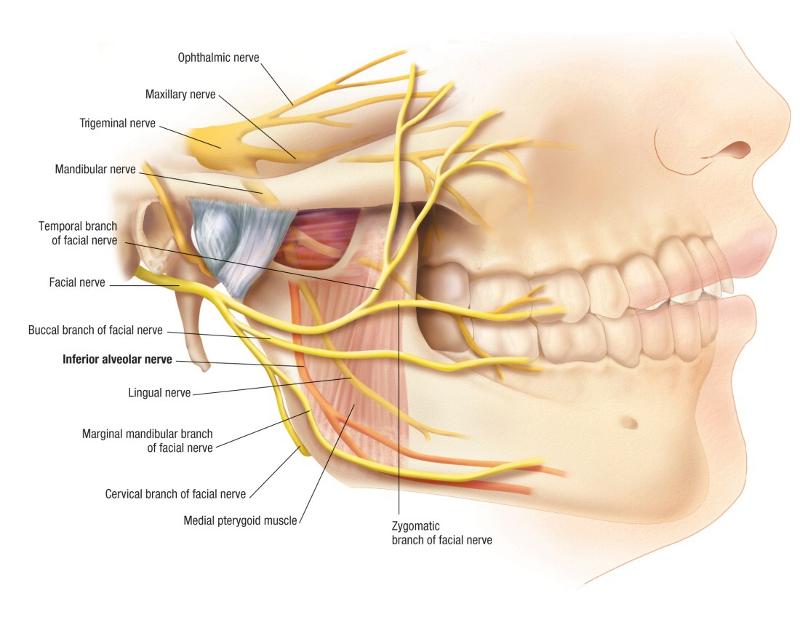
Facial Nerve (CNVII)
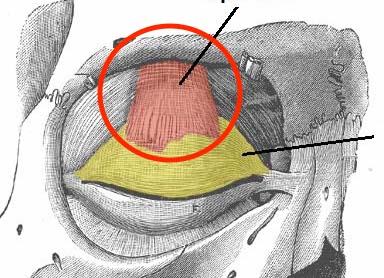
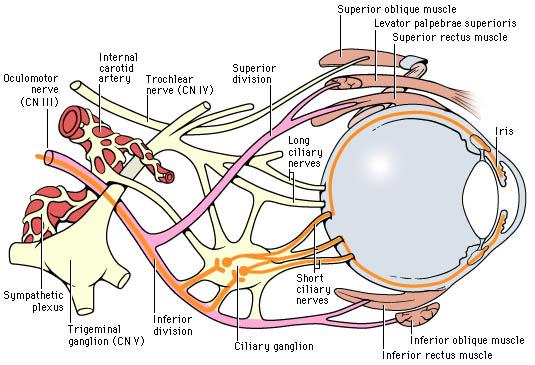
Identify A, state the action?
A) Levator Palpebrae Superioris
B) Elevates superior eyelid (opening the upper eyelid)
'What 'muscle of facial expression is NOT innervated by the Facial Nerve (CNVII)? State the innervation?
A) Levator Palpebrae Superioris
B) Oculomotor Nerve (CNIII)
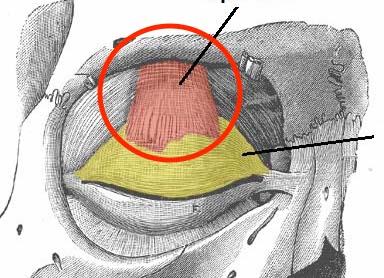
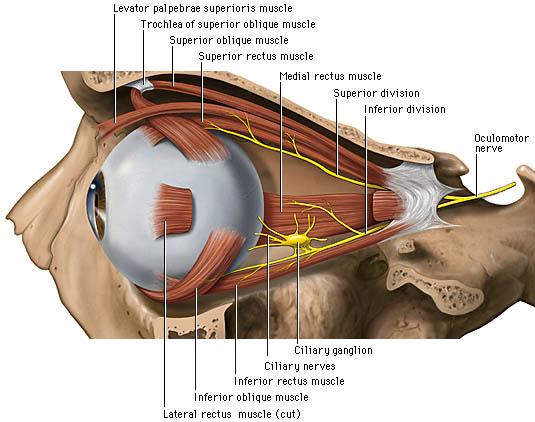
Identify (C)?
What is the innervation of (C)?
A) Levator Palpebrae Superioris
B) Oculomotor Nerve (CNIII)
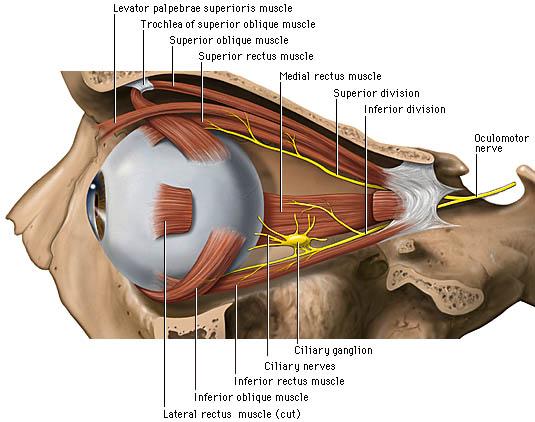
State which muscles are innervated by the Oculomotor Nerve (CNIII)?
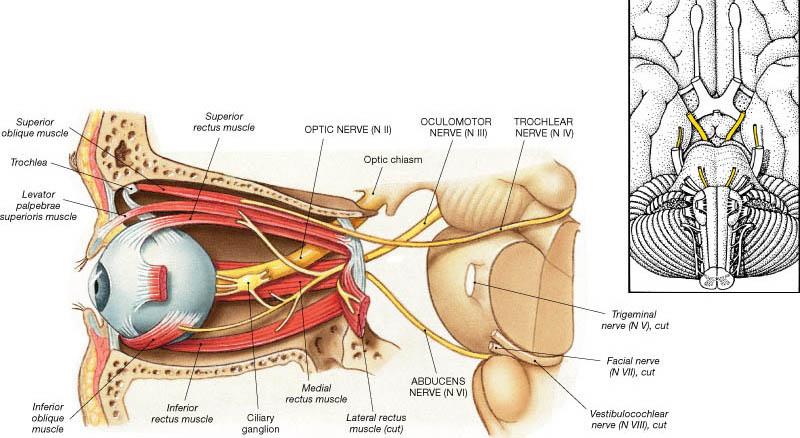
A) Extrinsic muscles of the eye: Superior, Inferior, Medial Rectus, Inferior Oblique
B) Facial Expression Muscle: Levator Palpebrae Superioris
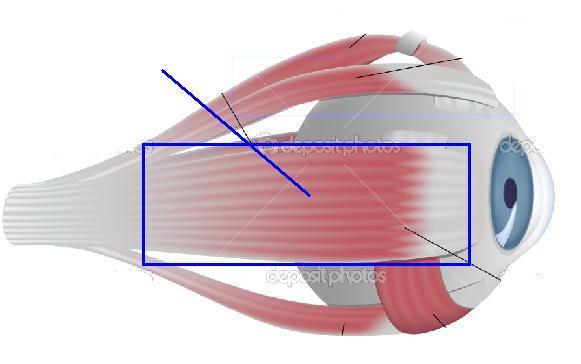
Identify (A)?
State the action & innervation?
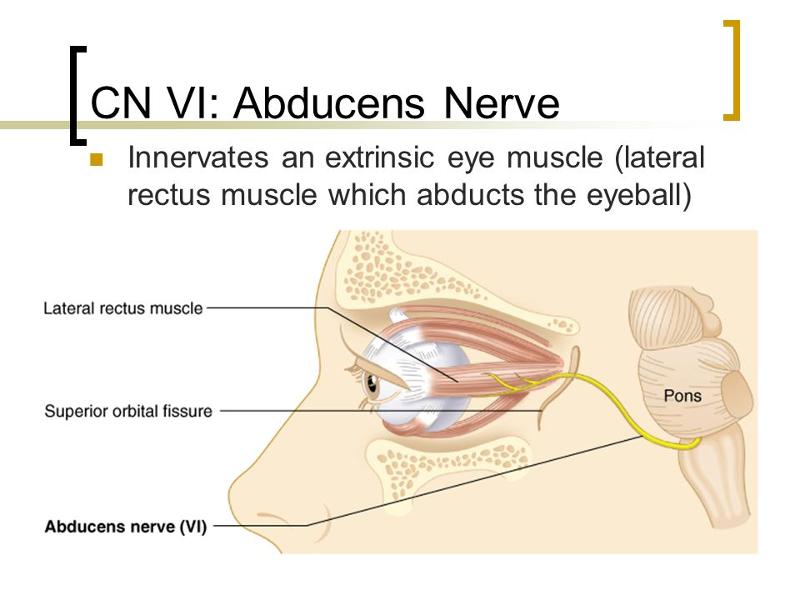
A) Lateral Rectus
B) Abduct Eye & Abducens Nerve
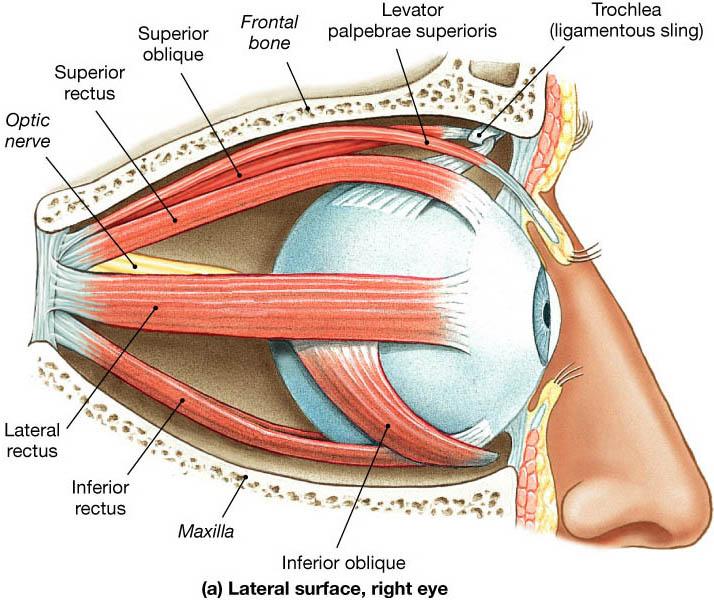
What do the extrinsic muscles of the eye: superior, inferior, medial and lateral rectus have in common?
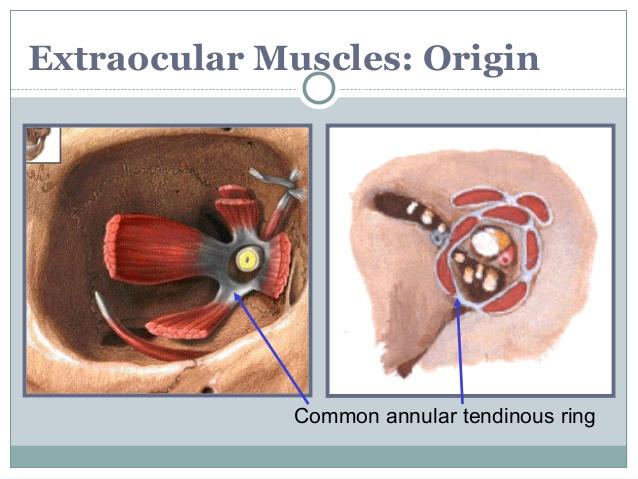
The origin: Common Tendinous Ring
What is the insertion & action of the Medial & Lateral Rectus of the eye?
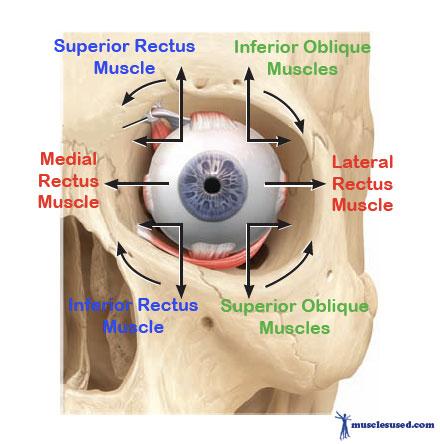
Medial: Anterior Medial Insertion, Adduct Eye
Lateral Anterior Lateral Insertion, Abduct Eye
What is the insertion & action of the Superior & Inferior Rectus of the eye?
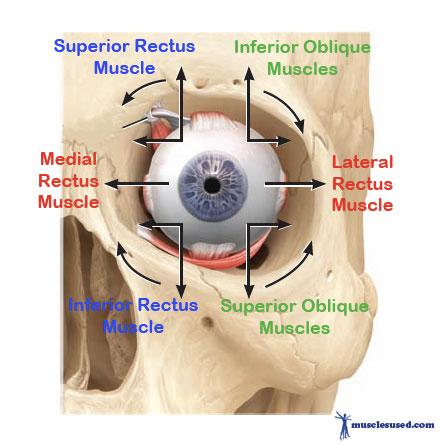
Superior: Anterior Superior Eyeball, elevation in abduction
Inferior: Anterior Inferior, depression in abduction
State origin, insertion, action & innervation of Superior Oblique?
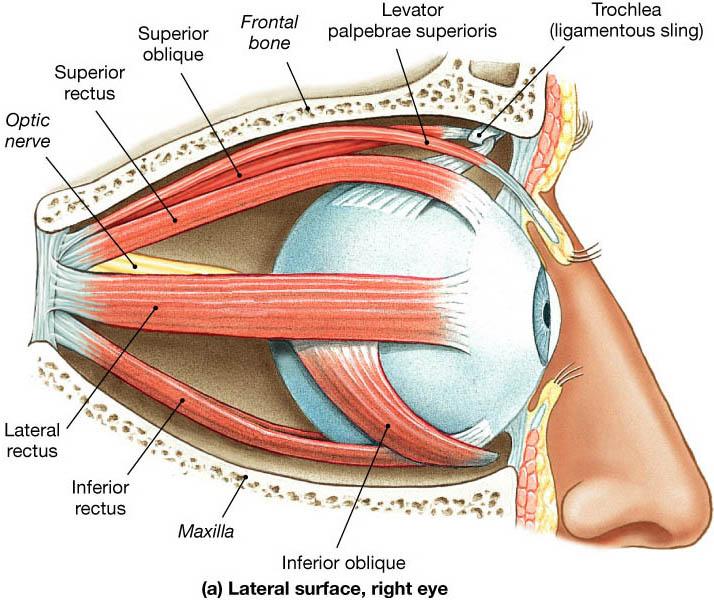
- Origin: Sphenoid in Orbit
- Insertion: Posterior Superior Eyeball
- Action: Depression in Adduction
- Innervated: Trochlea Nerve
State origin, insertion, action & innervation of Inferior Oblique?
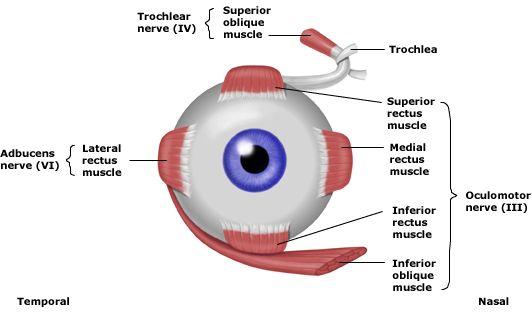
- Origin: Orbital portion of Maxilla
- Insertion: Posterior Inferior Eyeball
- Action: Elevation in Adduction
- Innervated: Oculomotor Nerve
What intrinsic eye muscles are active when eyeball is looking downward medially?
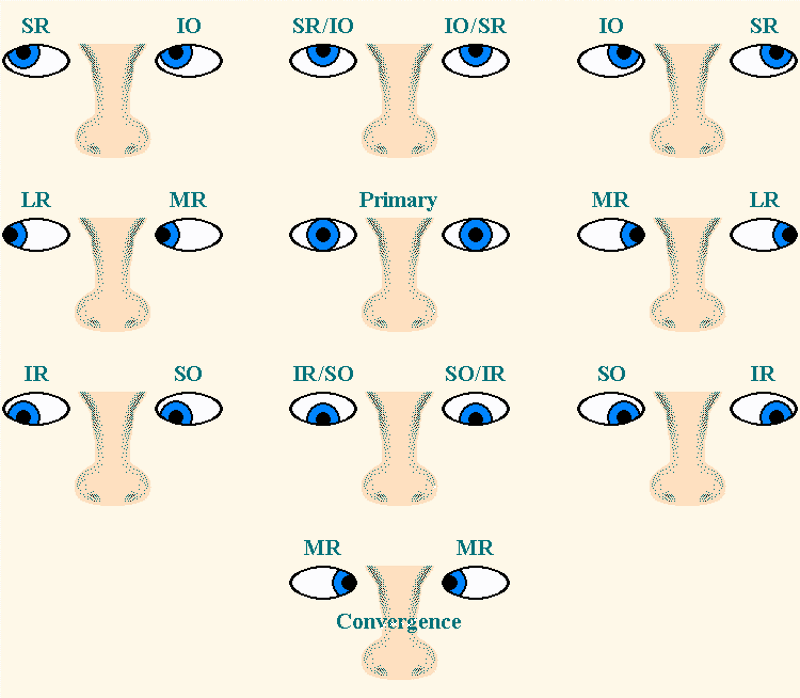
A) Right Eye: Inferior Rectus / Superior Oblique
B) Left Eye: Superior Oblique / Inferior Rectus
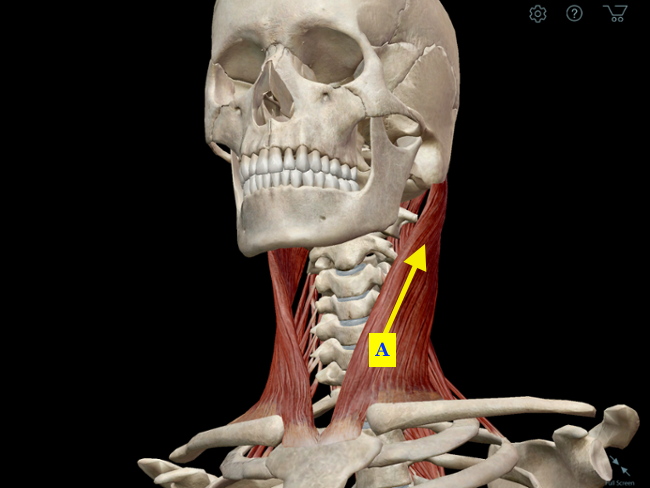
Identify (A) and state the origin AND insertions?
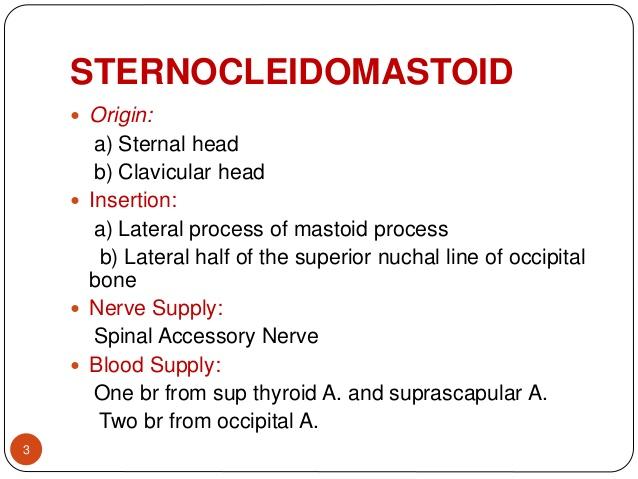
(A): Sternocleidomastoid
(B): ORIGIN: Manubrium & Medial Clavicle
(C): INSERTION: Mastoid Process & Superior Nuchal Line
State the innervation and actions of SCM?
(A): Accessory Nerve
(B): BILATERAL: UPPER & LOWER CERVICAL EXTENSION
(C): UNILATERAL: IPSILATERAL LATERAL FLEXION & CONTRALATERAL ROTATION
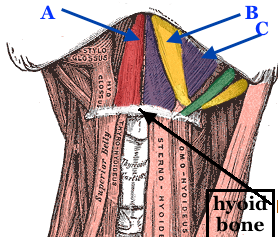
Identify the SUPRAHYOID (A) (B) (C) Muscles & state the collective unilateral action?
(A) GENIOHYOID (B) DIGASTRIC (C) MYLOHYOID
(D) ELEVATE HYOID & LARYNX OR DEPRESS MANDIBLE; if mandible fixed = elevate hyoid (swallowing), if hyoid fixed = depress mandible (mastication)
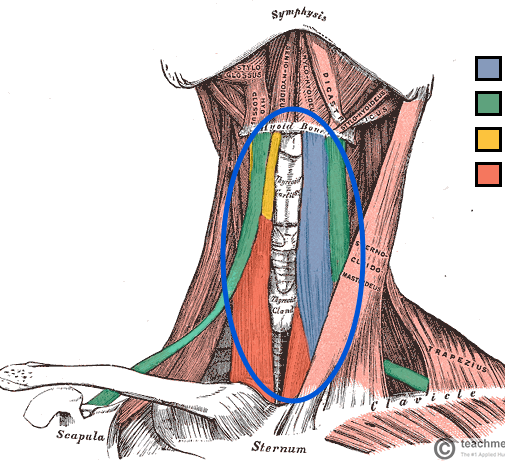
Identify this group of muscles & state the Unilateral action?
(A): Infrahyoid
(B): DEPRESS HYOID & MOVE THE LARYNX