Blood Vessels of the Upper Limb
In the correct order, what are the three major arteries that branch off the aortic arch?
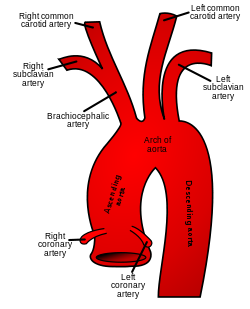
Brachiocephalic trunk, left common carotid a., left subclavian a.
The superficial vein that travels along the ulnar side of the forearm is the __________.
basilic v
Which artery travels with the radial nerve to supply the muscles located in the posterior compartment of the arm?
deep brachial v
What superficial vein travels in a groove between the deltoid muscle and the pectoris major muscle (i.e. the deltopectoral groove)?
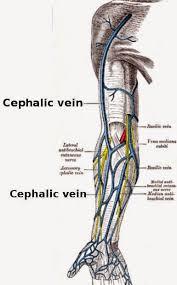
cephalic v
The __________ supplies oxygenated blood to the muscles of the anterior compartment of the arm.
brachial a
In the upper limb, the brachial artery can be found ___________.
with the median nerve in the cubital fossa
on the right side of the body, what is the order of the blood supply to the upper limb?
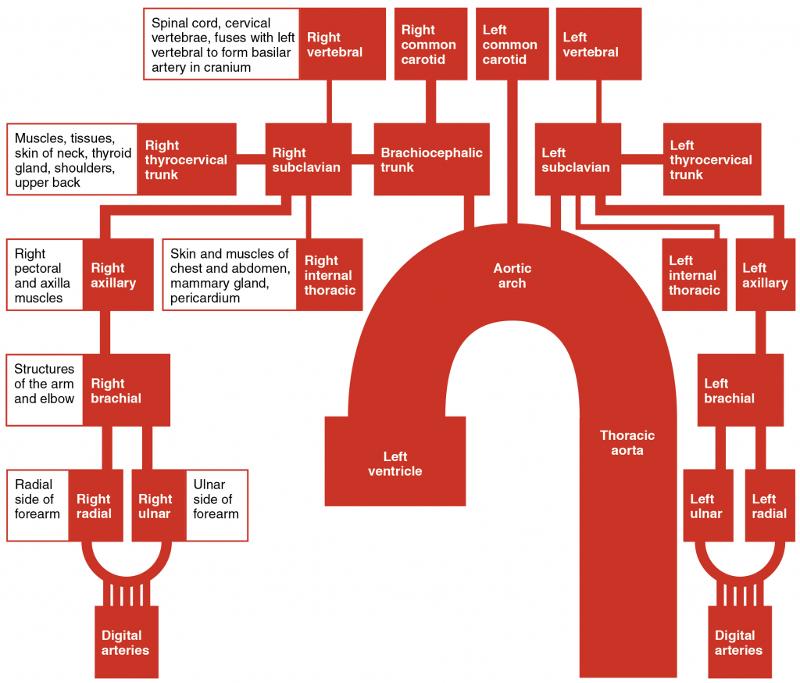
left ventricle, ascending aorta, arch of aorta, brachiocephalic trunk, right subclavian artery
What branches directly off the brachiocephalic trunk?
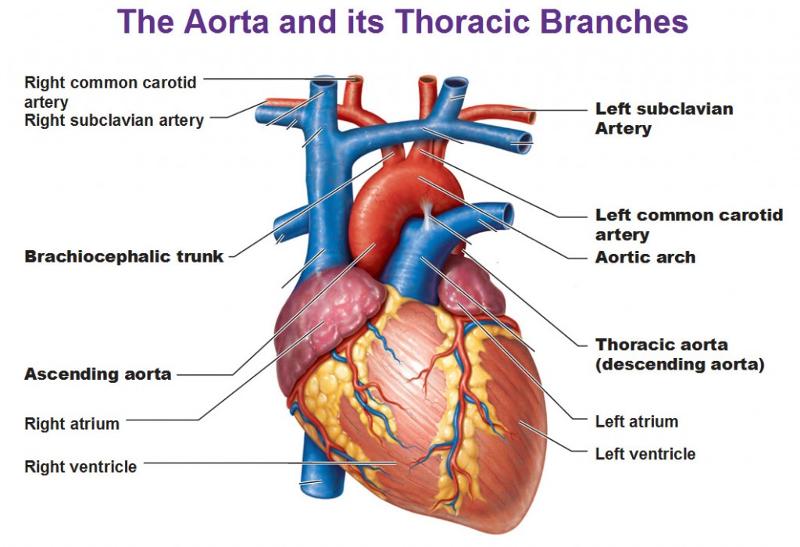
the right subclavian artery and the right common corotid artery
From the subclavian arteries downward, be able to draw flowchart
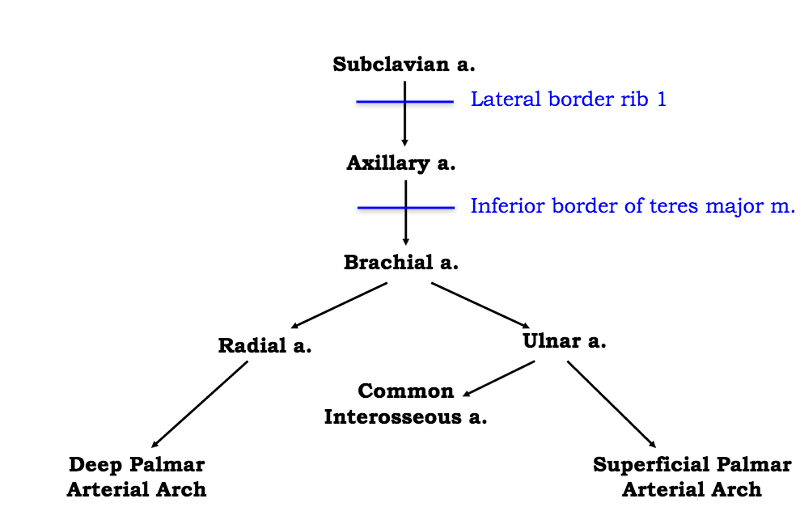
where does the axillary artery begin and end?
begins at the lateral border of rib one and ends at the inferior border of teres major
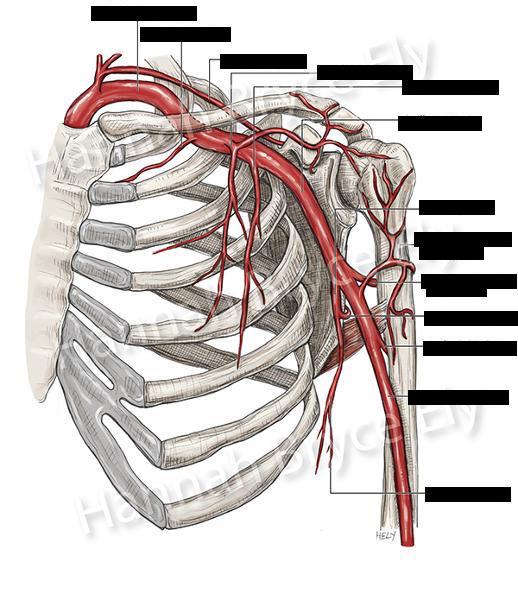
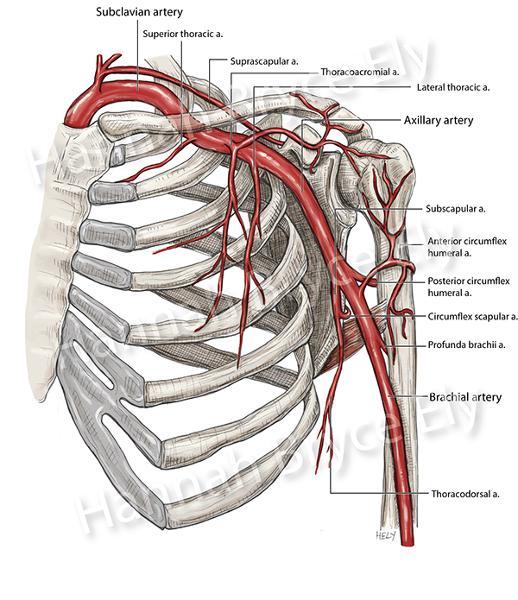
Be able to label
axillary
subclavian
suprascapular
superior thoracic
thoracocromial
lateral thoracic
subscapular
circumflex scapular
thoracodorsal
anterior circumflex humeral
posterior circumflex humeral
brachial artery
profunda brachii
what is the pathway of the superior thoracic artery and what does it feed?
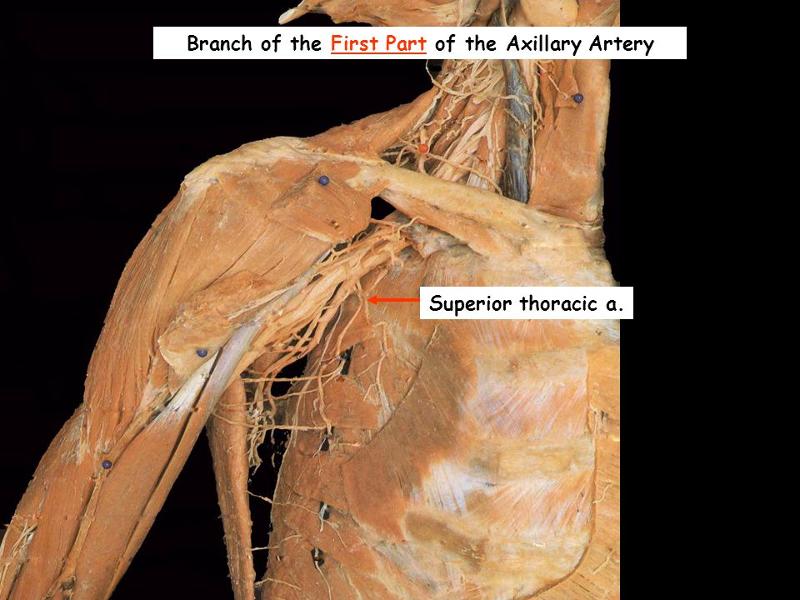
first branch of axillary artery. runs medially along superior border of pec minor. feeds top portion of serratus anterior
what is the pathway of thoracoacromial artery/trunk?
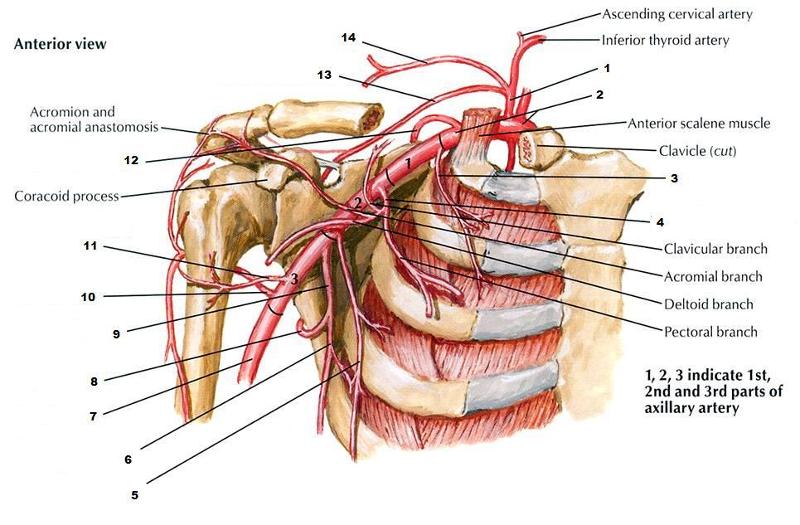
branches from axillary artery deep to pec minor then immediately branches four ways
(thoracoacromial is #4)
what is the pathway of the lateral thoracic artery? what does it supply?
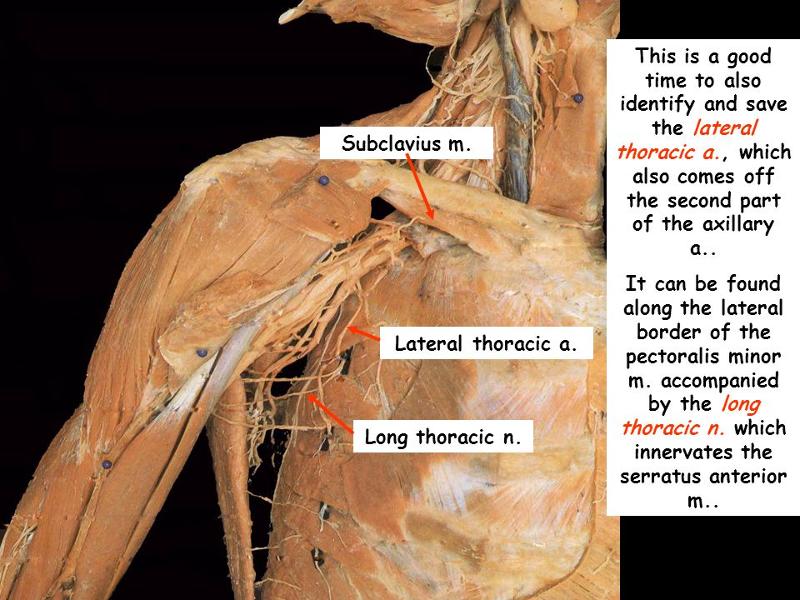
branches off axillary deep to pec minor and then runs with the long thoracic nerve. Supplies pec major and serratus anterior
what is the pathway of the subscapular artery?
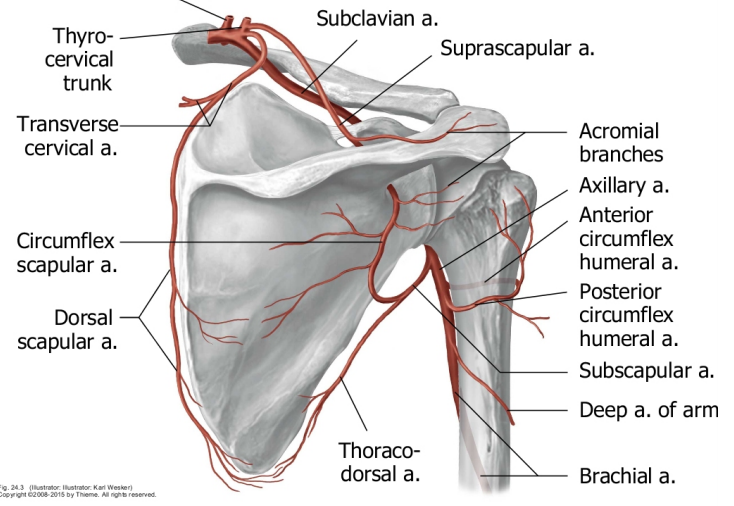
branches off axillary between lateral border of pec minor and inferior border of teres major. bifurcates into circumflex scapular artery and thoracodorsal.
what is the pathway of the circumflex scapular artery?
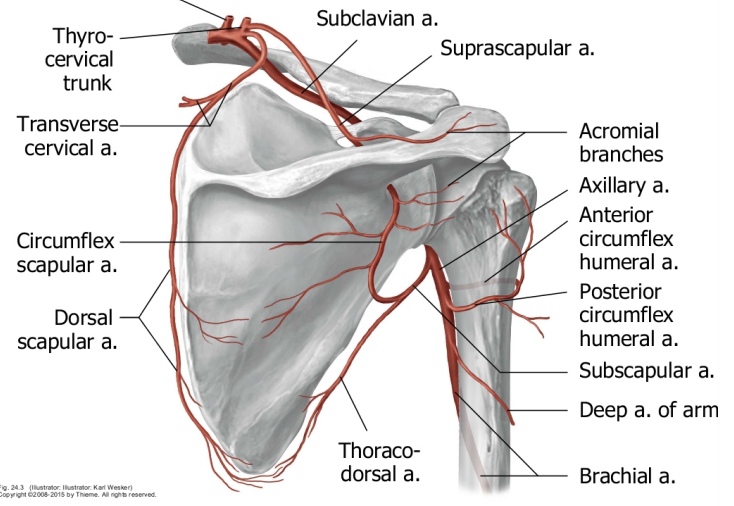
branches off th subscapular and curves around the lateral border of the scapula and trough the triangular space.
what is the pathway of the thoracodorsal artery and what does it feed? what nerve does it travel with?
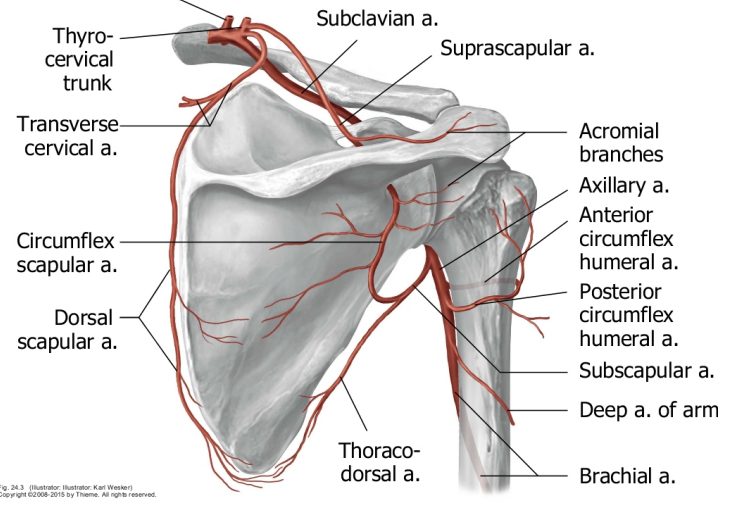
branches off the subscapular and travels inferior to thoracodorsal nerve. feeds latissimus dorsi
what is the pathway of the anterior circumflex humeral artery?
compare size of anterior and posterior circumflex humeral arteries.
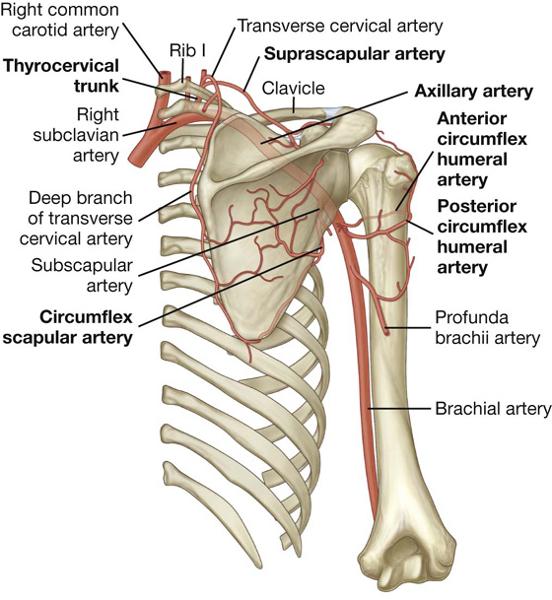
the anterior humeral circumflex artery runs horizontally, beneath the coracobrachialis and short head of the biceps brachii muscle, in front of the neck of the humerus. feeds head of humerus and shoulder joint and deltoids
(between anterior c h a and posterior c h a, this is smaller)
what is the pathway of the posterior circumflex humeral artery. what nerve does it run with? what special area does it go through?
what does it feed?
compare sizes with anterior circumflex humeral.
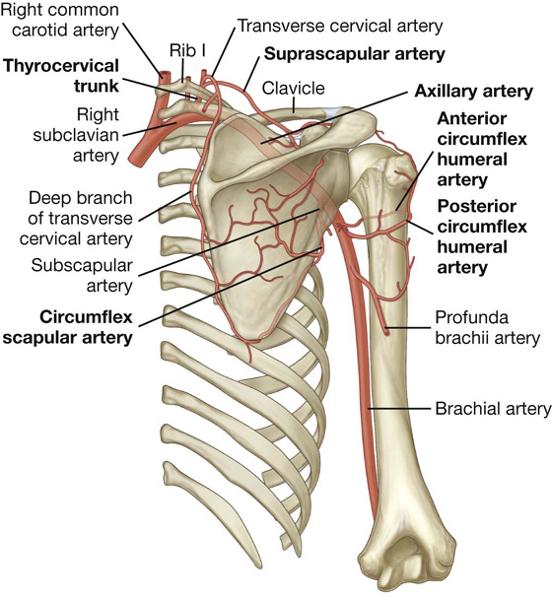
The posterior humeral circumflex artery (posterior circumflex artery, posterior circumflex humeral artery) arises from the axillary artery at the lower border of the subscapularis, and runs posteriorly with the axillary nerve through the quadrangular space.
feeds teres minor and deltoids.
(between anterior c h a and posterior c h a, this is bigger)
what is the pathway of brachial artery?
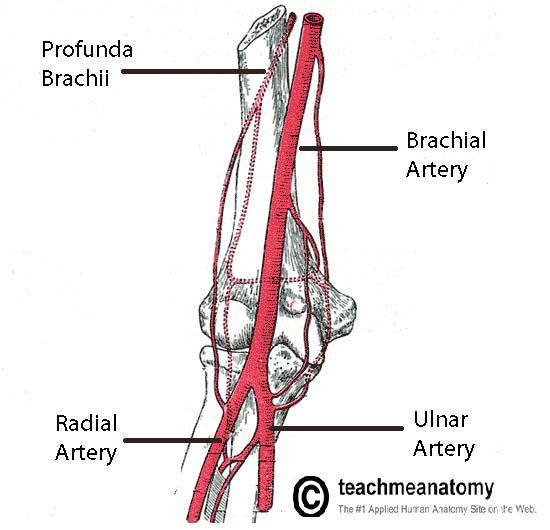
brachial artery is the continuation of the axillary artery and it spans from the inferior border of teres major to the proximal anterior forearm where it branches into radial artery and ulnar artery. also gives off the deep brachial artery.
what is the pathway of the deep artery of the arm (profunda brachii)?
what nerve does it travel with?
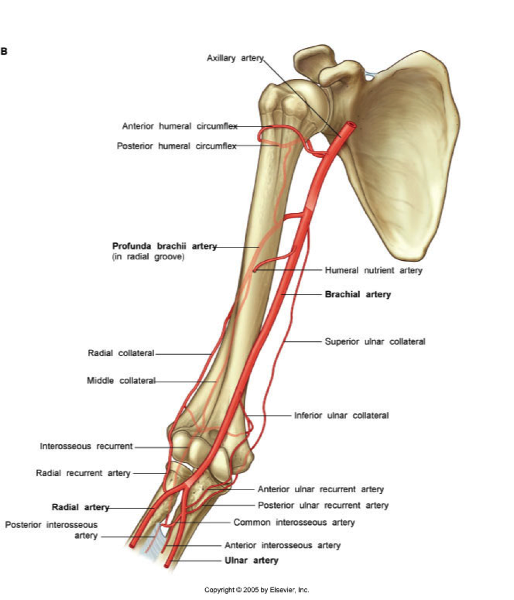
branches off brachial artery and travels in the radial groove with the radial nerve, in the posterior compartment of the arm
what is the pathway of the radial artery?
what special area does it travel through?
which palmar arch does it form?
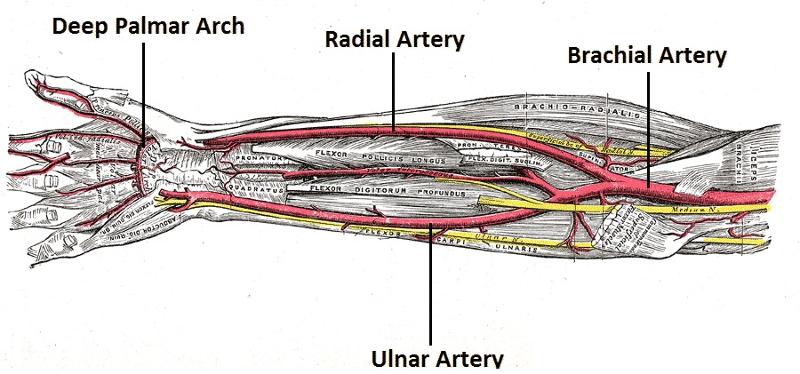
branches laterally off the brachial artery and travels through the lateral forearm to the anatomical snuffbox before entering the palm to form the deep palmar arch
what is the pathway of the ulnar artery?
what is the most important artery that it gives off?
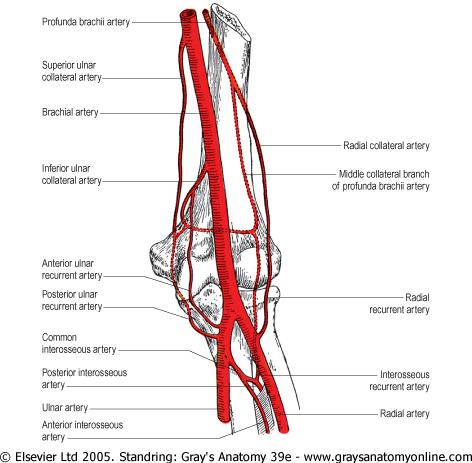
branches medially off brachial artery and immediately gives off the common interosseus artery.
then travels along medial forearm and forms the superficial palmar arch
what is the pathway of the common interosseus artery?
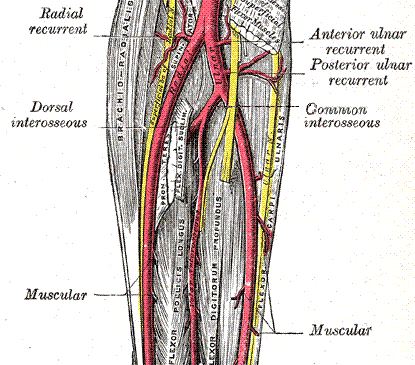
branches off ulnar artery
then branches into vessels that supply muscles that arise on the anterior and posterior surfaces of the interosseus membrane
what is an anastomoses?
where vascular channels unite or join.
what are the two types of vascular anastomoses?
arterial and venous
what are two examples of arterial anastomoses in the hand?
superficial and deep palmar arterial arches
what is a venae comitante?
paired veins that travel with areteries in the forearm
how are deep veins named?
typically travel with artery of same name and are mostly deep to muscles
what are the two primary superficial veins of the upper limb and where do they originate?
cephalic and basilic and they both orginate from venous anastomoses of the dorsum of the hand
what is the pathway of the cephalic vein?
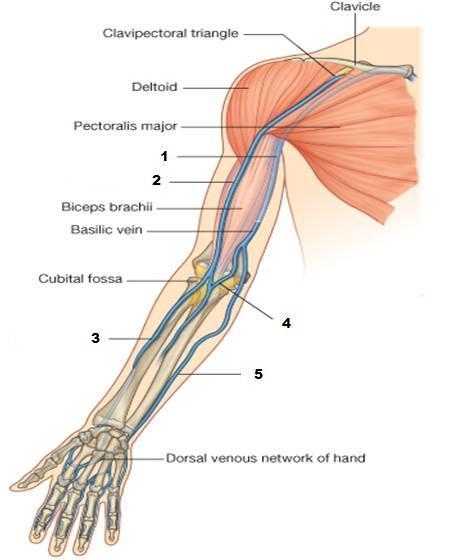
travels laterally in the forearm and arm and drains into axillary vein
what is the pathway of the basilic vein?
what does it join with before draining into the axillary vein?
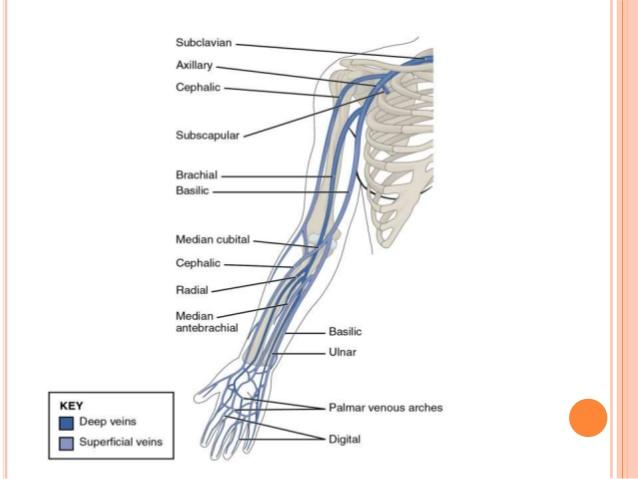
travels medially in the forearm and arm and joins the brachial venae comitantes to form the axillary vein
which two veins does the median cubital vein connect?
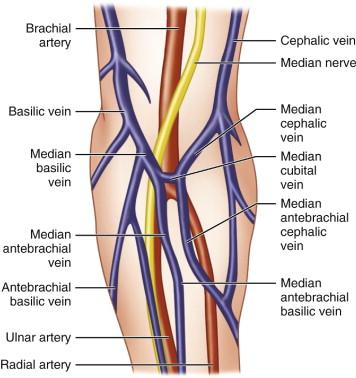
the basilic and cephalic
which vein is most commonly used to draw blood
median cubital vein
what is the pathway of venous return from the upper limbs?
draw flowchart
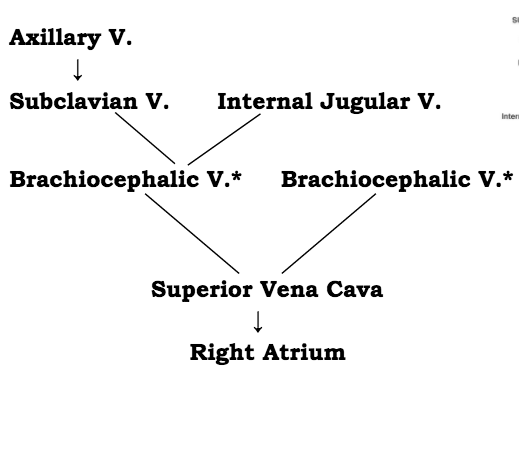
also remember that cephalic drains into axillary
basilic and brachial join to form axillary
origin, course, and distribution of occipital artery
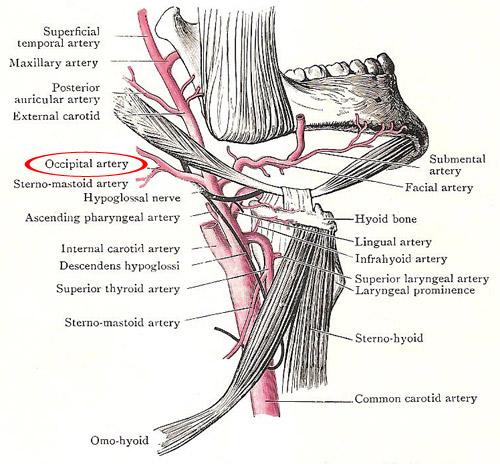
branch of external carotid artery
crosses apex of lateral cervical region
ascends to supply posterior half of scalp
origin and course of thoracodorsal artery
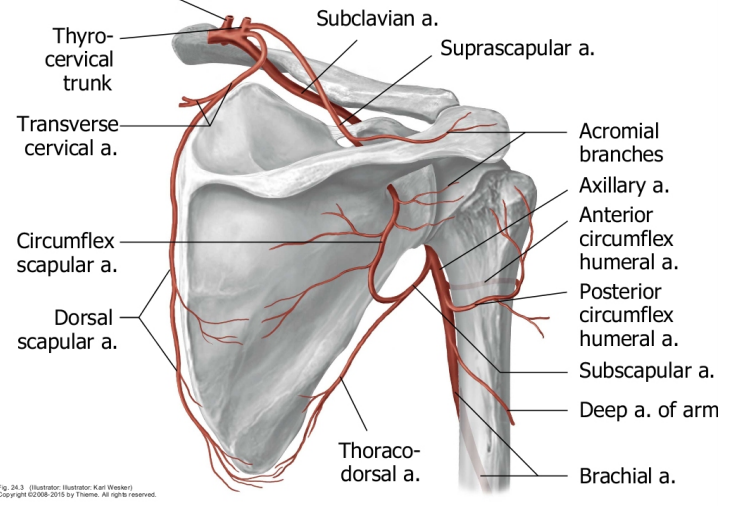
O subscapular artery
C continue course of subscapular artery, descending with thoracodorsal nerve to enter apex of latissimus dorsi
origin and course of dorsal scapular artery
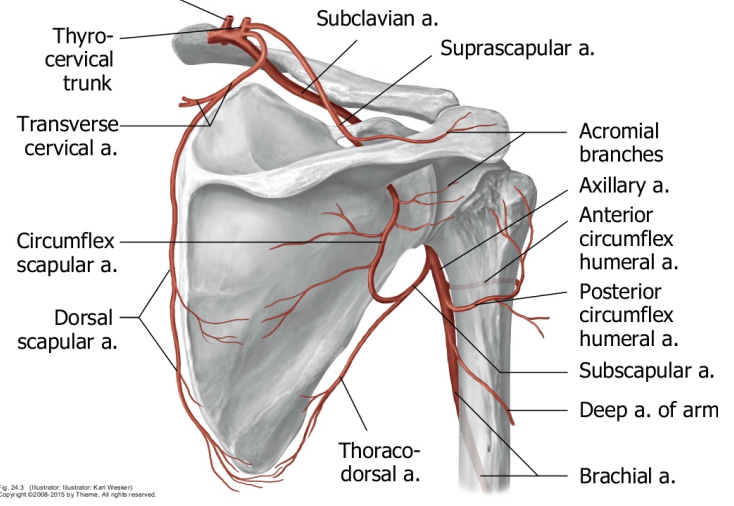
O arises from third part of subclavian artery
C runs along medial aspect of scapula
origin and course of lateral thoracic artery
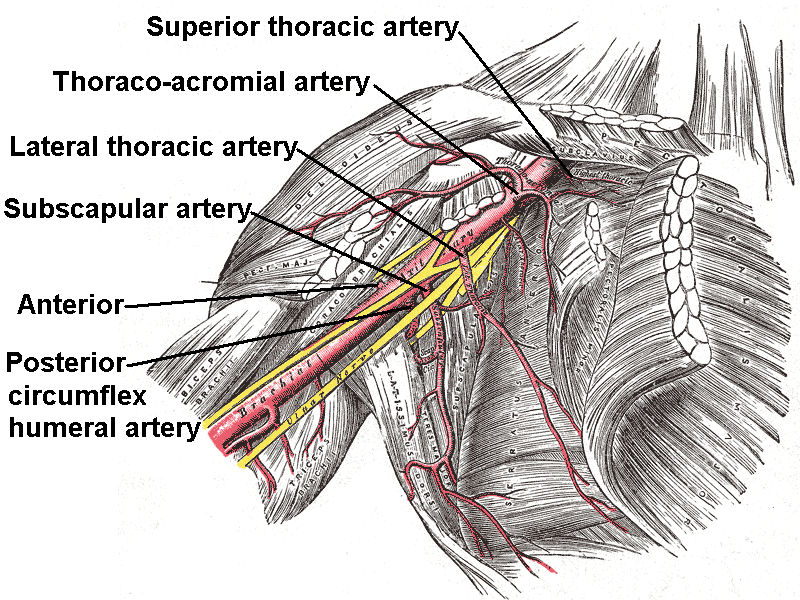
O second part of axillary artery
C descends along axillary border of of pec minor. follows it onto the thoracic wall, supplying the lateral aspect of the breast.
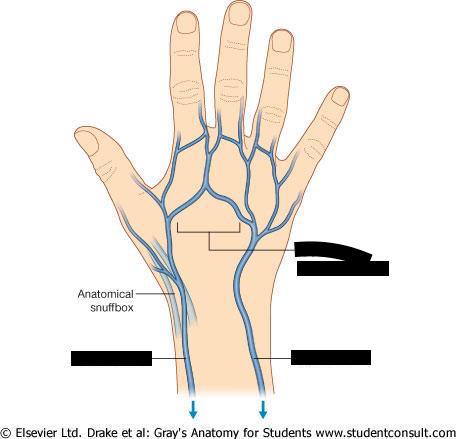
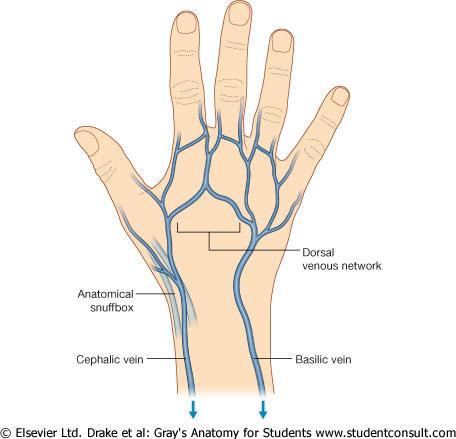
label
course and origin of suprascapular artery
origin - thyrocervical trunk
course - runs inferolaterally crossing subclavian artery, brachial plexus running parallel and posterior to clavicle. passes over transverse scapular ligament and supraspinous fossa and lateral to scapular spine deep to acromion to infraspinous fossa on posterior scapula. anastomoses with scapular circumflex
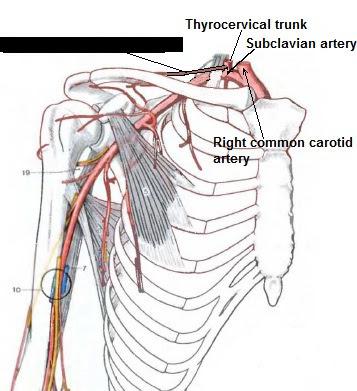
identify
suprascapular artery
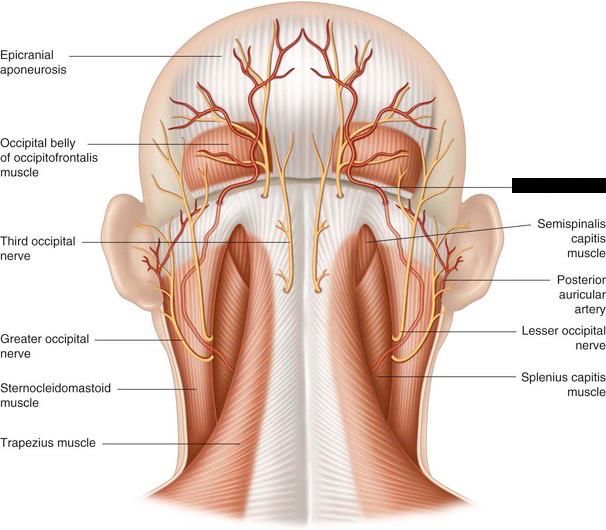
identify
occipital artery
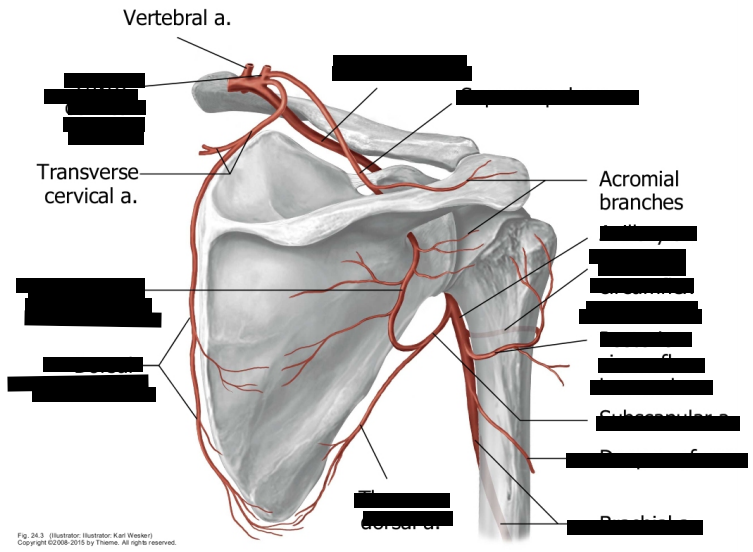
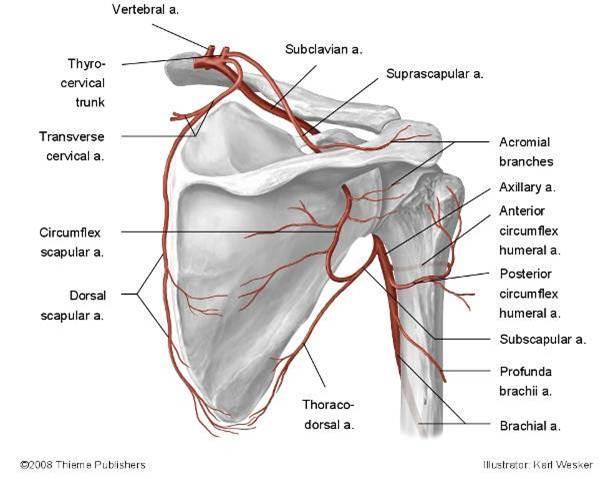
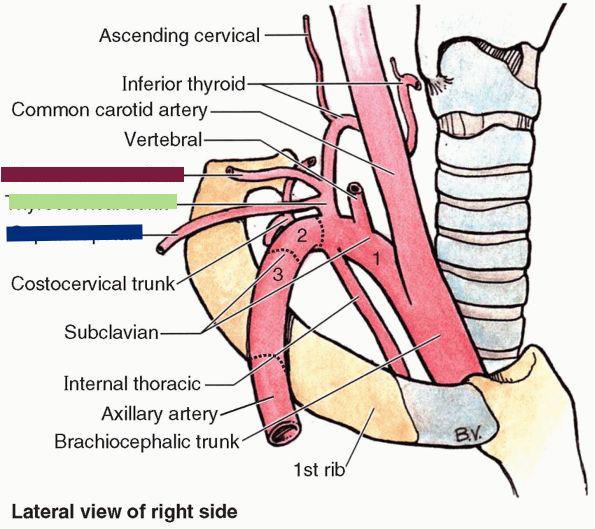
identify
red - transverse cervical
green - thyrocervical trunk
blue - suprascapular
origin and course of transverse cervical artery
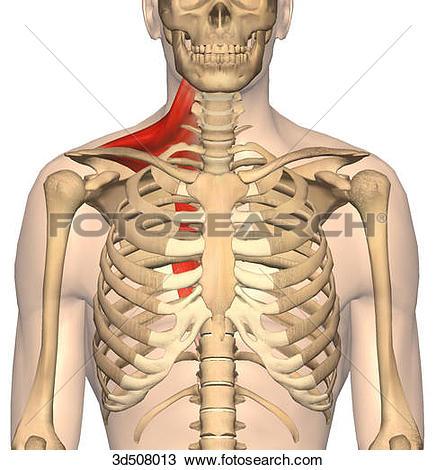
runs superior to suprascapular, deep to omohyoid and passes to anterior margin of trapezius where it splits into deep and superficial
what are the four branches of thoracoacromial artery?
acromial, pectoral, clavicular, deltoid
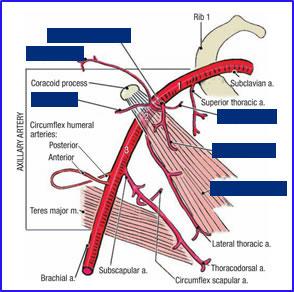
label
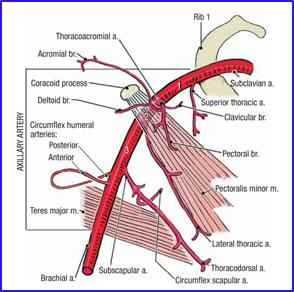
label
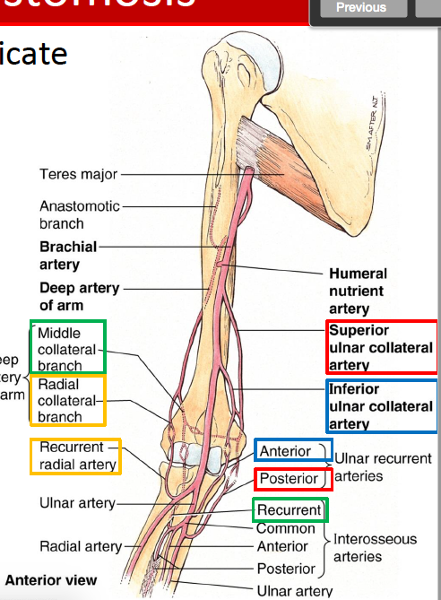
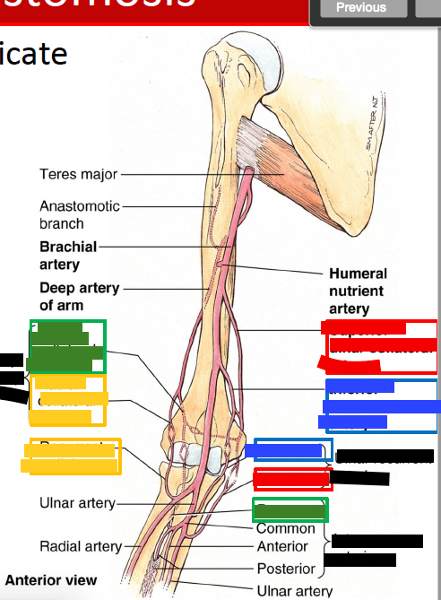
course and origin of superior ulnar collateral artery?
arises from brachial artery
accompanies ulnar nerve to posterior aspect of elbow
anastomoses with posterior ulnar recurrent
course and origin of inferior ulnar collateral
arises from brachial artery
passes anterior to medial epicondyle of humerus
anastomoses with anterior ulnar recurrent
origin and course of radial recurrent artery
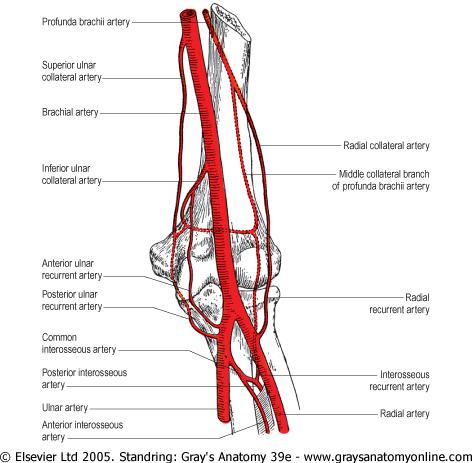
originates from the lateral side of the radial artery, just distal to brachial artery bifurcation
ascends between brachioradialis and brachials, supplying both muscles and the elbow joint
anastomoses with radial collateral artery
origin and course of radial collateral artery
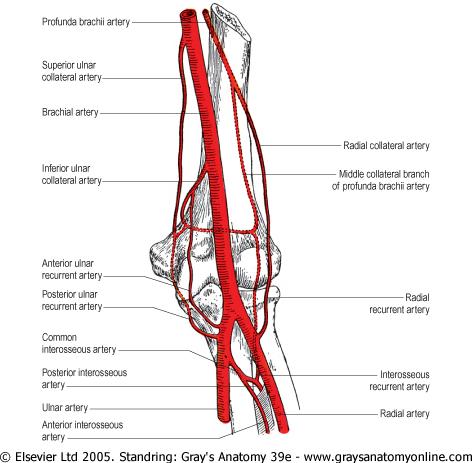
arises from profunda brachii and runs inferior to anastomos with radial recurrent on the lateral side of the arm
describe origin and location of dorsal carpal arch
arises from dorsal carpal branches of ulnar and radial arteries. on dorsum of hand over carpal bones. gives off the dorsal metacarpal arteries and anastomoses with interosseous arteries
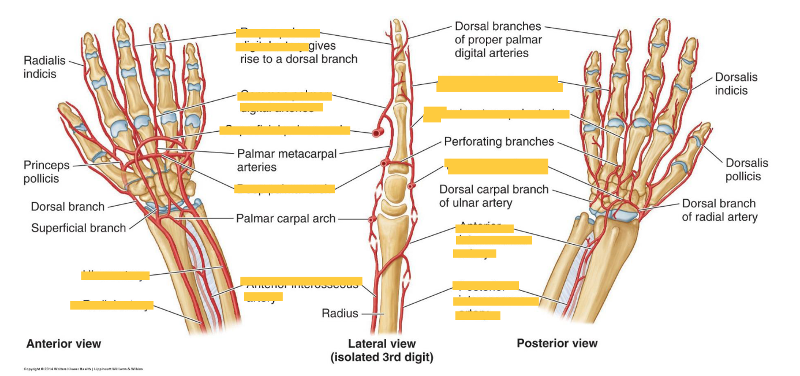
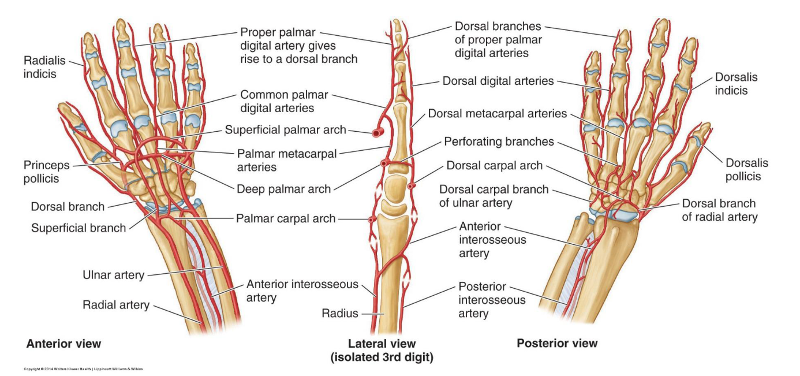
what forms the deep palmar arch?
where is it located?
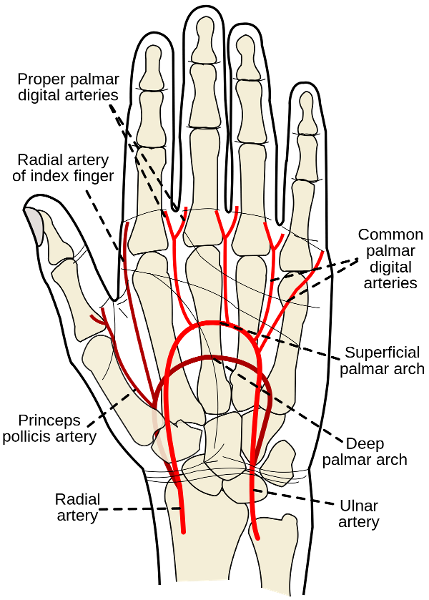
mainly the radial artery but the but also deep branch of ulnar artery
(this is how radial artery terminates)
lies across the metacarpals just distal to their bases
describe course of superficial palmar branch of radial artery
branches off radial artery about when radial artery winds around lateral side of wrist
goes over or through thenar muscles (which it supplies) to anastomose and form the superficial palmar arch
describe course and origin of dorsal metacarpal arteries
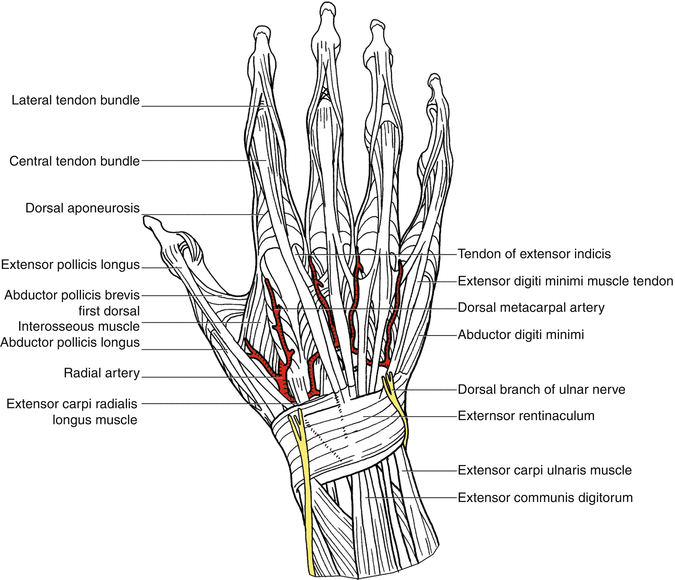
arise from dorsal carpal arch and run dorsal metacarpals before bifurcating into dorsal digital arteries
describe course and origin of dorsal digital arteries
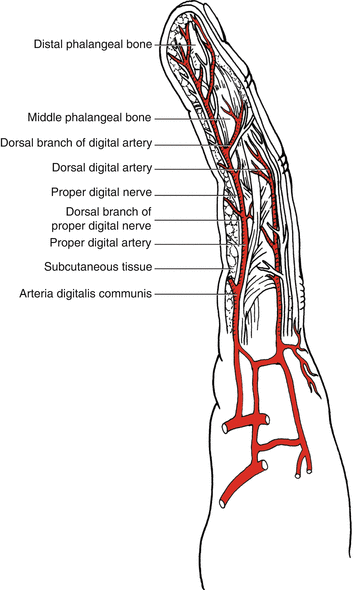
arise from dorsal metacarpal arteries and run alongside digits
describe path of anterior interosseous artery
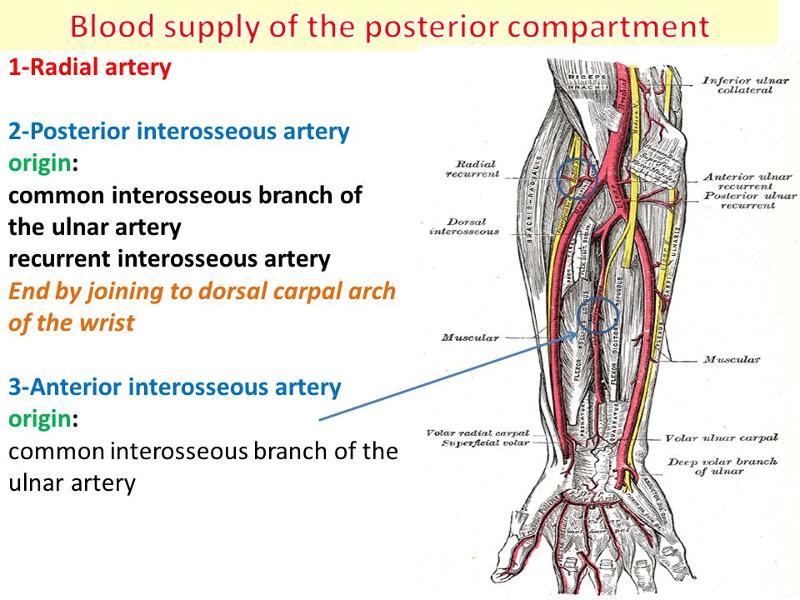
branches from common interosseous and runs down palmar surface of interosseous membrane. joins carpal dorsal network and feeds muscles that originate on interosseous membrane.
describe path of posterior interosseous artery
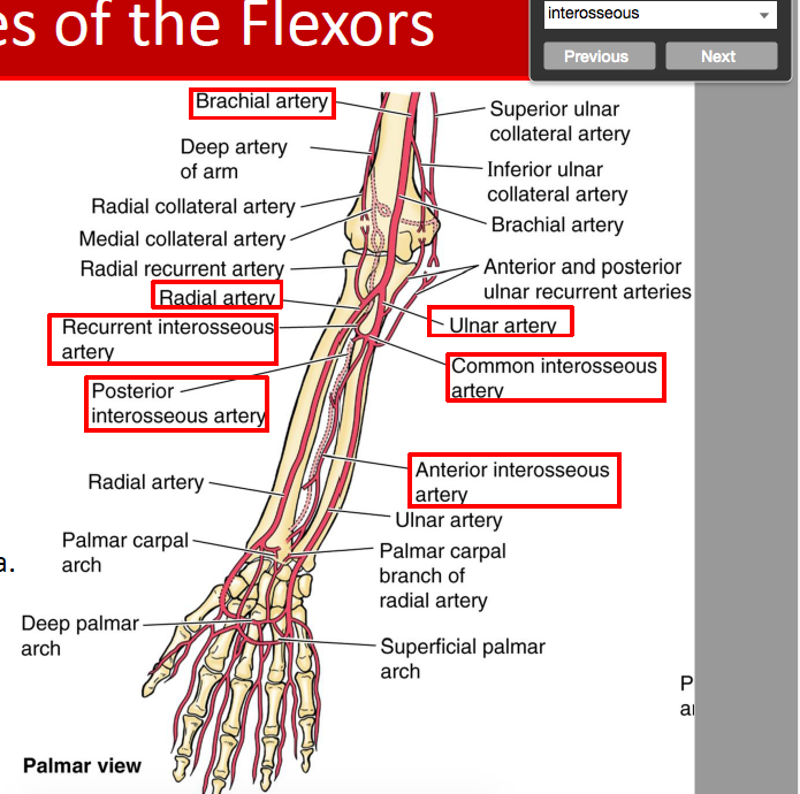
runs down back of forearm between deep and superficial muscles. gives off interosseous recurrent artery
describe path of interosseous recurrent artery
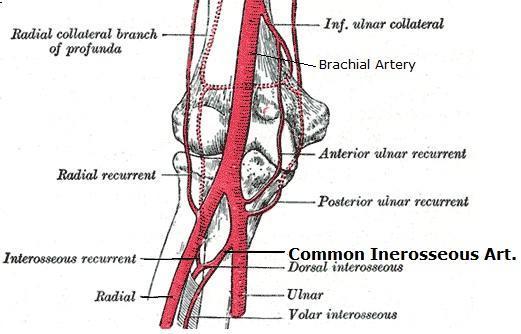
branches from posterior interosseous artery. anastamoses with middle collateral artery
travels between lateral epicondyle and olecranon
describe path of anterior ulnar recurrent
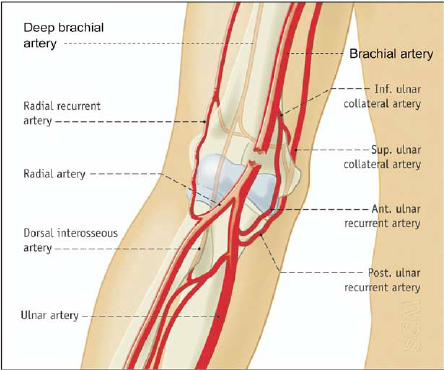
branches off ulnar artery and anastamoses with inferior collateral artery
It arises from the ulnar artery immediately below the elbow-joint, runs upward between the brachialis and pronator teres muscle and supplies twigs to those muscles. In front of the medial epicondyle it anastomoses with the superior and Inferior ulnar collateral arteries.
describe path of posterior ulnar recurrent
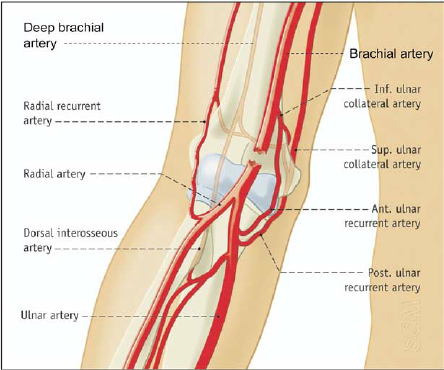
branches from ulnar artery and anastamoses with superior ulnar collateral
ascends behind the medial epicondyle of the humerus.
describe location of superficial branch of ulnar artery
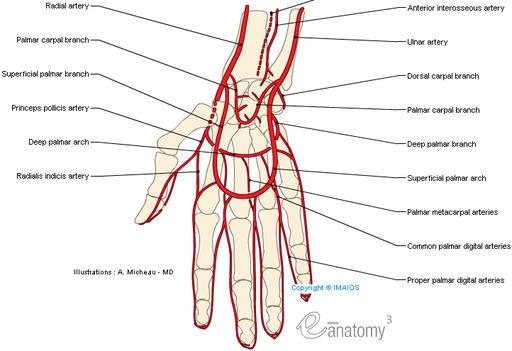
branches from ulnar artery
helps to form superficial palmar arch
describe course of common palmar digital arteries
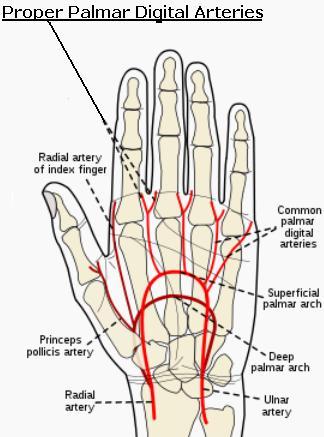
arise from superficial palmar arch. there are three.
run along metacarpals
split into proper palmar digital arteries
describe course of proper palmar digital arteries
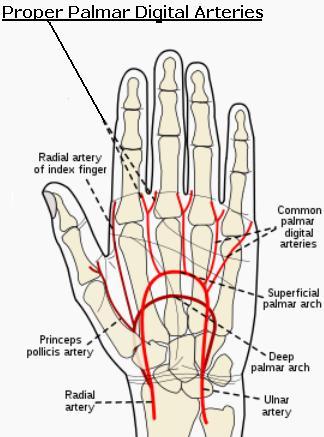
arise from common palmar digital arteries. travel along phalanges.
describe deep palmar branch of ulnar artery
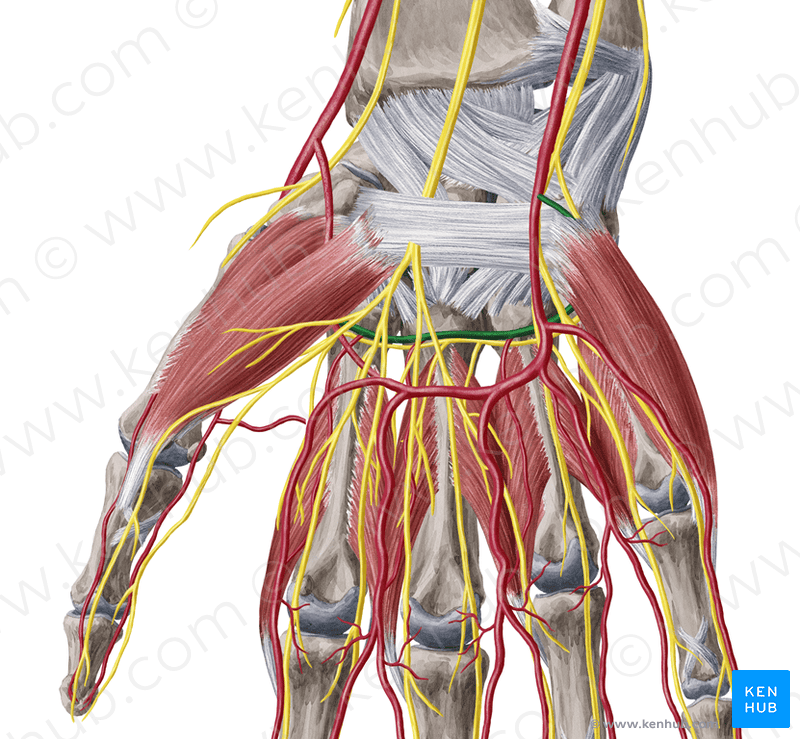
contributes to deep palmar arch (but most comes from radial artery)
the superficial palmar arch is mainly formed by radial or ulnar artery?
deep palmar arch?
superficial - ulnar
deep - radial