Chapter 25: The Urinary System (Mastering)
Which of the following best describes glomerular filtration rate (GFR)?
the volume of urine leaving the kidneys per minute
the volume of blood flowing through the glomerular capillaries per minute
the volume of filtrate created at the glomerulus per liter of blood flowing through the glomerular capillaries
the volume of filtrate created by the kidneys per minute
the volume of filtrate created by the kidneys per minute
GFR regulation mechanisms primarily affect which of the following?
capsular osmotic pressure (OPc)
blood osmotic pressure (OPg)
glomerular hydrostatic pressure (HPg)
capsular hydrostatic pressure (HPc)
glomerular hydrostatic pressure (HPg)
Which of the following are mechanisms of intrinsic control of glomerular filtration (renal autoregulation)?
myogenic mechanism and sympathetic nervous system control
myogenic mechanism and tubuloglomerular feedback
tubuloglomerular feedback and the renin-angiotensin mechanism
sympathetic nervous system control and the renin-angiotensin mechanism
myogenic mechanism and tubuloglomerular feedback
Macula densa cells of the juxtaglomerular apparatus (JGA) regulate GFR through which intrinsic mechanism?
myogenic mechanism
tubuloglomerular feedback s
ympathetic nervous system control
renin-angiotensin mechanism
tubuloglomerular feedback
The myogenic mechanism of renal autoregulation primarily involves smooth muscle in which blood vessels?
efferent arterioles
systemic arterioles
glomeruli
afferent arterioles
afferent arterioles
What does a high concentration of NaCl in the renal tubule at the juxtaglomerular apparatus (JGA) most likely indicate?
insufficient NaCl reabsorption due to low GFR
excessive NaCl reabsorption due to low GFR
excessive NaCl reabsorption due to high GFR
insufficient NaCl reabsorption due to high GFR
insufficient NaCl reabsorption due to high GFR
Through the tubuloglomerular feedback mechanism, how would an increase in filtrate NaCl concentration affect afferent arteriole diameter?
Afferent arteriole diameter would decrease.
Afferent arteriole diameter would stay about the same.
Afferent arteriole diameter would increase.
Afferent arteriole diameter would decrease.
Granular cells of the juxtaglomerular apparatus (JGA) regulate GFR indirectly through which mechanism?
renin-angiotensin mechanism
myogenic mechanism
tubuloglomerular feedback mechanism
sympathetic nervous system controls
renin-angiotensin mechanism
The long nephron loops of the __________
juxtamedullary
nephrons are located in the renal ________
medulla
The __________ create the medullary osmotic gradient
long nephron loops
and act as countercurrent ________
multipliers
The __________ preserve the medullary osmotic gradient
vasa recta
and act as countercurrent __________.
exchangers
The ___________ use the medullary osmotic gradient to concentrate urine.
collecting ducts
Which of the following is NOT a property used to establish the medullary osmotic gradient?
the blood flow through the ascending and descending portions of the vasa recta
the descending limb's permeability to water and impermeability to salt
the filtrate flow through the ascending and descending limbs of the long nephron loops of juxtamedullary nephrons
the ascending limb's impermeability to water and permeability to salt
the blood flow through the ascending and descending portions of the vasa recta
Art-based Question
Focus your attention on the positive feedback cycle in Focus Figure 25.1.
Drag and drop the labels onto the figure in the correct order of events to complete the positive feedback loop. You may use a label only once or not at all.
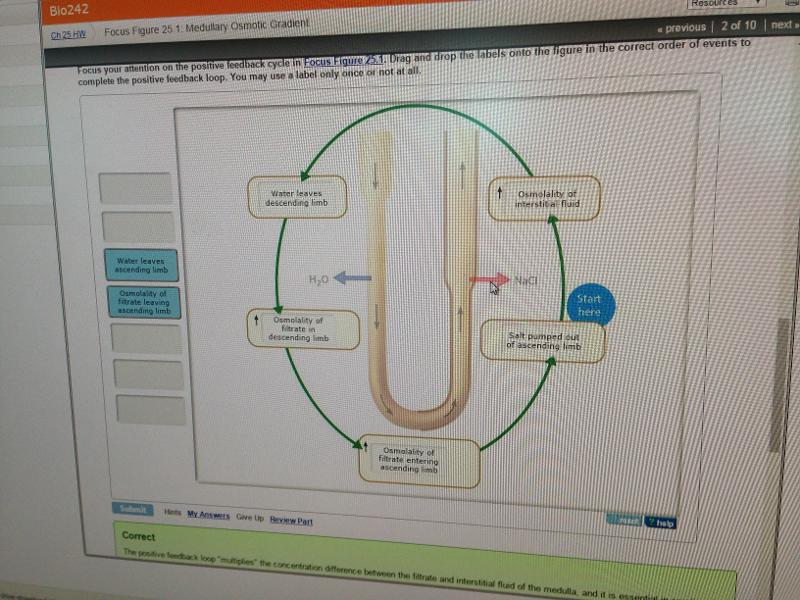
See Photo
Art-based Question
Long Nephron Loops: Creation of the Medullary Osmotic Gradient. Focus your attention on the long nephron loop in Focus Figure 25.1.
Sort the items onto the appropriate limb of the nephron loop figures. All items must be sorted.
→ direction of filtrate flow →
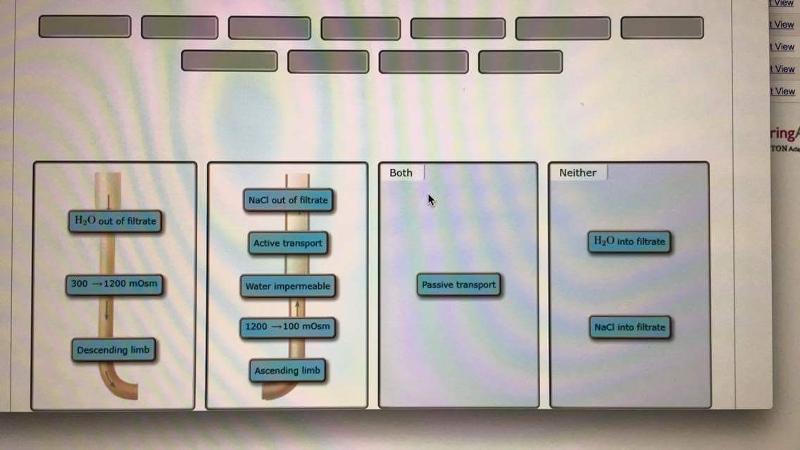
Descending:
Ascending:
Both : Passive Transport
Neither: H2O intro filtrate, NaCl into filtrate
What area of the nephron is responsible for the reabsorption of most of the water from the filtrate as well as most nutrients?
descending nephron loop
proximal convoluted tubule
collecting duct
distal convoluted tubule
proximal convoluted tubule
In what part of the renal tubule does parathyroid hormone (PTH) promote the reabsorption of calcium ions?
descending limb of the nephron loop
distal convoluted tubule (DCT)
proximal convoluted tubule (PCT)
collecting duct
distal convoluted tubule (DCT)
Approximately 80% of the energy used for active transport is devoted to the reabsorption of __________.
water
sodium
potassium
glucose
sodium
Upon reaching what point in the nephron is reabsorption (1) dependent upon the body's needs at the time and (2) regulated by hormones?
distal convoluted tubule
descending limb of the loop of Henle
ascending limb of the loop of Henle
proximal convoluted tubule
distal convoluted tubule
Art-based Question
Art-labeling Activity: Figure 25.12d Part A
Drag the appropriate labels to their respective targets.
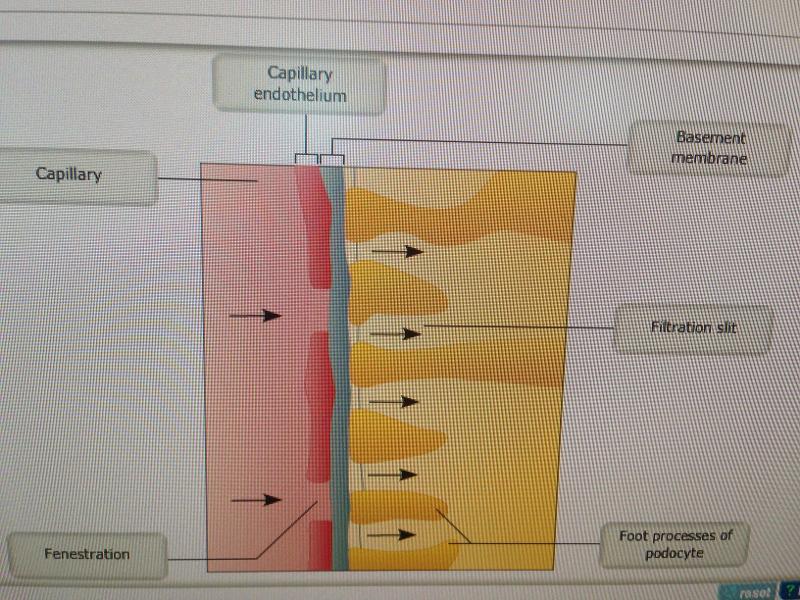
See Photo
Which of the following processes would be considered as a secretory rather than an excretory activity?
feces elimination by the colon
sweat removal by the skin
carbon dioxide removal by the lungs
aldosterone release by the adrenal glands
aldosterone release by the adrenal glands
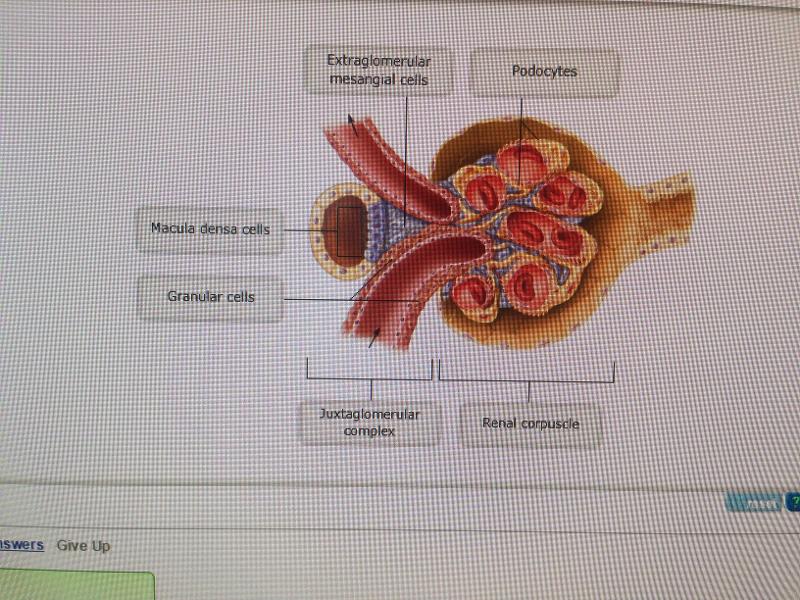
Art-based Question
Art-labeling Activity: Figure 25.8a (2 of 2) Part A
Drag the appropriate labels to their respective targets.
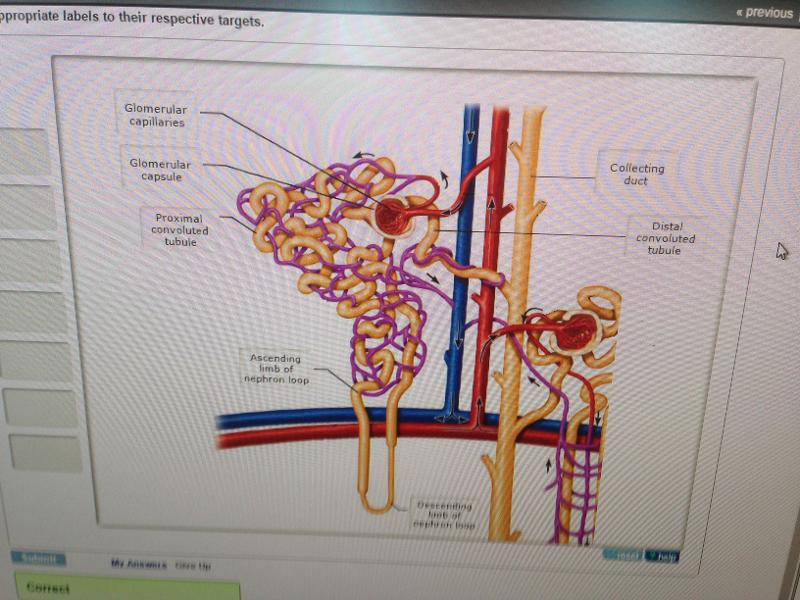
See Photo
Art-based Question
Art-labeling Activity: Figure 25.10 Part A
Drag the appropriate labels to their respective targets.
See photo