A&P Muscles
Epicranius

Origin: Occipital Bone
Insertion: Skin and muscles around eye
Action: Raises eyebrow as when surprised
Orbicularis Oculi

Origin: Maxillary & Frontal bones
Insertion: Skin around eye
Action: Closes eye as in blinking
Orbicularis Oris

Origin: Muscles near the mouth
Insertion: Skin of central lip
Action: Closes lips, protrudes lips as for kissing
Buccinator

Origin: Outer surfaces of Maxilla and Mandible
Insertion: Orbicularis oris
Action: Compresses cheeks inward as when blowing air
Zygomaticus Major

Origin: Zygomatic bone
Insertion: Corner of mouth
Action: Raises corner of mouth as when smiling
Zygomaticus Minor

Origin: Zygomatic bone
Insertion: Corner of mouth
Action: Raises corner of mouth as when smiling
Platysma

Origin: Fascia in upper chest
Insertion: Lower border of mandible
Action: Draws angle of mouth downward
Masseter

Origin: Lower border of zygomatic arch
Insertion: Lateral surface of mandible
Action: Elevates mandible
Temporalis

Origin: Temporal Bone
Insertion: Coronoid precess + anterior ramus of mandible
Action: Elevates mandible
Medial Pterygoid

Origin: Sphenoid, palatine, maxillary bones
Insertion: Medial surface of mandible
Action: Elevates mandible and moves it side to side
Lateral Pterygoid

Origin: Sphenoid bone
Insertion: Anterior surface of mandibular condyle
Action: Depresses and protracts mandible and moves it from side
to side
Sternocleidomastoid

Origin: Anterior surface of sternum and upper surface of clavicle
Insertion: Mastoid process of temporal bone
Action: Pulls head to one side, flexes neck or elevates sternum
Splenius Capitis

Origin: Spinous precesses of lower cervical and upper thoracic
vertebrae
Insertion: Occipital Bone
Action: Rotates head, bends head to one side, or extends neck
Semispinalis Capitis

Origin: Processes of lower cervical and upper thoracic vertebrae
Insertion: Occipital Bone
Action: Extends head, bends head to one side, rotates head
Quadratus Lumborum

Origin: Iliac crest
Insertion: Upper lumbar vertebrae and twelfth rib
Action: Aids in breathing, extends lumbar region of vertebral column
Iliocostalis Lumborum
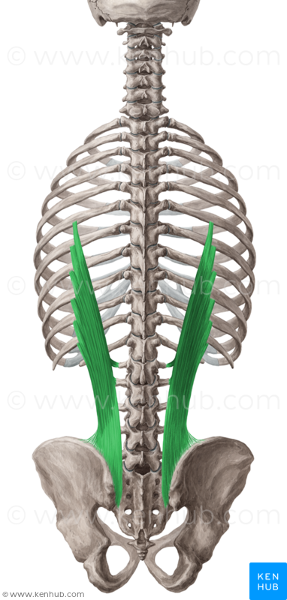
Origin: Iliac crest
Insertion: Lower six ribs
Action: Extends lumbar region of vertebral column
Iliocostalis Thoracis
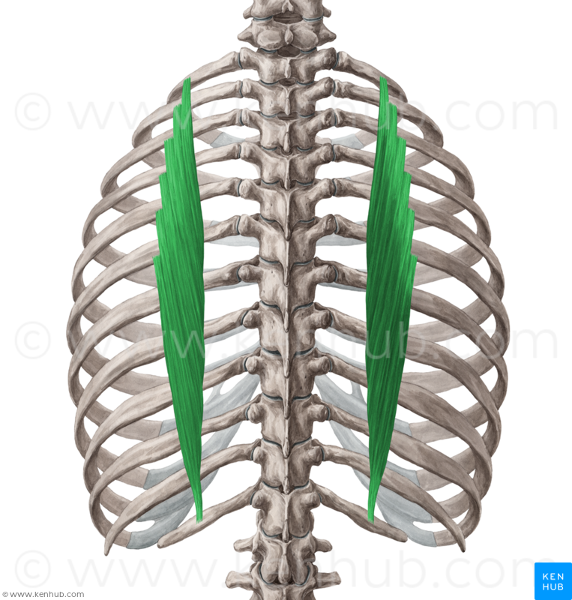
Origin: Lower six ribs
Insertion: Upper six ribs
Action: Holds spine erect
Iliocostalis Cervicis
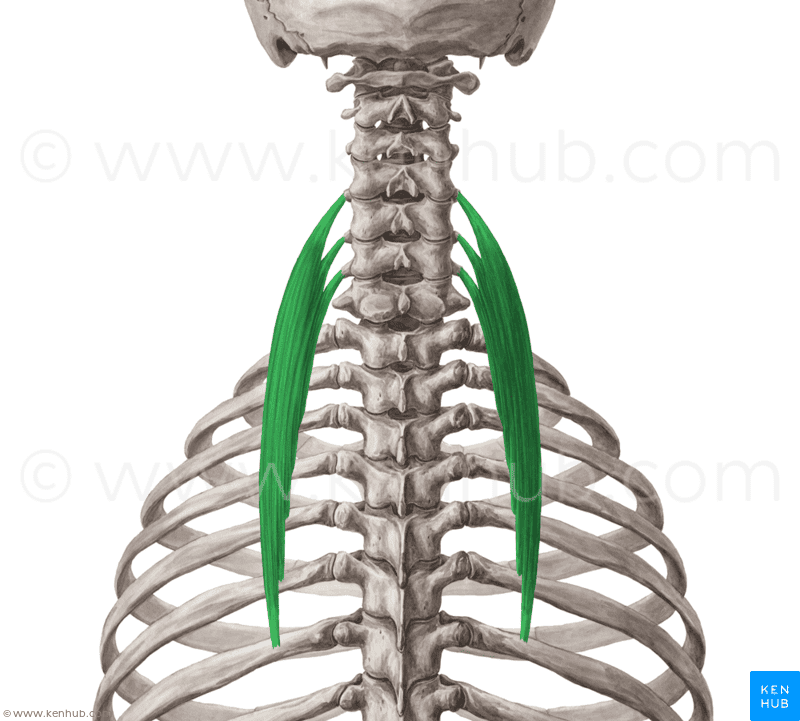
Origin: Upper six ribs
Insertion: Fourth through sixth cervical vertebrae
Action: Extends cervical region of vertebral column
Longissimus Thoracis
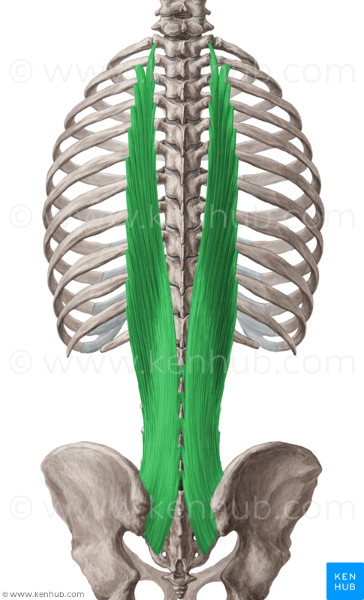
Origin: Lumbar vertebrae
Insertion: Thoracic and upper lumbar vertebrae and ribs 9+10
Action: Extends thoracic region of vertebral column
Longissimus Cervicis
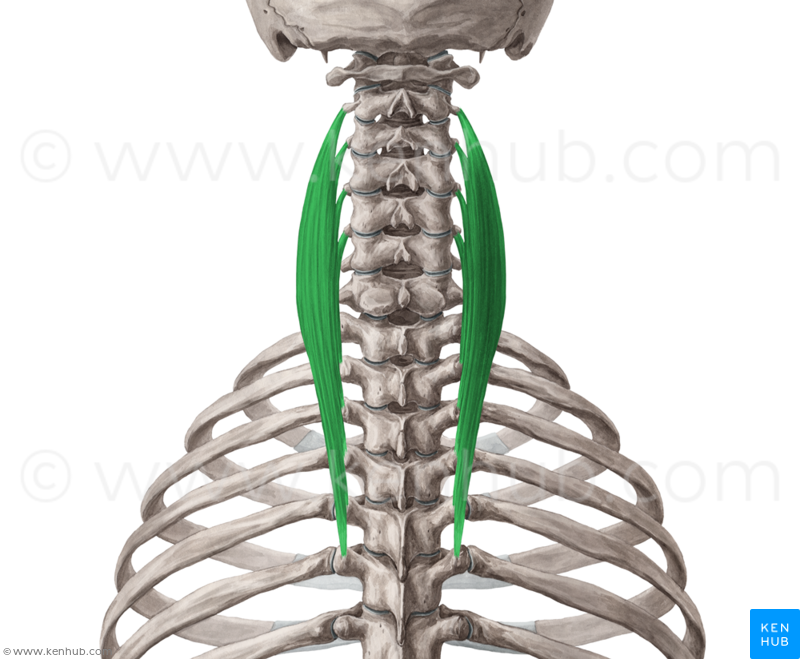
Origin: Fourth and fifth thoracic vertebrae
Insertion: Second through sixth cervical vertebrae
Action: Extends cervical region of vertebral column
Longissimus Capitis
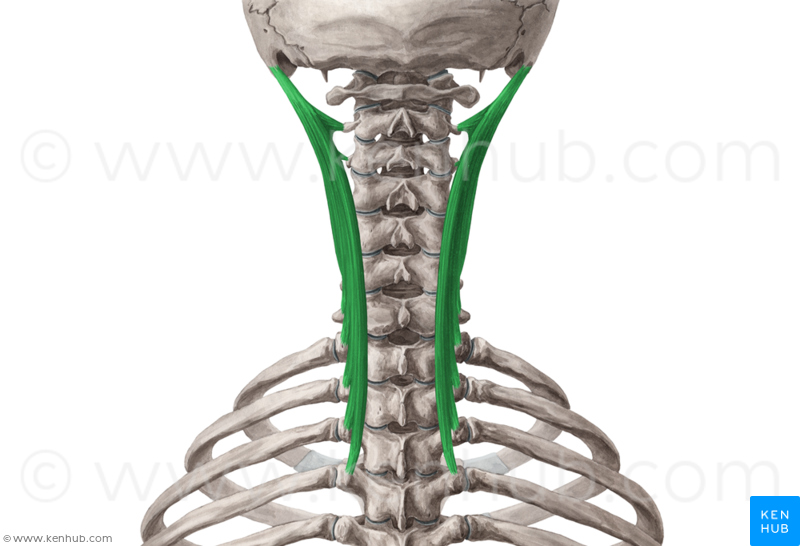
Origin: Upper thoracic and lower cervical vertebrae
Insertion: Mastoid process of temporal bone
Action: Extends and rotates head
Spinalis Thoracis
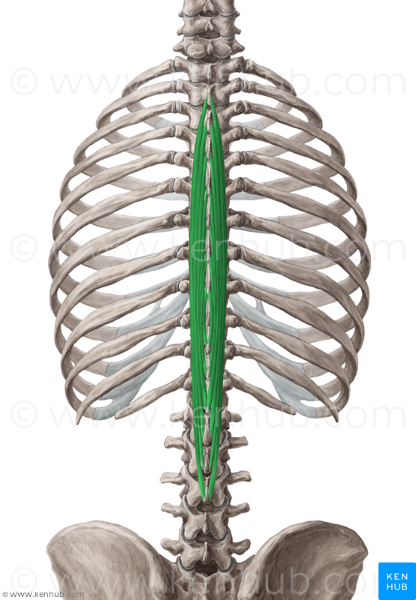
Origin: Upper lumbar and lower thoracic vertebrae
Insertion: Upper thoracic vertebrae
Action: Extends vertebral column
Spinalis Cervicis
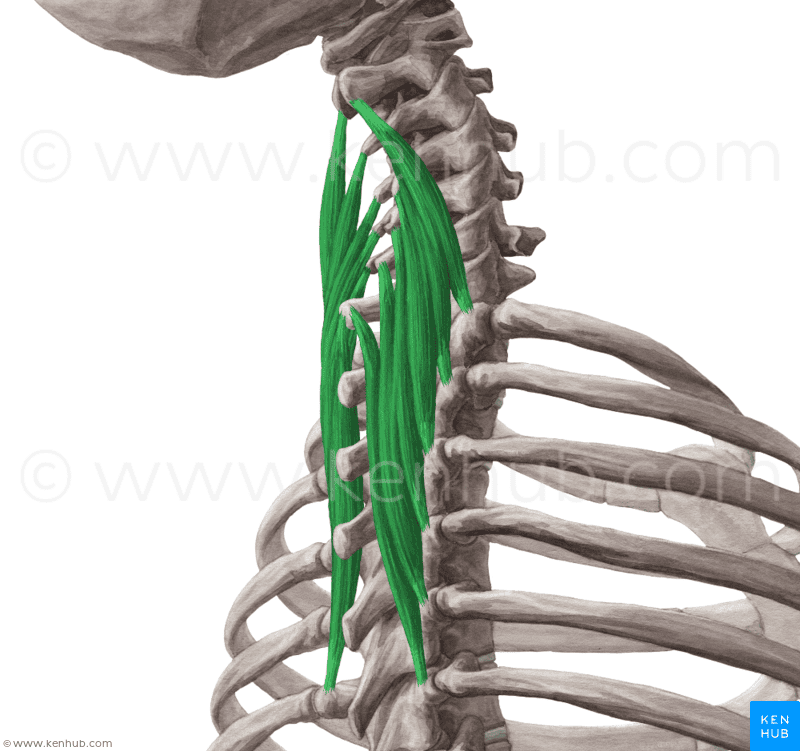
Origin: Ligamentum nuchae and seventh cervical vertebra
Insertion: Axis
Action: Extends vertebral column
Spinalis Capitis
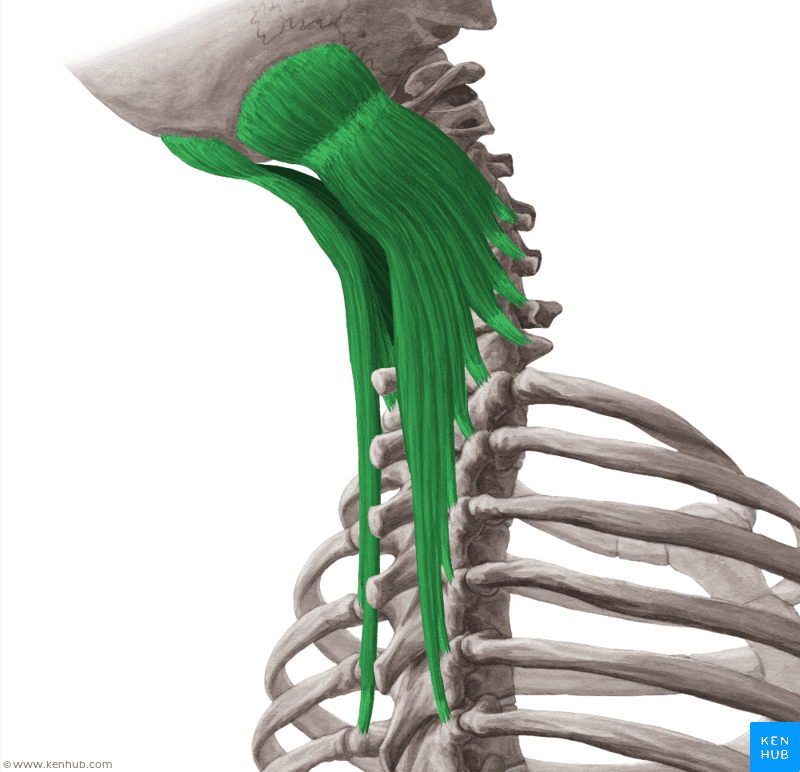
Origin: Upper thoracic and lower cervical vertebrae
Insertion: Occipital bone
Action: Extends vertebral column
Trapezius

Origin: Occipital bone and spines of cervical and thoracic vertebrae
Insertion: Clavicle, spine, and acromion process of scapula
Action: Rotates scapula; various fibers raise scapula, pull
scapula medially, or pull scapula and shoulder downward.
Rhomboid Major
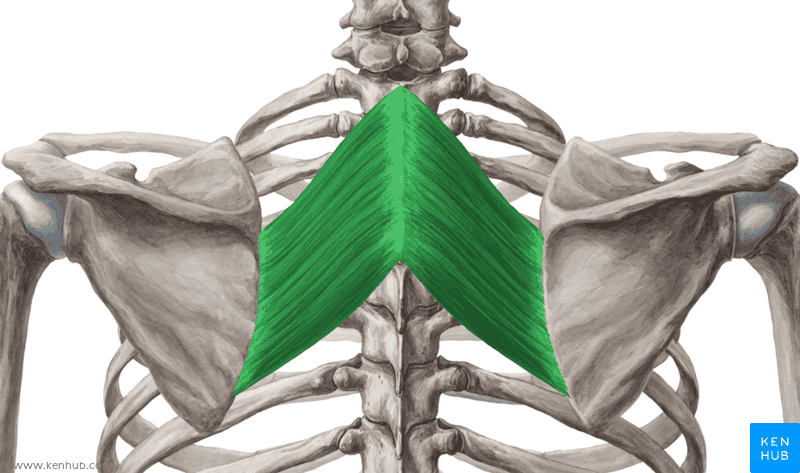
Origin: Spines of upper thoracic vertebrae
Insertion: Medial border of scapula
Action: Retracts, elevates, and rotates scapula
Rhomboid Minor
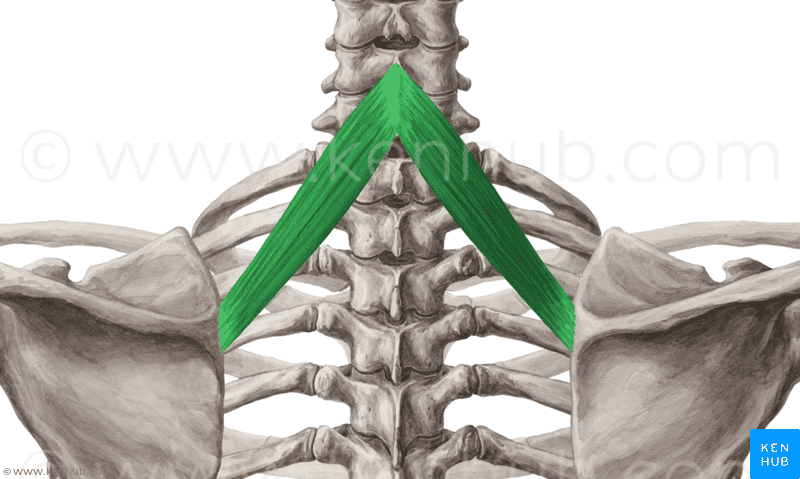
Origin: Spines of lower cervical vertebrae
Insertion: Medial border of scapula
Action: Retracts and elevates scapula
Levator Scapulae
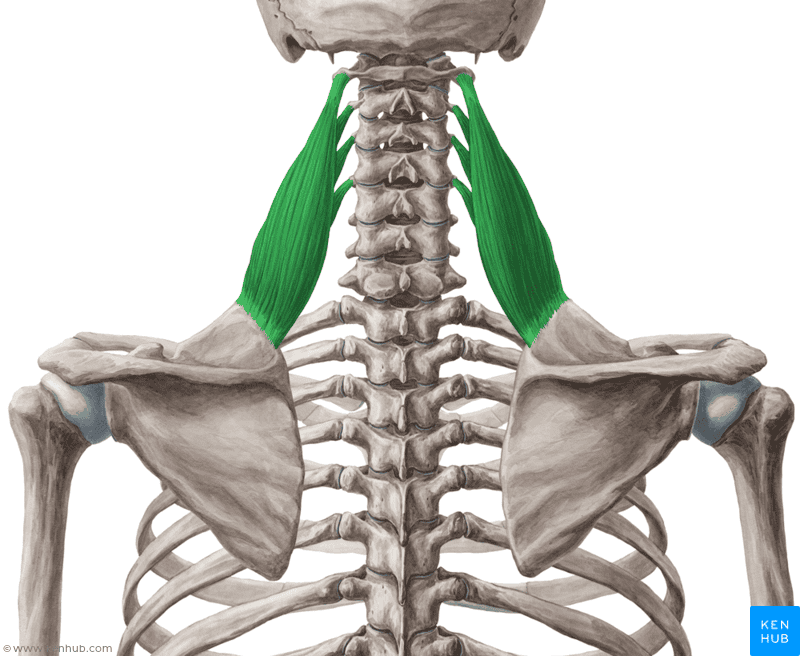
Origin: Transverse processes of cervical vertebrae
Insertion: Medial margin of scapula
Action: Elevates scapula
Serratus Anterior
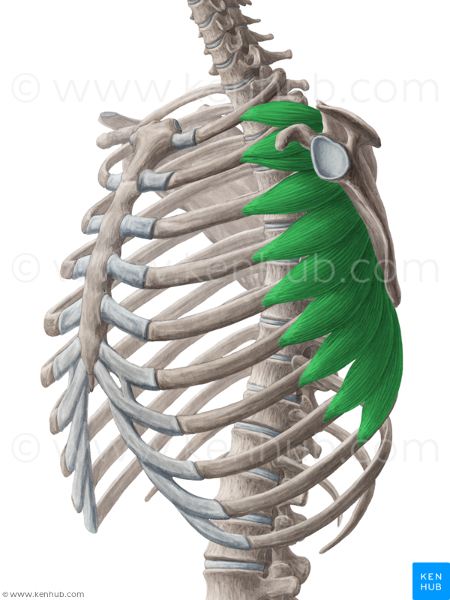
Origin: Outer surfaces of upper ribs
Insertion: Ventral surface of scapula
Action: Pulls scapula anteriorly and downward
Pectoralis Minor
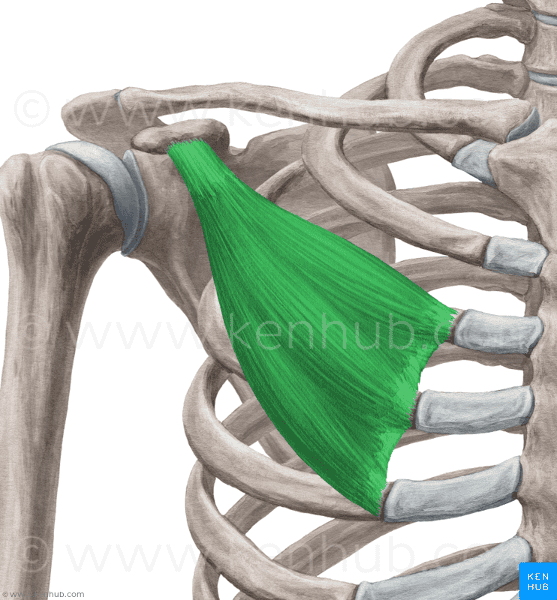
Origin: Sternal ends of upper ribs
Insertion: Coracoid process of scapula
Action: Pulls scapula forward and downward or raises ribs
Coracobrachialis

Origin: Coracoid process of scapula
Insertion: Shaft of humerus
Action: Flexes and adducts the arm
Pectoralis Major
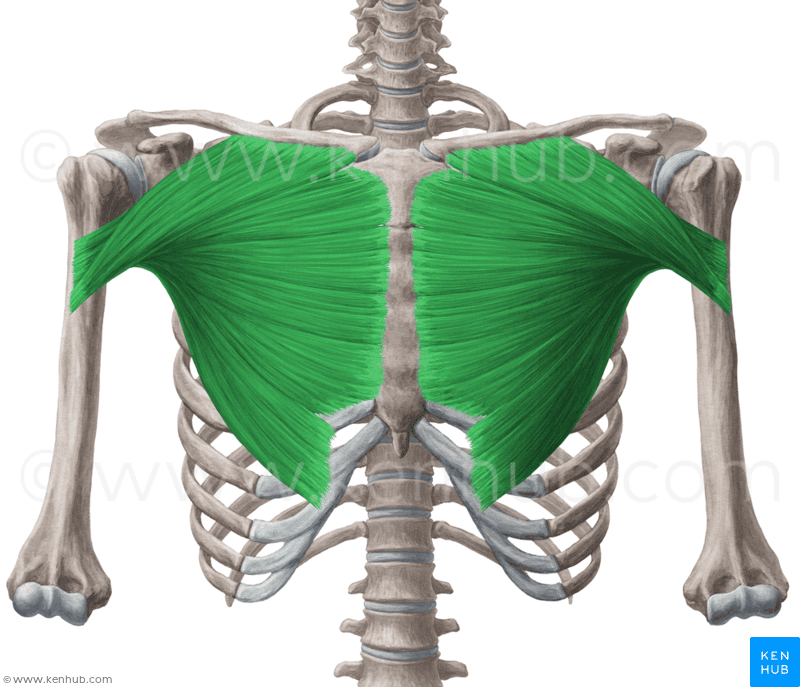
Origin: Clavicle, sternum, and costal cartilages of upper ribs
Insertion: Intertubercular groove of humerus
Action: Flexes, adducts, and rotates arm medially
Teres Major

Origin: Lateral border of scapula
Insertion: Intertubercular groove of humerus
Action: Extends, adducts, and rotates arm medially
Latissimus Dorsi
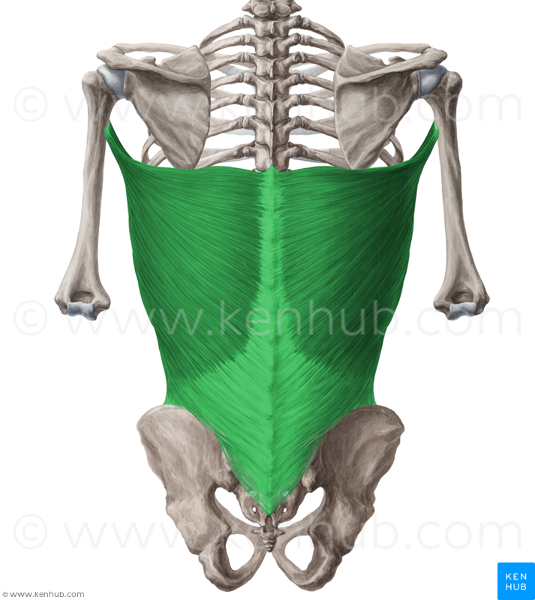
Origin: Spines of sacral, lumbar, and lower thoracic vertebrae, iliac
crest, and lower ribs
Insertion: Intertubercular groove of humerus
Action: Extends, adducts, and rotates the arm medially, or pulls
the shoulder downward and back
Supraspinatus

Origin: Posterior surface of scapula above spine
Insertion: Greater tubercle of humerus
Action: Abducts arm
Deltoid

Origin: Acromion process, spine of the scapula, and the clavicle
Insertion: Deltoid tuberosity of humerus
Action: Abducts, extends and flexes arm
Subscapularis

Origin: Anterior surface of scapula
Insertion: Lesser tubercle of humerus
Action: Rotates arm medially
Infraspinatus

Origin: Posterior surface of scapula below spine
Insertion: Greater tubercle of humerus
Action: Rotates arm laterally
Teres Minor

Origin: Lateral border of scapula
Insertion: Greater tubercle of humerus
Action: Rotates arm laterally
Biceps Brachii

Origin: Coracoid process and tubercle above glenoid cavity of scapula
Insertion: Radial tuberosity of radius
Action: Flexes elbow and rotates hand laterally
Brachioradialis

Origin: Distal lateral end of humerus
Insertion: Lateral surface of radius above styloid process
Action: Flexes elbow
Brachialis

Origin: Anterior shaft of humerus
Insertion: Coroniod process of ulna
Action: Flexes elbow
Triceps Brachii

Origin: Tubercle below glenoid cavity and lateral and medial surfaces
of humerus
Insertion: Olecranon process of ulna
Action: Extends elbow
Supinator

Origin: Lateral epicondyle of humerus and crest of ulna
Insertion: Lateral surface of radius
Action: Rotates forearm laterally and supinates hand
Pronator teres

Origin: Medial epicondyle of humerus and coronoid process of ulna
Insertion: Lateral surface of radius
Action: Rotates forearm medially and pronates hand
Pronator Quadratus

Origin: Anterior distal end of ulna
Insertion: Anterior distal end of radius
Action: Rotates forearm medially and pronates hand
Flexor Carpi Radialis

Origin: Medial epicondyle of humerus
Insertion: Base of second and third metacarpals
Action: Flexes wrist and abducts hand
Flexor Carpi Ulnaris

Origin: Medial epicondyle of humerus and olecranon process
Insertion: Carpal and metacarpal bones
Action: Flexes wrist and adducts hand
Palmaris Longus

Origin: Medial epicondyle of humerus
Insertion: Fascia of palm
Action: Flexes wrist
Flexor Digitorum Profundus

Origin: Anterior surface of ulna
Insertion: Bases of distal phalanges in fingers 2-5
Action: Flexes distal joint of fingers
Flexor Digitorum Superficialis

Origin: Medial epicondyle of humerus, coronoid process of ulna and
radius
Insertion: Tendons of fingers
Action: Flexes fingers and wrist
Extensor Capri Radialis Longus

Origin: Distal end of humerus
Insertion: Base of second metacarpal
Action: Extends wrist and abducts hand
Extensor Capri Radialis Brevis

Origin: Lateral epicondyle of humerus
Insertion: Base of second and third metacarpals
Action: Extends wrist and abducts hand
Extensor Carpi Ulnaris

Origin: Lateral epicondyle of humerus
Insertion; Base of fifth metacarpal
Action: Extends wrist and adducts hand
Extensor Digitorum

Origin: Lateral epicondyle of humerus
Insertion: Posterior surface of phalanges in fingers 2-5
Action: Extends fingers
External Oblique

Origin: Outer surfaces of lower ribs
Insertion: Outer lip of iliac crest and linea alba
Action: Tenses abdominal wall and compresses abdominal contents
Internal Oblique

Origin: Crest of ilium and inguinal ligament
Insertion: Cartilages of lower ribs, linea alba, and crest of
pubis
Action: Tenses abdominal wall and compresses abdominal contents
Transversus Abdominis

Origin: Costal cartilages of lower ribs, processes of lumbar
vertebrae, lip of iliac crest, and inguinal ligament
Insertion: Linea alba and crest of pubis
Action: Tenses abdominal wall and compresses abdominal contents
Rectus Abdominis

Origin: Crest of pubis and symphysis pubis
Insertion: Xiphoid process of sternum and costal cartilages
Action: Tenses abdominal wall and compresses abdominal contents;
flexes vertebral column
Levator Ani

Origin: Pubic bone and ischial spine
Insertion: Coccyx
Action: Supports pelvic viscera and provides sphincter like
action in anal canal and vagina
Coccygeus

Origin: Ischial spine
Insertion: Sacrum and coccyx
Action: Supports pelvic viscera and provides sphincter like
action in anal canal and vagina
Superficial Transversus Perinei

Origin: Ischial tuberosity
Insertion: Central tendon
Action: Supports pelvic viscera
Bulbospongiosus

Origin: Central tendon
Insertion: Males - Urogenital diaphragm and fascia of penis /
Females - Pubic arch and root of clitoris
Action: Males - Assists emptying of urethra and assists in
erection of penis Females - Constricts vagina and assists in erection
of clitoris
Ischiocavernosus

Origin: Ischial tuberosity
Insertion: Pubic arch
Action: Males - Erects penis / Females - Erects clitoris
Sphincter Urethrae

Origin: Margins of pubis and ischium
Insertion: Fibers of each unite with those from other side
Action: Opens and closes urethra
Psoas Major

Origin: Lumbar intervertebral discs; bodies and transverse processes
of lumbar vertebrae
Insertion: Lesser trochanter of femur
Action: Flexes thigh
Iliacus

Origin: Iliac fossa of ilium
Insertion: Lesser trochanter of femur
Action: Flexes thigh
Gluteus Maximus

Origin: Sacrum, coccyx, and posterior surface of ilium
Insertion: Posterior surface of femur and fascia of thigh
Action: Extends hip
Gluteus Medius

Origin: Lateral surface of ilium
Insertion: Greater trochanter of femur
Action: Abducts and rotates thigh medially
Gluteus Minimus

Origin: Lateral surface of ilium
Insertion: Greater trochanter of femur
Action: Abducts and rotates thigh medially
Piriformis

Origin: Anterior surface of sacrum
Insertion: Greater trochanter of femur
Action: Abducts and rotates thigh laterally
Tensor fasciae latae

Origin: Anterior iliac crest
Insertion: Iliotibial tract (fascia of thigh)
Action: Abducts, flexes and rotates thigh medially
Pectineus

Origin: Spine of pubis
Insertion: Femur distal to lesser trochanter
Action: Flexes and adducts thigh
Adductor Brevis

Origin: Pubic bone
Insertion: Posterior surface of femur
Action: Adducts, flexes and rotates thigh laterally
Adductor Longus

Origin: Pubic bone near symphysis pubis
Insertion: Posterior surface of femur
Action: Adducts, flexes and rotates thigh laterally
Adductor Magnus

Origin: Ischial tuberosity
Insertion: Posterior surface of femur
Action: Adducts thigh, posterior portion extends and anterior
portion flexes thigh
Gracilis

Origin: Lower edge of symphysis pubis
Insertion: Medial surface of tibia
Action: Adducts thigh and flexes knee
Biceps Femoris

Origin: Ischial tuberosity and linea aspera of femur
Insertion: Head of fibula and lateral condyle of tibia
Action: Flexes knee, rotates leg laterally and extends thigh
Semitendinosus

Origin: Ischial tuberosity
Insertion: Medial surface of tibia
Action: Flexes knee, rotates leg medially and extends thigh
Semimembranosus

Origin: Ischial tuberosity
Insertion: Medial condyle of tibia
Action: Flexes knee, rotates leg medially and extends thigh
Sartorius

Origin: Anterior superior iliac spine
Insertion: Medial surface of tibia
Action: Flexes knee and hip, abducts and rotates thigh laterally
Rectus Femoris

Origin: Spine of ilium and margin of acetabulum
Insertion: Patella by common tendon, which continues as patellar
ligament to tibial tuberosity
Action: Extends knee
Vastus Lateralis

Origin: Greater trochanter and posterior surface of femur
Insertion: Patella by common tendon, which continues as patellar
ligament to tibial tuberosity
Action: Extends knee
Vastus Medialis

Origin: Medial surface of femur
Insertion: Patella by common tendon, which continues as patellar
ligament to tibial tuberosity
Action: Extends knee
Vastus Intermedius

Origin: Anterior and lateral surfaces of femur
Insertion: Patella by common tendon, which continues as patellar
ligament to tibial tuberosity
Action: Extends knee
Tibialis Anterior

Origin: Lateral condyle and lateral surface of tibia
Insertion: Tarsal bone and first metatarsal
Action: Dorsiflexion and inversion of the foot
Fibularis Tertius

Origin: Anterior surface of fibula
Insertion: Dorsal surface of fifth metatarsal
Action: Dorsiflexion and eversion of the foot
Extensor digitorum longus

Origin: Lateral condyle of tibia and anterior surface of fibula
Insertion: Dorsal surfaces of second and third phalanges of four
lateral toes
Action: Dorsiflexion and eversion of foot, extends toes
Gastrocnemius
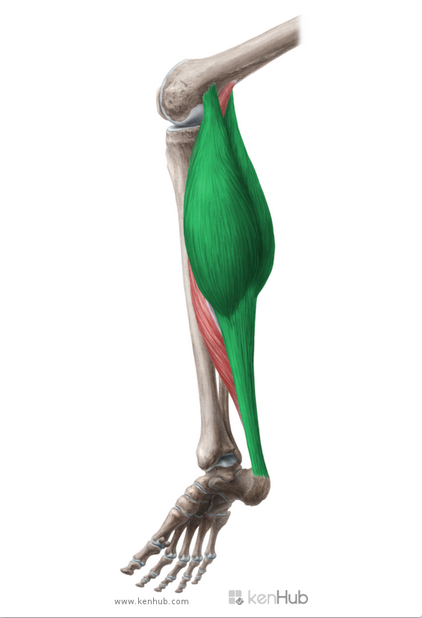
Origin: Lateral and medial condyles of femur
Insertion: Posterior surface of calcaneus
Action: Plantar flexion of foot, flexes knee
Soleus

Origin: Head and shaft of fibula and posterior surface of tibia
Insertion: Posterior surface of calcaneus
Action: Plantar flexion of foot
Plantaris

Origin: Femur
Insertion: Calcaneus
Action: Plantar flexion of foot, flexes knee
Flexor digitorum longus

Origin: Posterior surface of tibia
Insertion: Distal phalanges of four lateral toes
Action: Plantar flexion and inversion of foot, flexes four
lateral toes
Tibialis Posterior

Origin: Lateral condyle and posterior surface of tibia and posterior
surface of fibula
Insertion: Tarsal and metatarsal bones
Action: Plantar flexion and inversion of foot
Fibularis Longus

Origin: Lateral condyle of tibia and head and shaft of fibula
Insertion: Tarsal and metatarsal bones
Action: Plantar flexion and eversion of foot, also supports arch
Extensor Hallucis Longus

Origin: Anterior surface of fibula
Insertion: Distal phalanx of the great toe
Action: Extends great toe, dorsiflexion and inversion of foot