BIO 340 Exam 3-Lecture 15
What's the building blocks of DNA?
Nucleotides
What do nucleotides consist of?
Nitrogenous base, pentose sugar, and phosphate group
What would be the complementary DNA strand for the following DNA sequence?
5'-GCGTATG-3'
A. 5'-CGCATAC-3'
B. 5'-CATACGC-3'
C. 5'-GTATGCG-5'
B. 5'-CATACGC-3'
What type of replication is used to reproduce DNA?
Semiconservative Replication
What does conservative replication consist of?
The original helix is conserved and two newly synthesized strands come together
What does semiconservative replication consist of?
Each replicated DNA molecule consists of one "old" strand and one new strand
What does dispersive replication consist of?
Parental strands are dispersed into two new double helices
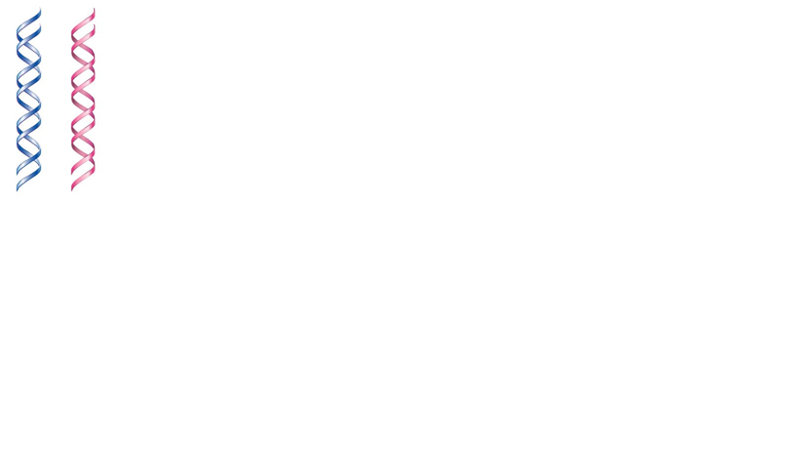
What type of replication would result in these two strands after one round of replication?
Conservative Replication
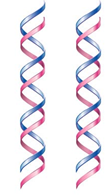
What type of replication would result in these two strands after one round of replication?
Semiconservative Replication
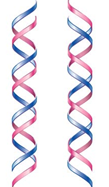
What type of replication would result in these two strands after one round of replication?
Dispersive Replication
What was learned/gained from the Meselson and Stahl experiment?
DNA replication is semiconservative in prokaryotes and that each new DNA molecule consists of one old strand and one newly synthesized strand
Does semiconservative replication only occur in prokaryotes or various other species as well?
Various other species as well
What are the different ways in which semiconservative replication can occur?
In either a circular or linear fashion depending on chromosome shape
Which of the following would result from a third round of replication using the methods of Messelson and Stahl?
A. One heavy band, one light band, and one intermediate band
B. One light band and one intermediate band
C. One light band
D. One heavy band
B. One light band and one intermediate band
Where does DNA replication begin?
At the origin of replication
Where/how is the replication fork created?
Where replication occurs, the strands of the helix are unwound thus producing a replication fork
Replication is _____, therefore there are two replication forks
Bidirectional
The length of DNA that is replicated following one initiation event at a single origin is called?
Replicon
How many circular DNA does bacteria have and at how many points does DNA synthesis originate at?
Bacteria has a single circular DNA and DNA synthesis originates at a single point
How many replicons does an entire bacterial chromosome constitute?
One replicon
In eukaryotes, DNA replication begins at one or many sites?
Many sites
What does DNA polmerase do?
DNA polymerase catalyzes DNA synthesis and requires a DNA template and all four deoxyribonucleoside triphosphates in order to help catalyze the polymerization of dNTPs into a DNA strand
How do nucleotides arrive?
They arrive as nucleosides
True or False: DNA bases do not arrive with an energy source for bonding
False, DNA bases arrive with their own energy for bonding
What is the bonded enzyme called?
DNA polymerase
What are nucleosides?
DNA bases with P-P-P which is energy for bonding
In what direction does chain elongation occur?
5' to 3'
What are DNA polymerases?
Enzymes that help catalyze in the polymerization of dNTPs into a DNA strand
What can DNA polymerases 1, 2, and 3, do to a DNA strand (primer)?
What can they not do?
Can: elongate an existing DNA strand
Cannot: initiate DNA synthesis
What do all DNA polymerases (1, 2, and 3) possess? (activity type?) and what does it enable them to do?
Possess 3' to 5' exonuclease activity that allows them to proofread newly synthesized DNA and remove and replace incorrect nucleotides
What kind of exonuclease activity does DNA polymerase 1 possess?
Only DNA polymerase I demonstrates 5' to 3' exonuclease activity, which allows it to excise primers and fill in the gaps left behind.
Which DNA polymerases possess 5'-3' polymerization?
DNA polymerases I, II, and III
Which DNA polymerases possess 3'-5' exonuclease activity?
DNA polymerases I,II, and III
Which DNA polymerases possess 5'-3' exonuclease activity?
DNA polymerase I
How many molecules of polymerase/cell are found in DNA polymerase I and III?
DNA polymerase I: 400
DNA polymerase III: 15
Which DNA polymerase is responsible for the 5' to 3' polymerization essential in vivo?
DNA polymerase III
All known bacterial DNA polymerases _____
A. can initiate DNA chain synthesis
B. have 5' to 3' polymerization activity
C. have 3' to 5' polymerization activity
D. All of the above
B. have 5' to 3' polymerization activity
Which polymerases are the main DNA builders?
DNA polymerase II and III
Which polymerases are responsible for editing, repair and primer removal?
DNA polymerase I
How often do errors occur during cell copies and bases when dividing?
Only 1 error per 100 million bases
What are the seven key issues that must be resolved during DNA replication?
1. unwinding of the helix
2. reducing increased coiling generated during unwinding
3. synthesis of a primer for initiation
4. discontinuous synthesis of the second strand
5. removal of the RNA primers
6. joining of the gap-filling DNA to the adjacent strand
7. proofreading
Where does DnaA bind to? And what is it responsible for?
DnaA binds to the origin of replication and is responsible for the initial steps in unwinding the helix
What helicases further open and destabilize the helix?
DnaB and DnaC
What do the single-stranded binding proteins do?
Single-stranded binding proteins stabilize the open conformation
What do topoisomerases do in DNA replication?
Topoisomerases remove positive supercoils that normally form ahead of the growing replication fork
What are used to achieve a high speed replication of both the leading and lagging strands?
DNA polymerases utilize sliding clamps which move along the template without falling off
What are clamp loaders?
Clamp loaders are ATP-fueled moelcular machines that open the sliding clamp, load them onto primed DNA, and unload them at the appropriate time
What does DNA polymerase III require to elongate a polynucleotide chain?
Requires a primer
What does primase do to an RNA primer
Primase synthesizes an RNA primer which provides the free 3' hydroxyl required by DNA polymerase III
What does DNA polymerase I do?
It removes the primer and replaces it with DNA
True or False: Priming is a universal phenomemnon during initiation of DNA synthesis?
True
Which strand serves as a template for continuous DNA synthesis?
Leading strand
Which strand undergoes discontinuous DNA synthesis?
Lagging strand
How is the lagging strand synthesized?
As Okazaki fragments with an RNA primer
What does DNA polymerase I do?
It removes the primers on the lagging strand and its fragments are joined by DNA ligase
What is proofreading?
DNA polymerase uses structure of DNA to catch errors. Two stranded molecule passes through the DNA polymerase once synthesis is complete. If there's a wrong base it's detected and replaced.
What would happen if DNA polymerase used a single stranded DNA as a temple and the completed double strand didn't continue to interact with the enzyme after synthesis?
The number of errors in DNA replication would be much higher
What is an integral part of DNA replication?
Proofreading and error correction
What does DNA synthesis at a single replication fork involve?
DNA polymerase III, single stranded binding proteins, DNA gyrase, DNA helicase, RNA primers
Is DNA replication more complex in Eukaryotes or Prokaryotes?
Eukaryotes is more complex
What are some features shared between eukaryotic replication and replication in bacteria?
Double stranded DNA is unwound at replication origins, replication forks are formed, bidirectional synthesis creates a leading and lagging strand, eukaryotic require four dNTPs, a template and a primer
Why is Eukaryotic DNA replication more complex than that of prokaryotes?
They have more DNA that prokaryotic cells, chromosomes are linear, and DNA is complexed with proteins
How many origins of replication do eukaryotic chromosomes have?
Multiple origins of replication are had to allow the genome to replicated in a matter of minutes to a few hours
Yeast genomes contain 250-400 origins which are called?
Autonomously replicating sequences (ARSs)
When does the cell growth checkpoint occur in the cell cycle?
Occurs toward the end of the growth pahse
When does the DNA synthesis checkpont occur in the cell cycle?
Occurs during the synthesis (S) phase
When does the mitosis checkpoint occur in the cell cycle?
Occurs during the mitosis phase (M)
What is the checkpoint?
Checkpoint is a mechanism that halts progression throughout the cell cycle until a critical process like DNA replication is complete or until DNA damage is repaired
What happens when a checkpoint is satisfied?
the cell cycle continues
What type of proteins play a role in controlling the cell cycle?
Cyclins and cyclin-dependent kinases
What do complexes between cyclins and CDKs do to the cell?
Cause the cell cycle to advance
What do CDKs do?
They're regulatory molecules that alter the activity of many other proteins through phosphorylation. CDKs need o pair with cyclins to be active
What happens if cyclins are absent?
If cyclins are absent then CDKs do not function
What are the four separate proteins that assemble in an ordered fashion in Pre-RC?
ORC (origin recognition complex), Cdc6 and Cdt1 (helicase loading proteins), and Mcm 2-7 (complex, helicase)
Does the pre-RC initiate DNA unwinding before or after the S phase?
pre-RC initiates DNA unwinding after the cell enters the S phase
What are telomeres?
Telomeres are at the ends of linear chromosomes and consist of long stretches of short repeating sequences that preserve the integrity and stability of chromosomes
Telomeres provide ____ at chromosome ends but are _____ to ____
provide structural integrity at chromosome ends but are problematic to replicate
The enzyme telomerase directs synthesis of?
What does it result in?
TTGGGG and results in formation of hairpin structure
In most eukaryotic somatic cells is the telomerase active? What happens to eat with each cell division?
It is not active, and with each cell division the telomeres shorten and erode (causing further cell division to stop)
What do malignant cells maintain? Are they mortalized or immortalized?
They maintain telomerase activity and are immortalized.