Chapter 57 review
Which animals are likely to be carriers of rabies?
Dogs, cats, and raccoons
which of the following is included in the care of an animal bite?
wash the area and apply antibiotic ointment and a dry, sterile dressing
the appropriate way to remove an insect stinger is to ___
scrape the skin with a credit card or flat, hard, sharp object
for which accidental injury would you apply ice to the site, 10 minutes on and 10 minutes off, to reduce the pain and swelling?
insect sting
Your brother has been working in the backyard, trimming bushes and pulling weeds. He was not wearing gloves, and suddenly he comes into the house looking scared and holding his lower arm. He has been bitten by a snake that he thinks was a rattlesnake. You call EMS immediately. Until help arrives, what will you do for your brother?
immobilize his arm and positioning it below heart level.
A tetanus toxoid is administered for an animal bite if the patient has not received one in the last ____.
5 to 10 years
Which of the following is the appropriate care for a spider bite?
Apply a cold compress and elevate the area
The main symptom of a choking emergency is ____.
the inability to speak
the universal sign of choking is?
hand up to the throat and a fearful look
You are having lunch with friends at a local restaurant. Suddenly, you notice someone at the table next to yours putting his hands up to his throat. He has a fearful look on his face. Which of the following is the appropriate first action to take?
ask the person if he or she is choking
which of the following is part of the care of a severed ear?
wrap the ear in plastic and place it in ice
which of the following is the appropriate care for tiny specks in the eye?
Moisten a sterile gauze to remove them
If a patient falls from an examining table and cannot get up, ____.
call for help and do not move the patient until the physician examines him
n which position should you place a patient before you begin cardiopulmonary resuscitation (CPR) ?
on the back
which bone fracture goes entirely across the bone?
complete
incomplete fractures:
go through only part of the bone
In a comminuted fracture, ____.
the bone id broken into several fragments
Which type of bone fracture occurs most often in children because their bones are still soft and pliable?
greenstick
in a greenstick fracture,
the bone is bent but only one side is fractured
Displacement of a bone end from the joint is a ____.
dislocation
which of the following is included in cast care?
Report any pain, swelling, discoloration, lack of pulsation, warmth, or inability to move
Which of the following is a jarring injury to the brain?
Concussion
An injury characterized by partial tearing of a ligament that supports a joint is a ____.
sprain
The first priority in caring for a patient with a severe head injury is to ___
maintain the patient's airway
A swelling caused by an accumulation of blood under the skin is a ____.
hematoma
Which symptoms that are specific to a severe head injury should you look for?
Leakage of clear or bloody fluid from the ears or nose, seizures, and respiratory arrest
A strain is ____.
a muscle injury that results from overexertion
Which of the following would you include in the care of a patient who has sustained a concussion?
Instruct the patient to avoid pain medicines other than acetaminophen
Which of the following is the first priority when caring for multiple injuries?
Assess the CABs
Which of the following is an appropriate action to stop bleeding?
Apply direct pressure over the injury
Symptoms of ingested poison include ____.
abdominal pain, nausea, vomiting, diarrhea, burns in or around the mouth, and drowsiness
Which of the following steps would you include if a patient has ingested poison but is alert and not having convulsions?
Call the regional poison control center and follow their instruction
What is the correct position to place a patient in after ingestion of a poison?
on the left side
What are symptoms of absorbed poisons?
Rash, swelling, burning eyes, headache, fever, abnormal pulse or respirations
Which of the following is included in the care of a patient who has come in contact with an absorbed poison?
Remove contaminated clothing and wash skin with soap and water
Which of the following would you include in the care of a patient who inhaled a poison?
Get the patient into fresh air, loosen tight-fitting clothing, and wrap the patient in a blanket to prevent shock
Which of the following is characteristic of carbon monoxide poisoning?
It is a major cause of inhalation poisoning in the home.
While camping with friends, you are asked to help find a nearby camper's lost son. The 9-year-old boy is found after being lost in the woods for several hours in temperatures below 10°F. His hands have a white, waxy appearance. When you touch them, they feel cold and hard. He says they are tingling and hurt a lot. Which of the following actions will you take?
Place his hands in warm water
For which condition would you move the patient to a cool place and remove outer clothing?
heatstroke
A 19-year-old college student is seen in the office due to severe sunburn. The physician has asked you to provide patient education on preventing sunburn in the future. Which of the following statements should you include in your teaching?
Avoid sunbathing between 10:00 a.m. and 2:00 p.m."
Closed wounds are often called ____.
contusions
The signs of infection in a wound are ____.
heat, redness, pain, and swelling
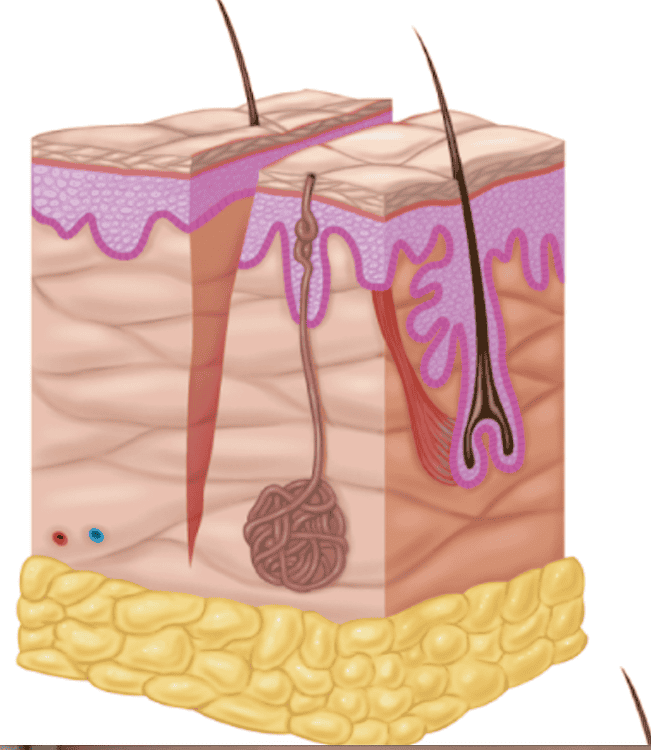
A wound pictured here, which is clean and has a smooth cut, is a(n) ____.
incision
Which type of wound, pictured here, occurs when someone slides across gravel during a softball game?
abrasion
You are at a friend's house when her mother begins having acute pains in her abdomen. You know that sudden acute abdominal pain may indicate an emergency, so you immediately call EMS. While waiting for their arrival, what can you do to make your friend's mother more comfortable?
Encourage her to lie on her back with her knees flexed.
Symptoms of hyperglycemia include ____.
dry mouth, intense thirst, muscle weakness, and blurred vision
Acute abdominal pain in the right upper quadrant that radiates to the back between the shoulder blades is characteristic of ____.
a gallbladder attack
The cardinal symptom of a myocardial infarction is ____.
chest pain
If not contraindicated, which of the following would you include in the care of a patient in shock?
elevate the feet to 8 to 12 inches
Which of the following is an acute infection caused by Staphylococcus aureus?
toxic shock syndrome
Which of the following results from insufficient blood volume in the circulatory system?
Hypovolemic shock
Which of the following, pictured here, is a closed wound with bruising?
contusion
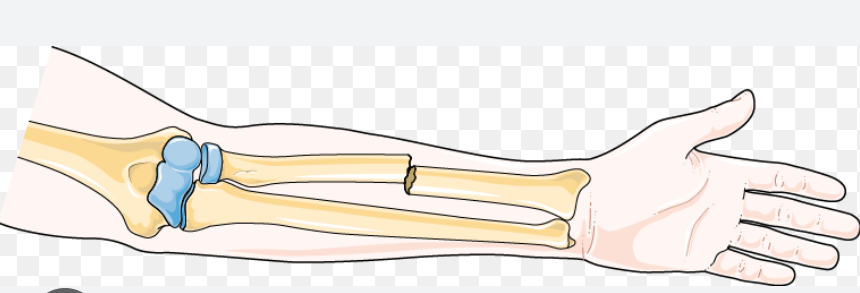
The fracture pictured here is a(n) ____.
closed fracture
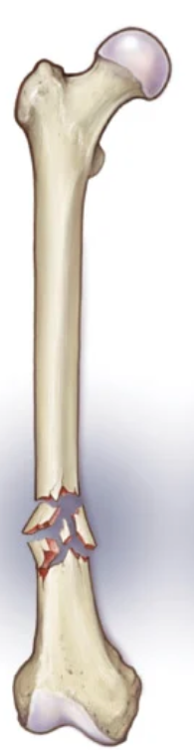
Which of the following is pictured here?
comminuted fracture
What type of fracture is pictured here?
completed fracture
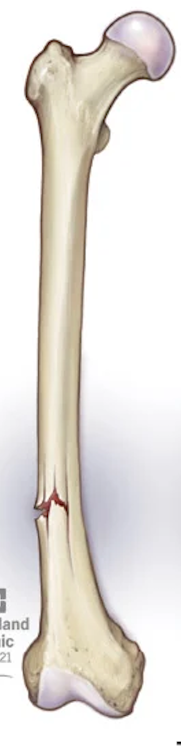
The fracture pictured here, which occurs most often in children, is a(n) ____.
greenstick
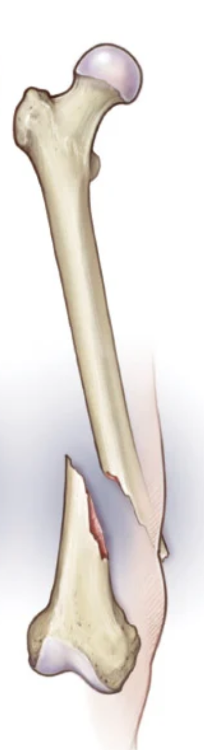
Which type of fracture is pictured here?
open fracture
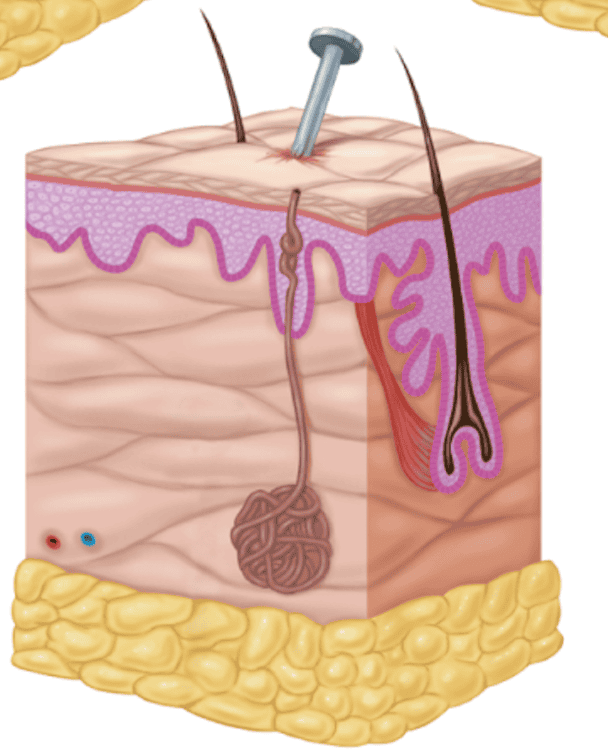
What type of wound is pictured here?
puncture
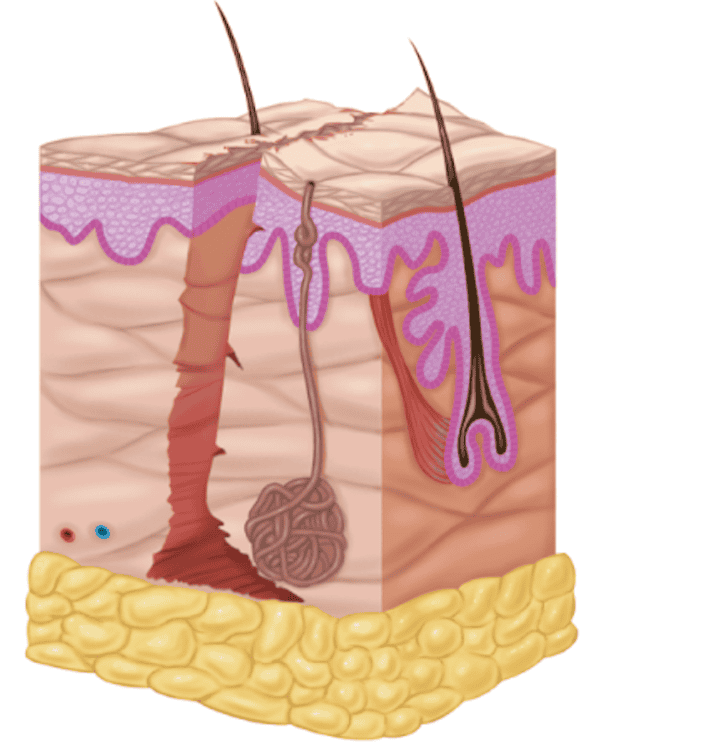
what type of wound os pictured here
laceration