Instructions for Side by Side Printing
- Print the notecards
- Fold each page in half along the solid vertical line
- Cut out the notecards by cutting along each horizontal dotted line
- Optional: Glue, tape or staple the ends of each notecard together
ATI Skills Module - Urinary Catheter Care
front 1 Straight Catheter | back 1 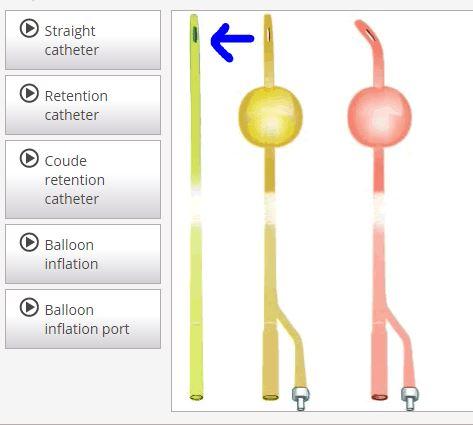 |
front 2 Retention Catheter | back 2 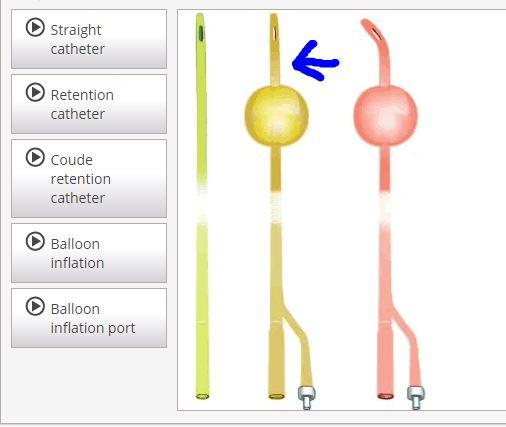 . |
front 3 Coude Retention Catheter | back 3 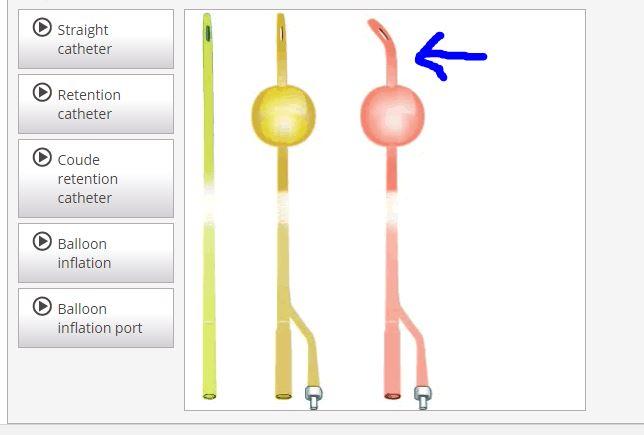 . |
front 4 Balloon Inflation | back 4 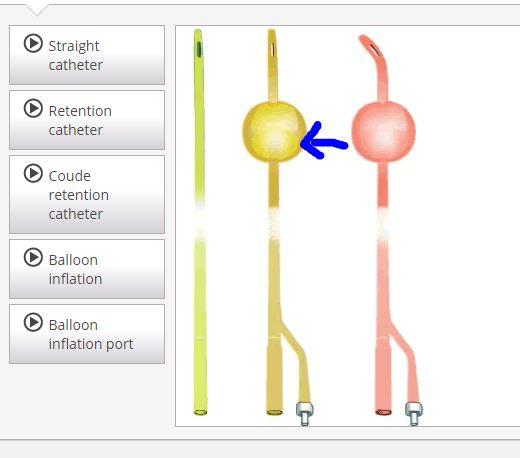 . |
front 5 Balloon Inflation Port | back 5 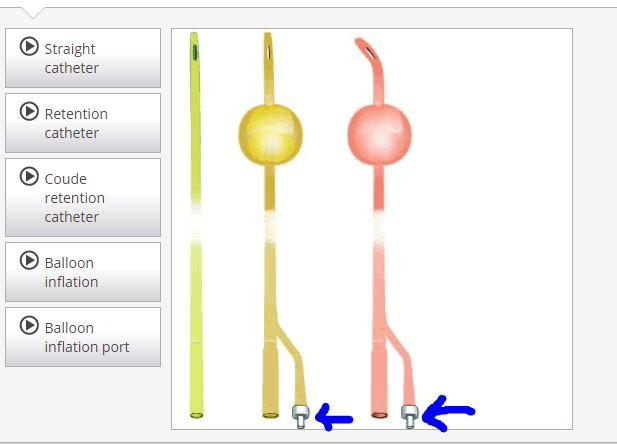 . |
front 6 One of the greatest risks involved with urinary catheters | back 6 infection |
front 7 perineal care or peri-care | back 7 Care of a patient with a urinary catheter |
front 8 Perineal care involves cleansing around the | back 8
|
front 9 Vital consideration when performing perineal care | back 9
|
front 10 Things to use when performing perineal care | back 10
Do not use povidone-iodine, alcohol, or any other strong agent on the genital area. |
front 11 Connector | back 11 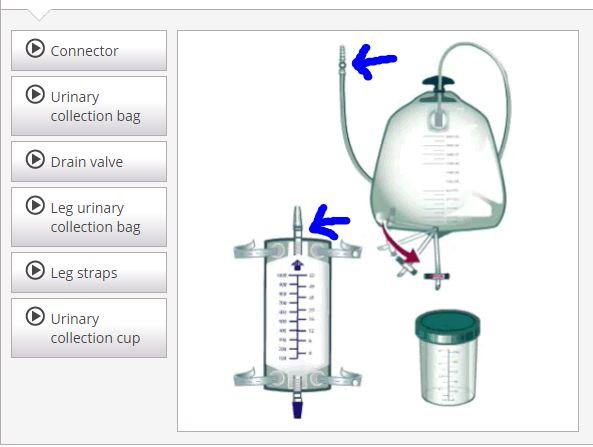 . |
front 12 Urinary Collection Bag | back 12  . |
front 13 Drain Valve | back 13 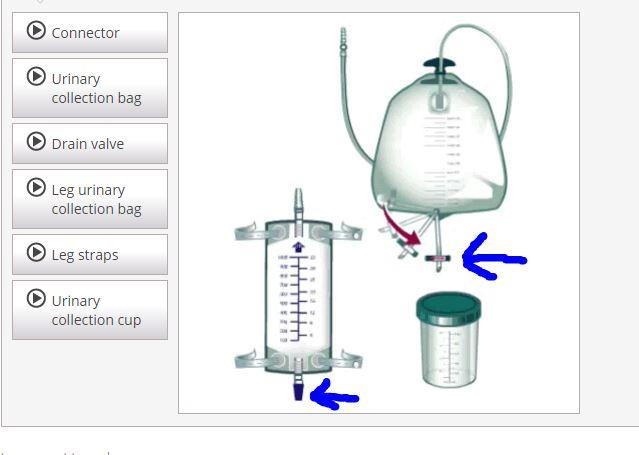 . |
front 14 Leg Urinary Collection Bag | back 14  . |
front 15 Leg Straps | back 15  . |
front 16 Urinary Collection Cup | back 16 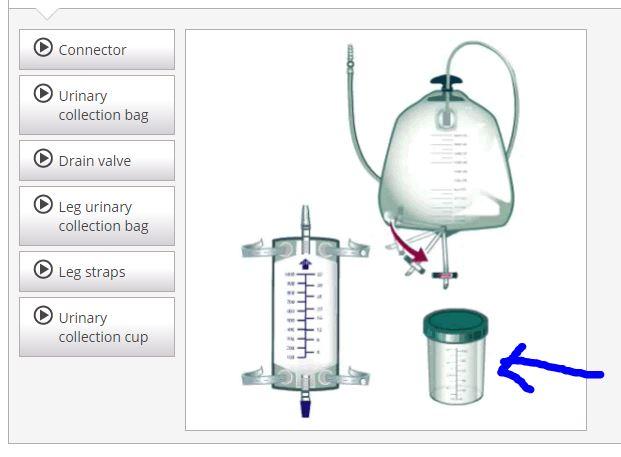 . |
front 17 A nurse us assessing a patient's indwelling urinary catheter drainage at the end of the shift and notes the output is considerably less than the fluid intake. Which of the following actions should the nurse take first?
| back 17
Output that is considerably less than intake is a sign that the catheter is blocked. The first action the nurse should take is to check the tubing for kinks and ensure the client's urine flow is not obstructed. |
front 18 When providing perineal care for a female patient who has an indwelling urinary catheter, which of the following areas should the nurse cleanse last?
| back 18
The basic aseptic principle applicable to perineal care is to cleanse from the area of least contamination to the area that is the most contaminated. The anal area is typically contaminated with coliform bacteria and should be cleansed last. |
front 19 Which of the following actions should a nurse take when removing a patient's indwelling urinary catheter?
| back 19
If any inflation solution remains in the balloon, trauma to the urethral canal is likely with removal of the catheter. |
front 20 A nurse is likely to receive an order for urinary catheterization of a new admitted patient who
| back 20
Precise measurement of urinary output is crucial for managing fluid balance in patients who are critically ill. |
front 21 A nurse is preparing to insert an indwelling urinary catheter for a female patient. When beginning the insertion procedure, the nurse should instruct the patient to
| back 21
Bearing down as if to void relaxes the external sphincter and aids in the insertion procedure. This is the appropriate instruction for the patient. |
front 22 A nurse who preparing to insert a straight urinary catheter for a male patient should
| back 22
Lifting the penis to a position perpendicular to the body while applying light traction straightens the urethral canal to facilitate catheter insertion. |
front 23 A nurse is applying a condom catheter for an older adult patient who is uncircumcised. Which of the following is an appropriate step in the procedure?
| back 23
A space of 2.5 to 5 cm (1 to 2 in) should be left between the tip of the penis and the end of the catheter. This space helps prevent irritation of the tip of the penis and allows full drainage of urine. |
front 24 A nurse is planning on obtaining a urinary specimen from a patient's close urinary system. Identify the sequence of steps the nurse should take.
| back 24
|