Instructions for Side by Side Printing
- Print the notecards
- Fold each page in half along the solid vertical line
- Cut out the notecards by cutting along each horizontal dotted line
- Optional: Glue, tape or staple the ends of each notecard together
BIOL 2333-A Microbiology
front 1 Describe some of the destructive and beneficial actions of microbes. | back 1 Destructive: Few are disease-causing (ex: fever, diarrhea) and spoils food. |
front 2 Describe some of the destructive and beneficial actions of microbes. | back 2 Beneficial : produce fermented foods (cheese, bread, vinegar), produces industrial chemicals (ethanol and acetone), decompose organic wastes, are producers in the ecosystem by photosynthesis, produce products used in manufacturing and treatment (insulin) |
front 3 Distinguish a genus from a specific epithet. | back 3 Established by Carolus Linnaeus (1735)
a genus : Capitalized the first letter a specific epithet (species ): species/specific epithet all lowercase Need to be italicized or underlined |
front 4 The scientific name of an organism includes its
| back 4 genus and species . Ex: Staphylococcus aureus OR Homo sapiens |
front 5 In the name Staphylococcus aureus, aureus is the | back 5 D) specific name. |
front 6
What is a Refraction index? | back 6
Is the loss of light rays after we passed
them through the stained specimen. To avoid we add immersion oil
has the same reflation index the glass, the light rays do not
refract when passing through. |
front 7 List the three domains | back 7 Bacteria Archaea Eukarya |
front 8 Differentiate the major characteristics of Bacteria | back 8 Prokaryotic, unicellular organism Lack a membrane-bounded nucleus Reproduce asexually Heterotrophic by absorption |
front 9 Differentiate the major characteristics of Archaea | back 9 Prokaryotic, unicellular organisms Lack a membrane-bounded nucleus Reproduce asexually many are autotrophic by chemosynthesis; some are heterotrophic by absorption |
front 10 Differentiate the major characteristics of Eukarya | back 10 Eukaryotic, unicellular to multicellular organisms Membrane-bounded nucleus Sexual reproduction Phenotypes and nutrition are diverse |
front 11 Which groups of microbes are prokaryotes? Which are eukaryotes? How can you distinguish between them? | back 11 Prokaryotes are organisms made up of cells that lack a cell nucleus or any membrane-enclosed organelles. Eukaryotes are organisms made up of cells that possess a membrane-bound nucleus (that holds genetic material) as well as membrane-bound organelles. |
front 12
Which of the following is not a characteristic of
prokaryotes? B) Cell membrane C) Cell wall D) Endoplasmic reticulum | back 12 D) Endoplasmic reticulum |
front 13
Eukaryotic cells are more complex than prokaryotic cells. Which
would you not find in a prokaryotic cell? B) Plasma membrane C) Nucleus D) Ribosomes | back 13 C) Nucleus |
front 14 ______using a simple microscope was the first to observe microorganisms | back 14 Anton van Leeuwenhoek |
front 15
The scientist usually considered the first to see
microorganisms, which he called "animalcules",
was | back 15
b) Anton von Leeuwenhoek |
front 16
Which of the following individuals
| back 16 a. Anton von Leeuwenhoek |
front 17 Koch provided the experimental steps, “Koch’s postulates”, to prove that a specific microbe causes a specific disease, what are those steps? | back 17 1.The same pathogen must be present in every case of the disease
|
front 18 Which of the following is NOT part of Koch's postulates?
| back 18 D) The microorganism must secrete a toxin in culture. |
front 19 The formal steps (postulates) by which a microbiologist can
demonstrate that a particular disease is caused by a particular
microbe were first laid down by | back 19 b. Robert Koch |
front 20 Spontaneous generation: | back 20 the hypothesis that living organisms arise from nonliving matter; a “vital force” forms life. Ex: three jars were covered with net and there were no maggots Three open jars maggots appears |
front 21 The idea of spontaneous generation postulated that | back 21 d. living organisms could arise from nonliving material. |
front 22 Biogenesis: | back 22 The hypothesis that the living organisms arise from preexisting life |
front 23 Biogenesis refers to the Ex: When the flask is tilted the microorganism are able to enter the broth and they grew in the broth this showed the microorganism did not appear spontaneously | back 23 C) development of aseptic technique |
front 24 Pasteurization: | back 24 heat (below boiling) for short period of time to kill pathogens and reduce bacteria count, does not kill all bacteria- some survive |
front 25 Pasteurization involves the:. A) exposure of food to high temperatures for short periods to destroy harmful microorganisms. B) exposure of food to heat to inactivate enzymes that cause undesirable effects in foods during storage. C) fortification of foods with vitamins A and D. D) use of irradiation to destroy certain pathogens in foods. | back 25 A) exposure of food to high temperatures for short periods to destroy harmful microorganisms. |
front 26 Ionic bond= | back 26 when it gives up an electron to make the valence electrons stable |
front 27 Covalent bond= | back 27 is when you share electrons to make the valence electrons complete/ balance |
front 28 Polar covalent bond= | back 28 atoms are shared unequally |
front 29 Non polar covalent bond= | back 29 Atoms are shared equally |
front 30 Atoms that have the same atomic number (are of the same element) but different atomic weights are called______? | back 30 isotopes . |
front 31
Isotopes of the same element must have the same
number of | back 31 B) protons |
front 32
Isotopes of the same element must have different
numbers of | back 32 A) neutrons |
front 33 A hydrogen bond exists when a hydrogen atom ______ to one oxygen or nitrogen atom is attracted to another ______. | back 33 covalently bonded, oxygen or nitrogen atom. |
front 34
Which statement about hydrogen bonding is
true? | back 34 C) Hydrogen bond is a weak force between atoms in a molecule but is of enormous importance in physiology. |
front 35
Example of compound having hydrogen bonding
is | back 35 C)sodium chloride |
front 36
Which of the following is the type of
bond A)Ionic Bond B)Covalent Bon C) Hydrogen Bond D) Disulfide Bond E) Electrostatic interactions | back 36 C) Hydrogen Bond |
front 37 Endergonic reactions require more ____ than they_____? | back 37 energy, release; |
front 38 Exergonic reactions release more or less energy. | back 38 more |
front 39 Anabolism = | back 39 to build up a new molecule (creating polymers from monomers by dehydration synthesis) |
front 40 Catabolism = | back 40 breaking down molecules in cell (adding H2O to break down the bond, now you have hydrolysis reaction) |
front 41 Because water is a_______ , it is an excellent______ . | back 41 polar molecule,solvent |
front 42 The bond joining glucose and fructose together to form sucrose is A) A glycosidic linkage B) dehydration synthesis C) Dipole-dipole bonds D) Phosphodiester bond E) Ester linkage | back 42 A) A glycosidic linkage |
front 43
What bond links the fatty acid tail to the
glycerol in a lipid
A) Glycosidic B) Peptide C) Ester D) Phosphodiester E) Van der Waals | back 43 C) Ester |
front 44 Dehydration synthesis reaction : | back 44 removal of water to form a bond |
front 45 Hydrolysis | back 45 adds a water molecule, breaking a bond |
front 46 Both glycosidic and peptide linkages result from_____ | back 46 dehydration synthesis |
front 47 What happens during a hydrolysis reaction? A) A protein coils into its secondary structure B) The bond between two subunits of a macromolecule is broken C) Saturated fats become unsaturated D) A bond is formed between two subunits of a macromolecule E) Water breaks ionic bonds | back 47 B) The bond between two subunits of a macromolecule is broken |
front 48 Monomers usually bond together by _______ that form water and a polymer. | back 48 dehydration synthesis |
front 49 Polymers may be broken down by ______ a reaction involving the splitting of water molecules. | back 49 hydrolysis |
front 50 Dehydration reaction is removing______________? | back 50 Water + Glucose + Fructose |
front 51 Hydrolysis is by adding ______? | back 51 Sucrose + water |
front 52 Proteins have four levels of structure: | back 52 primary (sequence of amino acids) secondary (helices or pleats) tertiary (overall three-dimensional structure of a polypeptide) Quaternary (two or more polypeptide chains). |
front 53 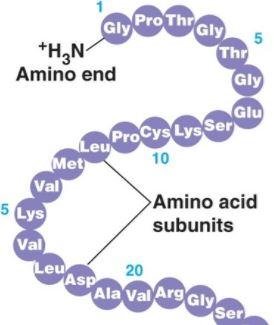 | back 53 primary (sequence of amino acids) |
front 54 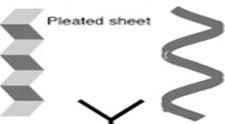 | back 54 secondary (helices or pleats) |
front 55 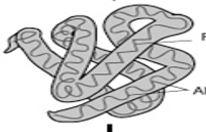 | back 55 tertiary (overall three-dimensional structure of a polypeptide) |
front 56  | back 56 Quaternary (two or more polypeptide chains). |
front 57 What is the total magnification of a compound light microscope with objective lens magnification of 40X and ocular lens of 10x | back 57 400X |
front 58  | back 58 GRAM NEGATIVE |
front 59 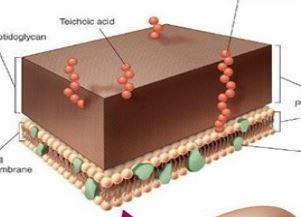 | back 59 GRAM POSITIVE |
front 60 The DNA found in most bacterial cells___. | back 60 is circular in structure. |
front 61
Gram negative differ from Gram positive in
having | back 61 C) Complex wall |
front 62
Lipopolysaccharide is found in cell wall of
| back 62 B) Gram negative bacteria |
front 63  | back 63 coccus |
front 64  | back 64 bacillus |
front 65 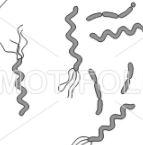 | back 65 Spirillum |
front 66 How would you be able to identify streptococci through a microscope? | back 66 It would look like a chain of spheres under the microscope |
front 67 How would you expect the effect of drugs to differ between gram-positive and gram-negative organisms? | back 67 Answer: Gram positive have a strong PG so the drugs won't destruct it ex: penicillin Gram negative- have a thin wall so it is susceptible to destruction of chemicals ex:tetracycline |
front 68 Flagella= | back 68 Long appendages. Made of chains of flagellin, attached to a protein hook. Anchored to the wall and membrane by the basal body. |
front 69 axial filaments= | back 69 In bacteria called spirochetes. Its anchored at one end of a cell, and spirals around. When it rotates causing the cell to move |
front 70 Fimbriae= | back 70 Short appendages that allow attachment ( velcro) not movement Can be at cell poles/ all over |
front 71 Pili | back 71 Facilitate transfer from DNA from 1 cell to another |
front 72 Eukaryotic= | back 72 cells contain organelles which include mitochondria,chloroplast the endoplasmic reticulum, the Golgi apparatus, and lysosomes |
front 73 Mitochondria= | back 73 powerhouse of the cell. |
front 74 Smooth ER= | back 74 synthesize phospholipids,fats, and steroids Release glucose in blood stream, detoxify drug-alcohol |
front 75 Rough ER= | back 75 process plasma membrane, process ribosomes |
front 76 Peroxisomes= | back 76 amino acids and fatty acids are oxidized and protects the cell from toxic effect of H202 |
front 77 Lysosomes= | back 77 break molecules, digest bacteria that enter the cell, and phagocytosis WBC contain lysosomes |
front 78 Golgi apparatus= | back 78 Membrane formation and secretion. It is the package house of the cell where macromolecules like proteins and lipids as they are synthesized within the cell. |
front 79 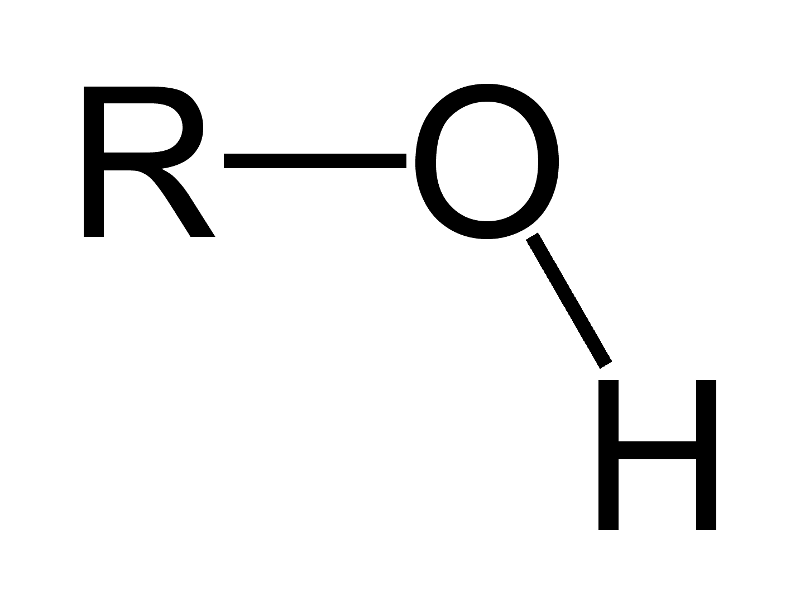 | back 79 ALCOHOL |
front 80 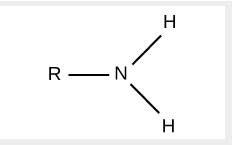 | back 80 AMINO |
front 81 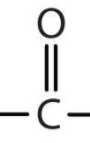 | back 81 CARBONYL |
front 82 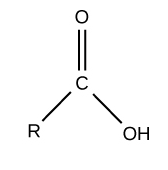 | back 82 CARBOXYL |
front 83 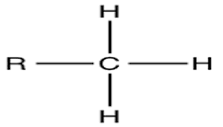 | back 83 METHYL |
front 84 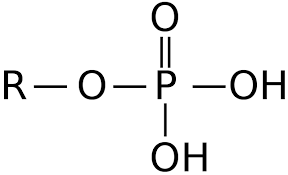 | back 84 PHOSPHATE |
front 85 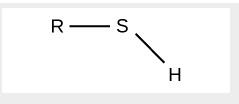 | back 85 SULHYDYL |
front 86 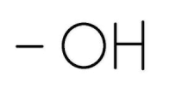 | back 86 Hydroxy |
front 87 What are the three domains of life? | back 87 -Bacteria(cyanobacteria, heterotrophic bacteria) -Archaea(Halophiles and Thermophiles) -Eukarya
|
front 88 Which groups of microbes are prokaryotes? | back 88 Answer: Bacteria and archaea |
front 89
Which component is not found in the cytoplasm of the majority of
prokaryotes? | back 89 A) Capsule |
front 90 Which are eukaryotes? How can you distinguish between them? | back 90 The main difference between the two is the presence of a “true” nucleus: eukaryotes have one, while prokaryotes do not. |
front 91 Prokaryotes | back 91 Their cell wall has no peptidoglycan layer. They have no histone Their cell wall have a peptidoglycan layer Reproduce usually by binary fusion |
front 92 Eukaryotes | back 92 Cell wall has peptidoglycan layer Dna has histone They have chemically simple cell walls. They reproduce by mitosis |
front 93 Summarize in your own words the germ theory of disease | back 93 The idea that tiny organisms called microbes cause infectious
diseases that are easily passed among humans. |
front 94
Which of the following is NOT part of Koch's
postulates? | back 94 D) the microorganism must secrete a toxin in culture. |
front 95 Define normal microbiota and their types | back 95 Normal microbiota or normal flora refers to the organism that colonizes the body’s surfaces without normally causing disease. Resident microbiota permanently colonizes the host and is established during the first months of life. Transient microbiota May be present for day, weeks, or month |
front 96 Define resistance= | back 96 resistance The ability to ward off diseases through innate and adaptive immunity |
front 97 Define biofilm = | back 97 Microbes attach to solid surfaces and grow into masses such as rocks, pipes, teeth and medical implants |
front 98 Why are biofilms important? | back 98 Important in oil spills and purifying water. |
front 99 How would you tell it was a virus? | back 99 If they contain a protein coat Have a nucleic acid genome Have a capsid Obligatory intracellular parasites ( need a host cell to replicate) The Virus is smaller than bacteria |
front 100 True or False Viruses have a cellular organization. | back 100 False(Viruses do not have a cellular organization and are therefore not classified with cellular organisms) |
front 101
Viruses are classified by ____________. | back 101 D) all of the above |
front 102
Which order below reflects the correct
procedure for Gram staining?
| back 102 C. crystal violet-iodine-alcohol/acetone-safranin |
front 103 Describe the appearance of gram-positive and gram-negative cells after each step. | back 103 1) First step use the first stain crystal violet (stains everything purple) 2) Than add the mordant (grams iodine) to help the chemical reaction along 3)Than wash with alcohol to decolorize anything that isn't chemically bonding 4)Than use the last stain: safranin (counterstaining) |
front 104 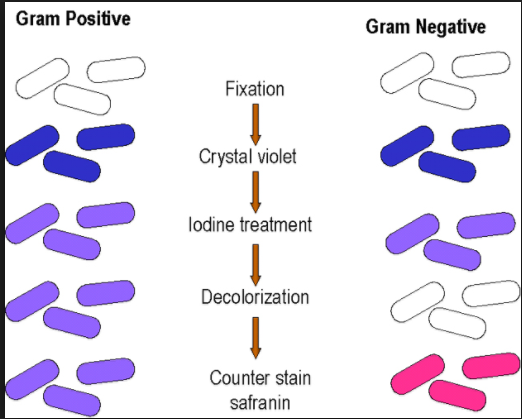 | back 104
The gram POS+ bacteria retain the purple stain after
the decolorization step Gram NEG- bacteria do not and thus appear pink from the counterstain. |
front 105 Why is the Gram stain so useful? | back 105 Being able to identify the Gram stain also means that in some cases, a clinician can get the patient started on antibiotic treatment even before the actual organism(s) is/are identified. |
front 106 How would you expect the effect of these drugs to differ between gram-positive and gram-negative organisms? | back 106 Drugs directed towards bacteria i.e Gram - because of the peptidoglycan layer (second outer membrane has lipopolysacaride layer which allows it to be resistant to antibiotics). Gram + have techoic acid, this allows charges to cross into the cell. |
front 107 How do bacteria move? | back 107 Some bacteria have a single, tail-like flagellum or a small cluster of flagella, which rotate in coordinated fashion, much like the propeller on a boat engine, to push the organism forward. The hook: Many bacteria also use appendages called pili to move along a surface. |
front 108 What is a spore? | back 108 A resting structure formed inside some bacteria. They can stay latent under their fixed conditions and activate when their nuclear components are activated. |
front 109 What is an enzyme? | back 109 A substance produced by a living organism that acts as a catalyst to bring about a specific biochemical reaction. AN ENZYME IS A PROTEIN, BUT NOT ALL PROTEINS ARE ENZYME |
front 110 Describe the mechanism of enzymatic action. | back 110 Step 1 of mechanisms of enzymatic action surface of the substrate contacts a specific region on the surface of the enzyme called the active site step 2 of mechanisms of enzymatic action a temporary enzyme-substrate complex forms lock and key step 3 of mechanisms of enzymatic action substrate is transformed to products step 4 of mechanisms of enzymatic action enzyme and products separate step 5 of mechanisms of enzymatic action unchanged enzyme can react with other substrate |
front 111 Enzymes are capable of recognizing and reacting with a special chemical substance called A) activator B) substrate C) co-factor D) co-enzyme | back 111 B) substrate |
front 112 Kind of molecules at which enzymes act are classified as
| back 112 D. substrates |
front 113 The microbial process of converting sugars to alcohol is known as
| back 113 B) fermentation. |
front 114 The first step for directly linking a microbe to a specific disease
according to Koch's postulates is to | back 114 C) obtain a sample of blood or other body fluid from a diseased animal. |
front 115 In which of the following situations would Koch's postulates be
utilized? | back 115 A) determination of the cause of a patient's illness in a hospital microbiology lab |
front 116 Robert Koch identified the cause of | back 116 C) anthrax |
front 117 Antibiotics are produced by | back 117 E) bacteria and fungi. |
front 118 Why is enzyme specificity important? | back 118 Because the unique arrangement of each enzyme allows it to find the correct substrate from all the diverse molecules in a cell . |
front 119 List the factors that influence enzymatic activity | back 119 Several factors affect the rate at which enzymatic reactions proceed - temperature, pH, enzyme concentration, substrate concentration, and the presence of any inhibitors or activators. |
front 120 What happens to an enzyme below/above its optimal temperature? | back 120 The graph shows that as temperature is increased, the reaction rate of an enzyme increases. However, the graph shows that there is an optimum temperature where the reaction proceeds at its maximum. Above that optimal temperature, the reaction rate decreases. |
front 121 Explain how the type of microbe affects the control of microbial growth. | back 121 The presence or absence of endospores has an obvious effect on microbial control. |
front 122 Why are gram-negative bacteria more resistant to chemical biocides than gram-positive bacteria? | back 122 biocides tend to be more effective against gram-positive bacteria- external lipopolysaccharide layer of gram-negative bacteria, makes them resistant; mycobacteria have a cell wall that is waxy, lipid-rich. viruses resistance depends on the presence or absence of an envelope. |
front 123 How is microbial growth in canned foods prevented? | back 123 Drying is often used to preserve foods (e.g. fruits, grains, etc.). Methods involve removal of water from commercial sterilization: product by heat, evaporation, freeze-drying, and addition of salt or sugar. |
front 124 Define normal and transient microbiota and their role in our health | back 124 Normal microbiota permanently colonize the host Transient microbiota may be present for days, weeks, or months |
front 125 What are opportunistic microorganisms? | back 125 Opportunistic microorganism: A bacterium, virus, protozoan or fungus that takes advantage of certain opportunities to cause disease. Those opportunities are called opportunistic conditions.They take advantage of a weak immune system. |
front 126 How are nosocomial infections primarily transmitted? | back 126 NOSOCOMIAL INFECTIONS ARE USUALLY ACQUIRED IN HOSPITALS . THEY AFFECT IMMUNO COMPROMISED PATIENTS. I.E FROM CATHETER, OR ON ANTIBIOTIC TREATMENT. |
front 127 A hospital acquired infection is A)familial. B)nosocomial. C)genial. D)viral. E)potential. | back 127 B)nosocomial. |
front 128 Explain how nosocomial infections can be prevented? | back 128 Using aseptic techniques, handling contaminated materials carefully, insisting on frequent hand washing, educate on infection control basics, and use isolation rooms. |
front 129
The most common of all nosocomial infections are found
in the | back 129 C. urinary tract |
front 130 What are true pathogens? | back 130 Cause disease in healthy person with normal immune defenses . |
front 131 What factors contribute to an organism’s pathogenicity? | back 131 Portal of entry:Mucous membranes -respiratory system, GI tract, and skin Penetration or Evasion of Host Defenses: Capsules, cell wall components, enzymes, antigenic variation Damage to Host Cell:siderophores, direct damage, toxins (endotoxins and exotoxins), lysogenic conversion Portal of exit: same as the portal of entry for a microbe |
front 132 Identify the principal portals of entry and describe how microorganisms gain access through each | back 132 Portal of entry:Mucous Membrane most common route for pathogens Respiratory tract, gastrointestinal tract , urinary/genital tract, conjunctiva |
front 133 Identify the principal portals of entry and describe how microorganisms gain access through each | back 133 Skin (keratinized cutaneous membrane) some pathogens infect hair follicles and sweat glands few can colonize surface unless broken, skin is usually an impermeable barrier to microbes |
front 134 Identify the principal portals of entry and describe how microorganisms gain access through each | back 134 Parenteral route penetrate skin: punctures, injections, bites, cuts, surgery, etc. deposit organisms directly into deeper tissues |
front 135 Explain how microbes adhere to host cells? Adherence specifically" | back 135 Tissue tropism: particular bacteria are known to have an apparent preference for certain tissues over others e.g., S. mutans is abundant in dental plaque but does not occur on epithelial surfaces of the tongue; S. salivarius is in high numbers to epithelial cells of the tongue but is absent in dental plaque Species specificity: certain pathogenic bacteria infect only certain species of animals e.g., N. gonorrhoeae, Genetic specificity within a species: certain strains or races within a species are genetically immune to a pathogen e.g. (malaria) |
front 136 Explain how capsules and cell wall components contribute to pathogenicity Capsule- prevent phagocytosis (examples: Streptococcus pneumoniae and Haemophilus influenzae) | back 136 Cell wall components - M protein ( resist phagocytosis ex: Streptococcus pyogenes), Opa Protein ( inhibit T helper cells, promote attachment and uptake of host cell), Mycolic Acid (resist digestion ex:Mycobacterium tuberculosis) |
front 137 Contrast the nature and effects of exotoxins and endotoxins | back 137 Exotoxin: Gram +, By-products of growing cell, Protein, No fever, yes neutralize antitoxins, LD50 small Endotoxin: Gram -, outer membrane, Lipids, glycolipids, yes fever, not neutralized by antitoxins, LD50 large |
front 138 Steps of A-B Exotoxins | back 138 1.Bacteria produces and releases exotoxin 2.B binding component of exotoxin attaches to host cell receptor 3.A-B exotoxins enters host cells by endocytosis 4.A-B exotoxin enclosed in pinched- off portion of plasma membrane during pinocytosis 5.A-B components of exotoxins separate. A component alters cell function by inhibiting proteins synthesis. The B component is released in the host cell |
front 139 Describe the role of the skin and mucous membranes in innate immunity | back 139 First Line of Defense: Skin ( dermis & epidermis) Epidermis is tightly compacted top layer contains dead cells called keratin protective protein Mucous Membrane- thick and moist epithelium
|
front 140 Describe the role of normal microbiota in innate immunity (16-5) Normal microbiota complete with pathogen or alter the environment More susceptible to infection (presence of normal flora continually challenges the immune system, keeping it active | back 140 Normal microbiota complete with pathogen or alter the environment More susceptible to infection (presence of normal flora continually challenges the immune system, keeping it active |
front 141 Distinguish microbial antagonism from commensalism | back 141 Microbial Antagonism: Normal flora inhibits overgrowth of harmful microbes.Mechanism includes competition for nutrients and affecting environmental factors such as ph, toxic substances and oxygen availability Commensalism: one organism benefits, the other is not affected (Many microbes live off secretions and dead cells and do not benefit or harm host cell) |
front 142 Describe the roles of white blood cells in immunity | back 142 Answer: Increase during infection When activated:
most leukocytes will produce cytokines
trigger, enhance, and coordinate various defense mechanisms
|
front 143 Define phagocyte and phagocytosis | back 143
Phagocyte=From Greek, meaning eat, Cyte: From Greek, meaning
cell Phagocyte is an organism. I.e macrophage, basophils that ingest pathogen. Phagocytosis is the process of ingesting an antigen by a macrophage or other phagocytic cells. |
front 144 Explain the process of phagocytosis | back 144
Step 1
|
front 145 What purposes does inflammation serve? | back 145
1) Destroy injurious agent and remove byproducts of injury
|
front 146 What causes the redness, swelling, and pain associated with inflammation? | back 146 Redness-= Because of vasodilation
Swelling=increase in permeability permits fluid to move from blood
to tissue spaces |
front 147 Describe the cause and effects of fever? | back 147
cause: infection from bacteria and their toxins, or viruses. Gram
negative endotoxin cause phagocyte to release interleukin-1
Prostaglandins released by the hypothalamus trigger the fever! Lowering the body tempature. |
front 148 What is the purpose of complement and interferons? | back 148 Complement system:activation aids in destructions of microbes The antibodies attack the cell which activated the complements to lysis the cell. Interferons:signals proteins,triggers neighboring cells to produce antiviral proteins |
front 149 Steps of the Antiviral actions of interferon | back 149 1.Viral RNA from an infecting virus enter the cell 2.The infecting virus replicates into new viruses The infecting virus also induced the host cell to produce interferon mRNA which is translated into alpha and beta 4.Interferons releases by virus infected host cell bind to plasma membrane or nuclear membrane receptors on uninfected neighboring host cells, inducing them to synthesize antiviral proteins. These include oligoadenylate synthetase and protein kinase. 5.New viruses released by infected host cell infect neighboring cells. 6.AVPś degrade viral mRNA and inhibits proteins synthesis and thus interfere with viral infection |
front 150 Explain the function of antibodies, and describe their structural and chemical characteristics | back 150 Special proteins produced by plasma cell ( B cells) recognize and bind to a specific epitope of an antigen via its antigen binding sites Recognize and bind to specific shape. They have great specificity and each have 2 antigen binding sites |
front 151  | back 151 IgA is an antibody that plays a crucial role in the immune function of mucous membranes |
front 152  | back 152 IgD is an antibody isotype that makes up about 1% of proteins in the plasma membranes of immature B-lymphocytes |
front 153 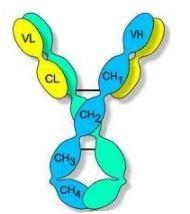 | back 153 IgE is a type of antibody (or immunoglobulin (Ig) "isotype") that has only been found in mammals. IgE is synthesised by plasma cells. |
front 154 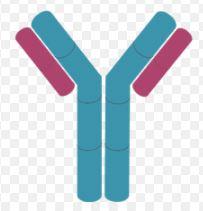 | back 154 IgG IgG,a monomer, is the predominant Ig class present in human serum |
front 155 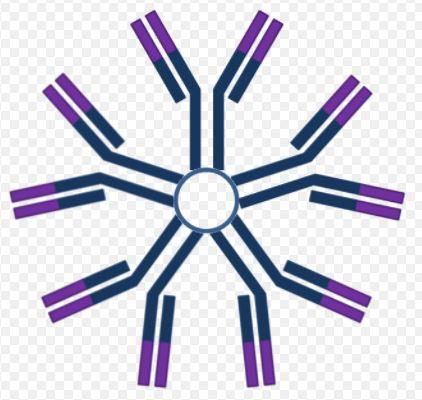 | back 155 IgM is one of several forms of antibody that are produced by vertebrates. |
front 156 Agglutination: | back 156 reduces number of infectious units to be dealt with |
front 157 Opsonization: | back 157 coating antigens with antibodies enhances phagocytosis |
front 158 Neutralization: | back 158 Blocks adhesion of bacteria and viruse to mucosa and blocks attack of toxins |
front 159 Antibody- | back 159 dependent cell cell mediated cytotoxins- antibodies attached to target cell causes destruction by macrophages,eosinophils,and NK cells |
front 160 Activation of complement | back 160 Causes of inflammations and cell lysis |
front 161 Why is the lymphatic system so valuable for the working of the immune system? | back 161 The Lymphatic system is the transport method of most pathogens. Bacteria or Viruses will travel to the lymph nodes where the CD4 and CD8 cells are located which then target and kills the pathogens. |
front 162 List the signs and symptoms of sepsis, and explain the importance of infections that develop into septic shock. | back 162 Sepsis is an infection of the blood. Fever Respiratory rate increases. Heart rate increases(tarchycardia). Infections that develop into sepsis c |
front 163 Why are hyperbolic chambers effective in treating gas gangrene? | back 163 Because it contains a pressurized oxygen-rich atmosphere. The oxygen then saturates the infected tissues of the obligately anaerobic clostridia. |
front 164 Tetanus | back 164
|
front 165 Toxin Bacterial | back 165 Bacterial toxins are toxic substances that are produced and released by bacteria to target other bacterial or host cells. |
front 166 How does the skin aid in protection of human body? | back 166
|
front 167 What are the layers of the nervous system? | back 167
|
front 168 What are the characteristic of the blood brain barrier | back 168
|
front 169 Stages of disease | back 169 Incubation phase period between infection and prodromal. No signs or symptoms . Prodromal stage. Mild symptoms Period of illness- most severe signs and symptoms . if the body’s immune response is unsuccessful deaths can occur. Period of decline- signs and symptoms decrease Convalescence stage no signs and symptoms . body returns to normal. |
front 170 Acquired Immunodeficiency is resulted from what? | back 170 Variety of drug, cancers, infectious diseases. |
front 171 What is considered the point of no return in an HIV infection? | back 171 Integration of viral RNA into chromosomal DNA in the cell’s nucleus. |
front 172 What are the graft complications? | back 172 Graft rejection, graft infection, and graft vs host disease. |
front 173 What are the necessary components needed for an HIV virion to bind to a CD4 cell? | back 173 CD4 receptor, Gp120, and Gp41 |
front 174 What is considered the window period for HIV? | back 174 Time period between infection and antibody production. |
front 175 With what drug was P. notatum replaced by and why? | back 175 It was replaced by P. chrysogenum because it was a more prolific strain. |
front 176 What is drug synergism and what is drug antagonism? | back 176 Synergism is when two drugs work together to enhance the effect. Antagonism is when two drugs inhibit the effects of each other |
front 177 Why can you not take Cephalosporins if you are allergic to Penicillins? | back 177 Cephalosporins have the same “nucleus”, which is the beta-lactam ring. If you are allergic to penicillins, then you are most likely allergic to cephalosporins. |
front 178 What does Sulfamethoxazole and Trimethoprim inhibit and why do they not hurt us? | back 178 They inhibit folic acid as result inhibiting DNA/RNA and protein synthesis. They do not harm us because we can get folic acid via our diet. |
front 179 If a drug is selective, what does that mean? | back 179 mean that it specifically targets the bacteria cells and not the human cells. |
front 180 Commensalism - | back 180 one benefits, one isn’t harmed/ not affected (+/0) (ex: bacteria lives off dead skin) |
front 181 Mutualism - | back 181 both benefit from living together (+,+) (e.coli synthesis vitamin k and vitamin B) |
front 182 Pathogenicity- | back 182 one organism benefits, the other is harmed (+/-) , causing disease in the host. |
front 183 What is the difference between an acute and latent infection? | back 183 Latent is dormant or recessive and chronic is ongoing and long term. Acute is sudden and severe. |