Instructions for Side by Side Printing
- Print the notecards
- Fold each page in half along the solid vertical line
- Cut out the notecards by cutting along each horizontal dotted line
- Optional: Glue, tape or staple the ends of each notecard together
AP2 Final Part 3
front 1 The ability of sperm cells to move along the ductus deferens is due to ________. A) gravity | back 1 B) peristaltic contractions |
front 2 Erection of the penis results from ________.
| back 2 D) a parasympathetic reflex |
front 3 Which is not a part of the proliferative phase of the female menstrual cycle?
| back 3 C) corpus luteum |
front 4 Which of the choices below is not a function of the vagina?
| back 4 A) serves as a passageway for the primary oocyte |
front 5 Select the correct statement about male sexual response.
| back 5 B) Erection is the result of vascular spaces in the erectile tissues filling with blood. |
front 6 Which of the choices below is not a function of testosterone?
| back 6 D) stimulates mammary gland development |
front 7 Which male hormone inhibits the secretion of FSH?
| back 7 B) inhibin |
front 8 During the secretory phase of the menstrual cycle ________.
| back 8 B) progesterone levels are at their highest |
front 9 Human egg and sperm are similar in that ________.
| back 9 C) they have the same number of chromosomes |
front 10 The constancy of the chromosome number from one cell generation to the next is maintained through ________.
| back 10 B) meiosis |
front 11 In humans, separation of the cells at the two-cell state following fertilization may lead to the production of twins, which in this case would be ________.
| back 11 B) identical |
front 12 Characteristics of the mature sperm include the ________.
| back 12 B) presence of Y chromosomes in approximately half the sperm |
front 13 How do the testes respond to exposure to excessive body warmth?
| back 13 B) They move away from the pelvic cavity. |
front 14 Effects of estrogen include ________.
| back 14 C) growth of the breasts at puberty |
front 15 Secretion of progesterone stimulates ________.
| back 15 B) preparation of the mammary glands for lactation |
front 16 The cells that produce testosterone in the testis are called ________.
| back 16 D) interstitial cells |
front 17 The most important risk for testicular cancer in young males is ________.
| back 17 C) nondescent of the testes |
front 18 Which of the following glands are responsible for 60% of the synthesis of semen?
| back 18 A) the seminal vesicles |
front 19 Which of the following hormones controls the release of anterior pituitary gonadotropins?
| back 19 C) GnRH |
front 20 The primary function of the uterus is to ________.
| back 20 D) receive, retain, and nourish a fertilized ovum |
front 21 Why is the blood-testis barrier important?
| back 21 A) because spermatozoa and developing cells produce surface antigens that are recognized as foreign by the immune system |
front 22 The structures that receive the ovulated oocyte, providing a site for fertilization, are called the ________.
| back 22 B) fallopian tubes |
front 23 If gametes were diploid like somatic cells, how many chromosomes would the zygote contain? A) twice the diploid number, and with every succeeding generation, the chromosome number would continue to double and normal development could not occur B) triple the diploid number, and with every succeeding generation, the chromosome number would continue to triple and normal development would not occur C) half the diploid number with no change in development D) There is no relationship between gametes and somatic cells. | back 23 A) twice the diploid number, and with every succeeding generation, the chromosome number would continue to double and normal development could not occur |
front 24 Select the correct statement about the uterine cycle. A) The menstrual phase of the cycle is from day 1 to day 8. B) During the secretory phase, estrogen levels are at their highest. C) During the proliferative phase, levels of progesterone rise as the follicle begins to produce more hormone. D) If fertilization occurs, the corpus luteum is maintained by a hormone secreted by the developing embryo. | back 24 D) If fertilization occurs, the corpus luteum is maintained by a hormone secreted by the developing embryo. |
front 25 Normally menstruation occurs when ________.
| back 25 B) blood levels of estrogen and progesterone decrease |
front 26 The basic difference between spermatogenesis and oogenesis is that ________.
| back 26 C) in oogenesis, one mature ovum is produced, and in spermatogenesis four mature sperm are produced from the parent cell |
front 27 Which of the following will occur after ovulation? A) The corpus luteum secretes estrogen only. B) The endometrium enters its secretory phase. C) The secretion of anterior pituitary gonadotropins is enhanced. D) The corpus luteum prepares to become a corpus albicans. | back 27 B) The endometrium enters its secretory phase. |
front 28 Why doesn’t semen enter the urinary bladder during ejaculation? A) There is no common duct between the reproductive system and the urinary system. B) There is no urge to urinate during sexual intercourse because of the suppression of LH by testosterone buildup in the blood. C) The smooth muscle sphincter at the base of the urinary bladder closes. D) Ejaculation is a parasympathetic reflex resulting in no response by urinary contraction muscles. | back 28 C) The smooth muscle sphincter at the base of the urinary bladder closes. |
front 29 Which hormone is absolutely necessary for ovulation to occur? A) LH | back 29 A) LH |
front 30 Select the correct statement about testosterone control. A) GnRH from the hypothalamus causes FSH and LH release from the anterior pituitary. B) FSH stimulates testicular production of testosterone. C) Inhibin and testosterone exert positive feedback on the hypothalamus and pituitary. D) The pineal gland is believed to be the gland that exerts the most influence in testosterone control. | back 30 A) GnRH from the hypothalamus causes FSH and LH release from the anterior pituitary. |
front 31 Which of the following is a correct statement about uterine tubes? A) The ampulla is the narrow constricted region. B) The infundibulum is the funnel-shaped region near the ovary. C) The isthmus is the normal site of fertilization. D) The mesometrium supports the uterine tubes along their entire length. | back 31 B) The infundibulum is the funnel-shaped region near the ovary. |
front 32 Select the correct statement about the hormonal events of the ovarian cycle. A) Rising levels of estrogen start follicle development. B) High estrogen levels result in a surge of LH release. C) The follicle begins to secrete progesterone in response to estrogen stimulation. D) The LH surge stimulates further development of the secondary oocyte. | back 32 B) High estrogen levels result in a surge of LH release. |
front 33 Which of these statements about sexually transmitted infections is false? A) Chlamydia is caused by bacteria that can often be asymptomatic or bring on a wide variety of symptoms. B) Gonorrhea is caused by a bacterium that can bring on painful discharges in males. C) Syphilis is caused by a virus that may lead to death if untreated. D) Genital herpes is caused by a virus that may cause intermittent lesions. | back 33 C) Syphilis is caused by a virus that may lead to death if untreated |
front 34 Match the following: A) Ovulation | back 34 1) B |
front 35 Match the following:
| back 35 1) C
|
front 36 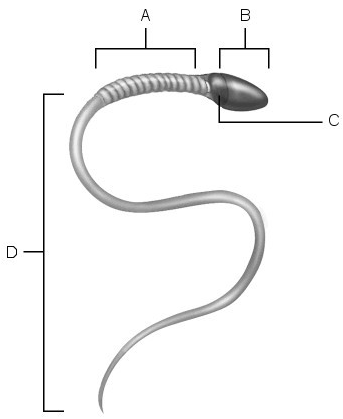 Match the following:
| back 36 7) A
|
front 37 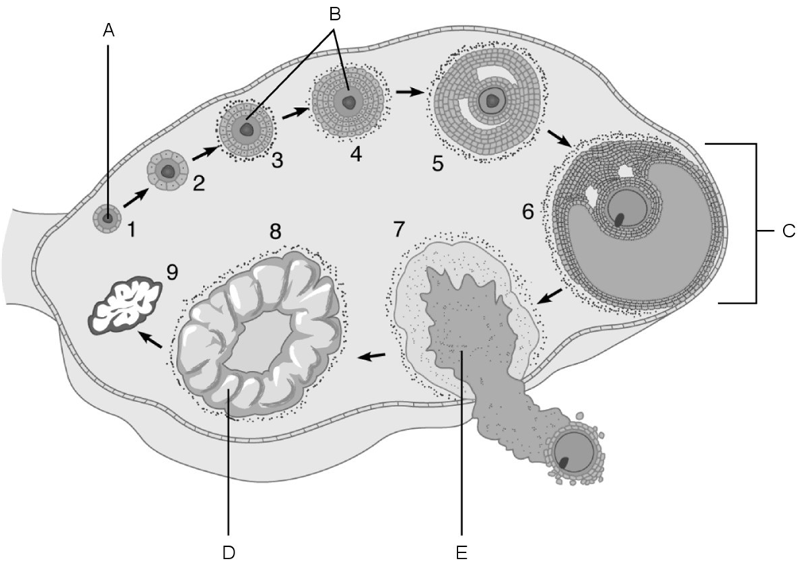 Match the following:
| back 37 2) E
|
front 38 The dartos and cremaster muscles are important to the integrity of the male reproductive system. Which of the following is true about the role they play?
| back 38 B) They regulate the temperature of the testes. |
front 39  1) Red Bone Marrow and place where T and B Cells are born at
| back 39 1) A
|
front 40 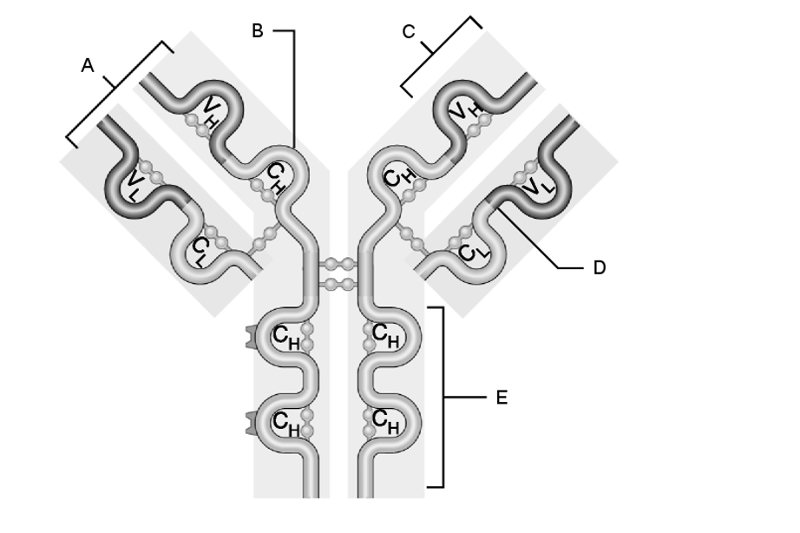 1) Heavy chain.
| back 40 1) b
|
front 41 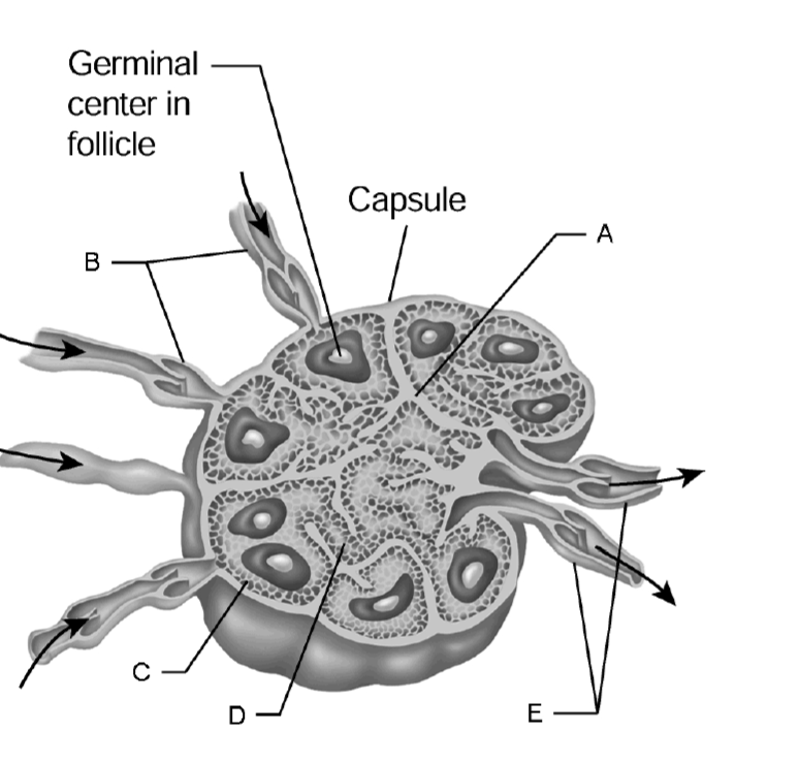 1) Cortex
| back 41 1) C
|
front 42 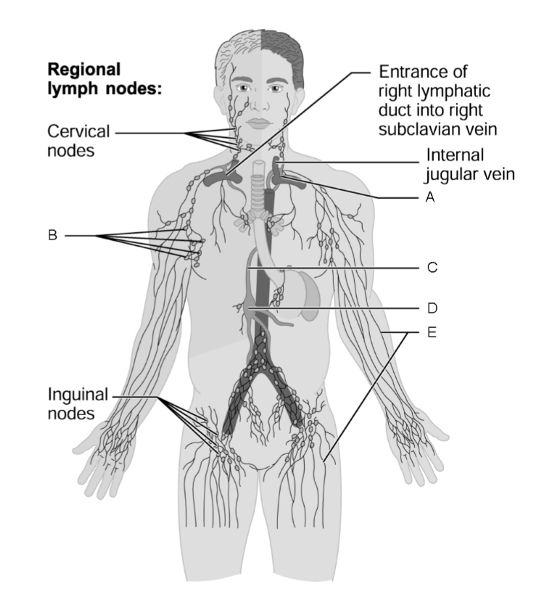 1) Entrance of thoracic duct into subclavian vein
| back 42 1) a
|
front 43 1) Protein-containing fluid within lymphatic vessels.
| back 43 1) a
|
front 44 Matching:
| back 44 1) a
|
front 45 11) Second line of defense
| back 45 11)j
|
front 46 6) Along with IgM, this is a B cell receptor
| back 46 6) f
|