Instructions for Side by Side Printing
- Print the notecards
- Fold each page in half along the solid vertical line
- Cut out the notecards by cutting along each horizontal dotted line
- Optional: Glue, tape or staple the ends of each notecard together
BIO
front 1 In a single molecule of water, the two hydrogen atoms are bonded to a single oxygen atom by A) Polar covalent bonds. B) Ionic bonds. C) Hydrogen bonds. D) Nonpolar covalent bonds. | back 1 A |
front 2 Stanley Miller's 1953 experiments demonstrated conclusively that A) Life arose on Earth from simple organic molecules, with energy from lightning and volcanoes. B) The conditions on early Earth were conducive to the origin of life. C) Life arose on Earth 3.8 bilion years ago from simple inorganic molecules. D) Organic molecules can be synthesized abiotically under conditions that may have existed on early Earth. E) The conditions on early Earth were conducive to the abiotic synthesis of organic molecules. | back 2 D |
front 3 What do the four ‘elements of life’ -carbon, oxygen, hydrogen, and nitrogen-have in common? A) They are equal in electronegativity B) They are elements produced only by living cells C) They all have the same number of valence electrons D) Each element exists in only one isotopic form E) They all have unpaired electrons in their valence shells. | back 3 E |
front 4 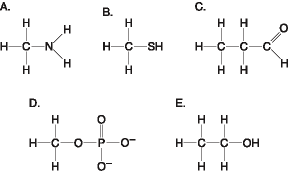 Using the functional group diagram at right answer A) A = amino group B) B = thiol group C) C = carbonyl (aldehyde) D) D= organic phosphate E) E= carboxyl group | back 4 E |
front 5 Water is able to form hydrogen bonds because A) The oxygen atom in a water molecule has a weak positive charge. B) Each of the hydrogen atoms in a water molecule is weakly negative in charge. C) Oxygen has a valence of 2. D) The water molecule is shaped like a tetrahedron. E) The bonds that hold together the atoms in a water molecule are polar covalent bonds. | back 5 E |
front 6 Which modifications of fatty acids will best keep triglycerides solid at warmer temperatures? A) Adding hydrogens and trans double bonds to the fatty acids B) Adding cis double bonds and trans double bonds to the fatty acids C) Creating cis double bonds to the fatty acids D) Adding hydrogens to the fatty acids E) Creating trans double bonds to the fatty acids | back 6 A |
front 7 A comparison of saturated and naturally occurring unsaturated fats reveals that the unsaturated fats are __________ at room temperature and have _______ A) Solids; cis double bonds B) Liquids; trans double bonds C) Liquids; single bonds D) Liquids; cis double bonds E) Solids; single bonds | back 7 D |
front 8 A molecule with four joined rings that is the precursor of vertebrate sex hormones and is also found in the vertebrate phospholipid bilayer is A) Estrogen B) Testosterone C) Glycerol D) Cholesterol E) A phospholipid | back 8 D |
front 9 A bond that forms after joining monomers (such as nucleotides or amino acids) into polymers (such as DNA or insulin) is a(n) A) Hydrogen bond B) Ionic bond C) Peptide bond D) van der Waals interaction E) Covalent bond | back 9 E |
front 10 Polysaccharides, triacylglycerides, and proteins are similar in that they A) Are synthesized from monomers by the process of hydrolysis. B) Are decomposed into their subunits by dehydration reactions. C) All contain nitrogen in their monomer building blocks. D) Are synthesized from subunits by dehydration reactions. E) Are synthesized as a result of peptide bond formation between monomers | back 10 D |
front 11 A molecule with the formula C18H36O2is probably a ____ where one with the formula C6H12O6 is probably a ___ A) Carbohydrate and fatty acid, respectively B) Fatty acid and monosaccharide, respectively C) Protein and monosaccharide, respectively. D) Nucleic acid and fatty acid, respectively. E) Fatty acid and nucleotide, respectively | back 11 B |
front 12 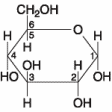 What molecule is shown? A) Cholesterol B) Dipeptide C) Saturated fatty acid D) Polyunsaturated fatty acid E) Glucose | back 12 E |
front 13 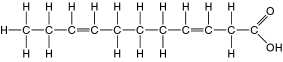 What molecule is shown? A) Cholesterol B) Dipeptide C) Saturated fatty acid D) Polyunsaturated fatty acid E) Glucose | back 13 D |
front 14  What molecule is shown? A) Cholesterol B) Dipeptide C) Saturated fatty acid D) Polyunsaturated fatty acid E) Glucose | back 14 C |
front 15 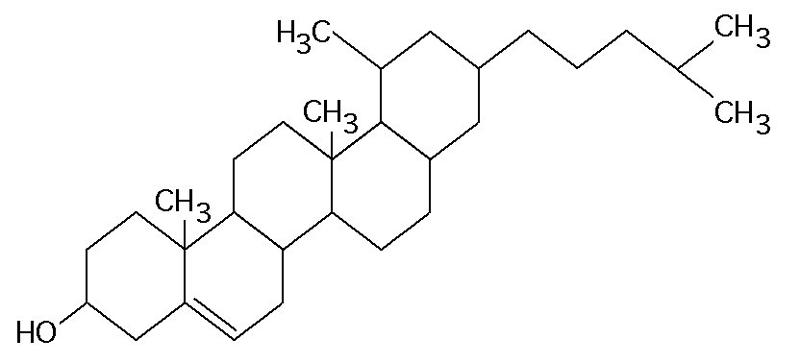 What molecule is shown? A) Cholesterol B) Dipeptide C) Saturated fatty acid D) Polyunsaturated fatty acid E) Glucose | back 15 A |
front 16 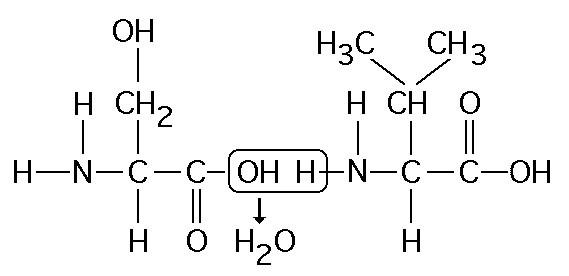 What molecule is shown? A) Cholesterol B) Dipeptide C) Saturated fatty acid D) Polyunsaturated fatty acid E) Glucose | back 16 B |
front 17 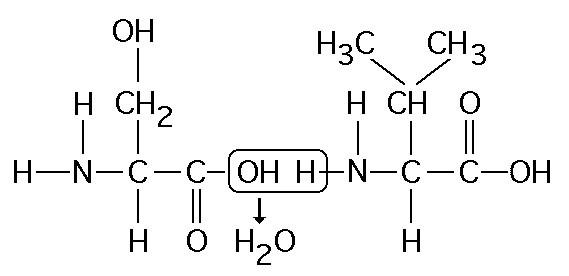 Which of the following statements is/are true regarding chemical reaction illustrated above? A) It is a hydrolysis reaction. B) It results in a peptide bond. C) It joins two fatty acids together. D) It is a hydrolysis reaction and it results in a peptide bond. E) It is a hydrolysis reaction, it results in a peptide bond, and it joins two fatty acids together. | back 17 B |
front 18 A bacterium engulfed by a white blood cell’s phagocytosis will be digested by enzymes within A) Golgi vesicles B) Vacuoles C) Peroxisomes D) Lysosomes | back 18 D |
front 19 Which of the following would move through the plasma membrane most rapidly? A) Glutamic acid, an amino acid B) Glucose C) CO2 and O2 D) NaCl and H2O | back 19 C |
front 20 Cell function: Sorting of proteins targeted for extracellular secretion A) Nucleus B) Mitochondria C) Nucleolis D) Rough ER E) Golgi Apparatus F) Smooth ER G) Extraceullular matrix | back 20 E |
front 21 Cell function: Site of cell-cell adhesion and cell recognition A) Nucleus B) Mitochondria C) Nucleolis D) Rough ER E) Golgi Apparatus F) Smooth ER G) Extraceullular matrix | back 21 G |
front 22 Cell function: Site of transcription of mRNA and tRNA for protein synthesis A) Nucleus B) Mitochondria C) Nucleolis D) Rough ER E) Golgi Apparatus F) Smooth ER G) Extraceullular matrix | back 22 A |
front 23 Cell function: Synthesis of the steroid hormone testosterone A) Nucleus B) Mitochondria C) Nucleolis D) Rough ER E) Golgi Apparatus F) Smooth ER G) Extraceullular matrix | back 23 F |
front 24 Cell function: Synthesis of ATP via oxidative phosphorylation A) Nucleus B) Mitochondria C) Nucleolis D) Rough ER E) Golgi Apparatus F) Smooth ER G) Extraceullular matrix | back 24 B |
front 25 Cell function: Site of rRNA for protein synthesis A) Nucleus B) Mitochondria C) Nucleolis D) Rough ER E) Golgi Apparatus F) Smooth ER G) Extraceullular matrix | back 25 C |
front 26 Cell function: Synthesis of the insulin receptor, a transmembrane glycoprotein A) Nucleus B) Mitochondria C) Nucleolis D) Rough ER E) Golgi Apparatus F) Smooth ER G) Extraceullular matrix | back 26 D |
front 27 This cellular protein protects and assists newly forming cytoplasmic proteins while they fold into their functional forms: A) Antibodies B) Enzymes C) Tubulin D) Chaperonins E) Signal recognition particles | back 27 D |
front 28 Proteins that are manufactured for secretion (export from the cell): A) Are made in the cytosol and transported across the ER membrane B) Are threaded through special pores in the plasma membrane C) Are made in the smooth ER and packaged in transport vesicles D) Have carbohydrates covalently added when the proteins are in transport vesicles E) Are made in the rough ER and packaged in transport vesicles | back 28 E |
front 29 Mammalian blood contains the equivalent of 0.15 M Seawater contains the equivalent of 0.45 M NaCl. What will happen if red blood cells are transferred to seawater? A) The blood cells will take up water, swell, and eventually burst. B) NaCl will passively diffuse into the red blood cells. C) Water will leave the cells, causing them to shrivel and collapse. D) NaCl will be exported from the red blood cells by facilitated diffusion. E) The blood cells will expend ATP for active transport of NaCl into the cytoplasm. | back 29 C |
front 30 All of the following are functions of integral membrane proteins except A) Synthesis of hormones. B) Active transport of ions. C) Cell – cell adhesion. D) Reception of hormone signals like epinephrine. E) Attachment to the extracellular membrane. | back 30 A |
front 31 Which of the following types of reactions would decrease the entropy within a cell A) Anabolic reactions B) Hydrolysis C) Respiration D) Digestion E) Catabolic reactions | back 31 A |
front 32 SELECT ALL THAT APPLY: Why is ATP an important molecule in metabolism? A) Its hydrolysis provides an input of free energy for exergonic reactions. B) It provides energy coupling between exergonic and endergonic reactions. C) Its terminal phosphate group has unusually strong covalent bonds that generate free energy. D) A and B E) A and C | back 32 D |
front 33 Increasing the substrate concentration in a reaction could overcome which of the following? A) Denaturization of the enzyme B) Allosteric inhibition C) Competitive inhibition D) Saturation of the enzyme activity E) Insufficient cofactors | back 33 C |
front 34 SELECT ALL THAT APPLY: The primary way that cells do work is called energy coupling, using ATP. Which statements below statements accurately defines energy coupling? A) Anabolic reactions drive catabolic reactions. B) Exergonic reactions drive endergonic reactions. C) Endergonic reactions drive exergonic reactions. D) ATP hydrolysis releases free energy that can be coupled to an endergonic reaction via the formation of a phosphorylated intermediate. E) Endergonic and exergonic reactions occur independently of each other. F) B and D G) B and C | back 34 F |
front 35 The general name for an enzyme that transfers phosphate groups from ATP to a protein is A) Phosphotase B) Protein kinase C) ATPase D) Protease | back 35 C |
front 36 Why are carbohydrates and fats considered high energy foods? A) They have a lot of oxygen atoms. B) They have no nitrogen in their makeup. C) They can have very long carbon skeletons. D) They have a lot of electrons associated with hydrogen. E) They are easily reduced. | back 36 D |
front 37 In liver cells, the inner mitochondrial membranes are about five times the area of the outer mitochondrial membranes. What purpose must this serve? A) It allows for an increased rate of glycolysis. B) It allows for an increased rate of the citric acid cycle. C) It increases the surface for oxidative phosphorylation. D) It increases the surface for substrate-level phosphorylation. E) It allows the liver cell to have fewer mitochondria. | back 37 C |
front 38 Why is the Calvin cycle said to be dependent on the light reactions? A) The light reactions generate the molecular oxygen needed for the production of sugars in the Calvin cycle. B) G3P produced in the light reactions is oxidized in the Calvin cycle. C) The light reactions produce the ATP energy and NADPH for sugar production in the Calvin cycle. D) RuBP produced in the light reactions facilitates CO2 fixation in the Calvin cycle. E) Photons of light that are byproducts of the light reactions provide the energy for the Calvin cycle. | back 38 C |
front 39 When skeletal muscle cells undergo anaerobic respiration, they become fatigued and painful. This is now known to be caused by A) Buildup of pyruvate. B) Buildup of lactate. C) Increase in sodium ions. D) Increase in potassium ions. E) Increase in ethanol. | back 39 B |
front 40 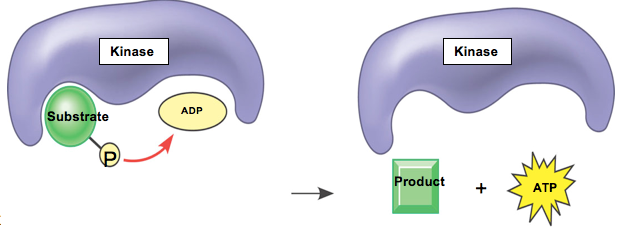 SELECT ALL THAT APPLY: Which of the 4 kinase enzymes in glycolysis might be the enzyme shown below? A) Hexokinase B) Pyruvate Kinase (PK) C) Phosphofructokinase (PFK) D) Phosphoglycerokinase (PGK) E) B and C F) B and D | back 40 F |
front 41 One function of alcohol and lactic acid fermentation is to A) Reduce NAD+to NADH. B) Reduce FAD+to FADH2. C) Oxidize NADH to NAD+. D) Reduce FADH2to FAD+. | back 41 C |
front 42 P680+is said to be the strongest biological oxidizing agent. Why? A) It is the receptor for the most excited electron in either photosystem. B) It is the molecule that transfers electrons to plastoquinone (Pq) of the electron transfer system. C) It transfers its electrons to reduce NADP+to NADPH. D) This molecule has a stronger attraction for electrons than oxygen, to obtain electrons from water. E) It has a positive charge. | back 42 D |
front 43 Which of the following correctly describes the energy payoffs in cellular respiration (before oxidative phosphorylation)? A) Glycolysis: 2 ATPs net, 2 NADH B) Transition reaction 2 NADH C) Kreb’s cycle 4 NADH, 2 FADH2 D) All of the above E) A and b only | back 43 E |
front 44 Where in the cell does the Krebs cycle take place? A) Thylakoid membrane B) Thlyakoid lumen C) Mitochondrial inner membrane space D) Chloroplast stroma E) Mitochondrial matrix | back 44 A |
front 45 Where in the cell does the Calvin cycle take place? A) Thylakoid membrane B) Thlyakoid lumen C) Mitochondrial inner membrane space D) Chloroplast stroma E) Mitochondrial matrix | back 45 D |
front 46 Where in the cell do light reactions take place? A) Thylakoid membrane B) Thlyakoid lumen C) Mitochondrial inner membrane space D) Chloroplast stroma E) Mitochondrial matrix | back 46 A |
front 47 Where in the cell is the proton gradient in cellular respiration located? A) Thylakoid membrane B) Thlyakoid lumen C) Mitochondrial inner membrane space D) Chloroplast stroma E) Mitochondrial matrix | back 47 C |
front 48 Where in the cell is the proton gradient in light reactions located? A) Thylakoid membrane B) Thlyakoid lumen C) Mitochondrial inner membrane space D) Chloroplast stroma E) Mitochondrial matrix | back 48 B |
front 49 Substrate-level phosphorylation accounts for approximately what percentage of the ATP formed during glycolysis? A) 0% B) 2% C) 10% D) 38% E) 100% | back 49 E |
front 50 A C4 plant initially fixes CO2 into ____ where a C3 plant fixes CO2 into _______ A) Oxaloacetic acid using PEP carboxylase, PGA using Rubisco. B) G3P using PEP carboxylase, PGA using Rubisco C) Malic acid using Rubisco, PGA using PEP carboxylase. D) RuBP using Rubisco, Oxaloacetic acid using PEP carboxylase E) ATP using PEP carboxylase, PGA using Rubisco. | back 50 A |
front 51 Which of the following statements describes the results of this reaction? 6 CO2 + 6 H2O + Energy → C6H12O6 + 6 O2 A) C6H12O6is oxidized and O2 is reduced. B) O2is oxidized and H2O is reduced. C) CO2is reduced and O2 is oxidized. D) CO2is reduced and H2O is oxidized. E) O2is reduced and CO2 is oxidized. | back 51 C |
front 52 The oxygen consumed during cellular respiration is involved directly in which process or event? A) Glycolysis B) Accepting electrons at the end of the electron transport chain C) The citric acid cycle D) The oxidation of pyruvate to acetyl CoA E) The phosphorylation of ADP to form ATP | back 52 B |
front 53 Which of the following is NOT true about Rubisco? A) It is a carboxylase B) It is an oxygenase C) It is a kinase D) It is the most abundant protein in the world E) It fixes carbon dioxide into an organic form | back 53 C |
front 54 Up to 60% of all medicines used today influence what structures in the cell membrane? A) Receptor tyrosine-kinases B) Epinephrine receptors C) Growth factors D) G-protein linked receptors E) Steroid hormone receptors | back 54 D |
front 55 How does adenylyl cyclase help transmit signals within a cell? A) Adenylyl cyclase converts cAMP to phosphodiesterase, which then amplifies the signal throughout the cell. B) Adenylyl cyclase activates a G protein after binding to an extracellular ligand. C) Adenylyl cyclase activates phospholipase C, releasing IP3and DAG from membrane lipids. D) Adenylyl cyclase converts ATP to cAMP, which then amplifies the signal throughout the cell. E) Adenylyl cyclase is responsible for the initial dimerization of R-TK proteins . | back 55 D |
front 56 Receptor tyrosine kinases (RTKs) are found at high levels on various cancer cells. A protein, Herceptin, has been found to bind to an RTK known as HER2 if which of the following is true? A) If Herceptin is found in the breast lymph nodes of the patient. B) If HER2, administered by injection, is in sufficient concentration. C) If the patient's breast cancer cells have detectable HER2. D) If the patient's genome codes for the HER2 receptor. E) If the patient's genome codes for the manufacture of Herceptin. | back 56 C |
front 57 If you wish to design an experiment to block a G protein-coupled receptor interaction, the block would preferentially affect which of the following? A) The exterior (cytoplasmic) end of the receptor B) The cytosolic end of the receptor C) Phospholipase C and IP3 D) The amino acid sequence in the binding site for the G protein E) The amino acids in the binding site for adenylyl cyclase | back 57 D |
front 58 The activation of receptor tyrosine kinases (R-TKs) is always characterized by A) Dimerization and auto-phosphorylation. B) Activation of adenylyl cyclase C) A phosphorylation cascade. D) GTP hydrolysis. E) Phosphorylation of Protein Kinase A . | back 58 A |
front 59 For anaphase to begin, which of the following must occur? A) Chromatids must lose their kinetochores. B) Cohesin must attach the sister chromatids to each other. C) Cohesin must be cleaved enzymatically. D) Kinetochores must attach to the metaphase plate. E) Spindle microtubules must begin to depolymerize. | back 59 C |
front 60 If the cell whose nuclear material is shown at right continues toward completion of mitosis, which of the following events would occur next? A) Cell membrane synthesis B) Spindle fiber formation C) Nuclear envelope breakdown D) Formation of telophase nuclei E) Synthesis of chromatids | back 60 D |
front 61 In plants, triploid endosperm cells contain three sets of chromosomes. If a plant species has 42 chromosomes per diploid cell, the triploid endosperm would be expected to have: A) 63 chromosomes in 31 1/2 pairs B) 63 chromosomes in 21 sets of 3 C) 63 chromosomes, each with three chromatids D) 21 chromosome pairs and 21 unique chromosomes | back 61 B |
front 62 If the DNA content of a diploid cell in the G1phase of the cell cycle is x, then the DNA content of the same cell at metaphase of meiosis I would be A) 25x B) 5x. C) x. D) 2x. E) 4x. | back 62 D |
front 63 Observations of cancer cells in culture support the hypothesis that cancer cells _____ A) Have altered plasma membranes and cytoskeletal proteins B) Have mutations or deletions in tumor suppressors like p53 C) Have the ability to stimulate new blood vessel formation D) Do not exhibit density-dependent inhibition of growth E) All of the above | back 63 E |
front 64 SELECT ALL THAT APPLY: Which of the following occurs in meiosis, but not mitosis? A) The cells formed have the same combination of genes as found in the initial cell. B) Homologous chromosomes separate. C) The nuclear envelope disappears. D) Sister chromatids undergo disjunction. E) A spindle apparatus forms. | back 64 D |
front 65 In an plant with a diploid chromosome number of 2n = 46, how many pairs of homologous chromosomes are present in a cell that has just entered Meiosis II? (we want everyone correct!) A) 0 B) 2 C) 23 D) 46 | back 65 A |
front 66 Using a microscope to examine the skin cells from a female, it is apparent that each nucleus has two Barr bodies. From this karyotype, it can be concluded that the woman’s chromosomal condition is A) 47, XXX B) 46, XX C) 45, XX D) 45, XO E) 47, XXY | back 66 D |
front 67 Homologous chromosomes synapse or pair during: A) Anaphase I. B) Prophase I. C) Anaphase II. D) Telophase II. E) Prophase II. | back 67 B |
front 68 Mendel's law of independent assortment has its basis in which of the following events of meiosis? A) Synapsis of homologous chromosomes B) Crossing over in prophase C) Alignment of tetrads at the equator in metaphase D) Separation of homologs at anaphase E) Separation of cells at telophase | back 68 C |
front 69 In a population with two alleles for cystic fibrosis, C and c, the frequency the recessive allele is 0.6. What percent of the population would be heterozygous carriers for cystic fibrosis if the population is in Hardy-Weinberg equilibrium? A) 16% B) 36% C) 40% D) 48% E) 64% | back 69 D |
front 70 Maize (corn) plants are tall if they have the genotype HH or Hh, and they are short if they have genotype hh. If a tall plant is mated with a short plant, which outcome would indicate that the tall parent corn plant was heterozygous? A) The ratio of tall offspring to short offspring is 1:1. B) All of the offspring are short. C) All of the offspring are tall. D) The ratio of tall offspring to short offspring is 3:1. | back 70 D |
front 71 A fruitfly with red eyes and leg bristles (genotype RrBb) was mated with a white-eyed fly lacking bristles (rrbb). Five hundred offspring were counted, with the following results: 58 Rrbb offspring; 62 rrBb offspring; 200 RrBb offspring; 180 rrbb offspring. Based on these results, how much distance is between these two genes on the chromosome? A) 24% (24 map units) B) 58% (58 map units) C) 60% (60 map units) D) 76 % (76 map units) E) 100% (100 map units) | back 71 A |
front 72 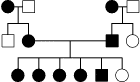 The trait found in the individuals is represented by the shaded symbols. Which of the following patterns of transmission for this gene is/are consistent with this pedigree A) Autosomal recessive B) Autosomal dominant C) X-linked recessive | back 72 B |
front 73 Marfan's A) Autosomal recessive condition B) Autosomal dominant condition C) Dominant lethal condition D) X-linked condition E) Multifactorial condition | back 73 B |
front 74 Tay Sachs A) Autosomal recessive condition B) Autosomal dominant condition C) Dominant lethal condition D) X-linked condition E) Multifactorial condition | back 74 A |
front 75 Cystic Fibrosis A) Autosomal recessive condition B) Autosomal dominant condition C) Dominant lethal condition D) X-linked condition E) Multifactorial condition | back 75 A |
front 76 Hemophilia A) Autosomal recessive condition B) Autosomal dominant condition C) Dominant lethal condition D) X-linked condition E) Multifactorial condition | back 76 D |
front 77 Achondroplasia A) Autosomal recessive condition B) Autosomal dominant condition C) Dominant lethal condition D) X-linked condition E) Multifactorial condition | back 77 C |
front 78 Schizophrenia A) Autosomal recessive condition B) Autosomal dominant condition C) Dominant lethal condition D) X-linked condition E) Multifactorial condition | back 78 E |
front 79 Polydaetyly A) Autosomal recessive condition B) Autosomal dominant condition C) Dominant lethal condition D) X-linked condition E) Multifactorial condition | back 79 B |
front 80 Cystic fibrosis affects the lungs, the pancreas, the digestive system, and other organs, resulting in a range of symptoms. Which of the following terms best describes this? A) Incomplete dominance B) Multiple alleles C) Pleiotropy D) Epistasis E) Codominance | back 80 C |
front 81 Black fur in mice (B) is dominant to brown fur (b). Short tails (T) are dominant to long tails (t). What fraction of the progeny of crosses BbTt × BBtt will be expected to have black fur and long tails? A) 1/16 B) 3/16 C) 3/8 D) 1/2 E) 9/16 | back 81 D |
front 82 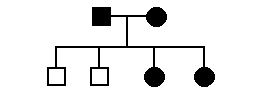 The pedigree at right shows a family with a disease pattern indicated by shaded symbols. Which of the following patterns of transmission for this gene are consistent with this pedigree? A) Autosomal recessive B) Autosomal dominant C) X-linked recessive | back 82 B |
front 83 In E coli, a mutation in a gene called dnaB that alters the helicase enzyme. Which of the following would you expect as a result of this mutation? A) No proofreading will occur. B) No replication fork will be formed. C) The DNA will supercoil. D) Replication will occur via RNA polymerase alone. E) Replication will require a DNA template from another source. F) It is not a ribonucleotide, but a deoxyribonucleotide | back 83 B |
front 84 A double-stranded DNA molecule contains a total of 120 purines and 120 pyrimidines. This DNA molecule could be comprised of , respectively A) 120 adenine and 120 uracil molecules. B) 120 thymine and 120 adenine molecules. C) 120 cytosine and 120 thymine molecules. D) 120 adenine and 120 thymine molecules | back 84 D |
front 85 The 5ꞌ end of a DNA strand always has a free __________ group while the 3ꞌ end always has a free __________ group. A) Phosphate; hydroxyl B) Hydroxyl; phosphate C) Phosphate; amine D) Amine; phosphate E) Phosphate; acidic | back 85 A |
front 86 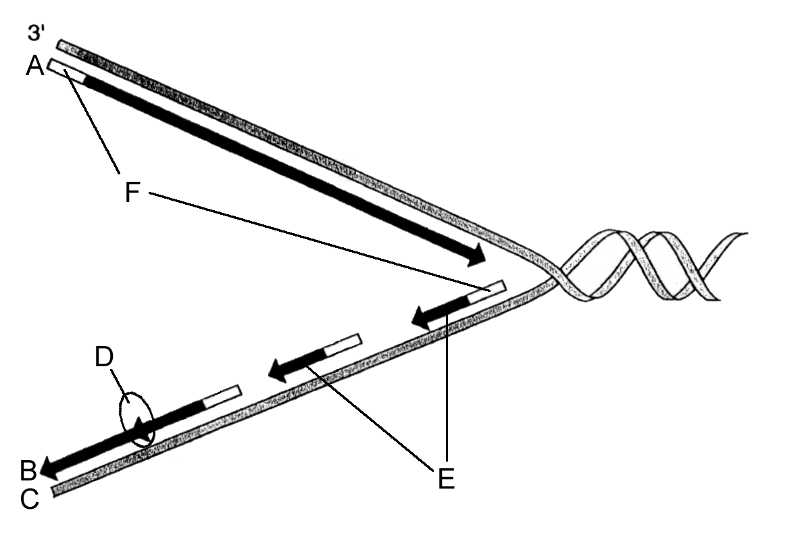 Identify the site of action of DNA Ligase A B C D E F | back 86 D |
front 87 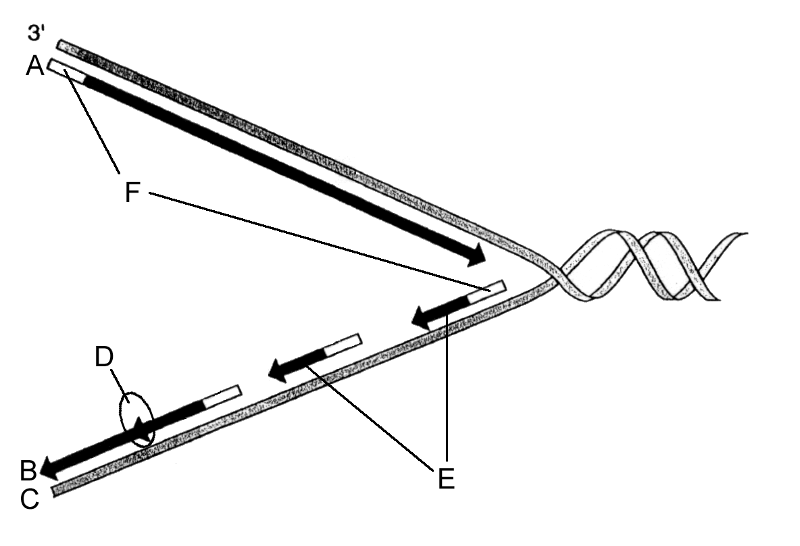 Identify the leading strand A B C D E F | back 87 A |
front 88 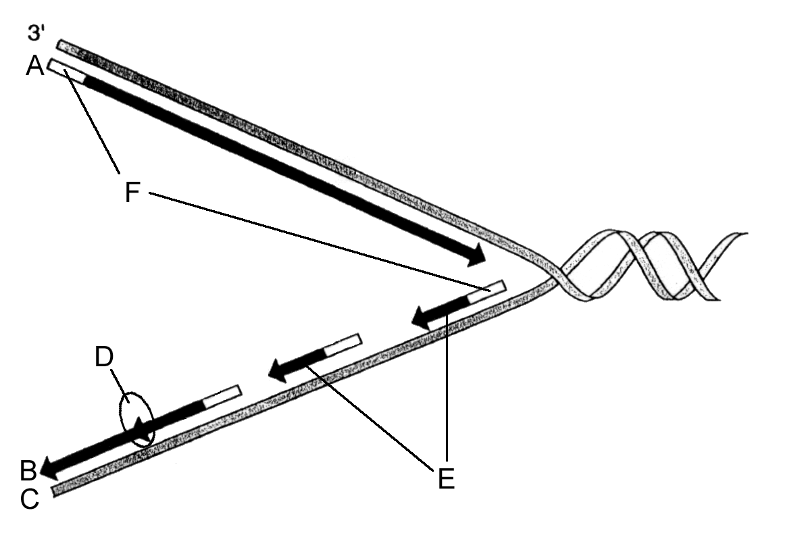 Identify the Okasaki fragments A B C D E F | back 88 E |
front 89 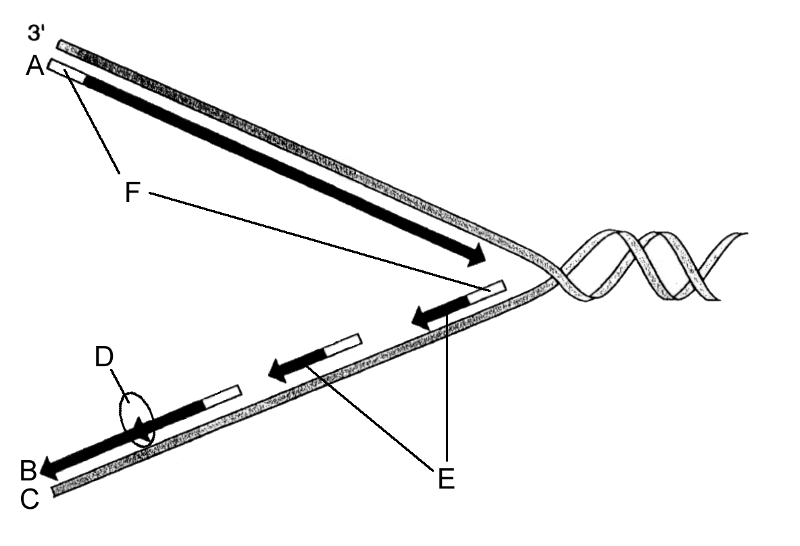 Identify the lagging strand A B C D E F | back 89 B |
front 90 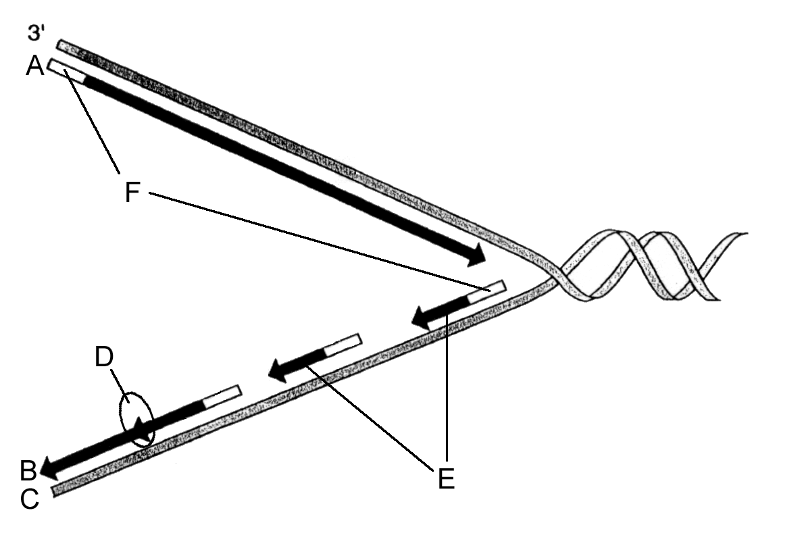 Identify the RNA primers A B C D E F | back 90 F |
front 91 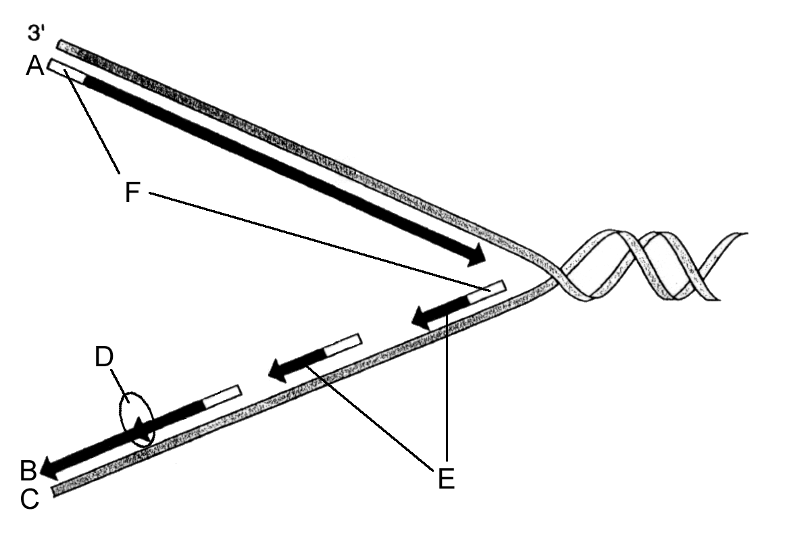 Identify the DNA template strand A B C D E F | back 91 C |
front 92 A mutant bacterial cell has a defective aminoacyl synthetase that attaches a lysine to tRNAs with the anticodon AAA instead of the normal phenylalanine. The consequence of this for the cell will be that A) None of the proteins in the cell will contain phenylalanine. B) Proteins in the cell will include lysine instead of phenylalanine at amino acid positions specified by the codon UUU. C) The cell will compensate for the defect by attaching phenylalanine to tRNAs with lysine-specifying anticodons. D) The ribosome will skip a codon every time a UUU is encountered. E) None of the options will occur; the cell will recognize the error and destroy the tRNA. | back 92 B |
front 93 In coli, there is a mutation in a gene called dnaB that alters the enzyme helicase. Which of the following would you expect as a result of this mutation? A) No proofreading will occur. B) No replication fork will be formed. C) The DNA will supercoil. D) Replication will occur via RNA polymerase alone. E) Replication will require a DNA template from another source. | back 93 B |
front 94 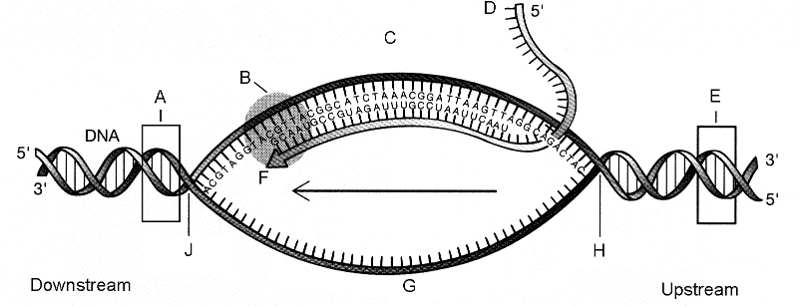 In the figure to the right, mRNA transcription process initiates at the area labeled _______, The messenger RNA transcript in the figure is labeled_____, and the template strand is labeled ______: A) E; D; C B) E G; D C) A; D; C D) A; C; D E) A; E; C | back 94 A |
front 95 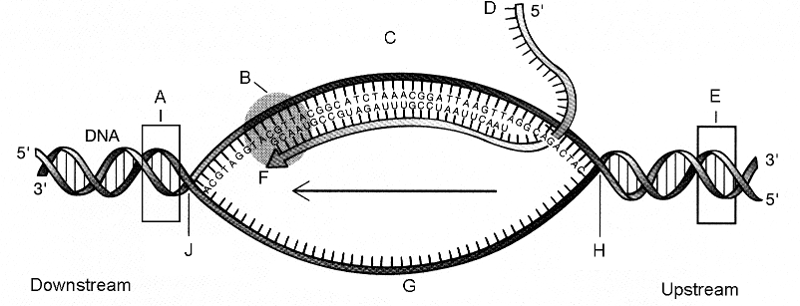 The component labeled B is A) DNAse B) RNA primase. C) Reverse transcriptase. D) DNA polymerase. E) RNA polymerase. | back 95 E |
front 96 The 5ꞌ end of a DNA strand always has a free __________ group while the 3ꞌ end always has a free __________ group. A) Hydroxyl; phosphate B) Phosphate; amine C) Amine; phosphate D) Phosphate; acidic E) Phosphate; hydroxyl | back 96 E |
front 97 The most commonly occurring mutation in people with cystic fibrosis is a deletion of a single codon. This results in A) A base-pair substitution. B) A nucleotide mismatch. C) A frameshift mutation. D) A polypeptide missing an amino acid. E) A nonsense mutation. | back 97 D |
front 98 RNA molecules with enzymatic functions (such as peptidyltransferase) are called A) RNA polymerases B) Transfer RNAs C) Polysomes D) Ribozymes E) Aminoacyl-RNA synthetases | back 98 A |
front 99  According to Beadle and Tatum, how many genes are necessary for the pathway shown below? A) 0 B) 1 C) 2 D) 3 | back 99 C |
front 100 A mutation results in a defective enzyme A. Which of the following would be a consequence of that mutation? A) An accumulation of A and no production of B and C B) An accumulation of A and B and no production of C C) An accumulation of B and no production of A and C D) An accumulation of B and C and no production of A E) An accumulation of C and no production of A and B | back 100 A |
front 101 A part of an mRNA molecule with the following sequence is being read by a ribosome: 5' CCG-ACG 3' (mRNA). The dipeptide that will form will be A) Cysteine-alanine. B) Proline-threonine. C) Glycine-cysteine. D) Alanine-alanine. E) Threonine-glycine. | back 101 B |
front 102 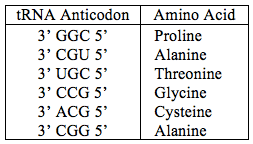 The anticodon loop of the first tRNA that will complement this mRNA is A) 3' GGC 5' B) 5' GGC 3' C) 5' ACG 3' D) 5' UGC 3' E) 3' UGC 5' | back 102 A |
front 103 When translating secretory ormembrane proteins, ribosomes are brought to the ER membrane by A) A specific characteristic that identifies it as a “bound” ribosome itself. B) A signal-recognition particle that brings ribosomes to a receptor protein in the ER membrane. C) Moving through a specialized channel of the nucleus. D) A chemical signal given off by the ER. E) A signal sequence of RNA that precedes the start codon of the message. | back 103 B |
front 104 In human females, one X chromosome per cell is randomly inactivated during early embryonic development, forming a Barr Body. Much of the DNA in this chromosome is then in the form of A) Introns B) Chromosome puffs C) Heterochromatin D) Euchromatin E) Tetrads | back 104 C |
front 105 In eukaryotes, histone methylation ________, while histone acetylation __________. A) Marks genes for destruction, promotes transcription B) Promotes transcription, represses transcription C) Imprints genes; inactivates genes D) Inactivates genes; reduces the size of the genome E) Represses transcription, promotes transcription | back 105 E |
front 106 SELECT ALL THAT APPLY: Which of the following are correctly matched with their description A) Enhancers (Distal Control Elements) = increase the rate of eukaryotic gene transcription; may be located upstream or downstream from the genes they regulate B) Promoter TATA box = binding and attachment site for RNA polymerase; located 25-35 base pairs upstream of the transcription start site C) Proximal Control Elements = required for accurate transcription initiation; bind numerous transcription initiation complex proteins D) All of the above | back 106 D |
front 107 The human Crystalline gene is contained in the genome of every cell of a human, but is only expressed (made into protein) in the lens of the eye. This is because A) The crystalline gene is spliced out of the genome early in development in all cells in the body except lens cells B) Activator proteins (transcription factors) that bind to regulatory regions of the crystalline gene are only found in the lens cells C) The crystalline gene has specific promoter and enhancer control elements that bind to only lens-specific activators D) All of the above E) b and c only | back 107 E |
front 108 Which of the following is the attachment site for RNA polymerase? A) The small subunit of the ribosome B) The TATAAA box C) The enhancer D) The Upstream Promoter Elements E) The AUG codon | back 108 B |
front 109 Upstream (proximal) promoter elements in Eukaryotes are: A) Nucleotide sequences that act as binding sites for RNA polymerase. B) Nucleotide sequences that regulate the efficiency of transcription initiation. C) Nucleotide sequences that contain the TATA box. D) Proteins that are required for RNA polymerase to bind to the promoter. E) Proteins that inhibit RNA polymerase binding to the promoter. | back 109 B |
front 110 Regulation of gene expression can be accomplished by controlling: A) The amount of chromatin packing. B) The amount of mRNA that is transcribed. C) The rate of translation of mRNA. D) The rate of mRNA degradation. E) All of the above. | back 110 E |
front 111 Eukaryotic enhancers are capable of which of the following? A) Regulating a gene even if they are cut out of the DNA and reinserted backwards B) Regulating a gene from very long distances C) Interacting with proteins that regulate transcription D) Increasing the rate of RNA synthesis after initiation E) All of the above | back 111 E |
front 112 Which of the following statements about the DNA in one of your brain cells is true? A) Most of the DNA codes for protein. B) The majority of genes are likely to be transcribed. C) Each gene lies immediately adjacent to an enhancer. D) Many genes are grouped into operon-like clusters. E) It is the same as the DNA in one of your heart cells. | back 112 E |
front 113 Gene expression might be altered at the level of post-transcriptional processing in eukaryotes rather than prokaryotes because of which of the following? A) Eukaryotic mRNAs get 5' caps and 3' tails. B) Prokaryotic genes are expressed as mRNA, which is more stable in the cell. C) Eukaryotic exons may be spliced in alternative patterns. D) Prokaryotes use ribosomes of different structure and size. E) Eukaryotic coded polypeptides often require cleaving of signal sequences before localization. | back 113 C |
front 114 Which of the following is most likely to have a small protein called ubiquitin attached to it? A) A cyclin that usually acts in G1, now that the cell is in G2 B) A cell surface protein that requires transport from the ER C) An mRNA that is leaving the nucleus to be translated D) A regulatory protein that requires sugar residues to be attached E) An mRNA produced by an egg cell that will be retained until after fertilization | back 114 A |
front 115 MicroRNAs (miRNAs) and small interfering RNAs (siRNAs) both function to "silence" genes, by A) Causing chromatin de-acetylation and tight winding of the DNA B) Acting as a release factor to cause ribosome disassembly C) Activating the Dicer enzyme to rapidly degrade the mRNA D) Binding to complementary RNA sequences to prevent translation E) Binding to complementary DNA sequences to prevent transcription | back 115 D |
front 116 Alternative RNA splicing A) Is a mechanism for increasing the rate of transcription. B) Can allow the production of proteins of different sizes from a single mRNA. C) Can allow the production of similar proteins from different RNAs. D) Increases the rate of transcription. | back 116 B |
front 117 Which of the following is the first event to take place in translation in eukaryotes A) Elongation of the polypeptide B) Base pairing of activated methionine-tRNA to AUG of the messenger RNA C) Binding of the larger ribosomal subunit to smaller ribosomal subunits D) Covalent bonding between the first two amino acids E) The small subunit of the ribosome recognizes and attaches to the 5' cap of mRNA | back 117 E |
front 118 Which of the following occurs in eukaryotic, but not prokaryotic, gene expression? A) mRNA, tRNA, and rRNA are transcribed. B) RNA polymerase binds to the promoter. C) A poly-A tail is added to the 3' end of an mRNA and a cap is added to the 5' end. D) Transcription can begin as soon as translation has begun even a little. E) RNA polymerase requires a primer to elongate the molecule. | back 118 C |
front 119 Which of the following is a function of a signal peptide? A) To direct an mRNA molecule into the cisternal space of the ER B) To bind RNA polymerase to DNA and initiate transcription C) To terminate translation of the messenger RNA D) To translocate polypeptides across the ER membrane E) To signal the initiation of transcription\ | back 119 D |
front 120 An experimenter has altered the 3' end of the tRNA corresponding to the amino acid methionine in such a way as to remove the 3' AAC. Which of the following describes the most likely result? A) tRNA will not form a cloverleaf. B) The nearby stem end will pair improperly. C) The amino acid methionine will not bind. D) The anticodon will not bind with the mRNA codon. E) The aminoacylsynthetase will not be formed. | back 120 C |
front 121 What is the effect of a nonsense mutation in a gene? A) It changes an amino acid in the encoded protein. B) It has no effect on the amino acid sequence of the encoded protein. C) It introduces a premature stop codon into the mRNA. D) It alters the reading frame of the mRNA. E) It prevents introns from being excised. | back 121 C |
front 122 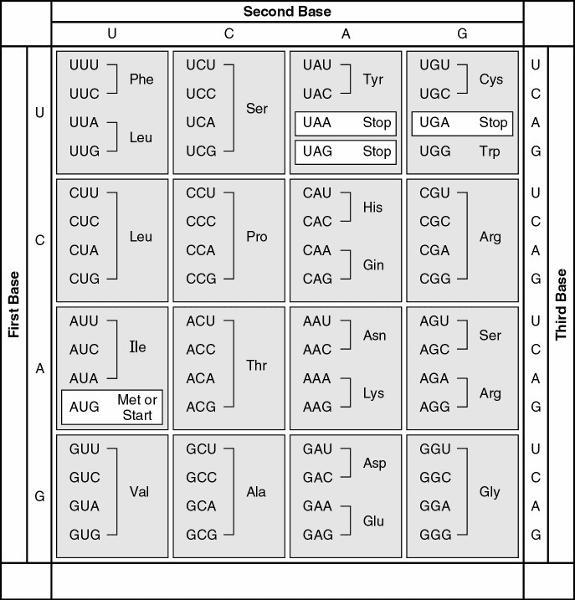 An mRNA codon specifying leucine is 5´-CUA-3´. Its corresponding anticodon is: A) 5´-GAT-3´. B) 3´-AUC-5´. C) 3´-GAU-5´. D) 3´-GAT-5´. E) 5´-GAU-3´. | back 122 C |
front 123 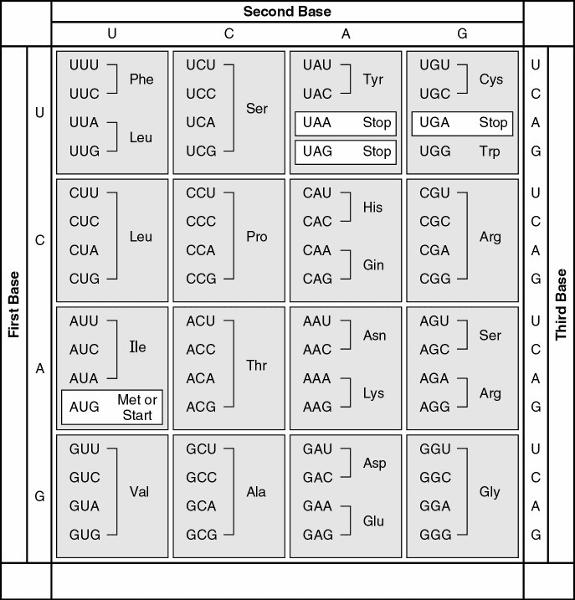 What amino acid sequence will be generated, based on the following mRNA codon sequence? 5' AUG-UCU-UCG-UUA-UCC-UUG 3' A) met-arg-glu-arg-glu-arg B) met-glu-arg-arg-glu-leu C) met-ser-leu-ser-leu-ser D) met-ser-ser-leu-ser-leu E) met-leu-phe-arg-glu-glu | back 123 D |
front 124 In the pGLO lab, how could you confirm that a transformed cell was expressing the bla gene? A) It would fluoresce green B) It would grow on Amp plates C) If would not grow on ‘LB only’ plates D) If would only grow on ‘LB only’ plates | back 124 B |
front 125 After transformation of HB101 by pGLO, why are the cells grown in LB broth for 20 minutes before plating on Amp plates? A) The Green Fluorescent Protein takes 20 minutes to be transcribed and translated B) The pGLO plasmid does not fully enter the HB101 cells until 20 minutes after the heat shock C) The Arabinose promoter needs at least 20 minutes before RNA polymerase can bind to the promoter D) There is a phenotypic lag of ~20 minutes before the b-lactamase gene for Amp resistance can be expressed E) The HB101 bacteria are weak after the heat shock treatment, and need 20 minutes to recover | back 125 D |
front 126 E. Coli can absorb the sugar Arabinose from its surroundings. When Arabinose is present, A) It binds to a repressor protein at the promoter of the Arabinose Operon B) It changes the conformation of the repressor protein such that RNA polymerase can begin transcribing the Ara operon. C) It binds to DNA and functions as an enhancer to turn on the Green Fluorescent Protein D) a and b E) All of the above | back 126 E |
front 127 Viruses that attack bacteria are called: A) Phages B) Bacteriods C) Prions D) Virons E) Viroids | back 127 A |
front 128 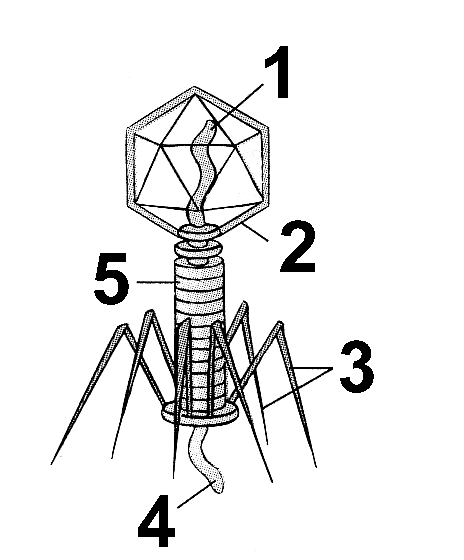 In the bacteriophage shown above, the functions of the structures labeled 2 and 3 are A) 2= protection of the genetic material, 3= locomotion. B) 2= mate recognition, 3= attachment to a host cell C) 2= protection of the genetic material, 3= replication. D) 2= to take over host cell mechanisms, 3= attachment to a host cell. E) 2= protection of the genetic material, 3= attachment to a host cell | back 128 E |
front 129 Retroviruses like the HIV virus differ from other viruses by: A) Using the enzyme reverse transcriptase to copy their RNA into DNA. B) The shape of their capsid. C) The way they infect their host cells. D) The sugar coating on their capsids. E) Lytically destroying their hosts. | back 129 A |
front 130 All of the following are DNA viruses except: A) The Herpes virus that causes cold sores B) The Influenza virus that causes the ‘flu. C) The Pox-viruses that cause chicken pox D) The Human Papilloma virus that causes cervical cancer E) The Parvoviruses that cause the common cold | back 130 B |
front 131 During the lytic life cycle of phages, which of the following occurs? A) The phage capsid fuses with the host cell, allowing the viral genome to be inserted into the host nucleus. B) The host cell often dies, releasing many newly assembled copies of the virus. C) The host cell usually lives and secretes the copies of the virus. D) The phage enters the host cell intact during infection. E) The host cell lives, with the viral genome becoming incorporated into the host cell’s own genome | back 131 B |
front 132 The H5N1 Influenza virus A) Caused a worldwide influenza pandemic in 1918 B) Caused the deaths of 40 million people worldwide during World War I C) Is highly similar genetically to recent viruses responsible for deadly “Bird Flu” or Avian Flu D) Is a retrovirus that mutates easily and often due to ‘sloppy’ replication enzymes E) All of the above | back 132 E |
front 133 The five stages of a viral infection are attachment, penetration, _______, assembly, and release A) Lysis B) Integration C) Lysogeny D) Transduction E) Replication | back 133 E |
front 134 The Prion Hypothesis (Dr. Stanley Pruissner) states that A) Mad cow disease is caused by eating beef tainted with abnormally folded prion proteins. B) Cooking beef or lamb infected with prion proteins will destroy the prions, making the meat safe to eat. C) Kuru, a transmissible spongiform encephalopathy in humans, can be caused by the religious practice of ritual cannibalism. D) Transmissible spongiform encephalopathies result from the conversion of normal PrP-c to an abnormally folded PrP-sc state E) Prion particles infect cells of the brain and redirect the cell’s protein synthesis machinery to replicate new prion particles in the neurons responsible for memory | back 134 D |
front 135 Prion diseases of humans include: A) Kuru B) Scrapie C) Mad Cow Disease D) Variant Creutfeld-Jacob disease E) A and D | back 135 E |
front 136 By fusing protein-coding eukaryotic DNA with bacterial promoter sequences, scientists can ensure: A) That bacterial DNA sequences will be inserted into the eukaryotic DNA sequence. B) That the eukaryotic DNA can be expressed in bacterial cells. C) That no mutations will occur within the eukaryotic sequence. D) That transcription of the eukaryotic DNA will not occur. E) That introns of the eukaryotic DNA will not be expressed. | back 136 B |
front 137 Which of the recombinant DNA drugs is incorrectly matched with its indication (the disease it is prescribed to treat)? A) Humulin (Lilly): Diabetes (Insulin) B) Epogen (Amgen): Anemia (Erythropoetin) C) Neupogen (Amgen): Mult iple sclerosis (interferon) D) Activase/TNKase (Genentech): AMI - Acure myocardial infarction (heart attack) E) Regranex (Novartis): Diabetic foot ulcers (PDGF) | back 137 C |
front 138 In the polymerase chain reaction (PCR) technique, a heating phase and a cooling phase alternate in cycles. An original sample of DNA would have to pass through how many total cycles to amplify the DNA ~1 billion times? (What about 2 billion times? What about 1 trillion times?) A) 20 B) 21 C) 30 D) 31 E) 40 | back 138 C |
front 139 Which of these statements is NOT TRUE regarding the procedure for making cloned animals? A) The recipient egg is e-nucleated before the procedure B) The donor nucleus can be either from a male or a female cell C) The donor nucleus is from a haploid, quiescent cell E) A brief electric shock is used to simulate fertilization E) A surrogate mother is used to carry the pregnancy to term | back 139 C |
front 140 Ian Wilmut A) First Human Gene Therapy B) Dideoxy DNA Sequencing C) Isolation of Bacterial Plasmids D) Cloning of Dolly the Sheep E) Derivation of Human Embryonic Stem Cells F) Whole Genome Shotgun Sequencing G) Polymerase Chain Reaction H) Isolation of Restriction Enzymes, Founder of Genetech | back 140 D |
front 141 Craig Venter A) First Human Gene Therapy B) Dideoxy DNA Sequencing C) Isolation of Bacterial Plasmids D) Cloning of Dolly the Sheep E) Derivation of Human Embryonic Stem Cells F) Whole Genome Shotgun Sequencing G) Polymerase Chain Reaction H) Isolation of Restriction Enzymes, Founder of Genetech | back 141 F |
front 142 W. French Anderson A) First Human Gene Therapy B) Dideoxy DNA Sequencing C) Isolation of Bacterial Plasmids D) Cloning of Dolly the Sheep E) Derivation of Human Embryonic Stem Cells F) Whole Genome Shotgun Sequencing G) Polymerase Chain Reaction H) Isolation of Restriction Enzymes, Founder of Genetech | back 142 A |
front 143 Fred Sanger A) First Human Gene Therapy B) Dideoxy DNA Sequencing C) Isolation of Bacterial Plasmids D) Cloning of Dolly the Sheep E) Derivation of Human Embryonic Stem Cells F) Whole Genome Shotgun Sequencing G) Polymerase Chain Reaction H) Isolation of Restriction Enzymes, Founder of Genetech | back 143 B |
front 144 Stanley Cohen A) First Human Gene Therapy B) Dideoxy DNA Sequencing C) Isolation of Bacterial Plasmids D) Cloning of Dolly the Sheep E) Derivation of Human Embryonic Stem Cells F) Whole Genome Shotgun Sequencing G) Polymerase Chain Reaction H) Isolation of Restriction Enzymes, Founder of Genetech | back 144 C |
front 145 Kary Mullis A) First Human Gene Therapy B) Dideoxy DNA Sequencing C) Isolation of Bacterial Plasmids D) Cloning of Dolly the Sheep E) Derivation of Human Embryonic Stem Cells F) Whole Genome Shotgun Sequencing G) Polymerase Chain Reaction H) Isolation of Restriction Enzymes, Founder of Genetech | back 145 G |
front 146 Herb Boyer A) First Human Gene Therapy B) Dideoxy DNA Sequencing C) Isolation of Bacterial Plasmids D) Cloning of Dolly the Sheep E) Derivation of Human Embryonic Stem Cells F) Whole Genome Shotgun Sequencing G) Polymerase Chain Reaction H) Isolation of Restriction Enzymes, Founder of Genetech | back 146 H |
front 147 James Thompson A) First Human Gene Therapy B) Dideoxy DNA Sequencing C) Isolation of Bacterial Plasmids D) Cloning of Dolly the Sheep E) Derivation of Human Embryonic Stem Cells F) Whole Genome Shotgun Sequencing G) Polymerase Chain Reaction H) Isolation of Restriction Enzymes, Founder of Genetech | back 147 E |
front 148 Which of the following ingredients is/are necessary for PCR? A) Template DNA B) Deoxynucleotides C) A thermostable DNA polymerase D) DNA primers E) All of the above | back 148 E |
front 149 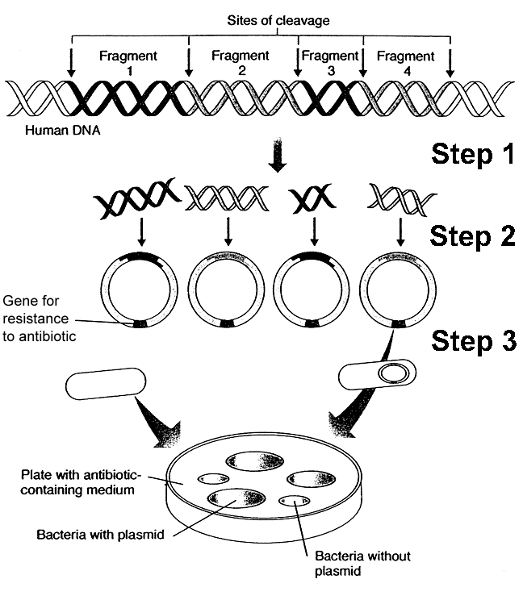 What process or enzyme was used for Step 1? A) PCR B) A bacteriophage C) A reverse transcriptase D) A DNA ligase E) Restriction enzyme | back 149 E |
front 150 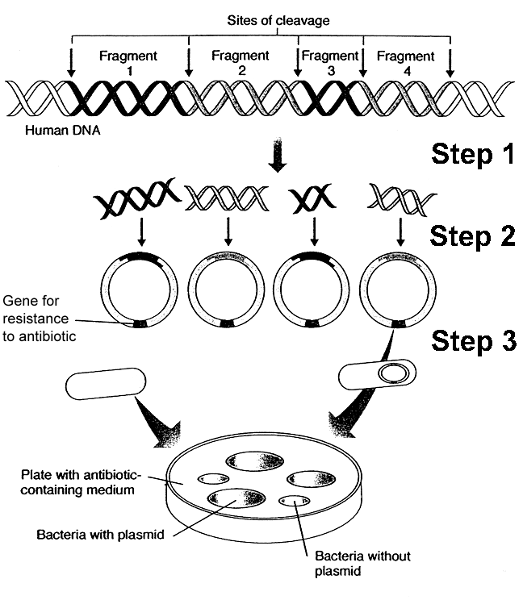 The use of antibiotic medium at the end of this process A) Selects against plasmids containing human DNA fragments. B) Selects for plasmids containing particular DNA fragments. C) Selects for bacteria containing plasmids. D) Selects for bacteria lacking plasmids. E) Prevents contamination of the medium | back 150 C |
front 151 Idaho Gem A) First cloned housecat (female calico) B) First cloned animal that was born from its genetic twin C) First cloned mule D) First cloned piggy engineered for human organ transplants E) First cloned mammal (1996) | back 151 C |
front 152 Dolly A) First cloned housecat (female calico) B) First cloned animal that was born from its genetic twin C) First cloned mule D) First cloned piggy engineered for human organ transplants E) First cloned mammal (1996) | back 152 E |
front 153 Prometia A) First cloned housecat (female calico) B) First cloned animal that was born from its genetic twin C) First cloned mule D) First cloned piggy engineered for human organ transplants E) First cloned mammal (1996) | back 153 B |
front 154 Ce A) First cloned housecat (female calico) B) First cloned animal that was born from its genetic twin C) First cloned mule D) First cloned piggy engineered for human organ transplants E) First cloned mammal (1996) | back 154 A |
front 155 Joy A) First cloned housecat (female calico) B) First cloned animal that was born from its genetic twin C) First cloned mule D) First cloned piggy engineered for human organ transplants E) First cloned mammal (1996) | back 155 D |
front 156 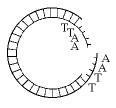 Which enzyme was used to produce the molecule at right? A) Ligase B) Transcriptase C) Restriction enzyme D) DNA polymerase E) DNA polymerase | back 156 C |
front 157 Human embryonic stem cells (hES cells) may be useful in transplantation medicine because A) They are pleuripotent and can form virtually any cell type in the body with appropriate hormones and growth factors B) They make the enzyme telomerase, allowing them to replicate indefinitely in tissue culture C) They have the same genetic karyotype as a normal human cell D) They can be prepared to provide an exact tissue match to a patient E) All of the above | back 157 E |
front 158 The sequencing gel below was produced from 4 samples of a DNA fragment that was incubated with chain-terminating ddNTP nucleotides. What is the sequence of nucleotides (5’ – 3’) in the original single-stranded DNA fragment? A) 5' TTCTACGCTACG B) 5' GCATCGCATCTT C) 5' AAGATGCGAAGC D) 5' CGTAGCGTAGAA E) 5’ GAATACACATGAG | back 158 D |
front 159 The bacteria Bacillus thurengiensis (Bt) A) Naturally makes a crystal protein toxic to Lepidopteran insects B) Causes food poisoning in people who eat the crystal protein C) Is the active ingredient in the insecticide Dipel D) All of the above E) A and C | back 159 E |
front 160 In genetic engineering, the naturally-occurring plasmid from Agrobacterium tumefaciens is used to A) Insert any gene of interest into plant chromosomes B) Cut DNA at a specific base sequence C) Locate specific genes on animal chromosomes D) Detect and correct mistakes in DNA replication D) Do all of these | back 160 A |
front 161 In 2000, scientists developed a crop called Golden Rice. This genetically modified food A) Contains 4 genes from daffodils and bacteria that together produce the pigment B-carotene in rice B) Holds the potential for preventing the deaths of millions of people every year C) Can help prevent blindness resulting from vitamin A deficiency D) Will be offered at low cost or no cost to developing countries E) All of the above | back 161 E |
front 162 Crops that are RoundUp Ready A) Make the herbicide RoundUp in every cell of the plant B) Kill weeds in the fields where they are growing C) Are genetically modified to be resistant to treatment with RoundUp herbicide D) Contain a mutant form of the enzyme EPSP synthase that is unaffected by RoundUp herbicide E) C and D only | back 162 E |
front 163 The results that have come from the Human Genome Project (HGP) include A) A detailed map of the DNA sequence of virtually the entire Human Genome B) Identification of over 2,000 disease genes for human genetic disorders C) A prediction of ~25,000 genes, encoding ~100,000 proteins and thousands of miRNAs D) The development of automated sequencing technology that has allowed scientists to determine the DNA sequence of hundreds of genomes such as Drosophila melanogaster (fruitfly), Mus musculus (mouse), and Pan troglodytes (Chimpanzee) E) All of the above | back 163 E |
front 164 Some bacteria avoid a host’s immune system by means of: A) Efficient use of their flagella. B) Cloaking the cell with host proteins. C) Cloaking the cell with a watery capsule. D) Changing their cell wall structure to resemble that of their host. E) Eliminating the use of a membrane | back 164 C |
front 165 Even though bacteria lack membrane-bound organelles, such as chloroplasts and mitochondria, they can still perform the functions of these organelles by localizing certain metabolic enzymes on: A) The nuclear membranes. B) The endoplasmic reticulum. C) Infoldings of the plasma membrane. D) Ribosomes. E) The cell wall. | back 165 C |
front 166 Extrachromosomal circles of DNA in bacteria called ______ often carry genes involved in _______: A) Capsids, bacterial reproduction B) Capsids, antibiotic resistance. C) Plasmids, viral resistance. D) Plasmids, antibiotic resistance. | back 166 D |
front 167 Many Gram (+) Eubacteria like Clostridium botulinum and Bacillus
anthraxis have the ability to survive harsh environmental conditions
by protecting their DNA in a dormant structure called a(n) B) Endospore C) Endotoxin D) Sporangium E) Capsid | back 167 B |
front 168 Clostridium tetani can cause A) Anthrax B) Gonorrhea C) Tetanus ("Lockjaw") D) Stomach ulcers E) Botulism (food poisoning) | back 168 C |
front 169 Clostridium botulinum A) Anthrax B) Gonorrhea C) Tetanus ("Lockjaw") D) Stomach ulcers E) Botulism (food poisoning) | back 169 E |
front 170 Helicobacter pylori A) Anthrax B) Gonorrhea C) Tetanus ("Lockjaw") D) Stomach ulcers E) Botulism (food poisoning) | back 170 D |
front 171 Bacillus anthraxis A) Anthrax B) Gonorrhea C) Tetanus ("Lockjaw") D) Stomach ulcers E) Botulism (food poisoning) | back 171 A |
front 172 Neisseria gonorrhea A) Anthrax B) Gonorrhea C) Tetanus ("Lockjaw") D) Stomach ulcers E) Botulism (food poisoning) | back 172 B |
front 173 Once they appeared on Earth, ___ forever changed the atmosphere on earth by the production of large quantities of oxygen gas. A) Gm (+) eubacteria B) Archaebacteria C) Cyanobacteria D) Plants E) Gm (-) rickettsias | back 173 C |
front 174 Prokaryotes found inhabiting the Great Salt Lake would be the _____. A) Cyanobacteria B) Extreme halophiles C) Methanogens D) Extreme thermophiles | back 174 B |
front 175 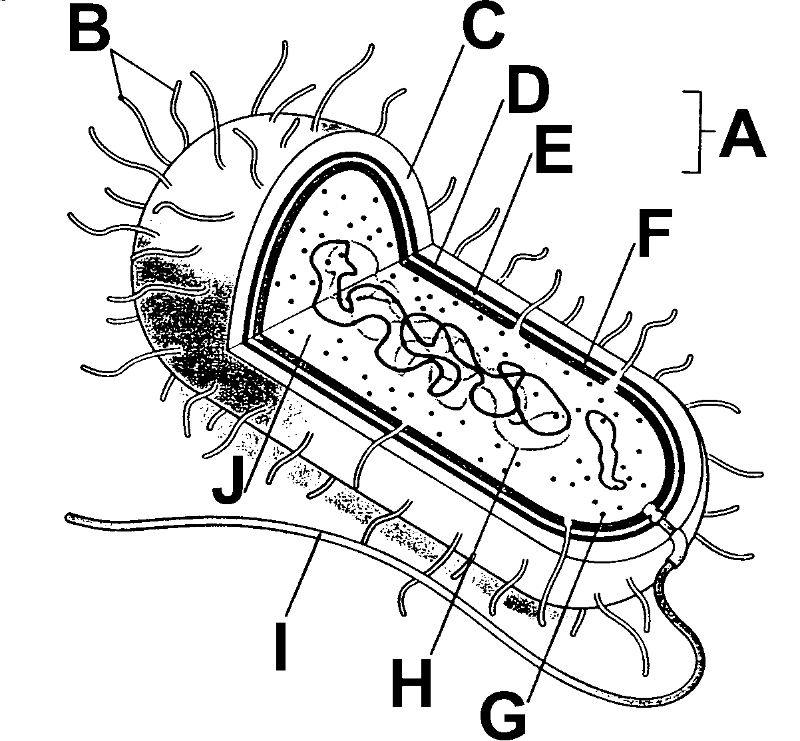 The structure in the accompanying figure labeled C (outermost layer) is ___, and the structure indicated by the letter I is _____: A) C - the plasma membrane, I – the cilia. B) C - the capsule, I – the cilia C) C - the capsule, I – the flagella D) C - the cell wall, I – the flagella E) C - the capsule, I – the pilus | back 175 C |
front 176 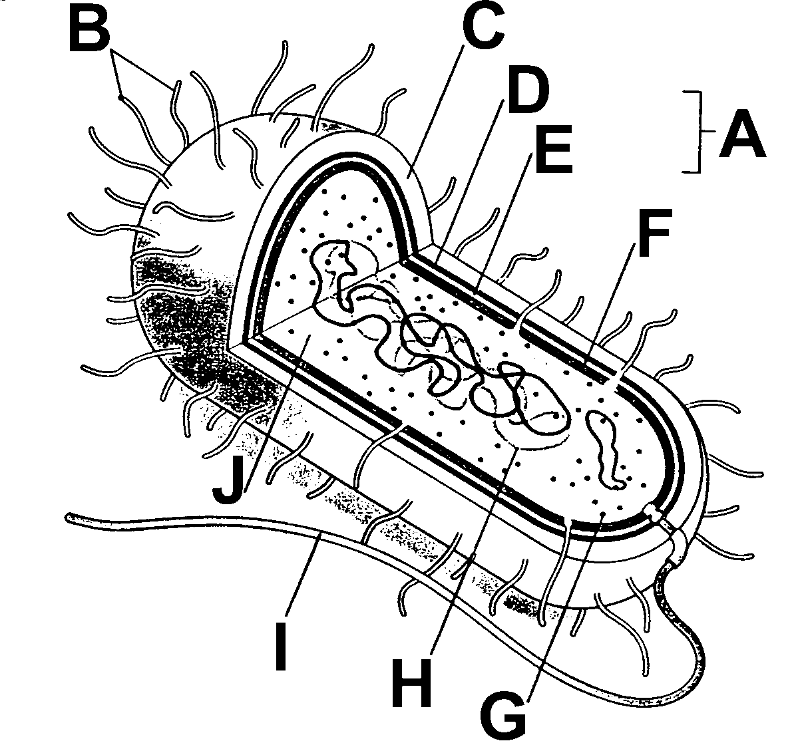 What is the function of the structures labeled B? A) To adhere to host cells, or other bacteria, or solid substrates B) To prevent phagocytosis by a white blood cell of the host C) To transmit DNA from one cell to another D) To exchange genetic material and genetic traits like antibiotic resistance between cells E) All answers except B | back 176 E |
front 177 The ____ Archaebacteria are typically found in extremely hot environments, whereas the _______ Archaebacteria are typically found in swampy environments lacking oxygen. A) Extreme halophile, methanogenic B) Extreme thermophile, methanogenic C) Pyrrhanogen, Extreme halophilic D) Methanogens, Extreme thermophilic E) Gram positive, Gram negative | back 177 B |
front 178 Organisms that share the most DNA homology to mitochondria and chloroplasts, respectively, are: A) Proteobacteria, cyanoacteria. B) Proteobacteria, green sulfur bacteria. C) Eubacteria, green sulfur bacteria. D) Eubacteria, cyanobacteria. E) E. coli, green sulfur bacteria | back 178 A |
front 179 What makes rRNA (or another sequence) a good ‘evolutionary chronometer’? A) It is universally distributed across group chosen – all organisms have rRNA. B) It is functionaly similar between organisms – rRNAs all participate in protein synthesis. C) Its sequence changes slowly - good for looking across long periods of time D) The rRNA sequences can be aligned, or matched up, between 2 organisms. E) All of the above | back 179 E |
front 180 The most significant difference between the Archaea and the Eubacteria is: A) The lack of a nuclear envelope in the Archaea. B) The absence of the 70S ribosomes in the Eubacteria. C) The presence of a single filament flagellum in the Eubacteria. D) The small subunit (16 S) rRNA sequence. E) All of the above | back 180 D |
front 181 The first indication that Archaea were different from the Eubacteria came from: A) The absence of peptidoglycans in the cell walls of the Archaea. B) Ribosome size. C) 16 S rRNA sequence. D) Nuclei. E) Response to antibiotics. | back 181 A |
front 182 Most bacterial cells keep from bursting in a hypotonic environment by A) An efficient water pump. B) A tough cell membrane. C) Pumping large quantities of salts into the cell. D) A rigid cell wall. E) A stiff capsule. | back 182 D |
front 183 Gram-positive bacteria stain _____ in a gram stain because of a thick layer of _____ in their cell walls A) Green; peptidoglycan B) Purple; peptidoglycan C) Green; cellulose D) Purple; polysaccharides E) Red; polysaccharides | back 183 B |
front 184 Which of the following groups of prokaryotes contains the genus Clostridium, responsible for the human diseases tetanus and botulism? A) Spirochetes B) Cyanobacteria C) Methanogens D) Gram Positive Eubacteria E) Proteobacteria | back 184 D |
front 185 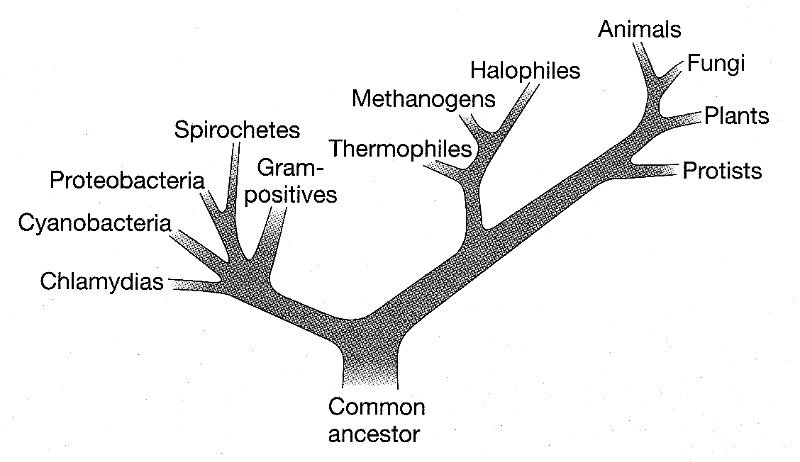 Which of the following groups of prokaryotes in the figure above contains the bacteria Helicobacter pylori, responsible for the human ulcers, and E. coli, beneficial intestinal bacteria in humans? A) Thermophiles B) Cyanobacteria C) Methanogens D) Gram Positive Eubacteria E) Proteobacteria | back 185 E |
front 186 Which of the following groups of prokaryotes might be found in the Great Salt Lake, the Red Sea, the Dead Sea, but NOT necessarily in the ocean? A) Cyanobacteria B) Methanogens C) Gram Positive Eubacteria D) Proteobacteria. E) Extreme Halophiles | back 186 E |
front 187 Which of the following cellular structures are shared by bacteria, archaea, and eukaryotes? A) Plasma membrane B) Nuclear envelope C) Membrane-bound organelles D) Cell wall composed of peptidoglycan E) Linear chromosomes | back 187 A |
front 188 What type of protists have formed massive deposits of chalk, as seen in the White Cliffs of Dover? A) Diatoms B) Dinoflagellates C) Alveolates (Ciliates) D) Cercozoans (Forams) E) Euglenas | back 188 D |
front 189 Pseudopods are used by the members of clade Amoebozoa for ingesting food as well as for: A) Reproduction. B) Excretion. C) Digestion. D) Movement. E) Avoiding predation | back 189 D |
front 190 Which of the following is true about Radiolarans? A) They cause periodic red tides, poisoning shellfish and the people who eat the shellfish B) They capture prey through the use of thread-like pseudopods c C) They have a test (shell) of calcium carbonate (chalk) D) B and C E) All of the above | back 190 B |
front 191 Entamoeba histolytica, a parasite that is the causative agent of Amoebic Dysentery, crawls through the small intestine of its victims via pseudopod formation. Based on this information, Entamoeba histolytica is a member of the clade A) Euglenozoa B) Amoebozoa C) Alveolata D) Stramenopila | back 191 B |
front 192 A commercially important unicellular protist whose silica shells are used in filters, polishes, toothpaste and various industrial processes are the: A) Dinoflagellates. B) Euglenoids. C) Apicomplexans. D) Zooflagellates. E) Diatoms. | back 192 E |
front 193 Protists like ________________ represent an intermediate stage in eukaryotic evolution when cells each had two haploid nuclei but fusion to become a true diploid organism had not occurred. A) Plasmodium B) Amoeba C) Euglena D) Giardia E) Parameciu | back 193 D |
front 194 The parasitic protist that causes malaria, Plasmodium, must spend part of its life cycle in a nonhuman host. What organism(s) serve(s) as the vector for this life cycle? A) Rats B) Sand flies C) Mosquitos D) Leeches E) Tse-tse flies | back 194 C |
front 195 Trypanosomes are eukaryotes that are currently classified in the SuperClade A) Superclade I: Excavata B) Superclade II: S.A.R. C) Superclade III: Archaeplastida D) Superclade IV: Unikonta | back 195 A |
front 196 Which organisms are capable of producing a "red tide", secreting a nerve agent toxic to humans? A) Dinoflagellates B) Chrysophytes (diatoms) C) Sporozoans D) Euglenids E) Red algae | back 196 A |
front 197 The mitochondria of eukaryotic cells most likely arose as a result of endosymbiosis between a eukaryotic cell and a A) Cyanobacteria (Blue-green bacteria). B) Gram (-) bacterium like Rickettsia. C) Gram (+) bacterium like Bacillus D) Gram (-) bacterium like E. coli E) Spiral bacteria like spirochaetes | back 197 B |
front 198 In paramecium and stentor, the surface of the cell is covered with thousands of short, hairlike _____: A) Pili B) Pseudopods C) Flagella D) Cilia E) Trichomes | back 198 D |
front 199 Euglena and dinoflagellates show Secondary Endosymbiosis in that A) They have both mitochondria and chloroplasts B) They have two lipid bilayers around their mitochondria C) They have chloroplasts, but they are non-functional D) They have two lipid bilayers around their chloroplasts E) They have three lipid bilayers around their chloroplasts. | back 199 E |
front 200 Which parasitic protist has 2 haploid nuclei, 2 pairs of flagella, remnants of mitochondrial genes (but no intact mitochondria) and lives and reproduces in the small intestines of mammals? A) Chara B) Giaridia C) Amoeba D) Stentor E) Volvox | back 200 B |
front 201 Evidence for the Endosymbiotic Theory (Margulis, 1967) includes A) Similarity between bacterial size and the size of mitochondria and chloroplasts B) The presence of a single circular chromosome in bacteria, mitochondria, and chloroplasts C) Reproduction by binary fission in bacteria, mitochondria, and chloroplasts D) 70S ribosomes in bacteria, mitochondria, and chloroplasts E) All of the above provides evidence for the Endosymbiotic Theory | back 201 E |
front 202 Evidence that Chara is the direct ancestor of all land plants includes A) The mechanism of cell wall synthesis in Chara and all land plants B) The presence of vascular tissue in Chara and all land plants C) The presence of homologous chloroplasts (chlorophylls a and b, as well as accessory pigments) in Chara and all land plants D) The presence of a cuticle in in Chara and all land plants E) A and C only. | back 202 E |
front 203 Which example below is a characteristic shared by all excavates (diplomonads and parabasalids): A) Both lack nuclei. B) Both are adapted to anaerobic environments. C) Both lack, or have highly reduced, mitochondria. D) Both have a single flagellum. E) Both have two nuclei and 4 flagella | back 203 C |
front 204 Among the protists below, which typically moves with one “tinsel” flagella and one “smooth” flagella? A) Stentor B) Euglena C) Trypanosoma D) Plasmodium E) Diatoms | back 204 E |
front 205 Aspergillus soyae, one of the fungi used commercially to make soy sauce, reproduces asexually via conidia but has no known sexual cycle. It is thus classified as one of the A) Ascomycota B) Basidiomycota C) Deuteromycota D) Zygomycota | back 205 A |
front 206 A wildlife pathologist is examining some skin tissue from a dead frog. She notes the presence of a fungus. She cultures the fungal cells and notices that some of the cells are flagellated. She concludes that the frog has a disease caused by A) An ascomycete fungus. B) A zygomycete fungus. C) A basdiomycete fungus. D) A chytridomycete fungus. | back 206 D |
front 207 A coenocytic mycelium is: A) A mesh of branched filaments produced by spores. B) Formed of hyphae with chitin-reinforced walls. C) A mycelium characterized by long hyphal cells with hundreds or thousands of nuclei. D) Characteristic of the zygomycota E) All of the above | back 207 E |
front 208 The sac fungi are characterized by sexual reproductive structures called__________ and asexual reproductive structures called _____________: A) Asci, conidia. B) Basidia, sporangia C) Gemmae cups, conidia. D) Conidiophores, ascocarps E) Conidia, asci | back 208 A |
front 209 The cell walls of fungi are composed of: A) Cellulose. B) Lipids. C) Glycogen. D) Chitin. E) Chlorophyll. | back 209 D |
front 210 Claviceps purpurea infests grain like rye and produces _______________, a precursor of LSD which, if accidentally ingested, can cause hallucinations and even death. A) An ergot B) A smut C) A rust D) A brown rot E) A mildew | back 210 A |
front 211 Consuming even a single mushroom of the genus _______________ can be fatal due to the irreversible inhibition of the enzyme RNA polymerase. A) Agaricus B) Shittake C) Portobello D) Amanita E) Oyster | back 211 D |
front 212 DNA and rRNA analysis indicates that modern fungi descended from A) Plants B) Diatoms and other protists with a shell made of chitin C) Colonial, flagellated protists similar to choanoflagellates D) Colonial, photosynthesic protists similar to volvox E) Protists that have large masses of amoeboid cells like plasmidial slime molds | back 212 C |
front 213 Puffballs and shelf fungi are most closely related to: A) Molds. B) Truffles. C) The common edible mushroom. D) Yeast. E) The black bread mold. | back 213 D |
front 214 Which of the following is mismatched? A) Bread mold - zygomycetes B) Sac fungi - Ascomycota C) Yeast - Ascomycota D) Amanita mushrooms – Ascomycota E) Shelf fungi – Basidiomycota | back 214 D |
front 215 Which of the following is mismatched? A) Mushroom – Basidiomycetes B) Sac fungi – Ascomycetes C) Club fungi – Basidiomycetes D) Puff balls – Basidiomycetes E) Corn smut - Ascomycetes | back 215 E |
front 216 Mycorrhizal fungi benefits plants by: A) Increasing photosynthetic area. B) Increasing absorptive surface area of roots. C) Increasing chlorophyll content. D) Increasing leaf area. E) All of the above. | back 216 B |
front 217 The sexual spores produced by black bread mold, Rhizopus, are called A) Zygospores. B) Ascospores. C) Basidiospores. D) Conidia E) Puffballs. | back 217 A |
front 218 Lichens reproduce primarily asexually by ______, which are fragments
of the body of the lichen. B) Soredia C) Asci D) Thalli | back 218 B |
front 219 An important difference between plants and algae is the presence of : A) Chlrorophyll. B) A waxy cuticle C) Lignin D) Stomata with guard cells E) Cellulose | back 219 B |
front 220 Which is a key difference between alternation of generations in plants and sexual reproduction in non-plant organisms? A) In plants, the haploid and diploid stages are both multicellular. B) In plants, only the haploid stage is multicellular. C) In plants, the haploid generation is always dependent on the diploid generation. D) In other sexually reproducing organisms, the haploid and diploid generations are both multicellular. E) In other sexually reproducing organisms, the fusion of gametes forms a zygote before an embryo | back 220 A |
front 221 When you see a green, "leafy" moss, you are looking at the _________ generation a A) Haploid sporophyte B) Haploid gametophyte C) Diploid sporophyte D) Diploid gametophyte E) Structure where meiosis occurs F) Structure that results directly from a fertilized egg | back 221 B |
front 222 One type of asexual reproduction in liverworts involves formation of : A) Setae. B) Gemmae. C) Fronds. D) Archegonia. E) Prothalli. | back 222 B |
front 223 The main advancement exhibited by ferns over mosses and other byrophytes is: A) Presence of leaves. B) Presence of specialized vascular tissue. C) Presence of gametophyte generation and sporophyte generation. D) Presence of seeds. | back 223 C |
front 224 The haploid gametohyte (C ) A) Develops from meiosis in the sori B) Has some cells that make flagellated sperm C) Has some cells that make haploid eggs D) Will nourish the young fern fiddlehead E) All of the above | back 224 E |
front 225 The "dots" on the underside of a fern frond are spore cases; therefore, what is true of the plant to which the frond belongs? A) It is a spore. B) It is a sporophyte. C) It is a gametophyte. D) It is a spermatophyte. | back 225 B |
front 226 In mosses, the antheridia produce: A) Sperm B) Spores C) Buds D) Eggs E) Leaves | back 226 A |
front 227 The leafy fern that you might have as a house plant is the _____________________ generation. A) Diploid sporophyte B) Diploid gametophyte C) Haploid sporophyte D) Haploid gametophyte | back 227 A |
front 228 Fertilization in moss occurs when sperm swim from a(n) _____ and down the neck of a(n) A) Antheridium ... sporangium B) Sporangium ... antheridium C) Antheridium ... archegonium D) Archegonium ... antheridium E) Sporangium ... archegonium | back 228 C |
front 229 The simplest vascular plants are the: A) Mosses. B) Whisk ferns. C) Charophytes. D) Hornworts. E) Liverworts. | back 229 B |
front 230 The most recent group of plants to evolve are the: A) Gymnosperms. B) Hornworts. C) Angiosperms. D) Conifers. E) Gnetophytes. | back 230 C |
front 231 In plants the fertilized egg develops into a multicellular _________ within a female gametangium. A) Zygote B) Seed C) Embryo D) Endosperm E) Cotyledon | back 231 C |
front 232 In the age of the dinosaurs (~100 million years ago), these plants were tree-sized and the dominant plants of the Carboniferous period. (Today, only 1 genus remains). A) Equisetum ,the horsetails B) Lycopodium, the club moss C) Psilotum, the whisk fern D) Polypodium, a true fern | back 232 A |
front 233 The eggs of seed plants are fertilized within ovules, and the ovules then develop into _____ A) Seeds B) Spores C) Gametophytes D) Fruit E) Ovaries | back 233 A |
front 234 In this extreme close-up of the female gametophyte of a flowering plant (above), which will be fertilized by the 2 pollen nuclei, and what will happen as a result? A) Cell 5 will be fertilized with a pollen nucleus, which will become the 2n embryo B) Cell 2 will be fertilized with a pollen nucleus,, which will become the 2n embryo C) Nuclei 7 and 8 will fuse with a pollen nucleus, which will become the 3n endosperm D) Cells 4 and 6 will be fertilized with a pollen nucleus,, which will become the 3n endosperm E) A and C F) A and D G) B and D | back 234 E |
front 235 In angiosperms, double fertilization produces A) Twin embryos (diploid) B) The 2n embryo and the 3n antipodals C) The 2n embryo and the 2n seed coat D) The 2n embryo and the 3n endosperm E) The 3n endosperm and the 2n seed coat | back 235 D |
front 236 Following fertilization, an unequal division of the cytoplasm occurs to split the embryo into two cells. Which of the following is true? A) The upper, terminal cell becomes the embryo and eventually the new plant B) The lower, basal cell becomes the suspensor and anchors the embryo within the seed C) The upper, terminal cell becomes the endosperm D) A and B only E) B and C only | back 236 D |
front 237 Seeds have advantages over spores. For example, _____ A) Seeds contain embryonic plants, an abundant food supply, and a protective covering B) Seeds can survive for extended periods of time at reduced metabolic rates C) Seeds are single cells, demanding fewer nutrients from the parent plants D) Seeds can survive even in conditions that are unfavorable for the parent plants | back 237 A |
front 238 Pollen is __________ and contains __________. A) Diploid ... spores B) Diploid ... sperm nuclei C) Haploid ... spores D) Haploid ... sperm nuclei | back 238 D |
front 239 The receptive portion of a flower that receives the pollen is the A) Ovary B) Stigma C) Anther D) Carpel E) Anther | back 239 B |
front 240 In flowering plants one megaspore gives rise to _____ nuclei A) Four diploid B) Four haploid C) Eight haploid D) Eight diploid E) Microsporangi F) B and C | back 240 F |
front 241 The triploid nucleus of the embryo sac develops into the _____ A) Embryo B) Endosperm C) Fruit D) Carpel E) Seed | back 241 B |
front 242 .A pea pod is formed from _____. A pea inside the pod is formed from _____. A) An ovule ... a carpel B) An ovary ... an ovule C) An ovary ... a pollen grain D) An anther ... an ovule E) Endosperm ... an ovary | back 242 B |
front 243 Which of the following is NOT a characteristic of dicots? A) Two seed leaves B) Parts of flowers in fours or fives C) A taproot D) Vascular bundles arranged in a ring E) Veins in leaves usually parallel | back 243 E |
front 244 If you were able to start your car your car at the center of a large redwood tree and than drive out to the bark, as above, you would cross, in this order: A) Young wood, old wood, oldest wood, vascular cambium, phloem, periderm B) Oldest wood, old wood, young wood, vascular cambium, phloem, periderm C) Periderm, phloem, vascular cambium, oldest wood, old wood, youngest wood D) Young wood, old wood, oldest wood, vascular cambium, periderm, phloem E) Oldest wood, old wood, young wood, vascular cambium, periderm, phloem | back 244 B |
front 245 Chlorenchyma A) Living cells that lack nuclei and ribosomes B) Thin, tapered water transport cells with numerous pits C) Thick, barrel shaped cells with end plate perforations D) Cells with unevenly thickened primary walls that support young, growing parts of a plant E) Parenchyma cells specialized in function for photosynthesis | back 245 E |
front 246 Collenchyma A) Living cells that lack nuclei and ribosomes B) Thin, tapered water transport cells with numerous pits C) Thick, barrel shaped cells with end plate perforations D) Cells with unevenly thickened primary walls that support young, growing parts of a plant E) Parenchyma cells specialized in function for photosynthesis | back 246 D |
front 247 Sieve tubes A) Living cells that lack nuclei and ribosomes B) Thin, tapered water transport cells with numerous pits C) Thick, barrel shaped cells with end plate perforations D) Cells with unevenly thickened primary walls that support young, growing parts of a plant E) Parenchyma cells specialized in function for photosynthesis | back 247 A |
front 248 Tracheids A) Living cells that lack nuclei and ribosomes B) Thin, tapered water transport cells with numerous pits C) Thick, barrel shaped cells with end plate perforations D) Cells with unevenly thickened primary walls that support young, growing parts of a plant E) Parenchyma cells specialized in function for photosynthesis | back 248 B |
front 249 Vessel Elements A) Living cells that lack nuclei and ribosomes B) Thin, tapered water transport cells with numerous pits C) Thick, barrel shaped cells with end plate perforations D) Cells with unevenly thickened primary walls that support young, growing parts of a plant E) Parenchyma cells specialized in function for photosynthesis | back 249 C |
front 250 Water and dissolved minerals are conducted from the roots to the stems and leaves via ___________, whereas sugar is conducted through specialized cells known as _____________ A) Parenchyma, collenchyma B) Sieve tubes, xylem C) Xylem, companion cells D) Xylem, sieve tubes E) Phloem, companion cells | back 250 D |
front 251 Secondary plant tissue produced by the vascular cambium includes all of the following, except: A) Vessel elements B) Sieve cells C) Tracheids D) Trichomes E) Companion cells | back 251 D |
front 252 Specialized cells of the dermal system in plants that function in gas exchange are called A) Cuticle cells B) Trichomes C) Periderm D) Guard cells E) Companion cells | back 252 D |
front 253 Primary growth in a young stem occurs at the A) Root apical meristem B) Lateral meristem C) Shoot apical meristem D) Vascular cambium E) Epidermis | back 253 C |
front 254 Sugar is translocated in phloem from a source, or an area of _____, to a sink, or an area of _____. A) Low sugar concentration; high sugar concentration B) High sugar concentration; low sugar concentration C) Positive water potential; negative water potential D) Negative water potential; positive water potentia | back 254 B |
front 255 Plant growth in response to a mechanical stimulus, such as contact with a solid object is called. A) Heliotropism B) Phototropism C) Gravitropism D) Thigmotropism E) Geotropic bending | back 255 D |