Instructions for Side by Side Printing
- Print the notecards
- Fold each page in half along the solid vertical line
- Cut out the notecards by cutting along each horizontal dotted line
- Optional: Glue, tape or staple the ends of each notecard together
Chapter 5
front 1 Any condition involving absence or loss of hair is called A) psoriasis. B) alopecia. C) impetigo. D) vitiligo. | back 1 B |
front 2 The white half-moon visible under the proximal part of a fingernail is the A) matrix. B) bed. C) lunule. D) cuticle. | back 2 C |
front 3 Soft keratin is present in the A) epidermis. B) hair cuticles. C) dermis. D) body of the nails. | back 3 A |
front 4 The subpapillary plexus A) nourishes the dermal papillae and epidermis. B) nourishes the hypodermis and reticular layer of the dermis. C) provides the sensation of fine touch. D) provides the sensation of deep pressure. | back 4 A |
front 5 The reticular layer of the dermis consists of ________ connective tissue. A) reticular B) stratified squamous C) dense regular D) dense irregular | back 5 D |
front 6 The cells in the skin that store the most melanin granules are A) dendritic cells. B) tactile epithelial cells. C) basal keratinocytes. D) melanocytes. | back 6 C |
front 7 A(n) ________ responds to the movement of a single hair. A) arrector pili muscle B) hair matrix C) hair papilla D) root hair plexus | back 7 D |
front 8 The proximal nail fold is also called the nail's A) matrix. B) bed. C) lunule. D) eponychium. | back 8 D |
front 9 Which primary layer of the skin provides a pink undertone to Caucasian skin? A) dermis B) hypodermis C) epidermis | back 9 A |
front 10 Which primary layer of the skin contains melanocytes? A) dermis B) hypodermis C) epidermis | back 10 C |
front 11 Lamellated granules A) burst from sebaceous glands, releasing oils onto the skin. B) contain glycolipids that are secreted from cells in the stratum granulosum. C) help form keratin in fingernails. D) smooth the cuticle of a hair shaft to prevent split ends. | back 11 B |
front 12 The appearance of wrinkles in skin with age is largely due to changes in the A) collagen and elastic fibers in the dermis. B) keratin of the epidermis. C) carotene in the epidermis. D) blood vessels in the dermis. | back 12 A |
front 13 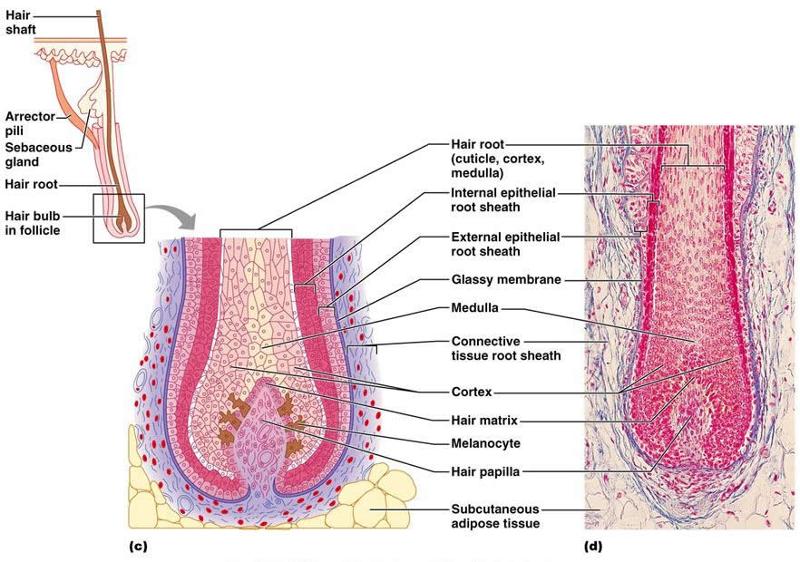 Which letter indicates cells that produce melanin in the hair root? a. hair shaft ? b. internal root sheath c. medulla d. melanocyte e. dermal papilla | back 13 D |
front 14 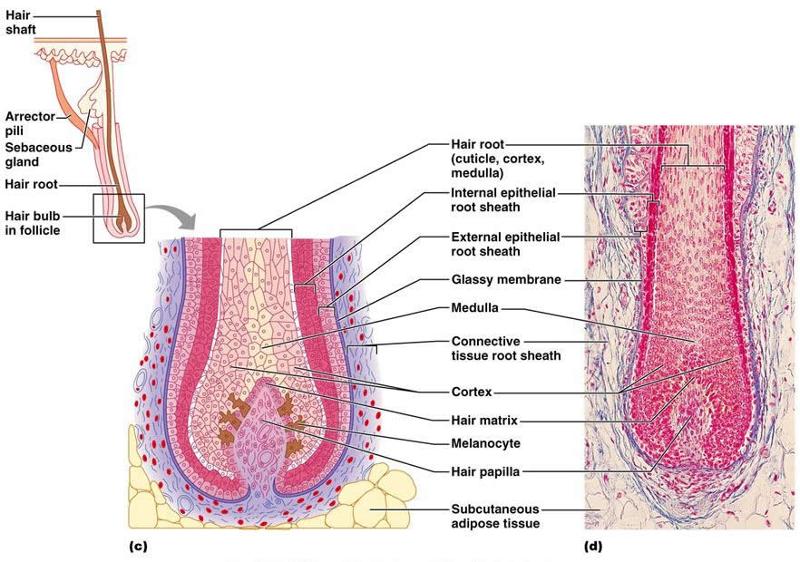 Which letter indicates the portion of the hair root that contains a single capillary cluster? a. hair shaft | back 14 E |
front 15 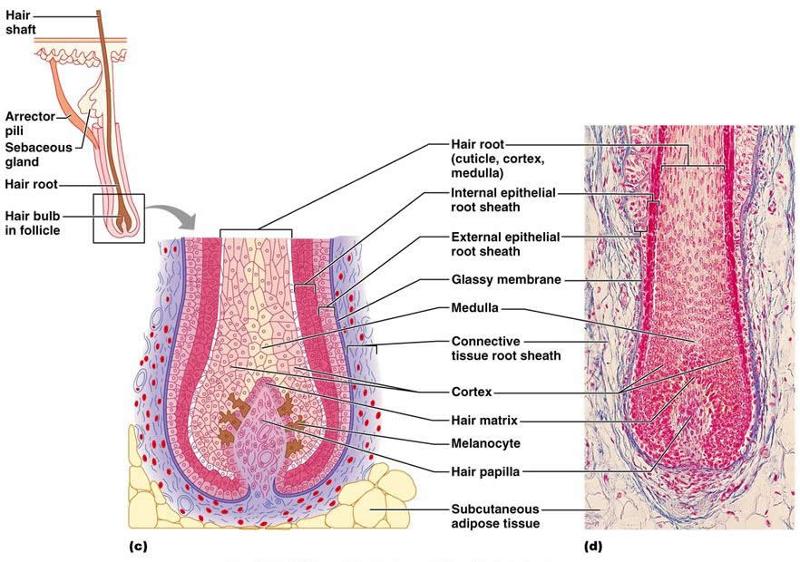 Which letter indicates a layer of cells that are derived from the epidermis? a. hair shaft | back 15 B |
front 16 When a blister forms due to friction, liquid pools between the epidermis and what other layer of the integument? a. dermis b. hypodermis c. epidermis | back 16 A |
front 17 Which layer of the integument is found deep to the dermis? a. dermis b. hypodermis c. epidermis | back 17 B |
front 18 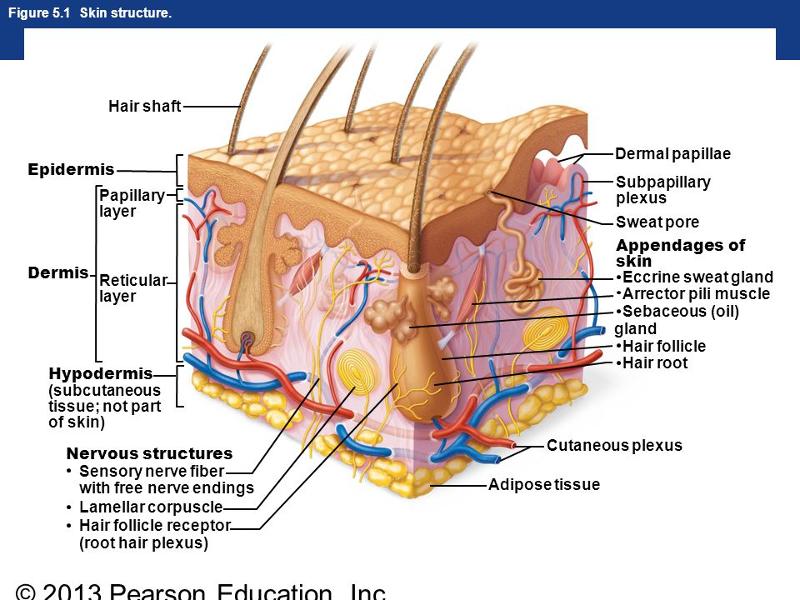 Which letter indicates the integument layer that has no vascularization? a. epidermis e. dermal papillae | back 18 A |
front 19 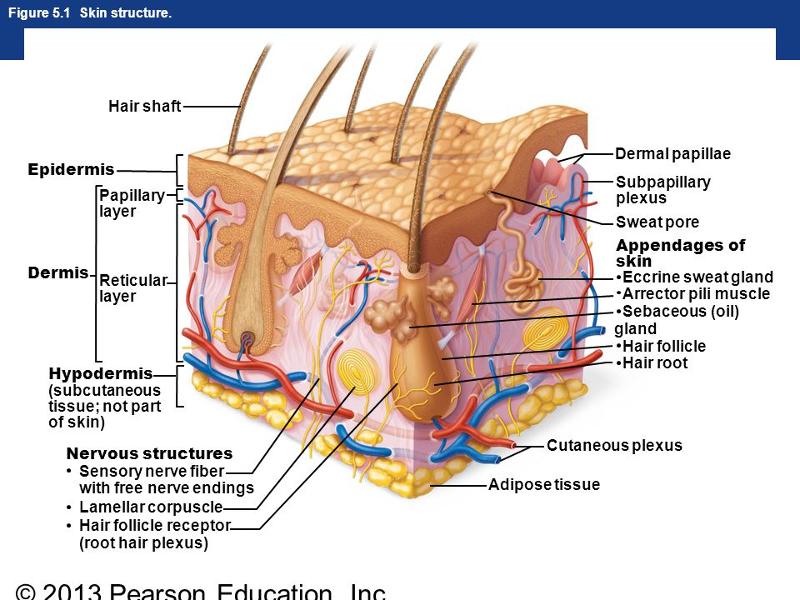 Which letter indicates the integument layer composed of keratinized stratified squamous cells? a. epidermis | back 19 A |
front 20 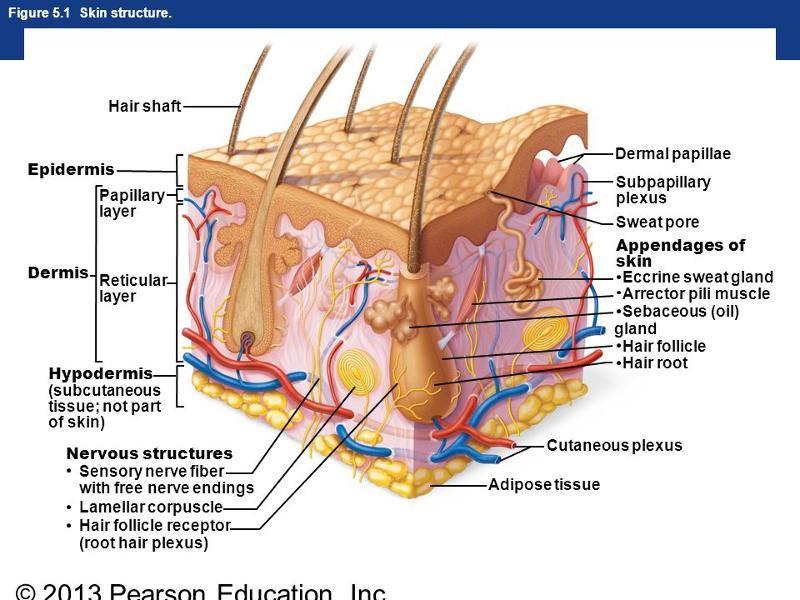 Which letter indicates projections from the dermis that reduce blister formation? a. epidermis b. dermis c. hypodermis d.lamellar corpuscle e. dermal papillae | back 20 E |